May 18, 2025


Homilies
Homilies
- Bishop Barron
- MORE
- 1-MINUTE HOMILY
- 2-Minute Homily
- MSGR. Peter Hahn
- Fr. Jude Langeh
- FR. RUTTIG
- FR. MCCARTHY, OSA
BISHOP
BARRON
5th Sunday of Easter C

For Easter Season (2022), Bishop Barron preached each Sunday on the Second Reading from the Book of Revelation.

5th Sunday of Easter C


ONE MINUTE
HOMILY

5th Sunday of Easter C


TWO MINUTE
HOMILY

5th Sunday of Easter C

MSGR. PETER
HAHN
5th Sunday of Easter C


FR. JUDE
LANGEH, CMF


FR. KEVIN
RUTTIG

5th Sunday of Easter C


FR. TOM
McCARTHY, OSA

5th Sunday of Easter C


Deacon Peter McCulloch
5th Sunday of Easter C

Love’s Two-Way Gift
This discussion guide has been generated by the WORD THIS WEEK'S Catholic AI Assistant based on Deacon Peter's homily.
1. Exploring the Necessity of Love
- Reflect on Jackie DeShannon's lyrics, "What the world needs now is love, sweet love." Do you agree with this statement? Why or why not?
- Consider Marilyn Monroe’s feelings of being unloved. What does her story teach us about the human need for love and acceptance?
2. Love and Human Nature
- How do you interpret the idea that humans are social beings wired to connect with others?
- Reflect on the statement that love is at the very heart of our human identity because we are made in God's image. What are the implications of this belief for how we live our lives?
3. The Impact of Love on Development
- Discuss the sermon’s insights into the importance of love and touch for children’s development. How do you see these insights reflected in your own life or observations?
- How does the story of neglected Romanian children reinforce the sermon’s message about the importance of love?
4. Love and Loneliness
- Discuss the effects of isolation and lack of connection, as illustrated by the story of the author's father during the Covid lockdown. How has the pandemic affected your understanding of love and human connection?
5. Jesus’ New Commandment of Love
- Reflect on Jesus’ new commandment: "Love one another just as I have loved you." What does this commandment mean to you personally?
- Why do you think Jesus felt the need to give this commandment to his disciples?
6. Different Types of Love
- Explore the four kinds of love described by C.S. Lewis: Storge, Philia, Eros, and Agape. How do these types of love manifest in your relationships?
- Why do you think Agape love is considered the highest form of love, and how can we practice it in our daily lives?
7. Giving and Receiving Love
- Discuss the psychological finding that both giving and receiving love contribute to our happiness and well-being. Can you share a personal experience where you felt happier by expressing love to someone else?
- Consider the challenge to perform a random act of kindness this week. How do you plan to incorporate this practice into your routine, and what impact do you anticipate it will have?
8. Actionable Steps
- As a group, brainstorm ways you can incorporate more moments of love and connection into your lives. How can you collectively support one another in these efforts?
Homily Excerpt
We’re all meant to love each other with agape, just as Jesus loves us. For our health and wellbeing, we know that we all need to receive love. But psychologists have also discovered that we have a parallel need to give love.
They’ve found that when we express our love and care for someone else, it’s not only the other person who benefits; we benefit, too. How? By feeling happier. Actively loving others makes us happier. And studies have shown that even small acts of kindness can generate just as much happiness as lofty acts.
So, this week, let’s test this theory. Let’s perform a random act of kindness on a stranger, and see if it makes you feel happier. The science says it will. And so does Jesus. That’s why he wants us to love each other, just as he loves us.

Love in Any Language
This discussion guide has been generated by the WORD THIS WEEK'S Catholic AI Assistant based on Deacon Peter's homily.
Section 1: The Language of Love
1. What do you think about Peter Hoeg’s mention of the Inuit having numerous words for snow and its comparison to the English language having only one primary word for love?
2. Discuss the potential consequences of having a limited vocabulary for love in expressing emotions and intentions.
Section 2: Different Words for Love
Explore the different words used to describe love: Eros, Philia, Storgé, and Agape.
1. What distinguishes each of these types of love, and how do they manifest in our lives?
2. Share examples from your personal experiences or observations where you have seen these types of love in action.
Section 3: Agape Love and Jesus' Teachings
Reflect on the notion of Agape love, as described in the story of Jesus' sacrificial love for humanity.
1. In what ways does Jesus exemplify Agape love through his life and teachings?
2. How can we, in contemporary society, demonstrate Agape love in our daily interactions?
Section 4: Love in Divine Messages
Review Sr Josefa Menéndez’s account of Jesus’ messages as noted in "The Way of Divine Love."
Discussion Questions:
1. How does the description of God's love through the actions of Jesus resonate with you personally?
2. Can you think of a time when you have witnessed or experienced such profound self-sacrificial love?
Section 5: Personal Reflection and Group Sharing
Consider the question: "When you say you love someone or God, what do you truly mean?"
1. Share your reflections with the group. What insights or new understandings have emerged for you during this session?
Closing Activity: Love Commitment
Challenge group members to think of a practical way to express a specific kind of love (Agape, Eros, Philia, or Storgé) in the upcoming week. Each participant can share their commitment with the group.
Homily Excerpt

In his novel Smilla’s Sense of Snow, Peter Hoeg says that the Inuit people of Greenland have a hundred words for snow. [i]
They have words for light, wind-blown snow; drifted snow; powdery snow, crusted snow, wet snow, slushy snow and many more.
A hundred words is an exaggeration, I’m told; however, they do have dozens. Why so many? It’s because these hardy people have long relied on clear communication for their survival. The subtleties of ice and snow can mean the difference between life and death.
If such clarity is so important in Greenland, then why do we have so few words for Love in English? Surely love and human relationships with all their complexities are just as important in our society.
In English, we do have a few words for some aspects of love, like affection, fondness and tenderness, but we usually use only one word – Love – to express almost everything, like ‘I love my wife, ‘I love my dog,’ ‘I love food,’ ‘I love my father,’ and ‘I love music.’ They all mean very different things.

THE WORD THIS WEEK invites you to check out the Catholic AI assistant (located at the bottom right-hand corner), a homily preparation resource you can use to clarify or develop the insights and themes of Deacon Peter’s homilies.
Fr. Austin Fleming
5th Sunday of Easter C

2016 HOMILY – Imagine a world with no newspapers, no magazines, no books, no computers, no internet, no social media, no telephone, no radio, no television… That’s the world in which St. Paul lived, in the mid-first century.
In that setting, over a span of about 10 years, St. Paul set out on three journeys, missionary journeys, to preach the message of Jesus and spread the Christian faith. In those three journeys Paul traveled some 7,000 miles. We know some of his travel was by boat because in the scriptures he reports being shipwrecked no fewer than three times. Still, a good deal of his travel was by foot. His travels took him to Cyprus, Turkey, Syria, Greece, Jerusalem, Lebanon and Israel.
He had no bible to carry with him, to read from, or refer to. He had no pamphlets, leaflets or handouts. There were no sound systems for addressing large crowds: small groups would be his largest audiences. He had only the faith in his heart and the words on his lips but with these simple tools he told the story of Jesus and founded whole faith communities, churches, along the way. And all this in places where the people had never heard of Jesus! It’s no exaggeration to say that we need a new missionary effort in the church.
This discussion guide has been generated by the WORD THIS WEEK’S Catholic AI Assistant based on Father Austin’s homily. NEED HELP? Copy and paste a question into the chat bot in the lower right corner of the screen and have our Catholic Assistant help you.
1. Historical Context and St. Paul’s Mission
– Reflect on the challenges St. Paul faced in spreading the Christian faith without the modern conveniences of communication. How does this inspire our own efforts today?
– Discuss how St. Paul’s determination and methods can serve as a model for us in engaging our own communities with the message of Jesus.
2. Contemporary Mission Territory
– According to the sermon, where is our current mission field? Why do you think the home, neighborhood, workplace, and classroom are considered mission territories?
– Some statistics reveal that church participation is declining. What do these trends indicate about our community, and how can we address them?
3. The Role of Personal Witness
– The sermon suggests that one of the best ways to attract others is by sharing our reasons for attending church and inviting others to join us. What are your personal reasons for attending, and how can you communicate this to others?
– How can we approach friends and family who might have drifted away from the church, with respectful and sincere invitations?
4. Challenges and Reactions
– The sermon warns that initial invitations might be ignored or rejected. How should we handle such responses, and how can persistence play a role in our outreach efforts?
– Share experiences where your invitation was either accepted or rejected. What did you learn from those encounters?
5. Living as a Disciple
– Explore the statement: “This is how all will know that you are my disciples, if you have love for one another.” How does love play a role in inviting others to church?
– Discuss practical ways to show love and extend an invitation to those around you, considering each individual’s unique circumstances.
Action Steps
– Reflection: Spend time this week reflecting on what attending church means to you. Write down your thoughts to clarify your perspective.
– Practice: Identify at least one person to whom you can extend a genuine invitation to attend church. Be prepared for any type of response.
– Commit: As a group, commit to supporting each other in these outreach efforts and share your experiences in a future meeting.
THE WORD THIS WEEK invites you to check out the Catholic AI assistant (located at the bottom right-hand corner), a homily preparation resource you can use to clarify or further develop the insights and themes of Fr. Fleming’s homily.
Dominican Blackfriars

5th Sunday of Easter C
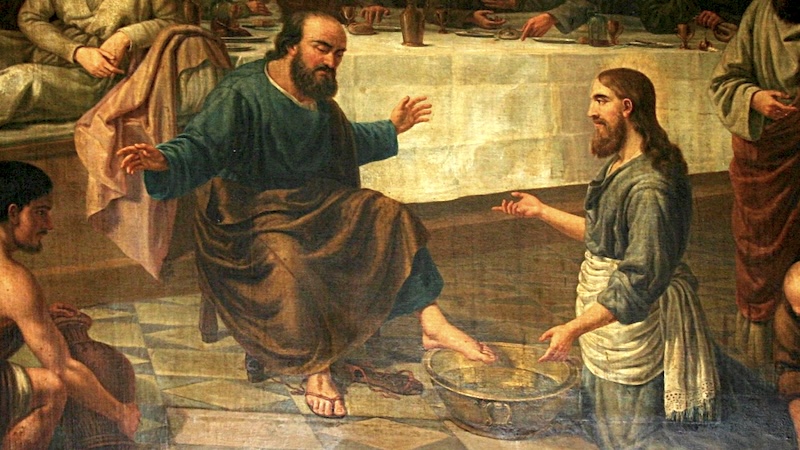
Image: detail from a painting of Christ washing St Peter’s feet, from the Basilica of Santa Maria del Mar, Barcelona, © José Ribeiro
This discussion guide has been generated by the WORD THIS WEEK'S Catholic AI Assistant based on the Dominican Blackfriars' homily for this week.
1. Darkness and Betrayal
- Reflect on the imagery of Judas walking out into the night. How does this symbolize rejection and betrayal in the context of the Gospel of John?
- Consider the significance of Judas being present at the foot washing. What does it convey about Jesus' love and forgiveness?
2. The Significance of the Morsel
- Discuss the act of Jesus dipping the morsel of bread and offering it to Judas. Why is this significant, and what does it reveal about Jesus' understanding of love and betrayal?
- Explore the meaning of "having loved his own in the world, he loved them to the end." What different interpretations can this phrase have?
3. Glorification Through Suffering
- Analyze Jesus' statement, "Now is the Son of Man glorified, and in him God is glorified," in light of the crucifixion. How does this perspective transform the perception of suffering and anguish?
- Reflect on how the crucifixion is a revelation of God's love despite being an event marked by darkness.
4. The New Commandment
- Examine the new commandment: "Love one another as I have loved you." What challenges arise from this commandment, especially in terms of loving all disciples, not just those we choose?
- Discuss how this commandment serves as a response to understanding Jesus’ great love and sacrifice.
5. Going Out into the World
- Consider the symbolism of being sent out at the end of Mass. How does this differ from Judas’ departure into darkness?
- Discuss the meaning of being called to engage in the "work of God" versus being drawn into darkness. What practical steps can individuals take to embody this journey toward the light?
6. Embracing Light and Love
- Explore how, as disciples, we can embody the light that "the darkness can never overcome." What personal and communal actions can foster this light?
- Reflect on the importance of love as a distinguishing mark of discipleship. How can individuals and communities nurture a culture of love that reflects Jesus' teachings?
Homily Excerpt

Fifth Sunday of Easter. Fr Dermot Morrin preaches on ultimate love.
When Judas had gone out, it was night. Judas walked out into the entangled darkness of those who rejected Jesus and who plotted his death. Judas walked away from the one who is the light of the world. When we think of this thirteenth chapter of John’s Gospel, we think of the foot washing and of how that extraordinary gesture symbolised Jesus giving his life for us on the cross. We think, too, of how Jesus said that, by this act, he has given the disciples an example to follow. Jesus washed the feet of each of them. He even washed the feet of Judas, while knowing that Judas would walk out into the darkness of betrayal.
But after the foot washing Jesus does something else. He dips the morsel of bread into his dish and offers it to Judas. This is no small thing. It is the sign of his love….
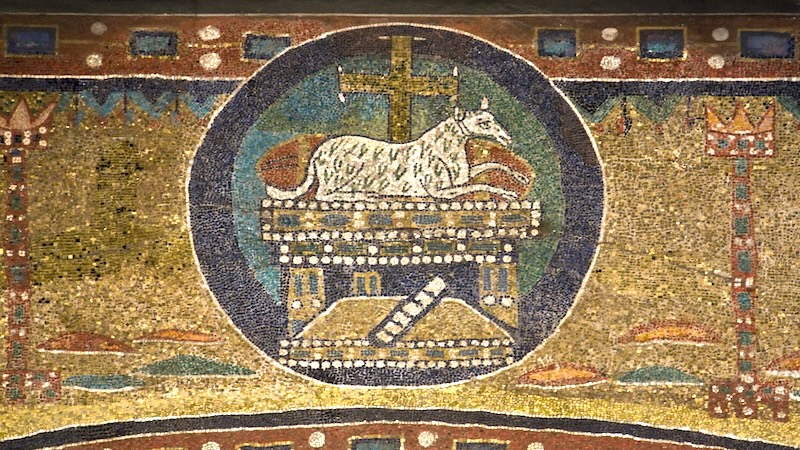
Image: detail from the triumphal arch mosaic of Santa Prassede in Rome, photographed by Fr Lawrence Lew OP
This discussion guide has been generated by the WORD THIS WEEK'S Catholic AI Assistant based on the Dominican Blackfriars' homily for this week. NEED HELP? Copy and paste a question into the chat bot in the lower right corner of the screen and have our Catholic Assistant help you.
Introduction
- Briefly recap the key events in the Church highlighted in the sermon, such as the death of Pope Francis and the election of Pope Leo XIV.
1. Understanding Eastertide
- Question: What does the term “Easter” actually represent, according to Fr. Benjamin Earl?
- Discussion: Discuss the significance of the term “Paschaltide” and how it relates to the entirety of the Lord’s Passover.
2. Death and Resurrection
- Question: Why is Easter joy not simply unalloyed jubilation?
- Discussion: Reflect on the necessity of death preceding resurrection and how this concept is integral to the Christian faith.
3. Scripture Readings
- Question: How do the Gospel passage from John and the Acts of the Apostles emphasize the theme of love and tribulation?
- Activity: Read and reflect on the passages: Acts 14:21-27 and John 13:31-33, 34-35. Discuss how these readings connect to the themes of sacrifice and enduring tribulations for the kingdom of God.
4. The Role of Suffering
- Question: What does it mean to embrace the cross in a society moving towards “practical atheism”?
- Discussion: Explore how Christians today might live out their faith in environments that are forgetful or dismissive of the gospel message.
5. The Symbolism of the Bridge
- Question: How is the idea of the "wood of the cross" being used as a bridge explained in the sermon?
- Activity: Brainstorm practical ways that believers can act as bridge builders in their communities, drawing from the metaphor of the pontiff as a "bridge builder."
6. Hope and the New Jerusalem
- Question: What is the significance of the new Jerusalem as mentioned in the sermon?
- Discussion: Discuss the hope found in Revelation 21:1-5 and how it relates to the message of Eastertide. How does the idea of the new Jerusalem provide comfort and purpose amid suffering?
Conclusion
- Summarize the key themes discussed and encourage participants to reflect on how the sermon’s message might influence their personal faith journey during Eastertide.
Additional Resource
- Encouragement to read Pope Leo XIV’s homily for further insight into the themes discussed.
Reflection
- End with a moment of silent reflection or prayer, focusing on how to incorporate the lessons from the sermon into daily life.
Homily Excerpt
Fifth Sunday of Easter. Fr Benjamin Earl discusses the meaning of our present liturgical season.
With all that has been happening in the Church in the last few weeks – the death of Pope Francis, his funeral, the election of Pope Leo XIV, and today’s solemn celebration of the inauguration of the new pontificate – we could almost be forgiven for forgetting that it is still Easter. Nevertheless, among all the other celebrations both sad and joyful, it is right to continue to wish each other ‘Happy Easter!’: the Lord is indeed risen.
The events of recent weeks perhaps providentially serve to remind us that the Christian’s Easter joy is not quite the unalloyed jubilation some might think. Easter may be a great celebration of resurrection, but no resurrection is possible if there is not first a death.
The term ‘Easter’ is something of a linguistic accident of English. The word originally had little to do with the Christian mysteries we celebrate at this time. Rather, it comes from the name of a pagan goddess, Ēastre, who was celebrated at the vernal equinox, which of course is always around the time we celebrate Easter…
The Pope’s homily, referenced above, can be found here.
THE WORD THIS WEEK invites you to check out the Catholic AI assistant (located at the bottom right-hand corner), a homily preparation resource you can use to clarify or further develop the insights and themes of the homilies above.
Fr. Charles E. Irvin
5th Sunday of Easter C
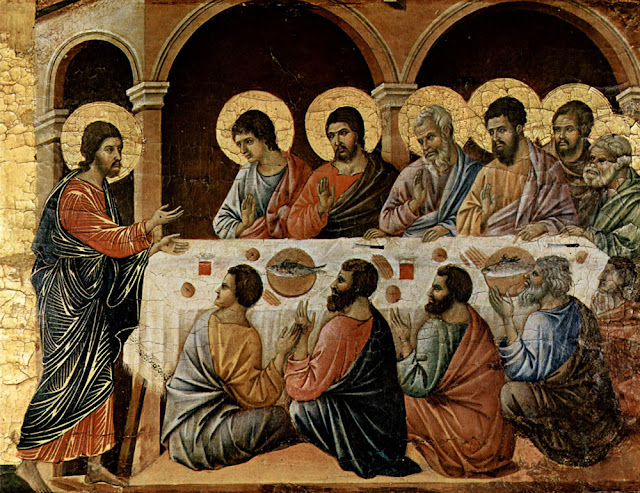

We greet each other with the question “What’s new?” We watch TV news, read newspapers, pay attention to advertisements, and look for new models of things we already have. Advertisements are loaded with words telling us of new products, or “new and improved” products that we can’t live without. The world of computers is filled with new gadgets, new programs, new downloads, and so forth. We seem to be obsessed with what’s new.
Jesus used the word “new” many, many times in His discourses and teachings, all the time trying to get us to see the new creation, the new man, and the new covenant His Father is bringing about. The gospel account we just heard was the beginning of Jesus’ final discourse at the Last Supper, a discourse filled with promise, hope and a vision of the future. The second reading is taken from the Book of Revelation. It’s interesting to note that Mel Gibson, in his movie The Passion of the Christ, put the words “Behold, I make all things new” into the mouth of Christ as He suffered during His passion under the weight of His cross.
What is this new thing God invites us to see?
This discussion guide has been generated by the WORD THIS WEEK’S Catholic AI Assistant based on Fr. Irvin’s homily.
1. Understanding Ecclesiastes 1:9
– How does the phrase “Nothing is new under the sun” reflect human perception of history and change?
– In what ways do we see this perspective influencing our everyday lives and attitudes?
2. The Obsession with Newness
– Why do you think society is so fascinated with “new” and “improved” products and ideas?
– How does this obsession affect our priorities and spiritual outlook?
3. Newness in Christ’s Teachings
– Discuss the significance of “new creation,” “new man,” and “new covenant” in Jesus’ teachings.
– How can these concepts alter our understanding of our spiritual journey and identity?
4. The Role of Artists and Poets
– The sermon mentions that artists and poets help us see deeper truths. How do you interpret this statement?
– Can you think of specific artists or works that have provided you with profound insights into spiritual truths?
5. The Icon of Christ Descending into Hell
– What does this icon represent about Christ’s reach and saving grace?
– How does this imagery impact your understanding of Christ’s redemptive work?
6. Living in the “Already but Not Yet”
– Discuss the concept of the kingdom of God being both present and future.
– How can this idea help you navigate your faith journey and everyday challenges?
7. Present Continuous Tense of God’s Work
– The sermon emphasizes God’s active, ongoing work in our lives. How does this perspective change your relationship with God?
– What are some practical ways you can respond to God’s present work?
8. The Role of Sacraments
– How do the Sacraments of Initiation and other sacraments reinforce the concept of Christ among us?
– What personal experiences do you have with the sacraments, and how have they impacted your faith journey?
9. Active Participation in Faith
– How does the concept of actively listening and responding to God affect your faith practice?
– What steps can you take to become more active in living out your faith daily?
10. The Profound Choice
– The sermon ends with the critical choice between accepting Jesus’ offer of hope and glory or succumbing to worldly despair. How do you perceive this choice in your own life?
– What practical and spiritual actions can help you make the choice that aligns with your faith and beliefs?
THE WORD THIS WEEK invites you to check out the Catholic AI assistant (located at the bottom right-hand corner), a homily preparation resource you can use to clarify or further develop the insights and themes of Fr. Irvin’s homily.
Fr. George Smiga
- The Last 24 Hours - 2004
- Love as Power - 2007
- Creation and New Creation- 2010
- What Kind of Love Is This?- 2013
- A New Commandment - 2016
- Loving Like Jesus - 2019
- A New Heaven and a New Earth - 2022
5th Sunday of Easter C

2004 HOMILY – You have probably heard this question before, but it’s a question worth meditating on regularly. What if you were told that you had 24 hours to live? How would you spend those hours? Would there be some place you feel you needed to go? What would you do? Who would you do it with?
Looking at life from this perspective, it is amazing how many things that we think are necessary, how many fears that absorb our time, suddenly seem trivial and unimportant. I think most of us would clear our calendars and delete many marginal people from our appointment books. We would try to surround ourselves with the few precious people in our lives and engage in a number of relatively simple things: crying, laughing, and perhaps sharing a meal. But one thing would be clear. In those final hours we would know what we would say. Because in those circumstances there is only one thing to say which makes any sense.
This can be documented by the events of 9/ll. During those terrible hours many people who were on the fatal hijacked airplane or who were isolated in the upper floors of the World Trade Center had cell phones. They used them, and we have records of those calls. The records that would break your heart. Nobody with those cell phones chose to call their financial planner. No one called the sports hotline to check on recent scores. They all called the person that meant the most to them, and they all said the same three words: “I love you.”
This discussion guide has been generated by the WORD THIS WEEK’S Catholic AI Assistant based on Fr. Smiga’s homily.
Introduction
– Reflect on the question: What if you were told you had 24 hours to live? How would you prioritize your time, and who would you spend it with?
– Consider how this perspective shifts our understanding of what is truly important in life.
Understanding Priorities
– Discuss how focusing on imminent life changes can highlight the trivialities that often occupy our lives.
– Reflect on the idea of clearing the calendar of unnecessary tasks and focusing on meaningful relationships.
The Power of “I Love You”
– Examine the significance of these words as expressed by people in life-threatening situations, such as on 9/11.
– Discuss why “I love you” is often the last message people want to communicate.
Love as a Sacrament
– Explore the concept that saying “I love you” is like a sacrament, making love tangible.
– Reflect on why relationships are our deepest focus in the face of death.
Jesus’ Commandment of Love
– Discuss the teachings of Jesus regarding love, focusing on his new commandment to love one another.
– Explore Jesus’ gifts of the Eucharist and the example of washing his disciples’ feet.
Practical Steps to Celebrate and Work for Love
– How can we celebrate love? Discuss the importance of appreciating and expressing love to key people in our lives.
– How do we work for love? Consider practical steps like speaking truth, listening, apologizing, and meeting others’ needs.
Application on Special Occasions
– Discuss how occasions like Mother’s Day can serve as opportunities to deepen relationships.
– Reflect on ways to meaningfully express love to mothers or other significant people.
Living Love Daily
– Reflect on the urgency of celebrating and nurturing relationships now, rather than waiting for final moments.
– Discuss how living out the commandment of love daily aligns with Jesus’ teachings.
Conclusion
– Consider the importance of not postponing actions of love.
– Encourage group members to make practical commitments to celebrate and work for love in their lives.
Reflection Questions
1. How has your perspective on your priorities shifted after reflecting on the idea of limited time?
2. What are some practical ways you can express love to important people in your life right now?
3. How can you make “I love you” a sacramental moment in your everyday interactions?
4. In what ways can you actively work to strengthen and grow your relationships this week?
THE WORD THIS WEEK invites you to check out the Catholic AI assistant (located at the bottom right-hand corner), a homily preparation resource you can use to further clarify or further develop the insights and themes of Fr. Smiga’s homilies.
Pro-Life Homily Resources
5th Sunday of Easter C

“There Shall Be No More Death”
The second reading from Revelation 21 declares, “There shall be no more death.” The Easter season celebrates the basis of this promise: Christ has conquered the kingdom of death by his own death and resurrection, and has given us a share in this victory through our baptism.
Moreover, the victory embraces the entire universe, physical as well as spiritual: “I…saw a new heaven and a new earth” scripture declares. Any power that death exercises now, through evils like abortion or the threat of our own death, is a temporary and fleeting power that has lost both its foundation and finality. That’s why the Church proclaims the Gospel of Life with utter confidence, and why we are to engage in pro-life activities with the same confidence. We do not just work “for” victory; we work “from” victory.
THE WORD THIS WEEK invites you to check out the Catholic AI assistant (located at the bottom right-hand corner), a homily preparation resource you can use to clarify or develop the insights and themes of Frank Pavone’s homily notes for preachers.
Msgr. Joseph Pellegrino
5th Sunday of Easter C

The New Jerusalem

What could never happen in the world that had rejected God, can now take place in the New Jerusalem. The Blind will see, the deaf will hear, the lame will walk and the poor will have the Good News preached to them. Jesus Christ has won the battle. He is the victim who has become the victor.
We are part of the New Jerusalem. The trials and pains of our lives have meaning and purpose because they are part of the witness of the Christians of the ages that Jesus wins.
Don’t be negative. Don’t be pessimistic. No matter what you are facing physically, in your home, in your lives, no matter what you may fear for your loved ones, no matter what questions you have for the future, be positive. It’s a whole new world. God is in charge. We are citizens of the New Jerusalem. Christian optimism must permeate every action of our lives. Sin will never win the final battle. Evil, no matter how powerful it may seem, will never conquer the world. Jesus Christ has won. God is in control.
This discussion guide has been generated by the WORD THIS WEEK’S Catholic AI Assistant based on Msgr. Pellegrino’s homily.
1. Introduction to the Sermon
– Reflect on the intriguing question posed by a Muslim man regarding Christians’ support for Jews and their beliefs about Jerusalem’s future role. How does this question relate to the Christian understanding of the New Jerusalem?
2. Understanding the Book of Revelation
– Apocalyptic Literature: Discuss how Revelation fits into the apocalyptic literary genre. How does this genre blend prose and poetry to evoke emotions and motivate action?
– Themes of Revelation: Identify the central theme of God’s ultimate triumph over apparent chaos and evil in the world. How does this provide reassurance?
3. God’s Control Over World Events
– The Seals and God’s Plan: Explore the symbolism of the seals opened by God’s angel. How do these revelations emphasize God’s control and plan for humanity?
– The Role of Martyrs: Consider the significance of the martyrs’ voices in Revelation. What does their call for justice reveal about God’s timing and perseverance in faith?
4. The Role of Jesus Christ
– Salvation Through the Lamb: Discuss the portrayal of Jesus as the Lamb and the victor over death. How does this image convey the essence of Christian hope?
– Restoration of God’s Plan: Reflect on how Jesus restores God’s plan for humanity and what this means for believers.
5. Vision of the New Jerusalem
– Characteristics: Describe the attributes of the New Jerusalem as mentioned in Revelation. What promises does this vision hold for believers?
– Optimism in Christianity: How does this vision of a renewed world instill a sense of optimism among Christians today?
6. Expressions of Christian Optimism
– In Life’s Challenges: Share experiences where Christian optimism has prevailed in difficult situations. How does the belief that “God is in control” manifest in everyday life?
– In Service to Others: Discuss examples of optimism in caregiving, parenting, and aiding the less fortunate. How do these acts relate to the vision of the New Jerusalem?
7. Being Part of the New Jerusalem
– Role of Believers: Discuss the concept that believers are already part of the New Jerusalem. What responsibilities and actions does this entail?
– Living with Hope: Consider the call to remain positive and hopeful amidst life’s adversities. How can Christians embody this optimism daily?
8. Final Reflection
– Defining the New Jerusalem: Clarify the spiritual concept of the New Jerusalem as the Kingdom of God among us.
– Call to Action: Encourage group members to reflect on how they can actively contribute to building this kingdom through faith and optimism.
THE WORD THIS WEEK invites you to check out the Catholic AI assistant (located at the bottom right-hand corner), a homily preparation resource you can use to clarify or develop the insights and themes of Msgr. Pelligrino’s homily.
Msgr. Charles Pope
5th Sunday of Easter C
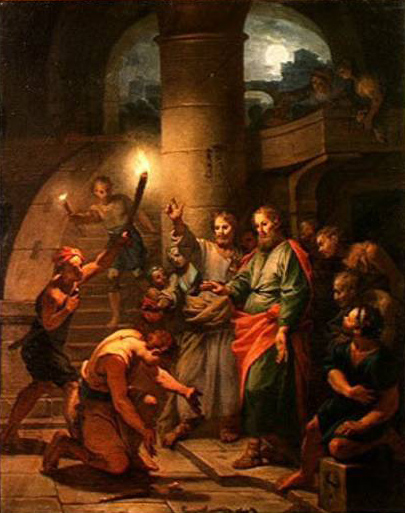
A Brief Directive for Church Leaders from the Acts of the Apostles
Lets look the first reading from the Acts of the Apostles (Acts 14:21-27), and see the true path of priests, teachers and leaders in the Church. Four steps are prescribed for our consideration based on this reading. We note that they went forth announcing, admonishing, appointing and accounting.
I. Announcing
II. Admonishing
III. Appointing
THE WORD THIS WEEK invites you to check out the Catholic AI assistant (located at the bottom right-hand corner), a homily preparation resource you can use to clarify or develop the insights and themes of Msgr. Pope’s homily.
Fr. Jude Siciliano, OP

5th Sunday of Easter C
The Book of Revelation
I don’t have scientific data to support this, but based on my experience, I would say that the most popular book of the New Testament among maximum-security prisoners serving life sentences is the Book of Revelation. Why might that be? Consider the situation of these inmates—and then consider the overall message of Revelation.
When your world is severely restricted and your future promises only more suffering, the Book of Revelation becomes a source of hope. Today’s passage (Revelation 21:1–5a) offers a glimpse of that hope. We are just one chapter from the book’s conclusion. The long-anticipated revelation has come to fulfillment: the enemies of the Lamb have been vanquished. Evil—represented vividly by the dragon, the beast, and the false prophet—has been thrown into the lake of fire.
Then comes a powerful image: the Holy City descending from heaven, described as a bride adorned for her husband. It represents the fulfillment of God’s promise—not just a beautiful city, but a new reality:
“Behold, God’s dwelling is with the human race.”
This is not a fleeting spiritual moment. The promise continues:
“God will dwell with them and they will be his people, and God himself will always be with them as their God.”
For a long-suffering people, this vision announces an end to pain:
“God will wipe every tear from their eyes, and there shall be no more death or mourning, wailing or pain, for the old order has passed away.”
THE WORD THIS WEEK invites you to check out the Catholic AI assistant (located at the bottom right-hand corner), a homily preparation resource you can use to clarify or develop the insights and themes of Fr. Jude’s homily notes.
Society of African Missions

5th Sunday of Easter C
Sunday Homilies
As Christians – followers of Christ through our Baptism – we are called on to make Christ present in our own lives and in the lives of others. As we read the Sacred Scripture during the different seasons of the Liturgical Year may we pray in our hearts:
Come Holy Spirit, fill the hearts of your faithful and enkindle in them the fire of your love.
Bishop John Kobina Louis
5th Sunday of Easter C

Sunday Homilies

Bishop John Kobina Louis, PhD, is an auxiliary bishop of the Archdiocese of Accra, Ghana. He was ordained as an auxiliary bishop on 19th April 2023.
Fr. Michael Chua
5th Sunday of Easter C
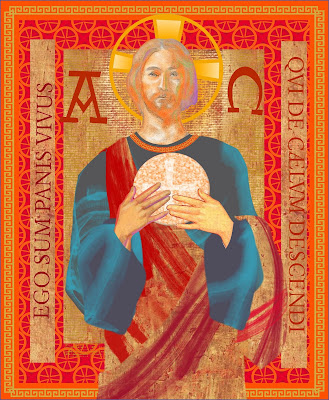
Homily Excerpt

One frequent objection to Christianity is that, it isn’t very original. Now, this is not targeted at the historical ties between Christianity and the Hebrew-Judeo faith, which we Christians make no apology for. Rather, the argument is that the teachings of Christianity comprise of stitched-together parts of other religions. The Golden Rule is a prime and important example. The rule “Do unto others as you would have them do unto you” is found in many religions and philosophies. The Golden Rule is a maxim of the law of reciprocity that essentially holds that people ought to treat others how they themselves want to be treated. Ultimately, self-interest or self-preservation is the yardstick for such a rule.
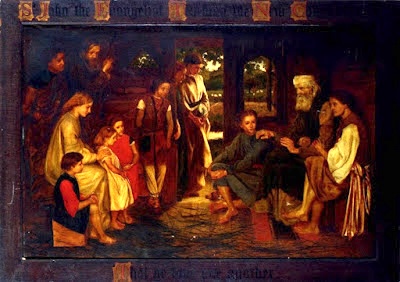
Homily Excerpt
What the world calls love today, is a counterfeit of love. What passes as love today, is another euphemism for sin. But the truth is that sin has nothing to do with love. In fact, sin is the exact opposite of authentic love. True love is in no way soft on sin—but it can turn our “sin lists” upside down. In a world of authentic fraternal love, then, sin and evil still exist—if anything they are even sharper, more pungent. In a world of authentic fraternal love, sin and evil are things to be actively resisted, even if this means you getting cancelled. In a world of authentic fraternal love, your own personal sins are for you to repent of, others’ personal sins are for you to forgive, and the world’s public sins are for you to resist.

Homily Excerpt
we must be like the missionaries St Paul and St Barnabas in the first reading – we must never tire of putting “fresh heart into the disciples, encouraging them to persevere in the faith.” If the road seems long and the work seems dreary, keep your eyes on the finishing line – the new heavens and the new earth, where every tear will be wiped away, death and mourning will be no more. But until that day, let us do everything with love. Love compels us Christians to preach the Good News in and out of season, even when it is unpopular to do so. Seems simple enough but you and I know how challenging it is to live out the demands of love, which call us to not only pay lip service but sacrifice for one whom we profess to love. Faith, hope and love are what motivate us to move forward even when the odds are against us, when the challenges seem impossible and when all seems lost and hopeless.
THE WORD THIS WEEK invites you to check out the Catholic AI assistant (located at the bottom right-hand corner), a homily preparation resource you can use to clarify or develop the insights and themes of Fr. Chua’s homilies.
Fr. Vincent Hawkswell
5th Sunday of Easter C
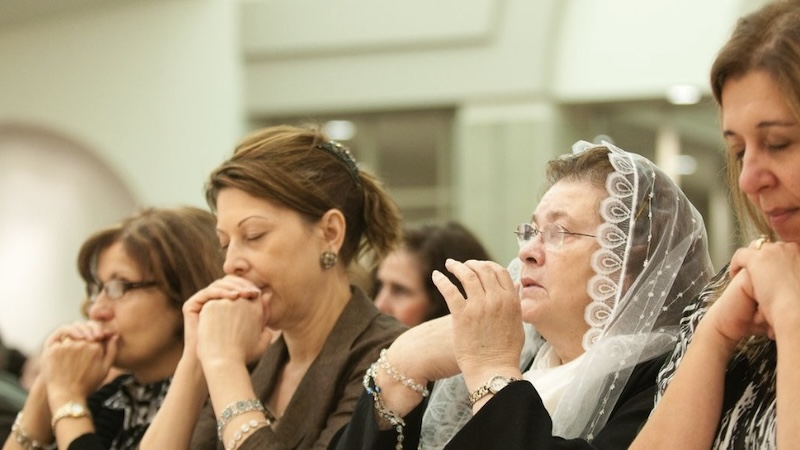
Homily Excerpt

2025 HOMILY – How can we obey Jesus’ command to love everyone with this kind of love?
First, we pray for them — even Hitler and anyone like him.
Second, especially during this holy Jubilee year, we communicate to them the “sure and certain hope” we have as Catholics.
In everyday English, we say, “I hope it won’t rain tomorrow.” We seldom say, “I trust it won’t rain tomorrow” — especially in Vancouver!
However, what the Church means by “hope” is closer to what we mean by “trust.” We can see this from the title to Pope Francis’ Bull of Indiction of the Ordinary Jubilee of the Year 2025: Hope does not disappoint.
THE WORD THIS WEEK invites you to check out the Catholic AI assistant (located at the bottom right-hand corner), a homily preparation resource you can use to clarify or develop the insights and themes of Fr. Hawkswell’s homily.


Fr. Tommy Lane

5th Sunday of Easter C
- Jesus’ new commandment to love as he has loved 2022
- Love one another just as I have loved you 2013
- Related Homilies: Love of God for us 2009
- Loving God with all our hearts and our neighbor as ourselves
- Loving God and neighbor: filled with God’s light and miracles follow 2018
- on loving others Seeing Jesus in others
- Bear with one another charitably, love your children
Fr. John Kavanaugh, S.J.
5th Sunday of Easter C

It is our love that clings to the present, that cherishes all the disappearing goods. Our love, as Augustine says, is part of the love which makes all things to be. The works of time, even our very lives, were from the beginning pronounced not only good, but very good, very lovable. It is only natural that we should love them, even in their frail state. Our very love for the goods of this earth draws us to the good whose self is love. And the God who loved all goods into being abides in that love for all eternity.
Was this the glorious message of Jesus? That the good, and our love of it in all its forms and faces, is the final as well as the first word? That the child’s unfettered laughter rings forever, charming the earth yet enduring beyond it? That the wise and gentle endurance of the old will not dissolve as the body falls away? That the love evoked from us would last, and that the love he came to give us is for this life as well as eternity.
This discussion guide has been generated by the WORD THIS WEEK’S Catholic AI Assistant based on Fr. Kavanaugh’s homily.
Introduction:
This discussion guide is designed to help small groups engage with the themes in the sermon based on “Augustine’s Confessions” and its exploration of the temporal and eternal, life and death, and the enduring nature of love.
Discussion Points:
1. Augustine’s Insight on Eternity
– How does Augustine’s focus on heavenly matters challenge our understanding of the temporal world?
– Do you agree with the suggestion that eternal divine light may diminish the significance of earthly joys? Why or why not?
2. The Account of Augustine and Monica
– What stands out to you about the conversation between Augustine and his mother, Monica, regarding life and death?
– Discuss Monica’s readiness to let go of life and Augustine’s profound grief. How do these perspectives reflect the tension between temporal attachment and eternal hope?
3. Personal Reflection and Attachment to Life
– Reflect on the sermon speaker’s personal experiences of cherishing life’s moments despite the brevity and fragility of life.
– How do personal trials and experiences of loss shape your view of mortality and the promise of eternity?
4. Grief, Love, and Eternal Promises
– How do you reconcile the sweet goodness of life with the grief of its potential loss?
– Consider the depiction of a future with God, as described in Revelation 21:1. How does this vision influence your understanding of hope and renewal?
5. The Role of Love
– Discuss the idea that love keeps us attached to the present and is part of what makes things valuable. How does this relate to Augustine’s view on love?
– In what ways does the love we experience in life draw us closer to the divine love that Augustine writes about?
6. Christ’s Commandment and its Implications
– How does Christ’s command to love one another as he loved us impact your day-to-day interactions and relationships?
– How does this directive intertwine with the notions of time, love, and eternity?
7. Time and Eternity
– Discuss the poem’s assertion that time is perceived differently based on one’s emotional state. How do you personally experience time during moments of waiting, fear, mourning, or joy?
– How does love transform our perception of time and connect us to eternity?
Conclusion:
As you wrap up the discussion, consider how the themes of love, time, and eternity can be applied to your lives. How can these reflections enrich your spiritual journey and understanding of the divine?
Actionable Steps:
– Identify one way you can demonstrate love that cherishes the present while holding onto hope for the eternal.
– Consider memorizing a scripture or a line from this sermon that resonates with you and reflecting on it throughout the week.
– Share your insights with the group in the next meeting to continue building on these themes together.
THE WORD THIS WEEK invites you to check out the Catholic AI assistant (located at the bottom right-hand corner), a homily preparation resource you can use to clarify or develop the insights and themes of Fr. Kavanaugh’s homily.
Bishop Frank Schuster
5th Sunday of Easter C
Homily Excerpt

Think of all the people in our lives that we have reason not to love. This should be easy given the dangerous world in which we live, or given the polarization of our political leadership in our country. However, usually the most painful hurts come from those closest to us. You see, all of us at some point or another have suffered a broken relationship or a breach of trust of someone close. Sometimes these hurts can feel just about as bad as what Judas did to Jesus. The question becomes, how do we love them?
I believe we begin to demonstrate our love through prayer, praying for their conversion, working toward justice rather than vengeance, and always seeking the higher road in how we conduct ourselves. What does this kind of love feel like sometimes? It can feel very difficult inside, it may at first make ourselves feel worse rather than better. True love however is a choice that does the right thing whether it feels good or not. And so we can ask ourselves, who are the people in my life I don’t like? Now we can ask the harder question, how can I love them this week, in my thoughts words and deeds? This will be difficult, but then again, discipleship must look like something.
THE WORD THIS WEEK invites you to check out the Catholic AI assistant (located at the bottom right-hand corner), a homily preparation resource you can use to clarify or develop the insights and themes of Bishop’s Schuster’s homily.

5th Sunday of Easter C

What Does Love Look Like?
On the evening news, we witness injustices and violence. Killings in the streets of our cities. The strange thing is if you were to ask the people involved in the injustice, the violence and the killings what religion they were, most of them would say Christian. Which means a follower of Christ.
A Hindu in India once said, if you Christians were like your Christ and loved the way He told you to, you would convert India in five years. Many Christians just do not imitate Christ, the one we are supposed to follow. They do not imitate Him in the way He treated others, or in the way He loved, even His enemies.
It is not so difficult to imitate Christ. Think about this: if at any time in your life you have once done something that Jesus would have done, you have taken the first step. It is just a matter of repetition. Like many things worth doing, it takes practice. Some of us have to get good at being good.
THE WORD THIS WEEK invites you to check out the Catholic AI assistant (located at the bottom right-hand corner), a homily preparation resource you can use to clarify or develop the insights and themes of Fr. Warren’s homily.
Fr. Jagodensky, SDS
5th Sunday of Easter C
Homily Excerpt

Presumably, you are here today to hear something inspiring from me. You hope they are words to take home with you. You pray it doesn’t linger on forever.
If it’s clarity you want from your local cable channel, then good luck with that. If it’s about an enduring relationship, listen up. Just compare the two of them.
“It’s allegedly been reported that a possible major car accident happened today but it could be slight. Stay tuned for complete information.”
I love you. (It’s only three words.)
“Those familiar with the situation have stated, although off the record because they have no authority to speak on the record, have firmly stated that they think…”
I love you. (It’s just eight letters with a period at the end.)
Please note that the provided video clips serve as additional resources to complement the homily. They may not have a direct correlation with the contributor’s original content. They aim to inspire preachers to enrich their own homilies, drawing ideas and insights from both the written material and the visual content explored.
“Think of all the people in our lives that we have reason not to love. This should be easy given the dangerous world in which we live, or given the polarization of our political leadership in our country.” Then think about all the reasons Jesus had to NOT love Judas, who had just left to earn 30 pieces of silver. But that’s his commandment… A commandment we are called to observe.