May 25, 2025


Homilies
Homilies
- Bishop Barron
- MORE
- 1-MINUTE HOMILY
- 2-Minute Homily
- MSGR. Peter Hahn
- Fr. Jude Langeh
- FR. RUTTIG
- FR. MCCARTHY, OSA
BISHOP
BARRON
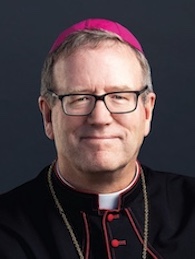
6th Sunday of Easter C

For Easter Season (2022), Bishop Barron preached each Sunday on the Second Reading from the Book of Revelation.

6th Sunday of Easter C


ONE MINUTE
HOMILY

6th Sunday of Easter C


TWO MINUTE
HOMILY

6th Sunday of Easter C


MSGR. PETER
HAHN
6th Sunday of Easter C


FR. JUDE
LANGEH, CMF


FR. KEVIN
RUTTIG

6th Sunday of Easter C


FR. TOM
McCARTHY, OSA

6th Sunday of Easter C


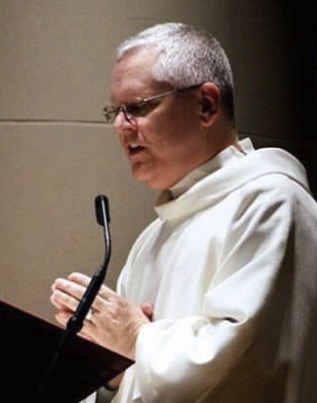
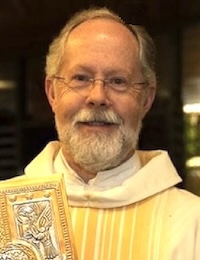
Deacon Peter McCulloch
6th Sunday of Easter C

Mother Earth, Brother Son
This discussion guide has been generated by the WORD THIS WEEK'S Catholic AI Assistant based on Deacon Peter's homily.
In this homily, Deacon Peter delves into environmental stewardship, the interconnectedness of creation, and the peace offered by Jesus. Reflect on Pope Francis' encyclical "Laudato Si," the teachings of St. Francis of Assisi, and the Gospel message from Jesus.
Discussion Questions:
1. The Reality of Plastic Pollution:
- How did the imagery of the Great Pacific Garbage Patch impact you?
- What are some ways you contribute to or can mitigate plastic pollution in your daily life?
2. Understanding Laudato Si:
- What key questions posed by Pope Francis resonate with you?
- How do these questions challenge you to think differently about your role in environmental stewardship?
3. Interconnectedness of Creation:
- How do you interpret the message that 'everything in our world is connected'?
- How does the connection between the fragility of our planet and the plight of the poor inform your perspective on social justice and environmental issues?
4. Jesus’ Peace:
- How do you understand the difference between worldly peace and the peace that Jesus offers?
- How can you cultivate or share this deeper peace in your community and with those around you?
5. Lessons from St. Francis of Assisi:
- What insights do you gain from the life and teachings of St. Francis concerning creation?
- How can St. Francis’ view of all creation belonging to one family influence your actions towards environmental care?
6. Personal Call to Action:
- The sermon ends with a question about what you can do to make the world a better place. What are some practical actions you feel called to take in response to this sermon?
- How can collective efforts in your small group or community bring about positive environmental and social change?
Reflection Activity:
- Personal Connection:
Reflect on a personal experience where you felt a deep connection with nature. How did this experience shape your understanding of being part of a larger ecological family?
- Action Plan:
Develop a small personal or group plan to address an environmental issue highlighted in the sermon. Identify steps you can take to contribute positively to your community and its surroundings.
Closing Prayer:
Conclude your session with a prayer focusing on gratitude for God’s creation, seeking guidance for responsible stewardship, and asking for the peace of Christ to dwell in our hearts and communities.
Homily Excerpt

I love fish and chips! Or at least, I used to. I’m not quite so sure anymore, after learning about the Great Pacific Garbage Patch. It’s an island of plastic rubbish the size of Texas, floating in the north Pacific.
We all know that plastic is everywhere: in our homes, cars, clothes, in packaging, toys and water bottles. There are even microbeads of plastic in some toothpastes and skin cleansers. Some of it goes down our drains, but much of it ends up in our waterways and oceans.
Sadly, plastic doesn’t go away. It just breaks down into ever smaller particles and enters the food chain. Fish eat the microplastic, and we eat the fish. Ugh!
This week the Church is celebrating Pope Francis’ encyclical Laudato Si, which he released in 2015. He addresses it to ‘every person living on the planet’ and asks the question, ‘What kind of world do we want to leave to our children?’

The Peace Crane

This discussion guide has been generated by the WORD THIS WEEK'S Catholic AI Assistant based on Deacon Peter's homily.
Introduction
- Begin by reflecting on the different symbols of peace mentioned in the sermon. Discuss what each symbol represents and why they might be meaningful.
- Introduce the story of Sadako Sasaki and how her life has become a symbol of peace.
Sadako Sasaki's Story
- Discuss the historical context of Sadako's life, including the impact of the atomic bomb on Hiroshima.
- Reflect on the significance of Sadako's origami cranes. What do they symbolize, and how do they connect to her wish for peace?
- Talk about the creation of the Children's Peace Monument and its importance in preserving the memory of Sadako and promoting peace.
Understanding Peace
- Compare and contrast worldly peace with true peace as described in the sermon. How do these differ in terms of permanence and source?
- Reflect on the interpretation of peace given by Jesus in the Gospel of John. What does it mean for peace to be a gift from God?
Achieving True Peace
- Explore how a close, loving relationship with God can lead to true peace. Discuss what it means to have God's peace in one's life.
- Examine Peter Kreeft's stages of how God becomes intimate with us. How does this relate to experiencing true peace?
Symbolism and Practical Application
- Discuss the symbolic power of Sadako’s peace cranes and their role in reminding us of peace.
- Consider practical steps to invite God into one's heart and life to experience His peace fully.
Reflection and Application
- Encourage group members to share personal experiences of peace in their lives.
- Discuss how participants can apply the lessons from the sermon in their daily lives to cultivate a deeper sense of peace.
Closing
- Encourage a group prayer or meditation focused on seeking true peace and fostering a loving relationship with God.
Homily Excerpt

The world has many symbols for peace. They include the olive branch and white dove, the white poppy, the broken rifle, the classic V sign – and the origami Peace Crane.
The story of the peace crane begins with a little girl, Sadako Sasaki, who was born in Hiroshima, Japan, in 1943. [i]
She was only two years old in 1945 when an atomic bomb fell on Hiroshima. It destroyed their home and killed her grandmother and most of her neighbours. But Sadako seemed unhurt and she grew into a happy girl.
Ten years later, when she was 12, she collapsed at school. Sadako was taken to hospital and diagnosed with leukemia.
A friend visited her there, bringing some colourful origami paper. She told Sadako the legendary story of the Japanese crane which lives for a long time. If you fold 1,000 origami paper cranes, she said, your wish will come true.
Sadako really wanted to go home, so she began folding 1,000 paper cranes. As she made each one, she prayed she would get better and said, ‘I will write peace on your wings, and you will fly all over the world.’ Her younger brother hung these birds from the ceiling of her room.

THE WORD THIS WEEK invites you to check out the Catholic AI assistant (located at the bottom right-hand corner), a homily preparation resource you can use to clarify or develop the insights and themes of Deacon Peter’s homilies.
Fr. Austin Fleming
6th Sunday of Easter C

2016 HOMILY – Keeping another’s word requires: attentiveness, care, vigilance, loyalty, and a strength that is gentle and a gentleness that is robust. To keep someone’s word in my heart is to be attuned, even to be obedient to its presence there. To keep another’s word is to listen and respond to it faithfully; to be faithful to the one who gave my heart a word to keep. When I keep a word entrusted to my heart, there is joy for me and for the one who trusts me… When I fail in keeping another’s word I weaken the spirit of the sharing and damage the bond we had created…
This discussion guide has been generated by the WORD THIS WEEK’S Catholic AI Assistant based on Father Austin’s homily. NEED HELP? Copy and paste a question into the chat bot in the lower right corner of the screen and have our Catholic Assistant help you.
Introduction
– Begin with a brief reflection: What does it mean to “keep someone’s word”? How does this relate to your personal experiences?
Key Themes and Questions
1. Understanding Jesus’ Request
– What does it mean for Jesus to ask for hearts that will keep His word?
– Compare the notion of keeping Jesus’ word with keeping promises made by friends, family, or colleagues.
2. The Act of Keeping a Word
– What qualities are necessary to keep someone’s word? (e.g., attentiveness, care, vigilance, loyalty)
– How does keeping a word create bonds of love and intimacy?
3. The Challenges and Joys
– Discuss the difficulties in keeping another’s word and relate these to your own life experiences.
– Explore the joy and trust that comes from successfully keeping a word.
4. The Consequences of Failing to Keep a Word
– What happens when a word is not kept? Consider the impact on relationships and trust.
5. The Unpredictability of Keeping a Word
– Why is it significant that we do not know how keeping a word will change us?
– Discuss examples of when keeping a word has led to unexpected outcomes in your life.
6. The Call to Love
– What does keeping the word of love involve, especially in prioritizing others’ needs above our own?
– How can this be both demanding and rewarding?
7. The Peace of God’s Presence
– How does keeping Jesus’ word lead to His presence dwelling within us?
– Reflect on the difference between worldly peace and the peace Jesus promises.
8. Practical Application
– How can you ensure that your heart is a dwelling place for Jesus’ word?
– Discuss ways in which you can consciously keep Jesus’ word in your everyday life.
Personal Reflection
– Ask yourself: What word have you entrusted to Jesus, and what word of His have you been asked to keep?
– Reflect on areas in your life where you seek peace and how Jesus’ word can bring you closer to that peace.
Closing Prayer Opportunity
– Conclude with a prayer inviting Jesus’ word to find a dwelling place in participants’ hearts and bring His peace into their lives.
THE WORD THIS WEEK invites you to check out the Catholic AI assistant (located at the bottom right-hand corner), a homily preparation resource you can use to clarify or further develop the insights and themes of Fr. Fleming’s homily.
Dominican Blackfriars

Dominican Friars
of England & Wales,
Scotland
6th Sunday of Easter C

Image: from a photograph of a window at Holy Trinity Catholic Church, Trinity, Indiana.
This discussion guide has been generated by the WORD THIS WEEK'S Catholic AI Assistant based on the Dominican Blackfriars' homily for this week.
Opening Reflection
Begin your session by reflecting on the following question: What has been your understanding or experience of the Holy Spirit in your life so far?
Understanding the Context
Discuss the significance of the Farewell Discourse in St John’s Gospel. Consider how this moment sets the stage for understanding the role of the Holy Spirit.
- Why is it important to know the wider context of this passage from the Gospels?
- How does Christ's act of washing the disciples' feet relate to the message of the Holy Spirit?
The Role of the Advocate
Christ introduces the Holy Spirit as another Advocate. Explore this idea further:
- How does Christ serve as the first Advocate during His earthly life?
- What does it mean for the Holy Spirit to be another Advocate?
- In what ways does the Holy Spirit continue Christ’s work on Earth?
Presence Through the Spirit
Examine how the Holy Spirit makes Christ present to us, especially within the sacraments.
- How is Christ made present in the Eucharist through the Holy Spirit?
- Beyond the sacraments, how might the Holy Spirit make Christ present in our everyday lives?
- Can you share any experiences where you felt the Spirit guiding or comforting you?
Active Presence in Daily Life
Consider how the Holy Spirit guides us in living out Christian principles.
- Discuss moments where the Spirit helped you choose love over selfishness or courage over despair.
- How can we become more aware of the Spirit’s presence and activity in our daily choices?
Christ's Words and Love
Reflect on how keeping Christ’s words is connected to loving Him and being loved by the Father.
- What does it mean to keep Christ’s words in our lives?
- How is this enabled by the Spirit dwelling within us?
Recognizing the Spirit
Discuss how recognition of our faith is intertwined with the activity of the Spirit.
- Share a moment when you realized the value of your Christian faith. How did this affect your life?
- In what ways do you feel drawn into the love that God has for us through Christ?
Closing Reflection
Encourage group members to reflect on how they might invite more awareness of the Spirit into their lives in the coming week. Consider setting a personal intention or prayer to seek the Spirit’s guidance in specific situations.
Prayer
Conclude the session with a prayer inviting the Holy Spirit to continue teaching, guiding, and loving each member of the group in their journey of faith.
Homily Excerpt

Sixth Sunday of Easter. Fr Martin Ganeri preaches on the manifold workings of the Spirit.
We might think that the Spirit is only active within us, only if we experience a profound moment of conversion. But the reality is that the Spirit is active within us whenever we come to see the truth of what Scripture tells us or whenever we make the choice to live well rather than badly, to be loving rather than selfish, to have courage rather than to give in to despair.
Christ tells the disciples, ‘If anyone loves me he will keep my word, and my Father will love him, and we shall come to him and make our home with him.’ Christ is the Word of God and so to love him and to keep his words, which are the self-expression of what he is himself, are intimately bound up with each other. To keep the words of Christ is to treasure everything that Christ is. And it is the Spirit of Christ who enables us to do this and it is the Spirit present and dwelling in us who makes the Father and the Son present in us, loving us as we love them. The Spirit is the love of God, present within us.

This discussion guide has been generated by the WORD THIS WEEK'S Catholic AI Assistant based on the Dominican Blackfriars' homily for this week. NEED HELP? Copy and paste a question into the chat bot in the lower right corner of the screen and have our Catholic Assistant help you.
Introduction
- Revisit the opening quote from Pope Leo XIV: "Peace be with you all."
- Reflect on the significance of this greeting in the context of a diverse, global Church.
Understanding Peace in a Troubled World
1. Discussion Point:
- How does Jesus's promise of peace contrast with the current state of the world?
- Share your thoughts on specific examples of conflict mentioned, such as in Ukraine, Sudan, Nigeria, and historically significant regions.
2. Reflection:
- In what ways do our cities and communities embody both peace and conflict?
- Discuss how the Church, as an institution, wrestles with internal and external tensions.
The Council of Jerusalem and Early Church Challenges
1. Discussion Point:
- Analyze how the early Church navigated the issue of circumcision for non-Jewish converts.
- What lessons can we learn from the way early Church leaders dealt with differences and disagreements?
2. Reflection:
- How does this historical debate compare to modern issues facing the Church?
- Consider the role of the Holy Spirit in guiding decisions and fostering unity.
The Vision of the Heavenly City
1. Discussion Point:
- What does the imagery of the heavenly Jerusalem in the Book of Revelation evoke about peace and divine presence?
- How does this vision serve as a contrast to earthly struggles?
2. Reflection:
- Discuss the importance of unity and diversity within the Church, drawing parallels from the image of the city with twelve gates.
The Role of the Paraclete
1. Discussion Point:
- Explore how Jesus describes the coming of the Paraclete, the Holy Spirit, and its role in teaching and uniting his followers.
- Why is the concept of peace offered by Jesus, and facilitated by the Paraclete, different from worldly peace?
2. Reflection:
- Discuss the metaphor comparing the Paraclete to parakeets in London. What does it convey about unity versus division?
- Share personal experiences of feeling guided or united by the Holy Spirit.
Living as People of Peace
1. Discussion Point:
- Discuss practical ways to embody peace in everyday actions and decisions.
- Consider challenges in balancing preventing harm and living peacefully.
2. Reflection:
- How can we remain committed to peace even in the face of personal or societal violence?
- Share how the parable of the Prodigal Son reinforces God’s mercy and forgiveness in our pursuit of peace.
Conclusion
- Recap the importance of striving for peace as individuals and as members of the global Church.
- Encourage group members to reflect on how they can act as advocates of peace in their communities this coming week.
Homily Excerpt
Sixth Sunday of Easter. Fr Peter Harries reflects on the role of the Paraclete in bringing peace to the Church and to the world.
‘Peace be with you all’: Pope Leo XIV’s first words to the assembled faithful in Saint Peter’s Square, to enthusiastic crowds waving a myriad of flags. People of many languages, many nations but (almost entirely) of one faith, one heart, one love of our Saviour Jesus and affirming our new Vicar of Christ, the successor of Saint Peter.
In today’s gospel reading, set during the last supper, Jesus’s last meal before his death, he tells his disciples: ‘Peace I leave with you. My peace I give to you’. Two thousand years later the world, sadly, is not at peace. Ukraine, Sudan, Nigeria, and the very lands where Jesus walked and taught, are all riven by war and conflict. Our cities harbour great edifices of mercy and truth, like hospitals and schools. But our cities and our homes are also places where exploitation and violence flourish. The Church itself has tensions. Bitter words criticising our new Pope and his faithful preaching of the Gospel have already been texted and tweeted. So what about peace?
THE WORD THIS WEEK invites you to check out the Catholic AI assistant (located at the bottom right-hand corner), a homily preparation resource you can use to clarify or further develop the insights and themes of the homilies above.
Fr. Jude Siciliano, OP

Fr. Jude Siciliano, OP
USA Southern Province
MINI-REFLECTION
Mini-reflections on the Sunday scripture readings designed for persons on the run. “Faith Book” is also brief enough to be posted in the Sunday parish bulletins people take home.
6th Sunday of Easter C
The Holy City Jerusalem
From today’s Book of Revelation reading:
The angel took me in spirit to a great, high mountain and showed me the holy city Jerusalem coming down out of heaven from God.
Reflection:
Revelation keeps our feet firmly rooted in our present struggles to live the Christian life; but it also focuses our eyes on what is to come. The world’s indomitable powers, despite present appearances, will be overcome. In the meanwhile, John is inviting us to turn away from the false values and powers of the world and focus on the vision of the new Holy City where we will dwell with God and one another.
So, we ask ourselves:
- How does our hope in a permanent future with God affect our lives now?
- What signs do I see that strengthen my hope in the power of good over evil?
Fr. Charles E. Irvin
6th Sunday of Easter C


What I am suggesting to you is that Jesus’ promised gift of the Holy Spirit is a promised gift to you and me, no matter how much we must pay attention to the affairs of this world, engaged as we all are in making a living and providing for those whom we love. God did not leave His disciples orphans. God has not left us as orphans either. God’s promise gave those members of the early Church the peace and security of the Advocate, the Counselor, the Holy Spirit. God continues to give us that same presence with His peace and security in the midst of all of our modern day trials and fearsome events.
Allow me now to say it again: we cannot remain passive and simply sit back and wait for God to act. No. We must develop eyes to see and ears to hear the promptings and whisperings of God’s Holy Spirit and discern His movements upon us and within us. A promised gift remains just a promise until we receive what is given. When we actively receive it then it becomes a gift, a gift not only for our own benefit but likewise for those around us.
In a few moments we will receive Christ in His Body and Blood. With Him we also receive His Holy Spirit. May He inspire you all the days of your life.
This discussion guide has been generated by the WORD THIS WEEK’S Catholic AI Assistant based on Fr. Irvin’s homily.
Introduction
This discussion guide will help groups engage with the sermon’s themes, focusing on the enduring presence of God through Jesus Christ and the Holy Spirit, and how this impacts the lives of believers today.
1. Understanding God’s Presence
– Reflect on the statement: “God did not come to us in Jesus Christ and then go away leaving us orphans.”
– How does this assurance of God’s never-ending presence affect your faith and daily life?
2. The Relationship Within the Trinity
– Discuss the intimate relationship between Jesus, God the Father, and the Holy Spirit.
– In what ways does the idea that “whenever God acts He acts triunely” influence your understanding of the Godhead?
3. The Role of the Holy Spirit
– What does it mean for believers to be temples of the Holy Spirit?
– Consider the dual role of the Holy Spirit to inspire and teach. How do you see these roles manifest in your spiritual journey?
4. Insights from John 14:15-21
– Review Jesus’ promise of the Advocate, the Holy Spirit. How do these promises provide comfort and guidance in the face of life’s challenges?
– Jesus speaks of not leaving His disciples as orphans. How does this shape the community of believers today?
5. The Gift of Peace
– Examine the concept of “peace” as expressed in the sermon. How does it go beyond the absence of conflict?
– In what ways can the Holy Spirit bring about a state of ‘shalom’ or total well-being in your life and within your community?
6. Living with an Eternal Perspective
– Discuss the “end of time” dimensions mentioned in the sermon. How can focusing on eternal truths influence present actions and attitudes?
– How does the promise of an eternal home shape your understanding of life’s purpose and challenges?
7. Active Engagement and Discerning God’s Will
– Reflect on the idea that passivity does not honor God. How can we be intentionally open to the Holy Spirit’s guidance?
– What practices can help cultivate attentiveness to God’s movements in our lives?
8. The Example of St. Joseph
– St. Joseph is highlighted as an example of attentiveness to the Holy Spirit. What can we learn from his life and decisions?
– Share experiences where you felt guided by the Holy Spirit in decision-making.
9. Application to Modern Life
– How can the assurance of God’s continual presence provide peace in today’s complex world?
– In what ways can the Holy Spirit inspire action amidst trials and uncertainties?
THE WORD THIS WEEK invites you to check out the Catholic AI assistant (located at the bottom right-hand corner), a homily preparation resource you can use to clarify or further develop the insights and themes of Fr. Irvin’s homily.
Fr. George Smiga
- Violence and Peace - 2004
- Trusting the Spirit of Love - 2007
- Not Available- 2010
- A Divine Partnership- 2013
- Making Peace - 2016
- God's in Love with This World - 2019
- Not Available - 2022
6th Sunday of Easter C

2004 HOMILY – There are many voices in our society that would present violence to us as a solution, and an easy one at that. Look at the films that entertain us. Routinely a violent enemy is eliminated by a hero using an even greater amount of violence. When is the last time that the plot of a major American film was resolved by negotiation? In business it seems to be more and more acceptable to use coercion and manipulation to make a profit. As long as we can produce a successful outcome, the means are not that important.
Yet violence is not a solution, certainly not an easy one. Rather, it is a dangerous option that is just as likely to undermine us as to save us. Violence begets violence, even if its aim is to achieve peace.
That is why Jesus’ words in today’s gospel should ring in our ears with authority. For Jesus says that he has a peace to give us that is very different than the peace that the world would seek to establish. Those words remind us that our attitudes should be distinct, different from the cultural values of our society. We should direct our lives from the gospels, rather than from the opinion polls that regularly guide our country’s course.
To follow Jesus is to be a people who carry a deep suspicion of violence and who refuse to use violence in our personal lives. We should reject strategies of manipulation and coercion in our workplace and in our families. We should struggle against the cynicism that advises that the only language people understand is force. We should not suppose that simply because we have power, we have the right to use it in any way we choose.
This discussion guide has been generated by the WORD THIS WEEK’S Catholic AI Assistant based on Fr. Smiga’s homily.

Introduction
Reflect on the Abu Ghraib prison scandal that have led to sadness and moral reflection, particularly regarding the violence and abuse in Iraq.
Section 1: Reflection on Violence and War
– Discuss the impact of violence as depicted in recent events.
– Consider the statement: “Violence begets violence.”
– How does this understanding challenge or affirm your current views on war and conflict?
Section 2: The Role of Moral Authority
– Reflect on how the shocking photos have affected moral authority.
– Discuss ways in which personal and national actions align or conflict with moral values.
– How can moral authority be restored or reinforced in times of conflict?
Section 3: Historical and Christian Perspectives on Violence
– Explore the Christian tradition’s suspicion towards violence, considering early church views and changes over time.
– Discuss the criteria under which violence can be justified according to the Christian perspective.
– Reflect on historical instances where violence was deemed necessary and analyze the outcomes.
Section 4: Cultural Influences and Violence
– Examine how media and popular culture present violence and solve conflicts, e.g., in films and business.
– Discuss the impact of these representations on personal and societal values.
– Share personal experiences where non-violent solutions were more effective than coercive or violent ones.
Section 5: Jesus’ Teachings on Peace
– Reflect on Jesus’ promise of peace and how it differs from worldly peace.
– Discuss what it means for personal attitudes and actions to be distinct from cultural norms.
– How can Jesus’ teachings guide us in rejecting violence in personal and professional settings?
Section 6: Personal Application and Reflection
– Challenge each other to identify areas in personal life where manipulation or coercion is present.
– Discuss practical steps to embrace wisdom, patience, and love as alternatives to violence.
– How can individuals and communities work towards creating a peace that Jesus promises?
Closing Reflection
– Reflect on the week’s events and their impact on understanding and embracing non-violence.
– Commit to paths that lead to peace and transformation in personal and communal life.
– Pray or meditate on becoming instruments of peace in a world where violence begets violence.
THE WORD THIS WEEK invites you to check out the Catholic AI assistant (located at the bottom right-hand corner), a homily preparation resource you can use to further clarify or further develop the insights and themes of Fr. Smiga’s homilies.
Pro-Life Homily Resources
6th Sunday of Easter C

The Fruit of the Resurrection
The readings today instruct us that as a fruit of the Resurrection, we enjoy the presence of Christ forever, through his Holy Spirit. That Spirit both enlightens us interiorly and as a society, bringing about peace and right relationships.
The truth that the Spirit brings, first of all, is one with the word of Jesus and the Father, as the Gospel passage explains. No “new gospel” can come along under the purported inspiration of the Spirit. No such inspiration will contradict the settled teachings of the Church. Jesus says the Spirit will “remind” us of what he said. Such reminders are necessary as we journey through history, and through periods, as in our day, when certain trends obscure fundamental truths, such as that of the sanctity of life. When influences in society like the decisions of government or the messages of mass media line up against the sanctity of life, the Spirit “reminds” the faithful and the Church of the truth about life and how it is to be respected.
THE WORD THIS WEEK invites you to check out the Catholic AI assistant (located at the bottom right-hand corner), a homily preparation resource you can use to clarify or develop the insights and themes of Frank Pavone’s homily notes for preachers.
Msgr. Joseph Pellegrino
6th Sunday of Easter C

Protecting Our Culture

There are also many challenges to our culture. As humanity progresses, we have to siphon that which is a true advancement from that which is an attack on the presence of God among us. This is often quite difficult because a desirable immediate solution often overlooks the creation of long term problems. For example, as we learned about forty years ago, the concept of a surrogate mother resulted in an immediate solution, a child for a childless couple, but led to a long term problem, a surrogate mother who demanded the return of the baby. Challenges such as these are continually occurring in the medical field, from fetal stem cell research, to cloning, IVF, etc. These present questions to our culture as to what is or is not acceptable for a Christian lifestyle.
We have to abstain from pagan practices and from immorality. That’s what the letter from Jerusalem directed. This is easier said than done. We really need help to discern where pagan immorality exists. We need help to fight off the attacks on our culture. We need even more help to recognize and determine the Christian response to the challenges to our culture.
This discussion guide has been generated by the WORD THIS WEEK’S Catholic AI Assistant based on Msgr. Pellegrino’s homily.

CATHOLIC NEWS SERVICE (2:40) – PART ONE Then-Father Robert Prevost (now Pope Leo XIV) reads from his address to the world Synod of Bishops on the New Evangelization in 2012. Father Prevost discusses the need for the church to adequately respond to the challenges posed by modern mass media. (November 8, 2012)
1. Historical Context
– What was the first major internal difficulty faced by the early Church according to the sermon?
– Why was there a debate about the admittance of gentiles into the Christian faith?
2. The Decision of the Early Church
– How did the early Church resolve the debate regarding gentile converts?
– What directives were given to the gentiles regarding their new way of life?
3. Christianity as a Lifestyle
– How does the sermon describe Christianity’s lifestyle in contrast to paganism?
– Discuss the challenges people might face when adopting a Christian lifestyle today.
4. Culture and Worship
– How does the sermon define culture and its relationship with worship?
– Reflect on how culture influences personal faith and the practice of Christianity.
5. St. John Paul II’s Influence
– What role did St. John Paul II play in coupling culture with human dignity?
– How did his actions inspire change in the Communist world, particularly in Poland?

CATHOLIC NEWS SERVICE (2:30) – PART TWO Then-Father Robert Prevost (now Pope Leo XIV) reads from his address (November 8, 2012).
6. Contemporary Attacks on Christian Culture
– Identify and discuss some current attempts to “cancel” Christian culture mentioned in the sermon.
– How can individuals and communities work to preserve and promote their Christian culture?
7. Influence of Media
– How does the sermon view the influence of movies and television on cultural perceptions of religion?
– Discuss how Christian families can counteract the often secular narratives presented by media.
8. Navigating Modern Challenges
– Identify some modern challenges to Christian culture, especially in medical and technological fields.
– Discuss how one might discern between true advancements and potential threats to Christian values.
9. Role of the Holy Spirit
– According to the sermon, why is divine help essential in defending and promoting Christian culture?
– How can believers seek guidance from the Holy Spirit in their daily lives?
Practical Application
Reflect on how this sermon impacts your personal faith journey. Consider the following actions:
– Identify specific challenges to your Christian lifestyle and develop strategies to address them.
– Engage in activities that promote and nourish your Christian culture.
– Pray for the guidance of the Holy Spirit in making decisions that align with your faith.
Closing Reflection
End the session by sharing insights gained from the discussion and committing to supporting one another in living a Christ-centered life. Encourage everyone to rely on the Holy Spirit for guidance and to remain steadfast in their faith amidst modern cultural challenges.
THE WORD THIS WEEK invites you to check out the Catholic AI assistant (located at the bottom right-hand corner), a homily preparation resource you can use to clarify or develop the insights and themes of Msgr. Pelligrino’s homily.
Msgr. Charles Pope
6th Sunday of Easter C

Four Gifts of Grace
The Gospel for Sunday has a number of “sayings” of the Lord Jesus, which together amount to a kind of litany of love. It is a setting forth of the gifts that He, by His grace, is accomplishing and will accomplish in us. Let’s consider the wonderful gifts of grace.
I. Power
II. Presence
III. Perfection
IV. Peace
THE WORD THIS WEEK invites you to check out the Catholic AI assistant (located at the bottom right-hand corner), a homily preparation resource you can use to clarify or develop the insights and themes of Msgr. Pope’s homily.
Society of African Missions

6th Sunday of Easter C
Sunday Homilies
As Christians – followers of Christ through our Baptism – we are called on to make Christ present in our own lives and in the lives of others. As we read the Sacred Scripture during the different seasons of the Liturgical Year may we pray in our hearts:
Come Holy Spirit, fill the hearts of your faithful and enkindle in them the fire of your love.
Bishop John Kobina Louis
6th Sunday of Easter C

Sunday Homilies

Bishop John Kobina Louis, PhD, is an auxiliary bishop of the Archdiocese of Accra, Ghana. He was ordained as an auxiliary bishop on 19th April 2023.
Fr. Michael Chua
6th Sunday of Easter C

Homily Excerpt
Throughout the centuries, the Church has also experienced many crises that threatened to shake its very foundation and unity. In the early centuries, many Church leaders were divided as to the issue of Christ’s divinity. In later centuries, there were also disagreement about many church teachings and practices. In modern times, the most contentious issues revolve around sexual mores. Throughout its histories, the Church had to contend with schisms (splits) and heresies (erroneous teachings) but remain steadfast on its course, the course set by her Lord and Master. And yet in spite of these many centuries of crises and trials, the Church has continued to survive and grow, only because of the guidance of the Holy Spirit. The Holy Spirit’s guidance ensures that in spite of all our personal opinions and ways of thinking, and despite the wickedness and failings of her shepherds, we can be sure of a certain authoritative position that reflects the will of God. In other words, the Holy Spirit is the guarantee of unity within the Church. Without the Holy Spirit, the Church and unity would not be possible.

Homily Excerpt
Today, we acknowledge that it is easy to walk away from a discussion and take matters into our own hands, when our opinions and ideas are not accepted. We may even justify our actions by calling it fidelity to Christ and the Spirit. But the truth is that, it is pride which often makes us take our own path, no matter how well-thought out we may imagine this path to be. At the end of the day, it is not about the agenda of the leadership or that of the larger community or ours. It is about the agenda of the Lord. Our Lord has made several promises to us. He is not a liar. He is not a propagandist, He does not have any political agenda to push. The only agenda He has is the salvation of souls, our souls. He is only concerned with the Truth and the Truth is that obedience, to the Father’s will and to His commandments, is the only sure path to salvation. The bottom line is this, if you profess to love the Lord, keep His commandments.

Homily Excerpt
Our Lord makes it clear in today’s gospel that if we truly love Him then we will show it by obeying His commands. To obey God is to love Him. Obedience is His love language and that is how He receives love. We may think of “obey” as a cold, dutiful verb, preferring “love” which feels more liberating and authentic. Recently, there had been many celebrities who proudly and publicly declared that they were finally free to love themselves and to break free of social norms. We can even hear the resounding finale of the musical “Wicked,” above their protests: “And nobody … is ever gonna bring me down!” One commentator exposes the hypocrisy of the statement: “this is not love, it’s called selfishness.” The world seems to believe that if we wish to be happy and to authentically love oneself, it means choosing not to love others or be accountable to them.
In contrast to this mantra of unfettered autonomy and disobedience, our Lord tells us, “If anyone loves me he will keep my word.” In fact, in an earlier verse He declares, “If you love me, keep my commands” (John 14:15). This simply sets the record straight – there is no contradiction between love and obedience. To love God is to obey Him. To obey Him is to love Him. To honour Him, serve Him, and please Him is the deepest cry of our hearts. That is what it means to be authentically “me.”
THE WORD THIS WEEK invites you to check out the Catholic AI assistant (located at the bottom right-hand corner), a homily preparation resource you can use to clarify or develop the insights and themes of Fr. Chua’s homilies.
Fr. Vincent Hawkswell
6th Sunday of Easter C

Homily Excerpt

2025 HOMILY – The Church is God’s “building,” says the Catechism of the Catholic Church, for Christ compared himself to its cornerstone. It is often compared to “the holy city Jerusalem,” whose “twelve foundations” are the “twelve apostles.”
As we hear this Sunday, Christ promised to send his apostles the Holy Spirit, not only to “remind” them of his teaching, but also to teach them “everything” and to stay with them “forever.”
It is with this understanding that the apostles said in their letter to the Gentiles, “It has seemed good to the Holy Spirit and to us.”
THE WORD THIS WEEK invites you to check out the Catholic AI assistant (located at the bottom right-hand corner), a homily preparation resource you can use to clarify or develop the insights and themes of Fr. Hawkswell’s homily.


Fr. Tommy Lane
6th Sunday of Easter C
- Loving Jesus and keeping his word 2022
- Jesus in your House: give up the motorcycle! 2016
- Related Homilies: Remaining in Jesus’ Word 2019
- Remain in My Love 2018
Fr. John Kavanaugh, S.J.
6th Sunday of Easter C

Among the churches, has it ever been heard that a certain practice can never be changed, since it is the will of God? And yet, has the practice been much more significant than the act of circumcision? Clearly circumcision was an important issue. But some of the antagonists seem to have given it the status of unchangeable law.
When I was a novice, a supremely confident novice in the year ahead of me made the pronouncement that two things would never occur. These impossibilities were: a Roman Catholic liturgy in English and a Roman Catholic president. So much for prophecy.
How do we escape fooling ourselves? How do we avoid servitude to merely human laws while we neglect the law of God? How do we guard against the tendency to worship our temporal and cultural fabrications?
Jesus, in the fourth Gospel, promises the Holy Spirit to instruct us in everything and remind us of all he revealed. Is this what led the Jerusalem community to forswear putting heavy burdens on its new believers?
This discussion guide has been generated by the WORD THIS WEEK’S Catholic AI Assistant based on Fr. Kavanaugh’s homily.
Introduction
– Briefly introduce the historical context of the sermon: conflict in Antioch regarding salvation requirements, Paul and Barnabus’s appeal to Jerusalem, and the resolution aimed at easing the burden on new Gentile converts.
Key Points of Discussion
1. Early Church Decisions and Context
– Stringent Requirements: Discuss the requirements for salvation that were being insisted upon in Antioch. What were the additional rules, and why might they have been considered burdensome?
– Resolution: What was the outcome of the appeal to Jerusalem, and what does it tell us about the early church’s approach to Gentile converts?
– Prescribed Practices: Why were abstention from idol meat, blood, meat from strangled animals, and illicit sexual unions considered necessary?
2. Examination of Historical Practices
– Significance of Certain Prohibitions: Reflect on the relevance of prohibitions regarding strangled animals and blood. How might idolatry be understood in a modern context?
– Contemporary Practices: Are there modern parallels to these rules? What practices might be considered essential today, and why?
3. Analyzing Scripture and Tradition
– Scriptural Examples: Consider the guidance given in 1 Timothy and Titus about the church community. Discuss possible implications on current church debates such as celibacy and leadership.
– Role of the Holy Spirit: How does the promise of the Holy Spirit relate to these decisions? What is the role of the Holy Spirit in guiding church practices?
4. Self-Reflection and Spiritual Guidance
– Personal and Cultural Practices: How do individual and cultural beliefs shape one’s understanding of God’s will?
– Interaction with Ideologies: Explore how ideologies and personal beliefs might distort the understanding of God’s will. Are there recent examples where this temptation has led to conflict?
5. Centrality of Jesus’ Teachings
– Foundation in Christ: Discuss the importance of remembering Jesus and his teachings first. How do the scriptures, community, creeds, and sacraments play roles in living out faith?
– Witnessing Christ: How are Christ’s teachings witnessed today in various aspects like the church, community, and interactions with others?
6. Reflection on Change and Tradition
– Resisting Change: Reflect on past predictions about church practices and examples where tradition has changed over time. How can the community discern between cultural customs and divine will?
Conclusion
– Reflect on the synthesis of tradition, scripture, and personal faith in understanding and living out the Christian mission.
– Discuss how the risen Christ informs and transforms all church practices and beliefs.
Group Reflection Activities
– Reflect individually on practices once considered necessary but now obsolete. How have personal beliefs evolved?
– Identify examples from personal experiences where God’s will may have been interpreted through personal or cultural biases.
– Engage in a group prayer focusing on discernment, asking for guidance to remain true to the core messages of Jesus while navigating cultural and personal challenges.
THE WORD THIS WEEK invites you to check out the Catholic AI assistant (located at the bottom right-hand corner), a homily preparation resource you can use to clarify or develop the insights and themes of Fr. Kavanaugh’s homily.
Bishop Frank Schuster
6th Sunday of Easter C
Homily Excerpt
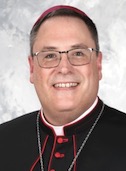
What does Jesus’ gift of peace look like for us? It is the kind of peace that helps us to desire serving others rather than serving ourselves, even when we are never thanked for it. It is the kind of peace that prefers patience and understanding over the prideful need to win every verbal argument. It is the kind of peace that can even return violence with love and give us the grace to turn the other cheek, at home, at work, at school and in our community. It is also the kind of peace that gives us permission to ask for forgiveness from others or from the Lord when we need it. It is the kind of peace that gives us permission to be forgiven by others, by the Lord, and by ourselves too.
You see, it is kind of peace that can help us withstand any storm that this life can throw at us, no matter how difficult life can be. My friends, peace is a supernatural gift from the Lord. I really believe that. Peace comes from within, and it comes from him. However, I also believe that we can’t receive this gift of peace from the Lord unless we give ourselves permission to choose it. We have to want it. My friends, as we receive the Prince of Peace in the Holy Eucharist today, the invitation this weekend is to open our hearts to the gift of peace Jesus wants to give us right now, today, a peace that will help us be faithful in good times and in bad, a peace that will help us weather any storm the world can throw at us, a peace that will lead us to salvation through Christ our Lord.
THE WORD THIS WEEK invites you to check out the Catholic AI assistant (located at the bottom right-hand corner), a homily preparation resource you can use to clarify or develop the insights and themes of Bishop’s Schuster’s homily.

6th Sunday of Easter C

Reaching for God
Many of us tend to think of God as far away, not part of our everyday life. Our Gospel tells us where God can be found. Jesus says, if you love Me, My Father and I will come to you and make Our dwelling with you. Who would have thought of that? That God would be that close to me, in my own house, in my own neighborhood, in my own small world.
But when you think about it, they are the kinds of places that Christ most often appeared. A peasant girl gave birth in a manger to a baby boy. That was God appearing in human form, but most people did not recognize Him because it was all too ordinary. In the city of Nazareth, a young man labored with a hammer and saw in a carpenter’s shop. That was God making Himself known, but most people did not see him. He was too ordinary. A home in Bethany had a frequent visitor. He ate with them, talked with them, laughed and cried with them. The visitor was Jesus, God incarnate, but almost no one recognized Him: He was too ordinary.
THE WORD THIS WEEK invites you to check out the Catholic AI assistant (located at the bottom right-hand corner), a homily preparation resource you can use to clarify or develop the insights and themes of Fr. Warren’s homily.