APR 13, 2025


Homilies
Homilies
- Bishop Barron
- MORE
- 1-MINUTE HOMILY
- 2-Minute Homily
- MSGR. Peter Hahn
- Fr. Jude Langeh
- FR. RUTTIG
- FR. MCCARTHY, OSA
BISHOP
BARRON
Palm Sunday C


Palm Sunday C


ONE MINUTE
HOMILY

Palm Sunday C


TWO MINUTE
HOMILY
Palm Sunday C


MSGR. PETER
HAHN
Palm Sunday C


FR. JUDE
LANGEH, CMF


FR. KEVIN
RUTTIG
Palm Sunday C


FR. TOM
McCARTHY, OSA

Palm Sunday C


Deacon Peter McCulloch
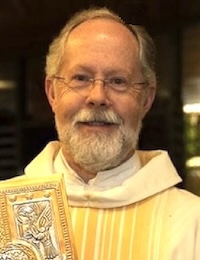
Deacon of the
Diocese of Broken Bay, Australia
Now Featuring Google Notebook LM Podcasts
With each edition THE WORD THIS WEEK will provide conversations between two AI hosts for selected homilies, simulating a podcast-style discussion.
Each NotebookLM discussion is based on the provided homilies. The AI hosts summarize the material, and make connections between topics.
Palm Sunday C
PODCAST: Deep Dive into Deacon Peter’s 2025 Homily (8:01)

On the Passing Parade
Click below to show/hide questions.
This discussion guide has been generated by the WORD THIS WEEK'S Catholic AI Assistant based on Deacon McCulloch's homily.
The Symbolism of the Donkey:
- Why do you think the donkey is often overlooked in the Palm Sunday narrative?
- How does Jesus’ choice of riding a donkey, rather than a horse or chariot, speak to his character and mission?
- What does the donkey symbolize in the context of Jesus fulfilling Zechariah’s prophecy?
Contrasting Processions:
- What emotions or thoughts arise when comparing the Roman imperial procession with Jesus’ humble entrance?
- How do these two processions reflect the differences between worldly power and the kingdom of God?
- In what ways do you see these two types of processions mirrored in today’s world?
The Parades That Continue Today:
- What characteristics define the parade of worldly power and pride?
- Why do you think the parade of humility, peace, and love is easily overlooked in modern society?
- Can you identify moments in your life when you’ve been drawn to one parade over the other?
Reflecting on Our Own Journey:
- The sermon challenges us to consider which procession we are part of. How do you interpret this challenge?
- How do the actions of the crowd from Hosanna on Sunday to crucifixion on Friday reveal human tendencies?
- In what ways do we see a reflection of this crowd mentality in our own actions or in society?
Deep Reflection Before Easter:
- How can reflecting on the question of loyalty vs. fickleness deepen your spiritual journey as Easter approaches?
- In what practical ways can you demonstrate true loyalty to Jesus' teachings in your daily life?
- How does the concept of humility play a role in your understanding of what it means to follow Jesus?
Application and Prayer:
- Reflect on a personal experience where you felt the tension between these two opposing parades.
- How can you draw inspiration from Jesus’ humble entry as you face challenges in your life today?
- Conclude your discussion with a prayer for the strength to pursue a life characterized by humility, peace, and love.
Homily Excerpt
One remarkable figure in today’s Palm Sunday Gospel that’s typically overlooked is the donkey – the simple, ordinary, humble donkey. It’s easy to miss this animal but its presence says so much.
2000 years ago, a worldly king would never have ridden a donkey. He’d have chosen a mighty wheeled vehicle, perhaps a chariot, drawn by magnificent horses.
But Jesus is different. In our second reading, St Paul tells us that although he was God, Jesus didn’t seek to be treated as God. Rather, he emptied himself, taking the form of a slave … he humbled himself. So he chose a donkey.
Riding his donkey, Jesus fulfilled Zechariah’s 500 year old prophecy: ‘Shout aloud, O daughter Jerusalem! Lo, your king comes to you; triumphant and victorious is he, humble and riding on a donkey … and he shall command peace to the nations …’ (Zech.9:9).
Jesus went to Jerusalem for the Passover celebrations. He approached the city from Jericho and that means he entered through the East Gate. Seeing him, the crowd got excited and shouted. ‘Hosanna to the Son of David!’ Jesus was their hero – their long-awaited Messiah.

YOUR HOLY LAND TOURS (8:49) – Titled “Who is the man in the shroud?”, the permanent exhibition about the Shroud of Turin is in Jerusalem’s Notre Dame center. It presents a detailed account of one of the holiest relics in Christendom and the most recent scientific research on it.
The Shroud of Turin
Click below to show/hide questions.
This discussion guide has been generated by the WORD THIS WEEK'S Catholic AI Assistant based on Deacon McCulloch's homily.
1. Biblical Context:
- Read Isaiah 50:4-7, Philippians 2:6-11, and Luke 22:14-23:56.
- Discuss how these passages relate to the physical and spiritual suffering of Jesus.
- Reflect on the narrative of Joseph of Arimathea obtaining Jesus' body for burial as mentioned in Luke 23:46-56.
2. The Shroud's Journey and History:
- Discuss the historical journey of the Shroud, from its reported custodianship by Byzantine Emperors to its current location in Turin, Italy.
- Explore participants' knowledge or previous experiences regarding the Shroud.
3. Detailed Examination of the Shroud:
- Explain the physical attributes of the Shroud (4.3m x 1.1m) and its portrayal of Jesus' front and back.
- Consider the Shroud's depiction of the suffering, including scourging, crowning with thorns, and the crucifixion.
- Discuss scientific analyses and the claims that the Shroud operates like a supernatural photograph of the Resurrection.
4. Scientific Investigations and Controversies:
- Discuss the 1988 radiocarbon dating of the Shroud, its subsequent discrediting, and modern acceptance of the Shroud as authentic.
- Share insights into the scientific details, like bloodstains behaving naturally and matching Gospel accounts.
5. Mystical and Symbolic Interpretations:
- Reflect on the Catholic Church's stance of neutrality regarding the Shroud's authenticity while acknowledging its symbolism.
- Discuss the metaphor of the Shroud as a "mirror of the Gospel," prompting a deeper understanding of divine love and sacrifice.
6. The Impact of the Shroud:
- Encourage discussions about personal reactions to learning about the Shroud and its vivid portrayal of suffering.
- Reflect on St. John Paul II’s view on the Shroud inspiring a deeper reflection on God's love and the call to model our lives after Christ.
7. Application to Personal Faith:
- Discuss how the Shroud of Turin and the Passion narrative challenge and encourage us to face our hardships with faith.
- Share personal encounters with suffering and ways in which reflecting on Jesus’ experiences might offer comfort and strength.
8. Closing Reflection and Prayer:
- Wrap up the discussion by encouraging gratitude to Jesus for his sacrifice.
- Lead a closing prayer, inviting participants to express their love and thankfulness to Jesus, especially as Easter approaches.
Homily Excerpt

Apart from the Cross, nothing depicts the Passion of Christ more powerfully than the Shroud of Turin.
After Jesus died on the Cross, Joseph of Arimathea asked Pontius Pilate for permission to bury Jesus. Pilate agreed. He then bought a linen cloth, took Jesus down from the Cross, wrapped him in it and buried him (Lk.23:46-56).
John’s Gospel tells us that the Shroud was left behind when Jesus rose from the dead (Jn.20:5-7). And history says it was kept by Byzantine Emperors until 1204AD. It was then taken by Crusaders to France, and in 1578 it went to Turin, where it remains today.[i]
The Shroud has been studied countless times, and it’s been described as a supernatural photo negative of Jesus lying in the tomb, taken by God probably at the moment of his Resurrection. Measuring 4.3m x 1.1m, it bears images of his front and back, as it was placed under him and then pulled over his head to cover the rest of his body.
The Shroud depicts someone who endured everything that Jesus suffered: scourging, beatings, crowning with thorns, and nails through his wrists and feet.
Silence Embrace
Click below to show/hide questions.
This discussion guide has been generated by the WORD THIS WEEK'S Catholic AI Assistant based on Deacon Peter's homily.
Introduction to Silence
- Discuss the modern struggle with silence and how pervasive noise impacts our ability to hear God’s voice. Reflect on Pope Benedict XVI’s observation about the interference of various 'frequencies' in our lives.
Jesus and Silence During the Passion
- Explore Jesus' response to his suffering: betrayal, false accusations, mockery, crucifixion, and more. Consider why Jesus chooses silence over defending himself. Contrast your personal potential reaction to Jesus' response.
Perceptions of Silence
- Delve into common perceptions of silence as a weakness. Discuss how Jesus redefines this silence as strength, using it to commune with his Father and draw strength.
Personal Reflection on Silence
- Reflect on personal experiences of pain or persecution. How do you usually respond? Compare these responses to Jesus’ silent strength and prayerful communion with God.
The Role of Prayer in Silence
- Analyze the nature of prayer according to the sermon. Discuss the concept that prayer is not about asking God for what we want, but rather receiving His embrace and trusting in His love and will.
Mary and Silent Suffering
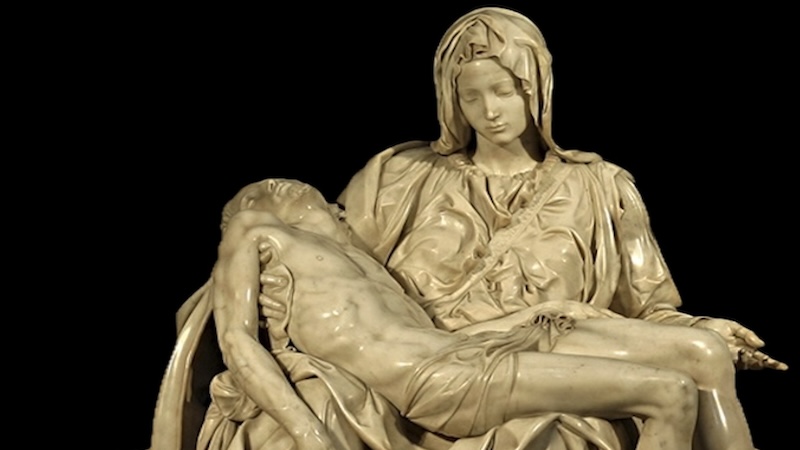
- Consider the example of the Blessed Virgin Mary’s response to witnessing Jesus’ suffering and death. Discuss her silent embrace of God’s will and how it relates to the concept of silent strength.
Quotes and Perspectives on Silence
- Examine Jacques Philippe's idea that a calm, silent spirit is necessary to hear the Holy Spirit. Discuss possible ways to cultivate this inner calm amidst the noise of daily life.
St. Teresa of Calcutta on Silence
- Discuss St. Teresa’s viewpoint that silence is foundational for prayer, faith, and service. Reflect on how beginning with silence can lead to living a more fulfilled spiritual life.
Practical Steps to Embrace Silence
- Identify and share practices to integrate silence into daily life, such as scheduled quiet time, meditation, and moments of reflection. Encourage each group member to consider implementing these practices.
Closing Reflections and Personal Application
- Encourage sharing of personal insights gained from this discussion on silence. Reflect on how embracing silence can transform one’s spiritual life and relationship with God. Discuss commitments or changes participants are inspired to make.
Homily Excerpt

Many of us struggle with silence. We are so used to noise that we think we cannot live without music, TV and other sounds, including our own voices.
Yet, in our hearts we know that’s wrong. Pope Benedict XVI once observed: ‘We are no longer able to hear God – there are too many different frequencies filling our ears.’ [i]
Silence is not emptiness; it’s an invitation to go deeper into our lives, and most especially into our relationship with God. This is a message we can take from the harrowing story of the Passion of Christ.
Jesus suffers the cruelest of abuse: betrayal, false accusations, insults, imprisonment, mockery, theft, beatings, scourging, crucifixion and even a stabbing. And how does he respond? He is silent. He doesn’t even complain.
What would you have done? Would you not have screamed, kicked, cursed, argued, struggled and done everything else you could to defend yourself? Jesus doesn’t even try. Why?

THE WORD THIS WEEK invites you to check out the Catholic AI assistant (located at the bottom right-hand corner), a homily preparation resource you can use to clarify or develop the insights and themes of Deacon Peter’s homilies.
Fr. Austin Fleming
Palm Sunday C

2013 HOMILY – Although it’s at the very heart of our faith, the story of the suffering and death of Jesus is recounted in its entirety only twice a year, and then in the same week, on Palm Sunday and Good Friday.
Though we hear this story infrequently, its images, scenes and characters are vivid in our imagination. Particular words and phrases have embedded themselves in our memory and in our hearts, evoking repentance and prayer…
Click link above to read words/phrases in the Passion…
This discussion guide has been generated by the WORD THIS WEEK’S Catholic AI Assistant based on Father Austin’s homily. NEED HELP? Copy and paste a question into the chat bot in the lower right corner of the screen and have our Catholic Assistant help you.
Introduction
The sermon touches on the significance of the suffering and death of Jesus, highlighting its central role in the Christian faith. The story is shared particularly during Palm Sunday and Good Friday. Despite its infrequent retelling, its words and images resonate deeply within believers.
Discussion Questions
1. Familiarity with the Story:
– How often do you reflect on the story of Jesus’ suffering and death beyond Palm Sunday and Good Friday?
– Are there specific images or scenes from the story that stay with you throughout the year? Why do they resonate with you?
2. Key Phrases for Reflection:
Consider the following phrases from the sermon:
– “This is my body, given for you…”
– “A new covenant in my blood, shed for you…”
– “Father, if you are willing, take this cup away from me…”
– “Father, forgive them, they know not what they do…”
– Which of these phrases speaks most profoundly to you? Why?
– How do these phrases influence your prayer life and personal reflection?
3. Moral and Spiritual Struggle:
– Reflect on Peter’s denial and subsequent weeping. How do moments of weakness and regret play a role in your spiritual journey?
– What does Judas’ betrayal with a kiss symbolize for you in your own life or in the broader context of human nature?
4. Forgiveness and Redemption:
– Discuss the themes of forgiveness and redemption as Jesus calls for forgiveness for those who crucified him.
– How do you find yourself challenged or inspired to forgive others or seek forgiveness yourself?
5. Contemplation of Jesus’s Final Words:
– When Jesus says, “Father, into your hands I commend my spirit,” how does this statement affect your understanding of faith and surrender?
– How can these last words of Jesus be approached in daily contemplation and prayer?
Application
– How can you let the story of Jesus’ suffering and death renew your faith in his love?
– In what ways can you carry the reflections on Jesus’ passion into the celebration of Easter’s joy and peace?
Conclusion
This Holy Week, consider how these words and images of Jesus’ passion are embedded in your heart. As you gather with others, engage in shared times of reflection and prayer, seeking to deepen your connection to the story that brings salvation. May these discussions and meditations guide you towards Easter’s renewal.
THE WORD THIS WEEK invites you to check out the Catholic AI assistant (located at the bottom right-hand corner), a homily preparation resource you can use to clarify or further develop the insights and themes of Fr. Fleming’s homily.
Dominican Blackfriars

Palm Sunday C
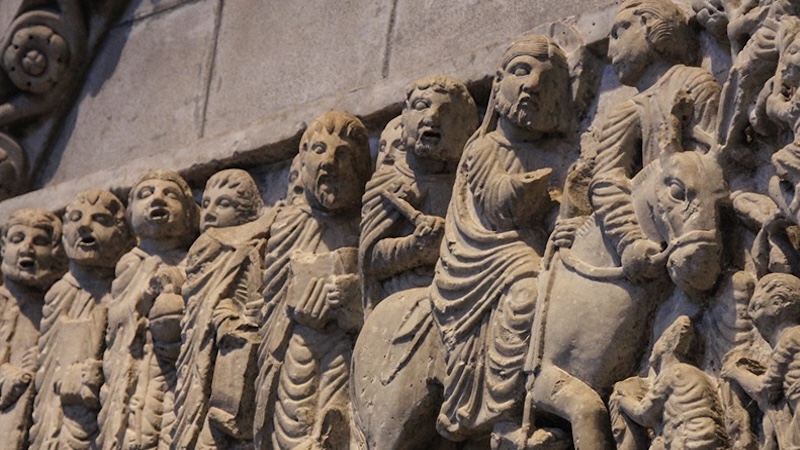
Cropped photograph by Fr Lawrence Lew OP of a medieval carving housed in the Cloisters Museum in New York.
Click below to show/hide questions.
This discussion guide has been generated by the WORD THIS WEEK'S Catholic AI Assistant based on the Dominican Blackfriars' homily for this week. NEED HELP? Copy and paste a question into the chat bot in the lower right corner of the screen and have our Catholic Assistant help you.
Introduction
1. Reflection on Palm Sunday's Significance:
- Why might Palm Sunday not often be the focus of sermons?
- How does the liturgy of Palm Sunday, involving the procession with palms and the passion narrative, serve as a sermon in itself?
Understanding the Context
2. Pilate, Herod, and Jesus:
- Explore the roles of Pilate and Herod in Luke’s narrative of the passion.
- Why do you think Pilate sent Jesus to Herod during His trial?
- Discuss the political dynamics and motivations behind Herod’s actions.
The Herodian Dynasty
3. The Three Herods:
- Identify the three Herods mentioned in the New Testament. What distinguishes each one?
- How might the overlapping identities of these rulers affect interpretations of New Testament stories?
Herod's Encounter with Jesus
4. Herod's Actions and Motivations:
- Why was Herod interested in questioning Jesus? What was at stake for him?
- Consider Herod’s decision to mock Jesus: What does this reveal about his character and priorities?
Political and Religious Dynamics
5. Authority and Condemnation:
- Discuss why neither Herod nor Pilate initially wanted to condemn Jesus. What were their underlying concerns?
- How did both political and religious authorities collaborate in the events leading to Jesus’ crucifixion?
Lessons from Herod's Character
6. Herod as a Counter-Example:
- Reflect on how Herod’s pursuit of self-interest serves as a warning. How can personal ambition impede integrity and mercy?
- Discuss the sermon’s message about the consequences of self-centeredness in personal and communal life.
Theological Implications
7. God's Mercy and Human Nature:
- How does the sermon interpret God’s allowance of Herod and Pilate’s actions within the plan of salvation?
- What does the ultimate outcome of Jesus’ death and resurrection signify about God’s mercy?
Application and Reflection
8. Living the Message:
- How can we practice integrity and mercy in our own lives, resisting the temptation to prioritize self-interest?
- Reflect on examples of modern-day “Herods” and “Pilates” in our society. How can the lessons from this sermon inform our responses to them?
Homily Excerpt
Palm Sunday of the Passion of the Lord. fr Peter Harries contrasts the Kingship of Jesus with that of the three Herods we find in Scripture.

I don’t think I have ever heard a sermon on Palm Sunday, so it is rather odd preparing one. Palm Sunday has the longest liturgy of any Sunday of the year apart from the Easter Vigil. The procession with palms and the devout listening to the passion of our Lord both preach most eloquently. But I will try to say something by concentrating on a single episode told only by Luke, for this year we read Luke’s account of the passion.
Luke tells us that after hearing the accusations against Jesus, but before the conclusion of the trial, Pilate sent Jesus to Herod to see what Herod would make of Jesus. Herod the Tetrarch, the political ruler of Galilee was in Jerusalem for the Passover feast. The scholars universally suggest that Herod’s attendance was for political show rather than any genuine devotion.
There were three Herods, all of the same ruling dynasty, all mentioned in the New Testament, though Luke does not make this clear and I suspect most Christians, then and now, assume there was only one nasty Herod. First there was King Herod the Great, a ruler with a blood-thirsty reputation. He was King when Jesus was born…
Cropped photograph by Fr Lawrence Lew OP of a medieval carving housed in the Cloisters Museum in New York.
Click below to show/hide questions.
This discussion guide has been generated by the WORD THIS WEEK'S Catholic AI Assistant based on the Dominican Blackfriars' homily for this week. NEED HELP? Copy and paste a question into the chat bot in the lower right corner of the screen and have our Catholic Assistant help you.
1. Understanding Holy Week
- Background: Holy Week spans from Palm Sunday to Easter Sunday. How does this timeline help us understand Jesus's journey and actions?
- Reflection: Why do the Gospels provide detailed accounts of every day of Holy Week? What significance does this hold for Christians today?
2. Sabbath Rest and Redemption
- Concept: The resting of Jesus's disciples on the Sabbath after His death parallels God's rest after creation.
- Discussion: Why is rest an essential theme in both creation and redemption? How does rest reflect the completion of God's work?
- Personal Application: In what ways can we find rest in God's completed works in our lives?
3. Humility vs. Pride
- Definition: True humility enables participation in God's works, while pride focuses on self-capabilities.
- Reflection: How can believers nurture true humility, distinguishing it from false humility?
- Discussion: Share experiences where pride may have limited God's work in your life. How can humility change this?
4. The Limitlessness of God
- Concept: God cannot be constrained by human conceptions or limitations.
- Discussion: What does it mean to say God can create sons from stones? How does this challenge our understanding of God's power?
- Contemplation: Reflect on personal instances where you may have unintentionally limited God. How can recognizing God's limitless nature transform your faith?
5. False Humility and Faith
- Concept: The Pharisees' false humility attempts to restrict God's power, contrasting true faith that accepts God's transformative love.
- Discussion: How does false humility manifest today, perhaps under the guise of limited expectations of God or self?
- Application: What steps can we take to reject false humility and fully receive God's love and purpose for us?
6. Becoming Children of God
- Scriptural Basis: Examine John 1:12-13 on the concept of becoming children of God.
- Reflection: What does sharing in the divinity of Christ mean to you?
- Discussion: How does this understanding challenge and inspire you in your daily walk with God?
Homily Excerpt
Palm Sunday (C) | Fr Leon Pereira ponders the false humility that would limit God and so refuse his divinising love and grace.
From Palm Sunday onwards, the gospels tell us what Jesus did on every single day of this week, Holy Week. The week ends with these words:
‘It was the day of Preparation, and the sabbath was beginning. The women who had come with him from Galilee followed, and saw the tomb, and how his body was laid; then they returned, and prepared spices and ointments. On the sabbath they rested according to the commandment.’ (Luke 23:54-56)
Jesus’s disciples rest on the Sabbath beginning with His death, because the work of our redemption echoes the work of creation – six days, and on the seventh day, God rested. The resting of God after creation and after redemption shows us clearly that these truly are the works of God.

Click below to show/hide questions.
This discussion guide has been generated by the WORD THIS WEEK'S Catholic AI Assistant based on the Dominican Blackfriars' homily for this week. NEED HELP? Copy and paste a question into the chat bot in the lower right corner of the screen and have our Catholic Assistant help you.
1. Opening Reflection:
- What does it mean for God to move "from ahead to behind" the Israelites, as seen in Exodus 14:19?
- How might this change of position reflect God's role as protector during our own life's journeys?
2. Historical Context and Parallels:
- Discuss the historical journey of the Israelites from Egypt to the Promised Land. Consider how their journey relates to modern spiritual journeys.
- How did the Israelites’ history of exile and return shape their understanding of the promised land and God's promises?
- How do these historical events parallel the journey of following Christ into Jerusalem and beyond?
3. Following Christ in the New Testament:
- How does the word "follow" in the New Testament indicate our relationship with Christ compared to the Israelites' journey?
- Reflect on Psalm 23: What does it mean to have "goodness and kindness pursue us"? How does this influence our understanding of God's presence during our struggles?
4. The Journey Continues:
- What does it signify that the journey of faith continues beyond Jerusalem? How do Christ's actions post-Jerusalem guide the Church's mission today?
- Discuss the role of the Holy Spirit in continuing the journey of faith after Jesus’ ascension.
5. Personal Reflection and Application:
- Share experiences of your own life journey that mirror walking through darkness and challenge. How have you found comfort in Christ's path?
- How do you engage with the journey of Christ through your spiritual practices, such as during Holy Week or personal meditation?
- In moments of suffering and difficulty, how can we remind ourselves that we "have walked this way before" with Christ?
6. Concluding Thoughts:
- Reflect on the ultimate journey to Paradise. How does maintaining the perspective that we're following Christ impact our everyday lives?
- What steps can we take as a community and individually to ensure we continue to journey with Christ, even when the path is hard to see?
Homily Excerpt
Palm Sunday. Fr Euan Marley takes us on journey into Paradise.
In Exodus 14:19 we read, ‘Then the angel of God who went before the camp of Israel moved and went behind them; and the pillar of cloud moved from before them and stood behind them.’ What is happening is that the Egyptian army is pursuing the Israelites into the desert, and God, who has been ahead of them – in appearance at any rate – moves behind them. This is to show that he is protecting the Israelites as they pass through the Red Sea. The journey of Israel has begun, and for most of the journey God is seen to be ahead of them, leading them to the promised land. I wonder if the people of Israel ever felt they had truly finished that journey. As they followed Christ into Jerusalem, perhaps some thought that this was the true completion of the journey.
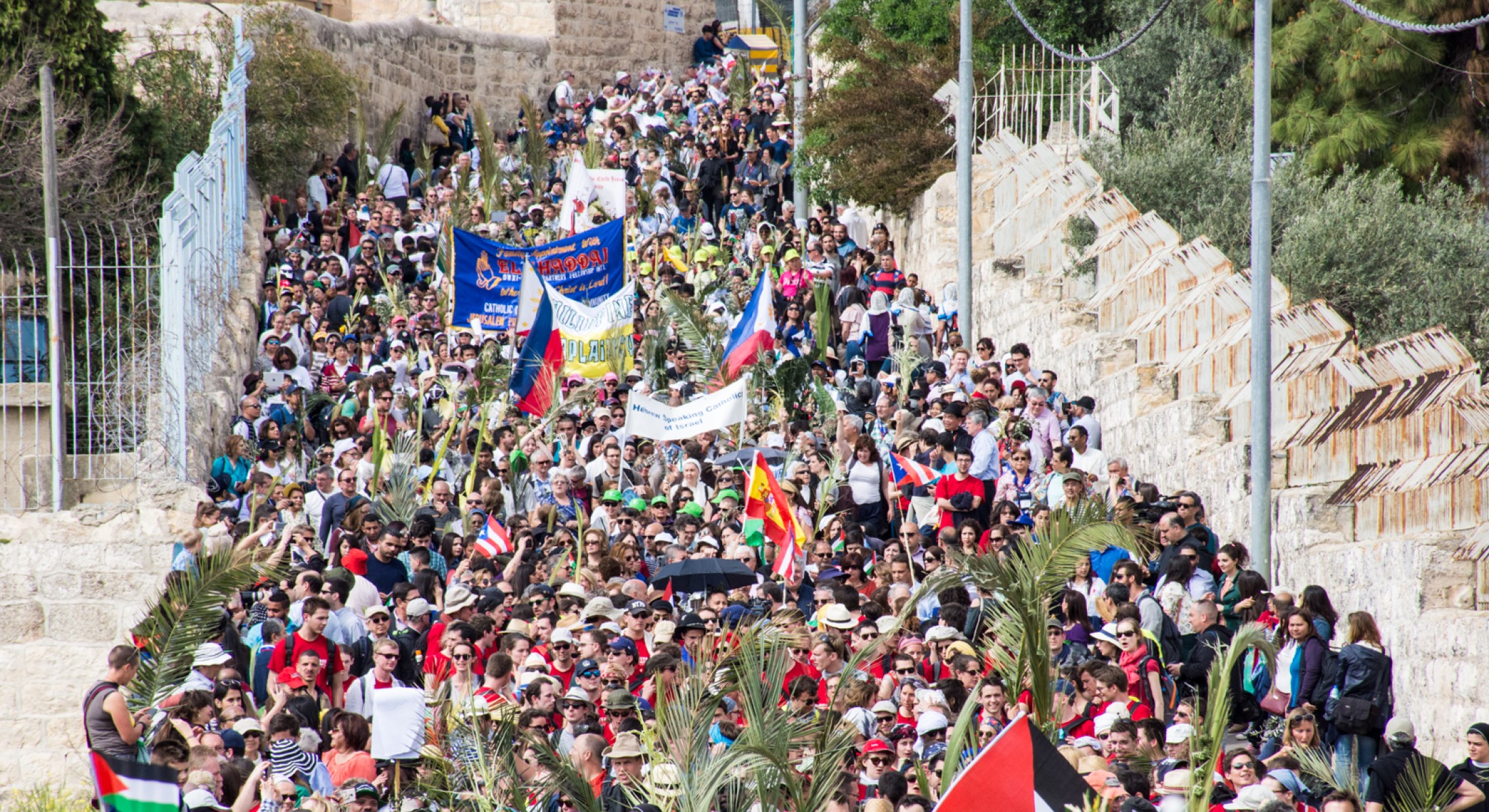
Image: Procession down the Mount of Olives
Click below to show/hide questions.
This discussion guide has been generated by the WORD THIS WEEK'S Catholic AI Assistant based on the Dominican Blackfriars' homily for this week. NEED HELP? Copy and paste a question into the chat bot in the lower right corner of the screen and have our Catholic Assistant help you.
Introduction to the Event
- Reflect on Jesus’ triumphant entry into Jerusalem, highlighting the celebration with cheering crowds, garments on the road, and palms waved.
- Discuss why this event is considered a triumph and its significant role at the beginning of Holy Week.
The Contrast of Events
- Examine the swift change from Jesus’ entry celebration to the crowd calling for his crucifixion.
- Discuss the reasons behind the crowd's rapid change in attitude towards Jesus.
The Nature of Crowds versus Individuals
- Analyze the sermon’s perspective on crowds being composed of individuals with fluid beliefs and actions.
- Discuss how individuals may not undergo real change but rather react to circumstances, as illustrated by the Fred and Bill analogy.
Example of Fred and Bill
- Discuss the analogy of Fred, whose shifting truths illustrate the changing nature of crowd members, versus Bill, who undergoes real change by growing taller.
- Reflect on how this analogy illustrates the difference between surface-level agreement and true personal transformation.
The Necessity of Real Change for Salvation
- Delve into the concept of "Bill-type change" being necessary for salvation, emphasizing the transformation of one's nature by grace.
- Discuss how intellects need elevation by faith and wills by hope and charity, focusing on real changes that define salvation.
Role of Sacraments in Transformation
- Talk about the sacraments, particularly baptism, and their role in facilitating real, transformative changes.
- Discuss the importance of being properly prepared and disposed to receiving the grace offered by the sacraments.
Reflection on Human Fickleness and Salvation
- Reflect on the sermon’s message regarding human fickleness and the profound need for real change as a result of salvation.
- Discuss how the Passion of Christ is presented as the means to attain this necessary transformation and deliverance.
Practical Application
- Consider how individuals today can ensure they are undergoing real change rather than merely reacting to external circumstances.
- Discuss practical steps to deepen faith and open oneself to transformative grace in everyday life.
Concluding Thoughts
- Wrap up the discussion with reflections on what participants have learned about personal change and salvation.
- Encourage sharing personal experiences relating to moments of real change and transformation in their spiritual journeys.
Homily Excerpt
Palm Sunday. Fr Dominic Ryan ponders the changeability of individuals.
Today, at the beginning of Holy Week, we recall Our Lord’s triumphant entry into Jerusalem. Crowds cheered, the great multitude of disciples rejoiced and praised God with loud voices, garments were laid upon the road, and palms were waved in the air. It’s certainly not hyperbole to call this event a triumph. By no stretch of the imagination are we exaggerating. Yet the more we exalt this triumph, the more we are compelled to think about what happened next; what followed this triumph and what we can learn from this about our salvation.
Of course what came next is very well known: things went rapidly downhill and a few days later Christ would die upon the Cross. Not that this would be the end, of course. Christ’s death on the Cross wasn’t God’s final verdict on the sacrifice of his Son. On the contrary, God would raise Christ from the dead. Nevertheless, the contrast between the crowd’s enthusiasm for Christ when he entered Jerusalem and their cry for his death a few days later is striking. It’s a remarkable about-face, in an extraordinarily short space of time. So what’s going on?
THE WORD THIS WEEK invites you to check out the Catholic AI assistant (located at the bottom right-hand corner), a homily preparation resource you can use to clarify or further develop the insights and themes of the homilies above.
Fr. Charles E. Irvin
Palm Sunday C
PODCAST: Deep Dive into Father Irvin’s Homily (6:06)


The same roles [in the Passion today] are there; the same actors, the same forces at work in our world just as they were in the year 33 A.D.
- First there are the indifferent, the easy-going, those who simply drift uncaring through life, those who give consent to the Passion by silence. There are millions and millions in this majority…
- Then there are the escapists — those who cop out…
- In the mob…
- And look, too, at the executioners…
- Finally there is the Son of Man — the infinitely patient victim who looks up with loving and sorrow-filled eyes and shames His persecutors. He exists now in a new body. He confronts us in His corporate body, in His Mystical Body — in the good people around the world who are suffering,
This discussion guide has been generated by the WORD THIS WEEK’S Catholic AI Assistant based on Fr. Irvin’s homily. NEED HELP? Copy and paste a question into the chat bot in the lower right corner of the screen and have our Catholic Assistant help you.
1. Introduction: The Book of Life and Recognition
- How does the sermon suggest we recognize ourselves and God during Holy Week?
- What parallels does the speaker draw between the Passion of Jesus and present times?
2. The Indifferent
- Reflect on the description of the indifferent. Why do you think indifference is considered participation in the Passion?
- What role does silence play in allowing suffering to continue in the world today?
3. The Escapists
- Who are the escapists, and how do they relate to Peter’s denial?
- Have you ever found yourself in a situation where it was easier to disengage than confront injustice? How did you handle it?
4. The Executioners and the Mob
- How does the sermon describe the executioners of today? What actions or behaviors classify someone as such?
- Discuss how modern societal rules or regulations can contribute to or perpetuate injustice.
5. Jesus’ Continuing Passion
- Identify where the sermon locates the suffering Christ in today’s world. What contemporary issues are comparable to the Passion?
- How can we reconcile our discomfort with the ongoing suffering around us as a reflection of Jesus’ Passion?
6. Personal Reflection
- Consider your role in this narrative. Where do you see yourself among the groups discussed?
- How can you take actionable steps to embody compassion and mercy in your daily life?
THE WORD THIS WEEK invites you to check out the Catholic AI assistant (located at the bottom right-hand corner), a homily preparation resource you can use to clarify or further develop the insights and themes of Fr. Irvin’s homily.
Fr. George Smiga
Palm Sunday

Fr. Smiga exercisesthe option to proclaim the full account of the passion and to omit the homily.
As a result there are no homilies available on his website for Palm Sunday.
This discussion guide has been generated by the WORD THIS WEEK’S Catholic AI Assistant based on Fr. Smiga’s homily.
Not Available
THE WORD THIS WEEK invites you to check out the Catholic AI assistant (located at the bottom right-hand corner), a homily preparation resource you can use to further clarify or further develop the insights and themes of Fr. Smiga’s homilies.
Pro-Life Homily Resources
Palm Sunday C

The Passion Narrative
We come today to the start of a week which brings us to the center and climax of the entire liturgical year and the very heart of the Gospel in which we believe: Christ has died, Christ is risen, Christ will come again.
We have been preparing for all of Lent to celebrate the events of these days – events that are so crucial to human history and to our own lives, that they require a whole season of repentance and preparation to celebrate them worthily. We are blessed and privileged to be able to say that we believe that through the events related in the Passion narrative, God has revealed his love for us, he has opened the way for the forgiveness of all our sins, and he has placed in our hands the gift of eternal life.
THE WORD THIS WEEK invites you to check out the Catholic AI assistant (located at the bottom right-hand corner), a homily preparation resource you can use to clarify or develop the insights and themes of Frank Pavone’s homily notes for preachers.
Msgr. Joseph Pellegrino
Palm Sunday C

A Call to Faith

Where had they gone, all those people who greeted the Lord with such exuberance during his triumphal entrance into Jerusalem? Where had they gone, now that He has left the city in a completely different type of triumph, the Triumph of the Cross? There were only a handful of people at the foot of the cross. The people who were there were the people who loved Him more than their own lives. The people who were there were people of faith, faith that God the Father would prevail even as Goodness was crucified. How horrible the other disciples of the Lord must have felt when they realized that they did not have enough faith to stand beneath the cross with Mary, John and those few others.
It is easy for us to thank the Lord when we experience his wonders in our lives. Two young people experience a deeper love than ever before and marry, and thank God. A child is born and brought to be baptized, and they thank God for this life. People experience the young, their young, taking their place in the world and thank God for guiding them.
This discussion guide has been generated by the WORD THIS WEEK’S Catholic AI Assistant based on Fr. Pellegrino’s homily.
Contrasting Triumphs:
Why do you think the crowd that celebrated Jesus during His entry into Jerusalem was not present at the cross?
Reflect on moments in your life when it was easy to celebrate your faith. Were there moments that were harder to maintain the same level of enthusiasm? How did you handle those times?
Understanding Sacrifice and Faith:
What does the phrase “Triumph of the Cross” mean to you?
How can we develop the kind of faith that the few who stood by Jesus at the cross had? What does this say about the nature of true faith?
Life’s Challenges as Calls to Faith:
The sermon suggests that life often calls us to Calvary. In your personal experience, have you faced your own ‘Calvary’? How did your faith guide you during those times?
In moments of crisis, what practical steps can you take to rely more on your faith rather than your own understanding?
Engagement with Crisis and Suffering:
Discuss the song lyrics “You’ve got to hold on to Jesus” in relation to personal tribulations. What does holding on to Jesus mean to you?
Can suffering be transformative? Reflect on a time when you or someone you know turned to faith during a hardship and how that impacted the situation.
Personal Reflection and Application during Holy Week:
As we enter Holy Week, how can you better prepare yourself to unite your present to Jesus’ eternal presence?
What practical actions can you take this Holy Week to deepen your faith and understanding of the importance of being with the Lord on Calvary?
Action Points
Reflect daily on a specific event where you felt your faith was challenged and how you responded. Consider journaling these reflections.
Identify someone in your life who might be struggling with their faith due to personal challenges. Reach out to them in support, offering prayer and companionship.
Commit to reading a passage from the Gospels each day of Holy Week, focusing on the journey from Jesus’ entry into Jerusalem to His crucifixion and resurrection.
THE WORD THIS WEEK invites you to check out the Catholic AI assistant (located at the bottom right-hand corner), a homily preparation resource you can use to clarify or develop the insights and themes of Msgr. Pelligrino’s homily.
Msgr. Charles Pope
Palm Sunday C
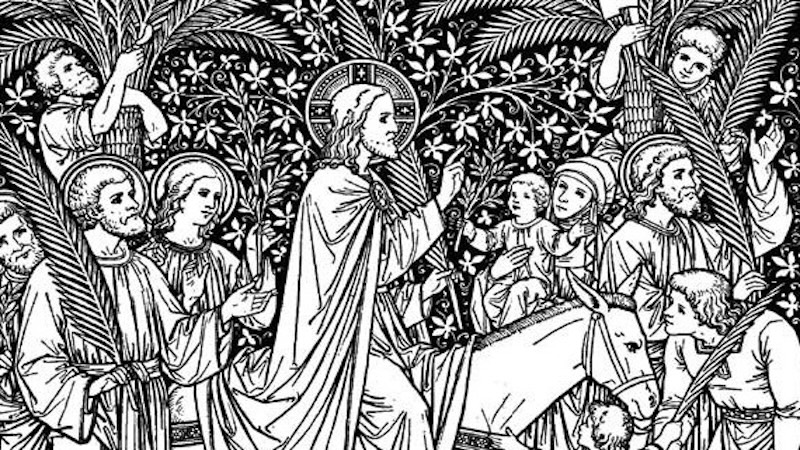
See What the End Will Be
The Passion, which we read in the liturgy for Palm Sunday, is too long to comment on in detail, so we will only examine a portion of it here.
It may be of some value to examine the problems associated with the more moderate range of personalities involved. The usual villains (the Temple leaders, Judas, and the recruited crowd shouting, “Crucify him!”) are unambiguously wicked and display their sinfulness openly. But there are others involved whose struggles and neglectfulness are more subtle, yet no less real. It is in examining these figures that we can learn a great deal about ourselves, who, though we may not openly shout, “Crucify him,” are often not as unambiguously holy and heroic as Jesus’ persecutors are wicked and bold.
As we read the Passion we must understand that this is not merely an account of the behavior of people long gone, they are portraits of you and me; we do these things.
I. The Perception that is Partial
II. The Problems Presented
III. The Path that is Prescribed
THE WORD THIS WEEK invites you to check out the Catholic AI assistant (located at the bottom right-hand corner), a homily preparation resource you can use to clarify or develop the insights and themes of Msgr. Pope’s homily.
Fr. Jude Siciliano, OP

Palm Sunday C
Palm Sunday
EXCERPT: Jesus is well aware what will happen to him if he stays faithful to God’s will. In Gethsemane he experiences intense struggle, anticipating what will happen to him if he continues his mission. But God is with them, “And to strengthen him an angel from heaven appeared to him.” Jesus was not sent by his Father just to die, rather he was to fulfill his mission to reveal God’s love for all – even if it meant his death.
If I am a follower of Jesus that I too am called to live as a prophet in my daily life. The prophetic mission begins with listening to God’s word. Jesus has revealed what the consequences of receiving that word each day are for us: to embrace the least; forgive sinners; speak boldly against injustice, large or small; stand with the outcasts, immigrants, imprisoned, homeless and the grieving. There is more. Each of us must look in to our own lives and answer the question: “how am I being called today to follow Jesus the prophet?”
THE WORD THIS WEEK invites you to check out the Catholic AI assistant (located at the bottom right-hand corner), a homily preparation resource you can use to clarify or develop the insights and themes of Fr. Jude’s homily notes.
Bishop John Kobina Louis
Palm Sunday C
Sunday Homilies

Bishop John Kobina Louis, PhD, is an auxiliary bishop of the Archdiocese of Accra, Ghana. He was ordained as an auxiliary bishop on 19th April 2023.
Fr. Michael Chua
Palm Sunday C

Homily Excerpt
Catholics are notorious for not knowing their bible but they somehow instinctively know their bible stories. It seems like a contradiction to non-Catholics, but it is true. The different stories of Christ gleaned from the pages of the different gospels all flow into a common ocean of Catholic consciousness. We may know the story, but we may not know from exactly which verse, chapter, or book it came from. Perhaps, the most familiar story to the Catholic mind is that of the Passion of the Lord. Each of the four gospels contains a major concluding section devoted to describing the arrest, trial and execution of Jesus in Jerusalem, in which all follow roughly the same structure and chronology, differing only in minor details. It is thought, in fact, that the gospels all started simply as accounts of the Passion and Death of Jesus written down for the benefit of preachers and adult converts to Christianity, and that these in time were expanded by adding introductory sections to describe the teaching and deeds of Jesus in His public life leading up to His death. The Passion reading for Palm Sunday in this lectionary cycle is the Passion of Saint Luke.
Homily Excerpt
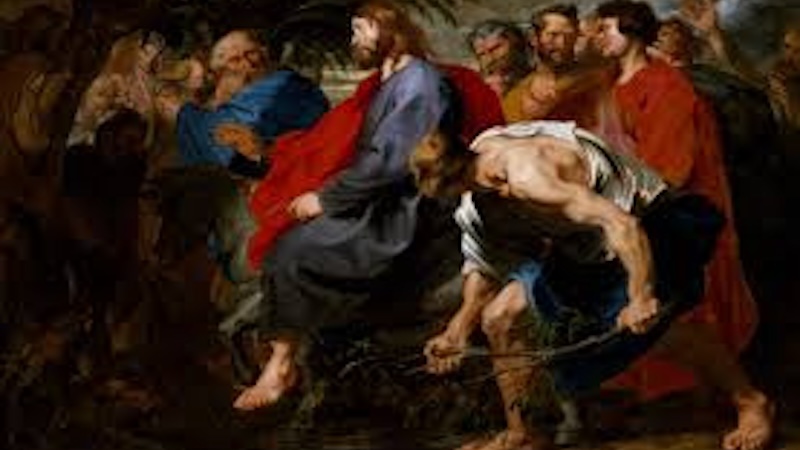
The most visible accoutrement for this Sunday is the palm branch, and for good reason. The palm branch was a symbol of triumph and of victory in the ancient world, and in Jewish tradition. But having paid closer attention to the first Gospel taken from Luke, it is at least a little ironic to refer to this Sunday as “Palm Sunday.” Actually, only John (12:13) mentions “palm branches.” Matthew mentions “branches from the trees”, while Mark describes them as “leafy branches.” Luke mentions nothing about any foliage. So, if you didn’t manage to get your hands on a nice leafy palm, don’t complain.
Be that as it may, why “palms?” It was a common custom in many lands in the ancient Near East to cover the path of someone thought worthy of the highest honour. The Hebrew Bible reports that Joshua was treated this way. The Gospels of Mark, Matthew and John report that people gave our Lord this form of honour. In Matthew/ Mark they are reported as laying their garments and cut branches on the street, whereas John more specifically mentions palm fronds. Luke mentions only garments being spread on the road as a kind of ancient red-carpet reception to our Lord whom the people feted as their Messianic King.
Homily Excerpt
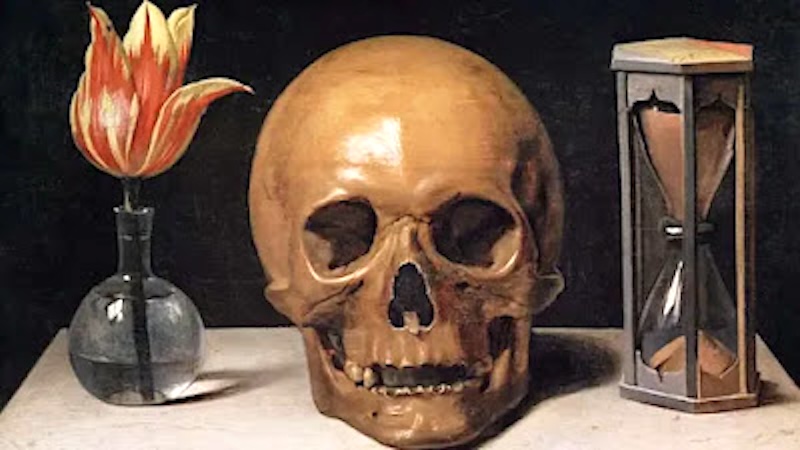
Tragedies and unexpected events serve as “memento mori” – they remind us of our mortality and the brevity of life. Tempus Fugit, Memento Mori – time flies, remember death!
Rather than shaking the foundation of our faith in God, such events should lead us to trust more in God rather than in ourselves and our devices. Only God alone can stave off an impending disaster or provide us with the strength and grace to push through and come out stronger.
Finally, such tragedies serve as a call to repent. In today’s gospel, our Lord refutes all speculations that the people who suffered tragedy deserved it by redirecting the attention of His audience to themselves: “unless you repent you will all perish as they did.” If we were to examine the concept of repentance in their original biblical languages, we would realise that repentance is more than just turning away from our sin but actually a turning to God, a radical reorientation of our lives to God. This is what happened to Moses in the first reading.
THE WORD THIS WEEK invites you to check out the Catholic AI assistant (located at the bottom right-hand corner), a homily preparation resource you can use to clarify or develop the insights and themes of Fr. Chua’s homilies.
Fr. Vincent Hawkswell
Palm Sunday C
Homily Excerpt

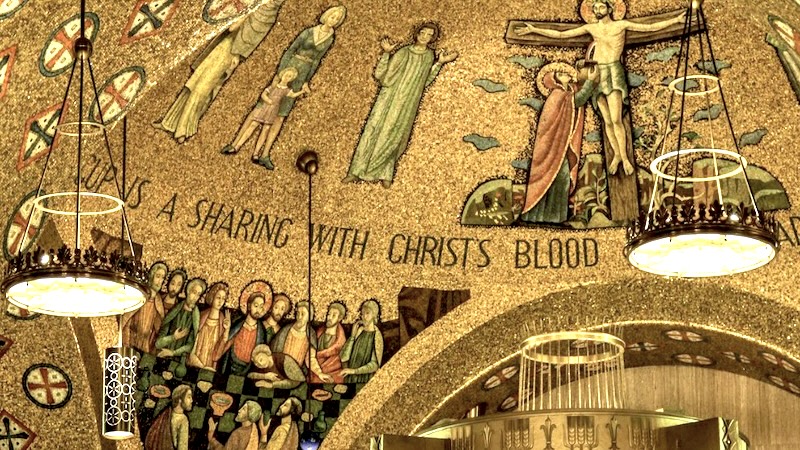
2025 HOMILY – The Church’s Holy Week liturgy is (in Hebrew) a zikaron of the first Holy Week, re-presenting, re-actualizing, and re-newing it so that we truly re-live it and participate in it, not just remember or commemorate it. The more we know about it, therefore, the better.
About 600 BC, Daniel had foretold that Judea would be conquered by Babylon, Persia, Greece, Rome, and then “the God of heaven.” Under Rome, therefore, Jesus’ contemporaries expected the Messiah, their hereditary King, to come soon to save them from Rome.
THE WORD THIS WEEK invites you to check out the Catholic AI assistant (located at the bottom right-hand corner), a homily preparation resource you can use to clarify or develop the insights and themes of Fr. Hawkswell’s homily.


Fr. Tommy Lane
Palm Sunday C
- Jesus’ faithful love 2024
- Meditating on Jesus’ Passion 2021
- The Passion of Jesus shows us up as sinners and heals us
- The characters in the Passion represent us 2009
- The Passion of Jesus speaks to us 2015
- Related Homilies: Jesus’ “Abba” Prayer in Gethsemane 2020
- Jesus’ Sufferings Revealed by the Turin Shroud
- Gethsemane and crucifixion
- Second Reading: All Should Bend the Knee at the Name of Jesus 2020
- First Reading: Jesus took our sins on himself 2018
Fr. John Kavanaugh, S.J.
Palm Sunday C

“I dread Good Friday this year.” It was an honest and simple statement from the gentle woman sitting before me recounting her faith’s journey. Yet she spoke not only for herself. She bore some weight we all carry when faced with the prospect of the Passion.
How like Jesus himself, I thought. He desired to eat the meal but dreaded the thought of drinking the cup. When the awful time came, he was as clear and straightforward as the reluctant woman who feared Good Friday: “Father, if it is your will, take this cup from me; yet not my will but yours be done.” He tasted the anguish. He bled with worry.
But as Isaiah foretold, this God-with-us would not turn back. He remained unshielded before the siege of life and death. Face set like flint, he clung only to the one who sent him.
God, having made us in the godly image, made God in Jesus the likeness of humankind. The incarnation and its inevitable result would be a great emptying out into us. It would be the second fall: the fall of God into our human estate, a sublime bankruptcy with no golden parachute.
This discussion guide has been generated by the WORD THIS WEEK’S Catholic AI Assistant based on Fr. Kavanaugh’s homily. NEED HELP? Copy and paste a question into the chat bot in the lower right corner of the screen and have our Catholic Assistant help you.
1. Identifying with Jesus’ Experience:
– How does the sentence “I dread Good Friday this year” resonate with your own experiences or feelings toward this period of the Passion?
– Discuss Jesus’ own dread as he faced the Passion and what we can learn from his response: “Father, if it is your will, take this cup from me; yet not my will but yours be done.”
2. The Concept of Incarnation:
– Explore the idea that God, in Jesus, entered human life fully and chose to share in our struggles. How does this perspective of divine participation in human suffering comfort or challenge you?
3. Confronting Human Predicaments:
– The sermon mentions “the solving of sin without endless stratagems of denial.” How do you personally confront or deny the reality of sin in your life?
– Discuss the notion of living through our personal “Passion,” reflecting on the inevitability of suffering and love in human experience.
4. Embracing Vulnerability and Love:
– Reflect on CS Lewis’s depiction of love in his poems, especially the line “Love’s as hard as nails.” How does this resonate with your understanding of love’s demands and sacrifices?
– In what ways does understanding love as difficult and sacrificial influence your relationships and faith journey?
5. Facing the Cross:
– The sermon suggests a fear of confronting the cross due to the raw acknowledgment of our need for salvation. How can we address this fear in spiritual practices or community support?
– How does accepting the need for salvation, as exemplified in Good Friday, impact your personal understanding of worthiness and redemption?
Personal Reflection:
– Reflect on your own spiritual journey and how this sermon challenges or affirms your beliefs. Consider journaling your thoughts about how the Passion narrative speaks into your life today.
Practical Application:
– Discuss practical ways to engage with the themes of the Passion over the coming week. This could include prayer, acts of service, or meditative reflection on biblical passages related to the suffering and love of Christ.
Closing Prayer & Reflection:
– End the session with a time of prayer, inviting participants to bring their own fears, dreads, and hopes to God, seeking courage and comfort as they continue their faith journey.
THE WORD THIS WEEK invites you to check out the Catholic AI assistant (located at the bottom right-hand corner), a homily preparation resource you can use to clarify or develop the insights and themes of Fr. Kavanaugh’s homily.
Bishop Frank Schuster
Palm Sunday C
Homily Excerpt
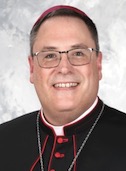
There is a moment that I find particularly meaningful that is only found in the Gospel of St. Luke. It is the dialogue happening between Jesus and the two condemned men crucified with him on both sides. They are both not named, however tradition refers to the repentant criminal as Dismas and the unrepentant criminal as Gestas…
Of course, St. Dismas can also represent all of humanity. We all face the certainty of dying someday. Jesus can therefore be seen as speaking to all who trust in him his pledge of salvation and eternal life. Tying back to Isaiah’s promise of a word that can lift us from spiritual weariness, I think it is helpful to spend some time reflecting on the examples of Gestas and St. Dismas. How are we like them? How can we avoid closing our hearts like Gestas in favor of opening our hearts like St. Dismas?
When are the times in life that you feel like you are carrying a heavy cross? When are the times in life that you feel crucified, perhaps even justifiably? When are the times in life when we feel weary? During Holy Week, we are encouraged to feel God’s mercy, not just to think about God’s mercy. We are invited to experience God’s mercy in our lives. When we find ourselves crucified in life, we encounter a God who, far from abandoning us, wants to be crucified right next to us if that is where we find ourselves. In fact, this week we encounter a God who wants to be crucified for us, in our place for the sake of our salvation.
THE WORD THIS WEEK invites you to check out the Catholic AI assistant (located at the bottom right-hand corner), a homily preparation resource you can use to clarify or develop the insights and themes of Bishop’s Schuster’s homily.

Palm Sunday C

Peter’s Moment of Shame
Peter was never to forget his moment of shame. Yet a few weeks later he was destined to hear the voice of that friend again speaking with compelling warmth and healing, saying to him by the lake, Simon, son of John, do you love Me?
What are we to do with this whole incident but apply it to ourselves? We have not denied any doctrine, or offended any philosophy, or embarrassed the culture. But have we ever broken the bond of personal friendship between Jesus and ourselves? Have we ever stood by the fire, so eager for the world’s approval we bought it at the price of denying that we even know our friend, Jesus?
Jesus looks at all of us in the midst of our business, our activity, our money-making, our careers, our traveling. If we heed that look and it leads us to open our eyes, to shed tears of regret and shame and repentance for the times we have denied Him by what we have said and done, then we are on our way to a closer relationship with Him. Then He is with us no longer as a betrayed friend, but as a close friend, Lord and liberator. For the look of Christ, as Peter found out, is one of understanding love.
THE WORD THIS WEEK invites you to check out the Catholic AI assistant (located at the bottom right-hand corner), a homily preparation resource you can use to clarify or develop the insights and themes of Fr. Warren’s homily.
Fr. Jagodensky, SDS
Palm Sunday C
Homily Excerpt
Our holiest of days next week is like the unholiest of a family’s yearly obligatory, optional dinner gathering. It’s obligatory because it’s family, it’s optional but they’ll talk about you if you don’t show up. (“And, bring a casserole to pass!”) Let the drama begin.
There’s the talkative aunt, thrice married and now dating. There’s that prodigal son with his now, new fourth investment venture that “Can’t miss”. There’s the quiet mother preparing supper and listening to the stories of others, no one asking her about hers. In the corner of the living room is the baffled college-age daughter, excellent grades, but wondering whether to remain a Catholic or not. Dad’s seated in his favorite chair watching all the excitement around him. Jokes are told that have been told every year. Conversations rise louder in equal proportion to the alcohol. Dad’s tired from his day’s work but happy to, again, gather them all together. Children are running around the house wondering why all those old folks are interrupting their supper. Mom told them that it’s a special night, once a year, every year.
Please note that the provided video clips serve as additional resources to complement the homily. They may not have a direct correlation with the contributor’s original content. They aim to inspire preachers to enrich their own homilies, drawing ideas and insights from both the written material and the visual content explored.