June 8, 2025
June 8, 2025


Homilies
Homilies
- Bishop Barron
- MORE
- 1-MINUTE HOMILY
- 2-Minute Homily
- MSGR. Peter Hahn
- Fr. Jude Langeh
- FR. RUTTIG
- FR. MCCARTHY, OSA
BISHOP
BARRON
Pentecost Sunday (Year C)


Pentecost Sunday (Year C)


ONE MINUTE
HOMILY

Pentecost Sunday (Year C)


TWO MINUTE
HOMILY
Pentecost Sunday (Year C)

MSGR. PETER
HAHN
Pentecost Sunday (Year C)


FR. JUDE
LANGEH, CMF

FR. KEVIN
RUTTIG
Pentecost Sunday (Year C)


FR. TOM
McCARTHY, OSA

Pentecost Sunday (Year C)


Your Support Matters
Please spread the word so this website continues to grow. Share your favorite articles, features, and experiences with fellow priests and deacons, parish leaders and ministers, your friends, and family, and on social media. Additionally, I invite you to use the comment section at the bottom of the pages. Share what you like or dislike, offer suggestions, and other constructive feedback. Understanding what matters most to you will enable me to prioritize my time and focus on creating and curating content that aligns with your needs and preferences. — Fr. Don
Deacon Greg’s blog has garnered some 20 million readers from around the world since its inception in 2007.
Pentecost Sunday (Year C)
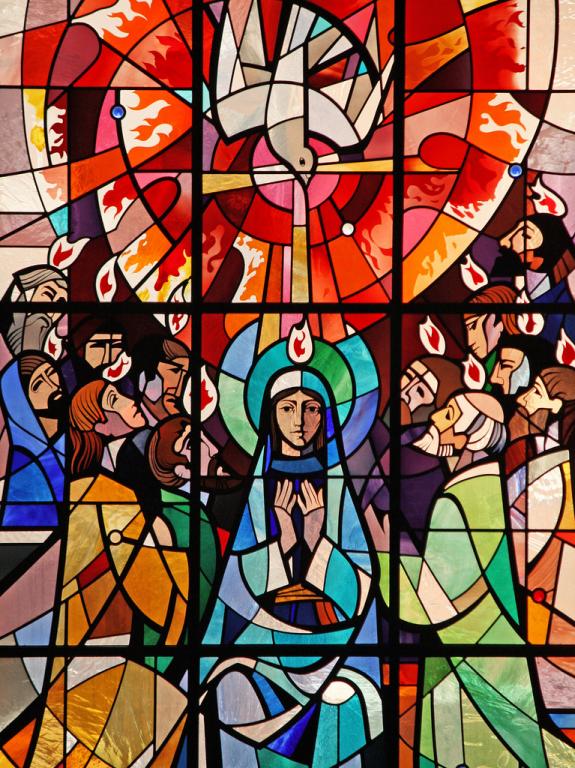
The Feast That Never Ends
This discussion guide has been generated by the WORD THIS WEEK'S Catholic AI Assistant based on Deacon Greg's homily.
Introduction and Overview
- Begin by discussing the nature of Pentecost as the "birthday" of the Church. How does it differ from other Church feasts in terms of celebration and recognition?
- Reflect on the role of the Holy Spirit within the Trinity. Why might the Holy Spirit often be perceived as the "quietest" member?
The Continuous Voice of the Spirit
- Read aloud Acts of the Apostles where the Holy Spirit descends upon the disciples. Discuss how the Spirit gave them a voice and what this symbolizes for the Church today.
- Reflect on the statement: "Pentecost never stopped." How can we see evidence of this ongoing event in the contemporary world?
Pentecost in Daily Life
- Discuss the examples provided in the sermon of how Pentecost is present in everyday actions and significant events, such as baptisms, confirmations, and acts of courage and martyrdom.
- Share personal experiences or stories where participants felt the presence of the Holy Spirit in their lives.
The Universal Nature of God’s Work
- Explore the idea that God’s work is "catholic" in the truest sense—universal, limitless, and timeless.
- How do the global examples mentioned in the sermon (e.g., efforts in Iraq, Ethiopia, acts of martyrs) emphasize the universal reach of Pentecost?
Hope and Transformation
- Discuss the concept of Pentecost as more than courage or defiance, but as hope—resounding, tireless hope.
- What instances in the sermon highlight the transformative power of hope through the Spirit? How do these relate to current events or personal experiences?
Living Pentecost Today
- Examine how Pentecost is evidenced every time the sacraments are celebrated or when we act as the body of Christ in the world.
- How can participants actively continue the legacy of Pentecost in their own communities and daily lives?
Closing Reflection
- Conclude by revisiting the prayer for the Holy Spirit to "come, creator blest, and in our hearts take up thy rest."
- Encourage participants to celebrate the ongoing presence of the Holy Spirit and reflect on their roles as part of the "great cloud of witnesses" to God’s work.
Homily Excerpt
2019 HOMILY—This Sunday, we celebrate the arrival of the Holy Spirit, and the great birthday of the Church, Pentecost. It’s different from most big feasts in the Church: We don’t hang lights or exchange gifts. We don’t wear fancy hats or eat lots of candy. There are no big Pentecost sales at Macy’s. But maybe there should be.
I don’t think we give this feast the credit or attention it deserves. Part of that may be because the one who dwells at the center of this great feast, the Holy Spirit, is surprisingly low key. Despite arriving with a roaring of wind and tongues of fire, the Spirit is very much someone who likes to stay in the background. He works behind the scenes.

THE WORD THIS WEEK invites you to check out the Catholic AI assistant (located at the bottom right-hand corner), a homily preparation resource you can use to clarify or develop the insights and themes of Deacon Greg’s homily.
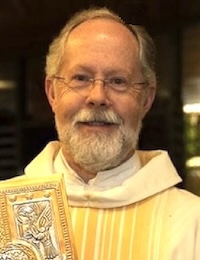
Pentecost Sunday (Year C)
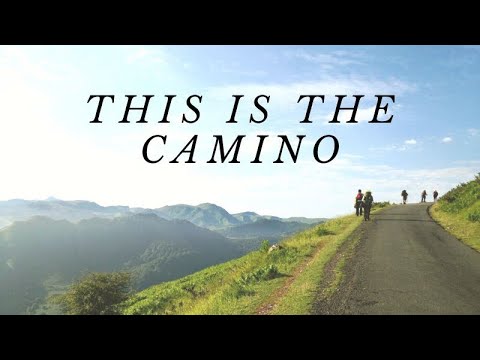
Camino Moments

This discussion guide has been generated by the WORD THIS WEEK'S Catholic AI Assistant based on Deacon Peter's homily.
1. Personal Experiences and 'Camino Moments'
- Have you ever experienced a 'Camino Moment' in your life, where a problem was unexpectedly resolved?
- Can you share a personal story in which a stranger brought help or comfort in a time of need?
2. The Role of the Holy Spirit
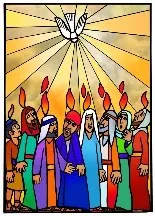
- How does the story of Pentecost illustrate the work of the Holy Spirit?
- In what ways do you see the Holy Spirit actively working in your own life or in the lives of others?
3. Sacraments and Spiritual Growth
- How do Baptism and Confirmation strengthen us with the gifts of the Holy Spirit?
- Which of these gifts do you find most relevant or useful in your current life situation?
4. Life as a Pilgrimage
- How is life similar to a pilgrimage, like the Camino Frances?
- What does viewing life as a journey toward a heavenly home change in your perspective or behavior?
5. Awareness and Reflection
- Why is it often difficult to notice the work of the Holy Spirit in our everyday lives?
- What practices can you incorporate into your life to become more aware of the Holy Spirit’s presence and guidance?
Activities
1. Reflection Journaling
- Spend time this week reflecting on moments when you sensed divine intervention or guidance. Record your thoughts and experiences in a journal and share them with the group.
2. Meditation or Quiet Walk
- Dedicate some time to a quiet walk or meditation, focusing on gratitude for the Holy Spirit's presence in your life. Reflect afterward with your group on your experiences.
3. Group Prayer
- Conclude your session with a group prayer, thanking God for the guidance of the Holy Spirit and asking for openness to future 'Camino Moments.'
Homily Excerpt
Ten years ago this week, I completed the Camino Frances with five members of my family. This is the famous 800 km pilgrimage from southern France to Santiago de Compostela in north-west Spain…
Walking the Camino can take many weeks, and you take with you only the most basic of necessities. Life becomes simpler and quieter, your mind becomes clearer, and you start to notice things that you’d normally miss in your busy life.
As you reflect on the Holy Spirit, you start to realise all he does for us. He leads us to Jesus, and helps us get to know him (Jn.15:26; 16:14). He guides us to where we need to go (Jn.16:13). He shows us what we’re meant to do (Acts 13:2; 16:6-7). And he helps us do God’s work (1Cor.12:11; Acts 1:8).
Something the Camino teaches us is that life itself is a pilgrimage, a journey from one day to another towards our heavenly home. And along the way, we’re all invited to see and experience, to learn and understand.
The Breath of God
This discussion guide has been generated by the WORD THIS WEEK'S Catholic AI Assistant based on Deacon Peter's homily.
1. Opening Reflection
- What are some common “locks” in our lives today, both literal and metaphorical?
- How do fear and worry contribute to these locks?
2. Scriptural Context:
- Read Acts 2:1-11, 1 Corinthians 12:3b-7, 12-13, and John 20:19-23. Discuss the setting and significance of these passages.
- How do these scriptures relate to the overarching theme of God’s breath bringing life and transformation?
3. Fear and Faith:
- Reflect on the disciples' fear following Jesus’ crucifixion. Have you ever experienced a similar feeling of being trapped by fear or uncertainty?
- Discuss Jesus’ action of breathing the Holy Spirit onto his disciples. What does the act of breathing symbolize in these scriptures?
4. The Power of God’s Breath:
- Consider instances in the Bible where God’s breath is depicted, such as in Creation (Genesis 1:1-5, 2:7) and the valley of dry bones (Ezekiel 37).
- How does understanding God’s breath as life-giving, creative, and renewing influence our spiritual life?
5. Pentecost Experience:
- What happened on the day of Pentecost and how did it transform the disciples?
- Relate to a personal Pentecost moment in your life – a time when you experienced transformation or clarity in your spiritual journey.
6. St. Edith Stein’s Journey:
- Summarize Edith Stein's background and intellectual struggles. Discuss her "Upper Room" experience and how she broke free.
- What was her Pentecost moment?
- How does her life serve as an example for overcoming spiritual restlessness and finding purpose?
7. Application:
- Are there areas in your life where you feel spiritually trapped or in your own "Upper Room"?
- How can you invite the Breath of God into these areas for transformation and renewal?
8. Contemporary Implications:
- In what ways does the message of Pentecost continue to resonate in the lives of Christians today?
- How can we, as individuals and communities, ensure that God’s spirit continues to lead us to live meaningful, faith-filled lives?
9. Closing Prayer:
- Conclude with a group prayer asking for openness to the Holy Spirit, courage to unlock the rooms we hide in, and wisdom to live as witnesses to God's transformative power.
Homily Excerpt

Are you filled with the Spirit and living a meaningful life? Or do you feel trapped in your own Upper Room, stuck with empty thoughts and going nowhere?
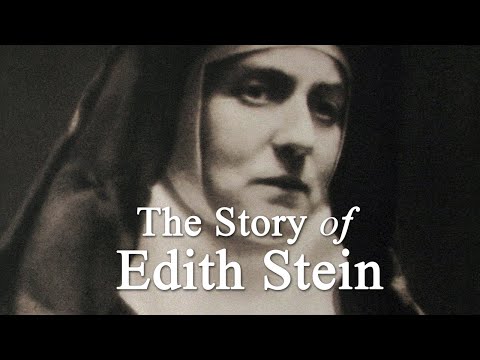
One person who managed to break out of her own Upper Room was St Edith Stein. She was born into a devout Jewish family in 1891, in Breslau, Germany (now Poland). As a teenager she turned to atheism, and as an adult she became a brilliant philosopher and one of the first women in Germany to earn a doctorate.
Edith’s ‘Upper Room’ wasn’t a physical room, however. She felt trapped in an intellectual prison, stuck in a silent space between unbelief and grace where she felt spiritually restless.
THE WORD THIS WEEK invites you to check out the Catholic AI assistant (located at the bottom right-hand corner), a homily preparation resource you can use to clarify or develop the insights and themes of Deacon Peter’s homilies.
────── ⋆⋅☆⋅⋆ ──────
Fr. Austin Fleming
Pentecost Sunday (Year C)

2009 HOMILY—So, the Spirit came upon the disciples as a strong driving wind and as tongues of fire resting on their heads. I wonder: if we had a new Pentecost would you prefer to be knocked over by a strong wind or have a flame settle just above the part in your hair?
Will it be wind strong and driving:
wind that forces you to lean into it as you walk;
wind so strong that if you don’t bow to it, you’ll be blown over;
wind strong enough strip a tree of leaves and branches
and strong enough to strip us of what we hold too tightly
what we reach for that is not ours…
wind strong enough to knock us down a peg or two;
wind strong to sweep us off our feet, like a lover driven to have us…
Or will it be tongues of fire, flames settling on our heads:
a flame strong enough to light our path in the dark times,
a flame bright enough to expose our hidden sins;
a flame warm enough to take the chill from a hardened heart
and melt our stubborn pride;
a flame of beauty drawing others to share our faith and hope;
a flame as pure as God: weightless yet weighted
by the Cross it brands upon our hearts…
This discussion guide has been generated by the WORD THIS WEEK’S Catholic AI Assistant based on Father Austin’s homily. NEED HELP? Copy and paste a question into the chat bot in the lower right corner of the screen and have our Catholic Assistant help you.
Opening Reflection Questions
1. What is your initial reaction to the imagery of wind and fire as symbols of the Holy Spirit?
2. Have you ever experienced a moment in your life where you felt “swept off your feet” by a powerful force or experienced a warming presence that guided you? How did that feel?
Exploring the Symbols: Wind and Fire
– Wind:
– How does the imagery of a strong wind challenge or inspire you in your faith journey?
– Discuss how the wind can strip away what we hold onto too tightly. What in your life might need to be surrendered to the Holy Spirit?
– Wind can be both a force of destruction and creation. How can we see God’s spirit act in both these ways in our lives and communities?
– Fire:
– Reflect on the ways fire acts as a source of light and warmth. How does the Holy Spirit bring light into dark areas of our lives?
– Consider the concept of fire exposing hidden sins and melting a hardened heart. How does this challenge resonate with you?
– How can the fire of the Holy Spirit be a force for beauty and attraction in spreading your faith and hope to others?
Balancing Wind and Fire
1. Do you think one is more necessary than the other, or do you agree that we need both wind and fire in our spiritual lives? Why or why not?
2. How can we avoid sheltering ourselves from the effects of God’s wind and fire, allowing transformation to occur?
Holy Spirit’s Role in Justice and Healing
– Discuss how the Holy Spirit’s “driving wind” can confront societal injustices and personal prejudices.
– In what ways does the Spirit empower us to be sources of warmth, light, healing, and justice?
Pentecost and the Gifts of the Holy Spirit
– Explore how Pentecost can renew the Spirit within us. What specific areas of your life require renewal and refreshment?
– Reflect on the gifts of the Holy Spirit mentioned in the sermon: wisdom, understanding, right judgment, courage, knowledge, reverence, and awe.
– How is each gift applicable in your daily life, at home, work, or within your community?
– How can you consciously open and use these gifts more effectively?
Practical Application
– Identify one specific way you can “lean into the Spirit’s driving force” in the coming week. What practical steps can you take to allow the Holy Spirit to work more fully in your life?
– What obstacles do you face that might hinder you from embracing the Holy Spirit fully? How can this group support you in overcoming them?
Prayer and Commitment
– Conclude by reflecting on the prayer for the Holy Spirit to transform our gifts and us as people offering them. How can this prayer become a daily personal practice?
– Commit to a specific action step or spiritual practice this week that invites the Holy Spirit to work within you.
THE WORD THIS WEEK invites you to check out the Catholic AI assistant (located at the bottom right-hand corner), a homily preparation resource you can use to clarify or further develop the insights and themes of Fr. Fleming’s homily.
────── ⋆⋅☆⋅⋆ ──────

Dominican Friars
of England & Wales,
Scotland
- The Spirit's Words of Forgiveness - 2001
- The Meaning of Pentecost - 2004
- Paraclete, or Parakeets?- 2007
- Blowin' in the Wind - 2016
- God at Home with Us - 2019
- Diversity in Unity - 2022
Pentecost Sunday (Year C)
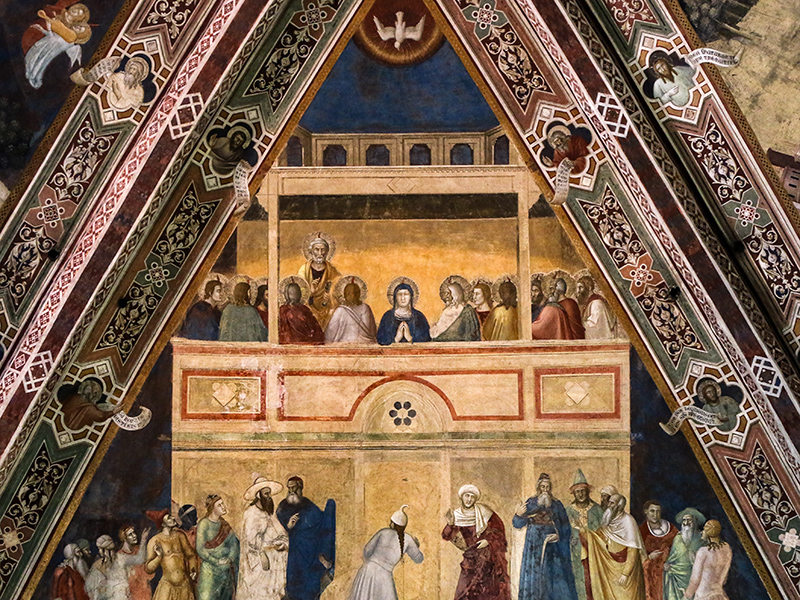
Photograph by Fr Lawrence Lew OP of a fresco in the Chapter Room (“Spanish Chapel”) of the Dominican convent of Santa Maria Novella, Florence.
This discussion guide has been generated by the WORD THIS WEEK'S Catholic AI Assistant based on the Dominican Blackfriars' homily for this week.
Introduction
The homily discusses the human longing for a sense of home, both physically and spiritually. It extends this metaphor of home to various aspects of life, including our relationship with God, our communities, and ourselves. This discussion guide will facilitate conversation around these themes and how they relate to our faith and the celebration of Pentecost.
1. Exploring the Concept of Home
- What are the elements or conditions that make you feel "at home"?
- How does the idea of "being at home" extend beyond the physical space to our relationships with others?
2. Challenges to Feeling At Home
- What are some of the obstacles we face in feeling at home with ourselves?
- How do external perceptions and criticisms influence our inner sense of being at home?
3. Community and Diversity
- Discuss the two perspectives on human diversity: those who embrace it versus those who are suspicious of differences. How can communities reconcile these viewpoints?
- Explore how your local community fosters a sense of home for its members. What could be improved?
4. Being At Home with God
- What misconceptions about God might make it difficult for people to feel at home with Him?
- How does the Catholic community sometimes contribute to a sense of not belonging or not being at home?
5. Lessons from Pentecost
- Compare the stories of the Tower of Babel and Pentecost. What is the significance of language and communication in each?
- How does the story of Pentecost shape our understanding of community and unity in diversity?
6. The Role of the Holy Spirit
- How does the Holy Spirit act as a ‘home-maker’ according to the sermon?
- Reflect on the personal invitation from the Spirit to make a home in our hearts. What does this mean for your personal faith journey?
7. Embracing God's Purpose
- What does it mean to keep Christ's word as described in John’s Gospel?
- How can we practice becoming more like Christ in our daily lives?
8. Reimagining Community
- Discuss the idea of the world as a home for every “waif and stray.” How do we as individuals and communities live up to this vision?
- What steps can you take to contribute to creating a more inclusive and welcoming environment in your community?
Homily Excerpt

Pentecost Sunday (C) | Fr Colin Carr invites us to make room for the God who seeks to make his home among us.
Human beings have a great longing to be at home: we feel particularly sorry for people who have to flee their home, perhaps even their country, because of natural disasters or human violence. We also speak of being at home with someone, or not feeling at home with them if they make us feel uncomfortable or keep criticising us. We want the street, the block of flats, the area where we live, to be a home for the local community. We want to feel at home with ourselves, but often find that difficult: we can’t believe that the person we see in the mirror is actually attractive to other people. Looking more widely, we can divide the human race into those who are glad that there’s a great variety of people in the world – the house is big enough for all sorts; and those who are suspicious of anyone who is different, and assume that they’re guilty until proved innocent.
And we want to be at home with God, but may have been told rather nasty things about him, like that he’s out to get us and is thoroughly critical of our performance as Catholics. And of course there are plenty of Catholics who seem to be thoroughly critical of our performance as Catholics, and the parish which we share with them doesn’t always have the feeling of a home and a community.
Pentecost is often called the birthday of the church. It’s the feast that teaches us about how to be at home – and how not to be.

This discussion guide has been generated by the WORD THIS WEEK'S Catholic AI Assistant based on the Dominican Blackfriars' homily for this week. NEED HELP? Copy and paste a question into the chat bot in the lower right corner of the screen and have our Catholic Assistant help you.
1. Introduction and Context
- What historical events at Obersalzburg does Fr Richard Finn reflect on, and how do they relate to the dangers of myths and nationalism?
- How does the historical setting contrast with the message of Pentecost in the context of the sermon?
2. Read and Reflect
Read Acts 2:1-11, Romans 8:8-17, and John 14:15-16,23-26.
- How do these readings complement the theme of Pentecost as presented in the sermon?
- Discuss the symbolism of "wind and flame" and the "gift of tongues" in the Pentecost story.
3. The Role of the Holy Spirit
- Why does the Holy Spirit choose to empower disciples to speak in diverse languages instead of unifying them in a single language?
- How does the Holy Spirit's empowerment relate to cultural identity and the dissemination of the Gospel?
4. Orthodox Preaching vs. False Myths
- Discuss the contrasts between orthodox preaching as informed by the Holy Spirit and the propagation of false myths for power.
- How are these distinctions relevant in contemporary society, considering the rise of populist parties and fear of migrants?
5. The Wonders of God
- What are the "wonders of God" that the disciples are empowered to speak of, according to the sermon?
- In what ways do these wonders shape the identity and mission of Christians both during Pentecost and in present times?
6. Discipleship and Forgiveness
- How does the notion of forgiveness relate to becoming orthodox preachers according to the sermon?
- Discuss the transformation in thought and action that comes with receiving forgiveness and the Holy Spirit.
7. Community and the Temple of the Holy Spirit
- Explore St Augustine’s vision of forming a temple of the Holy Spirit. How does this collective identity manifest in today's Church?
- In what ways can small groups and local churches contribute to this vision and offer true worship?
8. Application and Action
- Reflect on how the sermon’s themes can be applied to address current societal tensions and promote community.
- What practical steps can you and your group take to embody the message of Pentecost in your local context?
Homily Excerpt
Pentecost. Fr Richard Finn contrasts orthodox preaching with the allure of false myths.
A few days ago I looked out across the wooded valleys and crags of the alps from Obersalzburg. Here, Adolf Hitler had received parties of schoolchildren in meticulous staged displays of affection between the Führer and the offspring of the Fatherland. Here, too, he ordered and oversaw the invasion and occupation of neighbouring countries supposedly to restore German-speaking people to their rightful nation state. And here, too, Hitler instituted the mass murder of thousands who did not fit his vision of the Fatherland – the mentally and physically disabled, gypsies, communists, and homosexuals – and the genocide of literally millions of Jews.
THE WORD THIS WEEK invites you to check out the Catholic AI assistant (located at the bottom right-hand corner), a homily preparation resource you can use to clarify or further develop the insights and themes of the homilies above.
────── ⋆⋅☆⋅⋆ ──────
Fr. Jude Siciliano, OP

Pentecost Sunday (Year C)
Does the Church Lack Fire?
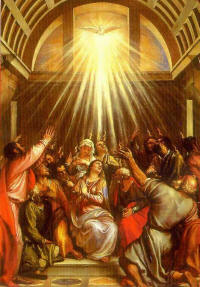
EXCERPT: Many of us “old-timers” in the faith are saddened by the number of people who have drifted away – or left the Church altogether. We notice others whose names remain on parish registries, but who are seldom present among us. Those who leave offer many reasons: uninspiring homilies, haphazard music, a lack of reverence, frequent fundraising appeals, disagreements with Church teachings on social issues, the exclusion of women, and more.
Do we, the Church, lack the fire of those early believers we read about today? The Gospel made a real difference in their lives. Belonging to the community gave them vitality and a shared sense of purpose. So, what are we waiting for? On this Pentecost, we pray for a new outpouring of the Holy Spirit – one that will set our communities ablaze with a fire that draws others by its warmth and light.
Fr. Charles E. Irvin
Pentecost Sunday (Year C)
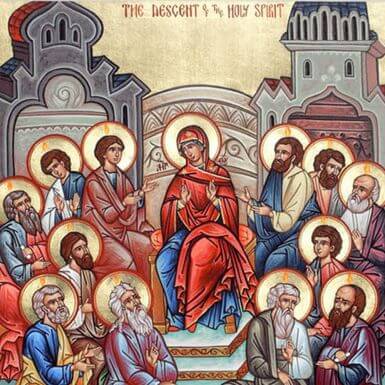

The Holy Spirit speaks to us in many ways both individually and when we as a people are gathered in Christ’s name. In a particular and solemn way the Holy Spirit speaks to us in His Church, in the Mystical Body of Christ, in Sacred Scripture, in inspired words we hear in sermons or from the mouths of people we know of that are close to God. In each and every Mass the Holy Spirit speaks to us in the scripture passages and in the words of the prayers that are offered. We ought to ponder over what we hear in those instances.
Reading classical literature, spiritual books and above all reading the bible, all can tune our minds to the promptings of the Holy Spirit.
So on this Pentecost Sunday, let’s you and I give attention not only to the workings of the Holy Spirit in the Church, but likewise give attention to the promptings, the movements, and the inspirations of the Holy Spirit in each one of us individually.
This discussion guide has been generated by the WORD THIS WEEK’S Catholic AI Assistant based on Fr. Irvin’s homily.
1. The History of God’s Approach to Humanity
– Explore how God approached humanity through Jewish prophets and leaders like Abraham and Moses.
– Discuss the significance of the Ten Commandments in living as God intended and fostering peace among people.
– Reflect on the incarnation: “The Word became flesh and dwelt among us” (John 1:14). How does Jesus embody the nearness of God to humanity?
2. The Role of the Holy Spirit
– Dialogue on the transition from God approaching through prophets and Jesus to His presence in the Holy Spirit.
– How does the Holy Spirit offer a unique closeness to God within us?
– Discuss the idea of being “temples of the Holy Spirit” and what this implies for our daily lives.
3. God’s Nature and Motivation
– Explore perceptions of God as angry versus understanding Him as a loving Father correcting out of love.
– Consider the role of punishment: Is it meant for condemnation or correction and healing?
– How does this view influence your understanding of justice and mercy?
4. Pope Francis’ Emphasis on Mercy and Love
– Examine Pope Francis’ teachings on mercy, love, and care for the afflicted.
– Discuss how these themes align with our understanding of God’s closeness and desire for a New Creation.
– Reflect on the individual’s role in embodying God’s presence in the world.
5. Reflection Questions for Personal Growth
– Do you set aside time for prayer, meditation, and worship? How do these practices enhance your relationship with God?
– What are you truly focusing on in life? Do these things align with spiritual growth and peace?
– Share insights on seeking God’s guidance and being led towards goodness, peace, and justice.
– Reflect on how you make decisions: Are they impulse-driven or thoughtfully considered?
6. Recognizing God’s Work and the Holy Spirit’s Influence
– Discuss how the Holy Spirit enlightens us and reveals God’s work in and through us.
– Reflect on the role of “coincidences” in discerning God’s presence and guidance.
– Examine how the Holy Spirit speaks to us through Scripture, sermons, and personal prayer.
7. Building Sensitivity to the Holy Spirit
– Explore ways to tune into the Holy Spirit’s promptings, such as reading scripture and literature.
– How can the insights from this Pentecost sermon guide your spiritual journey and deepen your faith?
8. Final Reflection
– Consider the power of Pentecost as both a renewal and a reminder of the Holy Spirit’s active presence.
– Reflect on your understanding of being a “temple of the Holy Spirit” and how this shapes your identity and actions.
THE WORD THIS WEEK invites you to check out the Catholic AI assistant (located at the bottom right-hand corner), a homily preparation resource you can use to clarify or further develop the insights and themes of Fr. Irvin’s homily.
────── ⋆⋅☆⋅⋆ ──────
Fr. George Smiga
- The Goose ofPentecost - 2004
- Seeing the Invisible - 2007
- The Light of the Spirit- 2010
- The Groove of the Spirit- 2013
- The Holy Spirit as Fire- 2019
- Bable and Pentecost- 2022
Pentecost Sunday (Year C)

2007 HOMILY – God acts in visible and invisible ways. The scriptures describe God visiting our ancestors in visible form. God walked with Adam and Eve in the cool of the garden, visited Abraham in the heat of the afternoon by the oaks of Mamre, spoke to Moses face to face on Mount Sinai. Of course, we as Christians believe that God became one of us in Jesus of Nazareth. Jesus is for us God made visible. But God’s actions are not limited only to these visible manifestations. In fact, God acts more frequently and more universally in ways that we cannot see. This brings us to today’s feast, the Feast of Pentecost. Because today we celebrate the gift of the Spirit, and it is through the Spirit of God that God works invisibly in our lives and in our world. When we say, “I believe in the Holy Spirit,” we say that God is present and active in all things, in all things but sin. When we say, “I believe in the Holy Spirit”, we say that there is no natural process, no historical development that is independent of God. God is present invisibly in all things, guiding the events of nature and history.
The famous Jewish comedian, Heni Youngman, was famous for his one-liners. On his ninetieth birthday a friend asked him, “Heni, to what do you give credit for your long life?” Without skipping a beat, Youngman responded, “Breathing.” There you have it. There’s no argument about that. Where there is no breath, there is no life. It is our invisible breath which sustains our lives from minute to minute, day to day, year to year.
This discussion guide has been generated by the WORD THIS WEEK’S Catholic AI Assistant based on Fr. Smiga’s homily.
Introduction
Begin with a brief overview of the homily’s main theme: God acts both visibly and invisibly in the world. Reflect on how the Holy Spirit represents God’s invisible actions and presence, guiding us towards the Kingdom of God.
Scriptural Context and Understanding
– Discuss the examples of God’s visible actions in the scriptures: Walking with Adam and Eve, visiting Abraham, speaking to Moses, and becoming human in Jesus.
– How do these examples help you to understand God’s interaction with humanity?
– Reflect on how Jesus is described as “God made visible” and the significance of this belief in Christian faith.
The Role of the Holy Spirit
– Examine the significance of Pentecost and the gift of the Holy Spirit in the church.
– What does it mean when we say, “I believe in the Holy Spirit”?
– Consider the statement that God is present and active in all things but sin. How does this influence your perspective on natural processes and historical developments?
The Metaphor of Breath
– Analyze the metaphor of breath as used in the sermon, particularly in the context of Heni Youngman’s quote. How does this metaphor help us understand the role of the Holy Spirit?
– How does Jesus breathing on the disciples relate to the concept of the Spirit as the breath of the world?
God’s Guidance Through Generations
– Explore the illustration of genetic makeup over generations. How does this natural process demonstrate God’s invisible guidance through the Holy Spirit?
– Reflect on how recognizing God’s role in these processes might impact the way we view our ancestry and our unique identity.
Hope and Courage in the Spirit
– Discuss how belief in the active presence of the Holy Spirit provides hope, even amidst adversity.
– Consider real-life situations where the Spirit’s presence could encourage hope or courage, such as facing family problems, illnesses, or societal injustices.
– Share personal experiences or stories where the Holy Spirit might have provided you with hope or the courage to act.
Living in Cooperation with the Spirit
– Reflect on how recognizing the Holy Spirit’s activity can motivate you to work for justice, peace, and support for the vulnerable.
– Discuss practical actions you can take in your community to align with the Spirit’s movement towards God’s Kingdom.
Conclusion
– Summarize the key points discussed and encourage group members to carry forward the hope and courage inspired by the Holy Spirit.
– Consider why believing in an active, guiding Spirit gives confidence in the fulfillment of God’s plan for creation.
THE WORD THIS WEEK invites you to check out the Catholic AI assistant (located at the bottom right-hand corner), a homily preparation resource you can use to further clarify or further develop the insights and themes of Fr. Smiga’s homilies.
────── ⋆⋅☆⋅⋆ ──────
Pentecost Sunday (Year C)
Holy Spirit: “Lord and Giver of Life”
EXCERPT: The Holy Spirit, the “Lord and Giver of Life,” brings us back to our truest selves as he illumines us regarding the sanctity of life. The Spirit brings many gifts, and one of them is to enable us to see creation in its proper relationship to God – including the crowning of his creation, the gift of human life.
When we do not have this light of the Holy Spirit, the law we have to follow seems like an imposition from the outside that limits our freedom. That’s what people in the world sometimes feel about our attitude toward abortion and euthanasia. They think we are “restricting rights.” But when the Holy Spirit fills us, he gives us an inner attraction to all that is right and good, so that we do not feel pushed where we would rather not go, but rather pulled by the attractiveness of what is good and right.
THE WORD THIS WEEK invites you to check out the Catholic AI assistant (located at the bottom right-hand corner), a homily preparation resource you can use to clarify or develop the insights and themes of Frank Pavone’s homily notes for preachers.
────── ⋆⋅☆⋅⋆ ──────
Pentecost Sunday (Year C)

He Remains Through the Spirit

It is important for us to realize that we also have received the Holy Spirit at our confirmation. Our confirmation was our personal Pentecost just as our baptism was our personal Easter. Because we have received His Spirit, the Lord is with us, wherever we go, whatever we do. And so we travel from one section of the country to another, or from one country to another. We might be visiting, like on summer vacation, or we might be staying permanently, like the Polish members of our family, or the Filipino and Asian members of our family. We may retire here, or move here for
work. Wherever we go, no matter how long we stay, we are given the mandate to make disciples of all nations and we are given the assurance that we are not alone. Because we have received the Holy Spirit, the Lord is with us.
This discussion guide has been generated by the WORD THIS WEEK’S Catholic AI Assistant based on Msgr. Pellegrino’s homily.
Introduction
– How does Matthew 28:20 resonate with you personally? Why do you think it is a vital scripture for Christians?
– What emotions or thoughts come to mind when you hear the phrase “I am with you always until the end of time”?
The Apostles and Their Mission
– Discuss the significance of the apostles’ journeys and their willingness to leave everything behind. How does receiving the Holy Spirit empower them in their mission?
– How does the sermon highlight the transitioning roles of the apostles post-Pentecost? Compare their lives before and after receiving the Holy Spirit.
The Role of the Holy Spirit
– In what ways did the Holy Spirit transform the apostles, according to the sermon? Share any personal experiences where you felt guided by the Holy Spirit.
– Discuss how the Holy Spirit played a crucial role in overcoming language barriers during Pentecost. How can this be seen as a metaphor for modern challenges?
Personal Pentecost: Realizing Our Mission
– The sermon relates personal confirmation to Pentecost. How can this perspective change the way we live our faith daily?
– What are some areas in your life where you feel called to “go and make disciples”?
Overcoming Loneliness with Faith
– How does the idea that “He is with me” provide comfort during times of loneliness or uncertainty?
– Reflect on a time when this assurance helped you through a challenging period.
Faith in Action
– The sermon suggests actions like joining community events or inviting others to faith-based gatherings. What are some practical ways you can incorporate these into your life?
– Discuss the importance of personal involvement in faith journeys, especially when encouraging others to rediscover their faith.
Historical vs. Living Faith
– Why do you think it is a mistake to view faith events in purely historical terms? How can seeing them as ongoing influence our spiritual growth?
– What steps can you take to ensure that the celebrations of Christmas, Easter, and Pentecost have a personal impact on your life?
Continuous Mission
– The sermon emphasizes that the mission of making disciples is ongoing. How can you actively participate in this mission in your community?
– How does the notion that every day is Pentecost challenge or motivate you in your faith journey?
Conclusion
– Reflect on the ways you can carry out the mandate of Pentecost in your everyday life. What practical steps will you commit to this week to live this out?
– How can this message from the sermon bring about changes in your personal and communal spiritual life?
THE WORD THIS WEEK invites you to check out the Catholic AI assistant (located at the bottom right-hand corner), a homily preparation resource you can use to clarify or develop the insights and themes of Msgr. Pelligrino’s homily.
────── ⋆⋅☆⋅⋆ ──────
Pentecost Sunday (Year C)

The video below features details from the clerestory of my parish, Holy Comforter in Washington, D.C. Notice the tongue of fire above each saint.
I Have Come to Cast A Fire on the Earth
What a wondrous and challenging feast we celebrate at Pentecost! A feast like this challenges us because it puts to the lie a lazy, sleepy, hidden, and tepid Christian life. The Lord Jesus said to the apostles, I have come to cast a fire on the earth (Luke 12:49). This is a feast about fire, a transformative, refining, purifying fire that the Lord wants to kindle in us. It is a necessary fire, for as the Lord first judged the world by fire, the present heavens and the earth are reserved for fire. Because it is going to be the fire next time, we need the tongues of Pentecost fire to fall on us to set us on fire and bring us up to the temperature of glory.
The readings today speak to us of the Holy Spirit in three ways: the portraits of the Spirit, the proclamation of the Spirit, and the propagation by the Spirit.
I. The Portraits of the Spirit
II. The Proclamation of the Spirit
III. The Propagation by the Spirit
THE WORD THIS WEEK invites you to check out the Catholic AI assistant (located at the bottom right-hand corner), a homily preparation resource you can use to clarify or develop the insights and themes of Msgr. Pope’s homily.
────── ⋆⋅☆⋅⋆ ──────
Society of African Missions

Pentecost Sunday (Year C)
Sunday Homilies
As Christians – followers of Christ through our Baptism – we are called on to make Christ present in our own lives and in the lives of others. As we read the Sacred Scripture during the different seasons of the Liturgical Year may we pray in our hearts:
Come Holy Spirit, fill the hearts of your faithful and enkindle in them the fire of your love.
────── ⋆⋅☆⋅⋆ ──────
Bishop John Kobina Louis
Pentecost Sunday (Year C)

Sunday Homilies

Bishop John Kobina Louis, PhD, is an auxiliary bishop of the Archdiocese of Accra, Ghana. He was ordained as an auxiliary bishop on 19th April 2023.
────── ⋆⋅☆⋅⋆ ──────
Fr. Michael Chua
Pentecost Sunday (Year C)

Homily Excerpt
Being “born again” seems to be within the exclusive domain of evangelical or Pentecostal Protestants. You may be surprised to know that being “born again” is not the sole monopoly of Protestants. But when Catholics use it, they typically mean something quite different. When a Catholic says that he has been “born again,” he refers to the transformation that God’s grace accomplished in him during baptism. Yes, if we have been baptised, we have been “born again.”
Pope Emeritus Benedict XVI described the Feast of the Pentecost as the feast of “the Baptism of the Church.” It is the day the Church is “born again.” The Holy Spirit, “who is the Lord and the Giver of Life … has the power to sanctify, to remove divisions, to dissolve the confusion caused by sin. … The Spirit distributes divine goodness and supports living beings that they may act in accordance with that goodness. As intelligible Light, it gives meaning to prayer, invigorates the mission of evangelisation, sets aflame the hearts of those who hear the happy message, and inspires Christian art and liturgical music. … It creates faith within us at the moment of our Baptism and allows us to live as conscious and responsible children of God, in keeping with the image of the Only-begotten Son.”
Homily Excerpt
Earth. Wind. Fire. Water. The four classical elements of the universe were originally conceived by the ancient Greek philosopher Empedocles, five hundred years before Christ, and popularised by Aristotle. Of course, we are not going to dispute the error and the naïveté of the ancients in postulating this simplistic explanation that the entire universe is made up of these basic building blocks. We are not going to split hairs, or to be more precise, split atoms to refute this ancient science. On this feast of Pentecost, we are invited to consider them as entry points into the story of divine love and presence, that encompasses all creation.
The association of these four material elementals with the ephemeral Spirit, points to something foundational to our Catholic perception of the universe – we speak of the Sacraments as outward signs of inward grace; the invisible spiritual realm hidden within and being expressed through the visible and material realm.

Homily Excerpt
It’s been 50 days since Easter, 49 days since the passing of Pope Francis and exactly one month since the election of a new Pope, Pope Leo XIV. Yes, I’ve been keeping count. Some can’t contain their exhilaration. Others are a little more cautious, observing a “wait-and-see” attitude. Still others remain disappointed that their preferred candidate wasn’t elected, though mostly hiding their disappointment publicly for fear of retribution or judgment. The question that was being floated before, during and even after the short conclave which elected the new pontiff has been this: what role did the Holy Spirit play in all this? Was it purely politics and human machinations or was this the result of divine intervention, the Holy Spirit at work in the Church?
It is not hard to come to such an assumption because if there is an implicit assumption that the Pope can be infallible (in whatever way that is claimed), then surely the election of the Pope must be equally infallible? It must be stated from the very beginning that we should not conflate the doctrine of infallibility with the election of the pope. The cardinals are not guaranteed infallibility. Furthermore, although secrecy is imposed on the participating cardinals under an oath that could lead to one’s excommunication, it doesn’t take much to assume that the entire conclave was conducted under a highly charged politicised atmosphere where much energy is spent on canvassing, persuading, negotiating, dissembling and organising. Is there even room for the Spirit to work?
THE WORD THIS WEEK invites you to check out the Catholic AI assistant (located at the bottom right-hand corner), a homily preparation resource you can use to clarify or develop the insights and themes of Fr. Chua’s homilies.
────── ⋆⋅☆⋅⋆ ──────
Pentecost Sunday (Year C)

Homily Excerpt
2025 HOMILY – Thank God for the Church on her birthday this Sunday, the feast of Pentecost!
“You are Rock, and on this rock I will build my Church,” Jesus told Peter. He declared that God in heaven would bind whatever Peter bound on earth, thus promising that Peter’s binding would be inerrant, for God cannot confirm error.
Moreover, Jesus said “the jaws of death” would not prevail against his Church, meaning that Peter’s office would survive Peter. Accordingly, Peter’s successors in this office understood that they possessed his primacy and inerrancy.
Finally, Jesus promised his Church his Holy Spirit. “I have much more to tell you, but you cannot bear it now,” he told his apostles. “When he comes, however … he will guide you to all truth.”
Vatican I summarized: the primacy that Christ gave Peter is possessed by the bishops of Rome. We must therefore obey the Pope in matters of faith, morals, and Church government.
THE WORD THIS WEEK invites you to check out the Catholic AI assistant (located at the bottom right-hand corner), a homily preparation resource you can use to clarify or develop the insights and themes of Fr. Hawkswell’s homily.


────── ⋆⋅☆⋅⋆ ──────
Fr. Tommy Lane
Pentecost Sunday (Year C)
The Holy Spirit Comes to Us in the Sacraments
It is interesting how everything comes together in God’s plan: in the Old Covenant, God gave the Ten Commandments on two stone tablets to Moses at Mount Sinai during wind and fire, and in the New Covenant God gave the Holy Spirit at Pentecost during wind and fire on the very day they were celebrating God giving the commandments to Moses. The prophet Jeremiah had foretold that God would give a new covenant not written on stone but written on people’s hearts (Jer 31:31-33). God giving the Holy Spirit is how the New Covenant is written on people’s hearts.
────── ⋆⋅☆⋅⋆ ──────
Pentecost Sunday (Year C)

It is no secret that many of us elders wonder why so many of our youth seem not to take our church as seriously as we once did (or as seriously as we think we once did). We can say that the homilies are boring, that we should be as entertaining as MTV or the new supermarket cathedrals.
We can blame the music, the irritating improvisations, the lack of reverence, the loss of chant, the irrelevance of sermons, the carping about money, the exclusive language, the inclusive language, and an almost infinite number of deficits.
But whatever it is, we lack the fire.
It was fire that the Spirit bequeathed to our ancient brothers and sisters. They were so much on fire, they wanted to proclaim it to the world. They spoke of something that made a difference in their lives, something or someone they loved.
This discussion guide has been generated by the WORD THIS WEEK’S Catholic AI Assistant based on Fr. Kavanaugh’s homily.
Introduction and Opening Thoughts
– What does it mean to be a Christian or a Catholic in today’s world?
– How does society’s emphasis on diversity and pluralism impact the way we perceive and celebrate our faith?
Understanding the Church and Faith
– What is the significance of Pentecost for the Church?
– How do we evaluate whether our church and faith are worth celebrating and sharing with future generations?
Challenges to the Faith
– Why might some feel uncomfortable being proud of their Catholic traditions?
– Discuss the tensions between maintaining religious identity and embracing diversity.
Reflection on Fire and Passion
– The sermon mentions a lack of “fire” in the church today. What does this mean, and how can we rekindle it?
– St. Paul described early Christians as a “vibrant body.” How can modern Christians foster a similar sense of unity and common purpose?
Unique Catholic Perspective
– What is the “catholic” dimension mentioned in the sermon, and how does it set Catholics apart?
– In what ways do the sacraments, structure, and traditions of the Catholic Church bring followers closer to Christ?
Encountering Christ
– Discuss the various ways Catholics find Christ in their lives, as listed in the sermon (e.g., scripture, community, sacraments).
– How can recognizing Christ in various facets of life enhance one’s faith journey?
The Role of Love in Faith
– Consider the idea that if you love something, you want to share it. How does this apply to faith?
– Reflect on the question: Do we love the Lord and the world enough to share our faith with others?
Personal Application
– What steps can you personally take to deepen your love for your faith and its traditions?
– How can you share your faith with others in a meaningful and respectful way?
Group Reflection and Prayer
– Close with a group reflection on the key points discussed. What can each participant take away from this session?
– End in prayer, asking for the fire of the Holy Spirit to reignite passion for the faith and the courage to share it with others.
THE WORD THIS WEEK invites you to check out the Catholic AI assistant (located at the bottom right-hand corner), a homily preparation resource you can use to clarify or develop the insights and themes of Fr. Kavanaugh’s homily.
────── ⋆⋅☆⋅⋆ ──────
Pentecost Sunday (Year C)
Homily Excerpt
Genesis tells us a story of how the whole world spoke the same language, once upon a time, using the same words and vocabulary. Interestingly enough, there are scientists who claim they can trace the languages of Europe and Asia to a common language that was spoken 10,000 years ago. I found that very interesting. The people of the kingdom mentioned in the bible, however, made a fateful mistake by deciding they no longer wanted to be subjugated under God. The bible tells us that this culture was no longer content with being mere creatures. They wanted to be greater than the Creator. The government of this kingdom, to achieve this ambition, built a tower high into the sky so that they could symbolically claim superiority over God. You remember the story. Or as one of my favorite poems goes, “Their tower’s impressive statistics pleased architects, boosters and mystics. But their excess of pride caused the Lord to decide it was time that they studied linguistics.” The great city of course was Babel. Babel is where we get the word “babbling” from. It is a story about original sin, about how egotism can get in the way of our relationship with God and with others.
THE WORD THIS WEEK invites you to check out the Catholic AI assistant (located at the bottom right-hand corner), a homily preparation resource you can use to clarify or develop the insights and themes of Bishop’s Schuster’s homily.

Pentecost Sunday (Year C)
The Spirit is Full of Surprises
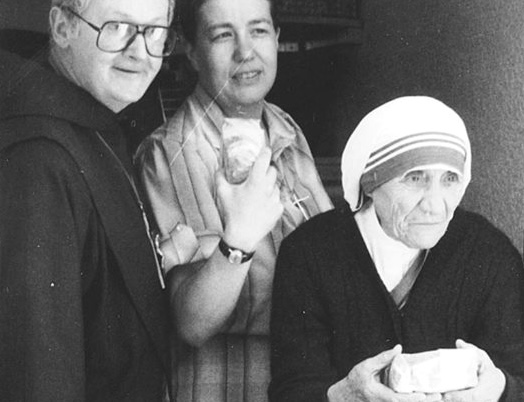
In the biography, Mother Teresa speaks of surprise. At her age, time and place, would she, could she do something different, be someone different? She was like the Apostles hiding behind the closed doors of her cloister. She said Christ surprised her. He came through the locked doors and breathed His Spirit on her. He called her to a second vocation.
The Spirit is full of surprises. We have to admit that secularism and affluence have muted the presence of God in our part of the world, but all is not lost. History has shown us that even in our worst moments, Jesus’ ever-present Spirit can break through and raise up saints who turn things around. They call us back to the Gospel, and give us hope.
A Francis of Assisi pops up out of the moral mess of the twelfth century. Maximilian Kolbe steps forward from the Nazi madness to die a martyr. Rosa Parks says no to racial prejudice and refuses to move to the back of the bus. Nelson Mandela rejects apartheid and goes to prison for twenty years.
Ascension and Pentecost tell us that God is still present, still speaks, still sends out disciples to make a difference, and still calls. Not just the St. Francis’ and the Kolbe’s and the Park’s and Mandela’s, but you and me. What Jesus said at Ascension still remains valid and indispensable: You be My witness. We are the Church, and what we do the Church does. And what we fail to do, the Church fails to do.
THE WORD THIS WEEK invites you to check out the Catholic AI assistant (located at the bottom right-hand corner), a homily preparation resource you can use to clarify or develop the insights and themes of Fr. Warren’s homily.
────── ⋆⋅☆⋅⋆ ──────
Fr. Jagodensky, SDS
Pentecost Sunday (Year C)
Homily Excerpt
Dear Joe, (no respect)
I wouldn’t wish it on anyone, but I don’t mind it myself. You ever hear the saying about “three on a date;” just try it for an eternity and see how it feels. Once, God and Jesus rented a tandem bicycle, I thought it was meant to taunt me, but I smiled. Ever see a restaurant with a table for three? Three soldiers and one match? Three strikes and you’re… So image a third on this eternal wheel.
You Folks Think Only in Two’s:
God did His thing in seven days and is thought and talked about enough. Jesus did his bit in only three years and even has an acronym for himself, WWJD as though it helps somebody in a bind. Me? Your life is full of twos but rarely is there a third. Right/Wrong, Left/Right, Sin/Grace, Heaven/Hell, Democrat/Republican. And then there’s “number three,” Me. Maybe my name ought to be, “Rarely!”…
“Offers You that Place of Peace and Contentment”…
“There ought to be eight gifts from Me”…
“1962 Was My Idea”…
“Tongue as of Fire”…
Please note that the provided video clips serve as additional resources to complement the homily. They may not have a direct correlation with the contributor’s original content. They aim to inspire preachers to enrich their own homilies, drawing ideas and insights from both the written material and the visual content explored.