

COMMENTARY

SOURCE: The Mass Readings Explained
SECOND READING: The Word of God is a powerful, two-edged sword that reveals deep truths about our hearts and souls, prompting transformation and repentance through its penetrating nature.
- 00:00 The Word of God is likened to a two-edged sword, emphasizing its powerful and potentially dangerous nature in revealing truth.
- 01:07 Scripture is likened to a sharp double-edged sword that penetrates deeply into our souls, revealing truths as effortlessly as a sharp knife cuts through bone.
- 02:31 The metaphor of the sword representing the word of God is vividly illustrated in scripture, particularly in Revelation, where the risen Christ is depicted with powerful imagery.
- 03:27 The imagery of Jesus wielding a sword symbolizes the powerful and discerning nature of God's word, both in scripture and as spoken by Christ, revealing the intentions of the heart.
- 04:46 God's word penetrates our hearts and souls, revealing our innermost truths much like a knife exposes the vital organs of an animal.
- 05:56 Scripture and preaching have the power to convict, transform, and expose our sinful hearts, as illustrated by Peter's sermon on Pentecost.
- 07:17 The powerful word of God can deeply transform hearts, prompting repentance and a desire for salvation, yet many hesitate to engage with scripture due to its revealing nature.
- 08:48 Daily Bible reading is essential as it confronts us with God's Word, revealing our hearts and encouraging repentance.
- Many people avoid reading the Bible daily due to excuses like being too busy or finding it difficult and intimidating.
- Reading scripture is powerful and convicting because it allows us to encounter the living Word of God, which exposes our hearts and prompts repentance.

SOURCE: Hearers of the Word
GOSPEL READING: True discipleship requires prioritizing faith over wealth, as sacrificing earthly possessions for the gospel leads to eternal rewards and spiritual fulfillment.
- 00:00 Reflecting on Mark 10:17-31 challenges us to reassess our values regarding possessions and wealth in the pursuit of true discipleship.
- The reflection on Mark 10:17-31 emphasizes the significance of possessions and wealth in the context of discipleship, urging us to reconsider our true desires in light of current crises.
- The passage from Mark 10:17-31 explores the relationship between possessions, wealth, and true discipleship, prompting reflection on personal values and priorities in life.
- 03:14 Selling possessions and prioritizing faith is essential for entering the kingdom of God, as wealth can be a significant barrier to salvation.
- 05:13 Sacrificing earthly possessions for the gospel is essential for true discipleship and leads to eternal rewards, while prioritizing wealth can result in spiritual ruin.
- Jesus teaches that sacrificing earthly possessions for the sake of the gospel leads to abundant rewards in this life and eternal life, emphasizing the danger of prioritizing wealth over God.
- Serving wealth leads to spiritual ruin, as the pursuit of riches can result in temptation, destruction, and a departure from faith.
- Wealth and luxury can lead to spiritual ruin, as true discipleship requires prioritizing faith over familial and material attachments.
- To inherit eternal life, one must be willing to give up their possessions and follow Jesus, as illustrated by the story of a wealthy man who struggled to do so.
- 10:40 The passage illustrates the rich man's quest for eternal life, emphasizing God's goodness and the call for wealthy disciples to prioritize justice and charity over earthly possessions.
- The passage emphasizes the journey of discipleship, highlighting the rich man's eagerness and humility in seeking eternal life, while Jesus redirects the focus to God's goodness and the nature of true resurrection.
- The Shema Israel emphasizes loving God wholeheartedly, while Jesus highlights the importance of commandments related to justice and charity, particularly for the wealthy, contrasting earthly life with eternal life.
- 14:09 Jesus teaches that true discipleship requires prioritizing faith over wealth, echoing Saint Paul's view that knowing Christ surpasses all material possessions.
- Jesus emphasizes the cost of discipleship, highlighting the need to prioritize following Him over material possessions, as illustrated by the rich man's reaction to His call.
- Saint Paul emphasizes that all worldly assets are worthless compared to the value of knowing Christ and attaining righteousness through faith in Him.
- 17:32 Wealth hinders entry to God's kingdom, but faith makes the impossible possible.
- Wealth makes it difficult to enter the kingdom of God, but with faith, all things are possible.
- The idea of a narrow gate in Jerusalem is a metaphorical exaggeration, illustrated by the image of a camel passing through a needle, emphasizing the challenges of wealth and faith.
- 20:48 Those who sacrifice for Jesus will be richly rewarded in this life and the next, highlighting the value of discipleship and community.
- Those who sacrifice for Jesus and the gospel will be rewarded abundantly in this life and receive eternal life, but the order of importance will be reversed.
- The passage highlights the positive portrayal of disciples who have sacrificed everything to follow Jesus, emphasizing the new Christian community's kinship, the promise of rewards in this life and the next, and the importance of the concluding paradox in understanding discipleship.
- 23:05 True value lies in spiritual wealth and following Jesus, rather than worldly possessions.

SOURCE: A Word Proclaimed
GOSPEL READING: True fulfillment and happiness come from surrendering material wealth and following Jesus’s teachings, which lead to deeper spiritual connections and treasures in heaven.
- 00:00 Wisdom is the ultimate treasure, as Jesus emphasizes the commandments in response to a man's quest for eternal life.
- 02:26 Selling all possessions to follow Jesus leads to true happiness, but many, like the rich man, struggle to let go of distractions.
- 04:18 Embracing Jesus's call to give up worldly possessions leads to greater treasures in heaven and a deeper relationship with God.
- 05:55 God offers a second chance for fulfillment in life, urging detachment from material riches while emphasizing the importance of listening to His call.
- 07:47 God urges parents to seek His guidance in raising children, as wealth can distract from spiritual priorities and hinder entry into the kingdom of God.
- God calls parents to submit their responsibilities to Him for guidance in raising their children and managing their lives.
- Wealth can hinder one's ability to enter the kingdom of God, as it often leads to anxiety and distraction from spiritual priorities.
- 10:17 Wealth can be a distraction, but by sharing it and seeking guidance from the Lord, one can use it for good and remain detached from its harmful effects.
- 11:29 A Palestinian man shared how his family quickly decided to give away $60,000 he received from the Israeli government instead of using it for a trip to America.
- 12:43 Surrendering material wealth and following God's guidance can restore family bonds and lead to a holy life.

SOURCE: A Walk in the Word
MASS READINGS: True discipleship requires detachment from wealth and a commitment to following Jesus, emphasizing that eternal life and spiritual fulfillment come from prioritizing God over material possessions.
- 00:00 A rich young man struggles to follow Jesus' call to sell his possessions, illustrating the challenge for the wealthy to attain eternal life, while Jesus emphasizes the rewards for those who sacrifice for Him.
- A rich young man, despite his adherence to commandments, is unable to follow Jesus after being told to sell his possessions, highlighting the difficulty for the wealthy to enter the kingdom of God.
- Jesus assures that those who sacrifice for Him and the gospel will receive abundant rewards in this life and eternal life to come.
- Jesus, on his way to the cross, is approached by a man seeking guidance on inheriting eternal life, highlighting the connection between the path to death and the path to life.
- A man asks Jesus how to inherit eternal life, highlighting the urgency of understanding salvation, which is a gift of grace that requires a response of faith.
- A wealthy young ruler humbly approaches Jesus, defying social norms, to seek guidance on inheriting eternal life.
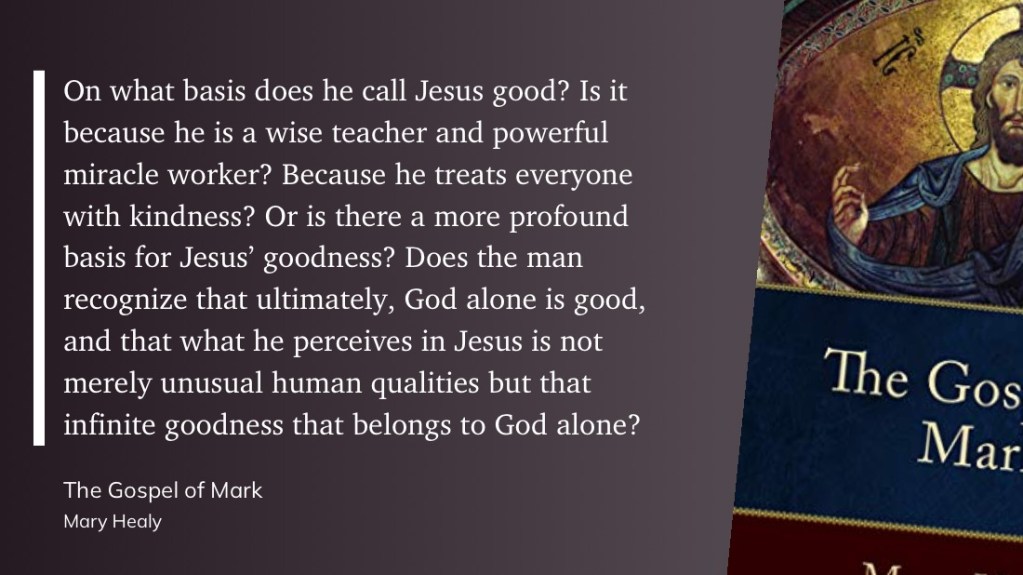
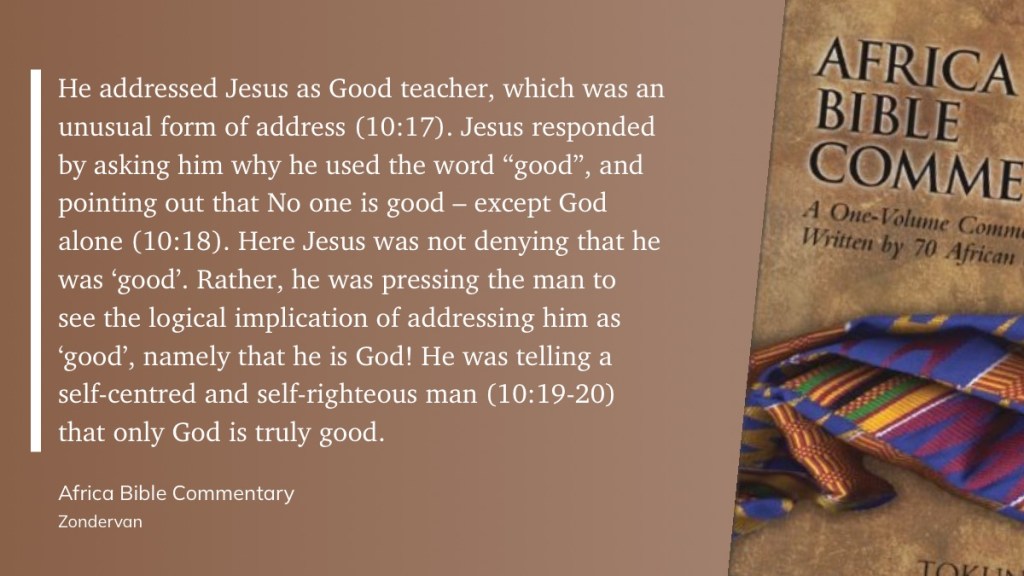
- Jesus challenges the Rich Young Ruler's perception of goodness by questioning why he calls Him good, emphasizing that only God is truly good and highlighting the irony of addressing Him as such without recognizing His divine nature.
- 10:28 Jesus teaches the Rich Young Ruler that true discipleship requires selflessness and prioritizing God over wealth for eternal life.
- Jesus highlights the Commandments related to neighborly relationships to the Rich Young Ruler, who claims to have followed them since his youth.
- Jesus loves the Rich Young Ruler despite his shortcomings, highlighting that true concern for eternal life can come from unexpected individuals.
- Despite our imperfections and shortcomings, Jesus sees our potential and loves us unconditionally.
- Jesus challenges the Rich Young Man to sell his possessions and give to the poor, emphasizing that true perfection requires selflessness and following Him.
- Jesus calls the rich young man to perfection, detachment from possessions, and true discipleship, emphasizing that the Gospel demands holiness rather than mere goodness.
- The Rich Young Ruler's attachment to his wealth prevented him from fully following Jesus and achieving eternal life, highlighting the importance of prioritizing God over material possessions.
- 23:32 Jesus calls us to true discipleship through detachment from wealth and worldly attachments, urging a commitment to holiness and self-denial to follow Him.
- Jesus calls his disciples to strive for greatness, holiness, and perfection, rather than settling for mediocrity and mere decency.
- Jesus calls the Rich Young Man to renounce his wealth and pursue perfection, highlighting the universal call to holiness beyond mere goodness.
- Detachment from worldly attachments and complete surrender to Jesus Christ as the Lord of our lives are essential for true discipleship and worship of God.
- Jesus teaches that true perfection requires detachment from wealth and possessions, urging the rich young man to sell his belongings, give to the poor, and follow Him to gain treasure in heaven.
- Discipleship requires self-denial, detachment from idols, and a commitment to follow Jesus, who loves us enough to challenge our attachments.
- To enter the kingdom and truly follow Jesus, we must renounce worldly attachments, embrace self-denial, and deepen our relationship with Him beyond mere rituals.
- 34:03 Jesus calls the rich young man to let go of his possessions to follow Him, revealing that attachment to wealth can hinder spiritual fulfillment and entry into the kingdom of God.
- Humans are created for greatness and to be filled by God, but their hearts must be stretched to embrace this destiny.
- Jesus challenges the rich young man to transcend mediocrity by selling his possessions and following Him, urging self-examination of one's spiritual commitment.
- The rich young man walked away sorrowful not just because he had great possessions, but because those possessions owned him, highlighting a distorted attachment to worldly things.
- Jesus challenges the belief that wealth signifies God's favor, surprising his disciples by stating that it is difficult for the rich to enter the kingdom of God.
- Jesus teaches that it is difficult for the wealthy to enter the kingdom of God, emphasizing that trusting in riches hinders salvation.
- 39:58 Jesus teaches that trusting in wealth makes it nearly impossible to enter the kingdom of God, but with God's grace, salvation is possible for all.
- Jesus uses the imagery of a camel passing through the eye of a needle to illustrate the difficulty for those who trust in riches to enter the kingdom of God, emphasizing the need to shed burdens of sin and wealth.
- The rich must relinquish their love of wealth and sin to enter the narrow way that leads to life, as illustrated by Jesus's teaching on the two gates in Matthew 7.
- The love of money, rather than wealth itself, poses a significant risk of idolatry for both the rich and the poor, as it can lead anyone away from the kingdom of God.
- Jesus may be referring to a thick rope made of camel's hair rather than a literal camel, suggesting a more plausible interpretation of the difficulty of entering the kingdom of God.
- Wealth can create a disordered attachment that makes it nearly impossible for rich individuals to enter the kingdom of God, leading even the devout to question the possibility of salvation.
- Salvation is impossible for humans alone, but with God's grace, all things are possible.
- 51:53 Jesus promises rewards for those who follow him, emphasizing that eternal life and true joy begin now through faith and surrender.
- Jesus reassures his disciples that those who leave everything to follow him will be rewarded both in this life and in the age to come.
- Eternal life and true joy begin now through baptism and cooperation with God's will, not just after death.
- Following Jesus brings joy and peace amid trials and persecutions, with the promise of eternal life starting now and continuing forever.
- The encounter with the Rich Young Ruler challenges us to reflect on our lives, recognize our potential for greatness through surrender and repentance, and follow Jesus.
- 57:15 Jesus teaches the rich young man that true wisdom and eternal life come from obeying God's commandments and detaching from material wealth through divine grace.
- The passage connects Solomon's prayer for wisdom in First Kings with the personification of wisdom in scripture, highlighting its significance.
- Wisdom is portrayed as more valuable than wealth, and Jesus offers this true wisdom to the rich young man, emphasizing its superiority over material riches.
- Obeying God's commandments, especially the call to love one another, leads to wisdom and fullness of joy, as expressed in Psalm 90's plea for divine favor and guidance.
- Detaching from worldly possessions requires God's grace and wisdom to fulfill His will and achieve holiness, as exemplified by the rich young man's encounter with Jesus.
- Jesus teaches the rich young man that eternal life requires keeping the Commandments and following Him, which includes a call to sell possessions and embrace poverty and chastity.
- God provides the grace necessary for us to fulfill the Commandments and achieve holiness, making it possible to aspire to righteousness despite our limitations.
- 01:10:52 Support the podcast through Patreon or one-time contributions to inspire and evangelize listeners.
- The podcast aims to inspire and evangelize, encouraging listeners to engage with the content and consider supporting it through Patreon.
- Support for the podcast can be provided through monthly patronage or one-time contributions via buaccoffee.com, with gratitude expressed to the community for their generosity.

SOURCE: Fr. Geoffrey Plant Homily Presentations
The pursuit of eternal life requires courage, action, and the willingness to overcome material attachments and personal insecurities, as illustrated through biblical and literary examples.
- The pursuit of eternal life requires courage, action, and the willingness to overcome material attachments and personal insecurities, as illustrated through biblical and literary examples.
- 00:00 Jesus teaches that the quest for eternal life mirrors the hero's journey, emphasizing the pursuit of valuable goals.
- Jesus, on his journey to Jerusalem, is approached by a man seeking guidance on how to inherit eternal life.
- All stories revolve around a quest for a valuable goal, as highlighted by Christopher Booker's exploration of storytelling patterns.
- The hero's journey is defined by a singular quest, whether it be for treasure, love, justice, or understanding, driving the narrative until the objective is achieved.
- 03:58 The rich young ruler's quest for eternal life highlights the importance of taking action on our spiritual journeys, as hesitation can lead to missed opportunities for growth.
- The hero's journey, as outlined by Joseph Campbell, reflects a universal narrative of discovery that resonates with our own experiences, beginning with the Call to Adventure.
- A rich young ruler sincerely seeks eternal life from Jesus, who acknowledges his adherence to commandments but reveals that he lacks one essential thing.
- The call to adventure requires immediate action, as seizing opportunities can lead to great rewards while hesitation may result in missed chances.
- 09:03 Overcoming egocentrism and insecurities is essential for embarking on life's transformative journeys, as illustrated by Bilbo Baggins and Moses.
- The Guardian of the Threshold represents the egocentric and heartless aspects of human nature that must be overcome to embark on the hero's journey.
- Bilbo Baggins expresses skepticism about adventures, viewing them as disruptive and unnecessary in his quiet life.
- Moses hesitates to lead the Exodus due to his insecurities, but God reassures him of His support and guidance.
- 13:31 Courage is essential for living authentically, as illustrated by the man who declines to follow the preacher due to the sacrifices of wealth and comfort.
- The most common regret of the dying is not having lived authentically due to fear of others' expectations, highlighting the importance of courage in pursuing one's true self.
- The man refuses the call to follow the wandering preacher because the sacrifices required, including giving up his wealth and comfort, are too great for him.
- 17:25 Wealth can hinder our relationship with God, as illustrated by the metaphor of a camel passing through the eye of a needle, emphasizing the difficulty of detachment from its allure.
- Wealth can create a false sense of security and identity, making it difficult for individuals to embrace a life without it, as illustrated by the metaphor of a camel passing through the eye of a needle, which highlights the challenges the wealthy face in entering the kingdom of God.
- Wealth can create a significant barrier to our relationship with God, making detachment from its allure a challenging journey for many.
- 20:25 St. Francis of Assisi transformed from a chivalrous youth to a servant of God, realizing his true calling was to restore the spiritual community rather than just physical church buildings.
- St. Francis of Assisi, initially drawn to chivalry and knighthood, experienced a transformative mystical moment after enduring captivity and illness during his early military pursuits.
- Francis experienced a transformative call from God that led him to seek a life of service, reflecting a common struggle of discerning divine purpose.
- Francis initially believed he was called to repair physical church buildings, but ultimately realized he was meant to restore the spiritual community of the people of God.
- 24:41 St. Francis of Assisi embodied radical poverty and reliance on God, ultimately seeking to die with nothing.
- Assisi, largely unchanged since the 13th century, features the basilica of Our Lady of the Angels, built to protect the small chapel known as the Portiuncula.
- St. Francis exemplified a life of poverty and total dependence on God, culminating in his desire to die bare on the ground, reflecting his belief in having nothing and being nothing.
- 28:45 Linus's struggle to navigate past a tree on a snowy hillside symbolizes the rich man's choice to cling to wealth, sacrificing the chance for true joy and freedom in following Jesus.
Gospel Greek Lexicon
Gospel Greek Lexicon
ἀγαθός (agathos): GOOD
Etymology
Agathos is a Greek adjective derived from the Proto-Indo-European root *h₂ég̑-tis, meaning "driven by a good spirit" or "divinely inspired." The term carries connotations of moral goodness, excellence, and virtuousness.
Definition
Agathos is an adjective that can be translated as "good," "kind," "virtuous," "righteous," or "morally excellent." In the New Testament, it describes various attributes, such as good works, good fruit, and good news. It is often used to illustrate the character of God and His people, emphasizing moral and ethical uprightness.
Key Occurrences in the New Testament
- Matthew 7:17 - "Even so, every good tree bears good fruit, but a bad tree bears bad fruit."
- Mark 10:18 - "And Jesus said to him, “Why do you call Me good? No one is good except God alone."
- Luke 6:45 - "The good person out of the good treasure of his heart produces good, and the evil person out of his evil treasure produces evil, for out of the abundance of the heart his mouth speaks."
- Romans 5:7 - "For one will scarcely die for a righteous person—though perhaps for a good person one would dare even to die."
Theological Significance for Catholics
Agathos holds great importance for Catholics, as it underscores the moral and ethical standards of Christian living. The concept of agathos encompasses the idea of a life marked by goodness, virtue, and holiness, which reflects the very nature of God. It serves as a reminder for Catholics to strive for moral excellence and emulate Christ in thought, word, and deed. Moreover, the New Testament’s use of agathos to describe the good news of salvation highlights its significance in the life of faith, providing hope and assurance that God’s goodness is freely offered to all who believe.
πλούσιος (plousios): RICH
Etymology
Plousios stems from the ancient Greek word "πλοῦτος" (ploutos), which refers to wealth, riches, or abundance. It is derived from the Proto-Indo-European root *pleh₁- meaning "to fill."
Definition
Plousios is an adjective that denotes being wealthy, rich, or abounding in material possessions or resources. It can also refer to spiritual abundance and richness.
Key Occurrences in the New Testament
- Matthew 19:23 - "And Jesus said to his disciples, “Truly, I say to you, only with difficulty will a rich person enter the kingdom of heaven."
- Mark 10:22 - "Disheartened by the saying, he went away sorrowful, for he had great possessions."
- Luke 6:24 - "But woe to you who are rich, for you have received your consolation."
- 1 Timothy 6:17 - "As for the rich in this present age, charge them not to be haughty, nor to set their hopes on the uncertainty of riches, but on God, who richly provides us with everything to enjoy."
Theological Significance for Catholics
Plousios serves as a cautionary term in Catholic theology, reminding believers of the potential spiritual dangers associated with material wealth. The New Testament emphasizes the importance of prioritizing spiritual treasures and dependence on God rather than earthly riches. For Catholics, the concept of plousios highlights the need for detachment from worldly possessions and the pursuit of heavenly riches, such as love, compassion, and humility. In addition, the term also points to the abundance of spiritual blessings bestowed by God, demonstrating that true richness comes from a relationship with Him.
ῥαφίς (rhaphis): NEEDLE
Etymology
Rhaphis is an ancient Greek word derived from the Proto-Indo-European root *wer- meaning "to turn, bend." It refers to a slender, pointed instrument used for sewing or knitting.
Definition
Rhaphis translates to "needle" in English. In the context of the New Testament, it is used metaphorically to describe a small opening or a narrow passage, emphasizing the difficulty of a specific action or situation.
Key Occurrences in the New Testament
- Matthew 19:24 - "Again I tell you, it is easier for a camel to go through the eye of a needle than for a rich person to enter the kingdom of God."
- Mark 10:25 - "It is easier for a camel to go through the eye of a needle than for a rich person to enter the kingdom of God."
- Luke 18:25 - "For it is easier for a camel to go through the eye of a needle than for a rich person to enter the kingdom of God."
Theological Significance for Catholics
Rhaphis serves as a powerful metaphor in Catholic theology, illustrating the difficulty of salvation for those who are attached to worldly wealth and possessions. The image of a camel passing through the eye of a needle emphasizes the seemingly impossible nature of this task. This challenges Catholics to examine their relationship with material wealth and encourages them to prioritize spiritual treasures instead. Moreover, the metaphor serves as a reminder of God's boundless grace and the necessity of reliance on Him for salvation.
Commentary Highlights


Sunday Planner
by Fr. Lawrence Mick
2018 Column
Today’s second reading contains a challenge for all of us, planners, presiders, lectors and assembly members. Hebrews insists that “the word of God is living and effective, sharper than any two-edged sword, penetrating even between soul and spirit, joints and marrow, and able to discern reflections and thoughts of the heart.”
If that is true, how is it that we proclaim the word of God week after week with so little apparent effect? How is it that so many Christians “hear” God’s word but walk out of church largely unchanged? How is it that we proclaim the values of God week after week and most of us continue to live by the values of the world, which are frequently in complete contradiction to God’s ways? Why is our proclamation of the word of God so often ineffective? Far from penetrating “between soul and spirit, joint and marrow,” it often barely penetrates the consciousness of the assembly.
If the word of God is truly proclaimed with power and truly heard by the assembly, it will change us. If it is not doing so (and much evidence suggests that change is minimal), then God’s word is not truly being heard.
There is no magic solution to this failure. Our culture conditions people to ignore any word of the Lord that is discomfiting or that demands change from us. So, we hear the word each week but fail to really listen; or perhaps some listen but then fail to implement the word in daily life.
Some years ago, I was often quite busy conducting intensive workshops with lectors over several weeks in many parishes. There seems to be little call for that today. Is that because all of our lectors do an excellent job and need no further training? If that were so, we should expect that our world would be changing for the better. Or is it because we don’t consider the proclamation of the world with power to change us a priority in our parishes?
Planners might spend some time together this week to discern the state of lector training and performance in the parish. Is the word of God always intelligible to the assembly? Does the sound system need improvement? Do the lectors need better training? Does the assembly need to be trained in how to listen better? Is there adequate silence surrounding each reading to allow it to be really heard and taken into the consciousness of the assembly? What further training could help lectors (and presiders) proclaim the word with more power and effectiveness?
Planners might start by simply discussing whether the words of our second reading are true in the parish. Is the word of God “living and effective, sharper than any two-edged sword” in your assembly? If not, what can be done?
SOURCE: Fr. Mick’s column was originally published in CELEBRATION, the pastoral and worship planning resource which served readers from 1972 until 2019.
Camels on the Way
by Mary M. McGlone, CSJ
- KNOW BEFORE YOU GO
- BISHOP JAMES GOLKA
- CATHOLIC WOMEN PREACH

SOURCE: Central Province of USA Dominican Friars | YouTube
Prioritizing faith and community, seeking God’s wisdom, and embracing the transformative power of His word are essential for navigating life’s challenges and making meaningful decisions.
- 00:00 Emphasizing the importance of prioritizing faith and community, the readings encourage reflection on what truly matters in our spiritual journey.
- 01:16 Wisdom is a priceless gift that should guide our decisions over wealth and power, prompting self-reflection on its true value in our lives.
- 02:26 Reflecting on the importance of seeking God's wisdom in decision-making, especially in light of the upcoming US elections, encourages a commitment to faith and action amidst distractions.
- 03:29 The letter to the Hebrews emphasizes the transformative power of God's word in overcoming life's challenges and encourages authenticity in our Christian journey.
- 04:48 Jesus challenges a rich man to give up his wealth and follow Him, revealing the man's inability to let go of his possessions.
- 06:07 Embrace the wisdom of faith over worldly distractions, recognizing that Jesus supports us through life's struggles and challenges.
- 07:44 Nothing is impossible with God, even amidst life's struggles and challenges.
- 08:37 Embrace God's call to prioritize what truly matters, lean on Jesus, and release your burdens to experience His comfort and support.
Seeking Wisdom
How can I prioritize wisdom in my life? Seek wisdom over wealth and fame, considering it a precious gift from God and valuing it above power, prestige, titles, and riches.
Why is the word of God important? View the word of God as powerful and precious, capable of piercing through life's challenges and guiding you to authenticity in your Christian journey.
Overcoming Challenges
How can I find strength during difficult times? Lean on Jesus when facing obstacles, remembering that nothing is impossible for God and He can help you overcome seemingly insurmountable challenges.
How does Jesus support us in our struggles? Remember that Jesus experiences human sufferings alongside us, proudly calling us brothers and lifting us up through our difficulties.
Decision-Making and Action
What should guide my decision-making process? Seek God's wisdom for prudent choices, especially when selecting individuals for positions of office, to make decisions aligned with your faith.
How can I put my faith into action? Let go of distractions and obstacles, prioritizing God's wisdom in your life, and actively commit to living your faith through your interactions with others.
Challenging Traditional Religious Views
Q: Is following the Ten Commandments enough for salvation?
A: No, Jesus challenges the rich man to go beyond merely following the Commandments, stating that one must also let go of wealth and follow Christ to truly be on the path to salvation.
Q: Should wisdom be valued more than wealth and power?
A: Yes, Solomon in Wisdom 7:7-11 considers riches "insignificant" compared to wisdom, challenging believers to prioritize God's plan over personal gain and material success.
Controversial Interpretations of Scripture
Q: Can the word of God really penetrate one's innermost thoughts?
A: According to Hebrews 4:12-13, the word of God is described as "living and effective", capable of piercing through life's most difficult challenges and discerning the "thoughts and intentions of the heart".
Q: Did Jesus have the ability to see into people's hearts?
A: The Gospel suggests Jesus could perceive the rich man's "transparent heart", indicating a belief in Christ's ability to discern true intentions and spiritual readiness.
Radical Approaches to Faith
Q: Is it necessary to give up all wealth to follow Christ?
A: Jesus tells the rich man to "sell what you have" and give to the poor, suggesting that complete detachment from material possessions may be required for true discipleship.
Q: Can faith alone overcome seemingly impossible challenges?
A: Jesus states that "nothing is impossible for God", implying that with sufficient faith, even the most difficult spiritual obstacles can be overcome, challenging believers to trust in divine intervention.

SOURCE: Colorado Springs Diocese
True fulfillment and eternal life come from prioritizing a relationship with God over worldly possessions and attachments, and embracing selfless love by following Jesus wholeheartedly.
- 00:00 The rich young man seeks eternal life from Jesus, who advises him to follow the commandments.
- 00:32 Jesus offers unconditional, sacrificial love to us as we strive to follow his commandments.
- 01:04 The young man's sadness stems from his possessions clouding his vision of eternal life, reminding us to prioritize heavenly values over worldly attachments.
- 01:52 Each person has an innate desire for eternal life and a relationship with God, which transcends the superficial offerings of culture.
- 02:19 To find true fulfillment, we must invite God into our lives and remove obstacles that hinder our friendship with Jesus.
- 02:57 Embrace a life of selfless love for God by letting go of what holds you back and following Him wholeheartedly.
Removing Obstacles to Spiritual Growth
Q: How can I identify obstacles in my relationship with God?
A: Examine your priorities and attachments, asking the Lord to shine light on what's hindering your spiritual growth and remove those obstacles for a deeper connection with God.
Q: What's the key to following Jesus wholeheartedly?
A: Set aside possessions and distractions that you don't need, focusing on eternal life rather than worldly attachments to follow Jesus with your whole heart.
Understanding Divine Love
Q: What characterizes Jesus' love according to the video?
A: Jesus' love is described as unconditional (agape), sacrificial, endless, and demonstrated by his willingness to suffer and die for others.
Applying Biblical Teachings
Q: How does Pope St. John Paul II use the rich young man's story?
A: In his encyclical "Splendor of Truth", he illustrates three themes: our deep hunger for eternal life, the need to remove obstacles to our relationship with God, and living a life of total, selfless love.
Cultural Critique
Q: How does our culture's focus on possessions affect spirituality?
A: The culture's emphasis on possessions can distract us from heavenly matters, clouding our vision and preventing us from fully embracing eternal life.
Scriptural Interpretation
Q: What was the rich young man's reaction to Jesus' teachings?
A: After Jesus restated the Commandments, the rich young man went away sad, as his attachment to possessions prevented him from fully embracing Jesus' message.
Controversial Interpretations of Jesus' Love
Q: Is Jesus' love truly unconditional if it requires obedience to commandments?
A: While Jesus expresses unconditional love (agape) for the rich young man, he also emphasizes the importance of following God's commandments for eternal life, potentially creating a paradox.
Q: Does material wealth inherently prevent spiritual enlightenment?
A: The video suggests that the rich young man's "many possessions" acted as a barrier to his spiritual vision, implying that wealth may be an obstacle to perceiving "things of heaven".
Challenging Aspects of Faith
Q: Is suffering necessary for true love?
A: The reflection portrays Jesus' love as "willing to suffer and die", suggesting that sacrificial suffering might be an essential component of the deepest form of love.
Q: Can one truly follow all commandments from youth?
A: The rich young man claims to have "observed all these things from my youth", raising questions about the feasibility of perfect obedience to religious commandments throughout one's life.

SOURCE: Catholic Women Preach
The word of God, as heard in Mass, calls us to transform our lives by prioritizing love, service, and generosity, while courageously following Jesus amidst daily challenges.
- 00:00 The word of God, heard in Mass, is meant to transform our everyday lives, urging us to reflect on our priorities and how Jesus calls us to follow Him amidst daily challenges.
- 01:47 The dialogue between Jesus and the man seeking eternal life highlights the difficulty of truly living out the Commandments.
- 02:20 Jesus invites us to courageously follow him by letting go of our attachments and embracing a life of love and service.
- 03:29 Sharing our treasures with the poor is essential for participating in God's kingdom, and we must discern how to do this generously amidst our personal responsibilities.
- 04:26 Pray for wisdom to navigate the challenges of everyday life and keep Jesus at the center.
- 05:10 Cherishing wisdom aligns our hearts and priorities, leading to divine coincidences as we seek guidance in our lives.
- 05:55 The letter to the Hebrews emphasizes the transformative power of God's word, which penetrates deeply into our innermost thoughts and intentions.
- 06:17 Daily scripture reading and prayer for wisdom transform our hearts, guiding us to follow Jesus and make joyful decisions.
Donna Orsuto hails from Ashtabula, Ohio (USA), but has lived in Rome for nearly five decades. She is currently serving as the Director of the Department of Moral Theology and Spiritual Theology at the Pontifical Gregorian University where she has been teaching since 1990. She has authored two books and numerous articles in the area of spirituality. Orsuto is also co-founder of The Lay Centre at Foyer Unitas (www.laycentre.org), which is dedicated to creating community and offering formation and leadership opportunities for lay women and men studying at pontifical universities.
Spiritual Growth
How can I grow in wisdom daily? Pray for wisdom, read the Word of God daily, and let it transform your life by opening your heart to receive it.
What's the importance of reading scripture? The Word of God is powerful, living, and effective, active in daily life, and can help you discern how to share your treasures with the poor.
Practical Actions
How should I respond to Jesus' call to share? Share your treasures generously with those in need, as it's an important part of participating in the kingdom of God.
How do I determine what to share? Discern day by day what sharing means for you personally, as it's different for each person and requires figuring out in the nitty-gritty of everyday life.
Spiritual Guidance
Where can I find guidance for sharing resources? The first and second readings provide concrete actions and help you grow in wisdom through prayerfully reading scripture daily.
When should I respond to Jesus' call? Respond to Jesus' call to follow him now, in the present moment, to avoid going away sad.