

SOURCE: The Jesuit Post
2021 HOMILY – The Kingdom of God emphasizes deep spiritual freedom and a genuine commitment to following Jesus rather than merely adhering to a set of rules.
- 00:00 The Kingdom of God is about deep spiritual freedom and commitment to follow Jesus, not just checking off a list of rules.

SOURCE: Archdiocese of Brisbane Homilies
2024 HOMILY – Seeking eternal life involves self-reflection and the pursuit of true wisdom, as exemplified by Jesus Christ, to navigate a world of distractions and fulfill our true purpose.

SOURCE: Fr. Peter Hahn Archive of Homilies
2018 HOMILY – True fulfillment and eternal life come from prioritizing a relationship with Jesus over worldly possessions and aspirations.

SOURCE: Fr. Jude Thaddeus Langeh Basenbang
2018 HOMILY – Following Jesus is a challenging and an expensive venture. It is not only expensive monetary wise. It takes one whole being. Jesus’ preaching and teaching left deep impression on people and many were drawn to follow him for various reasons.

SOURCE: Fr. Kevin’s Homilies
2021 HOMILY – The beauty of celestial events like eclipses serves as a metaphor for the human experience, illustrating how even amidst distractions and darkness, our true essence and potential can shine through.
Bishop Robert Barron
SOURCE: Word on Fire
VIEWING GUIDE w/ Questions
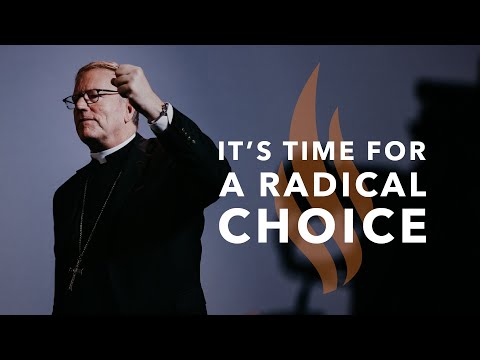
2021 SERMON – Friends, in our first reading today, Solomon finds that all the power and wealth of the world are nothing compared to the gift of wisdom—seeing life from the perspective of God. Although this gift seems to help one further amass wealth, in today’s Gospel, Christ teaches us that to use the gifts of the world properly, we must give them away so we can follow him.

SOURCE: Word on Fire
VIEWING GUIDE w/ Questions
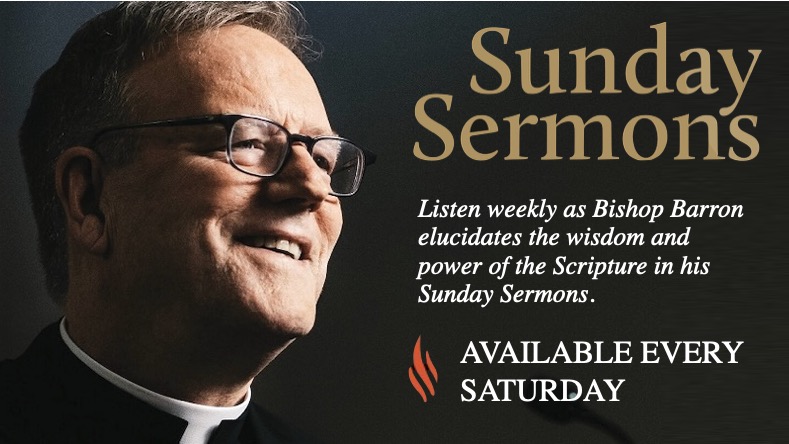
2024 SERMON – Friends, for this Twenty-eighth Sunday of Ordinary Time, our first reading from the marvelous book of Wisdom presents an old biblical trope: If you were to ask God for something, or if God were to come to you and say he will give you whatever you want—what would you ask for? This is a really clarifying question. And while many things might come to mind, the answer of the paradigmatic wisdom figure is instructive.
Deacon Peter McCulloch

On Letting Go
Wis.7:7-11; Heb.4:12-13; Mk.10:17-30
2021 EXCERPT: In the movie ‘Up in the Air’ (2009), George Clooney’s character is teaching a class of students. He asks them:
‘… How much does your life weigh? Imagine … you’re carrying a backpack. I want you to feel the straps on your shoulders … Now pack it with all the stuff you have in your life. Start with the little things. The things on shelves and in drawers, the knick-knacks, the collectibles. Feel the weight as it adds up. Then start adding larger stuff, clothes, table-top appliances, lamps, linens, your TV.
‘The backpack should be getting pretty heavy now. And you go bigger. Your couch, bed, your kitchen table. Stuff it all in there. Your car, get it in there. Your home, whether it’s a studio apartment or a two-bedroom house. I want you to stuff it all into that backpack. Now try to walk. It’s kind of hard, isn’t it? This is what we do to ourselves on a daily basis. We weigh ourselves down until we can’t even move. And make no mistake, moving is living…’
The Secret to Eternal Life
Wis.7:7-11; Heb.4:12-13; Mk.10:17-30
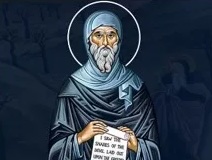
2024 EXCERPT: ‘Jesus replies, ‘Sell all you have, give the money to the poor and come follow me, for then you’ll have treasure in heaven.’ That price is much too high, the young man thinks, and he goes away sad. He just can’t let go of his possessions.
About 250 years later, St Anthony of Egypt heard this story. He was another rich young man but his response was very different.
Fr. Andrew Ricci

Letting Go of the Things of This World
2021 PODCAST: The Book of Wisdom and Mark’s Gospel challenge us to let go of worldly things and put the Lord at the center of our lives.
Fr. Austin Fleming


No Body Likes a Wise Guy
2021 HOMILY: It’s true, as they say, that “nobody likes a wise guy” – but who wouldn’t be grateful to wake up tomorrow just a little wiser than today – and a lot wiser than some times in the past?
Damned Foolishness!
2018 EXCERPT: love Solomon’s prayer in today’s first scripture:
I prayed and prudence was given me;
I pleaded and the spirit of wisdom came to me.
A way of getting at this verse from scripture might be
to come in through the back door. Let’s you and I ask ourselves a few questions [but] don’t raise your hand or shout out any answers – OK?
• First question. Might help to close your eyes.
“What’s the most imprudent thing I’ve ever done in my life?”• A second question.
“What’s the most foolish thing I’ve ever done in my life?”
Dominican Blackfriars


2021 EXCERPT: One interpretation that I’ve heard of the key sentence of today’s Gospel, “It is easier for a camel to pass through the eye of a needle than for a rich man to enter the kingdom of God,” is that there is a gate known to Jesus’ hearers, called the Eye of the Needle, which is small enough that it would be difficult, but not impossible, for a camel to enter that way. The problem for that interpretation is that there is no evidence for a gate of that name, but also it doesn’t fit at all with the reaction of the disciples, “In that case, who can be saved?”
Fr. Charles E. Irvin

What are You Willing to Risk?

EXCERPT: You are here in church today because you claim to be a Christian, to be a follower of Christ in His way, in His truth and in His life. If you are radical about your commitment to Christ then you will be faced with living a risky life. It is a great risk, a costly one, to live life as Christ did, to live as one of His own, to be loved by him. The testimony of history is that economics will not save humanity from its misery. The plagues of war, racism, and poverty have existed and exist now in many economic systems. Nor will science save us. We have only to take a look at what we have done with all of our newly discovered scientific wonders. Nor will technology save us. The Internet is both a blessing and a curse, it cannot save us.
What will save us comes from our hearts and souls, not from our brains and hands. Knowledge has not. Knowledge alone will not save us. Wisdom offers us more. Wisdom bids us place our lives, our fortunes, our treasures, and our talents into the care of God. Wisdom transcends facts, information and data, taking us into realms found beyond simple cognitive comprehension.
Fr. Leon Ngandu, SVD
Fr. Leon Ngandu, SVD
Two Steps to Accomplish to Go To Heaven
EXCERPT: We know that nobody lives eternally in this world. Everybody dies. We also believe that there is another life after death: either eternal life in God’s kingdom or eternal condemnation in hell. The Scripture readings today deal with eternal life in the heavenly kingdom. They tell us what we must do to go to heaven. In the Gospel, Jesus suggests two steps to go to heaven: First, we must follow God’s commandments, and second, we must give up any possessions and follow him. The first reading advises us to pray to God continuously for Wisdom; when we get it, we should prefer it above all other things. This Wisdom stands for our intimate relationship with God. Therefore, we should live in transparency in front of God because, as the second reading reminds us, no creature is concealed from him, but everything is naked and exposed to the eyes of God to whom we must render an account.
Fr. Joe Jagodensky, SDS
2021 EXCERPT: Sitting on my porch in early October, I see them all falling around me. Slowly, others faster, sometimes alone and others in groups. The ground holds them as their numbers increase each day.
I considered glue and buying a very, very tall ladder but smiled at its futility. Scotch tape? Same response. It’s happening and has been happening all my life but this time in my life it seems to kinda hurt to see those guys and gals falling from their beautiful branches that made summer so green. Now their green turns to amber, and then finally becoming a rich golden that says to all, “Another season is ending with a new season beginning.”
Fr. George Smiga
Letting Go So As to Receive

2009 EXCERPT: Richard Rohr crystallized this truth in a beautiful saying. Rohr says, “Sometimes the greatest obstacle to the next good thing that God wants to give us is the good thing we already possess.” We can become so possessive of what we already have, that we close ourselves off to what is yet to come. Rohr points to a pattern of the Christian life: letting go so as to receive.
Today’s gospel is not about possessions. It is about the freedom to trust and believe that when we must let go of one thing in our life, God will still remember us. This is what the rich man in the Gospel could not do. We are called to make a different choice. We are called to support one another in the faith that when we must let go of any good thing, God is still with us. When we must let go of something we would rather hold on to, it is only so that we can make room for God to bless us again.
Fr. Anthony Ekpunobi, C.M.

The Wisdom of Detachment
2021 EXCERPT: The gospel reminds us of the wisdom of detachment that comes through the word of God. The wisdom to detach from excessive reliance on material things will enable us inherit eternal life. The rich young man that approached Jesus in the gospel claimed to have kept the commandments right from his earliest days. But when Jesus spelt out to him what it really takes to inherit eternal life, ‘…his face fell… and he went away sad, for he was a man of great wealth’. Jesus told him, ‘…Go and sell everything you own and give the money to the poor, and you will have treasure in heaven; then come, follow me.’ He was unable to meetup with this demand because of his attachment to his wealth.
Msgr. Joseph Pellegrino


Wisdom and a Superbowl Ring

2024 EXCERPT: Many, many people would do anything to earn a ring like that. Certainly, the athletes put a lot of blood, sweat and tears to be in the shape that let them be among the few who won a championship. But what happens after you have won? What happens after you win the ring? Where do you go from there? Is your life a success? It’s not just the ring, it’s the question of achieving anything of great monetary value. Once we have it, then what? Are billionaires satisfied with their bank accounts, or are they always looking for more? Sadly, the latter is the answer. As deserving of their possessions as people who work hard are, if that is all there is in their lives, then how poor they are. I know many of the doctors in our parish will tell
you that their greatest possession is the knowledge that they have helped people conquer pain, helped people heal, or even helped them finish their life in peace. They will also tell you that their greatest joy is in leading their own families to draw closer to the Lord. They might own a great deal which they certainly worked hard for, but their possessions do not define them nor do they dominate their lives.
Msgr. Charles Pope
What Does Heaven Cost?
2021 EXCERPT: The Sunday Gospel invites us to wrestle with these fundamental, essential, focal questions: “What does Heaven cost?” and “Am I willing to pay it?”
I. Problematic Pondering
II. Playful Prescription
III. Perceived Perfection
IV. Pricey Prescription
V. Powerful Possibility
Bishop John Louis

2021 EXCERPT: A priority is something that one considers as more important than other things and should be dealt with first. In other words, as the saying goes, “first things first”. The management and outcomes of our lives, organizations, communities, nations and world would be better if we are able to get our priorities right. In today’s readings, our attention is drawn to two priorities which we must get right. They are wisdom and eternal life.
Fr. Michael Chua

2018 EXCERPT: Today, we see the rise of mediocrity in every sphere. Mediocrity today poses as democratisation, inclusiveness, populism, condescension, tolerance, broad-mindedness, optimism and even charity. Mediocrity provides our society the band-aid needed to shield it from the sting of suffering. In other words, mediocrity presents the promise of salvation without a cross, charity without needing to sacrifice. We try to make religion easier and more accessible in order to stem the steady decline in followers. But mediocrity is settling for cheap; it is selling a lie. The call to holiness, ultimately, is a call to perfection. Being average or just good when it comes to holiness, just doesn’t make it! The Church constantly calls us to walk the extra mile, to go out into the deep end, to make the greater sacrifice for faith. As Pope Francis tells us in his latest encyclical, “He wants us to be saints and not to settle for a bland and mediocre existence.” (Gaudete et Exsultate # 1)You will hear Jesus constantly prodding you, “Why do less when you can do more?” The law may simply set the minimum base line. But the maximum limit is literally the sky – heaven, in fact! We are all called to be saints!
The short parable of the camel and the eye of a needle can be understood in this phrase, “how hard it is…,” which our Lord uses twice. The way of following Christ would always appear hard and even impossible when we place more trust in our own status, knowledge, wealth and abilities as substitutes for trust in God alone. But remember: “For men ….it is impossible, but not for God: because everything is possible for God.” The Kingdom of God, the gift of eternal life, is something utterly beyond human achievement. It cannot be earned, it cannot be claimed as a right, it cannot be bought or bartered for a price, it does not come as a reward for good behaviour. It depends solely on the goodness of God, who freely offers it as a gift. Nothing we are capable of giving up or enduring for the Lord’s sake or “for the sake of the gospel” is worthy of comparison with the eternal life that we will gain in the end. So, there is no need to congratulate yourself if you think that you’ve put in more prayer, more donations, more service than the average person. Never keep a record of what you have done for God. But always remember what He has done for you, something which you can never hope of repaying.
Fr. Vincent Hawkswell
2021 EXCERPT: In his book Jesus of Nazareth, Pope Emeritus Benedict XVI says that when the Babylonians conquered Judea (586 BC), 90 per cent of Judeans were poor, and Persian tax policy kept them poor after their return from exile. Consequently, he says, they could not maintain the old idea that poverty is a consequence of a bad life: that the righteous prosper in this world.
Israel began to realize that its poverty was precisely what brought it close to God; that the poor, in their humility, were closest to God’s heart, while the rich, in their arrogant pride, were farthest away.
Fr. Denis J. Hanly

Fr. Tommy Lane
Treasure in Heaven

EXCERPT: Notice that he said marriage is a path towards sanctification. Marriage is a way to achieve holiness. When we consider some of the advice the Bible gives us about living the Christian life, we can understand how marriage can indeed be a path to sanctification. Jesus said that to follow him we must be servants, and marriage is a life of service to one’s spouse and children. St. Paul said there are three things that last: faith, hope, and love, and the greatest of these is love. Marriage is a commitment to love one’s spouse until death. No wonder that Pope Paul VI said marriage is a long path towards sanctification.
Fr. John Kavanaugh, S.J.
The Sadness of Many Securities

EXCERPT: What do we want more than anything else? What is behind the drama of our desire? What will make us happy?
These, of course, are the questions of philosophers and mystics. In quiet moments, after sudden joy or loss, they stalk our inner stillness. In creative moments, they launch imagination into soaring poetry and myth or the higher reaches of science and technique.
Bishop Frank Schuster
The Eye of the Needle
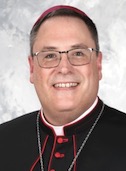
2021 EXCERPT: For God, all things are possible. However, the worldly attachments we accumulate through life do have a way of weighing us down. I suppose that an equivalent for today could be reflected by the following parable. There once was a man whom God promised that he could take one suitcase with him to heaven when he died. So, in his will, he had a suitcase full of gold placed next to his hospital bed. When he passed during the night, because God made that promise, an angel lugged that suitcase to the pearly gates with one hand and the soul of the deceased man in the other. St. Peter looked at the man the angel brought and then
the suitcase filled with gold, scratched his head, and says, “Oh great, more pavement”. There is a spiritual truth in today’s Gospel reading. What we value here on earth could at times be quite worthless in heaven. Or said in another way, if we can’t empty our cup of earthly attachments, God can’t fill something that is already full.
The Radical Jesus Poses a Perennial Question

2021 EXCERPT: What is the message? That nothing, absolutely nothing should take the place of Christ in my life. We all know that there is peril in possession whether is it an adult’s preferred stock or a child’s toy. Whether it is power or wealth, my new home or car, whatever I own, the peril is simply that it is mine and it can become the center of my existence. It can organize my life, manipulate me, even strangle me. When that happens, Christ takes second place. I do not listen, I do not hear His invitation or His command to give it all up, or only half, or just a little. I have not heard to care and to share, and to let go.
The radical Jesus poses a perennial question: what rules my life, the camel or the kingdom? On the other hand, the moderate Jesus fixes my eye on something splendidly positive that, ultimately, whatever is mine is God’s gift. Even if it stems from my own fantastic talent, that talent owes its origin to God. And God’s gifts are not given to be clutched selfishly, but rather they are given to be given freely.
