
HOLY SEE
Scroll down the page to read papal homilies from Pope Francis and Benedict XVI.

SOURCE: Vatican News – English

28th Sunday of Year B
The Supreme Value
Of the many values that we encounter in human existence, which is the most important, the supreme value? The Book of Wisdom answers this question by stating that wisdom possesses a more precious value than others such as power, wealth, health and beauty (first reading). The encounter with the rich young man allows Jesus to reaffirm the superior value of his following over the goods and riches of this world (Gospel). The authority and effective penetration of the Word of God deserves to be recognized as the supreme value, like God himself (second reading).
P. Antonio Izqeuirdo, L.C., Copyright © Dicastery for the Clergy
28th Sunday of Year B
Doctrinal Messages
28th Sunday of Year B
Pastoral Suggestions
Catechism of
the Catholic Church
Cross-References

Pope Francis
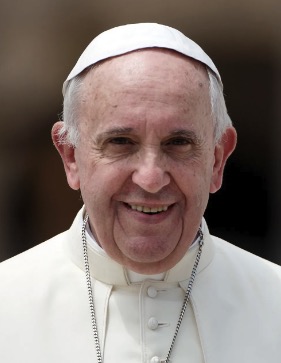
Three Gazes of Jesus
11 October 2015 | Saint Peter’s Square
Today’s Gospel, taken from Mark, Chapter 10, is divided into three scenes, punctuated by three gazes of Jesus.
The first scene presents the encounter between the Teacher and a fellow who — according to the parallel passage of Matthew — is identified as a “young man”. The encounter of Jesus with a young man. This man runs up to Jesus, kneels and calls him “Good Teacher”. Then he asks: “what must I do to inherit eternal life”, in other words, happiness (v. 17). “Eternal life” is not only the afterlife, but is a full life, fulfilled, without limitations. What must we do to achieve it? Jesus’ answer restates the commandments that refer to loving one’s neighbours. In this regard the young man has nothing to reproach; but clearly, observing the precepts is not enough. It does not satisfy his desire for fulfillment. Jesus perceives this desire that the young man bears in his heart; for this reason his response is expressed in an intense gaze filled with tenderness and love. The Gospel thus says: “[Jesus] looking upon him loved him” (v. 21). He realized he was a good young man…. But Jesus also understood his interlocutor’s weakness, and offers him a practical proposal: to give all his possessions to the poor and follow Him. That young man’s heart, however, was divided between two masters: God and money, and he went away sorrowful. This shows that faith and attachment to riches cannot coexist. Thus, in the end, the young man’s initial enthusiasm is dampened in the unhappiness of a sunken sequela.
In the second scene the Evangelist frames the eyes of Jesus, and this time it is a pensive gaze, one of caution: “[Jesus] looked around and said to his disciples: ‘How hard it will be for those who have riches to enter the kingdom of God!’” (v. 23). To the astonishment of the disciples, who ask him: “Then who can be saved?” (v. 26), Jesus responds with a encouraging gaze — it is the third gaze — and says: salvation, yes, “with men it is impossible, but not with God!” (v. 27). If we trust in the Lord, we can overcome all obstacles that impede us from following him on the path of faith. Trust in the Lord. He will give us strength, he gives us salvation, he accompanies us on the way.
And thus we arrive at the third scene, that of Jesus’ solemn declaration: Truly, I say to you those who leave all to follow me shall have eternal life in the age to come and a hundredfold now in this time (cf. vv. 29-30). This “hundredfold” is comprised of things first possessed and then left, but which shall be restored and multiplied ad infinitum. In divesting oneself of possessions, one receives in exchange the comfort of true good; freed from the slavery of things, one earns the freedom of serving out of love; in renouncing possessions, one acquires the joy of giving. As Jesus said: “It is more blessed to give than to receive” (cf. Acts 20:35).
The young man did not allow himself to be conquered by Jesus’ loving gaze, and thus was not able to change. Only by accepting with humble gratitude the love of the Lord do we free ourselves from the seduction of idols and the blindness of our illusions. Money, pleasure, success dazzle but then disappoint: they promise life but procure death. The Lord asks us to detach ourselves from these false riches in order to enter into true life, the full, authentic, luminous life. I ask you, young people, young men and young women, who are here now in the Square: “Have you felt Jesus’ gaze upon you? Do you prefer to leave this Square with the joy that Jesus gives us or with the sadness of heart that worldliness offers us?”.
On the Canonization of
Five New Saints
11 October 2009 | Vatican Basilica
“What must I do to inherit eternal life?”. The brief conversation we heard in the Gospel passage, between a man identified elsewhere as the rich young man and Jesus, begins with this question (cf. Mk 10: 17-30). We do not have many details about this anonymous figure; yet from a few characteristics we succeed in perceiving his sincere desire to attain eternal life by leading an honest and virtuous earthly existence. In fact he knows the commandments and has observed them faithfully from his youth. Yet, all this which is of course important is not enough. Jesus says he lacks one thing, but it is something essential. Then, seeing him well disposed, the divine Teacher looks at him lovingly and suggests to him a leap in quality; he calls the young man to heroism in holiness, he asks him to abandon everything to follow him: “go, sell what you have, and give to the poor… and come, follow me” (v. 21).
“Come, follow me”. This is the Christian vocation which is born from the Lord’s proposal of love and can only be fulfilled in our loving response. Jesus invites his disciples to give their lives completely, without calculation or personal interest, with unreserved trust in God. Saints accept this demanding invitation and set out with humble docility in the following of the Crucified and Risen Christ. Their perfection, in the logic of faith sometimes humanly incomprehensible consists in no longer putting themselves at the centre but in choosing to go against the tide, living in line with the Gospel. This is what the five Saints did who are held up today with great joy for the veneration of the universal Church: Zygmunt Szczęsny Feliński, Francisco Coll y Guitart, Jozef Damien de Veuster, Rafael Arnáiz Barón and Mary of the Cross (Jeanne Jugan). In them we contemplate the Apostle Peter’s words fulfilled: “Lo, we have left everything and followed you” (v. 28), and Jesus’ comforting reassurance: “there is no one who has left house or brothers or sisters or mother or father or children or lands, for my sake and for the Gospel, who will not receive a hundredfold now in this time… with persecutions, and in the age to come eternal life” (vv. 29-30).