

HOLY SEE
Scroll down the page to read papal homilies from Pope Francis and Benedict XVI.

SOURCE: Vatican News – English

27th Sunday of Year B
Marriage
The theme of marriage dominates this Sunday’s liturgy. On the one hand, there is Moses’ law which allows a man to dismiss his wife “on account of something ugly” (according to the interpretation, it could refer to infidelity between the spouses or even a poorly prepared meal – Gospel). On the other hand, Jesus goes back to the original law introduced in nature, according to which “a man leaves his father and mother, and the two become one flesh” (first reading, Gospel). In the second reading, Jesus, the bridegroom of the Church, gives himself to her to the point of dying to purify and sanctify her with his blood. This way, he becomes the true prototype of spousal love.
P. Antonio Izqeuirdo, L.C., Copyright © Dicastery for the Clergy
27th Sunday of Year B
Doctrinal Messages
27th Sunday of Year B
Pastoral Suggestions

Catechism of
the Catholic Church
Cross-References

Pope Francis
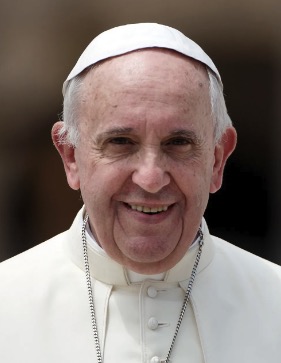

Marriage as
a Union of Love
7 October 2018 | Saint Peter’s Square
This Sunday’s Gospel reading (cf. Mk 10:2-16) offers us Jesus’ words on marriage. The passage opens with the provocation of the Pharisees who ask Jesus if it is “lawful for a man to divorce his wife”, as the Law of Moses provides (cf. vv. 2-4). Jesus firstly, with the wisdom and authority that come to him from the Father, puts the Mosaic prescription into perspective, saying: “For your hardness of heart he” — that is, the ancient legislator — “wrote you this commandment” (v. 5). Thus it is a concession that is needed to mend the flaws created by our selfishness, but it does not correspond to the Creator’s original intention.
And here, Jesus again takes up the Book of Genesis: “from the beginning of creation, ‘God made them male and female’. ‘For this reason a man shall leave his father and mother and be joined to his wife, and the two shall become one’” (vv. 6-8). And he concludes: “What therefore God has joined together, let not man put asunder” (v. 9). In the Creator’s original plan, it is not that a man marries a woman and, if things do not go well, he repudiates her. No. Rather, the man and the woman are called to recognize each other, to complete each other, to help each other in marriage.
This teaching of Jesus is very clear and defends the dignity of marriage as a union of love which implies fidelity. What allows the spouses to remain united in marriage is a love of mutual giving supported by Christ’s grace. However, if in the spouses, individual interests, one’s own satisfaction prevails, then their union cannot endure.
And the Gospel passage itself reminds us, with great realism, that man and woman, called to experience a relationship of love, may regretfully behave in a way that places it in crisis. Jesus does not admit all that can lead to the failure of the relationship. He does so in order to confirm God’s plan, in which the power and beauty of the human relationship emerge. The Church, on the one hand, does not tire of confirming the beauty of the family as it was consigned to us by Scripture and by Tradition; at the same time, she strives to make her maternal closeness tangibly felt by those who experience relationships that are broken or that continue in a difficult and trying way.
God’s way of acting with his unfaithful people — that is, with us — teaches us that wounded love can be healed by God through mercy and forgiveness. For this reason in these situations, the Church is not asked to express immediately and only condemnation. On the contrary, before so many painful marital failures, she feels called to show love, charity and mercy, in order to lead wounded and lost hearts back to God.
God is the
Author of Marriage
8 October 2006 | Saint Peter’s Square
This Sunday, the Gospel presents to us Jesus’ words on marriage. He answered those who asked him whether it was lawful for a man to divorce his wife, as provided by a decree in Mosaic law (cf. Dt 24: 1), that this was a concession made to Moses because of man’s “hardness of heart”, whereas the truth about marriage dated back to “the beginning of creation” when, as is written of God in the Book of Genesis, “male and female he created them; for this reason a man shall leave his father and mother and be joined to his wife, and the two shall become one” (Mk 10: 6-7; cf. Gn 1: 27; 2: 24).
And Jesus added: “So they are no longer two but one. What therefore God has joined together, let not man put asunder” (Mk 10: 8-9). This is God’s original plan, as the Second Vatican Council also recalled in the Constitution Gaudium et Spes:”The intimate partnership of life and love which constitutes the married state has been established by the Creator and endowed by him with its own proper laws: it is rooted in the contract of its partners… God himself is the author of marriage” (n. 48).
My thoughts now go to all Christian spouses: I thank the Lord with them for the gift of the Sacrament of Marriage, and I urge them to remain faithful to their vocation in every season of life, “in good times and in bad, in sickness and in health”, as they promised in the sacramental rite.
Conscious of the grace they have received, may Christian husbands and wives build a family open to life and capable of facing united the many complex challenges of our time.
Today, there is a special need for their witness. There is a need for families that do not let themselves be swept away by modern cultural currents inspired by hedonism and relativism, and which are ready instead to carry out their mission in the Church and in society with generous dedication.
In the Apostolic Exhortation Familiaris Consortio, the Servant of God John Paul II wrote that “the sacrament of marriage makes Christian couples and parents witnesses of Christ “to the end of the earth’, missionaries, in the true and proper sense, of love and life” (cf. n. 54). Their mission is directed both to inside the family – especially in reciprocal service and the education of the children – and to outside it. Indeed, the domestic community is called to be a sign of God’s love for all.
The Christian family can only fulfil this mission if it is supported by divine grace. It is therefore necessary for Christian couples to pray tirelessly and to persevere in their daily efforts to maintain the commitments they assumed on their wedding day.