15th Sunday of Year B

July 14, 2024 Holy See

PAPAL HOMILIES

VATICAN MEDIA LIVE

15th Sunday of Year B

YEAR B

The Mission

The point of convergence between the readings is the mission. The Gospel speaks about the mission that Jesus entrusts to the Twelve: he began to send them out in pairs, giving them authority over unclean spirits. The prophet Amos, in the first reading, stresses that he prophesies not out of his personal will or initiative, but because the Lord took him as he followed the flock and said to him “Go and prophesy to my people Israel.” The Christological hymn of the Letter to the Ephesians (second reading) sings the fruits of the mission in the conscience of Christians: the blessing of God the Father, the choice of us in Christ, his adoption of us as his children, the redemption and forgiveness of sins, the revelation of God’s plans for history, baptism in the Holy Spirit.

P. Antonio Izqeuirdo, L.C., Copyright © Dicastery for the Clergy

Doctrinal Messages

15th Sunday of Year B

YEAR B

Doctrinal Messages

The mission in the Church as communion

The ecclesiology of Vatican II has emphasized the conception of the Church as communion, and this conception of the Church developed considerably over the subsequent decades, up to the present day. The ecclesiology of communion entails the ecclesiology of mission. We find both in the words and teachings of Jesus: "May they all be one…" (Jn 17:21); "My command to you is to love one another" (Jn 15:17), on the one hand, and on the other, "and he appointed twelve; they were to be his companions and to be sent out to proclaim the message" (Mk 3:14); "Then he summoned the Twelve and began to send them out in pairs" (Mk 6:7); "Go, therefore, make disciples of all nations" (Mt 28:19). The communion among churches requires that those who have more evangelizers, catechists, consecrated men and women and priests share them with those who have less or are in urgent need of them. In this, the supreme good of the entire Church must prevail over the particular good of a local church. Likewise, communion within each local church calls for a marked sense of mission and a considerable missionary spirit to evangelize and promote the evangelization of the Christian faithful. In this way, all may acquire an understanding of the Church as communion, above and beyond other conceptions, like the "Church as a charitable institution", the "Church as a perfect society", the "Church as power", etc. It is an urgent mission that must be fulfilled by all!

P. Antonio Izqeuirdo, L.C., Copyright © Dicastery for the Clergy

Jesus’ Mission - the Church’s Mission

The evangelist Mark emphasizes that the mission of the Twelve (and of the Church) is the very mission of Jesus. In effect, in Mk 6:13 he tells us that the Twelve proclaimed repentance, cast out many devils and cured sick people. This corresponds to Jesus’ mission: "Repent, and believe the Gospel" (Mk 1:15). "For he had cured so many that all who were afflicted in any way were crowding forward to touch him" (Mk 3:10), and finally, "And he went all through Galilee, preaching in their synagogues and driving out devils" (Mk 1:39). About the Twelve, it is added that "they anointed many sick people with oil." Perhaps this is a reference to the custom practiced by the early Christians of the anointing the sick in the name of the Lord by the presbyters of the Church, as urged by the letter of James in 5:14. In James, in the place of the Twelve we find the presbyters (the followers of the Twelve), and instead of them being directly sent out by Jesus we have the anointing in the name of the Lord, that is, of the glorious Christ in Heaven. By means of all these actions Jesus first, and then the Twelve, show us the signs revealing the presence of the Kingdom of God among men.

P. Antonio Izqeuirdo, L.C., Copyright © Dicastery for the Clergy

Characteristics of the Mission

There are quite a few aspects of our Christian mission mentioned in this Sunday’s liturgical texts. First, we could say that the Twelve (and all Christians with a mission) are called to communion (in pairs), poverty ("Take nothing for the journey except a staff…"), consistency in a humble conduct ("If you enter a house anywhere, stay there until you leave the district…"), in a conduct governed by the freedom of the spirit ("If any place does not welcome you, as you walk away shake off the dust from under your feet…"); with brave and intrepid conduct (Amos, who still prophesies even though his life is in danger…). Second, in the mission, the Twelve will encounter the same difficulties as Jesus. Just as the people did not welcome or listen to Jesus, in certain instances they will not welcome or listen to the Twelve. Eight centuries before, the same had happened to the prophet Amos, whose message of social justice and criticism of external worship were also rejected by Amaziah, the priest of Bethel. Third, the mission is characterized by the fruits that it bears, by the creation of communities in faith in which God the Father is blessed, because he has chosen us in Christ, he has adopted us as his children, he has redeemed us in his Son, he has revealed to us the mysteries of his will and he has sealed us with the Spirit by means of the baptism (second reading).

P. Antonio Izqeuirdo, L.C., Copyright © Dicastery for the Clergy

Pastoral Suggestions

15th Sunday of Year B

YEAR B

Pastoral Suggestions

The Mission of the Church is Still Beginning (John Paul II, Redemptoris Missio 1)

These words may be pronounced in any generation and in any historical time, for it is always necessary to be in the process of beginning. Indeed, since the Gospel is for all, when new men come into the world, we must begin with them the work of evangelization. On the other hand, we observe that after two thousand years of Christianity, the believers in Christ account for approximately 27% of the world’s population. Might not our century, the 21st century, be the time of God for the remaining 73% who still do not know Christ? On the basis of what has been said, it is evident that as Christians, we must all live in a "state of mission". Parents are their children’s missionaries; teachers are their students’ missionaries; doctors and nurses are their patients’ missionaries; volunteer workers are the missionaries of those whom they assist; parish priests and their co-workers are the missionaries of the faithful of their parish… The only thing that we cannot do in this hour of God is to sit back and do nothing.

P. Antonio Izqeuirdo, L.C., Copyright © Dicastery for the Clergy

Free for the Mission

Just like one thousand temptations do not make a fall, by the same token, one thousand difficulties do not make a crisis of faith.

To be missionaries, we must be free. Free to accept this dimension proper to the Christian vocation; free to respond to God’s call with generosity, without instinctive restraints and selfish passions; free to obediently follow the lights and movements of the Holy Spirit inside us. We are asked to be free of all attachments to material goods, so that we may present ourselves with the pure Gospel, free of all pride and hunger for power, conscious of the fact that we are servants. The only thing that we are asked to have is a great love for Jesus Christ, our model; we are asked to present the Gospel in our lives; we are asked to trust in God and hope in the action of the Holy Spirit in the heart of all people.

P. Antonio Izqeuirdo, L.C., Copyright © Dicastery for the Clergy

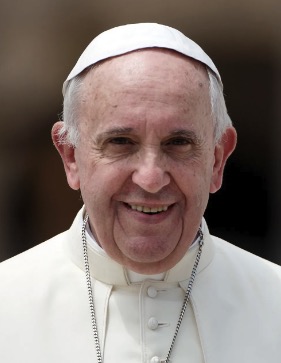
Pope Francis

The Anointing of the Sick

11 July 2021 | “A. Gemelli” University Hospital

The Gospel passage we read today in the Liturgy recounts that Jesus’ disciples, sent by him, “anointed with oil many that were sick and healed them” (Mk 6:13). This “oil” also makes us think of the Sacrament of the Anointing of the Sick, which gives comfort to spirit and body. But this “oil” is also listening, the closeness, the care, the tenderness of those who take care of the sick person: it is like a caress that makes you feel better, soothes your pain and cheers you up. All of us, all, need this “anointing” of closeness and tenderness sooner or later, and we can all give it to someone else, with a visit, a phone call, a hand outstretched to someone who needs help. Let us remember that, in the protocol of the final judgment — Matthew 25 — one of the things they will ask us will be about closeness to the sick.

In these days of hospitalization, I experienced once again how important is good healthcare that is accessible to all, as there is in Italy and in other countries. Free healthcare, that assures good service, accessible to everyone. This precious benefit must not be lost. It needs to be kept! And for this everyone needs to be committed, because it helps everyone and requires everyone’s contribution. In the Church too it happens that at times some healthcare institution, due to poor management, does not do well economically, and the first thought that comes to mind is to sell it. But vocation in the Church, is not to have money; it is to offer service, and service is always freely given. Do not forget this: saving free institutions.

READ MORE


Style of the Missionary

15 July 2018 | Saint Peter’s Square

Today’s Gospel passage (cf. Mk 6:7-13) narrates the moment Jesus sends the Twelve [Apostles] on mission. After calling each of them by name “to be with him” (Mk 3:14), listening to his words and observing his gestures of healing, he now calls them again to “send them out two by two” (6:7) to the villages he was going to visit. It is a sort of “internship” of what they would be called to do following the Resurrection of the Lord, through the power of the Holy Spirit.

The Gospel passage pauses on the style of the missionary which we can sum up in two points: the mission has a centre; the mission has a face.

First of all, the missionary disciple has his centre of reference who is Jesus himself. The narrative indicates this by using a series of verbs which have him as the subject — “He called to him”; he “began to send them”; he “gave them authority”; “he charged them”, “he said to them” (vv. 7, 8, 10) —, so that the going out and working of the Twelve appears to be radiating from a centre, reaffirming the presence and work of Jesus in their missionary actions. This demonstrates that the Apostles have nothing of their own to proclaim, nor any abilities to manifest, but rather that they speak and act as “emissaries”, as messengers of Jesus.

READ MORE


xxxxxxxxx

29 March 2015 | Saint Peter’s Square

15th Sunday of Year B

At the heart of this celebration, which seems so festive, are the words we heard in the hymn of the Letter to the Philippians: “He humbled himself” (2:8). Jesus’ humiliation.

These words show us God’s way and, consequently, that which must be the way of Christians: it is humility. A way which constantly amazes and disturbs us: we will never get used to a humble God!

Humility is above all God’s way: God humbles himself to walk with his people, to put up with their infidelity. This is clear when we read the the story of the Exodus. How humiliating for the Lord to hear all that grumbling, all those complaints against Moses, but ultimately against him, their Father, who brought them out of slavery and was leading them on the journey through the desert to the land of freedom.

This week, Holy Week, which leads us to Easter, we will take this path of Jesus’ own humiliation. Only in this way will this week be “holy” for us too!

We will feel the contempt of the leaders of his people and their attempts to trip him up. We will be there at the betrayal of Judas, one of the Twelve, who will sell him for thirty pieces of silver. We will see the Lord arrested and carried off like a criminal; abandoned by his disciples, dragged before the Sanhedrin, condemned to death, beaten and insulted. We will hear Peter, the “rock” among the disciples, deny him three times. We will hear the shouts of the crowd, egged on by their leaders, who demand that Barabas be freed and Jesus crucified. We will see him mocked by the soldiers, robed in purple and crowned with thorns. And then, as he makes his sorrowful way beneath the cross, we will hear the jeering of the people and their leaders, who scoff at his being King and Son of God.

READ MORE

SOURCE: The Holy See Archive at the Vatican Website © Libreria Editrice Vaticana