

SOURCE: Vatican News – English

22nd Sunday of Year B
True Religion
In what does true religion consist? What is true worship? These questions are answered by the readings of this twenty-second Sunday of Ordinary Time. The first reading answers these questions by stating that true religion consists in faithfully complying with all the commandments of the Decalogue. Jesus Christ, in the Gospel, teaches that the Word of God (Holy Scriptures) is above all traditions and human laws. Therefore, true religion is in the heart of man, who listens and puts into practice the Word of God. In his letter, James will tell us that pure and uncontaminated religion before God consists in love for one’s neighbor, especially for the neediest.
P. Antonio Izqeuirdo, L.C., Copyright © Dicastery for the Clergy
Catechism Cross-References
Catechism
Cross-References
22nd Sunday of Year B
Doctrinal Messages
22nd Sunday of Year B
Pastoral Suggestions
Pope Francis
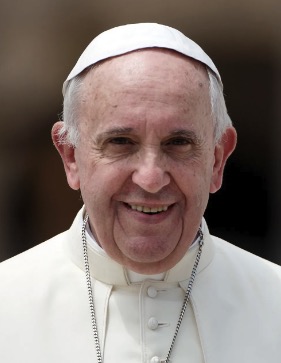
Spending time blaming
others is wasting time
29 August 2021 | Saint Peter’s Square
We often think that evil comes mainly from the outside: from other people’s conduct, from those who think badly of us, from society. How often we blame others, society, the world, for everything that happens to us! It is always the fault of “others”: it is the fault of people, of those who govern, of misfortune, and so on. It seems that problems always come from the outside. And we spend time assigning blame; but spending time blaming others is wasting time. We become angry, bitter and keep God away from our heart. Like those people in the Gospel, who complain, who are scandalized, who cause controversy and do not welcome Jesus. One cannot be truly religious while complaining: complaining poisons, it leads you to anger, to resentment and to sadness, that of the heart, which closes the door to God.
Let us ask the Lord today to free us from blaming others — like children: “No, it wasn’t me! It’s the other one, the other one…”. Let us ask in prayer for the grace not to waste time polluting the world with complaints, because this is not Christian. Jesus instead invites us to look at life and the world starting from our heart. If we look inside ourselves, we will find almost all that we despise outside. And if, with sincerity, we will ask God to purify our heart, then indeed we will be starting to make the world cleaner. Because there is an infallible way to defeat evil: by starting to conquer it within yourself. The first Fathers of the Church, the monks, when they were asked: “What is the path of holiness, how should I begin”? The first step, they used to say, was to blame oneself: blame yourself. Blaming ourselves. How many of us, during the day, in a moment of the day or a moment in the week, are able to blame ourselves within? “Yes, this one did this to me, the other one … that one, a barbarity…”. But me? Do I do the same thing, or do I do it this way…. It is wisdom: learning to blame yourself. Try to do it, it will do you good. It does me good, when I manage to do so, but it is good for us, it is good for everyone.
Inner Purity over
Outward Observance
30 August 2015 | Saint Peter’s Square
22nd Sunday of Year B
Pay heed! With these words, Jesus wants to caution us too, today, against the belief that outward observance of the law is enough to make us good Christians. Dangerous as it was then for the Pharisees, so too is it for us to consider ourselves acceptable or, even worse, better than others simply for observing the rules, customs, even though we do not love our neighbour, we are hard of heart, we are arrogant and proud. Literal observance of the precepts is a fruitless exercise which does not change the heart and turn into practical behaviour: opening oneself to meet God and his Word in prayer, seeking justice and peace, taking care of the poor, the weak, the downtrodden. We all know, in our communities, in our parishes, in our neighbourhoods, how much harm and scandal is done to the Church by those people who say they are deeply Catholic and often go to Church, but who then neglect their family in daily life, speak badly of others and so on. This is what Jesus condemns because this is a counter-witness to Christianity.
After his exhortation, Jesus focuses attention on a deeper aspect and states: “there is nothing outside a man which by going into him can defile him; but the things which come out of a man are what defile him” (v. 15). In this way he emphasizes the primacy of interiority, that is, the primacy of the “heart”: it is not the external things that make us holy or unholy, but the heart which expresses our intentions, our choices and the will to do all for the love of God. External behaviour is the result of what we decide in the heart, and not the contrary: with a change in external behaviour, but not a change of heart, we are not true Christians. The boundary between good and evil does not pass outside of us, but rather within us. We could ask ourselves: where is my heart? Jesus said: “Where your treasure is, there will your heart be also”. What is my treasure? Is it Jesus, is it his teaching? If so, then the heart is good. Or is my treasure something else? Thus it is a heart which needs purification and conversion. Without a purified heart, one cannot have truly clean hands and lips which speak sincere words of love — it is all duplicitous, a double life — lips which speak words of mercy, of forgiveness: only a sincere and purified heart can do this
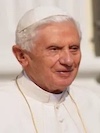
Balancing Faith and Action
in a World of Temptation
16 August 2012 | Castel Gandolfo
The theme of God’s Law, of his commandments, makes its entrance in the Liturgy of the Word this Sunday. It is an essential element of the Jewish and Christian religions, where the complete fulfilment of the law is love (cf. Rom 13:10). God’s Law is his word which guides men and women on the journey through life, brings them out of the slavery of selfishness and leads them into the “land” of true freedom and life. This is why the Law is not perceived as a burden or an oppressive restriction in the Bible. Rather, it is seen as the Lord’s most precious gift, the testimony of his fatherly love, of his desire to be close to his People, to be its Ally and with it write a love story.
This is what the devout Israelite prays: “I will delight in your statutes, / I will not forget your word…. Lead me in the path of your commandments, / for I delight in it” (Ps 119[118]:16, 35). In the Old Testament the person who passes on the Law to the People on God’s behalf is Moses. After the long journey in the wilderness, on the threshold of the promised land, he proclaims: “Now, O Israel, give heed to the statutes and the ordinances which I teach you, and do them; that you may live, and go in and take possession of the land which the Lord, the God of your fathers, gives you” (Deut 4:1). And this is the problem: when the People put down roots in the land and are the depository of the Law, they are tempted to place their security and joy in something that is no longer the Word of God: in possessions, in power, in other ‘gods’ that in reality are useless, they are idols. Of course, the Law of God remains but it is no longer the most important thing, the rule of life; rather, it becomes a camouflage, a cover-up, while life follows other paths, other rules, interests that are often forms of egoism, both individual and collective.