FEB 16, 2025


Papal Homilies
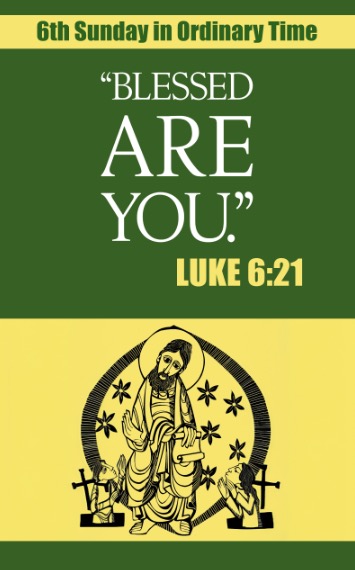
TIP: You can rewind the livestream up to twelve hours, allowing you to catch up on any events or addresses you may have missed.

SOURCE: Vatican News – English
This livestream allows viewers to witness the Pope’s addresses during Papal Audiences, as well as other Vatican events and news. The livestream is part of the Vatican Media Center’s efforts to share the latest updates on Pope Francis, the Holy See, and the Church worldwide with a global audience.

Fr. Gaetano Piccolo (SI)
The Dicastery for the Clergy deals with everything that concerns the priests and deacons of the diocesan clergy with regard to their persons, their pastoral ministry and what is necessary for its fruitful exercise. In these matters it offers the Bishops appropriate assistance.

Blessings and Curses
6th Sunday of Year C
A series of antitheses may be glimpsed in the readings. First we read that blessed are those who trust in God, and then that accursed are those who trust in human beings (first reading, Responsorial Psalm). In the Gospel, Luke contrasts the blessedness of those who are poor and hungry, of those who are weeping and hated, with the curses of the rich and those who have their consolation now, of those who laugh and are praised by all. Finally, in the second reading, there is a contrast between those who do not believe in the resurrection of the dead (some Corinthians) and those who do believe in it, since Christ has risen (Paul and all of the Christian tradition).
P. Antonio Izqeuirdo, L.C., © Dicastery for the Clergy A | B | C
Doctrinal Messages
6th Sunday of Year C
VATICAN
DAILY
BULLETIN
The Vatican Daily Bulletin is the official news source for the Pope’s activities and statements, providing accurate and up-to-date information. Published daily, it keeps the public informed about the Church’s activities and decisions.
Pastoral Suggestions
6th Sunday of Year C
THE HOLY
FATHER

RELATED LINKS
THIS SUNDAY’S
QUOTES
“The heart that trusts in the Lord is like a tree planted by the water, resilient and fruitful even in the face of difficulties. Let us root our lives in Christ, the living water, and bear witness to the transforming power of his love.” [Reference: Homily, February 12, 2023]
“The resurrection of Christ is not just a past event, but a reality that transforms our lives today. It is the source of our hope and the foundation of our faith, reminding us that love is stronger than death and that God’s mercy endures forever.” [Reference: Homily, April 4, 2021]
“The Beatitudes are not simply a list of moral prescriptions, but a call to a new way of living, centered on love, justice, and solidarity. They invite us to embrace a culture of encounter, where no one is excluded or left behind.” [Reference: Homily, February 7, 2016]
“True happiness is not found in material possessions or worldly success, but in following Jesus and living according to his teachings. Let us ask for the grace to become poor in spirit, humble, and merciful, so that we may inherit the kingdom of God.” [Reference: Homily, February 11, 2018]
“The resurrection of Christ is the ultimate sign of God’s love and mercy. It shows us that death does not have the final word, and that our lives have meaning and purpose beyond this world. Let us live in the hope of the resurrection, and share the joy of the Gospel with all those we meet.” [Reference: Homily, April 20, 2014]
“The Beatitudes are a blueprint for building a more just and compassionate world, where the poor, the marginalized, and the vulnerable are at the center. Let us work together to create a society where everyone can live with dignity and enjoy the fullness of life.” [Reference: Homily, February 15, 2015]
Please note that the quotes provided may not be verbatim transcriptions of pope’s homilies but rather summaries of the main points and insights that he shared
Pope Francis
6th Sunday of Year C
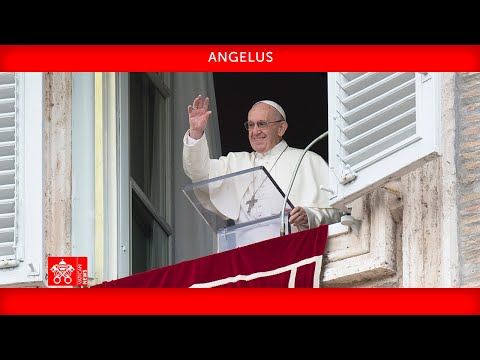
The Beatitudes
13 February 2022 | Saint Peter’s Square
- TEXT
- DISCUSSION GUIDE
At the centre of the Gospel of today’s Liturgy are the Beatitudes (cf. Lk 6:20-23). It is interesting to note that despite being surrounded by a great crowd, Jesus, proclaims them by addressing “his disciples” (v. 20). He speaks to the disciples. Indeed, the Beatitudes define the identity of the disciple of Jesus. They may sound strange, almost incomprehensible to those who are not disciples; whereas, if we ask ourselves what a disciple of Jesus is like, the answer is precisely the Beatitudes. Let us take a look at the first one which is the basis for all the other ones: “Blessed are you poor, for yours is the Kingdom of God” (v. 20). Blessed are you poor. Jesus says two things of his people: that they are blessed and that they are poor; indeed, that they are blessed because they are poor.
In what sense? In the sense that Jesus’ disciples do not find their joy in money, power, or other material goods; but in the gifts they receive every day from God: life, creation, brothers and sisters, and so on. These are gifts of life. They are content to share even the goods they possess, because they live according to the logic of God. And what is the logic of God? Gratuitousness. The disciple has learned to live in gratuitousness. This poverty is also an attitude towards the meaning of life, because Jesus’ disciples do not think they possess it, that they already know everything, but rather they know they must learn every day. And this is poverty: the awareness of having to learn every day. Because they have this attitude, Jesus’ disciples are humble, open people, far from prejudice and inflexibility.
There was a good example in last Sunday’s Gospel reading: Simon Peter, an expert fisherman, accepts Jesus’ invitation to cast his nets at an unusual time, and then, filled with wonder at the miraculous catch, he leaves the boat and all his goods to follow the Lord. Peter shows himself to be docile by leaving everything, and in this way, he becomes a disciple. Instead, those who are too attached to their own ideas and their own securities, find it difficult to truly follow Jesus. They follow him a little, only in those things in which “I agree with him and he agrees with me”, but then, as far as the rest is concerned, it goes no further. And this is not a disciple. And so, they fall into sadness. They become sad because things don’t add up, because reality escapes their thinking patterns and they find they are dissatisfied. Disciples, on the other hand, know how to question themselves, how to humbly seek God every day, and this allows them to delve into reality, grasping its richness and complexity.
In other words, the disciple accepts the paradox of the Beatitudes: they declare that those who are poor, who lack many things and recognize this, are blessed, that is, happy. Humanly speaking, we are inclined to think in another way: happy are those who are rich, with many goods, who receive plaudits and are the envy of many, who have all the certainties. But this is a worldly mindset, it is not the way of thinking of the Beatitudes! Jesus, on the contrary, declares worldly success to be a failure, since it is based on a selfishness that inflates and then leaves the heart empty. Faced with the paradox of the Beatitudes, disciples allow themselves to be challenged, aware that it is not God who must enter into our mindset, but we into his. This requires a journey, sometimes wearisome, but always accompanied by joy. Because the disciple of Jesus is joyful, with the joy that comes from Jesus. Because, let us remember, the first word Jesus says is: blessed, hence the name of the Beatitudes . This is the synonym of being disciples of Jesus. By freeing us from the slavery of self-centredness, the Lord breaks our closures, dissolves our hardness, and opens up to us true happiness, which is often found where we do not expect it to be. It is he who guides our life, not us, with our preconceptions and our demands. Disciples, in the end, are those who let themselves be led by Jesus, who open their heart to Jesus, who listen to him and follow his path.
We might then ask ourselves: do I — each one of us — have the disciple’s readiness? Or do I behave with the rigidity of one who believes him or herself to be right, who feels decent, who feels they have already arrived? Do I allow myself to be “inwardly unhinged” by the paradox of the Beatitudes, or do I stay within the confines of my own ideas? And then, with the logic of the Beatitudes, setting aside the hardships and difficulties, do I feel the joy of following Jesus? This is the decisive trait of the disciple: the joy of the heart. Let us not forget the joy of the heart. This is the touchstone for knowing if a person is a disciple: does he or she have joy in their heart? Do I have joy in my heart? This is the point.
Opening Reflection
1. Reflect on the central message of the Beatitudes. How do they redefine our understanding of true happiness and success?
2. Consider the concept of being blessed as presented by Jesus. What does it mean to be blessed in the context of the Beatitudes?
Reading and Comprehension
1. Read Luke 6:20-23. Why did Jesus choose to address his disciples specifically when proclaiming the Beatitudes?
2. How does the sermon define a disciple of Jesus? What are the characteristics that distinguish a disciple according to the Beatitudes?
Deepening Understanding
1. Explore the paradoxical nature of the Beatitudes. How does being poor lead to blessedness and happiness according to Jesus?
2. Discuss the concept of ‘gratuitousness’. How does living a life of gratuitousness align with the teachings of the Beatitudes?
Personal Reflection and Sharing
1. Reflect on the example of Simon Peter from last Sunday’s Gospel reading. How did Peter exemplify the character of a true disciple?
2. Are there areas in your life where you find it difficult to follow Jesus completely? What steps can you take to be more open to his teachings?
Application and Practice
1. Consider the role of humility and openness in discipleship. How can these qualities help you become more receptive to learning and growing in faith?
2. Discuss practical ways in which you can embody the paradox of the Beatitudes in your daily life. How can you find joy amidst challenges by following Jesus?
Challenge and Commitment
1. Reflect on the question: Do I have the readiness and openness of a disciple of Jesus? What can you do this week to become more ‘inwardly unhinged’ by the Beatitudes?
2. Identify a specific action you can take to experience and share the joy of discipleship with others. How can you cultivate the joy of the heart as a disciple?
THIS SUNDAY’S
QUOTES
“Trust in the Lord is the true guarantee of stability, while those who trust in human beings, in economic and political power, are like shrubs in the desert, without roots, incapable of withstanding the force of the wind.” [Reference: Homily, February 13, 2011]
“To believe in the resurrection means to trust in the power of God’s mercy, which is always greater than our weaknesses, our disappointments, our failures, and our sins.” [Reference: Homily, April 8, 2007]
“In the Beatitudes, Jesus presents a model of life that overturns worldly values and invites us to live according to the logic of God’s kingdom, where the poor, the humble, and the merciful are blessed.” [Reference: Homily, February 6, 2011]
“The Christian life is a journey of transformation, in which we learn to love as Christ loved, and to put our faith into action through concrete acts of charity and service.” [Reference: Homily, February 13, 2013]
“The resurrection of Christ is the source of our hope and the foundation of our faith. Without the resurrection, our faith would be in vain, and we would still be in our sins.” [Reference: Homily, April 12, 2009]
“The Beatitudes challenge us to embrace a new set of values, which prioritize love, humility, and justice over power, wealth, and status. They call us to live as disciples of Christ, committed to building a more just and compassionate world.” [Reference: Homily, February 10, 2013]
Please note that the quotes provided may not be verbatim transcriptions of pope’s homilies but rather summaries of the main points and insights that he shared
Benedict XVI
6th Sunday of Year C

A Level Place
14 February 2010 | Saint Peter’s Square
- TEXT
- DISCUSSION GUIDE
The liturgical year is a great journey of faith made by the Church, always preceded by her Mother the Virgin Mary. This year, during the Sundays in Ordinary Time, the path is marked by readings from Luke’s Gospel. Today it brings us to “a level place” (Lk 6: 17), where Jesus stops with the Twelve and where a crowd of other disciples and people who had come from everywhere gather to listen to him. This is the setting for the proclamation of the “Beatitudes” (Lk 6: 20-26; cf. Mt 5: 1-12). Jesus, lifting up his eyes to his disciples, says: “Blessed are you poor…. Blessed are you that hunger…. Blessed are you that weep…. Blessed are you when men hate you… when they cast out your name” on account of me. Why does he proclaim them blessed? Because God’s justice will ensure that they will be satisfied, gladdened, recompensed for every false accusation in a word, because from this moment he will welcome them into his Kingdom. The Beatitudes are based on the fact that a divine justice exists, which exalts those who have been wrongly humbled and humbles those who have exalted themselves (cf. Lk 14: 11). In fact, the Evangelist Luke, after repeating four times “blessed are you”, adds four admonitions: “Woe to you that are rich…. Woe to you that are full now…. Woe to you that laugh now” and: “Woe to you, when all men speak well of you”, because as Jesus affirms, the circumstances will be reversed; the last will be first, and the first will be last (cf. Lk 13: 30).
This justice and this Beatitude are realized in the “Kingdom of Heaven”, or the “Kingdom of God”, which will be fulfilled at the end of times but which is already present in history. Wherever the poor are comforted and admitted to the banquet of life, there God’s justice is already manifest. This is the work that the Lord’s disciples are called to carry out also in today’s society. I am thinking of the Hostel run by the Roman Caritas at Termini Station, which I visited this morning. I warmly encourage all who work in that praiseworthy institution and those who, in every part of the world, volunteer themselves generously to similar works of justice and of love.
Not Available
 Highlight text or double-click a paragraph anywhere on the site to ADD TO NOTES. You can also click ASK AI to copy your selection to the clipboard with a command prompt, ready for you to paste manually into the chat above.