FEB 23, 2025


Papal Homilies

TIP: You can rewind the livestream up to twelve hours, allowing you to catch up on any events or addresses you may have missed.

SOURCE: Vatican News – English
This livestream allows viewers to witness the Pope’s addresses during Papal Audiences, as well as other Vatican events and news. The livestream is part of the Vatican Media Center’s efforts to share the latest updates on Pope Francis, the Holy See, and the Church worldwide with a global audience.

Fr. Gaetano Piccolo (SI)
The Dicastery for the Clergy deals with everything that concerns the priests and deacons of the diocesan clergy with regard to their persons, their pastoral ministry and what is necessary for its fruitful exercise. In these matters it offers the Bishops appropriate assistance.

Generosity
7th Sunday of Year C
The point of reference of today’s liturgy seems to be generosity: David’s generosity with Saul, who persecuted him and wanted to kill him. But David kept Abishai from killing Saul (first reading). We see the generosity of Christians with all human beings, to the point of being able to love one’s enemies (Gospel), thus imitating the mercy of the heavenly Father. Finally, we learn about the generosity of Jesus Christ who, being a life-giving spirit by virtue of his resurrection, lets us all share in his spiritual and heavenly condition (second reading).
P. Antonio Izqeuirdo, L.C., © Dicastery for the Clergy A | B | C
Doctrinal Messages
7th Sunday of Year C
VATICAN
DAILY
BULLETIN
The Vatican Daily Bulletin is the official news source for the Pope’s activities and statements, providing accurate and up-to-date information. Published daily, it keeps the public informed about the Church’s activities and decisions.
Pastoral Suggestions
7th Sunday of Year C
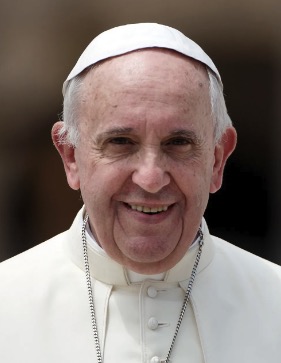
Pope Francis
7th Sunday of Year C

Do Good to Haters
20 February 2022 | Saint Peter’s Square
- TEXT
- DISCUSSION GUIDE
In the Gospel of today’s Liturgy, Jesus gives some basic life guidance to the disciples. The Lord refers to the most difficult situations, those that constitute the bench test for us, those that confront us with those who are enemies and hostile to us, those who are always trying to do us harm. In such cases, the disciple of Jesus is called not to give in to instinct and hatred, but to go further, much further. To go beyond instinct, to go beyond hatred. Jesus says: “Love your enemies, do good to those who hate you” (Lk 6:27). And even more concretely: “To him who strikes you on the cheek, offer the other also” (v. 29). When we hear this, it seems that the Lord is asking for the impossible. And then, why love your enemies? If one does not react to bullies, then every abuse of power is given free rein, and this is not fair. But is it really so? Does the Lord really ask for the impossible and indeed even unjust things of us? Is it so?
Let us consider first and foremost that sense of injustice that we feel in “turning the other cheek”. And let us think of Jesus. During the passion, in his unjust trial before the high priest, at one point he receives a slap from one of the guards. And how does He react? He does not insult him, no: he says to the guard, “If I have spoken wrongly, bear witness to the wrong; but if I have spoken rightly, why do you strike me?” (Jn 18:23). He asks for an account of the wrong done to him. Turning the other cheek does not mean suffering in silence, giving in to injustice. With his question, Jesus denounces what is unjust. But he does so without anger, without violence, indeed with kindness . He does not wish to spark off an argument, but rather to defuse resentment , this is important: to extinguish hatred and injustice together, seeking to restore the guilty brother. This is not easy, but Jesus did it and he tells us to do likewise. This is turning the other cheek: Jesus’ meekness is a stronger response than the slap he received. Turning the other cheek is not the withdrawal of the loser, but the action of one who has a greater inner strength. Turning the other cheek means defeating evil with goodness which opens up a breach in the heart of the enemy, unmasking the absurdity of his hatred. And this attitude, this turning the other cheek, is dictated not by calculation or by hatred, but by love. Dear brothers and sisters, it is the freely given, undeserved love we receive from Jesus that generates in the heart a way of doing things that is similar to his, that rejects all vengeance. We are accustomed to revenge: “You did this to me, I will do that to you”, or to bearing a grudge in our heart, resentment that harms, that destroys the person.
Let’s get to another objection: is it possible for a person to come to love his or her enemies? If it depended only on us, it would be impossible. But let us recall that, when the Lord asks for something, he wishes to give it. The Lord never asks for something he has not already given us first. When he tells me to love my enemies, he wants to give me the capacity to do so. Without that ability, we would not be able, but he tells you to “love your enemy” and gives you the capacity to love. Saint Augustine prayed in this way — listen to this beautiful prayer: Lord, “give what You command, and command what You will” (Confessions , X, 29.40), because you have already given it to me. What should we ask of him? What is God happy to give us? The strength to love, which is not a thing, but rather the Holy Spirit. The strength to love is the Holy Spirit, and with the Spirit of Jesus, we can respond to evil with good, we can love those who do us harm. This is what Christians do. How sad it is when persons and peoples who are proud to be Christians see others as enemies and think about waging war against each other! It is very sad.
And we, do we try to live following Jesus’ invitations? Let us think about someone who has wronged us. Each one of you, think of a person. It is common for us to be hurt by someone; think of that person. Perhaps there is some resentment within. So, let us set the image of Jesus alongside this resentment: meek during his trial, after the slap. And then let us ask the Holy Spirit to act in our heart. Finally, let us pray for that person: praying for those who have done us harm (cf. Lk 6:28). When someone has wronged us, we immediately go and tell others and we feel we are victims. Let us stop, and pray to the Lord for that person, that he might help him or her, and so this feeling of resentment will be dispelled. Praying for those who have wronged us is the first step to transforming evil into good.
1. Initial Thoughts
– How do you initially react to Jesus’ statement: “Love your enemies, do good to those who hate you”?
– Why do you think this command might feel impossible or unfair at first glance?
2. Understanding “Turning the Other Cheek”
– Reflect on the example of Jesus during His trial when He receives a slap but doesn’t retaliate. How does His response illustrate the concept of “turning the other cheek”?
– What does it mean to turn the other cheek according to this sermon? How is it an act of strength rather than weakness?
– Discuss the importance of defusing resentment and extinguishing hatred in relationships. How does this apply to your daily interactions?
3. The Power of Love over Hatred
– Discuss how undeserved love given by Jesus empowers us to reject vengeance. How does this view challenge conventional reactions to being wronged?
– What role does the Holy Spirit play in enabling us to love our enemies? Share any experiences where prayer or a spiritual presence helped you forgive someone who had wronged you.
4. Practical Application
– Identify someone who has wronged you. How does placing the image of Jesus’ meekness alongside your feelings towards this person change your perspective?
– Spend a few moments praying for this individual. How does this practice influence your feelings of resentment or hurt?
– How can we encourage a culture of forgiveness and peace in our communities, especially in places with historical or ongoing conflicts?
5. Reflection and Concluding Thoughts
– Why might it be significant that Jesus commands love in these difficult situations? How does His example set a precedent for Christian behavior?
– Consider the implications for our personal lives and society if more people adopted this Christlike approach to loving enemies. What changes might occur?
– End with a prayer, inviting the Holy Spirit to help everyone in the group love more deeply, forgive more readily, and seek peace in challenging relationships.
May the teachings of this sermon guide our hearts towards embracing and embodying Christ-like love in our lives.
Benedict XVI
7th Sunday of Year C

Love Your Enemies
18 February 2007 | Saint Peter’s Square
- TEXT
- DISCUSSION GUIDE
This Sunday’s Gospel contains some of the most typical and forceful words of Jesus’ preaching: “Love your enemies“(Lk 6: 27). It is taken from Luke’s Gospel but is also found in Matthew’s (5: 44), in the context of the programmatic discourse that opens with the famous “Beatitudes”. Jesus delivered it in Galilee at the beginning of his public life: it is, as it were, a “manifesto” presented to all, in which he asks for his disciples’ adherence, proposing his model of life to them in radical terms.
But what do his words mean? Why does Jesus ask us to love precisely our enemies, that is, a love which exceeds human capacities?
Actually, Christ’s proposal is realistic because it takes into account that in the world there is too much violence, too much injustice, and therefore that this situation cannot be overcome except by countering it with more love, with more goodness. This “more” comes from God: it is his mercy which was made flesh in Jesus and which alone can “tip the balance” of the world from evil to good, starting with that small and decisive “world” which is the human heart.
This Gospel passage is rightly considered the magna carta of Christian non-violence. It does not consist in succumbing to evil, as a false interpretation of “turning the other cheek” (cf. Lk 6: 29) claims, but in responding to evil with good (cf. Rom 12: 17-21) and thereby breaking the chain of injustice.
One then understands that for Christians, non-violence is not merely tactical behaviour but a person’s way of being, the attitude of one who is so convinced of God’s love and power that he is not afraid to tackle evil with the weapons of love and truth alone.
Love of one’s enemy constitutes the nucleus of the “Christian revolution”, a revolution not based on strategies of economic, political or media power: the revolution of love, a love that does not rely ultimately on human resources but is a gift of God which is obtained by trusting solely and unreservedly in his merciful goodness. Here is the newness of the Gospel which silently changes the world! Here is the heroism of the “lowly” who believe in God’s love and spread it, even at the cost of their lives.
Dear brothers and sisters, Lent, which will begin this Wednesday with the Rite of Ashes, is the favourable season in which all Christians are asked to convert ever more deeply to Christ’s love.
Let us ask the Virgin Mary, docile disciple of the Redeemer who helps us to allow ourselves to be won over without reserve by that love, to learn to love as he loved us, to be merciful as Our Father in Heaven is merciful (cf. Lk 6: 36).
Opening Reflection
– Begin the session by reading Luke 6:27 and Matthew 5:44. Reflect on the emotions and thoughts these verses evoke. Are there any initial questions or insights?
Understanding Jesus’ Message
1. Contextual Background
– Discuss the significance of Jesus delivering this message at the beginning of his public ministry in Galilee.
– Consider why Jesus’ teachings, especially on loving enemies, could be seen as a “manifesto” for his followers.
2. Why Love Our Enemies?
– Explore the reasons Jesus emphasizes loving enemies, which seems to exceed human capacity.
– How does this teaching challenge societal norms, particularly the prevalent culture of violence and injustice?
Realistic vs. Idealistic Love
1. God’s Mercy and Human Action
– Discuss how Christ’s proposal is realistic because it taps into God’s merciful goodness, which can tip the balance from evil to good.
– How does this teaching encourage individuals to start with personal transformation?
2. Non-Violence as Christian Praxis
– Examine the concept of Christian non-violence as discussed in the sermon.
– How is responding to evil with good different from simply succumbing to evil?
– Reflect on Romans 12:17-21. How do these verses support or expand on Jesus’ teachings in Luke and Matthew?
The Christian Revolution
1. Revolution of Love
– What makes the Christian way of love revolutionary?
– Discuss how this revolution does not depend on worldly power but on love as a divine gift.
2. Silent Change
– How does the Gospel’s quiet power transform the world?
– Why might the “lowly” who embody this love be seen as heroic?
Application for Lent
1. Season of Conversion
– With Lent approaching, how can Christians deepen their conversion to Christ’s love?
– What personal practices can help embody this love in daily life?
2. Role of the Virgin Mary
– Discuss the role of the Virgin Mary as a model for surrendering to God’s love. How does her example inspire believers?
Concluding Reflection
– Reflect on how the group can collectively and individually work towards loving their enemies and practicing Christian non-violence.
– End with a prayer asking for the courage and strength to embrace and live out Christ’s revolutionary love each day.