FEB 16, 2025


Homilies
Homilies
6th Sunday of Year C


Sunday Podcast (USCCB)
Fr. Andrew Ricci
1st Reading – Jeremiah 17:5-8
- Cursed is the one who trusts in human beings.
- Blessed is the one who trusts in the Lord.
Psalm – 1:1-4,6
- “Blessed are they who hope in the Lord.”
- We are blessed when we avoid sin and cultivate a life of faith in God.
2nd Reading – 1st Corinthians 15:12,16-20
- Paul affirms the resurrection of Jesus Christ, which is a central truth to our faith.
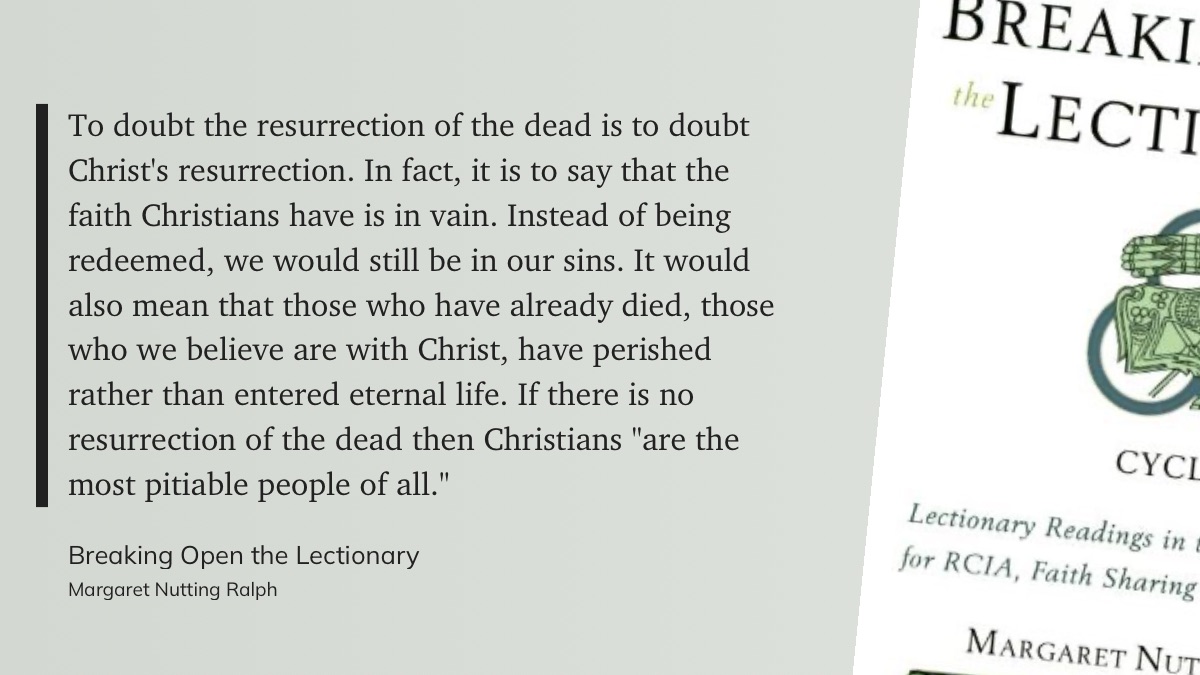
- Without the resurrection our faith is in vain and we are still in our sins.
Gospel – Luke 6:17,20-26
- This is the “Sermon on the Plain” (Luke’s version of the Sermon on the Mount in Matthew’s Gospel.)
- Note the contrast of the “blessings” and the “woes” in the teaching of Jesus.
Fr. Andrew Ricci, ordained in 1997, is a priest for the Diocese of Superior. He is the Rector of the Cathedral of Christ the King.
SOURCE: Study, Pray, Serve

Fr. Francis Martin




Bulletin Inserts


Christ in our Neighborhood
Faith-sharing small church communities focused on God’s Word

Bishop John P. Dolan / Phoenix
TWO PAGE HANDOUT | MOBILE
MAIN PAGE


Our Sunday Readings
Edrianne Ezell
Commentary, Questions & Prayer

Scripture Study

Lectionary Commentary
Fr. Tobin
Echoing God’s Word
Fr. Thibodeau
Carmelite Lectio Divina
Reflections and Prayers
77 page PDF with refections and prayers for each day of the month.
Lectio Divina February 2025 (PDF)
Lectio Divina February 2025 [Mobi]
Lectio Divina February 2025 [ePub]
“Lectio divina is an authentic source of Christian spirituality recommended by our Rule. We therefore practise it every day, so that we may develop a deep and genuine love for it, and so that we may grow in the surpassing knowledge of Christ. In this way we shall put into practice the Apostle Paul’s commandment, which is mentioned in our Rule: “The sword of the Spirit, too, which is the word of God, is to dwell abundantly in your mouth and in your hearts; and whatever things you have to do, let them be done in the word of the Lord.” (Carmelite Constitutions (2019), n. 85.)
Source: Carmelites

Social Media /
Bulletin Inserts
THE CURSED MAN
“He is like a barren bush in the wasteland that enjoys no change of season, but stands in a lava waste, a salt and empty earth.” – Jeremiah 17:6
Reliance on the temporary leads to fruitlessness and emptiness, while trust in the Lord nurtures and sustains.
Reflection: What areas of your life feel like a ‘barren bush’ and need God’s nurturing touch?
THE BLESSED MAN
“Blessed is the man who trusts in the LORD, whose hope is the LORD.” – Jeremiah 17:7
Finding true hope and blessing comes from putting your trust not in the world, but in God.
Reflection: How can you strengthen your reliance on God in your daily routine?
“He fears not the heat when it comes, its leaves stay green; In the year of drought it shows no distress, but still bears fruit.” – Jeremiah 17:8
A life grounded in God can weather any storm and emerge stronger and more vibrant.
Reflection: What steps can you take to deepen your spiritual roots today?

In the study for the Fourth Sunday in Ordinary Time (C), we investigated Jeremiah’s prophetic call; today, we study Isaiah’s call. Isaiah lived 150 years before Jeremiah. He was born into an aristocratic family who advised the King. He prophesied during the Assyrian advance on Jerusalem in 705 B.C. Indeed, much of his life as a court prophet (adviser to the king) was spent trying to keep Judah independent from Assyria to the north and Egypt to the south.
Unlike any other prophet, Isaiah receives his prophetic call in a vision during Temple worship. Jews believed that God “dwelled” on earth (i.e., the place they knew God was present) in the Temple. They also believed that the Temple itself was a mirrored image of God’s heavenly court. In Isaiah’s vision, the Temple does indeed become God’s Holy court.
As an observer, Isaiah does not see God directly, only the train of his garment (i.e, his glory). [1] Seraphim have six wings: two to hover with, two to cover their faces (so they would not see God’s glory and die), and two to cover their feet (i.e, their genital area for modesty’s sake). The angels cry out their worship; their words have been incorporated into our “Hosanna” at Mass. In response to their words, the doors shook (an earthquake?) and smoke filled the Temple; for the people of the time, an earthquake and smoke were both signs of divine presence. [2-5]
In the presence of God, Isaiah was anxious for his life because, in the face of such divine power, he could die. He was one of the sinful people who spoke with “unclean lips” (i.e., those who said one thing and did another). But his “sin” is removed by the touch of a burning coal to his lips; now Isaiah would only speak the truth and be single hearted. With this sin removed he could speak in the holy court. [6-7]
God calls out for a prophet. Here, Isaiah’s anxiousness turns to willingness. The “clean” Isaiah becomes God’s prophet. [8]
Isaiah was a witness to God’s power, first as an observer, then as a prophet. We are called to be God’s witnesses, by what we see in our world and by what we do in our world. Seeing God’s power requires prayer; doing God’s will requires honesty and purpose.
Permission for use. All materials found in word-sunday.com are the property of Larry Broding (Copyright 1999-2025). Viewers may copy any material found in these pages for their personal use or for use in any non-profit ministry.
6th Sunday of Year C
Trust in the Lord
Jeremiah 17:5-8

I. The consequences of trusting in human strength (vv. 5-6)
- Cursed are those who trust in mortals
- They turn from the Lord and rely on human strength
- They become like a barren bush in the desert
II. The blessings of trusting in the Lord (vv. 7-8)
- Blessed are those who trust in the Lord
- They are like a tree planted by the water
- They have no worries and remain fruitful
- They withstand drought and continue to bear fruit
Clipart by Fr. Richard Lonsdale
Scriptures in Context
Fr. Paul Galeto, OSA


Fr. Paul Galetto, OSA
Catholic Sunday Scriptures in Context
Jeremiah’s Oracle

Click on slide for larger image.
Psalm 1
Click on slide for larger image.
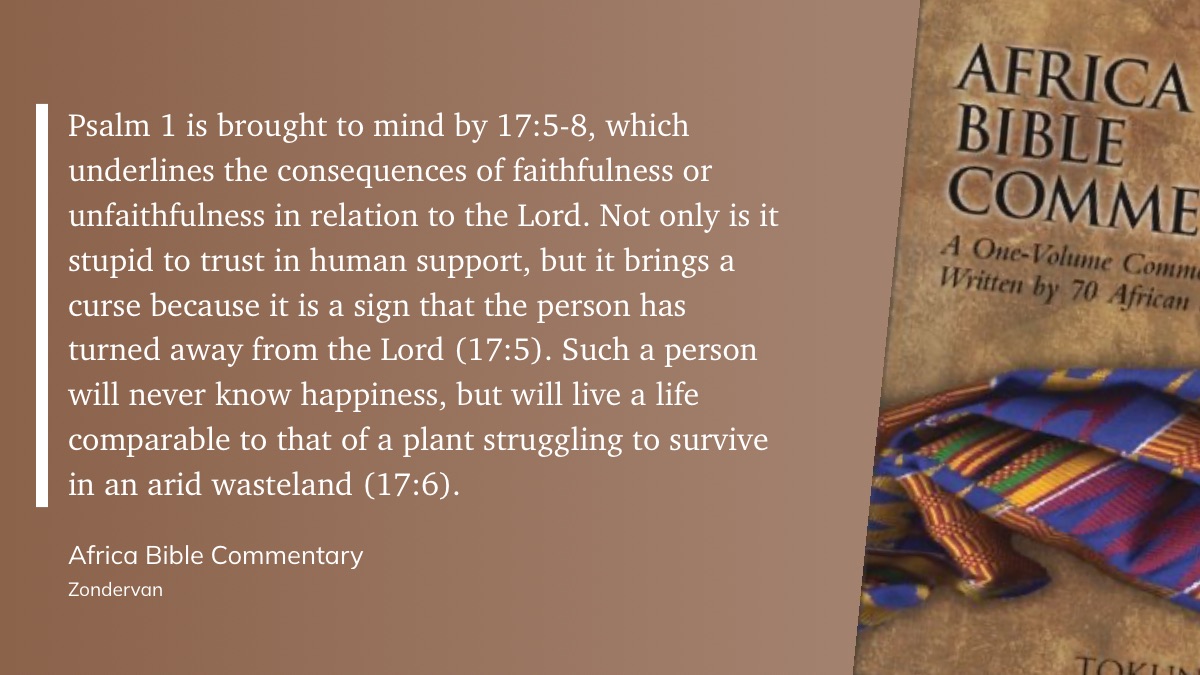
Cursed is the man who trusts in man, and makes flesh his arm
SERMON WRITER: It is not a sin to trust people, but it is a sin to trust in people—to invest our deepest faith in another person and to derive our dearest hope from that person—to give that person the place in our hearts that rightfully belongs to God.
- Or we might be tempted to invest our ultimate trust in an ideology or philosophical system—or the scientific method —or technology—or some get rich scheme.
- Or we might be tempted to trust in contractual agreements with other people or treaty agreements with other nations.
- Or we might be tempted to trust in our military prowess or that of our allies.
- Or we might be tempted to trust in a healthy lifestyle and physical fitness routines. Some people put their ultimate trust in oat bran.
- Or we might be tempted to trust in our own wisdom or our own strength or our own resources. The more gifted or wealthy we are, the more this is likely to be our temptation.
Bible Study Notes (PDF)
PDF Handout

- The Jerome Biblical Commentary,
- The New Jerome Biblical Commentary, and
- The Navarre Bible.
SOURCE: St. Charles Borromeo Catholic Church (Picayune, MS)


Blessed is the One who Trusts Yahweh
EXCERPT: In the First Reading, the prophet Jeremiah contrasts the arid and fruitless lives of those who trust only in themselves or others with those who live spiritually nourished lives because they have faith in God to provide for them, even in times of distress.
In this poetic passage, the 6th-century BC prophet Jeremiah contrasts the arid and fruitless lives of those who trust only in themselves or other human beings with those who live spiritually nourished lives because they have faith in God to provide for them even in times of distress.
The cursed who separate themselves from God | The blessed who are in union with God |
He trusts in other human beings | He places his trust in Yahweh |
He rejects the spiritual in favor of the material | He places his hope in Yahweh |
He is like a barren bush in the desert | He is like a tree planted beside life-giving water |
His life is as barren and fruitless as a bush growing in unproductive ground | His life is fruitful like a tree that is continually nourished even in times of distress |
In verse 8, "heat" and "drought" represent the struggles every human being faces in a world full of sin, while "water" is a symbol of the Holy Spirit working in the lives of those who are in union with God, placing their hope and trust in Him. Even though the blessed one who trusts in God will encounter the same dangers others face, the power of God will sustain him in his struggles. He will continue to bear the spiritual fruit of righteousness that promises an ever "green" eternal reward from the waters of the "stream" of everlasting life.
SOURCE: Agape Bible Study Copyright © 2015; revised 2024 (Used with permission.)
Social Media /
Bulletin Inserts
“If the dead are not raised, then neither has Christ been raised.” (1 Corinthians 15:16)
Our faith stands on the resurrection. Trust in the life that Jesus offers beyond what we can see and touch.
Reflection: In what ways do you see the power of resurrection at work in your life today?
“And if Christ has not been raised, your faith is vain; you are still in your sins.” (1 Corinthians 15:17)
The resurrection is the cornerstone of our faith, removing the chains of sin and bringing us into light. Let this truth strengthen your commitment.
Reflection: How does this understanding of faith motivate you towards personal growth and transformation?
In the midst of his prophecy, Jeremiah compared the good and evil persons with an analogy from the plant world. The evil person was like the desert plant that knew no season, who only knew harsh conditions. [5-6] Why was this person cursed to unchanging barrenness? Notice who the person trusted, his friends and his own self (“flesh” of v. 5). This person depended on his/her looks, intelligence, or personality to persuade; he/she used wealth or friendships to promote his/her position. The person who depended only on the self and his/her friends did not see the greater picture and did not experience the greatness of God. Because of blind selfishness, the evil person did not grow emotionally or spiritually; he/she would never know joy.
The good person did grow because he/she trusted in God. The trust of a good person went beyond looks or intelligence or personality or friends. When those qualities failed (the “heat” and “drought” of v. 6-7), a spiritual life would keep the good person enriched and productive. The good person would spiritually mature and would know joy.
“All assets are liabilities; all liabilities are assets.” Our talents can be our burdens; our burdens can be turned into talents. To see this paradox requires faith, firm trust in God.
Permission for use. All materials found in word-sunday.com are the property of Larry Broding (Copyright 1999-2025). Viewers may copy any material found in these pages for their personal use or for use in any non-profit ministry.
6th Sunday of Year C
Christian Hope
1 Corinthians 15:12, 16-20
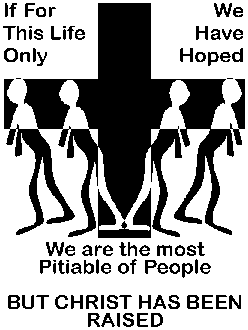
I. The centrality of Christ’s resurrection (vv. 12, 16)
- If Christ is preached as raised from the dead, how can some deny the resurrection?
- If the dead are not raised, Christ has not been raised
II. The consequences of denying the resurrection (vv. 17-19)
- Faith becomes futile
- Sins remain unforgiven
- Those who have fallen asleep in Christ have perished
III. The reality of Christ’s resurrection and its implications (v. 20)
- Christ has been raised from the dead
- He is the firstfruits of those who have fallen asleep
- His resurrection paves the way for the resurrection of all believers
Clipart by Fr. Richard Lonsdale
Scriptures in Context
Fr. Paul Galeto, OSA

Fr. Paul Galetto, OSA
Catholic Sunday Scriptures in Context
Remaining Green

Click on slide for larger image.
Doubting the Resurrection
Click on slide for larger image.
Bible Study Notes (PDF)
PDF Handout
- The Jerome Biblical Commentary,
- The New Jerome Biblical Commentary, and
- The Navarre Bible.
SOURCE: St. Charles Borromeo Catholic Church (Picayune, MS)
The Blessed Hope of Eternity
EXCERPT: Some among the Christian community at Corinth apparently denied the promise of bodily resurrection at Christ's Second Coming. Paul answered their false claims with his argument favoring a bodily resurrection at the end of the Age of Humanity, showing the inconsistencies and faulty logic of arguments against it. He forcefully defends the resurrection of Christ as an essential truth of the Christian faith and states that by rising from the dead, Christ completes God's work of redemption.
He states his basic argument twice. First, in verse 16, he writes 16 If the dead are not raised, neither has Christ been raised... His point is if there is no such thing as a bodily resurrection, then it has not taken place even in the case of Jesus's bodily resurrection.Second, in verses 17-19, Paul points to the grave consequence of this denial. Unless Christ was resurrected bodily from death, their faith does not save them, and they are condemned, never to be physically resurrected with Christ. Then, St. Paul gives arguments supporting Christ's resurrection by pointing out what an unfavorable situation we would be in if Jesus had not risen from the dead:
- Our faith would be in vain since we would remain lost in our sins (verse 17).
- Therefore, our hope of eternal life would also be in vain (verses 18-19).
St. Paul concludes his arguments in verse 20 with a triumphant assertion of the reality of Christ's bodily resurrection with positive implications and consequences. He calls Christ the "Fruitfruits" of the resurrection. Under Mosaic Law, the "Firstfruits" were the portion of the harvest offered in thanksgiving to the Lord that implied the consecration of the entire harvest that would follow (Lev 34:26; Dt 26:1-11). Christ's resurrection is not an end in itself. It is not completed but continues in the harvest of souls in every generation of humankind. At Christ's return, all humanity will arise bodily as the completion of the final human harvest in God's call to the Last Judgment that will end for the just in eternity with Christ in His heavenly Kingdom (1 Thes 4:16; Rev 20:11-15).
SOURCE: Agape Bible Study Copyright © 2015; revised 2024 (Used with permission.)
Social Media /
Bulletin Inserts
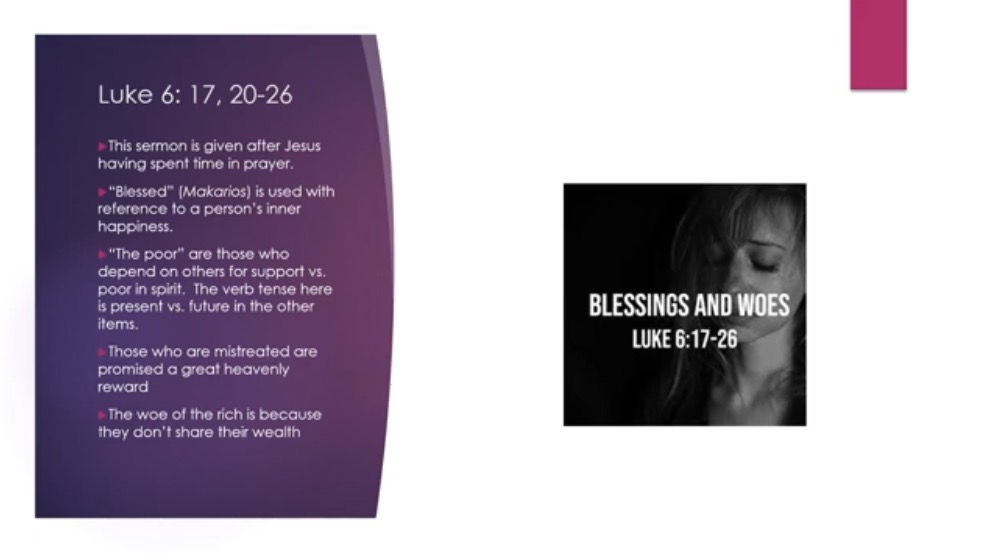
“Blessed are you who are poor, for the kingdom of God is yours.” – Luke 6:20
“In moments of need, find comfort knowing the kingdom of God is open to you. Your challenges do not define you; your faith does.”
Reflect: How can you find strength in your faith when facing difficulties?
“Blessed are you who hunger now, for you will be satisfied.” – Luke 6:21
“Though you may feel an emptiness now, know that fulfillment and joy await the patient heart.”
Reflect: What are ways you can nourish your spirit while waiting for your needs to be met?
“Blessed are those who weep now, for you will laugh.” – Luke 6:21
“Every tear you shed is seen and known by God. A time of joy is promised and will come.”
Reflect: How can you hold onto hope during times of sadness, trusting in future joy?
“Rejoice in that day and leap for joy, for behold, your reward will be great in the kingdom of God.” – Luke 6:23
“Let your heart take pride in knowing your perseverance is recognized and praised beyond this world.”
Reflect: How does the promise of a heavenly reward influence your daily actions and decisions?
“But woe to you who are rich, for you have received your consolation.” – Luke 6:24
“True wealth is not found in material possessions but in the depths of one’s soul and acts of love.”
Reflect: In what ways can you redirect your focus from worldly gains to spiritual growth?
6:17 “HE stood on level ground” Unlike the rocky peaks of the hills, this phrase seemed to refer to the slope of the hills or mountains where a large following could gather.
“a great number of people from all (over) Judea, and Jerusalem and along the coast of Tyre and Sidon.” Luke indicated people came from the populated areas northwest and south of Galilee to hear Jesus. The reputation was more than local or regional. It reached the Gentile areas of modern-day south Lebanon and the orthodox City of David. In other words, Jesus’ audience was Jew and Gentile alike.
6:22 Exclusion, public insult, and denial form the process of excommunication from the synagogue. Exclusion was physical; the person is no longer welcome to the synagogue or association with the Jewish community. Insult was public and social; there was a concerted effort to destroy the reputation of the excommunicated. The final step was denial; one’s name was cast out from the rolls of the community. No one used the name of the excommunicated. At this point, the community did not even recognize the existence of the person thrown out.
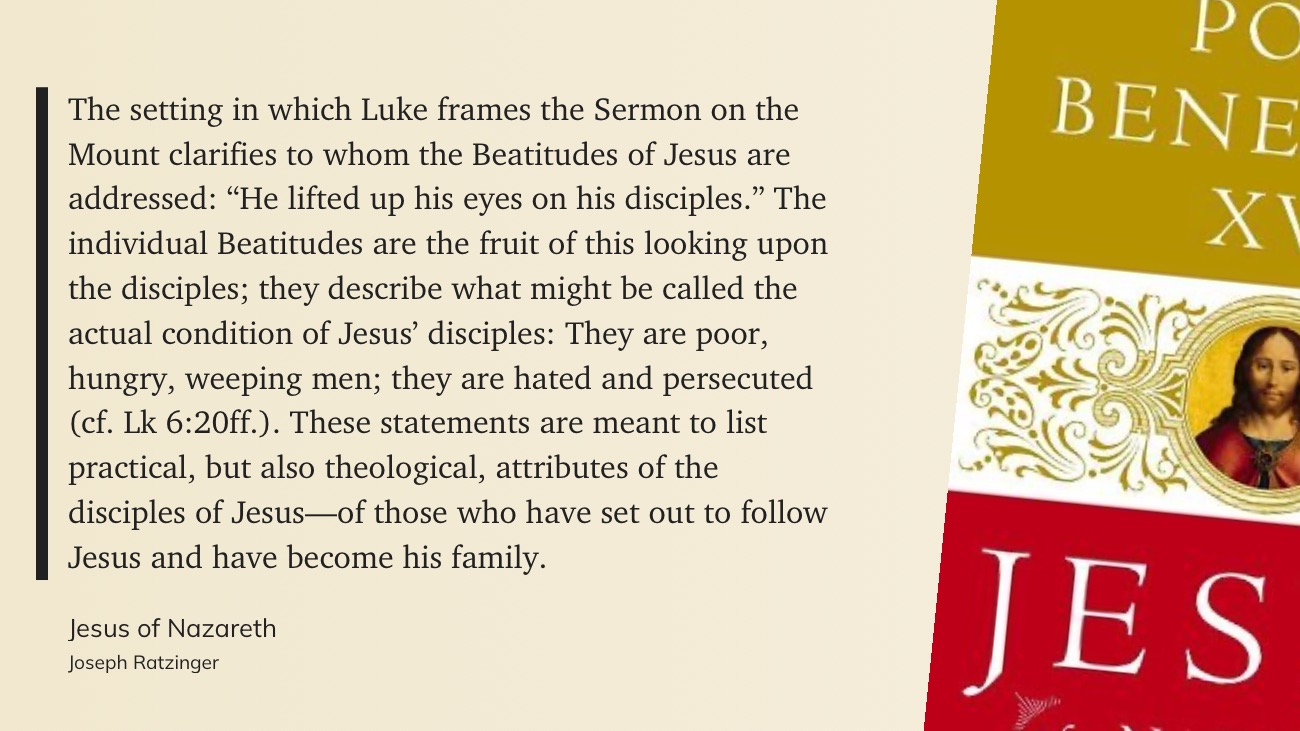
Luke liked to turn conventional wisdom upside down. Looking through God’s eyes, he contrasted the blessed with the cursed. Before we compare these two groups, we must remember that Jesus’ audience was poor; they believed that wealth was acquired at their expense through dishonest and oppressive means. We must also remember that Jesus was addressing his disciples, those who have given up the quest for riches in order to achieve something greater.
Luke differentiated the “poor” from the “rich” by the focus of their attention. The poor would inherit God’s kingdom because that was where they set their sights; their hope was in the future. [20] The rich, on the other hand, were concerned with maintaining and enjoying what they already had; their focus was upon the present gratification. [24] For Luke, the “rich” were marked by their concern for money and what it could buy. Freed from the temptation of money, the “poor” were marked by their spiritual concern.
To make his point, Luke paralleled three activities: material needs (“food”), entertainment (“laughter”), and reputation. Even though the poor did not have possessions, they would be satisfied [21]; the rich had their needs fulfilled, but they would not ultimately be satisfied [25]. Even though the poor cried out for the opportunities that bring entertainment, they would be filled with contentment [21]; the rich, on the other hand, would simply crave more entertainment [25]. In the name of the kingdom, the poor would be persecuted but will be honored like the prophets of old [22-23]; concerned with present reputation, the rich would be quickly forgotten [26].
Permission for use. All materials found in word-sunday.com are the property of Larry Broding (Copyright 1999-2025). Viewers may copy any material found in these pages for their personal use or for use in any non-profit ministry.
6th Sunday of Year C
Blessings/ Woes
Luke 6:17, 20-26

I. The Blessings (vv. 17, 20-22)
- Blessings for the poor, hungry, weeping, and persecuted
- The reward of the kingdom of God, satisfaction, laughter, and the company of the prophets
II. The Woes (vv. 24-26)
- Warnings to the rich, well-fed, joyful, and popular
- Their comfort on earth will be followed by woes
III. The call to love and endure hardship (v. 23)
- Rejoice when hated, excluded, insulted, or rejected on account of the Son of Man
- Great will be your reward in heaven
Clipart by Fr. Richard Lonsdale
Scriptures in Context
Fr. Paul Galeto, OSA
Fr. Paul Galetto, OSA
Catholic Sunday Scriptures in Context
The Beatitudes are
a Portrait of Jesus on the Cross
SOURCE: BISHOP ROBERT BARRON
Jesus’ Preaching

Click on slide for larger image.
Old Testament Context

Click on slide for larger image.
The Eternal Choice

Click on slide for larger image.
Four Cardinal Virtues

Click on slide for larger image.
To Be Free

Click on slide for larger image.
Living the Beatitudes

Click on slide for larger image.
The Disciples
Click on slide for larger image.
St. Francis of Assisi
Click on slide for larger image.
Bible Study Notes (PDF)
PDF Handout
- The Jerome Biblical Commentary,
- The New Jerome Biblical Commentary, and
- The Navarre Bible.
SOURCE: St. Charles Borromeo Catholic Church (Picayune, MS)
The Blessings and Curses in the Sermon on the Plain
EXCERPT:
In His teaching, Jesus raised issues of social justice followed by the blessings He promises to those who have suffered from social injustice in this life (verses 20-23):
- He promised the poor that they would inherit the Kingdom of Heaven.
- He promised the hungry they would be filled.
- He promised the sorrowful they would become joyful.
- He promised those persecuted for following Him that God would reward them in Heaven just as He promised the prophets.
Four judgments followed the "blessings" that He pronounced along with the ultimate consequences of judgments. First, he pronounced judgment on the rich who allowed poverty to increase without using the blessings of their material wealth to comfort the poor and suffering. The rich who did not share their wealth would only receive temporal blessings in this life. Their judgment was to remain spiritually impoverished and to have no share in the eternal blessings promised in Jesus's heavenly Kingdom:
- They will have no "wealth" in eternity.
- They may be full now, but they will be hungry for eternity.
- They may experience joy now, but they will suffer later beyond this earthly existence.
- They are compared to those who persecuted God's holy prophets.
Jesus spoke of four different groups to receive blessings and curses. Then He contrasted those groups with a significant fifth category:
- The true prophets and the false prophets.
- The poor and the rich.
- The hungry and the satisfied.
- Those who grieve and those who laugh.
Those persecuted for the sake of the Kingdom of Jesus Christ and those who persecute them.
SOURCE: Agape Bible Study Copyright © 2015; revised 2024 (Used with permission.)

SCRIPTURE
SEARCH
FIRST READING (36)
SECOND READING (68)
GOSPEL (71)
This tool created by Jeff Pinyan uses the CCEL Early Church Fathers digital edition of the Philip Schaff collection.
6th Sunday of Year C
Just Jr., A., Oden, T. C., Carson, D. A., & Oden, E. (Eds.). (2003). Ancient Christian Commentary on Scripture: New Testament III, Luke (Vol. 3). IVP Academic.
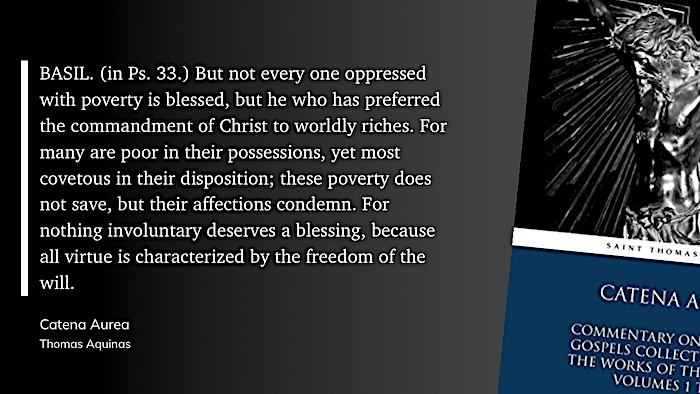
Catena Aurea
The Catena Aurea, which means “Golden Chain” in Latin, is a comprehensive biblical commentary comb is a 13th-century biblical commentary compiled by St. Thomas Aquinas. This anthology features insights from over eighty Church Fathers on the four Gospels.