May 26, 2024

Study | Preach | Teach
HOMILIESCONNECTIONSHOLY SEEFR TONY

The Trinitarian mystery is a mystery of God-Love. This becomes evident in the readings of the liturgy. God-Love, with a mighty hand and outstretched arm to bring his people out of Egypt, the symbol of slavery and oppression (first reading). God-Love gives his disciples a wonderful mission and assures them that he will be with them always, throughout the centuries (Gospel). God-Love makes men his adopted children so that they may cry out with Jesus Christ “Abba”, that is, “Father.”

P. Antonio Izqeuirdo, L.C., Copyright © Dicastery for the Clergy
DOCTRINAL MESSAGES

Although in the Old Testament we already find figures that prepare for the revelation of the Trinitarian mystery. The God of the Old Testament, Moses’ God, reveals himself in his uniqueness in the face of other gods that are not gods. In God’s pedagogy with man, the first thing that occurs is the revelation of a unique and personal God who in his indescribable love chooses a people, frees them and makes a covenant with them. The surrounding polytheism (especially the Canaanite gods: Baal, god of the earth and of its fruits, Astarte, goddess of fecundity and Moloch, the god that required human sacrifices) were very attractive to the religiosity, still elementary, of the twelve tribes of Israel. The uniqueness of God had to be proclaimed and defended at all cost. Grasp this today and meditate on it carefully: Yahweh is the true God, in heaven above as on earth below, he and no other (first reading). Along the same lines as Deuteronomy, the book of Isaiah puts the following words in God’s mouth: "Is there any God except me? There is no Rock, I know of none" (Is 44:8). And shortly before he had said of idols: "Taken altogether they are nothingness, what they do is nothing, their statues, wind and emptiness" (Is 41:29). The temptation of idolatry does not belong to the past. It lies in wait around the corner of every era and of every historical period. In our days, in a multi-ethnic and religiously individualistic society, the temptation appears everywhere.

P. Antonio Izqeuirdo, L.C., Copyright © Dicastery for the Clergy


After long preparation, God considered that man had been empowered to receive the revelation of his intimate life and of his Trinitarian mystery. God-Love sent forth his Son to lift the veil of his mysterious intimacy, and the Holy Spirit educates us from within, so that we are not foolish, dazzled or blinded before so much divine splendor. The God of Jesus Christ is first and foremost a God of giving: the Father gives us his Son, the Father and Son give us the Spirit, the Father, Son and Spirit give us their life by making us the children of God. The God of Jesus Christ is a God of salvation: the Father wants all men to be saved, the Son provides for the salvation of all with his blood, the Spirit makes effective in the heart of each man the salvation of God. The God of Jesus Christ is a God of mission: be on your way, make all people disciples, baptize them in the name of the Father, the Son and the Holy Spirit, teach them to put into practice everything that I have ordered them to do. The revelation of this divine mystery may be partly grasped with one’s intelligence, but it is penetrated even more with the heart and the experience of God in prayer. It is for this reason that this mystery is not a barrier between God and man (if it were so, God would not have revealed it), but an intense, living and constant impulse to wish to deepen it more, to be amazed, enraptured.

P. Antonio Izqeuirdo, L.C., Copyright © Dicastery for the Clergy


The Gospel according to Saint Matthew begins with the birth of Emmanuel (God is with us), and ends with the presence of Jesus Christ, glorious among his disciples and in human history. "I am with you always; yes, to the end of time" (Gospel). Israel had already experienced in its history the presence and closeness of Yahweh. Now the new Israel, the Church, experiences the closeness of the Father in the presence and in the face of its Son, Jesus Christ, by virtue of the Holy Spirit, whose mission it is to make present in time and in history the complete truth about God and man. In the time of the Church, not only the Son, but also the Father and the Spirit are really with us and in us.

P. Antonio Izqeuirdo, L.C., Copyright © Dicastery for the Clergy


Like the Apostles, we must be men of hope, to which we are stimulated by the Ascension of Jesus Christ. We first of all await the glorious coming of our Lord Jesus Christ. And we wait serenely for a better and more Christian future, a future more full with the Gospel of Jesus Christ, more docile to the plan of God for history, and to his mysterious action. The Ascension determines in us the ascetic effort to prepare ourselves to receive the redeeming action of Christ. It also awakens an interest and effort to work for the unity of all Christians and all men, the possible, real but imperfect unity that will be fulfilled in heaven in

P. Antonio Izqeuirdo, L.C., Copyright © Dicastery for the Clergy

PASTORAL SUGGESTIONS

In all times, we have seen that if God "did not exist," people would have had to invent a god. And this has indeed been the case. There is no people or culture, from the most primitive to the most advanced, that has not manufactured its gods. The history of religions confirms this. Not even atheists are exempted from this law. They will change the face of their idols, they will worship the Party, the boss, they will fight to bring heaven on earth… It is evident that what man has inscribed in his very nature cannot be killed. In human history, generations have witnessed the fall of many idols, but the rise of other new ones. At the time in which we are living, the idols created by Communism have fallen noisily, other idols are collapsing: technology, progress, money, eroticism … We are at a very favorable time for us Christians not to talk to the world about idols, but about the only and true God, who was revealed to us by Jesus Christ. It is a great pity that a time in which many men need someone to tell them about God, we Christians sink into silence out of ignorance, fear or excessive "prudence". Let us not be afraid, God himself will put in our mouths the right words for us to speak well of him.


Perhaps we Christians do not make God visible because we do not have a living experience of him, because we sometimes treat God as if he were something abstract and not a living God, who is called Father, Son and Holy Spirit. Justice becomes visible in a just man, truth in a truthful man, love in a man who really loves; in this same way, God makes himself visible in a man that has experienced love, tenderness, the greatness and beauty of God; in a man that has seen, heard, touched God in the Sacred Scriptures, in prayer, in the sacraments, in his brother. Shouldn’t each Christian be like a monstrance of the living God, of the Trinitarian love? If God is no longer present in our world, let us not be discouraged. Let us say to ourselves: it is time to make an effort, it is time to take responsibility. Let’s get to work!

P. Antonio Izqeuirdo, L.C., Copyright © Dicastery for the Clergy

Solemnity of the Most Holy Trinity

27 May 2018 | Saint Peter’s Square

MULTIMEDIA
YouTube player

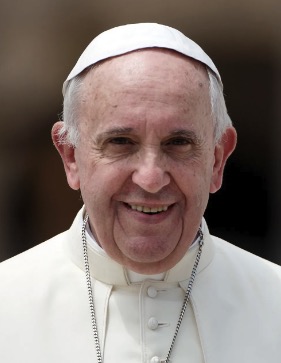
Today, the Sunday after Pentecost, we celebrate the Solemnity of the Most Holy Trinity, a celebration for contemplating and lauding the mystery of the God of Jesus Christ, who is one in the communion of three Persons: the Father, the Son and the Holy Spirit. To celebrate with ever new wonder God-Love, who freely offers us his life and asks us to spread it throughout the world.

Today’s Bible readings help us understand that God wishes to show us not so much that he exists but rather that he is the ‘God with us’, close to us, who loves us, who walks with us, is interested in our personal life story and takes care of each one, beginning with the least and the neediest. He “is God in heaven above” but also “on the earth beneath” (cf. Dt 4:39). Therefore, we do not believe in a distant entity, no! In an indifferent entity, no! But, on the contrary, in the Love who created the universe and who engendered a people, became flesh, died and rose for us and, as the Holy Spirit, transforms and leads everything to fulfilment.

Saint Paul (cf. Rom 8:14-17), who experienced first hand this transformation brought about by God-Love, tells us of God’s desire to be called Father, indeed, ‘Dad’ — God is ‘Our Father’ —, with the total confidence of a child who abandons himself in the arms of the one who gave him life. Acting in us — the Apostle again recalls — the Holy Spirit ensures that Jesus Christ is not reduced to a character of the past, no, but that we feel he is near, our contemporary, and feel the joy of being children loved by God. Lastly, in the Gospel, the Risen Lord promises to remain with us forever. And thanks precisely to his presence and to the power of his Spirit we can serenely carry out the mission that he entrusts to us. What is the mission? To proclaim to all and witness to his Gospel and thereby expand our communion with him and the joy that comes from it. God, walking with us, fills us with joy and in a way, joy is a Christian’s first language.

Thus, the Feast of the Most Holy Trinity leads us to contemplate the mystery of God who unceasingly creates, redeems and sanctifies, always with love and through love, and enables every creature that welcomes him to reflect a ray of his beauty, goodness and truth. He has always chosen to walk with mankind and forms a people who may be a blessing for all nations and for each person, excluding none. A Christian is not an isolated person; he or she belongs to a people: this people that God forms. One cannot be Christian without this membership and communion. We are a people: the People of God. May the Virgin Mary help us to joyfully fulfil the mission of witnessing to the world, thirsty for love, that the meaning of life is precisely the infinite love, the tangible love of the Father, of the Son and of the Holy Spirit.

READ MORE

What do you think Pope Francis means when he says that celebrating the Holy Trinity is a “revolution in our way of life”?

This is why celebrating the Most Holy Trinity is not so much a theological exercise, but a revolution in our way of life. God, in whom each Person lives for the other in a continual relationship, in continual rapport, not for himself, provokes us to live with others and for others. Open. Today we can ask ourselves if our life reflects the God we believe in: do I, who profess faith in God the Father, Son and Holy Spirit, truly believe that I need others in order to live, that I need to give myself to others, that I need to serve others? Do I affirm this in words or do I affirm it with my life?…

In short, the Trinity teaches us that one can never be without the other. We are not islands; we are in the world to live in God’s image: open, in need of others and in need of helping others

SOURCE: Discussion Questions by Anne Osdieck


xxxxxxxxx

8 April 2018 | Saint Peter’s Square

Most Holy Trinity

In today’s Gospel, we hear, over and over, the word “see”.  The disciples rejoiced when they saw the Lord (Jn 20:20).  They tell Thomas: “We have seen the Lord” (v. 25).  But the Gospel does not describe how they saw him; it does not describe the risen Jesus.  It simply mentions one detail: “He showed them his hands and his side” (v. 20).  It is as if the Gospel wants to tell us that that is how the disciples recognized Jesus: through his wounds.  The same thing happened to Thomas.  He too wanted to see “the mark of the nails in his hands” (v. 25), and after seeing, he believed (v. 27)…

READ MORE


xxxxxxxxx

29 March 2015 | Saint Peter’s Square

Most Holy Trinity

At the heart of this celebration, which seems so festive, are the words we heard in the hymn of the Letter to the Philippians: “He humbled himself” (2:8). Jesus’ humiliation.

These words show us God’s way and, consequently, that which must be the way of Christians: it is humility. A way which constantly amazes and disturbs us: we will never get used to a humble God!

Humility is above all God’s way: God humbles himself to walk with his people, to put up with their infidelity. This is clear when we read the the story of the Exodus. How humiliating for the Lord to hear all that grumbling, all those complaints against Moses, but ultimately against him, their Father, who brought them out of slavery and was leading them on the journey through the desert to the land of freedom.

This week, Holy Week, which leads us to Easter, we will take this path of Jesus’ own humiliation. Only in this way will this week be “holy” for us too!

We will feel the contempt of the leaders of his people and their attempts to trip him up. We will be there at the betrayal of Judas, one of the Twelve, who will sell him for thirty pieces of silver. We will see the Lord arrested and carried off like a criminal; abandoned by his disciples, dragged before the Sanhedrin, condemned to death, beaten and insulted. We will hear Peter, the “rock” among the disciples, deny him three times. We will hear the shouts of the crowd, egged on by their leaders, who demand that Barabas be freed and Jesus crucified. We will see him mocked by the soldiers, robed in purple and crowned with thorns. And then, as he makes his sorrowful way beneath the cross, we will hear the jeering of the people and their leaders, who scoff at his being King and Son of God.

READ MORE

SOURCE: The Holy See Archive at the Vatican Website © Libreria Editrice Vaticana