FEB 2, 2025


Sunday Papal Homilies
Sunday Papal Homilies
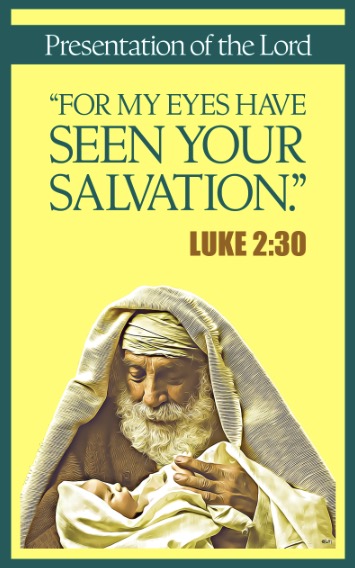
TIP: You can rewind the livestream up to twelve hours, allowing you to catch up on any events or addresses you may have missed.

SOURCE: Vatican News – English
This livestream allows viewers to witness the Pope’s addresses during Papal Audiences, as well as other Vatican events and news. The livestream is part of the Vatican Media Center’s efforts to share the latest updates on Pope Francis, the Holy See, and the Church worldwide with a global audience.
The notes for this week are not available,
as the Feast of the Presentation
has replaced the 4th Sunday in Ordinary Time.


THE HOLY
FATHER
RELATED LINKS
THIS SUNDAY’S
QUOTES
“The purifying fire of the Lord’s messenger, of which the prophet Malachi speaks, is the fire of God’s love, which burns away our impurities and transforms us into more compassionate and faithful disciples.” [December 24, 2016]
“Jesus, as our high priest, understands our human struggles and offers us mercy, serving as a bridge between our weaknesses and God’s boundless love.” [February 2, 2018]
“In the presentation of Jesus at the Temple, we witness the joy and hope that accompany the recognition of Christ as the light of revelation for all people, inviting us to welcome and share that light with others.” [February 2, 2019]
“The obedience and humility demonstrated by Mary and Joseph at the Temple serve as a model for our own spiritual lives, reminding us of the importance of trust and fidelity to God’s divine plan.” [February 2, 2020]
“As we celebrate the Feast of the Presentation, let us remember that Christ’s mission of love and redemption extends to all, inspiring us to work for justice, peace, and unity in our world.” [February 2, 2021]
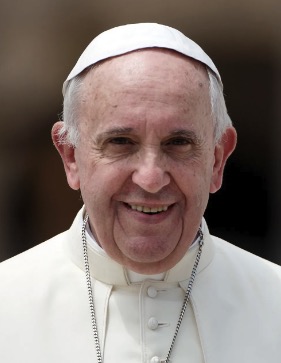
[Pope Francis]: “The encounter between Simeon, Anna, and the infant Jesus at the Temple invites us to open our hearts to the transformative power of the divine, allowing God’s light to illuminate our paths and guide us toward a deeper relationship with Christ.” [February 2, 2022]
Pope Francis
Presentation of the Lord

Feast of the Presentation
2 February 2020 | Saint Peter’s Square
- TEXT
- DISCUSSION GUIDE
Today we are celebrating the Feast of the Presentation of the Lord: when the infant Jesus was presented in the Temple by the Virgin Mary and Saint Joseph. Today is also World Day of Consecrated Life which recalls the great treasure in the Church of those who follow the Lord assiduously, by professing the evangelical counsels.
The Gospel (cf. Lk 2:22-40) narrates that 40 days after his birth, Jesus’ parents took their child to Jerusalem to consecrate him to God, as prescribed by Jewish Law. And as it describes a rite prescribed by tradition, this event brings to our attention the behaviour of some of the protagonists. They are caught at the very moment they experience the encounter with the Lord in the place where he makes himself present and close to mankind. They are Mary and Joseph, Simeon and Anna who are examples of welcome and offering as they offered their own lives to God. These four were not the same. They were all different but they all sought God and allowed themselves to be guided by the Lord.
The evangelist Luke describes all four of them in a twofold attitude: the attitude of movement and the attitude of wonder.
The first attitude is movement. Mary and Joseph head towards Jerusalem: meanwhile, moved by the Spirit, Simeon goes to the Temple, while Anna tirelessly serves God day and night. In this way the four protagonists of the Gospel passage show us that Christian life requires dynamism, and it requires a willingness to walk, allowing the Holy Spirit to guide one. Immobility suits neither Christian witness nor the Church’s mission. The world needs Christians who allow themselves to be moved, who do not tire of walking on life’s streets, to bring the comforting Word of Jesus to everyone. Every baptized person has received the vocation to proclaim — to proclaim something, to proclaim Jesus — the vocation and mission to evangelize: to proclaim Jesus! Parishes and various ecclesial communities are called to foster the commitment of young people, families and the elderly so that everyone can have a Christian experience, living the Church’s life and mission as protagonists.
The second attitude with which Saint Luke presents the four protagonists in the narrative is wonder. Mary and Joseph: “marvelled at what was said about him” (v. 33). Wonder is also an explicit reaction of the aged Simeon, who sees with his own eyes in the Child Jesus the redemption of God for his people: that redemption which he had awaited for years. And the same is true of Anna who “gave thanks to God” (v. 38) and went about pointing Jesus out to the people. She was a saintly chatterbox. She talked well, she talked of good, not bad things. She spoke, she announced: a saint who went from one woman to the next, making them see Jesus. These figures of believers were wrapped in wonder because they allowed themselves to be captivated by and involved in the events that occurred right before their eyes. The ability to be amazed at things around us promotes religious experience and makes the encounter with the Lord more fruitful. On the contrary, the inability to marvel makes us indifferent and widens the gap between the journey of faith and daily life.
Brothers and sisters, always [be] on the move and open to wonder!
Discussion Guide for the Feast of the Presentation of the Lord
Opening Reflection
– Reflect on the significance of the Feast of the Presentation of the Lord and its connection to the World Day of Consecrated Life.
– Consider how these observances relate to your personal faith journey.
The Gospel Context
– Read Luke 2:22-40 and summarize the key events and characters involved in the Presentation of Jesus at the Temple.
– Discuss the cultural and religious significance of this event for the Jewish people during the time of Jesus.
Character Analysis
– Mary and Joseph: Discuss their role in the Presentation and how they exemplify faithfulness and obedience to God’s law.
– Simeon and Anna: Explore how Simeon and Anna’s anticipation and recognition of Jesus reflect their deep devotion and spiritual insight.
Attitudes to Emulate
– Movement: What does it mean for Christians to have an attitude of movement, as demonstrated by the Gospel’s protagonists?
– How can we embrace spiritual dynamism in our lives, participating actively in the Church’s mission?
– Share experiences where you felt prompted by the Holy Spirit to take action in faith.
– Wonder: How does wonder enhance our faith experience?
– In what ways can we cultivate a sense of wonder in our daily lives?
– Discuss how wonder can deepen our relationship with God and make our journey of faith more profound.
Application and Mission
– Discuss practical ways in which parishes and ecclesial communities can foster Christian experiences and encourage all age groups to live out their faith dynamically.
– How can we, as individuals, contribute to the proclamation of Jesus and the evangelization mission of the Church?
Conclusion
– Reflect on the interplay of movement and wonder as essential components of a vibrant Christian life.
– Encourage group members to share personal commitments to being on the move spiritually and open to moments of divine wonder.
Prayerful Closing
– Conclude with a shared prayer, asking for guidance to embody both the dynamism and amazement of faith in our everyday lives.
THIS SUNDAY’S
QUOTES
“In the presentation of Jesus at the Temple, we witness the meeting of the Old and New Testaments, as Simeon’s faith and hope in the Messiah finds its fulfillment in the Christ child.” [February 2, 2011]
“The Feast of the Presentation reminds us that Christ, as the light of the world, dispels the darkness of sin and offers salvation to all who believe.” [February 2, 2012]
“Through the obedience and humility of Mary and Joseph, we learn the importance of faithfulness to God’s divine plan and our own call to holiness.” [February 2, 2013]
“The encounter between Simeon and the infant Jesus reveals the redemptive mission of Christ, who came to bring salvation and light to the world.” [February 2, 2009]
“In the example of Simeon and Anna, we see the importance of patient waiting and spiritual discernment in recognizing God’s presence and action in our lives.” [February 2, 2010]
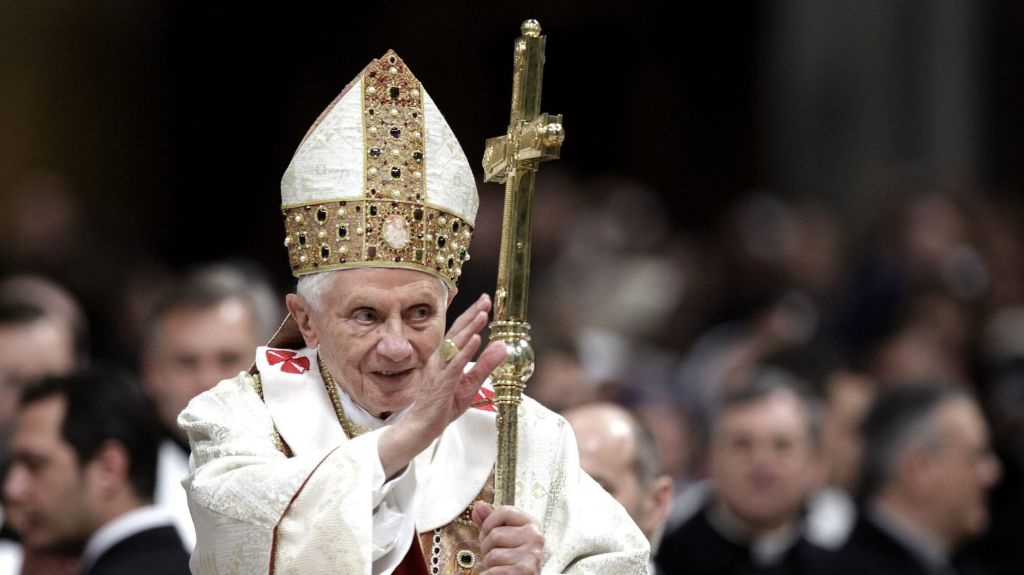
[Pope Benedict XVI]: “The Presentation of Jesus in the Temple invites us to reflect on our own call to offer our lives to God, consecrating ourselves to his service and the mission of the Church.” [February 2, 2006]
Pope Benedict XVI
Presentation of the Lord
The light that illuminates
the world and brings light
to every life
2 February 2011 | Vatican Basilica
- TEXT
- DISCUSSION GUIDE
It is interesting to take a close look at this entrance of the Child Jesus into the solemnity of the temple, in the great comings and goings of many people, busy with their work: priests and Levites taking turns to be on duty, the numerous devout people and pilgrims anxious to encounter the Holy God of Israel. Yet none of them noticed anything. Jesus was a child like the others, a first-born son of very simple parents. Even the priests proved incapable of recognizing the signs of the new and special presence of the Messiah and Saviour. Alone two elderly people, Simeon and Anna, discover this great newness.
Dear friends, this Gospel passage also challenges us “today”. First of all, Led by the Holy Spirit, in this Child they find the fulfilment of their long waiting and watchfulness. They both contemplate the light of God that comes to illuminate the world and their prophetic gaze is opened to the future in the proclamation of the Messiah: “Lumen ad revelationem gentium!” (Lk 2:32). The prophetic attitude of the two elderly people contains the entire Old Covenant which expresses the joy of the encounter with the Redeemer. Upon seeing the Child, Simeon and Anna understood that he was the Awaited One.
The Presentation of Jesus in the Temple is an eloquent image of the total gift of one’s life for all those, men and women, who are called to represent “the characteristic features of Jesus — the chaste, poor and obedient one” (Post-Synodal Apostolic Exhortation, Vita Consecrata, n. 1) in the Church and in the world, through the evangelical counsels. For this reason Venerable John Paul II chose today’s Feast to celebrate the Annual World Day of Consecrated Life. In this context, I would like to offer a cordial and appreciative greeting to Archbishop João Braz de Aviz, whom I recently appointed Prefect of the Congregation for Institutes of Consecrated Life and Societies of Apostolic Life, along with the Secretary and the co-workers. I also greet with affection the Superiors General present and all the consecrated people.
Discussion Guide for Sermon on the Presentation of Jesus in the Temple
1. Introduction to the Feast of the Presentation
– Discuss the significance of Mary and Joseph bringing Jesus to the Temple as described in Luke 2:22. What symbolic meaning does this act hold within the Gospel narrative?
2. The Role of Simeon and Anna
– Reflect on the roles of Simeon and Anna in recognizing Jesus as the Messiah. Why do you think these two figures, out of all present in the Temple, were able to identify Jesus as “the light for revelation to the Gentiles”?
– How does their ability to recognize Jesus connect with the idea of prophetic vision and the fulfillment of the Old Covenant?
3. Jesus as the Fulfillment of the Law and the New Covenant
– Explore the significance of Jesus entering the old temple as the new Temple of God, fulfilling the law and ushering in salvation. What does this symbolize in the context of Christian theology?
4. The Symbolism of Light in the Presentation
– Discuss the symbolism of light mentioned in the sermon. How does light represent Christ, and what is its significance for those who lead a consecrated life?
5. Prophecy and the Consecrated Life
– Examine how the consecrated life is portrayed as a prophetic witness. What are the dual contemplative and active dimensions of such a life?
– How can consecrated individuals exemplify “philokalia” or love of divine beauty?
6. Wisdom and Search for God in Consecrated Life
– Reflect on the wisdom of Simeon and Anna in dedicating their lives to seeking God’s face. How is this wisdom a model for consecrated life today?
– In what ways does the diligent search for God’s will manifest in the lives of those who are consecrated?
7. Relativism and the Role of Religion in Modern Society
– Discuss the challenges posed by relativism and the marginalization of religion in today’s world. What steps can be taken to ensure a luminous and consistent Christian witness?
– How does the sermon call for educational efforts that guide people toward a life that aligns with the Gospel?
8. Prayer and Entrustment to the Blessed Virgin Mary
– Contemplate the closing prayer to Mary, Mother of the Church. How does the prayer encapsulate the themes discussed in the sermon?
– What role does prayer play in the life of consecrated individuals and the broader Christian community?
Encourage the group to reflect on these questions and share personal insights or experiences related to the themes discussed. These discussion points aim to deepen understanding and foster a meaningful dialogue around the sermon content.