FEB 2, 2025


Liturgy Planning
Liturgy Planning
- PLANNING GUIDE
- Liturgical Environment
- LECTOR PREP
- MUSIC


SOURCE: Basilica of the The National Shrine. Crypt Church (TV Mass)
February 02, 2020
Celebrant & Homilist: Rev. Patrick A. Smith
Choir: Saint Paul VI High School Choir, Fairfax, Virginia
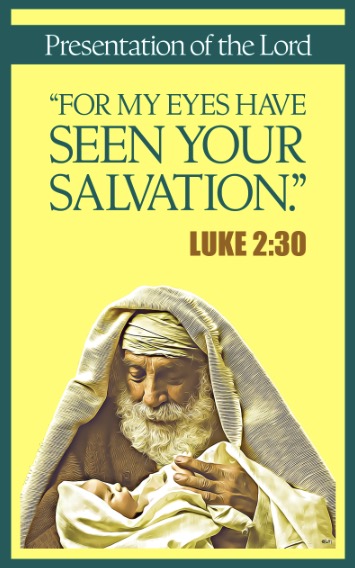
Presentation of the Lord
Presentation of the Lord

- 00:18 OPENING SONG
- 03:13 FIRST READING - The Lord will come to refine and purify His people, enabling them to offer acceptable sacrifices.
- 04:25 RESPONSORIAL PSALM
Psalm 24) - Who is this king of glory? It is the Lord! - 05:22 SECOND READING - Jesus shared in humanity to conquer death and provide mercy and help to those who suffer.
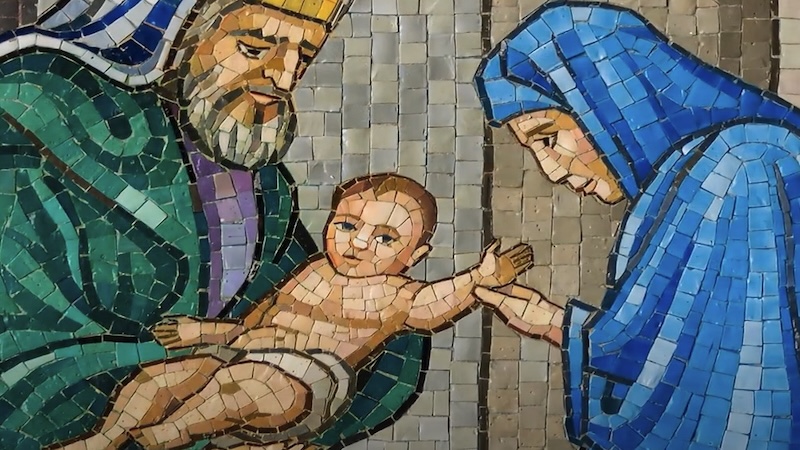
- 07:18 GOSPEL - Mary and Joseph presented Jesus in the temple, where Simeon, guided by the Holy Spirit, recognized him as the promised Savior and proclaimed him a light for the Gentiles and glory for Israel.
- 9:26 HOMILY - The Feast of the Presentation of the Lord emphasizes the symbolism of candles as a representation of light, highlighting the importance of being a source of light in darkness.

⬇️ Planning Notes
Presentation of the Lord
Presentation of the Lord

The 4th Sunday of Ordinary Time has been replaced this year with the Feast of the Presentation of the Lord due to the liturgical significance of the feast. The Feast of the Presentation, also known as Candlemas, commemorates the presentation of the infant Jesus at the Temple in Jerusalem and the purification of the Virgin Mary after childbirth, as described in the Gospel of Luke (Luke 2:22-40).
In the liturgical calendar, certain feast days take precedence over regular Sundays in Ordinary Time, and the Feast of the Presentation is one such feast. When a significant feast day falls on a Sunday, the Church replaces the usual Sunday liturgy with the special liturgy for the feast, emphasizing the importance of the event being celebrated.
⬇️ Greeting
Presentation of the Lord
⬇️ Kyrie
Presentation of the Lord
- Lord Jesus, your presentation at the Temple revealed your sacred purpose: Lord, have mercy.
- Christ Jesus, your obedience to the law and humility became a model for all: Christ, have mercy.
- Lord Jesus, you call us, as a faithful community, to live lives rooted in your teachings: Lord, have mercy.
SOURCE: CELEBRATION
⬇️ Collect
Presentation of the Lord

SOURCE: Julie Storr
⬇️ Lectionary Readings

FR. FELIX JUST, S.J (1:26:40)
Presentation of the Lord
COMMENTARY | BIBLE STUDY | HOLY SEE
- 03:13 FIRST READING – The Lord will come to refine and purify His people, enabling them to offer acceptable sacrifices.
- 04:25 RESPONSORIAL PSALM
Psalm 24) – Who is this king of glory? It is the Lord! - 05:22 SECOND READING – Jesus shared in humanity to conquer death and provide mercy and help to those who suffer.
- 07:18 GOSPEL – Mary and Joseph presented Jesus in the temple, where Simeon, guided by the Holy Spirit, recognized him as the promised Savior and proclaimed him a light for the Gentiles and glory for Israel.
⬇️ Homily
Presentation of the Lord
⬇️ Prayers of the Faithful
Presentation of the Lord
Discover a vast collection of over 100 petitions that are thoughtfully updated each week, ensuring a strong connection to the Sunday Readings. These petitions, designed for the Prayers of the Faithful during Mass, provide a relevant and meaningful way for your parish community to unite in prayer and intercession.
CHURCH | WORLD | SPECIAL NEEDS | COMMUNITY
Presider— Let us pray now for our concerns and for the concerns of the whole world.
Minister—
- Loving God, as we encounter your refining love (Malachi 3:1-4), guide all members of the church—laity and clergy, women and men—to use our gifts in service to your divine purpose.
- Compassionate God, inspire our world’s leaders to embrace the new covenant embodied by Christ (Hebrews 2:14-18), seeking justice, championing freedom, and prioritizing the well-being of all people.
- Righteous God, grant us the grace to approach church laws with humility and openness (Hebrews 2:14-18), working together to liberate those unfairly judged or condemned.
- Bold and loving God, empower us to courageously share your love with those in need (Luke 2:22-40), following the example of Christ as the light of revelation for the world.
- Unifying God, as we celebrate the presentation of Christ in the Temple (Luke 2:22-40), grant our community the wisdom and empathy to overcome disagreements and reflect the unity of your love.
Presider— God, whose law is love, guide us to embrace the refining love of Christ (Malachi 3:1-4), following the example of your Son as the embodiment of a new covenant (Hebrews 2:14-18) and the light of revelation (Luke 2:22-40). Empower us to live the law of love, working for justice and inclusion for all people.
SOURCE: CELEBRATION
⬇️ Preface
Presentation of the Lord
PREFACE — The Mystery of the Presentation of the Lord
It is truly right and just, our duty and our salvation,
always and everywhere to give you thanks.
Lord, holy Father, almighty and eternal God.
For your co-eternal Son was presented on this day in the Temple
and revealed by the Spirit.
as the glory of Israel and Light of the nations.
And so, we, too, go forth, rejoicing to encounter your Salvation,
and with the Angels and Saints
praise you, as without end we acclaim: Holy…
SOURCE: LITURGIES.NET
RESOURCES
General Instruction of the Roman Missal
How to Create the Liturgical Environment for Advent and Christmas – by Rev. Philip Horrigan
A Simple Guide to Liturgical Enviornment (DIocese of New Ulm PDF)
Common Questions on Liturgical Norms – by Father Edward McNamara, rofessor of liturgy at the Regina Apostolorum Pontifical Athenaeum
DIRECTORY OF
POPULAR PIETY
AND THE LITURGY
Directory (Vatican)
Advent (PDF)
Christmastide (PDF)
Lent (PDF)
Holy Week (PDF)
Eastertide (PDF)
GUIDELINES AND RESOURCES

CANDLEMAS (2:43)- It’s more than a service for blessing candles. This video explains the origins of this rich tradition. See how it connects to the Blessed Virgin Mary’s purification and the presentation of Jesus in the Temple.
Candlemas
Candlemas, also known as the Feast of the Presentation of the Lord, is celebrated on February 2nd in many Christian denominations. This significant feast commemorates the presentation of the infant Jesus at the Temple in Jerusalem, as well as the purification of the Virgin Mary after childbirth, as recounted in the Gospel of Luke.
The name “Candlemas” derives from the tradition of blessing and distributing candles on this day, symbolizing the light of Christ entering the world. In some cultures, Candlemas marks the end of the Christmas season, and the liturgical color for the day is white or gold, signifying joy and purity.
The biblical account of the Presentation in Luke’s Gospel tells of Mary and Joseph bringing Jesus to the Temple in Jerusalem, where they encountered Simeon and Anna, who recognized Jesus as the long-awaited Messiah. Simeon’s words, known as the Nunc Dimittis, express his joy at beholding the Savior and serve as a reminder of the fulfillment of God’s promises.
Candlemas holds various meanings and traditions across different Christian denominations. In the Catholic Church, it is a day of purification, light, and hope, emphasizing the role of Jesus as the light of the world.
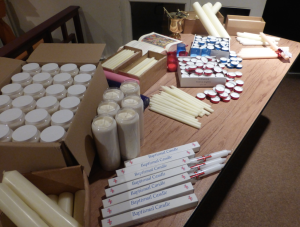
On this day’s Mass, the candles that are to be used for the next liturgical year are blessed, hence the common name for the day ‘Candlemas’.
In some parishes, each member of the congregation gets to keep a blessed candle for use in their home.
- Traditionally this candle was used to light the way of the priest from the font door of the home to the sick bed, when he was bringing Holy Communion to the ill and dying. Many still like to keep to this practice and it is not uncommon to be met at the door of the house with a lit candle when arriving with the Blessed Sacrament.
- Others light their candles in times of strife as an act of prayer– the polish community light their candles in heavy storms and pray for good weather to return.
Saint Blaise (February 3)

Two of the candles, which are blessed on this day, are then used the following day, February 3rd, the day of Saint Blaise. St Blaise cured a child of choking on a fishbone and, as such, he has become the patron saint of illnesses of the throat. The blessing of throats, by invoking the intercession of St Blaise, is carried out on this day by placing the two candles across the throats of the faithful.

Nunc Dimitis
The Nunc Dimittis, also known as the Canticle of Simeon or the Song of Simeon, is a hymn of praise found in the Gospel of Luke (2:29-32). It is named after the Latin opening words of Simeon’s speech, “Nunc dimittis servum tuum, Domine,” which translates to “Now, Master, you can let your servant go in peace.”
The Nunc Dimittis is significant because it represents Simeon’s recognition of Jesus as the long-awaited Messiah and his joy at having seen the Savior. The hymn also includes elements of prophecy and thanksgiving.
In the story told in Luke, Simeon, a devout and righteous man, had been promised by the Holy Spirit that he would not die until he had seen the Messiah. When Mary and Joseph brought the infant Jesus to the Temple for the purification ritual, Simeon recognized him as the Savior and took him into his arms, singing the Nunc Dimittis.
In the Catholic tradition, the Nunc Dimittis holds a significant place in liturgical practice and devotion. It is often recited or sung during the Liturgy of the Hours, particularly during Night Prayer or Compline, the final prayer of the day.
Jubilee Holy Year 2025
The Jubilee Year begins on Christmas Eve in Rome. Be sure to download Fr. Horning’s 16 page e-book with Resources to help you understand and celebrate the Jubilee and Holy Year of 2025!



Lector’s Notes
A close look at the Sunday readings,
focusing on the lector’s understanding
and proclamation
Greg has has served the church with his website since 1999 helping lectors prepare to proclaim the Scriptures. For each Sunday’s first and second readings (and occasionally for the gospel), the notes give the historical and theological background, plus suggestions on oral interpretation.
Lisa M. Bellecci
FIRST
READING

SECOND READING

Lector Series
The following lector videos were produced by the Los Angeles Archdiocese:


Presentation of the Lord

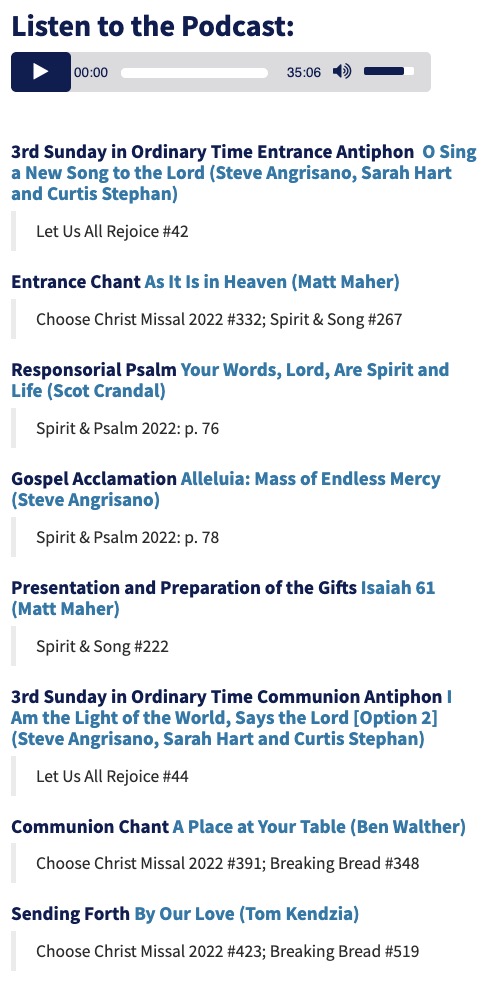
SOURCE: OCP Liturgy Podcasts
“For my eyes have seen your salvation, which you have prepared in the sight of all people: a light of revelation to the Gentiles, and glory for your people Israel.”
On this blessed day, we join Simeon and Anna in proclaiming Jesus as the light of the world.



⬇️ Entrance
Of the Father’s Love Begotten
Traditional; arr. by Curtis Stephan
Presentation of the Lord

⬇️ Responsorial
Psalm 24
Alstott
Presentation of the Lord

⬇️ Presentation
What Child Is This
Traditional; arr. by Tom Booth
Presentation of the Lord

⬇️ Communion
Song of Simeon
Janèt Sullivan Whitaker
Presentation of the Lord
⬇️ Sending Forth
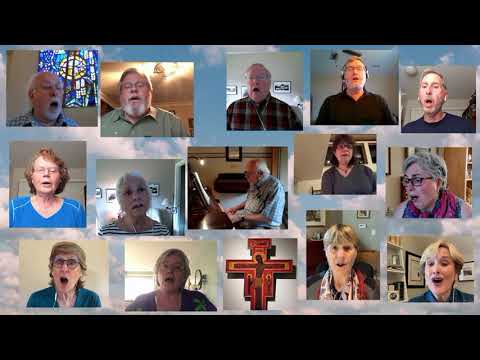
We Are the Light
(Jesse Manibusan)
Presentation of the Lord
