


SOURCE: Young Catholics


Discussion Questions
Mk 1:21-28
1. In Mark 1:21-28, what happened when Jesus and his disciples went to Capernaum and entered the synagogue on the Sabbath day?
Answer: Jesus and his disciples went to Capernaum and entered the synagogue on the Sabbath day in Mark 1:21.
2. How did the people in the synagogue react to Jesus’ teaching?
Answer: The people in the synagogue were astonished at Jesus’ teaching because he taught with authority, unlike the scribes, as mentioned in Mark 1:22.
As teenagers, how can we apply Jesus’ authoritative teaching in our lives? Teenagers can apply Jesus’ authoritative teaching by seeking to understand and follow his teachings in their daily lives. They can strive to emulate the qualities he displayed, such as compassion, forgiveness, and love towards others.
3. According to Mark 1:23, what happened when Jesus encountered a man with an unclean spirit in the synagogue?
Answer: When Jesus encountered the man with an unclean spirit in the synagogue, the unclean spirit recognized and cried out to Jesus.
How can teenagers relate to the idea of facing “unclean spirits” in their own lives? Teenagers may face various challenges, temptations, or influences that can be considered “unclean spirits” in their lives. These can include peer pressure, negative influences, addictions, or unhealthy habits. They can relate by recognizing these forces and seeking Jesus’ help and guidance to resist and overcome them.
4. What did the unclean spirit say to Jesus when it recognized Him?
Answer: The unclean spirit said to Jesus, “What have you to do with us, Jesus of Nazareth? Have you come to destroy us? I know who you are—the Holy One of God!” as mentioned in Mark 1:24.
How can teenagers understand the significance of Jesus being recognized as the Holy One of God? Teenagers can understand the significance of Jesus being recognized as the Holy One of God by acknowledging His divine nature and understanding that He is the Savior sent by God to redeem humanity. They can develop a personal relationship with Jesus as they recognize and accept His role in their lives.
5. What did Jesus do to the unclean spirit in response to its recognition and statement?
Answer: Jesus rebuked the unclean spirit, instructing it to be silent and come out of the man in Mark 1:25-26.
How can teenagers apply Jesus’ example of authority and power over evil forces in their own lives? Teenagers can apply Jesus’ example by seeking His help and relying on His authority and power to resist evil influences and live according to His teachings. Through prayer, faith, and following Jesus, they can conquer the negative forces that may try to overpower them.
6. How did the people who witnessed these events in the synagogue react?
- Answer: The people who witnessed the events in the synagogue were amazed and questioned among themselves, asking, “What is this? A new teaching with authority!” as mentioned in Mark 1:27.
How can teenagers relate to the reaction of the people and their reflection on Jesus’ teaching and authority? Teenagers can relate by being open to recognizing and appreciating the authority and teachings of Jesus. They can question and reflect on the impact of Jesus’ teachings in their lives, just as the people did in the synagogue._
Ascension Presents
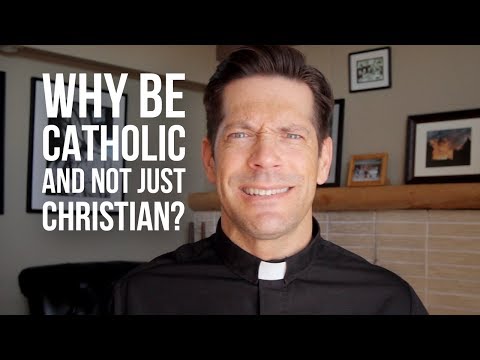
1. What is the main difference between the Catholic Church and other non-Catholic Christian denominations?
The main difference is the issue of authority.
2. Why is authority seen as a bad word by some people?
Many people dislike the idea of authority and it doesn’t sit well with them.
3. What does it mean that the Church has the ability to teach authoritatively?
It means that the Church has the power to teach us what is true and what is not true.
4. Where did Jesus establish the Church according to Matthew chapter 16?
Jesus established the Church on Peter, renaming him “rock” and giving him the keys to the kingdom of heaven.
5. What happened in Acts of the Apostles chapter 15 regarding a crisis with evangelizing Gentiles?
The crisis was whether Gentiles needed to be circumcised before being baptized. The Church came together, discussed, and decided that they did not need to be circumcised.
6. What did the Church declare at the Council of Nicaea in 325 AD?
The Church declared that Jesus is fully God and fully man, with two natures in one divine person.
7. Why do we need the authority of the Catholic Church?
We need the authority of the Catholic Church to ensure that our understanding of God’s truth is accurate and not distorted.
8. What did G.K. Chesterton mean when he said he needs a Church that will tell him where he’s wrong?
He meant that he needs a Church that can correct his understanding and keep him on the right track in matters of faith.
Fr. Mike Schmitz


Jared Dees


SOURCE: The Religion Teacher
1. Who was Moses?
Moses was a Liberator and Lawgiver for the People of Israel.
2. What was Moses chosen by God to do?
He was chosen by God to lead the people of Israel out of slavery in Egypt to the Promised Land of Canaan.
3. What did God give Moses to give to the people of Israel?
God gave Moses the Ten Commandments to give to the people.
4. Why did Moses flee Egypt?
Moses fled Egypt after killing an Egyptian to protect an Israelite.
5. How did Moses meet God?
Moses met God in the form of a burning bush on a mountain.
6. What did Moses do to convince the Pharaoh to let his people go?
Moses warned the Pharaoh of many plagues that God would inflict on Egypt if the Israelites were not freed.
7. How did Moses lead his people out of Egypt?
With the power of God, Moses divided the Red Sea in two so that the people could pass through to safety.
8. What laws did God give to Moses on Mount Sinai?
God gave Moses the Ten Commandments and many other laws for the people to follow.
9. Why was Moses not able to enter the Promised Land?
Moses showed some doubt in God’s power.
10. Who led the people into the Promised Land?
Joshua led the people into the Promised Land after Moses’ death.
Find Catholic resources for Youth Ministry, Vacation Bible School (VBS), religious ed, catechists, Parish School of Religion (PSR), Confraternity of Christian Doctrine (CCD), Catholic families, Rite of Christian Initiation of Adults (RCIA) and Catholics of all ages.
