
Featured
Videos




Commentary
Highlights



Fr. George
Corrigan
OFM

Fr. Corrigan, OFM

This page is an easy place to access the commentaries that I have prepared for the Gospel of Mark. The commentaries are arranged by Liturgical Year B order. It is not a complete coverage of the Gospel… but who knows… maybe one day. You are free to download and use for Bible Study, to evangelize, or anything that gives Glory to God. Enjoy.
Michal E.
Hunt

Catena
Aurea
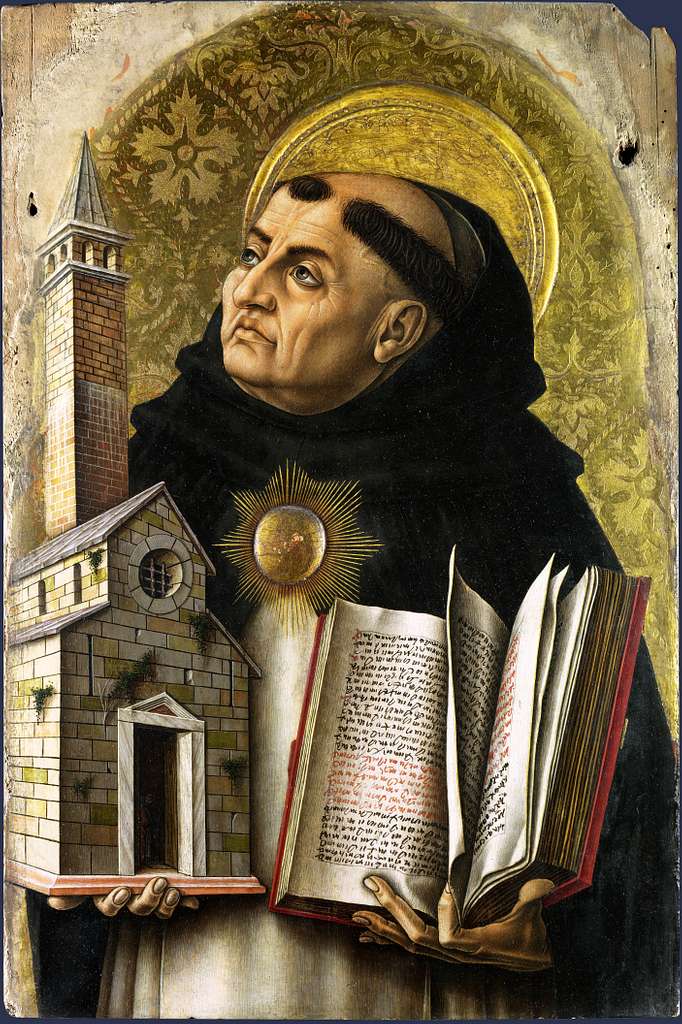
Compiled by
St. Thomas
Aquinas
Thomas Aquinas compiled this opus from sermons and commentaries on the Gospels written by the early Church Fathers, arranging their thoughts in such a way that they form a continuous commentary on each Gospel.
1:21–22
21. And they went into Capernaum; and straightway on the sabbath day he entered into the synagogue, and taught.
22. And they were astonished at his doctrine: for he taught them as one that had authority, and not as the Scribes.
PSEUDO-JEROME. Mark, arranging the sayings of the Gospel as they were in his own mind, not in themselves, quits the order of the history, and follows the order of the mysteries. Wherefore he relates the first miracle on the sabbath day, saying, And they go into Capernaum.
THEOPHYLACT. Quitting Nazareth. Now on the sabbath day, when the Scribes were gathered together, he entered into a synagogue, and taught. Wherefore there follows, And straightway on the sabbath day, having entered into the synagogue, he taught them. For for this end the Law commanded them to give themselves up to rest on the sabbath day, that they might meet together to attend to sacred reading. Again, Christ taught them by rebuke, not by flattery as did the Pharisees; wherefore it says, And they were astonished at his doctrine; for he taught them as one having power, and not as the Scribes. He taught them also in power, transforming men to good, and He threatened punishment to those who did not believe on Him.
BEDE. (ubi sup.) The Scribes themselves taught the people what was written in Moses and the Prophets: but Jesus as the God and Lord of Moses himself, by the freedom of His own will, either added those things which appeared wanting in the Law, or altered things as He preached to the people; as we read in Matthew, It was said to them of old time, but I say unto you. (Mat. 5:27)
1:23–28
23. And there was in their synagogue a man with an unclean spirit; and he cried out,
24. Saying, Let us alone; what have we to do with thee, thou Jesus of Nazareth? art thou come to destroy us? I know thee who thou art, the Holy One of God.
25. And Jesus rebuked him, saying, Hold thy peace, and come out of him.
26. And when the unclean spirit had torn him, and cried with a loud voice, he came out of him.
27. And they were all amazed, insomuch that they questioned among themselves, saying, What thing is this? what new doctrine is this? for with authority commandeth he even the unclean spirits, and they do obey him.
28. And immediately his fame spread abroad throughout all the region round about Galilee.
BEDE. (in Marc. i. 7) Since by the envy of the devil death first entered into the world, it was right that the medicine of healing should first work against the author of death; and therefore it is said, And there was in their synagogue a man, &c.
PSEUDO-CHRYSOSTOM. (Vict. Ant. e Cat. in Marc.) The word Spirit is applied to an Angel, the air, the soul, and even the Holy Ghost. Lest therefore by the sameness of the name we should fall into error, he adds, unclean. And he is called unclean on account of his impiousness and far removal from God, and because he employs himself in all unclean and wicked works.
AUGUSTINE. (de Civ. Dei, ix. 21) Moreover, how great is the power which the lowliness of God, appearing in the form of a servant, has over the pride of devils, the devils themselves know so well, that they express it to the same Lord clothed in the weakness of flesh. For there follows, And he cried out, saying, What have we to do with thee, Jesus of Nazareth, &c. For it is evident in these words that there was in them knowledge, but there was not charity; and the reason was, that they feared their punishment from Him, and loved not the righteousness in Him.
BEDE. (ubi sup.) For the devils, seeing the Lord on the earth, thought that they were immediately to be judged.
PSEUDO-CHRYSOSTOM. (Vict. Ant. e Cat. in Marc.) Or else the devil so speaks, as if he said, ‘by taking away uncleanness, and giving to the souls of men divine knowledge, Thou allowest us no place in men.’
THEOPHYLACT. For to come out of man the devil considers as his own perdition; for devils are ruthless, thinking that they suffer some evil, so long as they are not troubling men. There follows, I know that thou art the Holy One of God.
PSEUDO-CHRYSOSTOM. (Vict. Ant. e Cat. in Marc.) As if he said, Methinks that Thou art come; for he had not a firm and certain knowledge of the coming of God. But he calls Him holy not as one of many, for every prophet was also holy, but he proclaims that He was the One holy; by the article in Greek he shews Him to be the One, but by his fear he shews Him to be Lord of all.
AUGUSTINE. (ubi sup.) For He was known to them in that degree in which He wished to be known; and He wished as much as was fitting. He was not known to them as to the holy Angels, who enjoy Him by partaking of His eternity according as He is the Word of God; but as He was to be made known in terror, to those beings from whose tyrannical power He was about to free the predestinate. He was known therefore to the devils, not in that He is eternal Life, but by some temporal effects of His Power, which might be more clear to the angelic senses of even bad spirits than to the weakness of men.
PSEUDO-CHRYSOSTOM. (Vict. Ant. e Cat. in Marc.) Further, the Truth did not wish to have the witness of unclean spirits; wherefore there follows, And Jesus threatened him, saying, &c. Whence a healthful precept is given to us; let us not believe devils, howsoever they may proclaim the truth. It goes on, And the unclean spirit tearing him, &c. For, because the man spoke as one in his senses and uttered his words with discretion, lest it should be thought that he put together his words not from the devil but out of his own heart, He permitted the man to be torn by the devil, that He might shew that it was the devil who spoke.
THEOPHYLACT. That they might know, when they saw it, from how great an evil the man was freed, and on account of the miracle might believe.
BEDE. (ubi sup.) But it may appear to be a discrepancy, that he should have gone out of him, tearing him, or, as some copies have it, vexing him, when, according to Luke, he did not hurt him. But Luke himself says, When he had, cast him into the midst, he came out from him, without hurting him. (Luke 4:35) Wherefore it is inferred that Mark meant by vexing or tearing him, what Luke expresses, in the words, When he had cast him into the midst; so that what he goes on to say, And did not hurt him, may be understood to mean, that the tossing of his limbs and vexing, did not weaken him, as devils are wont to come out even with the cutting off and tearing away of limbs. But seeing the power of the miracle, they wonder at the newness of our Lord’s doctrine, and are roused to search into what they had heard by what they had seen. Wherefore there follows, And they all wondered &c. For miracles were done that they might more firmly believe the Gospel of the kingdom of God, which was being preached, since those who were promising heavenly joys to men on earth, were shewing forth heavenly things and divine works even on earth. For before (as the Evangelist says) He was teaching them as one who had power, and now, as the crowd witnesses, with power He commands the evil spirits, and they obey Him. (1 John 5:20. John 17:3) It goes on, And immediately His fame spread abroad, &c.
GLOSS. (non occ.) For those things which men wonder at they soon divulge, for out of the abundance of the heart the mouth speaketh. (Mat. 12:24)
PSEUDO-JEROME. Moreover, Capernaum is mystically interpreted the town of consolation, and the sabbath as rest. The man with an evil spirit is healed by rest and consolation, that the place and time may agree with his healing. This man with an unclean spirit is the human race, in which uncleanness reigned from Adam to Moses; for they sinned without law, and perished without law. (v. Rom. 5:14. 2:12) And he, knowing the Holy One of God, is ordered to hold his peace, for they knowing God did not glorify him as God, but rather served the creature than the Creator. (1:21.25) The spirit tearing the man came out of him. When salvation is near, temptation is at hand also. Pharaoh, when about to leti Israel go, pursues Israel; the devil, when despised, rises up to create scandals.
ORIGINAL: e-Catholic 2000
STCB Notes


Sermon
Writer

Mark 1:21-28 Exegesis
Traditionally, verse 23 is translated “a man with an unclean spirit,” but a literal translation is “a man in an unclean spirit,” suggesting that the man is completely immersed in and overwhelmed by the unclean spirit. This alternate translation gains credibility from the confusing identities in verses 24-25. The man cries out, (singular, v. 23), “What have you to do with us” (plural, v. 24, suggesting that the man and the unclean spirit have merged). Then Jesus “rebuked him” (singular—v. 25)—the context showing that he is rebuking the unclean spirit.
Mark uses “unclean spirit” and “demon” almost interchangeably. The former suggests ritual impurity or unworthiness, and the latter suggests evil.
Talk of spirits and demons seems primitive and makes us uncomfortable today. We prefer to speak of poverty and mental illness as the causes of bizarre behavior. We also hesitate to use the word evil, which sounds judgmental, and look to medical science to deliver us from our demons. Medical science has accomplished a great deal in that regard, and promises to achieve even more. However, medical science is unlikely ever to solve the problem of evil, which is a spiritual problem and a present reality. We have only to read a newspaper to confirm the pervasive presence of evil in our world.