
Featured
Videos


Commentary
Highlights



Fr. George
Corrigan
OFM

Fr. Corrigan, OFM

This page is an easy place to access the commentaries that I have prepared for the Gospel of Mark. The commentaries are arranged by Liturgical Year B order. It is not a complete coverage of the Gospel… but who knows… maybe one day. You are free to download and use for Bible Study, to evangelize, or anything that gives Glory to God. Enjoy.
Michal E.
Hunt

Catena
Aurea
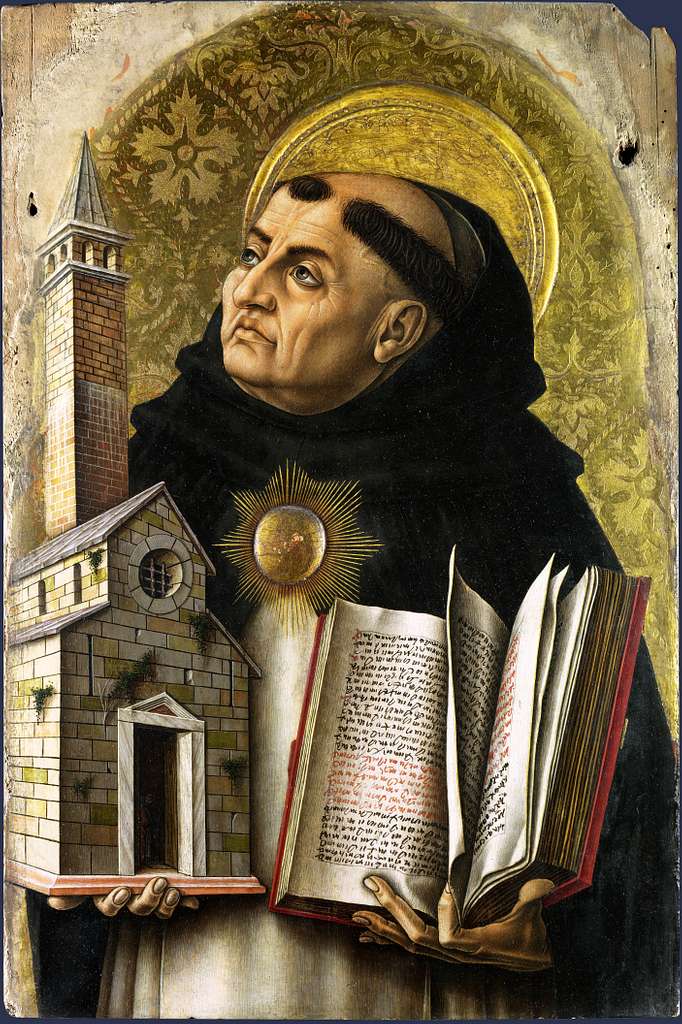
Compiled by
St. Thomas
Aquinas
Thomas Aquinas compiled this opus from sermons and commentaries on the Gospels written by the early Church Fathers, arranging their thoughts in such a way that they form a continuous commentary on each Gospel.
Mark 1:29–31
29. And forthwith, when they were come out of the synagogue, they entered into the house of Simon and Andrew, with James and John.
30. But Simon’s wife’s mother lay sick of a fever, and anon they tell him of her.
31. And he came and took her by the hand, and lifted her up; and immediately the fever left her, and she ministered unto them.
BEDE. (in Marc. i. 7) First, it was right that the serpent’s tongue should be shut up, that it might not spread any more venom; then that the woman, who was first seduced, should be healed from the fever of carnal concupiscence. Wherefore it is said, And forthwith, when they were come out of the synagogue, &c.
THEOPHYLACT. He retired then as the custom was on the sabbath-day about evening to eat in His disciples’ house. But she who ought to have ministered was prevented by a fever. Wherefore it goes on, But Simon’s wife’s mother was lying sick of a fever.
PSEUDO-CHRYSOSTOM. (v. Vict. Ant. e Cat. in Marc. c. 1:32) But the disciples, knowing that they were to receive a benefit by that means, without waiting for the evening prayed that Peter’s mother should be healed. Wherefore there follows, who immediately tell him of her.
BEDE. (ubi sup.) But in the Gospel of Luke it is written, that they besought him for her. (Luke 4:38.) For the Saviour sometimes after being asked, sometimes of His own accord, heals the sick, shewing that He always assents to the prayers of the faithful, when they pray also against bad passions, and some times gives them to understand things which they do not understand at all, or else, when they pray unto Him dutifully, forgives their want of understanding; as the Psalmist begs of God, Cleanse me, O Lord, from my secret faults. (Ps. 19:12) Wherefore He heals her at their request; for there follows, And he came and took her by the hand, and lifted her up.
THEOPHYLACT. By this it is signified, that God will heal a sick man, if he ministers to the Saints, through love to Christ.
BEDE. (in Marc. i. 6, 8) But in that He gives most profusely His gifts of healing and doctrine on the sabbath day, He teaches, that He is not under the Law, but above the Law, and does not choose the Jewish sabbath, but the true sabbath, and our rest is pleasing to the Lord, if, in order to attend to the health of our souls, we abstain from slavish work, that is, from all unlawful things. It goes on, and immediately the fever left her, &c. The health which is conferred at the command of the Lord, returns at once entire, accompanied with such strength, that she is able to minister to those, of whose help she had before stood in need. Again, if we suppose that the man delivered from the devil means, in the moral way of interpretation, the soul purged from unclean thoughts, fitly does the woman cured of a fever by the command of God mean the flesh, restrained from the heat of its concupiscence by the precepts of continence.
PSEUDO-JEROME. For the fever means intemperance, from which, we the sons of the synagoguek, by the hand of discipline, and by the lifting up of our desires, are healed, and minister to the will of Him who heals us.
THEOPHYLACT. But he has a fever who is angry, and in the unruliness of his anger stretches forth his hands to do hurt; but if reason restrains his hands, he will arise, and so serve reason.
Mark 1:32–34
32. And at even, when the sun did set, they brought unto him all that were diseased, and them that were possessed with devils.
33. And all the city was gathered together at the door.
34. And he healed many that were sick of divers diseases, and cast out many devils; and suffered not the devils to speak, because they knew him.
THEOPHYLACT. Because the multitude thought that it was not lawful to heal on the sabbath day, they waited for the evening, to bring those who were to be healed to Jesus. Wherefore it is said, And at even, when the sun had set. There follows, and he healed many that were vexed with divers diseases.
PSEUDO-CHRYSOSTOM. (Vict. Ant. e Cat. in Marc.) Now in that he says many, all are to be understood according to the Scripture mode of expression.
THEOPHYLACT. Or he says many, because there were some faithless persons, who could not at all be cured on account of their unfaithfulness. Therefore He healed many of those who were brought, that is, all who had faith. It goes on, and cast out many devils.
PSEUDO-AUGUSTINE. (Pseudo Aug. Quæst. e Vet. et Nov. Test. xvi.) For the devils knew that He was the Christ, who had been promised by the Law: for they saw in Him all the signs, which had been foretold by the Prophets; but they were ignorant of His divinity, as also were their princes, for if they had known it, they would not have crucified the Lord of glory. (1 Cor. 2:8)
BEDE. (ubi sup.) For, Him whom the devil had known as a man, wearied by His forty days’ fast, without being able by tempting Him to prove whether He was the Son of God, he now by the power of His miracles understood or rather suspected to be the Son of God. The reason therefore why he persuaded the Jews to crucify Him, was not because he did not think that He was the Son of God, but because he did not foresee that he himself was to be condemned by Christ’s death.
THEOPHYLACT. Furthermore, the reason that He forbade the devils to speak, was to teach us not to believe them, even if they say true. For if once they find persons to believe them, they mingle truth with falsehood.
PSEUDO-CHRYSOSTOM. (Vict. Ant. e Cat. in Marc.) And Luke does not contradict this, when he says, that devils came out of many, crying out and saying, Thou art Christ the Son of God: (Luke 4:41) for he subjoins, And he rebuking them, suffered them not to speak; for Mark, who passes over many things for the sake of brevity, speaks about what happened subsequently to the abovementioned words.
BEDE. (ubi sup.) Again, in a mystical sense, the setting of the sun signifies the passion of Him, who said, As long as I am in the world, I am the light of the world. (John 9:5) And when the sun was going down, more demoniacs and sick persons were healed than before: because He who living in the flesh for a time taught a few Jews, has transmitted the gifts of faith and health to all the Gentiles throughout the world.
PSEUDO-JEROME. But the door of the kingdom, morally, is repentance and faith, which works health for various diseases; for divers are the vices, with which the city of this world is sick.
Mark 1:35–39
35. And in the morning, rising up a great while before day, he went out, and departed into a solitary place, and there prayed.
36. And Simon and they that were with him followed after him.
37. And when they had found him, they said unto him, All men seek for thee.
38. And he said unto them, Let us go into the next towns, that I may preach there also: for therefore came I forth.
39. And he preached in their synagogues through out all Galilee, and cast out devils.
THEOPHYLACT. After that the Lord had cured the sick, He retired apart. Wherefore it is said, And rising very early in the morning, he went out and departed into a desert place. By which He taught us not to do any thing for the sake of appearance, but if we do any good, not to publish it openly. It goes on, and there prayed.
PSEUDO-CHRYSOSTOM. (Vict. Ant. e Cat. in Marc.) Not that He required prayer; for it was He who Himself received the prayers of men; but He did this by way of an economy, and became to us the model of good works.
THEOPHYLACT. For He shews to us that we ought to attribute to God whatever we do well, and to say to Him, Every good gift cometh down from above, (James 1:17) from Thee. It continues: And Simon followed him, and they that were with him.
PSEUDO-CHRYSOSTOM. (Vict. Ant. e Cat. in Marc.) Luke however says, that crowds came to Christ, and spoke what Mark here relates that the Apostles said, adding, And when they came to him, they said to him, All seek thee. (Luke 4:42) But they do not contradict each other; for Christ received after the Apostles the multitude, breathlessly anxious to embrace His feet. He received them willingly, but chose to dismiss them, that the rest also might be partakers of His doctrine, as He was not to remain long in the world. And therefore there follows: And he said, Let us go into the neighbouring villages and towns, that there also I may preach.
THEOPHYLACT. For He passes on to them as being more in need, since it was not right to shut up doctrine in one place, but to throw out his rays every where. It goes on: For therefore am I come.
PSEUDO-CHRYSOSTOM. (Vict. Ant. e Cat. in Marc.) In which word, He manifests the mystery of His emptying himself, (Phil. 2:7) that is, of His incarnation, and the sovereignty of His divine nature, in that He here asserts, that He came willingly into the world. Luke however says, To this end was I sent, proclaiming the Dispensation, and the good pleasure of God the Father concerning the incarnation of the Son. There follows: And he continued preaching in their synagogues, in all Galilee.
AUGUSTINE. (de Cons. Evan. ii. 19) But by this preaching, which, he says, He continued in all Galilee, is also meant the sermon of the Lord delivered on the mount, which Matthew mentions, and Mark has entirely passed over, without giving any thing like it, save that he has repeated some sentences not in continuous order, but in scattered places, spoken by the Lord at other times.
THEOPHYLACT. He also mingled action with teaching, for whilst employed in preaching, He afterwards put to flight devils. For there follows: And casting out devils. For unless Christ shewed forth miracles, His teaching would not be believed; so do thou also, after teaching, work, that thy word be not fruitless in thyself.
BEDE. (ubi sup.) Again mystically if by the setting of the sun, the death of the Saviour is intended, why should not His resurrection be intended by the returning dawn? For by its clear light, He went far into the wilderness of the Gentiles, and there continued praying in the person of His faithful disciples, for He aroused their hearts by the grace of the Holy Spirit to the virtue of prayer.
ORIGINAL: e-Catholic 2000
STCB Notes


Sermon
Writer

Mark 1:29-39 Exegesis
RICHARD NIELL DONOVAN was a Disciples of Christ clergyman who published SermonWriter, for a paid subscription, from 1997-2020. After he died, his family has generously provided his resources without subscription.