The readings for the 5th Sunday in Ordinary Time Year B highlight Jesus' healing power and the themes of serving others, hope, and evangelization. Job's lamentation in the first reading contrasts with the psalm's reminder of God's ability to heal the brokenhearted, while the Gospel recounts Jesus' acts of healing and preaching.
Ancient people believed a face-to-face encounter with God would be overpowering, even deadly. So they welcomed the idea that a prophet, a single human being, could bear the brunt of that encounter for them. They did not always welcome what the prophet had to report from God. (Greg Warnusz)
OUTLINE
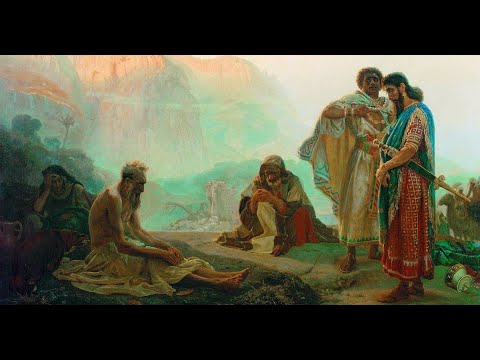
I. Job expresses his suffering and desire for death, questioning God's severity. II. He laments the pain and restlessness that fill his days, desiring comfort. III. Job wishes for shorter nights and believes his life is meaningless and filled with torment. IV. He feels hopeless and questions why God is intentionally afflicting him._
What Happens Before
The book of Job opens with a description of Job, a man who is described as blameless and upright, fearing God and shunning evil. In the first chapter, Satan challenges Gods assertion that Job only serves him because of the blessings and protection he receives from God. God allows Satan to test Job, taking away his possessions, his children, and even his health. Despite this, Job remains faithful and refuses to curse God. In chapter 2, Satan again argues that Jobs faithfulness is only because his health has not been taken. God allows Satan to afflict Jobs body with painful sores, but still, Job does not curse God.
In chapter 3, Job finally speaks and laments his suffering. This is where we find our passage in Job 7:1-4, 6-7. Job is expressing his despair and hopelessness, saying that his life is but a shadow and full of turmoil. He compares his suffering to a hired laborer who longs for his wages, but instead only receives pain and misery.
The context of Jobs suffering is crucial to understanding his words in chapter 7. As mentioned earlier, Job was a blameless and upright man, but he has lost everything. This would have been a devastating blow to a man in that culture, as material possessions were seen as a sign of Gods favor and blessing. In addition, Jobs friends had come to console him, but instead, they accuse him of sinning and causing his own suffering. This would have only added to Jobs despair, feeling abandoned and misunderstood by his closest friends.
What Happens After
The continuation of the book of Job shows Gods ultimate response to Jobs suffering and the wisdom that can be gained from it. Despite Jobs despair and questioning, he remains faithful to God and ultimately sees the wisdom and goodness of God in the midst of his suffering.
Historical Context
The period in which the book of Job takes place is uncertain, but it is believed to be during the time of the patriarchs, possibly even before the events of Genesis. This would place Job as a contemporary of Abraham, Isaac, and Jacob. Jobs wealth and possessions, as well as the use of animals for sacrifices, also suggest a time before the Mosaic Law was established. This context is important to note because it helps to understand Jobs perspective on God and his suffering, as well as the cultural and religious beliefs of the time.
Cultural Context
The book of Job is believed to be one of the oldest books in the Bible, with scholars dating it between the 6th and 4th century BC. During this time, the culture of the ancient Near East was heavily influenced by the belief in retribution theology, which states that bad things only happen to bad people and good things happen to good people. This cultural belief is reflected in the responses of Jobs friends, who believe that Job must have sinned to deserve such suffering. The idea of suffering as a punishment from God was also prevalent in the ancient Near East.
SOURCE: Content written in collaboration with OpenAI's GPT-3.5 model.
2nd Reading: 1 Cor 9:16-19, 22-23
Saint Paul continues his teachings about how to be prepared for the imminent return of Jesus in glory. That coming should make people put their priorities in order.(Greg Warnusz)
OUTLINE
I. Paul proclaims his obligation to preach the Gospel despite personal desires. II. He willingly accepts the role of a servant to all, seeking the salvation of others. III. Paul becomes all things to all people to win them for Christ. IV. He does everything for the sake of the Gospel, striving to share in its blessings.
What Happens Before
In the preceding verses, Paul is addressing the Corinthians questions about his rights as an apostle. He explains that although he has the right to be supported financially by the church, he has not exercised this right in order to avoid any hindrance to the gospel. Paul also argues that his ministry and apostleship are from God, as evidenced by his labor and suffering for the sake of the gospel.
What Happens After
In the verses immediately following 1 Corinthians 9:16-19, Paul continues to use his own example as a model for the Corinthians to follow. He urges them to imitate his self-discipline and to run the race of faith with determination and purpose. He also warns them against idolatry and sexual immorality, using the example of the Israelites in the wilderness.
Historical Context
During this time, the city of Corinth was known for its wealth, diversity, and immorality. It was also a significant center for trade, making it a strategic location for spreading the gospel throughout the Roman Empire. However, this cultural and religious diversity also posed challenges for the early church, as believers navigated various cultural and social norms while holding onto their faith in Christ.
Cultural Context
In the cultural context of the first century, it was common for traveling teachers and philosophers to receive financial support from those they taught. Therefore, it was customary for the Jewish teachers and the Greek philosophers to receive payment for their teachings. The fact that Paul did not request financial support from the Corinthian church may have been seen as unusual or even suspicious in their eyes.
SOURCE: Content written in collaboration with OpenAI's GPT-3.5 model.
Gospel: Mk 1:29-39
This gospel recalls a time when people questioned Jesus' authority and right to teach, because of his modest origins.(Greg Warnusz)
OUTLINE
I. Jesus enters Simon Peter's house and heals his mother-in-law. II. News spreads, and people bring the sick and possessed to Jesus for healing. III. Jesus rises early to pray, but His disciples search for Him. IV. Jesus declares His mission to preach in other towns and casts out demons throughout Galilee.
What Happens Before
Prior to the events described in this passage, Jesus had just begun his ministry in Galilee, beginning with his baptism by John the Baptist and calling his disciples. He had already performed several miracles, including exorcising a demon from a man in the synagogue in Capernaum (Mark 1:21-28).
What Happens After
Overall, Mark 1:29-39 provides a significant turning point in the early days of Jesus ministry and sets the stage for his continued healing and teaching throughout Galilee and beyond. It also reveals aspects of Jesus character, including his commitment to fulfilling his purpose and his need for time alone with God.
Historical Context
This passage takes place in the first century during the Roman occupation of Palestine. Galilee, where Jesus grew up and began his ministry, was a diverse region with a mix of Jewish and Gentile populations, including many Hellenized Jews who spoke Greek and were influenced by Greco-Roman culture. There was also a strong sense of Jewish religious identity and resistance to the Roman rule.
Cultural Context
The cultural context is essential to understanding this passage. As a first-century Jewish rabbi and healer, Jesus would have been familiar with the religious practices and beliefs of his culture. Healing was a significant aspect of this, and Jesus ability to heal and exorcise demons would have been seen as a sign of his authority and power. Furthermore, Jesus practice of going to desolate places for prayer was also a common practice among Jewish teachers and prophets. It demonstrated their devotion and connection to God.
SOURCE: Content written in collaboration with OpenAI's GPT-3.5 model.
Explanation: In this passage, we see Jesus entering the house of Simon and Andrew and healing Simons mother-in-law who was sick with a fever. This healing shows us the power and authority of Jesus over illnesses and diseases. He also heals many others who were sick or possessed by demons, proving His divine nature as the Son of God.
Illustration: Imagine being one of those people who witnessed Jesus healing the sick and casting out demons. Imagine seeing the sick and possessed being restored to good health and sanity right before your very eyes. Such miracles can only be possible with the power of God.
Application: As followers of Christ, we must remember that through Him, we too have the power to heal and bring hope to those who are sick and suffering. Just as Jesus showed compassion and mercy to those in need, we too must be instruments of His healing and love in the world.
Main Point 2: The Importance of Prayer (Mark 1:35-37)
Explanation: After a long day of healing and preaching, Jesus rises early the next morning to go to a quiet place to pray. He knew the importance of communing with the Father to renew His strength and guidance for the mission ahead. He also teaches His disciples the importance of prayer by His own example.
Illustration: Imagine the serenity and stillness Jesus must have felt as He communed with the Father in prayer. In the midst of all the busyness and demands of ministry, He found time to recharge and seek guidance from God.
Application: Just like Jesus, we must prioritize prayer in our own lives. As we go out into the world to fulfill our mission, we must take time to seek Gods presence and ask for His guidance and strength.
Main Point 3: The Need for Spreading the Good News (Mark 1:38-39)
Explanation: Jesus tells His disciples that He must go to other towns to preach the Good News, for that is why He was sent. He emphasizes the importance of spreading the Word of God to those who have not yet heard it.
Illustration: Imagine how the people in the other towns must have felt when they heard the Good News for the first time from Jesus Himself. Imagine the joy and hope it brought them, knowing that they are loved and redeemed by God.
Application: As followers of Christ, it is our duty to share the Good News with others. We must not only be content with our own salvation, but we must also be passionate about bringing others to know and experience the love of God.
Reference: NABRE (New American Bible, Revised Edition) Bible, USCCB (United States Conference of Catholic Bishops)
How does the healing Jesus performs in this passage (Mk1:30-31) compare with the exorcism we heard about last week (Mk1:25)? What new realm of Jesus’ authority is seen here?
How do you picture the scene in Mk1:32-34? Why does Jesus silence the demons?
After a day like this passage describes, what pressures could Jesus be feeling as a new day dawns? How might this relate to his decision to move on (Mk1:38)?
What do you think Jesus prayed for during his prayer time?
What do you do when you need to get away and be with God?
What goals would you like to set for your “quiet time” with God—for example, a certain amount of time, saying the Rosary or Divine Mercy Chaplet, or a Scripture reading plan?
1. Do you feel like Job feels in this reading, at least sometimes? Why do you think God allows suffering? Can you still have trust in God even if you don’t understand why God allows people to suffer?
SECOND READING
2. What drove Paul to say he would do anything for the sake of the gospel? Is there a passion that drives you to the things you do?
GOSPEL
3. “Everyone is looking for you.” Is that statement as true now as it was then, with all of our own “demons and various diseases”? E.g. Covid? Prejudice? Climate crisis? Unemployment?
To what extent is your daily decision-making guided by your life of prayer? Do you pray daily? When during the day? Do you pray about things that are real to you, about everyday things? Do you ask for guidance in the choices that you will make that day? Do you pray that God’s will will be done in your daily decision-making?
Does your parish community (or family or prayer group) pray for things that are practical and concrete in the life of its members? Are the Prayers of the Faithful (General Intercessions) actually reflecting the prayer needs of the faithful? Who composes the Prayers of the Faithful for your weekend liturgies? Do you have any input? Should you?
Have you ever asked anybody to pray for you? When was the last time you did so? Do you believe that a disciple of Jesus Christ will be heard when that person prays for someone or something? Do you sometimes pray for yourself? Do you believe that your prayers are heard by God? Why? Or why not?
Job is in a very bad place. What is one of the worst or darkest experiences you have had to deal with? What helped you move through that time?
SECOND READING
What do you hear Paul saying to us in the Second Reading?
What are forces of evil that you or others have to deal with? What helped you during those times?
GOSPEL
Jesus finds time for prayer in the midst of a very busy schedule. Do you have a challenge in this area? If so, how do you make space for prayer as you do all the other things in your daily life?
Name one thing today’s Gospel says to us that we disciples of Jesus need to heed and act on.