


SOURCE: Young Catholics


Discussion Questions
Mk 1:29-39
1. What happened after Jesus left the synagogue in Capernaum?
He entered the house of Simon and Andrew with James and John.
2. Who was lying ill with a fever at Simon’s house?
Simon’s mother-in-law.
3. What did Jesus do when He was told about her fever?
He approached, grasped her hand, and helped her up.
4. What did she do afterwards?
She immediately waited on them.
5. What happened in the evening, after sunset?
People brought to Jesus all who were ill or possessed by demons.
6. How did Jesus respond to the crowds seeking His help?
He cured many who were sick with various diseases and drove out many demons.
7. What did Jesus do early in the morning, while it was still dark?
He went off to a deserted place to pray.
8. Who sought out Jesus and what did they say to Him?
Simon and those who were with him, who had been looking for Jesus, said, “Everyone is looking for you.”
9. How did Jesus spend His time in the nearby villages?
He preached in their synagogues and drove out demons.
10 What did the disciples say to Jesus about the people seeking Him?
They said to him, “Everyone is looking for you.”
11. What was Jesus’ response to His disciples?
He said to them, “Let us go on to the nearby villages that I may preach there also. For this purpose have I come.” (repeats response from earlier)
Teenager-related interspersed questions:
1. As a teenager, how might you respond if someone you know is suddenly healed from a sickness?
2. If you had the power to heal, how would you handle people constantly seeking your help?
3. How can finding time to pray, even in the midst of a busy schedule, benefit a teenager’s life?
4. Why do you think people were constantly seeking Jesus? How does this relate to teenagers seeking guidance and popularity?
5. How can a teenager balance their own needs and the needs of others, as Jesus did when He chose to go to nearby villages instead of staying where everyone was looking for Him?
6. How can teenagers use their voices to spread messages of faith, just as Jesus preached in the synagogues?_
Ascension Presents
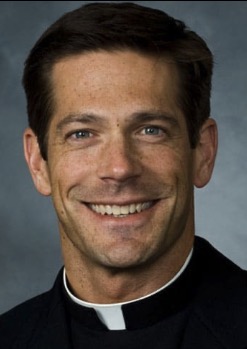

1. What question does Fr. Mike address in this video?
The question of why there is so much suffering and evil in the world.
2. What lens does Fr. Mike use to examine this question?
The lens of comic books, specifically the “Injustice” series in DC Comics.
3. What happens in the “Injustice” storyline?
The Joker uses a fear toxin on Superman, causing him to inadvertently kill Lois Lane and their unborn child. This leads to Superman becoming a totalitarian dictator.
4. What does Batman argue against Superman’s actions?
Batman believes that eliminating evil and crime should not come at the expense of freedom.
5. How does Fr. Mike relate this comic book storyline to the question of God allowing evil?
If God were to eliminate evil, He would also have to take away human freedom.
6. Does God not care about human suffering and evil?
No, God is not distant or uncaring. He actually experiences our suffering through the incarnation of Jesus.
7. How does Jesus handle suffering and evil?
Jesus enters into it, transforms it, and redeems it.
8. Does Jesus take away our suffering and pain?
No, Jesus does not take away our suffering. He enters into it, giving it meaning and purpose.
9. How can we unite our sufferings to Jesus?
By remembering that we are members of the Body of Christ, we can offer our sufferings to God and ask Him to use them for His purposes.
10. What is the role of our suffering as members of the Church?
Our suffering, united to Jesus’ suffering, continues the redemptive work of Christ in the world through the Church.
11. What simple prayer can we say in the midst of suffering?
“Lord, use this.”
12. Is anything given to God ever wasted?
No, nothing given to God is ever wasted.
Fr. Mike Schmitz


Jared Dees

SOURCE: The Religion Teacher
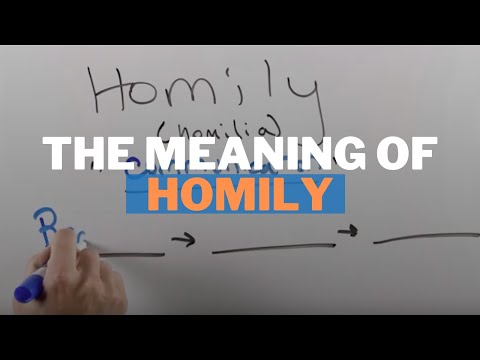
1. What is the meaning of the term “homily”?
It comes from the Greek word “hamilia,” which means communication.
2. What is the purpose of a homily during Mass?
The purpose is to provide a commentary or communication on the readings from the Old Testament, New Testament, and especially the Gospels.
3. How can we understand what we are supposed to do as we listen to the homily?
We should listen and try to understand how the message applies to our personal lives.
4. What does a good homily do?
A good homily connects the readings to our own lives.
5. What should we do after listening to the homily?
We should strive to go out and live what we have learned. It’s not just about receiving good ideas, but about putting them into practice in our lives.
6. What is the purpose of Mass?
Mass is a sending forth, a call to go out into the world and live what we have learned.
7. How should we approach listening to a homily?
We should think about how we can live what we are learning and how we can respond to God’s call in the readings we hear.
8. What is the significance of the term “mass”?
The term means “go,” emphasizing that we are sent out into the world after Mass to live out what we have learned.
9. What should we consider during a homily?
We should consider how we can listen in a way that helps us live out what God is calling us to do in the readings we hear.
10. How can we apply the teachings from the homily to our daily lives?
By actively listening and reflecting on how we can live out the message, we can strive to become disciples and make a positive impact in the world._
Find Catholic resources for Youth Ministry, Vacation Bible School (VBS), religious ed, catechists, Parish School of Religion (PSR), Confraternity of Christian Doctrine (CCD), Catholic families, Rite of Christian Initiation of Adults (RCIA) and Catholics of all ages.
