
African Americans
African Americans
African Americans

Different
Perspectives
on the Sunday
Readings
IMPORTANT: This page offers a creative synthesis of the biblical text with insights influenced by Catholic theologians and spiritual writers.
For a more comprehensive understanding of the readings, go to
COMMENTARIES
BIBLE STUDIES
Book
Excerpt
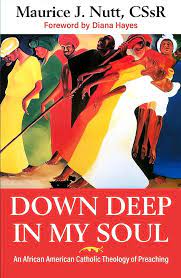
An African American Catholic Theology of Preaching
Fr. Maurice J. Nutt, CSsR
THE WORK OF EVANGELIZATION
The Holy Spirit calls us all to the work of evangelization. It is important that those who have received the Gospel of Jesus Christ spread the Good News. Like Paul, Christians must be compelled to confess, “Preaching the gospel is not the subject of a boast; I am under compulsion and have no choice. I am ruined if I do not preach it!” (1 Cor. 9:16).
Evangelization is both a call and a response. It is the call of Jesus reverberating down the centuries: “Go into the whole world and proclaim the good news to all creation” (Mark 16:15). The response is, “Conduct yourselves, then, in a way worthy of the gospel of Christ” (Phil. 1:27).
Evangelization means not only preaching but witnessing, not only conversion but renewal, not only entry into the community but the building up of the community, not only hearing the Word but sharing it. The Good News of the gospel not only transforms those who hear it, but it must also transform those who preach it. “The person who has been evangelized,” Pope Paul VI wrote, “goes on to evangelize others.”6 However, evangelization is not done in a vacuum; it is performed within a particular context.
Nutt, Maurice J., CSsR. Down Deep in My Soul: An African American Catholic Theology of Preaching (pp. 30-31). Orbis Books.
Commentary below written in collaboration with OpenAI’s GPT-3.5 model.
African Americans
First Reading | Second Reading | Gospel
VERSE BY VERSE COMMENTARY
TOP OF PAGE First Reading | Second Reading | Gospel

FOCUS: African Americans
Verse 1: "Is not man's life on earth a drudgery, his days like those of a hireling?"
In this verse, Job ponders the toil and hardship of human existence. African American history is deeply intertwined with the struggles and challenges faced by African Americans throughout the centuries.
The enslavement of African people, followed by a long history of systemic racism, discrimination, and oppression, were like a drudgery, depriving them of their humanity and dignity.
Rev. Bryan N. Massingale writes, "The African American experience must be seen as something akin to Job's ordeal, without the assurance of a divine voice to announce that their suffering has any redemptive meaning."
Verse 2: "As a slave who longs for the shade, as a hireling who waits for his wages."
Here, Job uses imagery to describe the unfulfilled longing and hope for relief from suffering.
This can be likened to the aspirations and yearnings for freedom, justice, and equality in African American history.
Dr. C. Vanessa White, she speaks about the desire for liberation and the struggle against racial injustice, stating, "As African Americans, we long for the shade of God's protection, for grace, justice, and healing."
Verse 3: "So I have been assigned months of misery, and troubled nights have been allotted to me."
Job acknowledges the prolonged period of his suffering.
This can parallel the ongoing struggles and challenges faced by African Americans throughout history. The months of misery can symbolize the years of enslavement, segregation, lynching, and discrimination that plagued African Americans.
Dr. M. Shawn Copeland reminds us, "African American history is full of troubled nights, marked by violence and systemic racism."
Verse 4: "If in bed I say, 'When shall I arise?' then the night drags on; I am filled with restlessness until the dawn."
Among the experiences of African Americans, the restless nights depicted in this verse may resonate with the anxieties and uncertainties experienced by many African Americans throughout history. The dawn symbolizes the hope for a better future, just as African American spirituals expressed the yearning for freedom and deliverance from suffering.
Alice Walker reminds us, "African Americans have always yearned for the dawn of equality, seeking liberation from the bonds of racism."
Verses 6-7: "My days are swifter than a weaver's shuttle; they come to an end without hope. Remember that my life is like the wind; I shall not see happiness again."
In these verses, Job reflects on the fleeting nature of life and the absence of hope.
For African Americans, the struggle for equality and justice has often been met with setbacks and continued challenges. Yet, amidst the hardships, there have been moments of resilience and triumph.
Dr. Diana Hayes affirms the spirit of hope within African American culture, stating, "In the midst of adversity, African Americans have learned to embrace the beauty of their culture and find hope within their communities, their faith, and their struggle for justice."
SOURCE: Content written in collaboration with OpenAI's GPT-3.5 model. If you find an error or would like to add content or edit page, don't hesitate to use contact button below. Excerpts from the Lectionary for Mass for Use in the Dioceses of the United States of America, second typical edition © 2001, 1998, 1997, 1986, 1970 Confraternity of Christian Doctrine, Inc., Washington, DC. Used with permission.
TOP OF PAGE First Reading | Second Reading | Gospel

FOCUS: African Americans
Verse 16: "If I preach the gospel, this is no reason for me to boast, for an obligation has been imposed on me, and woe to me if I do not preach it!"
In this verse, the apostle Paul expresses his sense of duty and urgency to proclaim the gospel.
Similarly, African American history and culture have been deeply rooted in the proclamation of freedom, justice, and equality.
Dr. M. Shawn Copeland reminds us of the obligation within African American culture, stating, "The African American experience of faith compels us to speak out against injustice and proclaim the Good News of liberation."
Verse 17: "If I do so willingly, I have a recompense, but if unwillingly, then I have been entrusted with a stewardship."
Here, Paul acknowledges the reward that comes with willingly sharing the gospel.
This verse can be related to African American history and culture through the dedication and commitment shown by African American leaders and activists, who willingly took on the task of advocating for their rights and the rights of their communities.
Dr. C. Vanessa White states, "African Americans have been entrusted with the stewardship of breaking the chains of racial oppression and pursuing justice with unwavering dedication."
Verse 18: "What then is my recompense? That when I preach, I offer the gospel free of charge so as not to make full use of my right in the gospel."
In this verse, Paul speaks of his willingness to preach the gospel without seeking personal gain.
This can be related to the African American tradition of using their talents, such as music, literature, and art, to uplift and inspire their community without seeking personal profit.
Rev. Bryan N. Massingale speaks to the importance of African Americans using their gifts for the greater good, stating, "African Americans have demonstrated their creativity and resilience by transforming their experiences into powerful expressions of faith, offering a message of hope and liberation to their communities."
Verses 22-23: "To the weak I became weak, to win over the weak. I have become all things to all, to save at least some. All this I do for the sake of the gospel, so that I too may have a share in it."
In these verses, Paul highlights his adaptability and willingness to meet people where they are in their understanding of the gospel.
This can be related to African American history and culture through the practice of community solidarity and empathy.
Dr. Diana Hayes affirms this idea, stating, "African Americans have learned the importance of being 'all things to all' as a survival strategy, finding common ground with others and building bridges across divides for the sake of unity and justice."
SOURCE: Content written in collaboration with OpenAI's GPT-3.5 model. If you find an error or would like to add content or edit page, don't hesitate to use contact button below. Excerpts from the Lectionary for Mass for Use in the Dioceses of the United States of America, second typical edition © 2001, 1998, 1997, 1986, 1970 Confraternity of Christian Doctrine, Inc., Washington, DC. Used with permission.
TOP OF PAGE First Reading | Second Reading | Gospel

FOCUS: African Americans
Verse 29: On leaving the synagogue he entered the house of Simon and Andrew with James and John.
This verse sets the scene shortly after Jesus teaching in the synagogue.
In African American history, the house has often been a symbol of resilience and community. During times of slavery and segregation, African Americans would gather in homes to worship, strategize, and find solace. The Black Church emerged as a powerful force in African American culture, embodying hope and resistance against injustice.
In this context, theologian James Cone beautifully expressed, "The Black Church is the voice and the conscience of black people in the United States."
Verse 30: Simon’s mother-in-law lay sick with a fever. They immediately told him about her.
Simon's mother-in-law being in bed with a fever reflects the physical and emotional toll that disease and oppression have had on African American communities throughout history. Illnesses have disproportionately affected Black individuals due to systemic disparities in healthcare access.
Howard Thurman acknowledged the communal impact of struggling for liberation, stating, "There is in each of us so much damned unhappiness, so many unresolved moral dilemmas and racial tensions that we could not resolve."
Verse 31: He approached, grasped her hand, and helped her up. Then the fever left her and she waited on them.
Jesus' healing touch represents a powerful symbol of hope and liberation in the African American experience. Just as Jesus raised Simon's mother-in-law from her sickbed, African Americans, through their faith and collective struggle, have risen from the depths of oppression.
Allan Boesak once said, "Only when we rise from our knees can we stand on our feet and see face to face clearly the majesty of our past and the challenge of our future."
Verse 32: When it was evening, after sunset, they brought to him all who were ill or possessed by demons.
Throughout African American history, the church has served as a refuge for those facing physical illness, mental afflictions, and emotional distress. It has been a sanctuary where individuals believed in the healing power of God and sought spiritual liberation.
Katie Cannon wrote, "In the face of evil, black people experienced God's radical presence." Church gatherings during slavery, the Civil Rights Movement, and beyond showcased the community's unwavering belief in divine healing.
Verse 33: And the whole town was gathered at the door.
The mention of the "whole town" symbolizes the unity and communal bond formed through shared struggle.
Just as African American activists like Rosa Parks ignited a city-wide unity during the Montgomery Bus Boycott, this verse reminds us of the strength found in collective action and the power of community.
Delores S. Williams expressed, "Community, in the African-American context, is the salvation of human beings."
Verse 34: And he cured many who were sick with various diseases and cast out many demons; and he would not permit the demons to speak because they knew him.
Jesus' ministry was characterized by confronting and casting out evil forces that plagued individuals and communities.
This verse echoes the resilience of African American communities who have fought against the forces of racism, oppression, and injustice.
African American theologian James H. Cone reminded us, "Black religion is our hope."
Verse 35: In the morning, while it was still very dark, he got up and went out to a deserted place, and there, he prayed.
This verse highlights Jesus' need for solitude and communion with God, a practice deeply rooted in African American culture.
African American spirituals and prayers were often composed in times of isolation and contemplation amidst the brutal conditions of slavery. Reflecting on the significance of prayer, spiritual writer and theologian Howard Thurman stated, "Prayer is the divine therapy that enables one to experience the vast dimensions of reality."
Verse 36: Simon and those who were with him pursued him
Simon and the disciples actively sought out Jesus, recognizing the importance of his presence and teachings.
In African American history, leaders like Frederick Douglass and Martin Luther King Jr. emerged as powerful voices, tirelessly seeking justice and equality.
Quoting African American Catholic theologian Sr. Jamie T. Phelps, "Prophetic leaders in the African American tradition must embody the spirit of inclusivity, radical change, and transformative vision."
Verse 37: and on finding him said, “Everyone is looking for you.”
This scripture resonates with African American history, as many individuals and communities have yearned for liberation, equality, and recognition. Throughout the civil rights movement, prominent leaders such as Malcolm X and Angela Davis drew international attention to the African American struggle.
Expressing the urgency of this search for liberation, Catholic theologian M. Shawn Copeland notes, "In the struggle for liberation, the cross still rises high."
Verse 38: He told them, “Let us go on to the nearby villages that I may preach there also. For this purpose have I come.”
Jesus' response emphasizes the importance of spreading the message of liberation to broader communities.
Inspired by this approach, African American churches and leaders have consistently sought to uplift not only their own communities but also advocate for justice on a broader scale.
Quoting African American theologian Vincent Wimbush, "Diasporic Christianity means crossing boundaries, unsettling established categories, and transforming identities."
Verse 39: So he went into their synagogues, preaching and driving out demons throughout the whole of Galilee.
Lastly, this verse signifies Jesus' unyielding dedication to his mission.
In the context of African American history, it reminds us of the tireless efforts of leaders and activists to dismantle systemic racism and provide justice for all.
James Cone expressed this perseverance beautifully, "Black theology sees in Jesus a liberator who lived a human life becoming free even as we live our lives becoming free."
SOURCE: Content written in collaboration with OpenAI's GPT-3.5 model. If you find an error or would like to add content or edit page, don't hesitate to use contact button below. Excerpts from the Lectionary for Mass for Use in the Dioceses of the United States of America, second typical edition © 2001, 1998, 1997, 1986, 1970 Confraternity of Christian Doctrine, Inc., Washington, DC. Used with permission.
HOME | COMMENTARY | BIBLE STUDY | CONNECTIONS
