
African Americans
African Americans
African Americans

Different
Perspectives
on the Sunday
Readings
IMPORTANT: This page offers a creative synthesis of the biblical text with insights influenced by Catholic theologians and spiritual writers. For a comprehensive understanding of the readings, click on the commentary and bible study links above which offer a more extensive biblical analysis.
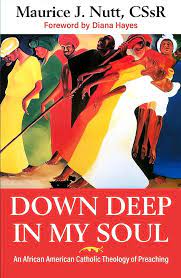
An African American Catholic Theology of Preaching
Fr. Maurice J. Nutt, CSsR
According to the US Catholic Bishops, the Catholic preacher “represents a given community by voicing its concerns, by naming demons, and thus enabling it to gain some understanding and control of the evil which afflicts it.” (Fulfilled in Your Hearing, 6)
In other words, the preacher represents the Lord by offering the community another word—a word of healing and pardon, of acceptance and love. The bishops acknowledge that the people in the pews attend liturgy seeking meaning in their lives. True, they do find some meaning in family, friends, or even employment. Yet these fall short of providing the ultimate meaning sought by the People of God. The bishops maintain,
“Without meaning we are ultimately unsatisfied. If we are able to hear a word which gives our lives another level of meaning, which interprets them in relation to God, then our response is to turn to this source of meaning in an attitude of praise and thanksgiving.” (Fulfilled in Your Hearing, 6)
Sunday after Sunday a given African American Catholic community comes together to await a word from the preacher that will give meaning to the lives of the community members and enable them to truly celebrate the Word and Eucharist. I am convinced that the Black preaching style provides the needed message in a manner that gives meaning to Black peoples’ lives and gives them cause to celebrate fully the Word and Sacrament.
Nutt, Maurice J., CSsR. Down Deep in My Soul: An African American Catholic Theology of Preaching (pp. 101-102). Orbis Books.
African Americans
First Reading | Second Reading | Gospel
Commentary below written in collaboration with OpenAI’s GPT-3.5 model.
VERSE BY VERSE COMMENTARY
TOP OF PAGE First Reading | Second Reading | Gospel

FOCUS: African Americans
Verse 15: "The LORD, your God, will raise up for you a prophet like me from among your own people; you shall heed such a prophet."
In this passage, Moses speaks to the Israelites, explaining God's promise to raise up a future prophet from among their own people.
Within African American Catholic culture, the recognition and reverence for prophetic voices, messengers, and leaders play a crucial role in shaping the community's faith and struggle for justice.
Rev. Bryan N. Massingale expressed, "The African American Catholic tradition lifts up prophetic voices, men, and women who courageously speak truth to power, challenging unjust systems and advocating for justice and equality" (Massingale, Bryan N. Racial Justice and the Catholic Church).
Verse 18: "I will put my words into the mouth of the prophet, who shall speak to them all that I command."
The promise of God to put His words into the mouth of the prophet resonates with African American Catholic culture's emphasis on the Word of God.
Dr. M. Shawn Copeland emphasizes, "The Word of God holds a central place in African American Catholic spirituality, as the source of liberation and inspiration for the community's faith and struggle" (Copeland, M. Shawn. Enfleshing Freedom: Body, Race, and Being).
Verse 19: "If any man will not heed my words which he speaks in my name, I myself will make him answer for it."
The call to heed and respond to God's words through the prophet relates to the African American Catholic experience of spiritual accountability and social justice.
The late Sr. Thea Bowman, an influential African American Catholic educator, stated, "The call to justice and righteousness is a religious obligation and, when ignored, has spiritual consequences" (Bowman, Thea. We Are Church).
Verse 20: "But if a prophet presumes to speak in my name an oracle that I have not commanded him to speak, or speaks in the name of other gods, he shall die."
This verse serves as a cautionary reminder within African American Catholic culture that discernment and adherence to the true message of God are vital.
Dr. Cyprian Davis affirmed, "The African American Catholic community has been discerning the voice of God in the midst of challenges, ensuring fidelity to the Gospel and avoiding false teachings" (Davis, Cyprian. The History of Black Catholics in the United States).
SOURCE: Content written in collaboration with OpenAI's GPT-3.5 model. If you find an error or would like to add content or edit page, don't hesitate to use contact button below. Excerpts from the Lectionary for Mass for Use in the Dioceses of the United States of America, second typical edition © 2001, 1998, 1997, 1986, 1970 Confraternity of Christian Doctrine, Inc., Washington, DC. Used with permission.
TOP OF PAGE First Reading | Second Reading | Gospel

FOCUS: African Americans
Verse 32: "I should like you to be free of anxieties. An unmarried man is anxious about the things of the Lord, how he may please the Lord."
African American Catholic culture places great emphasis on faith and seeking ways to please the Lord.
Theologian Dr. M. Shawn Copeland beautifully articulated the significance of pleasing God in African American spirituality, stating, "African American Catholic spirituality affirms that our fundamental identity and destiny lie in living lives that glorify God" (Copeland, M. Shawn. Enfleshing Freedom: Body, Race, and Being).
Verse 33: "But a married man is anxious about the things of the world, how he may please his wife, and he is divided."
Within African American Catholic culture, the importance of marriage and family is deeply valued.
Theologian Dr. C. Vanessa White affirms, "Marriage and family life are seen as sacred gifts and sources of strength, love, and community support" (White, C. Vanessa. Singing with the Spirit: An Exploration of African American Catholic Worship).
Verse 34: "An unmarried woman or a virgin is anxious about the things of the Lord, so that she may be holy in both body and spirit."
In African American Catholic history, the vocation of unmarried women or virgins has held a significant place. They often played crucial roles as educators, church leaders, and caregivers within their communities.
Dr. Diana Hayes, African-American Catholic theologian specializing in womanism and Black theology, noted, "Unmarried African American Catholic women have been instrumental in fostering social change, education, and the empowerment of others" (Hayes, Diana. Women Deacons in the Church: A Historical and Theological Investigation).
Verse 35: "I am telling you this for your own benefit, not to impose a restraint upon you, but for the sake of propriety and adherence to the Lord without distraction."
The call to celibacy or marriage, as emphasized in this verse, is understood within the context of African American Catholic culture as a means to live in devotion to the Lord without distraction.
The late Sr. Thea Bowman, an influential African American Catholic educator, affirmed, "To be celibate or married is a choice to serve God and God's people with undivided love and commitment" (Bowman, Thea. Today's Gifts: Tomorrow's Legacy, Reflections on an African American Catholic Heritage).
SOURCE: Content written in collaboration with OpenAI's GPT-3.5 model. If you find an error or would like to add content or edit page, don't hesitate to use contact button below. Excerpts from the Lectionary for Mass for Use in the Dioceses of the United States of America, second typical edition © 2001, 1998, 1997, 1986, 1970 Confraternity of Christian Doctrine, Inc., Washington, DC. Used with permission.
TOP OF PAGE First Reading | Second Reading | Gospel

FOCUS: African Americans
Verse 21: "Then they came to Capernaum, and on the sabbath Jesus entered the synagogue and taught."
In this verse, we find Jesus teaching in the synagogue at Capernaum.
The act of Jesus entering the synagogue and teaching signifies the importance of education and the pursuit of knowledge within the African American community. Rev. Augustus Tolton, the first recognized African American Catholic priest, remarked, "The instruction of our people is a work of time. It needs the experience of age. Only one thing is necessary at present: to give Catholic education to the young.*"
Verse 22: "The people were astonished at his teaching, for he taught them as one having authority and not as the scribes."
The astonishment of the people at Jesus' authoritative teaching resonates with the African American Catholic experience.
Dr. Cyprian Davis, an esteemed African American Catholic historian and theologian, reflected, "When African Americans embraced Catholicism, it was often because of the liturgy and spiritual presence of the Church. They saw the Catholic faith as a source of empowerment and liberation" (Davis, Cyprian. The History of Black Catholics in the United States).
Verse 23: "In their synagogue was a man with an unclean spirit; he cried out…"
The encounter with the man possessing an unclean spirit within the synagogue can be seen as a metaphor for the African American struggle for freedom and equality.
Just as the man cried out for liberation, African American Catholics have cried out for justice and recognition within the Church and society. Theologian Dr. M. Shawn Copeland conveyed, "The cry for justice arises out of the depths of African American religious experience and insists that God hears and acts" (Copeland, M. Shawn. Enfleshing Freedom: Body, Race, and Being).
Verse 24: "'What have you to do with us, Jesus of Nazareth? Have you come to destroy us? I know who you are—the Holy One of God!'"
In this verse, the recognition of Jesus as the Holy One of God echoes the deep spirituality and faith of African American Catholics.
The late Sr. Thea Bowman, an African American Franciscan Sister, expressed, "When I sing, 'Were you there when they crucified my Lord?' I remember that I was there on Calvary. That is why, wherever I go, I declare before kings and princes, 'I'm here to witness, I'm here to testify, I'm here to praise…because I was there'" (Bowman, Thea. I Was There: African American Catholics Enrich the Church).
Verse 25: "Jesus rebuked him and said, 'Quiet! Come out of him!'"
The authoritative command of Jesus to silence and expel the unclean spirit can be seen as a call to confront and overcome the forces of oppression and discrimination that African Americans have faced.
Fr. Cyprian Davis wrote, "The African American Catholic community has witnessed the power of God to overcome adversity and transform hearts, minds, and lives, offering hope and healing" (Davis, Cyprian. The History of Black Catholics in the United States).
Verse 26-27: "The unclean spirit convulsed him and with a loud cry came out of him. All were amazed and asked one another, 'What is this? A new teaching with authority. He commands even the unclean spirits and they obey him.'"
The astonishment of the people witnessing the expulsion of the unclean spirit speaks to the resilience and faith of African American Catholics. They have often defied societal expectations and emerged victorious despite great challenges.
As Rev. Bryan N. Massingale, an African American Catholic theologian, emphasizes, "African American spirituality is grounded in survival, resistance, and resilience. It is the faith that empowers us to stand against all that diminishes our humanity and dignity" (Massingale, Bryan N. Racial Justice and the Catholic Church).
Verse 28: "His fame spread everywhere throughout the whole region of Galilee."
The spreading of Jesus' fame throughout Galilee finds resonance in the impact of African American culture and spirituality across the wider Catholic community.
Dr. Shannen Dee Williams, an African American Catholic historian, wrote, "African American Catholics have enriched the Church with their vibrant faith, prophetic witness, and dedication to justice, leaving an indelible mark on the history of Catholicism in the United States" (Williams, Shannen Dee. Subversives and Saints: The Untold Story of Black Catholics in the United States).
SOURCE: Content written in collaboration with OpenAI's GPT-3.5 model. If you find an error or would like to add content or edit page, don't hesitate to use contact button below. Excerpts from the Lectionary for Mass for Use in the Dioceses of the United States of America, second typical edition © 2001, 1998, 1997, 1986, 1970 Confraternity of Christian Doctrine, Inc., Washington, DC. Used with permission.
HOME | COMMENTARY | BIBLE STUDY | CONNECTIONS
