
African Americans
African Americans
African Americans

Different
Perspectives
on the Sunday
Readings
IMPORTANT: This page offers a creative synthesis of the biblical text with insights influenced by Catholic theologians and spiritual writers. For a comprehensive understanding of the readings, click on the commentary and bible study links available at the top of the page which offer a more extensive biblical analysis.
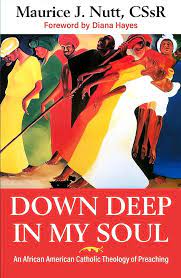
An African American Catholic Theology of Preaching
Fr. Maurice J. Nutt, CSsR
Black preaching is rooted in the African American cultural experience, the experience of a people who have suffered pain, discrimination, and oppression. Therefore, when the Word is proclaimed in effective Black preaching, it is a Word that is indeed good news. Black preaching traditionally provides hope to a people who have felt the heavy burden of injustice. The good news for the Black congregation is that God loves us and is watching over us. The Good News proclaimed in Black preaching is a liberating Word. (Olin P. Moyd, Redemption in Black Theology, Valley Forge, PA: Judson Press, 1979, 104)
Moreover, Black preaching speaks to the particular spiritual, racial, social, and economic concerns of the African American congregation. African Americans come to worship with these burdens perhaps knowing that after the Mass or service their situation will be unchanged but feeling that they have found inner peace and consoling words of encouragement as they face their hardships. They come to church anxious about unemployment, the sickness of a loved one, neighborhood gangs, children on drugs, unfaithfulness in their marriage, or a neighbor who slanders the family name by gossip. These are only a few concerns that may be troubling members of a Black congregation who come to receive good news.
Nutt, Maurice J., CSsR. Down Deep in My Soul: An African American Catholic Theology of Preaching (pp. 99-100). Orbis Books.
African Americans
First Reading | Second Reading | Gospel

Commentary below written in collaboration with OpenAI’s GPT-3.5 model.
VERSE BY VERSE COMMENTARY
TOP OF PAGE First Reading | Second Reading | Gospel

FOCUS: African Americans
Verse 1: "The word of the LORD came to Jonah a second time:"
In the book of Jonah, we see the theme of second chances and the call to fulfill one's mission.
This theme resonates with the African American experience and the ongoing struggle for freedom and equality. African Americans have often faced setbacks and obstacles in their journey towards justice, but they have repeatedly shown resilience and determination to continue the fight.
Daniel Berrigan emphasizes the importance of perseverance, stating, "I don't know what's going to happen. But I do know this: the only ones among you who will be really happy are those who have sought and found how to serve." (Berrigan, 2001) This perspective aligns with the African American community's refusal to give up on their quest for full liberation and equality, even in the face of adversity.
Verse 2: "Set out for the great city of Nineveh, and announce to it the message that I will tell you."
Nineveh represents a symbol of repentance and transformation in the book of Jonah. The message sent to Nineveh's inhabitants reveals God's desire for reconciliation and redemption.
In relation to African American culture and history, this can be understood as a call for society to repent from its historical and ongoing mistreatment of African Americans, to recognize the intrinsic worth and dignity of every person, and to work towards justice and equality.
Catholic theologian Bryan N. Massingale notes, "The work of racial justice is the work of converting hearts and changing systems." (Massingale, 2010) This understanding connects with the call to announce a transformative message to Nineveh. It emphasizes the need for deep-rooted changes in attitudes, structures, and policies to address the historical and systemic racism that has affected African Americans.
Verse 3-5: "So Jonah made ready and went to Nineveh, according to the LORD'S bidding. Now Nineveh was an enormously large city; it took three days to go through it. Jonah began his journey through the city, and had gone but a single day's walk announcing, 'Forty days more and Nineveh shall be overthrown,'"
The immense size of Nineveh highlights the enormity of the task before Jonah.
Similarly, in the context of African American history, the struggle for justice and equality has faced enormous challenges and obstacles. Yet, just as Jonah was obedient to God's command, African Americans have shown immense courage and determination in pursuing their quest for freedom and equality.
The message proclaimed by Jonah, warning of the impending destruction of Nineveh, can be related to the African American community's call for societal transformation and justice. This message represents a plea to dismantle systems of injustice and inequality that have perpetuated racial oppression. African Americans have consistently championed their rights, reminding society of the urgent need for change.
Verse 10: "When God saw by their actions how they turned from their evil way, he repented of the evil that he had threatened to do to them; he did not carry it out."
The ultimate theme of repentance and redemption in the book of Jonah finds parallels in the African American experience.
The verse resonates with the hope that society can change and embrace a more just and equitable future. The acknowledgment of past and ongoing racial injustice, along with efforts to address and rectify these wrongs, can lead to transformation and reconciliation.
Catholic theologian M. Shawn Copeland highlights the call for repentance and change in relation to racial justice, stating, "There is a restorative symmetry between holy repentance and conversion and the struggle against white racism." (Copeland, 2003) This understanding emphasizes the need for both individual and societal reflection and transformation to bring about lasting change and healing.
SOURCE: Content written in collaboration with OpenAI's GPT-3.5 model. If you find an error or would like to add content or edit page, don't hesitate to use contact button below. Excerpts from the Lectionary for Mass for Use in the Dioceses of the United States of America, second typical edition © 2001, 1998, 1997, 1986, 1970 Confraternity of Christian Doctrine, Inc., Washington, DC. Used with permission.
TOP OF PAGE First Reading | Second Reading | Gospel

FOCUS: African Americans
Verse 29: "I tell you, brothers, the time is running out. From now on, let those having wives act as not having them,"
In the context of African American culture and history, the concept of time carries significant weight. African Americans have faced centuries of oppression, discrimination, and the struggle for equal rights. The phrase "the time is running out" can be related to the urgency often felt within the African American community to address social and racial injustices, recognizing that time is not infinite. This urgency can be seen in the Civil Rights Movement, where activists worked tirelessly to bring about lasting change within a limited timeframe.
Catholic theologian Gustavo Gutierrez writes, "Hope, in the Christian sense of the word, is not a matter of waiting for things to come. It is rather an ability to see God in the midst of the present." (Gutierrez, 1988) This understanding speaks to the resilience of African Americans, who, despite the constraints of time, have managed to find hope and strength in their faith and in the pursuit of justice.
Verse 30: "those weeping as not weeping, those rejoicing as not rejoicing, those buying as not owning,"
The African American experience has been marked by a continual cycle of grief and struggle, as well as moments of celebration and triumph. The phrase "those weeping as not weeping" acknowledges the pain and suffering endured by African Americans throughout history, particularly during times of slavery, Jim Crow segregation, and racial violence. However, it also recognizes the resilience and endurance of the community, as they have found ways to persevere and find joy even in the midst of sorrow.
Catholic theologian James Cone asserts, "Those who have been oppressed can attest that despite their pain, they have not been overcome." (Cone, 1997) This perspective aligns with the African American experience, where the ability to endure and find strength in the midst of hardship has been a hallmark of the community's struggle for justice and equality.
Verse 31: "those using the world as not using it fully. For the world in its present form is passing away."
The African American culture has often emphasized the importance of spiritual values and faith as a means of navigating an unjust world. The phrase "those using the world as not using it fully" suggests a detachment from material possessions and a focus on the deeper significance of life. In African American history, there has been a recognition that worldly wealth and success may not bring lasting fulfillment or ultimate salvation.
Catholic theologian Howard Thurman writes, "Africans and Afro-Americans in turbulent times have had to face the fact… that careers and possessions do not guarantee lasting security and thus have turned for it to the resources of the spirit." (Thurman, 1976) This viewpoint emphasizes the resilience and faith that have helped sustain African Americans through periods of hardship and uncertainty.
The belief that "the world in its present form is passing away" reminds African Americans of the need for transformation and the pursuit of justice. It echoes the aspirations for social change and equality within movements like Black Lives Matter, which seek to dismantle systems of oppression and build a more just world.
SOURCE: Content written in collaboration with OpenAI's GPT-3.5 model. If you find an error or would like to add content or edit page, don't hesitate to use contact button below. Excerpts from the Lectionary for Mass for Use in the Dioceses of the United States of America, second typical edition © 2001, 1998, 1997, 1986, 1970 Confraternity of Christian Doctrine, Inc., Washington, DC. Used with permission.
TOP OF PAGE First Reading | Second Reading | Gospel

FOCUS: African Americans
Verse 14: "After John had been arrested, Jesus came to Galilee proclaiming the gospel of God"
Jesus' arrival in Galilee with the proclamation of the gospel represents hope, liberation, and the promise of a better future.
Throughout the struggles and oppression faced by African Americans, spirituals and sermons have served as powerful means of expressing their faith and finding solace in the midst of adversity. These spirituals and sermons echoed messages of freedom and salvation, carrying the hope of a better tomorrow despite the harsh realities they faced. They were a source of inspiration and courage, encouraging the community to persevere through challenging times.
Thomas G. Casey describes the Gospel as "Good News to the poor and oppressed." (Casey, 2007) This understanding resonates deeply with the African American community, as they have sought redemption from social, economic, and racial inequalities. The Gospel's message of hope, justice, and liberation speaks to their collective struggle, validating their experiences and offering a vision of a more equitable and just society.
Verse 15: "This is the time of fulfillment. The kingdom of God is at hand. Repent, and believe in the gospel."
"The kingdom of God" represents a vision of a just society, where all people are treated equally and with dignity.
The African American experience is one marked by long-standing struggles against oppression. The phrase "the time of fulfillment" holds significance as it points to the collective hope for justice and the fulfillment of God's promises.
Verse 16-18: "As he passed by the Sea of Galilee, he saw Simon and his brother Andrew casting their nets into the sea; they were fishermen. Jesus said to them, 'Come after me, and I will make you fishers of men.' Then they abandoned their nets and followed him."
In African American culture, fishing has often been a metaphor for survival and resilience. Like the fishermen in the passage, African Americans have cast their nets into the sea of life's challenges, using their strength and determination to overcome adversity. Jesus' call to Simon and Andrew to become "fishers of men" can relate to the African American experience of community and collective action. The call to follow Jesus is an invitation to become agents of change, advocating for justice, freedom, and equality for all people.
Theologian James Cone writes, "To follow Jesus means that we must involve ourselves in the liberation of the oppressed." (Cone, 2018)
Verse 19-20: "He walked along a little farther and saw James, the son of Zebedee, and his brother John. They too were in a boat mending their nets. Then he called them. So they left their father Zebedee in the boat along with the hired men and followed him."
The act of mending nets can be seen as metaphorical for healing wounds within the African American community. Just as Jesus called James and John to leave their nets and follow him, this passage reminds African Americans of the importance of leaving behind divisions and working together towards liberation and justice.
Catholic theologian Shannen Dee Williams emphasizes the significance of unity in the African American community, stating, "We are called… to draw on the strength of our ancestors and unite as a people." (Williams, 2018) By leaving their father and the hired men behind, James and John exemplify the need to prioritize the call to justice and the pursuit of God's kingdom.
SOURCE: Content written in collaboration with OpenAI's GPT-3.5 model. If you find an error or would like to add content or edit page, don't hesitate to use contact button below. Excerpts from the Lectionary for Mass for Use in the Dioceses of the United States of America, second typical edition © 2001, 1998, 1997, 1986, 1970 Confraternity of Christian Doctrine, Inc., Washington, DC. Used with permission.
HOME | COMMENTARY | BIBLE STUDY | CONNECTIONS
