
Basilica of the National Shrine
3rd Sunday of Year B


Jesus Calls Us to Respond to Him
Fr. Fangmeyer’s homily discusses the theme of responding to God’s call to repent and follow Him. He uses the examples of Jonah and Jesus to show how people responded to the message of repentance. The people of Nineveh, despite not being Jewish, repented when they heard Jonah’s words, while the apostles left everything to follow Jesus because they recognized something in Him that resonated with them. Fr. Fangmeyer also references St. Paul’s teaching that we should live as if we have nothing because the end of the world is near. This is not meant to be a moralistic approach, but rather a response to the call of love. He mentions the transformative encounters of characters in the Gospels, like Zacchaeus and the Samaritan woman, who experienced a change upon meeting Jesus. Fr. Fangmeyer concludes by explaining how the young men in the seminary choir are responding to the call of Jesus and preparing for a new way of life. He encourages everyone to listen for the voice of God calling them to respond, as nothing else can satisfy us like He can._
Homiletic Pastoral Review
3rd Sunday of Year B

Third Sunday in Ordinary Time – January 21. 2024
Fr. Trummer’s homily focuses on the urgency of obeying God’s call. Using the story of Jonah as an example, he emphasizes that God’s will is not thwarted by our disobedience. He explains that God’s mercy is conditional upon our repentance and highlights the importance of repenting in the present moment. Fr. Trummer discusses detachment as a prerequisite for following God’s will, emphasizing that it does not mean abandoning the good things in life, but rather setting our hearts on God. He concludes by urging the congregation to prioritize God above all else and reevaluate anything that hinders their relationship with Him.
Association of Catholic Priests
3rd Sunday of Year B

Open to Change
We can all become rather set in our ways. We get into certain ways of doing things and it can be easy to stay with those ways and rather difficult to change from them. We develop routines and those routines keep us going. It often takes someone else to broaden our horizons a little, to open us up to areas of life that we would never otherwise have ventured into. We each might be able to identify such people in our own lives, those who introduced us to something that proved to be very enriching and that helped us to grow as human beings.
Fr. Charles E. Irvin
3rd Sunday of Year B

The call of Jesus to twelve individuals, the call we just heard about in today Gospel account, is not a call issued only to twelve Jewish men over 2,000 years ago. It is an insistent call, and urgent call, a demanding call that comes down to us through 2,000 years in this Church of ours to you, to you here and now, to you today, who have been called by God to receive the Bread of Life from this altar and then to leave this church building on a mission. We are to leave here as those who are sent, sent with the twelve apostles to change the world by first changing our own lives.
Fr. Jim Chern
3rd Sunday of Year B
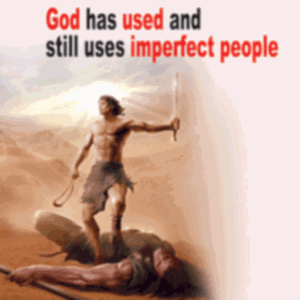
Imperfect People – Perfect Messengers
In his homily, Fr. Chern discusses the downfall of Lance Armstrong, a professional road racing cyclist who was diagnosed with cancer in 1996 but later made a successful recovery and went on to win seven Tour De France titles. Armstrong became a hero and an inspiration to many people who saw his victory over cancer as a symbol of resilience and hope.
In 2012, it was revealed that Armstrong had indeed been doping throughout his career and had orchestrated a highly sophisticated doping program. Fr. Chern expresses his personal disappointment in Armstrong’s actions, as he had been a hero and inspiration to him. Armstrong’s need to appear perfect and his subsequent downfall raise questions about why we sometimes shy away from important tasks or feel the need to be perfect, leading to failure or missed opportunities. Fr. Chern relates this to the Gospel message of forgiveness and recovery, emphasizing that one’s fall or failure can lead to self-discovery and the experience of God’s love and forgiveness.
Dominican Blackfriars
3rd Sunday of Year B

Follow him, but how? Leave work and family, that which in important ways fills our days and projects? Admiration without commitment, without direct involvement, will either leave us unchanged or alienate us in the face of perfection. For most Christians life will involve work, family, and belonging to a given society. The disruptions caused to Jonah and to the first disciples were extremely demanding. How are we to respond?
Bishop Robert Barron
3rd Sunday of Year B


Fr. Austin Fleming
3rd Sunday of Year B


Come, Follow Me!
At first glance, the way Simon, Andrew, James and John respond to Jesus’ call may seem extraordinary: they just drop everything and head off in a new direction. If that’s proposed to us as an example for how we might live, it may seem impractical, even impossible.
Fr. Joe Jagodensky, SDS
3rd Sunday of Year B
Politics, church, personal behavior – the category doesn’t matter, it’s only our behavior toward another person that matters. I’ll be the first to admit I implement the preceding paragraph quickly and easily which is why it was so easy to write. I walk away from a dividing topic with a friend surprised at my abruptness and cavalier feeling while also feeling a slight nausea inside like a piece of pizza that haunts you two hours later.
Fr. George Smiga
3rd Sunday of Year B

A Standoff with God
Today is the only time in the three-year Sunday lectionary cycle that we have a reading from the Book of Jonah. That is a shame because this book has a deep and relevant message for our lives. Some of you know that Jonah was the prophet who was swallowed by a whale. But that is not what the Book of Jonah is about. The Book of Jonah is about a disagreement, a standoff, between Jonah and God. The standoff concerns the Assyrians.
Fr. Anthony Ekpunobi, C.M.
3rd Sunday of Year B

Msgr. Joseph Pellegrino
3rd Sunday of Year B

The Wonder of God’s Mercy

Today’s Gospel sums up all of Jesus’ teaching. His message was simple: repent and believe in the Gospel, the Good News. The Good News is that if we are willing to fight against sin and turn to the Lord, happiness and peace will be ours. No one, no situation in life, nothing can destroy the joy that we have in being united to the Lord. The Good News is the wonder of God’s merciful love.

Fr. Michael Chua
3rd Sunday of Year B

Fr. Tom Lynch
3rd Sunday of Year B

Clergy E-Notes
“…if the family is the sanctuary of life, the place where life is conceived and cared for, it is a horrendous contradiction when it becomes a place where life is rejected and destroyed. So great is the value of a human life, and so inalienable the right to life of an innocent child growing in the mother’s womb, that no alleged right to one’s own body can justify a decision to terminate that life, which is an end in itself and which can never be considered the “property” of another human being.”
— Pope Francis
Bishop Anthony B. Taylor
3rd Sunday of Year B
No Homily Available
3rd Sunday of Year B


The Call for Change and Repentance
The call to repentance cuts through many pages of the Sacred Scriptures. It is necessary that we understand the cry of God who invites us to conversion and to be His disciples. Our world, following the example of Nineveh, is in full development of diverse mentalities and ideologies that it is now difficult for us to distinguish Christ from the Antichrist.
3rd Sunday of Year B

God’s Warning and Call
In his 2018 homily, Fr. Hahn reflects on the false missile warning in Hawaii and emphasizes the importance of credible and reliable warnings. He connects this idea to the teachings of the Church, stating that the warnings and teachings from the Word of God are always credible and reliable. Fr. Hahn points out that time is running out for all of us on Earth, and we need to recognize this and respond to God’s call. He mentions the story of Jonah, where Jonah was warned by God to go to Nineveh, and eventually, after disobedience and hardship, he delivers the warning and the people of Nineveh repent and are saved. Fr. Hahn encourages the listeners to respond to God’s warning and call, emphasizing the need for prayer and turning away from sin. He concludes by urging the congregation to take this warning seriously and to respond in a way that brings them closer to God and ensures their spiritual safety._
Fr. Phil Bloom
3rd Sunday of Year B

No Homily Available
Fr. Vincent Hawkswell
3rd Sunday of Year B
Fr. Tommy Lane
3rd Sunday of Year B

Being Formed and Changed by the Word of God
I have been saddened to see that in recent months the word of God has been misused by a small number of well-intentioned but misguided people to support conspiracy theories. You cannot take one line of Sacred Scripture and make it say what you want. We cannot force a meaning onto Sacred Scripture. Instead, we have to allow the word of God to form and change us just as it had to form and change Jonah in the story, and Jesus’ disciples. Our Catholic way of understanding Sacred Scripture is to figure out what the sacred writer intended, not what we want Scripture to say but what the sacred writer wanted to say. We arrive at that by looking at a line of Scripture in its context, not in isolation on its own. I say jokingly but also seriously that there are three basic rules for understanding Sacred Scripture: context, context, and context. To understand a line of Sacred Scripture we read it in the context of its paragraph, we read it in the context of its chapter, and we read it in the context of its book. By doing that, paying attention to what the author intended, we will avoid misusing a line of Sacred Scripture for conspiracy theories. We cannot force a meaning onto Sacred Scripture, it is Sacred Scripture that forms and changes us.
Fr. John Kavanaugh, S.J.
3rd Sunday of Year B

Ambivalences of the Call
It is a common misunderstanding, it seems to me, to expect that the experience of a call from God is somehow laced with peace, charged with happiness, and that it results in victory. Most instances in the scriptures suggest otherwise. Many prophets, even Moses, were reluctant and hesitant. They often felt not up to the test at all. Sometimes they regretted that the call had ever been placed.
Bishop Frank Schuster
3rd Sunday of Year B
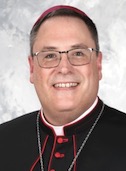
Don’t Be Late!
Jonah tells the people of Nineveh in our first reading, “40 days more and Nineveh shall be destroyed”. Now, how is that for a deadline? St. Paul tells us in our second reading, “I tell you brothers and sisters that time is running out.” Jesus tells us in our Gospel reading, “This is the time of fulfillment. The Kingdom of God is at hand. Repent, and believe in the Gospel”. It is as if the Church is trying to tell us this weekend: stop procrastinating, time is short, act now and don’t be late!
Fr. Michael Cummins
3rd Sunday of Year B
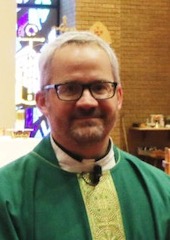
“God Saw”, the Dignity of Life and the Challenge of Jonah

In this Sunday’s first reading (Jonah 3:1-5, 10) we are told that God sawhow the people of Nineveh turned from their evil ways and therefore God spared them. In the Gospel reading (Mk. 1:14-20) we hear that Jesus saw Simon and Andrew about their ordinary and daily work of casting the nets and then later that Jesus saw James and John again about the very ordinary work of mending their nets. The scriptures help to teach us that how God sees is different than how humans see. God sees the human heart. We do not.
