January 21, 2024

Fr. Tony’s 8-minute Homily

HOMILIESCONNECTIONSPAPAL HOMILIESFR TONY
Fr. Tony's Homily

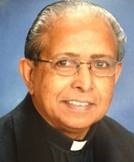
Fr. Tony

3rd Sunday of Year B

Fr. Tony started his homily ministry (Scriptural Homilies) in 2003 while he was the chaplain at Sacred Heart residence, applying his scientific methodology to the homily ministry. By word of mouth, it spread to hundreds of priests and Deacons, finally reaching Vatican Radio website. These homilies reach nearly 3000 priests and Deacons by direct email every week.

The clipart is from the archive of Father Richard Lonsdale © 2000. It may be freely reproduced in any non-profit publication.

THIS WEEK’S ANECDOTES

God’s call and the response expected from each of us is the main theme of today’s readings.  No matter to what life, work or ministry God calls us, God first calls us to convert, to reform, to repent — to continually become new people.  Those who constantly reform will be able to follow where God leads.  All the three readings today underline the absolute necessity of such repentance and ready response to God’s call.  

SOURCE: Fr. Tony’s Homilies / Used with permission

1st Reading Explained

The first reading tells us how the  prophet Jonah did not respond quickly when God called him because he hated the gentile people of Niniveh and thought that they were not worthy of God’s gracious mercy.  God had to punish him to make him properly respond to His call a second time to preach repentance to the people of Nineveh.  The people of Nineveh promptly responded to God’s word preached by His prophet. 

CONTINUE READING

First reading, Jonah 3:1-5: The first reading tells us how we should respond promptly to God’s call for repentance.  The Book of Jonah was written in Palestine around the 5th century B.C. after the Babylonian exile. Some of the Jews were quite nationalistic, filled with a smug sense of superiority over other nations. Like Jonah, they wished God would destroy the nations perceived as enemies.  For Jonah the Ninevites were terrible people doing terrible things.  The story of Jonah is meant to rebuke their smallness of vision, and teach them that God has care for other peoples as well as for them.  The first two chapters describe how God forces Jonah to accept His call by subjecting him to an excruciating experience in the belly of a whale.  Finally Jonah accepts God’s call to preach repentance in Nineveh but is disappointed seeing the ready response of that evil city to God’s message of repentance and penance.  Jonah was not even finished the first day of his preaching journey and the people totally turned around – and believed in God’s love and reconciliation and forgiveness.  Contrary to his expectations, the pagan peoples of the city "believed in God" and "renounced their evil behavior".  But perhaps the greatest change – the more radical turn about happened to Jonah.  Jonah was the arrogant, bigoted, narrow-minded prophet.  But he finally realized that God’s love is not elite – God’s forgiveness is not to be contained – God’s offer of salvation is for all – and we’d best not thwart it.

SOURCE: Fr. Tony's Homilies / Used with permission

2nd Reading Explained

In the second reading Paul urges the community in Corinth to lose no time accepting the message of the gospel because Jesus’ second coming can occur at any time.  

CONTINUE READING

Second Reading, 1 Corinthians 7:29-31:The second reading also urges us to get converted and to accept the “good news’ preached by Jesus.Saint Paul had to be strict and detailed in his moral teaching to the Christians in Corinth because Corinth was a bawdy seaport with a typical seaport's set of ethics and very bizarre philosophical ideas.  Hence Paul spends all of chapter 7 on marriage and sexual morality.  He tells the Corinthians to live in total freedom and detachment because nothing they have, whether things or personal attachments, are permanent and can disappear at a moment's notice.  Whether life is very good or very bad: nothing lasts except the fundamental values of truth and love, of freedom and justice.  It is what we are, not what we have that counts.  Hence let us ask to have the freedom to follow the call of God and to be ready to go wherever Jesus is asking us to go.  

SOURCE: Fr. Tony's Homilies / Used with permission

Gospel Explained

The gospel also describes the call of the first disciples and their ready response.  Jesus’ call to the people is described as a call to repentance and belief in the “good news” he preached. In describing the call of Jesus’ first disciples, today’s Gospel emphasizes how we sinners are to respond with total commitment, even by abandoning our accustomed style of life and family.

CONTINUE READING

Invitation to repentance: It is highly likely that Jesus and the four followers he summons here are not strangers.  Even if they have not personally met each other before this time, they were aware of each other's aspirations and objectives.  Jesus uses exactly the same words as John the Baptist used:  'Repent, for the kingdom of heaven has come near.’  The Greek word used “metanoeo” means to change one's mind or direction.  Repentance means that we take a complete change of direction in our lives.  It involves a radical conversion (metanoia), a change of direction and priorities in our lives.  Real repentance means that a man has come, not only to be sorry for the consequences of his sin, but to hate sin itself.  We often think of repentance as feeling guilty, but it is really a change of mind or direction -- seeing things from a different perspective.  Once we begin to see things rightly, it might follow that we will feel bad about having seen them wrongly for so long -- but repentance starts with the new vision rather than the guilt feelings.  By true repentance we are giving up control of our lives and throwing our sinful lives on the mercy of God.  We are inviting God to do what we can't do ourselves -- namely to raise the dead -- to change and recreate us.  "Repent" is used in the present tense -- "Keep on repenting!"  "Continually be repentant!"  It means that repentance must be the ongoing lifestyle of the people in the kingdom. 

Kingdom of God is the theme of Jesus’ preaching.  Matthew as a devout Jew consistently uses the phrase "kingdom of heaven" while Mark, a gentile convert,  uses the word  "kingdom of God," without any scruples about using God's name.  We probably shouldn't interpret the "kingdom of God" as heaven where God rules.  If we did, what should be our response to the coming of heaven's rule?  Surprisingly, it is not worship or praise, but repentance.  Perhaps this is the big problem with the coming of the Kingdom or the coming of Jesus at Christmas or Palm Sunday -- we want to celebrate and praise, rather than repent.  In telling us that the kingdom has come near, Jesus is telling us that we can dwell in this kingdom provided we repent or turn away from the idols that crowd our lives and do the will of God as it is done in heaven, thus   allowing God to reign in our lives.  

Believe in the “gospel’ or “good news.”  It was preeminently good news that Jesus came to bring to men.  It was the good news that God is our loving and forgiving Father and not a punishing judge, and He wants  to save us through His son Jesus.  So it is good news of truth (Gal.2:5; Col.1:5), good news of hope (Col.1:23), good news of peace with God and man (Eph.6:15), good news of God's promise of salvation (Eph. I; 13, 3:6) and good news of immortality (2Tim.1:10).  To believe in the good news simply means to take Jesus at his word, to believe that God is the kind of God that Jesus has told us about, to believe that God so loves the world that He will make any sacrifice to bring us back to Himself, to believe that what sounds too good to be true is really true.  To believe in the “good news” involves a total commitment; the investing of one's whole self in God without any guarantees or preconditions. 

The call of the apostles: Just like Matthew’s, Mark’s account of this call is very brief.  Jesus calls two pairs of brothers Andrew and Peter, James and John inviting them to become his disciples.  The men respond immediately by leaving their nets, their boats, and their father to follow Jesus.  Usually rabbinical students sought out their teachers and attached themselves to them.  However, Jesus as rabbi takes the initiative and calls -- probably less than ideal candidates -- to be his students.  The disciples were simple fishermen with no great background.  In Cicero's ranking of occupations (De Off 1.150-51), owners of cultivated land appear first and fishermen last.  What Jesus needs is ordinary folk who will give Him themselves.  What Christ needs is not our ability, but our availability.  What Jesus teaches them is not a course of study, but a way of life to follow.  Hence Jesus offers these men the opportunity to observe him at close hand on a daily basis.  

Call to make fishers of men: In the ancient world fishing was a metaphor for two distinct activities: judgment and teaching.  Fishing for people meant bringing them to justice by dragging them out of their hiding places and setting them before the judge.  And “fishing” was also used of teaching people, of the process of leading them from ignorance to wisdom.  Both cases involve a radical change of environment, a break with a former way of life and entrance upon a new way of life.  We are the fish and what God promises us, who are dragged out of the water in the nets to die, is a resurrection, a new life, a new family, a new future, all under God's control, all within the Kingdom of Heaven, which has come near in Jesus.  We have very little control over our own lives, but as fish caught in the net of God's love, we can trust that we are under God's control.  We have to believe that being captured by God's love, that responding to the command to repent and die to self, that being raised to a new life by God, is not only right for us, but a message we need to share with the entire world.  The disciples will be trained to do precisely what Jesus is doing right now:  proclaiming the kingdom, recruiting people for it, and drawing them into a community that experiences God's reign. 

SOURCE: Fr. Tony's Homilies / Used with permission

Fr. Tony’s
Life
Messages

3rd Sunday of Year B

Every one of us is called by God, both individually and collectively.  The mission of preaching, teaching and healing which Jesus began in Galilee is now the responsibility of the Church.  Our own unique vocation and relationship with the risen Lord is never separated from the body of the universal Church.  Be we monk, priest, married or single laity, we are all called, and in this call we become what God wants us to be.  The call, of course, began with our baptism and the other sacraments of initiation; it is strengthened throughout the years with the Eucharist and reconciliation, healed and consoled by anointing, made manifest by matrimony or holy orders.  But God will be relentless in calling us back to Himself even when we stray away from Him.  Let us be thankful to God for His Divine grace of allowing us to be members of the true Church, the one and only Catholic, Holy and Apostolic Church.  Let us make personal efforts to see the light of Christ and to grow in holiness by learning the truths that are revealed through the Holy Catholic Church and by using its Sacraments.  Let us be shining lights in the world as Christ was and make a personal effort to bring others to the truth and the light so that they may rejoice with us in the mystical Body of Christ, the invisible Kingdom of God. 

SOURCE: Fr. Tony’s Homilies / Used with permission


Like the missionary call of Samuel and the apostles, we too are called.  Our call is to rebuild broken lives, reconciling them to God’s love and justice through Christ Jesus, our Lamb and Lord.  Through baptism into the Body of Christ, we are empowered and enabled by the Holy Spirit to free the oppressed.  Through the love of the Lamb of God, we are called to better the lot and improve the broken spirit of all who have been exiled from the possibility of hope, exiled from God’s righteousness or burdened by the yoke of spiritual, social, economic, and political dislocation.  In other words, through the life, death, and resurrection of Jesus Christ, the glorified Lamb, we are called to empower the human spirit with a sense of identity and purpose. 

SOURCE: Fr. Tony’s Homilies / Used with permission


Today’s Gospel reminds us that being a disciple of Jesus means that we are to grow in faith and become witnesses for him.  Bearing witness to Christ is an active rather than a passive enterprise.  Knowing Jesus is a matter of experience.  One could know the Catechism of the Catholic Church, all 700 pages of it, by heart, and still not know Jesus.  Bearing witness to Christ, then, demands that we should have personal and first-hand experience of Jesus.  We get this personal of experience of Jesus in our daily lives – through the meditative reading and study of the Bible, through personal and family prayers and through the sacraments, especially by participation in the Eucharistic celebration. Once we have experienced the personal presence of Jesus in our daily lives, we will start sharing with others the Good News of love, peace, justice, tolerance, mercy and forgiveness preached and lived by Jesus.  The essence of our witness-bearing is to state what we have seen, heard, experienced and believed, and then to invite others to “come and see.”  Other people will see Jesus in our lives when we love, forgive and spend time doing good.  A dynamic and living experience of Jesus will also enable us to invite and encourage people to come and participate in our church activities.   

SOURCE: Fr. Tony’s Homilies / Used with permission

HOME | QUESTIONS | TOPICS | CONNECTIONS

Fr. Tony’s Homily

Fr. Tony’s Homily

Fr. Tony’s Homily

Fr. Tony’s Homily

Fr. Tony’s Homily