January 14, 2024

Fr. Tony’s 8-minute Homily

HOMILIESCONNECTIONSPAPAL HOMILIESFR TONY
Fr. Tony's Homily

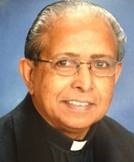
Fr. Tony

2nd Sunday of Year B

Fr. Tony started his homily ministry (Scriptural Homilies) in 2003 while he was the chaplain at Sacred Heart residence, applying his scientific methodology to the homily ministry. By word of mouth, it spread to hundreds of priests and Deacons, finally reaching Vatican Radio website. These homilies reach nearly 3000 priests and Deacons by direct email every week.

The clipart is from the archive of Father Richard Lonsdale © 2000. It may be freely reproduced in any non-profit publication.

THIS WEEK’S ANECDOTES

The main theme of today’s scripture readings is divine vocation – that everyone is called by God to be a witness for Christ by doing something for others with his or her life, using his or her unique gifts and blessings. Hence, today’s readings remind us of our personal and corporate call to become witnesses for Jesus, the Lamb of God, by leading lives of holiness and purity. 

SOURCE: Fr. Tony’s Homilies / Used with permission

1st Reading Explained

The first reading describes how Yahweh called Samuel to His service and how the boy Samuel responded to Him, saying, “Speak, Lord, your servant is listening.” Hence, God blessed him in the mission entrusted to him, and Samuel became an illustrious figure, ranking with Moses and David as a man of God. 

In the responsorial psalm, the psalmist sings, “Behold, I come to do Your will,” indicating   that his vocation is to obey, to do what God commands him to do. 

CONTINUE READING

The book of Samuel begins with a long narrative of what we might call ancient Israel's middle history.  Moses, Aaron, and Joshua were gone from the scene.  The period of rule by Judges had begun (at about 1000 BC).  The first chapter describes how Samuel was born to a long-barren couple by divine intervention.  They dedicated him in his early childhood to God's service in the temple at Shiloh, as an apprentice to the priest Eli.  The boy's duties included attendance during the night near "the Ark of God," a most sacred cult object and a place of unique divine presence among the people.  God called Samuel one night and Samuel thought it was his master Eli. Twice God called, twice Samuel went to Eli and twice Eli told him to go back to sleep.  The third time God called and Samuel went to Eli, the old priest realized what was going on, and told Samuel, "Next time, say, 'Speak, Lord, your servant is listening.’”  The threefold repetition of God's call indicates genuine experience rather than hallucination.  Eli knew the proper response for all God's followers: "Speak, Lord, for your servant is listening."  Only those willing to carry out the Lord's wishes will be able to hear God calling -- even in the middle of the night.  Though Eli had served God faithfully, it was Samuel whom God called.  Samuel became an illustrious figure, ranking with Moses and David as a man of God.  The lesson for us is that God often calls ordinary people, including the young, to serve within the community.  Consequently, we need guidance in discerning and responding to His will.  Our lives as God's followers revolve around seeking, finding and responding to God’s calls.  Listening to the call of God is to hear, understand, and accept it in word and action.  Is God calling me today for a special mission?  What is he saying to me?  Am I really listening?

SOURCE: Fr. Tony's Homilies / Used with permission

2nd Reading Explained

In the second reading, St. Paul explains to the Corinthians that their divine call is a call to holiness.  Hence, they need to keep their bodies pure and souls holy because by baptism they have become parts of Christ’s body and the temples of the Holy Spirit.  

CONTINUE READING

The letter is addressed to all members of the church at Corinth.  Corinth was a bawdy seaport in cosmopolitan Greece and the center of intellectual ferment.  The vices of every seaport, plus the philosophical ferment of ancient Greece, were all  part of these peoples' lives, and gave rise, in part, to the need for this letter.  One of the greatest besetting sins of the pagan port-town of Corinth was prostitution.  A few Christians even tried to justify prostitution as part of the Christian liberty which Paul had preached to them.  Corinth was a difficult place to preach a new doctrine and a new morality, but Paul had dared to preach both, provoking intense controversy.  The pagan Corinthians believed that the soul of man was the important part and the body a mere piece of matter.  They looked on the body as a   matter of instincts to be fulfilled, including the sex instinct.  Therefore, they argued, one ought to let the desires of the body have their way. Some of the Christian Corinthians had apparently picked up these pagan ideas. So Paul reminded them that they were "sanctified and called to be holy" like all who call on the name of Jesus.  Just as God called Samuel and Jesus called his apostles, the Corinthian Christians were called to lead a life of holiness.  Paul’s argument runs like this:  since God's Spirit dwells in us, we have become temples of God and consequently our bodies are sacred.  In addition, Christ gave his life in order that man might be redeemed, body and soul.  Hence, a man's body is not his own to do with as he likes; it is Christ's, and a man must use it, not for the satisfaction of his lusts, but for the glory of Christ.

SOURCE: Fr. Tony's Homilies / Used with permission

Gospel Explained

In the gospel, John the Baptist introduces Jesus to two of his disciples as the “Lamb of God,” suggesting Jesus’ vocation to become a sacrificial lamb to atone for our sins. The disciples followed Jesus to his residence, accepting his invitation to “come and see.”  They stayed with him that day.  Then Andrew brought his brother Simon to Jesus, introducing Jesus to him as the Messiah.  Thus, today’s gospel describes also the call or vocation of the first apostles and challenges us to invite others to Christ by our Christian witnessing. 

CONTINUE READING

John the Baptizer’s selfless witnessing: John's Gospel presents John the Baptist as a self-effacing figure whose role is preeminently one of witnessing. Instead of building up his own following, John selflessly directed his disciples to Jesus.  John the Baptist gave testimony to Jesus by pointing Him out as the Lamb of God (Jn 1:29, 36); Andrew called him the Messiah (Jn 1:41), and Nathaniel called Jesus Rabbi, Son of God, and King of Israel (Jn 1:49).  Jesus completed the epiphany, declaring Himself the Son of Man (Jn 1:51). In the Synoptic gospels, Jesus called the disciples away from their fishing boats to follow him (Mt 4:18-22, et al.).  But in the Fourth Gospel, they went to Him at John's direction rather than in response to Jesus' call.  Instead of leaving their boats, they left John. On the second day of Jesus’ public ministry, John the Baptist introduced Jesus to the Jews as the “Lamb of God.” (Jn 1:29).   On the third day, he pointed out Jesus, the Lamb of God, to two of his own disciples, Andrew and John, as described in today’s Gospel.

The Lamb of God is the most meaningful title given to Jesus in the Bible.  It is used 29 times in the book of Revelation.  It sums up the love, the sacrifice, and the triumph of Christ.  John’s introduction might have brought five pictures of the “lamb” to the minds of his Jewish listeners.

1) The Lamb of Atonement (Lv 16:20-22).  A lamb was brought to the Temple on the Day of Atonement (“Yom Kippur”).  Placing his hands over its head, the high priest transferred all the sins of his people to the lamb.  It was then sent into the wilderness (as the lamb who takes away the sins of the Jews) to be killed by some wild animal. 

2) The Lamb of Daily Atonement (Ex 29:38-42; Nm 28:1-8). This was the lamb sacrificed on the “Black Altar” of the Temple every morning and evening to atone for the sins of the Jews.  

3) The Paschal Lamb (Ex 12:11ss.).  The Paschal Lamb’s blood saved the firstborn of the Jewish families in Egypt from the “Angel of destruction.” The event was memorialized yearly in the sacrifice of the Paschal Lamb at Passover.

4) The Lamb of the Prophets, an image portraying One Who, by dying a sacrificial death, would redeem God’s people: “But I was like the gentle lamb led to the slaughter” (Jer 11:19. RSV 2 Catholic); “…like a lamb that is led to the slaughter” (Is 53:7); RSV 2 Catholic). Both, as we know, refer to the sufferings and sacrificial death of Christ. 

5) The Lamb of the Conquerors. The picture of a horned lamb on the Jewish flag at the time of the Maccabaean Liberation War was used as a sign of conquering majesty and power.  The great Jewish conquerors like Samuel, David and Solomon were described by the ancient Jewish historians as “horned lambs.”  

Addressing Christ as Lamb of God has become familiar to us in the Eucharist, when, at "the    breaking of the bread," we proclaim our traditional “fractional anthem” three times in word or song what the Baptist said: Agnus Dei – “Lamb of God, Who take away the sin of the world, … have mercy on us (twice)/ …grant us peace (once).”  In this prayer, we give expression to our deepest understanding of the identity and purpose of Jesus Christ in coming to earth as the Messiah of God. He has come to be both our Lamb and our Lord.  Because Jesus lived out his life on earth as one of humility, obedience to His Father, love, and sacrifice, we believe and affirm that Jesus is the One Who came and continues to come into a broken world to take our sins upon himself in the Holy Mass. 

Stages in God’s call: In the opening verses of today’s Gospel, John points out to his disciples that the One who is passing by is the “Lamb of God.” Two of John’s disciples follow Jesus. Jesus turns and asks them what they are seeking. Somewhat confused, they ask Jesus where he is staying. Jesus does not tell them. Instead, he invites them to “come and see.” The Catechism of the Catholic Church says,

“Each one of us is called personally by God to ‘stay with’ Jesus, to follow His way, and to continue His mission of spreading the Good News (in a manner appropriate to our vocation in life)” (CCC #871).

For each of us, belief in Jesus develops in stages, which John appears to be describing. First, we respond to testimony given by others. Then, having "seen" where Jesus dwells -- within believers, as individuals and as community -- we move to a commitment which is based on our own experience of the risen Lord. Finally, our conversion is completed when we become witnesses for Jesus. In Andrew's case, his conversion reveals his belief in Jesus as the Messiah. He then brings his brother Peter to Christ. Jesus looks at Simon and says, “You are Simon, son of John. You are to be called 'Cephas' or 'Peter.'” Cephas is the Aramaic word for "rock” while the Greek word for rock is "Petros." This kind of name-change has precedents in the Old Testament (Gn 17:5, 32:28). Such name-changes indicate the beginning of a new life—a new purpose—a new relationship with God. Simon's new life in Christ is symbolized by his new name, "Peter," conferred by the Master. The evangelist sets out a challenging pattern for evangelization. The first people to be evangelized preached Jesus in their turn to relatives, friends, and even to strangers. We, too, must find and grow in Faith through our grace-assisted, lifelong seeking of God's will, as we come to God through Jesus, finding him in each other, in the local Christian community, in the Church, in the Sacraments --particularly the Eucharist – and in the Scriptures.

SOURCE: Fr. Tony's Homilies / Used with permission

Fr. Tony’s
Life
Messages

2nd Sunday of Year B

We live like the Lamb of God:

a) by leading pure, innocent, humble, selfless lives, obeying Christ’s commandment of love;

b) by appreciating the loving providence and protecting care of the Good Shepherd for his Church; 

c) by partaking of the Body and Blood of the Good Shepherd in the Holy Eucharist and deriving spiritual strength from the Holy Spirit through prayer and the Sacraments.

2) We are called to die like the Lamb of God:

a) by sharing sacrificially our blessings of health, wealth, and talents with others in the family, parish, and community;

b) by bearing witness to Christ in our illness, pain, and suffering through our graceful acceptance of all of it;

c) by offering our sufferings for God’s glory, as penance for our sins, and for the conversion of sinners.

SOURCE: Fr. Tony’s Homilies / Used with permission


Like the missionary call of Samuel and the apostles, we too are called.  Our call is to rebuild broken lives, reconciling them to God’s love and justice through Christ Jesus, our Lamb and Lord.  Through baptism into the Body of Christ, we are empowered and enabled by the Holy Spirit to free the oppressed.  Through the love of the Lamb of God, we are called to better the lot and improve the broken spirit of all who have been exiled from the possibility of hope, exiled from God’s righteousness or burdened by the yoke of spiritual, social, economic, and political dislocation.  In other words, through the life, death, and resurrection of Jesus Christ, the glorified Lamb, we are called to empower the human spirit with a sense of identity and purpose. 

SOURCE: Fr. Tony’s Homilies / Used with permission


Doing this requires a personal experience of Jesus as our Lord and Savior.

a) We get this personal experience of Jesus in our daily lives through the meditative reading and study of the Bible, through personal and family prayers, and through our active participation in the Eucharistic celebration.

b) Once we have experienced the personal presence of Jesus in our daily lives, we will start sharing with others the Good News of love, peace, justice, tolerance, mercy, and forgiveness preached and lived by Jesus.

SOURCE: Fr. Tony’s Homilies / Used with permission

HOME | QUESTIONS | TOPICS | CONNECTIONS

Fr. Tony’s Homily

Fr. Tony’s Homily

Fr. Tony’s Homily

Fr. Tony’s Homily

Fr. Tony’s Homily