Homily Starters, Fr. Tony’s Homily
Homily Starters, Fr. Tony’s Homily
January 4, 2026
January 4, 2026
Epiphany (ABC)


- ANECDOTES
- EXEGESIS
- LIFE MESSAGES

HOMILY STARTERS
Feast of the Epiphany (A)
The Gift of the Magi

LITVERSE STUDIO (1:40) – “The Gift of the Magi” by O. Henry is a heartwarming tale of love, sacrifice, and selflessness. It tells the story of a young couple, Jim and Della, who are deeply in love but live in poverty. Each gives up their most precious possession to buy a special gift for the other — only to discover that their sacrifices have made the gifts useless but have revealed the true meaning of love. This timeless story reminds us that the greatest gift we can give is love itself.
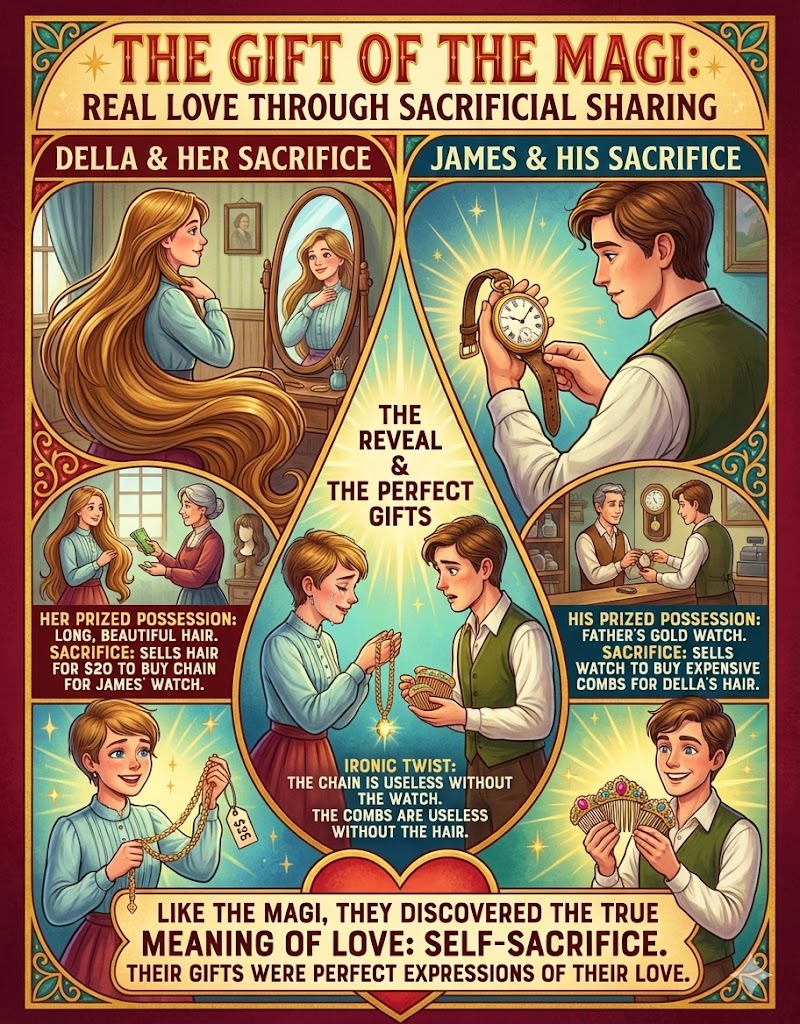
Real Love through Sacrificial Sharing
It was Christmas Eve, during the days of the depression of the 1930’s. Della and James, a newly married couple, were very poor. They loved each other dearly, but money was hard come by. In fact, as Christmas approached, they were unhappy because they had no money to buy presents for each other. They had two possessions that they valued deeply: James had a gold watch which had belonged to his father, and Della had long and beautiful golden-brown hair. Della knew that James’ watch had no matching chain–only a worn-out leather strap. A matching chain would be an ideal gift for her husband, but she lacked the money to buy it.
As she stood before the mirror, her eyes fell on her long brown tresses. She was very proud of her beautiful hair, but she knew what she had to do. She faltered a moment, but nothing could stand in the way of love. She hastened to the “hair-dealers,” sold her hair for twenty dollars, and went round shop after shop, hunting for the ideal gift. At last she found it: a gold chain for her husband’s watch. She was very happy and proud of the gift. She knew James would love it, the fruit of her sacrifice.
James came in, beaming with love, proud of the gift he had bought for Della. He knew she would be very happy with the gift. But when he saw her, his face fell. She thought he was angry at what she had done. She tried to console him by saying that her hair would grow fast, and soon it would be as beautiful as before. That is when he gave her his gift. It was an expensive set of combs, with gem-studded rims. She had always wanted them for her hair! She was very happy, but with a tinge of sadness. She knew it would be some time before she could use the precious gift.
Then, with tears in her eyes, she presented him with the gift she had bought. As he looked at the beautiful chain, he said with a sigh: “I guess our gifts will have to wait for some time. The combs were very expensive; I had to sell my watch to buy the combs!”
These were the perfect gifts: gifts of sacrificial love. Both James and Della were very happy for, like the Magi, they had discovered LOVE through self-sacrifice.
Summarized version above by Fr. Puncha
Feast of the Epiphany (A)
The Fourth Wise Man
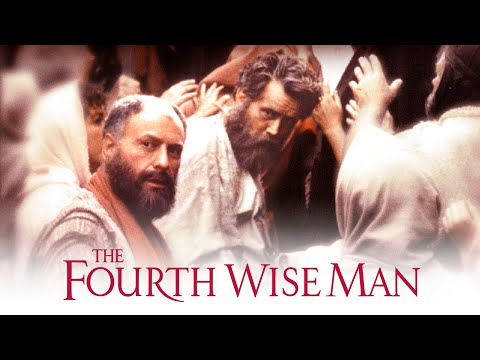
VISION VIDEO (1:08) – Based on Henry van Dyke’s classic, The Story of the Other Wise Man, this fictional story set in Biblical times is told in gently comic terms. A Magi named Artaban (Martin Sheen) sees a sign in the heavens that he hopes will lead him and his faithful servant to the Messiah.

The Other Wise Man
In 1895, Henry van Dyke wrote the story, “The Other Wise Man,” telling of a fourth wise mancalled Artaban. Our hero is not mentioned in the Gospel because he missed the caravan. He got to Bethlehem too late to see the Baby Jesus.
But Artaban did make it in time, using one of his gifts for the newborn King to save one of the Holy Innocents by bribing a soldier. For 33 years Artaban searched for Jesus. He did not find Jesus, but in the meantime, the Fourth wise man used the precious gifts he had brought for the King to feed the hungry and help the poor.
Then one day in Jerusalem Artaban saw the “King of the Jews” being crucified. He started to offer his last gift for the King, a great pearl, to the soldiers as ransom for Him. But then he saw a girl being sold into slavery to pay family debts. Artaban gave his pearl to buy freedom for the girl. Suddenly the earth quaked as Jesus died on the cross and a stone struck Artaban. Dying, he heard a Voice saying: “When you helped the least of my children, you helped me. Meet me in Heaven!”
Artaban, the fourth Wise Man, had been making God present in his community for years by helping others. God asks each of us on the feast of Epiphany to be a fourth Wise Man by becoming God’s epiphanies, making His love present in the world around us by our acts of love and kindness.
Feast of the Epiphany (A)
The Ring of the Kings

THE STORY BEHIND A MEXICAN TRADITION (0:58)

Rosca de Reyes
There is an Epiphany custom in Mexico that points us to the heart of this manifestation. On the Feast of the Epiphany, Mexican Christians bake a sweet bread that they call Rosca de Reyes which means “the ring of the Kings.” It is a bread that is baked in a circle to resemble the crowns that the Kings wore when they visited the Christ Child. On top of the bread they place candied fruits, cherries, and figs to represent the jewels of the crown. It is a beautiful bread that represents to us the glory of the Epiphany, the beauty of Christ becoming one of us to be our savior. But, there is another part to this bread. Baked inside of it is a small figurine of the child Jesus. This figurine is consciously hidden in the bread because Jesus had to hide from the plot of Herod who sought to destroy him. So, this Ring of the Kings points both to the glory of the Epiphany and to its danger. It reminds us that our human nature is a mixture of both beauty and grace together with struggle and pain—all of which Christ took up as he became one of us.
Now, when the Rosca de Reyes is eaten, the person who receives the piece that has the figurine within it is considered blessed, because he or she has found the Christ Child that has been hidden in the bread.
This custom invites us to ask, “Where is the Christ Child hidden in our world today?” Christ is certainly hidden in refugees and immigrants who are displaced from their homeland. We should not forget that there are more people in our world today displaced by war, poverty and persecution than in any other time in history. Listen to this amazing fact: One out of every 113 people on the earth is a displaced person. We are called to see Christ hidden within them. We should not to dismiss their plight, but finds ways to offer them safety and hope. We can to this by contributing to refugee organizations. But we can also to work politically to see that our immigration system is one that makes America a more welcoming place to those who flee persecution.
SOURCE: Father George Smiga in The Ring of the Kings
Feast of the Epiphany (A)
Fr. Tony’s Joke of the Week

Epiphany of a pilot: A helicopter was flying around above Seattle yesterday when an electrical malfunction disabled all the aircraft’s electronic navigation and communications equipment. Due to the clouds and haze, the pilot could not determine the helicopter’s position and course to steer to the airport. The pilot saw a tall building, flew toward it, circled, drew a handwritten sign, and held it in the helicopter’s window. The pilot’s sign said, “Where am I?” in large letters. People in the tall building quickly responded to the aircraft, drew a large sign, and held it in a building window. Their sign said, “You are in a helicopter.” The pilot smiled, waved, looked at his map, determined the course to steer to Sea-Tac airport, and landed safely. After they were on the ground, the co-pilot asked the pilot how the sign “You are in a helicopter,” helped determine their position. The pilot responded, “I knew that had to be the Microsoft building because, similar to their help-lines, they gave me a technically correct, but completely useless answer.”
FIRST READING
Feast of the Epiphany (A)
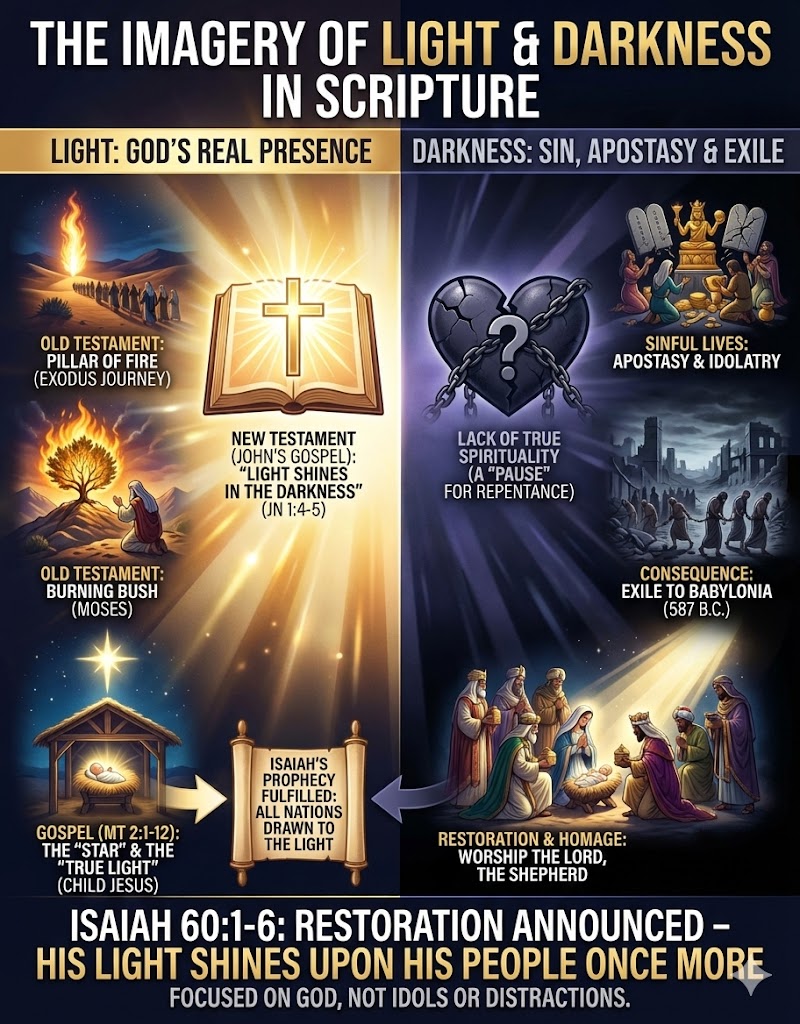
Isaiah consoles the exiled Israelites with a powerful prophecy of restoration. He proclaims that while darkness covers the earth, the glory of the Lord will shine upon a New Jerusalem. This divine light will be so radiant that it will attract all nations and kings, including non-Jews, who will come to pay homage to the God of Israel. In gratitude, these nations will bring wealth by land and sea, specifically gold and frankincense, to the Temple. This prophecy foretells the universal salvation offered through Jesus Christ, the Messiah, who gathers all people, Jews and Gentiles alike, into His Church, the New Jerusalem, to acknowledge and serve the one true God.

SECOND READING
Feast of the Epiphany (A)
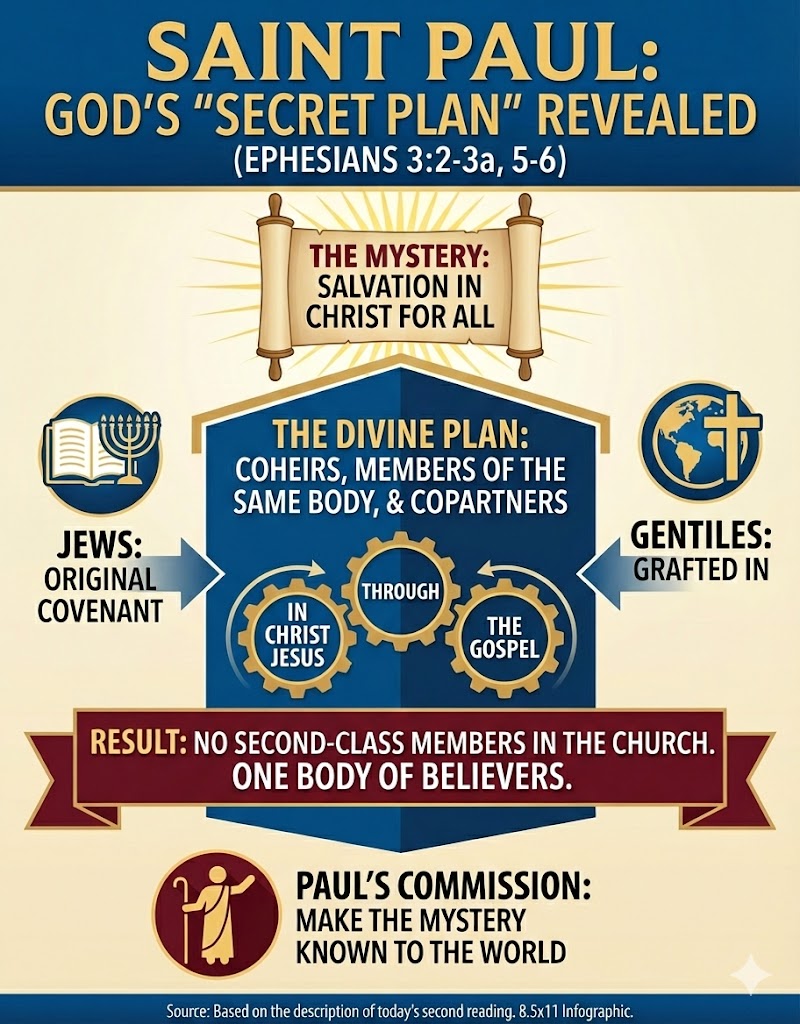
Paul, in the letter to the Colossians, advises us that we should put on love and remain thankful in our relationships with one another. Paul’s advice is part of the “Household Code” – the rules for members of the Christian family. Though its details date to Paul’s time, the underlying message of being careful with one another – being full of care for one another – is timeless. Paul teaches that children should learn and practice noble qualities like compassion, kindness, forgiveness, and sharing in the warmth of the family. In a truly holy family all members are respected, cherished, nurtured and supported, united through the bond of love.
GOSPEL
Feast of the Epiphany (A)
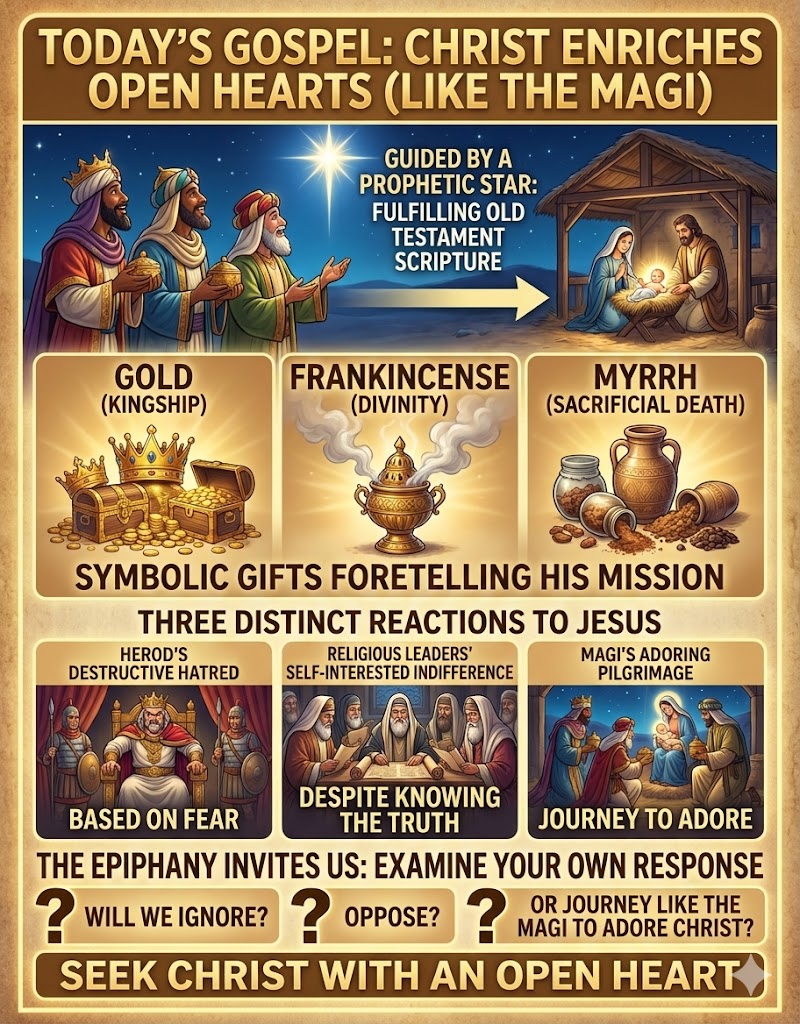
Today’s Gospel illustrates how Christ enriches those seeking Him with open hearts, like the Magi. Guided by a prophetic star fulfilling Old Testament scripture, these travelers journeyed to adore the Christ Child. They brought symbolic gifts—gold for kingship, frankincense for divinity, and myrrh for His sacrificial death—foretelling His mission. The narrative highlights three distinct reactions to Jesus: Herod’s destructive hatred based on fear, the religious leaders’ self-interested indifference despite knowing the truth, and the Magi’s adoring pilgrimage. The Epiphany invites us to examine our own response: will we ignore, oppose, or journey like the Magi to adore Christ?
Feast of the Epiphany (A)
What We Can Do
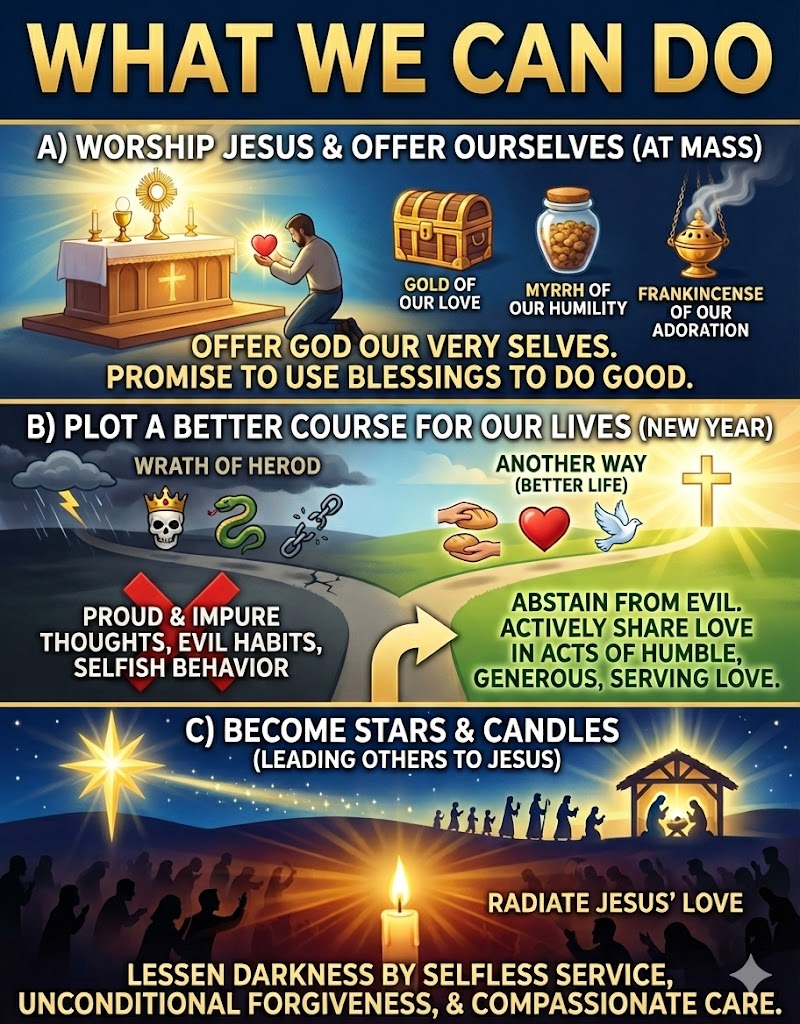
Three Things We Dan Do: a) Let us worship Jesus at Mass, every day if we can, with the gold of our love, the myrrh of our humility and the frankincense of our adoration. Let us offer God our very selves, promising Him that we will use His blessings to do good for our fellow men. b) Let us plot a better course for our lives as the Magi, obedient to the angel, found another way back home — and so avoided the wrath of Heord who was intent on murdering the Baby. In the same way, let us choose for ourselves a better way of life for traveling through the New Year by abstaining from proud and impure thoughts, evil habits, and selfish behavior, and by actively sharing our love with others in acts of hmble. generous, serving love. c) Let us become stars, leading others to Jesus, as the star led the Magi to Him. We can remove or lessen the darkness of the evil around us by being, if not like stars, at least like candles, radiating Jesus’ love by selfless service, unconditional forgiveness and compassionate care.
Feast of the Epiphany (A)
Offering Our Gifts to Jesus
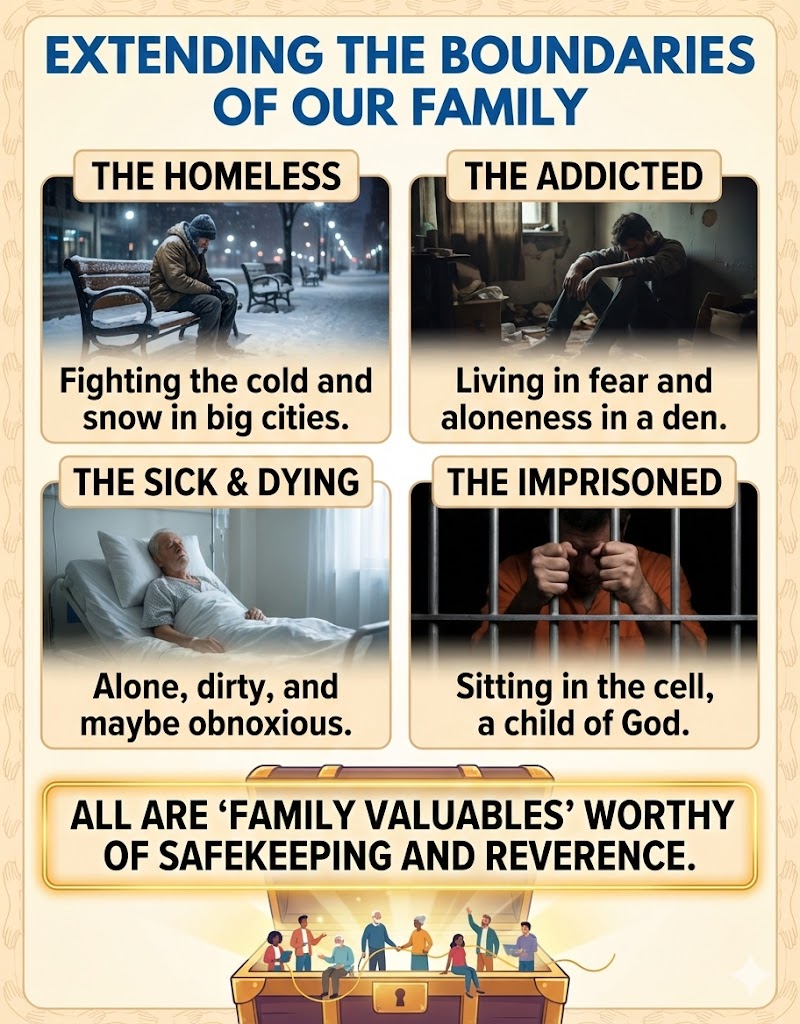
Like the Magi, let us offer to Jesus God’s Own gifts to us on this feast of Epiphany. (a) The first gift might be friendship with God. After all, the whole point of Christmas is that God’s Son became one of us to redeem us and call us friends. God desires our friendship in the form of wholehearted love and devotion. (b) A second gift might be altruistic, genuine friendship with others. This kind of friendship can be costly, for the price it exacts is vulnerability and openness to others. The Good News, however, is that, in offering friendship to others, we will receive back many blessings. (c) A third gift might be the gift of reconciliation. This gift repairs damaged relationships. It requires honesty, humility, recognition of our own part in the damage done by our sins to those around, understanding of others, forgiveness, and patience. (d) The fourth gift of this season is the gift of peace: The only way we can receive this offered gift is by seeking God’s Peace in our own lives through prayer, the Sacramental life, and daily meditation on the Word of God. It is out of humble gratitude that we give Him from our deepest heart our gifts of worship, prayer, song, possessions, talents, patience, and time through our humble, loving service of those we encounter. As we give our small, seemingly insignificant gifts to God, the Good News is that God accepts them! Like the Magi offering their gifts of gold, frankincense and myrrh, we offer what we have, from our deepest heart as we respond to the Divine Gift that Child offers us – Himself.

Infographics were created using Google Gemini 3 and Nano Banana Pro. Inspiration take from Fr. Tony’s Homilies; Non-profits may freely use this infographic in their publications and/or ministry. Please give credit or a shout out to TheWordThisWeek.NET.