Homily Starters, Fr. Tony’s Homily
Homily Starters, Fr. Tony’s Homily
March 8, 2026
April 12, 2026
2nd Sunday of Easter (A)


- ANECDOTES
- EXEGESIS
- LIFE MESSAGES
2nd Sunday of Easter (A)
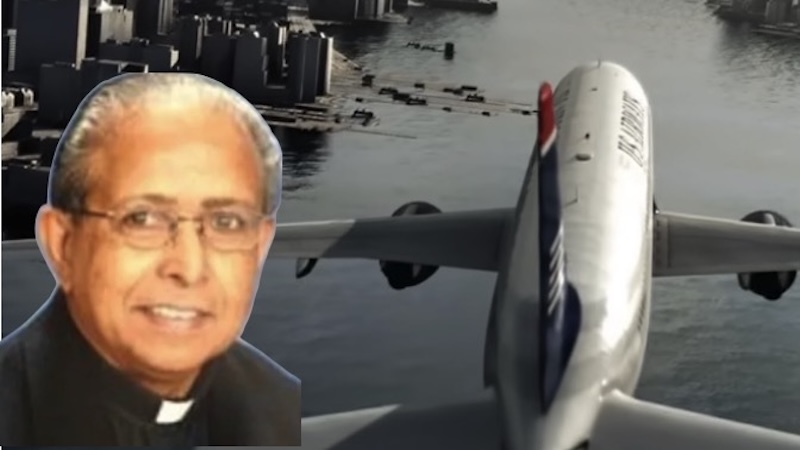
The Miracle Over Hudson River



The Miracle over Hudson River
A banker on a business trip in New York City, Fred Berretta had just checked into his hotel room. He had about 20 minutes downtime before he had to meet his colleagues. For some reason he decided to clean out his briefcase, something he hadn’t done in a long time. As he emptied it out, he came across a booklet he had stuffed into a pocket years ago on praying the Chaplet of The Divine Mercy. He recalls having prayed it a few times years ago. Only two weeks prior, Fred had made a New Year’s resolution to try to get into better spiritual shape. Here in this hotel room was an opportunity to fulfill it. So he followed along in the booklet and prayed the chaplet, a prayer our Lord gave to St. Maria Faustina Kowalska in the 1930s, during a series of revelations that has sparked the modern Divine Mercy movement. He would be among the 155 people to board a jet airliner at LaGuardia Airport bound for Charlotte, N.C., his hometown. Ninety seconds after takeoff, the jet would apparently hit a flock of geese, the engines would explode, and the plane would lose power at 3,200 feet. The aircraft would be out of reach from any airfield. It would lose thrust and altitude. Everything would become eerily quiet. Fred would cinch his seatbelt. His left hand would clutch the armrest, his heart would race, his face would be flushed. “Prepare for impact,” the pilot would say over the PA system. As the ground surged into view, Fred would look at his watch. It would be 3:30, the Hour of Great Mercy! “I prayed with every fiber of emotion and sincerity I could muster, ‘God, please be merciful to us,’” Fred would recall two weeks later.
You’ve probably heard about the crash landing of Flight 1549 in the Hudson River on Jan. 15, 2009. No one was seriously injured. Then, there were the news images of a US Airways Airbus floating gently down the frigid Hudson, like some sort of breaching, people-friendly, aquatic creature. The passengers stood on its wings, calmly awaiting rescue.
2nd Sunday of Easter (A)
“Sleep No More”- Macbeth


Macbeth Never Had Peace
One of the famous tragedies of William Shakespeare is Macbeth. When Macbeth was returning after a victory, he was met by three witches. The first witch greeted him, “Thane of Glamis”. The second witch greeted him “Thane of Cawdor”, and the third witch greeted him, “King hereafter”. As they disappeared messengers reached with the good news that he was appointed as the Thane of Glamis and Thane of Cawdor. Macbeth went home and shared this strange experience with his wife. She enkindled his hopes, and persuaded him to murder Duncan, the king, who came to his house as his guest. As Macbeth thrust the dagger into the heart of Duncan he heard a voice, “Sleep no more! Macbeth does murder sleep…” (II, 2:35-36). Thereafter Macbeth never had peace in his life. His life became miserable. In his frantic attempt to get peace he committed murder again and again. When Macbeth sinned against the king he lost his peace.
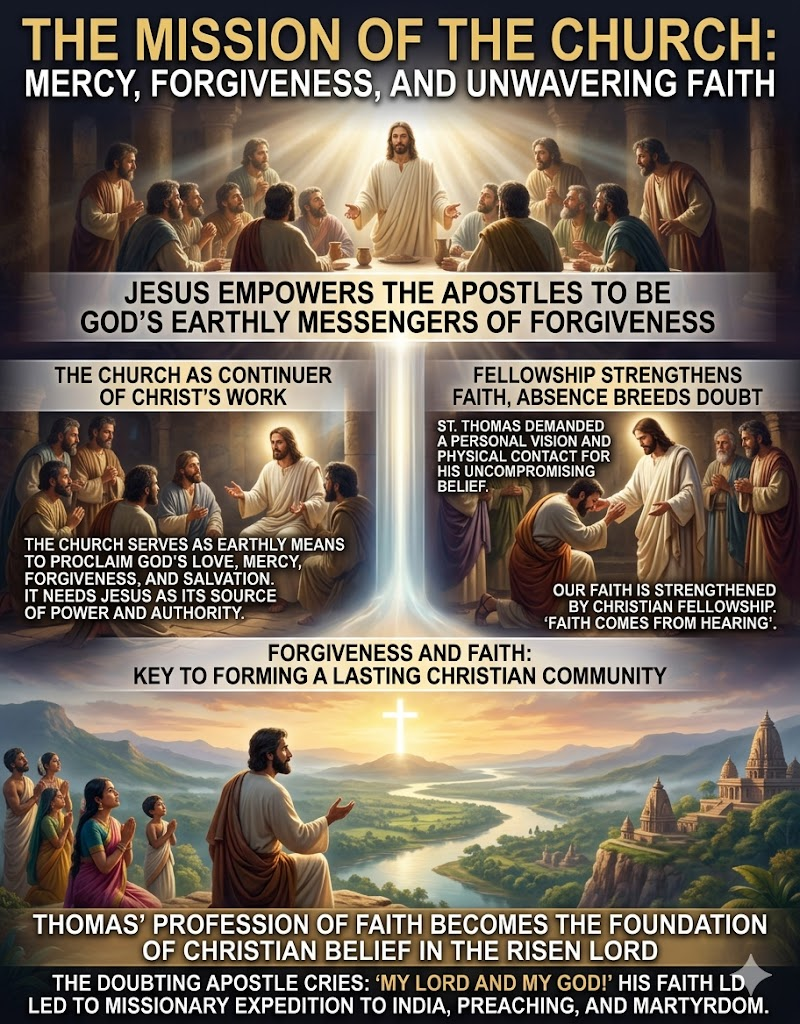
Jesus was aware that sins destroy the peace of man. So when he wished them “peace” he also granted them the power to destroy sin. To destroy a powerful enemy we need a powerful weapon. Jesus put this weapon in the hands of the Church when communicating to his Apostles the power to forgive sins through the sacrament of Reconciliation. Jesus said to the apostles: “Those whose sins you forgive, they are forgiven. Those whose sins you retain, they are retained.”
2nd Sunday of Easter (A)
Divine Mercy in Action

Divine Mercy in Action
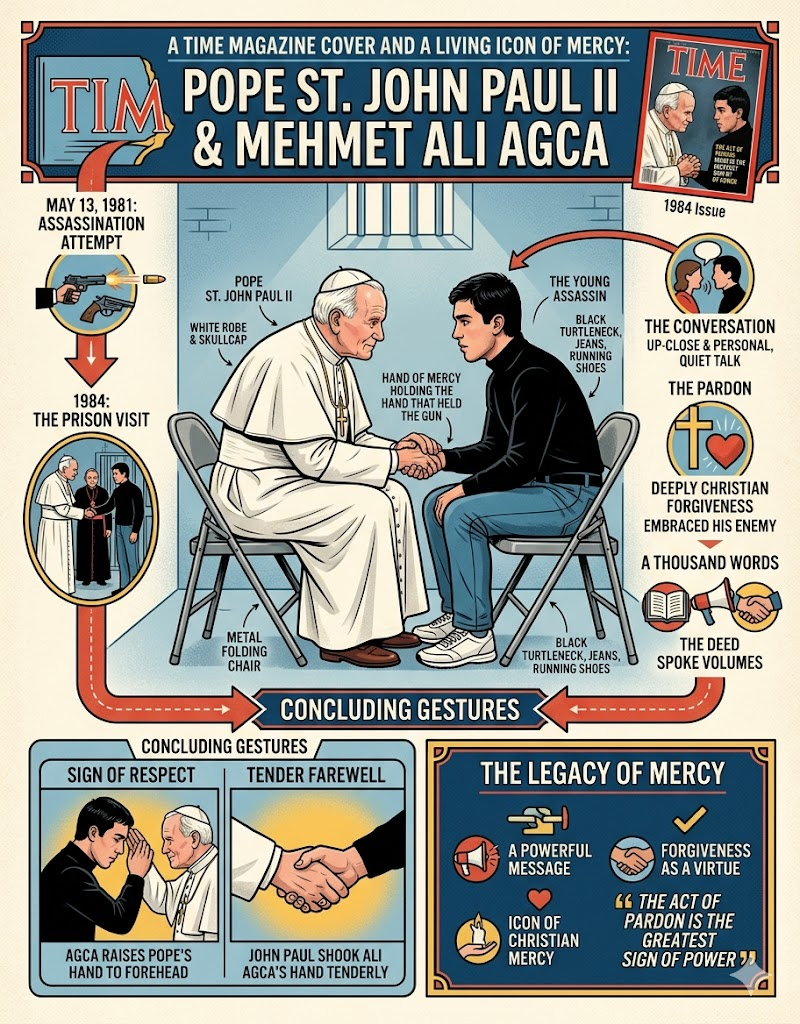
A TIME magazine issue in 1984 presented a startling cover. It pictured a prison cell where two men sat on metal folding chairs. The young man wore a black turtleneck sweater, blue jeans and white running shoes. The older man was dressed in a white robe and had a white skullcap on his head. They sat facing one another, up-close and personal. They spoke quietly so as to keep others from hearing the conversation. The young man was Mehmet Ali Agca, the pope’s would-be assassin (he shot and wounded the Pope on May 13, 1981); the other man was Pope St. John Paul II, the intended victim. The Pope held the hand that had held the gun whose bullet tore into the Pope’s body. This was a living icon of mercy. John Paul’s forgiveness was deeply Christian. His deed with Ali Agca spoke a thousand words. He embraced his enemy and pardoned him. At the end of their 20-minute meeting, Ali Agca raised the Pope’s hand to his forehead as a sign of respect. John Paul shook Ali Agca’s hand tenderly.
When the Pope left the cell he said, “What we talked about must remain a secret between us. I spoke to him as a brother whom I have pardoned and who has my complete trust.” This is an example of God’s Divine Mercy, the same Divine Mercy whose message St. Faustina witnessed.
1st Reading | 2nd Reading | Gospel

1st Reading | 2nd Reading | Gospel
2nd Sunday of Easter (A)
1st Reading | 2nd Reading | Gospel
2nd Sunday of Easter (A)

Message #2


Infographics were created using Google Gemini 3 and Nano Banana Pro. Inspiration take from Fr. Tony’s Homilies; Non-profits may freely use this infographic in their publications and/or ministry. Please give credit or a shout out to TheWordThisWeek.NET.