
Christology
Christology
Christology

Different
Perspectives
on the Sunday
Readings
IMPORTANT: Commentary on this page is a creative synthesis of the biblical text with insights influenced by Catholic theologians and spiritual writers. For a comprehensive understanding of the readings, click on the links available at the top of the page which offer a more extensive biblical analysis.
Christology
First Reading | Second Reading | Gospel
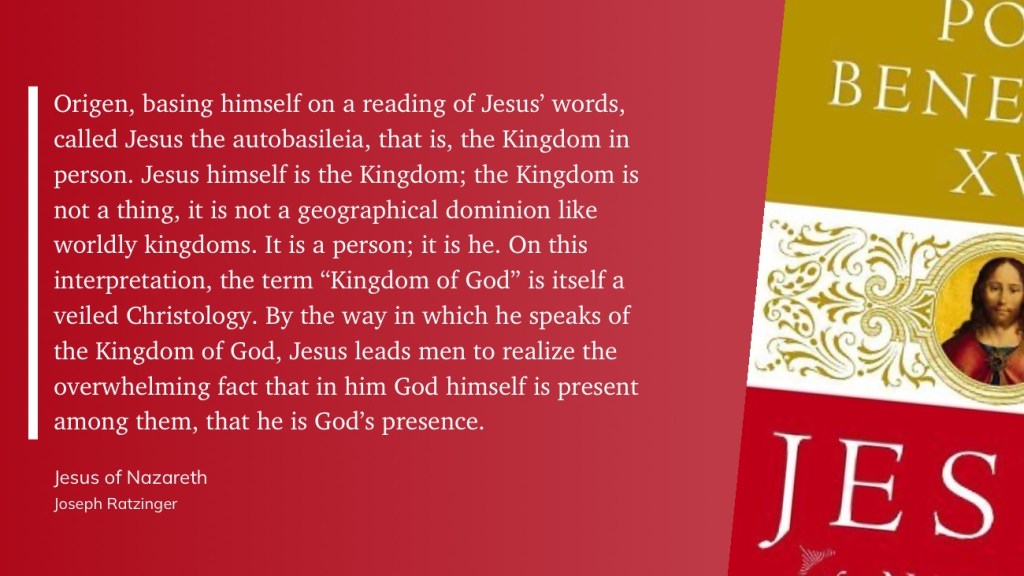
Commentary below written in collaboration with OpenAI’s GPT-3.5 model.
VERSE BY VERSE COMMENTARY
TOP OF PAGE First Reading | Second Reading | Gospel

FOCUS: Christology
Verse 1: "The word of the LORD came to Jonah a second time:"
This verse highlights the mercy and persistence of God towards Jonah. Even though Jonah initially resisted God's call, God grants him a second opportunity to fulfill his mission.
From a Christological perspective, this verse foreshadows the redemption and forgiveness brought by Jesus Christ, as He offers humanity multiple chances to turn towards God and embrace His message.
Verse 2: "Set out for the great city of Nineveh, and announce to it the message that I will tell you."
God instructs Jonah to go to Nineveh, a great city, and proclaim a message that He will reveal to him. In this context, the city of Nineveh symbolizes an enormous population living in sin and separation from God.
From a Christological standpoint, this verse echoes the mission of Jesus, who was sent by God the Father to proclaim the message of salvation to the world, calling humanity to repentance and reconciliation with God.
Verse 3: "So Jonah made ready and went to Nineveh, according to the LORD'S bidding. Now Nineveh was an enormously large city; it took three days to go through it."
Jonah obeys God's command and embarks on the journey to Nineveh. The description of Nineveh as an enormously large city that takes three days to traverse emphasizes its vastness and sinful state.
This parallels Jesus' ministry, as He came to bring salvation and healing to a world full of sin, darkness, and brokenness.
Verse 4: "Jonah began his journey through the city, and had gone but a single day's walk announcing, 'Forty days more and Nineveh shall be destroyed,'"
Jonah starts proclaiming his message of impending destruction to the people of Nineveh. The message of imminent destruction serves as a call to repentance, urging the city's inhabitants to turn away from their sinful ways and seek forgiveness from God.
From a Christological standpoint, this verse reflects Jesus' teachings about the need for repentance and the urgency of embracing God's mercy and forgiveness.
Verse 5: "When the people of Nineveh believed God; they proclaimed a fast and all of them, great and small, put on sackcloth."
The response of the people of Nineveh to Jonah's proclamation is remarkable. They believe in God's message, immediately act upon it, and engage in acts of penance, including fasting and wearing sackcloth, as signs of their repentance.
This aspect of genuine conversion aligns with the teachings of Jesus, who emphasized the necessity of faith, repentance, and turning away from sin to enter into a relationship with God.
Verse 10: "When God saw by their actions how they turned from their evil way, he repented of the evil that he had threatened to do to them; he did not carry it out."
The remarkable response of the people of Nineveh leads to a change of heart in God. Their sincere repentance averts the destruction that was initially threatened as a consequence of their sins. This verse reveals the merciful nature of God, who relents from punishment upon witnessing true contrition and conversion.
From a Christological perspective, this verse foreshadows the ultimate act of mercy and forgiveness offered by Jesus Christ through His sacrifice on the cross, where He bears the consequences of humanity's sin and opens the path to reconciliation with God.
SOURCE: Content written in collaboration with OpenAI's GPT-3.5 model. If you find an error or would like to add content or edit page, don't hesitate to use contact button below. Excerpts from the Lectionary for Mass for Use in the Dioceses of the United States of America, second typical edition © 2001, 1998, 1997, 1986, 1970 Confraternity of Christian Doctrine, Inc., Washington, DC. Used with permission.
TOP OF PAGE First Reading | Second Reading | Gospel

FOCUS: Christology
Verse 29: "I tell you, brothers, the time is running out. From now on, let those having wives act as not having them,"
In this verse, the apostle Paul emphasizes the urgency of the present time and how it should affect the believers' attitude towards various aspects of life. The phrase "let those having wives act as not having them" does not imply neglect or abandonment of marital responsibilities, but rather a detachment from worldly concerns and an undivided focus on the things of God.
This verse relates to Christology by reminding believers of the temporary nature of earthly relationships and possessions in light of the eternal significance of Christ's kingdom.
Verse 30: "those weeping as not weeping, those rejoicing as not rejoicing, those buying as not owning,"
Paul continues to highlight the detachment that believers should have towards worldly emotions and possessions. This does not negate nor suppress genuine human emotions or the importance of responsible stewardship, but rather points to the preeminence of the Kingdom of God and the need to prioritize it above all else.
This aspect of Christology is expressed by St. John Paul II, who states, "The proclamation of the Kingdom of God is being accomplished above all through the witness of a Christian life that is fully in conformity with divine law" (Veritatis Splendor, 87).
Verse 31: "those using the world as not using it fully. For the world in its present form is passing away."
This verse reinforces the temporal nature of worldly realities and the need for believers to have a proper perspective. Christians are called to engage with the world without becoming overly attached or enslaved by its fleeting nature. Instead, they are to prioritize the values of the Kingdom of God, which are eternal.
The Catechism teaches, "Christians are called to detach themselves from temporal goods and to have their eyes fixed on eternal goods" (CCC 2548). This detachment and proper perspective align with the central teachings of Christology, where Christ calls His followers to prioritize the values of His Kingdom above worldly pursuits.
SOURCE: Content written in collaboration with OpenAI's GPT-3.5 model. If you find an error or would like to add content or edit page, don't hesitate to use contact button below. Excerpts from the Lectionary for Mass for Use in the Dioceses of the United States of America, second typical edition © 2001, 1998, 1997, 1986, 1970 Confraternity of Christian Doctrine, Inc., Washington, DC. Used with permission.
TOP OF PAGE First Reading | Second Reading | Gospel

FOCUS: Christology
Verse 14: "After John had been arrested, Jesus came to Galilee proclaiming the gospel of God."
The mention of John's arrest sets the stage for Jesus' ministry and highlights the beginning of His public mission. The fact that Jesus chooses to enter Galilee signifies His purposeful action to bring the message of salvation to the people in that region.
From a Christological perspective, Jesus' proclamation of the gospel of God reveals His divine role as the appointed messenger of God's redemption.
Verse 15: "This is the time of fulfillment. The kingdom of God is at hand. Repent, and believe in the gospel."
Jesus' proclamation of the time of fulfillment reveals His consciousness of fulfilling Old Testament prophecies and promises regarding the coming of the Messiah.
By declaring that the kingdom of God is at hand, Jesus asserts His divinely bestowed authority and inaugurates a new era marked by the reign of God's Kingdom.
The Catechism of the Catholic Church teaches that "this kingdom shatters all the political and military expectations of the Messiah," and it is realized through Jesus' words and actions (CCC 552).
Verse 16: "As he passed by the Sea of Galilee, he saw Simon and his brother Andrew casting their nets into the sea; they were fishermen."
Jesus' encounter with Simon and Andrew demonstrates His divine insight and authority to choose and call disciples. Jesus' deliberate choice of fishermen as His first disciples illuminates His ability to draw individuals from various backgrounds into His salvific mission.
From a Christological perspective, Jesus' selection of ordinary fishermen reveals His power to transform and use ordinary human beings for extraordinary purposes.
Pope Benedict XVI explains that "the call of the first disciples constitutes a clear anticipation of the task which the risen Jesus will entrust to the Apostles as missionaries of the Gospel" (Jesus of Nazareth, 82).
Verse 17: "Jesus said to them, 'Come after me, and I will make you fishers of men.'"
Jesus' invitation to Simon and Andrew to become "fishers of men" reflects His Messianic mission of gathering people into the Kingdom of God.
By calling them to follow Him, Jesus exhibits His divine authority to call and commission individuals for specific roles in His salvific plan. This verse highlights Jesus' transformative power as the one who can make His disciples effective evangelizers and sharers of the Good News.
St. Augustine reflects on this verse by interpreting the "fishing for men" analogy as the disciples being entrusted with the mission to draw souls to Christ, saying, "Jesus walks by; let us cast our nets at his command" (Homilies on the Gospel of John, 7).
Verse 18: "Then they abandoned their nets and followed him."
Simon and Andrew's prompt response of abandoning their livelihoods to follow Jesus reveals their profound faith and their recognition of Jesus' divine authority.
Their immediate decision to follow Jesus without hesitation signifies their understanding that Jesus, as the Messiah, possesses an unparalleled significance and their willingness to submit themselves wholly to Him.
Verse 19: "He walked along a little farther and saw James, the son of Zebedee, and his brother John. They too were in a boat mending their nets."
Jesus' encounter with James and John further exemplifies His divine insight and authority in choosing His disciples. James and John, similar to Simon and Andrew, are diligently fulfilling their responsibilities as fishermen when Jesus calls them.
This encounter emphasizes Jesus' ability to perceive the potential in individuals and His authority to select them to be His apostles.
This encounter emphasizes Jesus' ability to perceive the potential in individuals and His authority to select them to be His apostles.
Pope Francis underscores the importance of Jesus' invitation by explaining, "Being called personally by Jesus means being willing to go out of ourselves, to leave behind our own convenience and to go forward on the path indicated by Him" (Angelus, 1 September 2013).
Verse 20: "Then he called them. So they left their father Zebedee in the boat along with the hired men and followed him."
James and John's immediate response to Jesus' call, leaving their father and their hired men, illustrates their unwavering commitment and absolute surrender to Jesus' divine authority.
Their act of forsaking their familial and vocational ties to follow Jesus reveals their recognition of His supreme calling and their willingness to prioritize Him above all else.
The Catechism of the Catholic Church teaches that "the call of Christ to the disciples unfolds in a progressive manner. At first, it is a simple invitation, but it develops into a challenging demanding commitment" (CCC 546).
SOURCE: Content written in collaboration with OpenAI's GPT-3.5 model. If you find an error or would like to add content or edit page, don't hesitate to use contact button below. Excerpts from the Lectionary for Mass for Use in the Dioceses of the United States of America, second typical edition © 2001, 1998, 1997, 1986, 1970 Confraternity of Christian Doctrine, Inc., Washington, DC. Used with permission.
HOME | COMMENTARY | BIBLE STUDY | CONNECTIONS
