Children, Catholic Home School, Children’s Liturgy of the Word, Catholic Home School
Children, Catholic Home School, Children’s Liturgy of the Word, Catholic Home School
June 21, 2026











12th Sunday of Year A

↩️ ↪️ Bishop James Golka
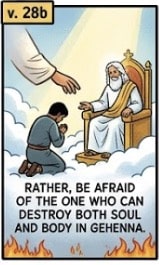
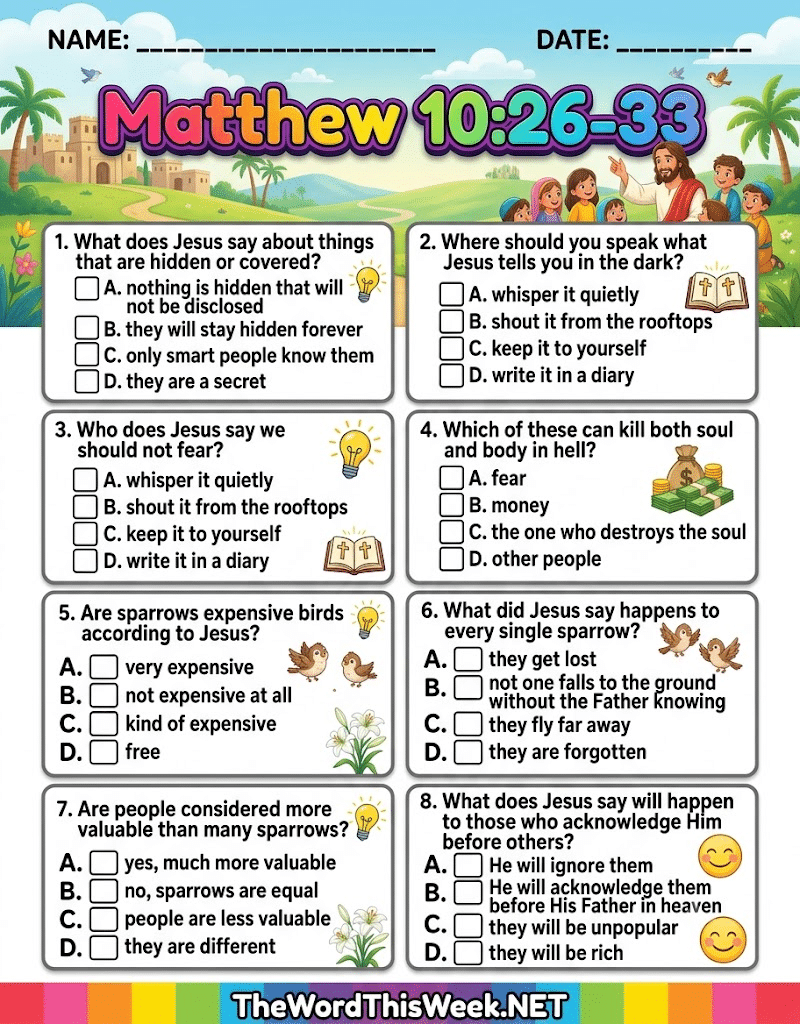
Q: What is the key distinction Jesus makes about fear in Matthew 10:28?
A: Jesus teaches not to fear men who can only kill the body but cannot touch the soul; instead, fear God who can destroy both soul and body in hell.
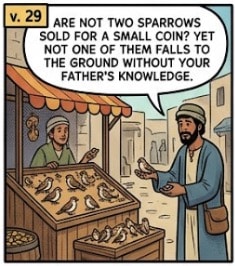
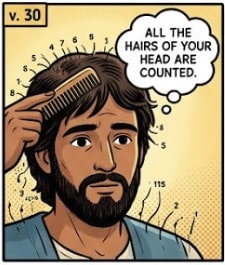
Q: How does Jesus demonstrate God’s intimate knowledge and care for individuals?
A: God values humans more than many sparrows and has even numbered every hair on each person’s head, showing His intimate care and knowledge of each individual.
Q: What does Matthew 10:27 teach about transparency and proclamation?
A: Nothing concealed will remain undisclosed, and what is whispered in secret will be proclaimed from the rooftops, emphasizing the importance of honesty and integrity as hidden things will always be revealed.
Q: What is the consequence of acknowledging or denying Jesus before others?
A: Everyone who acknowledges Jesus before men will be acknowledged before God the Father in heaven, but whoever denies Him will be denied by Jesus.
↩️ ↪️ 1-Minute Homily

God’s Personal Care and Value
Q: How does Jesus illustrate God’s intimate knowledge of each person? A: Jesus uses two specific examples in Matthew 10:29-31: God knows when the smallest sparrows fall and has counted the number of hairs on each person’s head, demonstrating that humans are valued more than sparrows and are precious to God, worth more than any treasure.
Q: What does God’s daily attention to children look like according to the teaching? A: God looks at each child every day with love, smiles at them, feels proud, observes their happiness, and cares when they are sad, showing continuous divine attention beyond mere awareness.
Prayer and Communication with God
Q: What is the nature of prayer communication that Jesus invites children into? A: Jesus invites children to “share their worries” with God in prayer, emphasizing that words aren’t always needed—God loves to sit with them and share his love, making prayer accessible beyond verbal expression.
Biblical Commands Against Fear
Q: What specific instructions does Jesus give about fear in Matthew 10:31? A: Jesus commands “Have no fear” and “Fear not” in Matthew 10:31, meaning “don’t be scared or worry”, directly addressing the apostles who felt “lonely, scared, and unsure” as they were sent out to share God’s love.
Divine Ownership and Identity
Q: How does Isaiah 43:1 define the relationship between God and each child? A: Isaiah 43:1 states “I have redeemed you, called you by name, you are mine”, establishing that God has called each child by name and claims personal ownership, reinforcing they are precious and don’t ever need to be afraid.
Context of Jesus’ Teaching
Q: Why was Jesus giving this reassurance to his apostles? A: Jesus was gently reassuring his worried apostles who felt “lonely, scared, and unsure” specifically as he sends them out to share God’s love, providing comfort during their mission deployment.
↩️ ↪️ Priests for Life

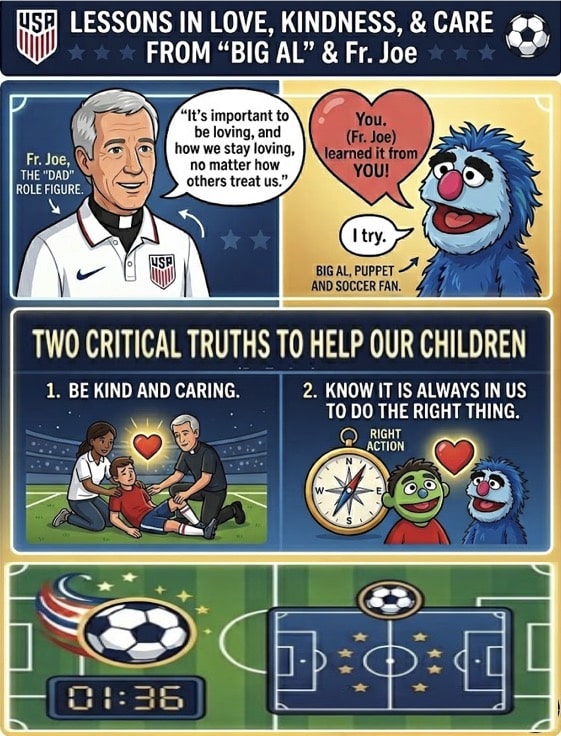
THE WORD THIS WEEK infographics are created using using GOOGLE’S AI Gemini 2.5 Pro. You are free to use the above infographic in any non-profit ministry.
Spiritual Formation
Q: How did Big Al learn to maintain loving behavior regardless of others’ treatment?
A: Big Al learned from Fr. Joe, who serves in a father-like role, that staying kind, tender, and loving no matter how others treat you is essential, and he’s actively working to practice this principle.
Q: What does Fr. Joe see as his responsibility toward children like Big Al?
A: Fr. Joe views it as his important responsibility to help children understand that being kind and caring matters and that doing the right thing is always within their capability.
GOSPEL GRAPHICS


QUESTIONS
Jeremiah’s Call and Ministry
Q: What made Jeremiah’s prophetic calling unique?
A: God called Jeremiah as a child from the tribe of Benjamin near Jerusalem, and when he protested he didn’t know how to speak, God promised to give him the words directly.
Q: How long did Jeremiah’s prophetic ministry span?
A: Jeremiah prophesied during the reigns of five kings of Judah, from the good king Josiah to the last king Zedekiah, speaking against idolatry, false prophets, and greedy priests.
Persecution and Babylonian Conquest
Q: Why did Judah’s leaders want to execute Jeremiah?
A: When Babylon invaded, the king’s advisors wanted to kill Jeremiah for prophesying that opposing the Babylonians would cause Jerusalem’s fall and for disheartening the armies of Judah, leading to his imprisonment after a failed assassination attempt.
Q: What happened to Jeremiah after Jerusalem fell?
A: The Babylonians released Jeremiah from prison after conquering Judah and destroying Jerusalem, and he fled to Egypt during the exile where he lived out his remaining days.
Theological Legacy
Q: What is the New Covenant Jeremiah prophesied?
A: Jeremiah foretold a New Covenant God would establish after the Babylonian exile, which Christians recognize in the life, death, and resurrection of Jesus Christ and the Holy Spirit writing God’s law on believers’ hearts.
Q: How were Jeremiah’s prophecies preserved?
A: Jeremiah’s messages were written down with the help of his assistant and preserved through the years to help people understand how to be closer to the Lord and the significance of Jesus’ mission as the Messiah.
12th Sunday of Year A


Our Sunday Visitor
SUNDAY READINGS | QUESTIONS | SAINT | ACTIVITIES


THE WORD THIS WEEK infographics are created using using GOOGLE’S AI Gemini 3 Pro. You are free to use the above infographic in any non profit ministry. Please give credit to TheWordThisWeek.NET and Our Sunday Visitor.
QUESTIONS
Grace and Salvation
Q: What is grace and what does it cost us versus God?
A: Grace means receiving blessings through Jesus that are free to us but cost God the price of Jesus’ sacrifice, giving us something we don’t deserve.
Q: Why can’t we remove sin ourselves and what solution does Jesus provide?
A: Adam’s sin brought sin to all humanity, making us unable to wash it away ourselves, but Jesus’ death paid the price for all our sins, cleansing us through His blood.
Consequences and Gift
Q: What do we deserve versus what we actually receive through Jesus?
A: We deserve death for our sins, but through Jesus we receive the gift of eternal life instead.
Forgiveness Process
Q: What happens when we make mistakes and return to Jesus?
A: No matter our mistakes, we can always return to Jesus, tell Him we’re sorry, and know He forgives us, making us clean and new.
Teaching Illustration
Q: How does the game demonstrate God’s grace?
A: The game shows that if one person misses an answer, everyone is out, but the teacher’s grace gives candy anyway, illustrating God’s unearned blessings.
Romans 5 Core Message
Q: What does Romans 5 explain about our condition and solution?
A: Because of Adam’s sin, we are all born sinful, but through Jesus, we can be made clean, new, and righteous.
12th Sunday of Year A

Adam’s Sin vs. God’s Grace
What does it cost to get to Heaven? How can we achieve salvation? Well, the bad news is that we all fall short of God’s glory, and no one is capable of earning or buying grace. Because of Adam, we are born into sin, which bears the consequence of death. The good news is that through Jesus, we have eternal life and righteousness! Jesus pays the price and takes away our sin. Through one man, evil came, but through another man, we have hope. This message emphasizes the hope and wonder of grace, granted through God’s love.


QUESTIONS
The “Wow” Numbers
- Who remembers the huge number of hair strands that usually grow on a person’s head? Is it closer to 10 or 200,000?
- If you tried to count every single hair on your head one by one, how long do you think it would take you? Do you think you could do it?
Heart & Faith Questions
- The story says that Jesus knows exactly how many hairs are on your head. What does that tell us about how much He cares for you?
- Jesus says, “Therefore don’t be afraid…” Why do you think knowing that God cares about the tiny details of our lives can help us feel safe when we are worried?
- The next time you brush or comb your hair in the morning, what is a special promise you can remember to help start your day with a smile?
Do Not Be Afraid
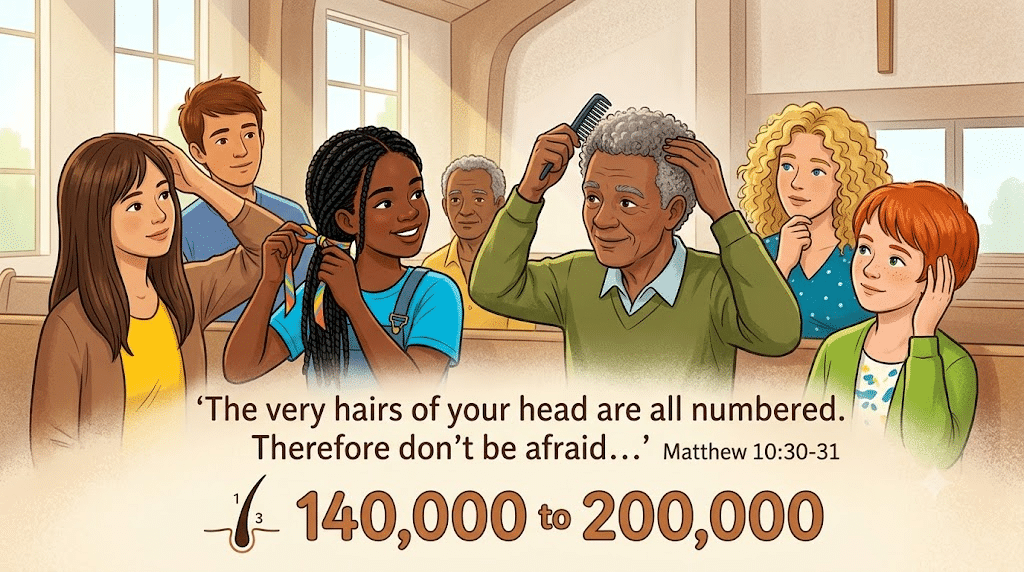
The very hairs of your head are all numbered. Therefore don’t be afraid….
It appears as if everyone combed their hair this morning. What other things do you do to take care of your hair? Yes, you wash your hair, cut your hair; perhaps you braid your hair and tie ribbons in it.
Some of you have curly hair; others straight. Some have black hair, others have brown hair, blonde
hair, red hair and a few people in the congregation have grey hair.
Our hair helps keep us warm. Have you ever thought about how many hairs grow on your head? Some people have more hair than others, but usually a person has between 140,000 to 200,000 strands of hair growing on their head. That is a lot of hair!
SOURCE: Sermon Writer – © 1997 – 2026 Richard Niell Donovan

Worries
- The Power of Belief: Talking to God restores Jack’s confidence. The passage concludes by noting that while everyone wants to be liked, a true friend is defined by the phrase, “I believe in you!”—a message God consistently offers to us.
- Jack’s Character: Jack is an outgoing, friendly, and universally liked person who has a few close, loyal friends. His most admired trait is his absolute honesty.
- The Onset of Rumors: Despite his good character, malicious rumors begin to spread about Jack. He feels completely isolated, echoing the experience of the prophet Jeremiah, whose peers actively watched for him to stumble so they could overpower him.
- Turning to God: In his loneliness, Jack follows Jeremiah’s example and turns to prayer. Jeremiah’s prayer reminds us that while human critics are fickle, God stands by the side of the righteous like a “mighty soldier,” testing the heart and rescuing the oppressed.
12th Sunday of Year A

THE WORD THIS WEEK infographics are created using using GOOGLE’S AI Gemini 3 Pro Nano Banana and images from Unsplash. You are free to use the above infographic in any non-profit ministry. Please give credit to TheWordThisWeek.net and the Word-Sunday.
Entrance Song
🧸 Simple Questions for Younger Children (Ages 4–7)
- Where are some of your favorite places to go? (School, the park, bed?) Does God stay with you when you go there?
- What does it feel like to be afraid? What can you whisper to God the next time you feel scared?
- The song mentions “darkest days.” What is something that makes you feel sad or scared, and how does knowing God is right beside you make you feel better?
- How can you “give your heart” to God? What do you think that means we should do with our love?
🎒 Deeper Questions for Older Children (Ages 8–11)
- The text mentions a “rod and staff” that protect and comfort us. These are tools a shepherd uses to take care of sheep. How do you think God acts like a good shepherd for you?
- There is a difference between never being sad and not being afraid when we are sad. Why does the writer say they won’t be afraid even during “hurtful days”?
- The phrase “Everywhere I go and in everything I do” covers a lot! Can you think of a tough situation at school or with friends where you need to remind yourself that God is there?
- Why do you think the words in this passage repeat so many times? How does repeating a truth like “Lord, you’re here with me” help our hearts when we are going through a hard time?
12th Sunday of Year A
Response & Acclaim
JESUS CLUB UNLIMITED (3:04)

HOPE KIDS BIBLE SONGS (2:44)

HEAVENLY KIDS PRAISE (3:30)
Response & Acclaim
Communion
Impact of Disobedience
- Question: Adam and Eve’s one choice to disobey God changed things for the whole world. Can you think of a time when someone made a bad choice (like in a game, at school, or at home) and it ended up ruining the fun for everyone else?
- Application: When we are tempted to disobey our parents or teachers, why is it important to remember that our choices don’t just affect us, but they affect the people around us too?
Receiving and Sharing
- Question: If someone buys you a wonderful, expensive birthday gift, but you leave it wrapped up in the closet and never open it, is it doing you any good? How do we “open” or accept God’s gift of being made right with Him?
- Application: Because Jesus gave us the gift of grace when we didn’t deserve it, how can you show grace to a friend or sibling this week who might annoy you or make a mistake?
12th Sunday of Year A
ST. JOSEPH’S CORNER (8:57)

Response & Acclaim
ST. BART’S TOOWOOMBA (0:57) – Romans 5:12-19

CPC SYDNEY CHILDREN’S TALKS (1:20) – Romans 5:12-21
