Fr. Tony’s Homily starters, anecdotes and life messages with infographics for use in parish bulletins, presentations, bible studies, and teaching @ Fr. Tony’s Homilies. 12th Sunday in Ordinary Time (A) Jeremiah 20:10-13 Romans 5:12-15 Matthew 10:26-33

Fr. Tony’s Homily, Life Messages, Homily Starters, Anecdotes

Fr. Tony’s Homily, Homily Starters

Fr. Tony’s Homily, Homily Starters

June 21, 2026

ANECDOTESLIFE APPLICATION

RELATED: ๐ŸŽฌ FAITH & FILM | ๐Ÿ˜‡ HOLY ADS

12th Sunday of Year A

RELATED INFOGRAPHIC

HOMILY #1: Crossing the Moat of Fear

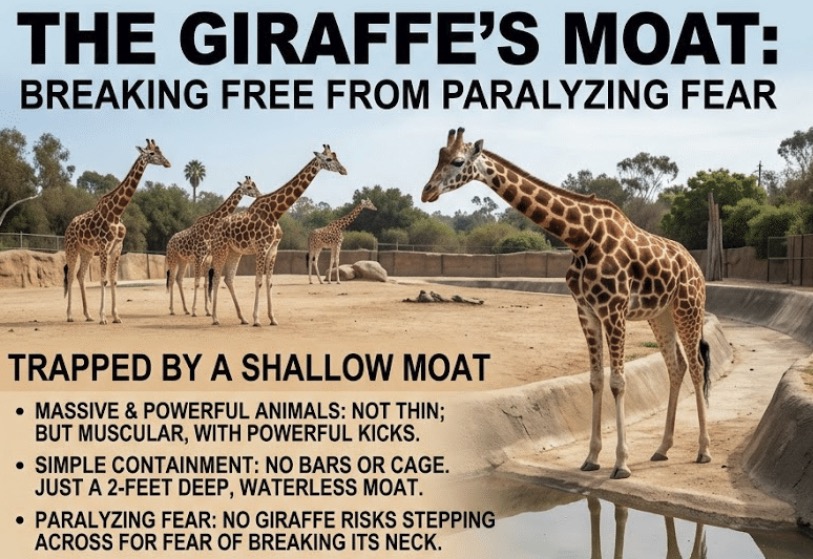
At the world-famous San Diego Zoo, there is a remarkable sight that draws thousands of visitors every year: the giraffe compound. These magnificent animals are everything you imagine, tall, graceful, regal. But standing close to them, you also notice what photographs never quite capture: they are massive. Their necks are thick as tree trunks. Their legs, though shorter than expected, are powerfully muscled. One swift kick from a giraffe can send a lion limping away in defeat.

And yet, here is the curious thing. These powerful creatures are kept in what looks like a small enclosure, far too small for animals of such size and strength. There are no bars. There are no walls. There is no cage. There is only a simple, shallow, waterless moat, no deeper than the giraffe’s knee. Freedom is just two steps away. But not one of them will take those two steps. Not one. Because each one fears that if it steps down into that little ditch, it might break its long, beautiful neck.

The giraffes are not held by walls. They are held by fear.

I wonder how often we are like those giraffes. God has made us tall and strong in His grace. He has clothed us with dignity, gifted us with talents, anointed us in Baptism, fed us with the Body and Blood of His Son. And yet, so often, we live in a tiny compound of our own making, fenced in not by walls but by fear. Fear of rejection. Fear of failure. Fear of looking foolish. Fear of being hurt. Fear of being alone. Fear of intimacy. Fear of being taken advantage of. Fear of change. Fear of criticism. The moat is shallow. Freedom is two steps away. But we will not cross.

CONTINUE READING

This is why the words of Jesus in today's Gospel come to us with such urgency. Three times in this short passage from Saint Matthew, our Lord says it: "Do not be afraid." "Fear no one." "Do not be afraid." Jesus knows the human heart. He knows that fear is one of the most powerful forces that can paralyze a disciple. And so He speaks to that fear directly.

Notice that Jesus does not pretend the dangers are not real. He is honest with His disciples. He tells them they will be persecuted. He tells them they may be hated. He tells them there are some who can kill the body. He does not deny the moat. He does not deny that it is possible to stumble. What He does is something much greater: He gives us a reason to step across anyway.

And that reason is the loving Providence of the Father. "Are not two sparrows sold for a small coin? Yet not one of them falls to the ground without your Father's knowledge. Even all the hairs of your head are counted. So do not be afraid; you are worth more than many sparrows." Saint John Chrysostom, commenting on this passage, said that Christ gives us this image of the sparrow not because God's care for us is small, but because if God's providence reaches even to such tiny creatures, how much more does it embrace us, His beloved children. The God who counts every hair on your head is not going to abandon you in the moat.

Our first reading shows us a man who learned this truth in the fire of his own suffering. The prophet Jeremiah is surrounded. He can hear the whispers: "Denounce! Let us denounce him!" Even his friends are watching for him to stumble. And in the middle of this terror, Jeremiah finds the courage to say, "But the Lord is with me, like a mighty champion." Jeremiah does not stop being afraid because the threats disappear. He stops being afraid because he remembers Who is standing with him.

And in our second reading, Saint Paul reminds us why we can have such confidence. Through one man, Adam, sin and death entered the world. But how much more, Paul says, has the grace of God overflowed through the one man Jesus Christ. Brothers and sisters, the grace of Christ is greater than the sin of Adam. The love of God in Jesus is more powerful than every fear that holds us back. Pope Saint John Paul II began his pontificate with those unforgettable words: "Do not be afraid! Open wide the doors to Christ!" He was simply echoing the Lord of today's Gospel.

What does it mean, then, to acknowledge Christ before others, as Jesus asks today? It means taking those two steps across the moat. It means the parent who finally has the difficult conversation with a son or daughter about returning to the faith. It means the young person who refuses to laugh at the cruel joke. It means the spouse who says, "I am sorry," first. It means the parishioner who finally volunteers, finally forgives, finally goes to Confession after twenty years. It means the disciple who lives the Gospel out loud in a world that often mocks it.

The Catechism reminds us that the virtue of fortitude "strengthens the resolve to resist temptations and to overcome obstacles in the moral life. The virtue of fortitude enables one to conquer fear, even fear of death." This is the gift God wants to pour into us. And He does pour it into us, dear friends, especially in this Mass.

Because in just a few moments, we are going to do something that should take our breath away. We are going to approach this altar, and the Lord of heaven and earth, the One who knows every hair on our heads, is going to give Himself to us under the appearance of bread and wine. He becomes our food. He becomes our strength. He becomes the "mighty champion" standing with us, within us, that Jeremiah spoke of. The Eucharist is the antidote to fear, because the Eucharist is Jesus, and "perfect love casts out fear," as Saint John tells us.

So let us return one last time to those giraffes at the San Diego Zoo. Tall, strong, magnificent, free in every way except in their imagination. Held back by a moat no deeper than their knee. Brothers and sisters, do not let that be the story of your discipleship. Do not let fear keep you penned in when Christ is calling you out into the wide pasture of His grace. The moat is shallow. Freedom is two steps away. And the Lord Jesus, who fed the sparrows and counts your hairs and gives Himself to you in this Eucharist, is on the other side, with His hand outstretched, saying once again, "Do not be afraid."

Take the step. He will catch you.

Fr. Tony's Homilies - Anecdotes - Exegesis - Life Messages

Sources Consulted:

  • Fr. Tony's Homilies - Anecdotes - Exegesis - Life Messages
  • St. John Chrysostom, Homilies on the Gospel of Matthew, Homily 34
  • St. Augustine, Sermons on Selected Lessons of the New Testament
  • Catechism of the Catholic Church, paragraphs 1808, 2848 (on fortitude and overcoming fear)
  • Pope St. John Paul II, Homily at the Inauguration of His Pontificate (October 22, 1978)
  • Pope Benedict XVI, Jesus of Nazareth, Vol. 1 (on the Sermon on the Mount and discipleship)
  • The Navarre Bible Commentary on St. Matthew's Gospel
  • Scott Hahn, Ignatius Catholic Study Bible: New Testament (commentary on Matthew 10 and Romans 5)
  • Brant Pitre, The Case for Jesus and reflections on Matthew 10
  • Word on Fire, Bishop Robert Barron, homily archives on the 12th Sunday in Ordinary Time, Year A

Click the banner to finish reading the homily.


12th Sunday of Year A

YouTube player
RELATED INFOGRAPHIC

HOMILY #2: The Antidote to a Fearful Heart

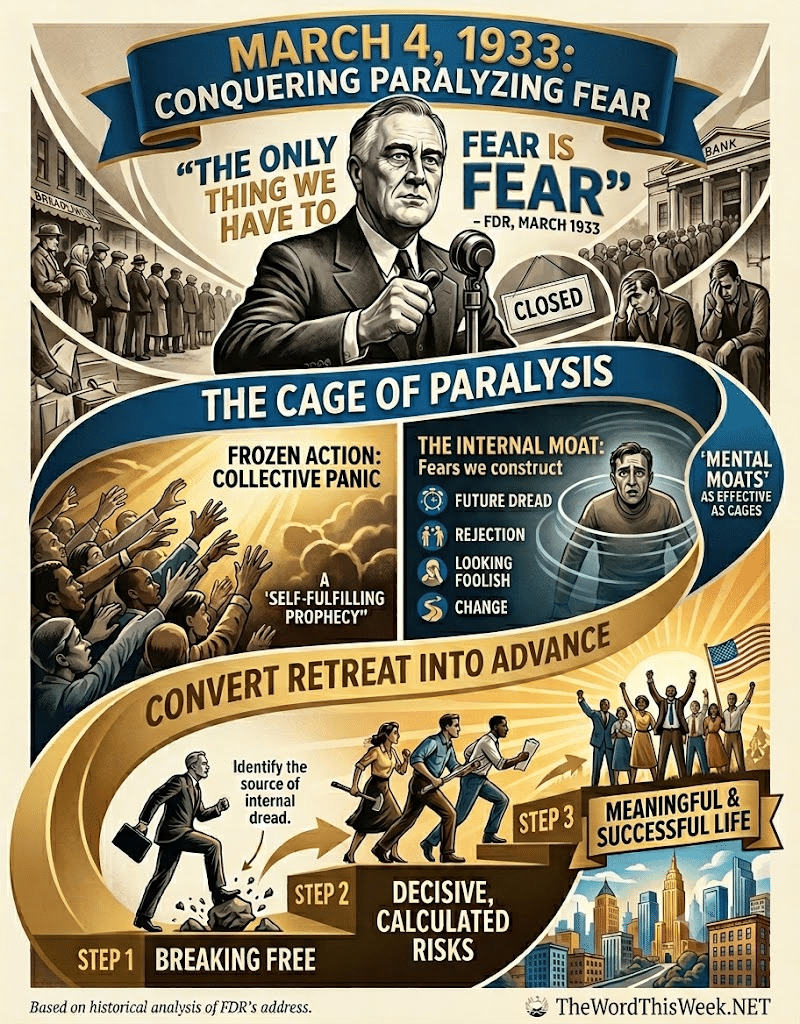
It was March 4, 1933. A nation was on its knees. Banks were failing, unemployment lines stretched for miles, and a heavy cloud of despair had settled over the American people. On that cold day, a newly elected President Franklin D. Roosevelt stood before his country and spoke these now famous words: “The only thing we have to fear is fear itself.”

He went on to describe this fear as a “nameless, unreasoning, unjustified terror.” He recognized something profound: the Great Depression was not only an economic crisis, it was a spiritual paralysis. Fear had frozen the nation. People were afraid to invest, afraid to hire, afraid to hope. And that very fear, Roosevelt understood, was making recovery impossible. Fear had become a self-fulfilling prophecy.

Nearly two thousand years before President Roosevelt spoke those words, Jesus stood before His own anxious disciples and said something even more powerful.

CONTINUE READING

Three times in today's Gospel from Matthew, He repeats the same command: "Do not be afraid. Do not be afraid. Do not be afraid." Not as a suggestion. Not as a piece of encouraging advice. But as a divine command from the lips of the Son of God.

Notice that Jesus is not speaking to people in comfortable circumstances. He is sending His apostles out into a hostile world. He has just warned them that they will be hated, persecuted, dragged before governors and kings. The fear they faced was not imaginary. It was real, and it was deadly. Yet still He says: "Do not be afraid."

How can He say this? How can He ask this of them, and of us? The answer lies in the very heart of today's readings.

Listen again to the Prophet Jeremiah. He cries out, "I hear the whisperings of many: 'Terror on every side!' Denounce! Let us denounce him!" His own friends are plotting against him. He is surrounded, isolated, betrayed. And yet, in the midst of this terror, Jeremiah declares: "But the Lord is with me, like a mighty champion." That, my friends, is the secret. Not the absence of danger, but the presence of God in the midst of danger.

Saint Augustine, reflecting on this kind of holy courage, once wrote that "the Christian should be an Alleluia from head to foot." Why? Because we know, even when surrounded by trouble, that we are never alone. Augustine understood that fear loses its grip when faith takes hold.

And here is where Roosevelt's insight meets the Gospel in a striking way. Roosevelt recognized that much of what paralyzes us is not the real threat in front of us, but the imagined threats we build up in our minds. The fear of rejection. The fear of looking foolish. The fear of an uncertain future. The fear of what others might think. These are the internal mental moats, as one might call them, that hold us back from living the life God calls us to live.

Jesus knows this about us. That is why He says, "What I say to you in the darkness, speak in the light." In other words: do not let the shadows of your fears silence the truth God has placed in your heart. Do not let the fear of human opinion keep you from acknowledging Christ before others.

Then Jesus offers us perhaps the most tender words in all of Scripture: "Are not two sparrows sold for a small coin? Yet not one of them falls to the ground without your Father's knowledge. Even all the hairs of your head are counted. So do not be afraid; you are worth more than many sparrows."

Brothers and sisters, pause and let that sink in. The God who flung the stars into space, the God who holds galaxies in His hand, knows the number of hairs on your head this morning. He sees you. He knows your worries about your children, your health, your finances, your future. He knows the fears you have not even spoken aloud. And He says to you today: "You are worth more than many sparrows."

This is what Saint Paul is getting at in our second reading from Romans. He reminds us that through one man, Adam, sin and death entered the world. But how much more, he says, has the grace of God and the gift of Jesus Christ overflowed for the many. The grace of Christ is greater than every fear, greater than every sin, greater than death itself. That is the foundation of our fearlessness.

The Catechism teaches us that hope is the theological virtue by which we desire the kingdom of heaven and place our trust in Christ's promises. Hope, dear friends, is the proper antidote to fear. Not optimism. Not positive thinking. Hope, rooted in the One who has already conquered the grave.

This is why we come to this altar today. In just a few moments, we will celebrate the Eucharist. We will hear the words: "Behold the Lamb of God." And as we approach to receive Him, we receive into our very bodies the One who said, "Do not be afraid." We do not face our fears alone. Christ Himself becomes our food, our strength, our mighty champion, just as Jeremiah described.

So I ask you this morning: what fear is paralyzing you? What "nameless, unreasoning terror" is keeping you from the life God calls you to live? Is it fear of speaking up about your faith at work or among family? Fear of forgiving someone who hurt you? Fear of making a change God has been quietly inviting you to make for years?

Roosevelt was right that fear itself can become the greatest obstacle. But he could only diagnose the problem. Only Christ provides the cure. The cure is not willpower. The cure is not pretending the dangers are not real. The cure is the living presence of God with us, the same God who counts the sparrows and numbers our hairs.

As Roosevelt called a nation to "convert retreat into advance," Christ calls each of us today to convert our fear into faith, our paralysis into mission, our silence into bold witness. Whoever acknowledges Him before others, He will acknowledge before His heavenly Father.

Let us come to this Eucharist today and lay our fears at the foot of the altar. Let us receive the Bread of Life and walk out those doors as men and women who have heard the voice of our Savior say once more: "Do not be afraid. You are worth more than many sparrows."

Fr. Tony's Homilies - Anecdotes - Exegesis - Life Messages

Sources Consulted:

  • Fr. Tony's Homilies - Anecdotes - Exegesis - Life Messages
  • The Catechism of the Catholic Church (paragraphs on hope and divine providence, nos. 301-314, 1817-1821)
  • St. Augustine, Sermons and Exposition on the Psalms
  • St. John Chrysostom, Homilies on the Gospel of Matthew (Homily 34)
  • St. Thomas Aquinas, Summa Theologiae (II-II, q. 19 on Fear; q. 17 on Hope)
  • Pope Benedict XVI, Spe Salvi (Encyclical on Christian Hope)
  • Pope Francis, Evangelii Gaudium (on courageous evangelization)
  • The Navarre Bible Commentary on Matthew and Romans
  • Scott Hahn, Ignatius Catholic Study Bible: New Testament

Click the banner to finish reading the homily.


12th Sunday of Year A
Commissioned by Christ to Reach Out

A second grader once asked his teacher how much the earth weighed. The teacher looked up the answer in an Encyclopedia. โ€œSix thousand million, million tons,โ€ she answered. The little boy thought for a minute and then asked, โ€œIs that with or without people?โ€  โ€” Viewed from one perspective, it might very well seem that people donโ€™t really matter very much. After all, we are but microscopic inhabitants of a tiny planet orbiting a relatively obscure star in a small galaxy among the billions and billions of stars and galaxies that make up creation. Yet the God of creation has counted the very hairs of our heads. Wow! What a magnificent picture of God! 

This highlights a key tension. When considering the vast weight of our massive planet, we as microscopic inhabitants seem insignificant. It’s easy to feel like just another obscure speck among billions of other stars and galaxies that make up creation. From a different perspective, however, people matter immensely. In stark contrast to our seemingly minute physical mass, the creator of the entire universe is intimately involved with each individual, caring for even our smallest details, like counting the very hairs on our heads. God is a compassionate creator. It’s a humbling and uplifting thought that suggests that although we seem small in the grand cosmic design, we are cherished on an deeply personal level.
RELATED: VOCATIONS | SOUL CARE | ๐ŸŒฑ PRO-LIFE

12th Sunday of Year A

YouTube player

Recorded live by Sunday 7pm Choir at St. Francis de Sales Parish in Ajax, ON Canada.

12th Sunday of Year A