Commentary for Sunday
28th Sunday of Year A

October 15, 2003

28th Sunday – Cycle A

THEME OF READINGS: Change/Transformation

Mass Readings Explained

28th Sunday of Year A

MORE VIDEOS / TRANSCRIPT

Kieran J.
O’Mahony, OSA

INDEX

ARCHIVE

ALL 3 READINGS (PDF)

PDF & Video Commentary

28th Sunday of Year A
Fr. Francis Martin
The Word Proclaimed Institute

DAILY REFLECTIONS

VIDEO ARCHIVE (CYCLE A)

The Word Proclaimed Institute

28th Sunday of Year A
Catholic Climate Covenant

INTEGRAL FAITH

INDEX

Catholic Climate Covenant

28th Sunday of Year A

28th Sunday – Cycle A

Pope Francis reminds us that God is the ultimate source of all creation, the Host of that vast banquet to which all are invited, and by which all are sustained. He is especially concerned with the poor, who usually suffer the most from environmental degradation and climate change – which, in the final analysis, is a manifestation of greed, consumption, and selfish individualism.

In today’s parable the original invitees were too busy to join the celebration because they had their own private agendas that they considered more important. Will we commit ourselves to the task, or will we prioritize our own agendas and be “too busy” to attend, too selfish to share what has been freely gifted to us, and meant to be shared for the good of all?

“Both everyday experience and scientific research show that the gravest effects of all attacks on the environment are suffered by the poorest.”… The impact of present imbalances is also seen in the premature death of many of the poor, in conflicts sparked by the shortage of resources, and in any number of other problems which are insufficiently represented on global agendas. (48)

Catholic Bible Study

28th Sunday of Year A

Kay Murdy

INDEX

Together with God’s Word

28th Sunday of Year A

KEY VERSE: “Many are invited but few are chosen” (Matthew 22:14).
TO KNOW: The marriage feast or banquet was a popular way of imagining the coming of God’s reign… READ MORE
TO LOVE: Have I failed to heed God’s call in my life?
TO SERVE: Lord Jesus, give me the grace to accept the invitation to your eternal banquet. 

Small group faith sharing scripture study by VInce Contreras

28th Sunday of Year A

Vince
Contreras

YEAR A

“Everything is Ready, Come to the Banquet”

FIRST READING

In the 1st Reading, God makes at least 6 promises to his people. What are they? How do they (or could they) apply to you?

SECOND READING

In the 2nd Reading, how has St. Paul learned to rely on God for his every need? How do we know that God will also provide for us (Mt 22:19-20)?

GOSPEL

Why is the banquet in Jesus’ parable being held?

What do you learn about those originally invited? What is so surprising about their response?

Who did the king eventually invite? Why?

What is the problem with the one guest (Mt 22:11-12)? What does it mean to be in the king’spresence “without a wedding garment”? What is its significance (Revelation 21:27; 6:9-11; 7:9-10, 13-14)? Why is this ill-clad guest banished?

What does it mean to accept Jesus’ invitation? What is he inviting you to?

What kind of excuses have you given for not responding to Jesus’ invitation? What kind ofchange are you afraid he wants of you?

With whom do you identify with in this story and why?

DOWNLOAD PDF

SOURCE: SundayScriptureStudy.com / used with permission

Matt
Zemanek

St. Timothy Catholic Church, Laguna Niguel, CA

ARCHIVE

This week’s study is on Matthew, chapter 22, verses 1-14, the Gospel reading for Sunday, October 15th, 2023, The Twenty-eighth Sunday in Ordinary Time – Cycle A.

0:00 – Welcome
0:54 – Opening Prayer
2:12 – Introduction
3:48 – Gospel Reading
9:03 – Teaching
24:49 – Q & A
44:42 – Closing prayer

AGAPE BIBLE STUDY

Michal
Hunt

The Divine Banquet 

28th Sunday of Year A

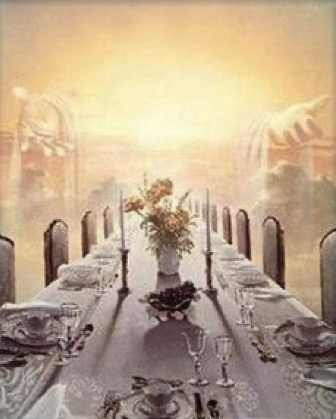
In the symbolic images of the prophets, drinking wine and marriage are two of the reoccurring metaphors used to describe the covenant people’s relationship with God.  Drinking the best wine at a banquet or a wedding feast is symbolic of the perfection of covenant union with the Lord.  The First Reading and the Gospel Reading use a banquet/wedding feast to describe the bliss of eternal communion at the Divine Banquet in the Kingdom of Heaven.

1st Reading

The Eschatological Banquet of the Just

Drinking wine is one of the symbolic images of the prophets depicting Israel's relationship or lack of a relationship with God. In the Old Testament, drinking wine in the Banquet of the Just symbolizes Israel's covenant union with God (see the chart on the symbolic images of the prophets).

Mount Zion is a symbol of the Church in the heavenly Jerusalem.

"The veil" refers to sin that separates humans from fellowship with God; sin brings physical and spiritual death. The promise in verses 7-8 is that God will remove the barrier of sin. Jesus fulfilled the promise when He offered up His life on the altar of the Cross.

2nd Reading

God's Reward

St. Paul, suffering for the sake of Christ in prison, had received a gift of money from the Christian community he founded at Philippi in the Roman province of Macedonia (the first Christian community in Europe). In his letter to the community, St. Paul expresses his gratitude, telling them, "it was kind of you to share in my distress" (verse 14a). And while he is unable to reward them for their kindness, he promises, "My God will fully supply whatever you need, in accord with his glorious riches in Christ Jesus" (verse 14b).

God's message to us is to be confident in times of distress, like St. Paul's confidence in God amid his sufferings for his faith in Christ. If we are faithful, we can have confidence that God will meet our needs.

God also wants us to be concerned about the distress of others and to be ready to give what we can for the support of those in emotional, physical, or material suffering (lacking the basic needs to survive). Even if our giving is limited, coming from our merger supplies, God will reward us for our generosity, and His reward will be far greater than any material earthly benefit.

Gospel

The Parable of the Wedding Feast

The invitation to the "wedding feast" is the invitation to be in covenant/communion with God the great King through His Son, Jesus.  God is the King, who invites guests to a wedding banquet, and Jesus, the King's son, is the Bridegroom. 

Three sets of invitations:  From the beginning of God's relationship with humanity, He extended the invitation to a covenant relationship with Him. 

  1. Some invited to the wedding feast are too obsessed with temporal concerns to take the time to enter into a relationship with God and refuse to come. 
  2. Others are hostile and reject the invitation that leads to eternal salvation.  
  3. And some try to gain admittance on their terms.  They try to attend but refuse to wear the wedding garment of divine grace that assures their entrance to the banquet of the Bridegroom and His Bride, the Church.

For Christians today, the divine banquet in Jesus' parable has a present and future reality.  The present reality is the Eucharistic meal through which Christ nourishes us with His very life on our journey to salvation.  The future reality is the eschatological wedding banquet of the Lamb and His Bride, the Church, waiting for us at the end of time.  God invites everyone "to come," but He also asks us to make a radical choice.  We must be willing to give up everything for the sake of His Kingdom (Mt 16:24-28; Mk 8:34-38; Lk 9:23-27). 

Our responsibility is to come clothed in a garment of grace in the humble repentance of our sins.  Only then can we be admitted to the heavenly Wedding Supper of the Lamb and His Bride (Rev 19:9).  The choice to come is ours: This is good and pleasing to God our savior, who wills everyone to be saved and to come to knowledge of the truth (1 Tim 2:3 NJB).  Are you prepared to be welcomed at the Wedding Feast of the Lamb?  Are you clothed in your garment of grace?

READ MORE

Michal E Hunt, Copyright © 2014; revised 2023 Agape Bible Study; used with permission

Fr. A Paul

ARCHIVE

Wiki Connections

28th Sunday of Year A

Gospel Connections

Mt 22:1-14

28th Sunday of Year A

1st Reading Connections

Is 25:6-10a

28th Sunday of Year A

2nd Reading Connections

Phil 4:12-14, 19-20

28th Sunday of Year A

Responsorial Connections

Ps 23:1-3a, 3b-4, 5, 6


Non-Catholic Resources

28th Sunday of Year A

20th Sunday after Pentecost / Proper 23A

GENERAL

All Resources by Scripture

Richard Niell Donovan, a retired Disciples of Christ clergyman, published Sermon writer for more than two decades. When Dick died in 2020, his wife, Dale, has graciously kept the website online free of charge.

Matthew 21:1-14

Biblical Commentary

Mt 21:23 – 22:14.  THE CONTEXT
Mt 22:1-14.  TWO WEDDING PARABLES
Mt 22:1-10.  THE PARABLE OF THE MARRIAGE FEAST
Mt 22:11-14.  THE PARABLE OF THE WEDDING CLOTHING


Sermons

When Showing Up Isn’t Enough

Just imagine that you were to receive a personal invitation to a banquet at the White House. So how do you respond? “Next Saturday? Let’s see. Well, I don’t know. I was planning to check my garden that day.”

It’s Not about You

Jesus tells us that the kingdom of heaven may be compared to a wedding. Not just any wedding, but a royal wedding where the handsome prince marries his beloved, and the king puts on the banquet to end all banquets.

MORE SERMONS

Terrible Parable!

When Anthony Campolo wrote, “The Kingdom of God is a Party,” the religious right was offended. They believed the Kingdom of God was a courtroom where the guilty are condemned. “Not so!” says Campolo. “The Kingdom of God is a party where the guilty are set free!”

Are You Properly Dressed?

I'll never forget the time I dropped by the funeral home to pay my respects. I was wearing a pair of bright pants and a colorful dress shirt. Everyone else wore black. The funeral director met me at the door with a glare to stop a locomotive. 

RSVP

There's a line attributed to Thomas More that the nobility of England would have snored through the Sermon on the Mount. But there’s nothing sleep inducing here.

Center for Excellence in Preaching at Calvin Theological Seminary

THIS WEEK

<

Sermons
that Work – Episcopal Church, USA

YEAR A

Episcopal Church, USA

ABOUT

ARCHIVE

Conflict is part of every day. There are some conflicts that need to be reduced. Other conflicts are part of the human condition. What does not help is ignoring conflicts – whether they are conflicts to be solved, or conflicts to be learnt from. The gospel texts are replete with dynamics of conflict: occupation; internal conflict between people about whether one should or shouldn’t work for an occupying force; conflict about the inclusion of others; conflict about the role of leadership and the role of popular voices. 
NLT Life Recovery Bible, 2nd Edition: Addiction Bible

USED WITH PERMISSION: Arterburn, Stephen; Stoop, David. NLT Life Recovery Bible, Second Edition: Tyndale House Publishers.

Life Recovery Bible Notes

1st Reading

Is 25:6-10a

No Commentary Available

Psalm

Psalm 23:1-6  God is our shepherd, and he knows what we need even better than we do. God wants us to have what is best for us. As long as we make him our shepherd, he will lead us to places of safety. He knows how to direct us away from places where we could easily stumble. Even when we fall, he can deliver us from our failure, pain, and suffering. God will help us avoid the places where we have stumbled in the past and guide as we journey toward recovery.

2nd Reading

4:12-13 Some of us may wonder if we will ever experience peace again. Our battles against addiction seem endless and hard. We continually find ourselves in helpless situations. When we get discouraged and recognize that recovery is too hard for us to achieve alone, we can claim these verses for renewed hope. God wants us to make progress in recovery, and he has the power to help us do it. As we entrust our lives to God, we can make progress in recovery with the help of Christ, who gives us the strength we need. With God, nothing is impossible!

4:15-20 Paul’s relationship with the Philippian believers was characterized by mutual respect and sharing—important qualities in any strong relationship, including our relationships in recovery. Paul was a respected Christian leader in the early church. Many in his position would have had difficulty accepting the Philippians’ help and might have refused it. It is sometimes difficult to accept help from others. Perhaps we feel they really don’t understand where we are coming from or are just trying to manipulate us, doing things that make them feel good about themselves. If we hope to succeed in recovery, however, we need to follow Paul’s example. He joyfully received the help from the Philippian believers and, as a result, he stood firm through tough, lonely times.

Gospel

22:1-10 When the king’s servants brought everyone they could find to the wedding feast, there were good and bad people. The offer was open to anyone who wanted to come. So it is with heaven: Everyone is invited, and anyone can refuse the offer. The same principles apply to recovery. God wants everyone to lead a healthy, productive, godly life; but anyone can refuse to start the recovery process. Will we be like the first group of guests and suffer for our decision, or will we be like the second group and enjoy what God offers us?

USED WITH PERMISSION: Arterburn, Stephen; Stoop, David. NLT Life Recovery Bible, Second Edition: Tyndale House Publishers.