




MUSIC CONNECTIONS
SOURCE: OCP Liturgy Podcasts

SOURCE: YouTube

SOURCE: YouTube

SOURCE: YouTube

SOURCE: YouTube
Television
and Movies
Television
& Movies
by Fr. Don
(with assistance
from AI)
MOVIES & TELEVISION
13th Sunday of Year B
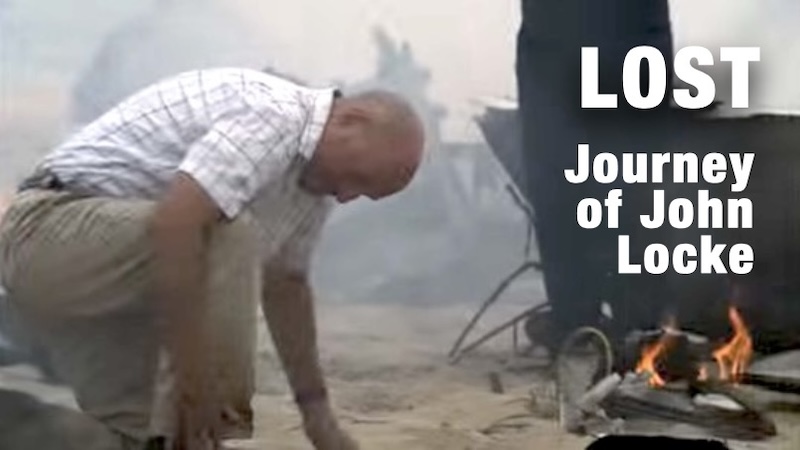

"Walkabout" (Lost)
The Journey of John Locke
The television series "Lost" presents numerous opportunities to reflect on the themes of life, death, and the consequences of our choices. In particular, Season 1, Episode 4, titled "Walkabout," relates well to the verses from the Book of Wisdom (1:13-15; 2:23-24), as it explores the journey of John Locke, a survivor of the plane crash who faces physical limitations and grapples with his purpose on the island.
Wisdom 1:13-15 states, "For God made not death: neither hath he pleasure in the destruction of the living. For he created all things, that they might have their being: and the generations of the world were healthful; and there is no poison of destruction in them, nor the kingdom of death upon the earth." This passage highlights the inherent goodness of God's creation and the divine intention for life and health.
In "Walkabout," John Locke experiences a miraculous transformation on the island. Before the plane crash, he was wheelchair-bound and struggled with feelings of inadequacy and purposelessness. However, upon arriving on the island, he regains his ability to walk, which he attributes to the island's mysterious powers. This physical healing can be seen as a manifestation of the divine intention for health and well-being expressed in Wisdom 1:13-15.
Wisdom 2:23-24 says, "For God created man to be immortal, and made him to be an image of his own eternity. Nevertheless through envy of the devil came death into the world: and they that do hold of his side do find it." This passage speaks of the divine origin of humanity, our intended immortality, and the introduction of death through evil.
Throughout the series, the survivors of Oceanic Flight 815 grapple with the line between life and death, often encountering manifestations of evil. In "Walkabout," John Locke's encounter with the "monster" in the jungle can be interpreted as a symbol of the evil forces that seek to undermine God's creation. His survival and determination in the face of this darkness serve as a testament to the resilience of humanity and our divinely intended purpose.
In conclusion, "Walkabout" from "Lost" serves as a thought-provoking exploration of themes related to life, death, and the divine nature of humanity. These themes align closely with the passages from the Book of Wisdom (1:13-15; 2:23-24), shedding light on our inherent purpose and the challenges we face in a world where the forces of good and evil are at play.

Scott's Tots (The Office)
Responsibility and Committment
"Scott's Tots," an episode from the popular television series "The Office," is a perfect example of the power and consequences of promises. In this episode, Michael Scott, the regional manager of the Dunder Mifflin Paper Company, faces the repercussions of a promise he made to a group of underprivileged third-grade students ten years earlier: that he would pay for their college tuition if they graduated high school. The episode ties in well with the themes of responsibility and commitment found in 2 Corinthians 8:7, 9, and 13-15.
In 2 Corinthians 8:7, Paul writes, "But just as you excel in everything—in faith, in speech, in knowledge, in complete earnestness and in your love for us—see that you also excel in this grace of giving." This verse speaks to the importance of following through on promises and being a person of integrity. In "Scott's Tots," Michael's struggle to fulfill his promise illustrates the consequences of failing to live up to one's commitments.
2 Corinthians 8:9 says, "For you know the grace of our Lord Jesus Christ, that though he was rich, yet for your sake he became poor, so that you by his poverty might become rich." This verse demonstrates the value of self-sacrifice and generosity, both of which are absent in Michael's handling of the Scott's Tots situation. Michael's inability to admit his shortcomings leads to heartache for the students who had relied on his promise.
Finally, 2 Corinthians 8:13-15 emphasizes fairness and equality in giving, stating, "Our desire is not that others might be relieved while you are hard pressed, but that there might be equality. At the present time your plenty will supply what they need, so that in turn their plenty will supply what you need. The goal is equality." The Scott's Tots episode underscores the importance of considering the needs of others and the long-term effects of our actions.
In conclusion, "Scott's Tots" from "The Office" serves as a poignant reminder of the significance of promises and the impact they can have on others. The episode's themes align closely with the lessons found in 2 Corinthians 8:7, 9, and 13-15, highlighting the importance of responsibility, self-sacrifice, and fairness in our dealings with others.

Miracles from Heaven
The Power of Faith
"Miracles from Heaven," a film based on a true story, revolves around the life of a young girl named Anna Beam, who suffers from a rare, incurable digestive disorder. The movie parallels the biblical story found in Mark 5:21-43, in which Jesus heals two people through their faith and determination. The film highlights the importance of maintaining faith and hope, even in seemingly hopeless situations.
In Mark 5:21-43, we read about two miraculous healings performed by Jesus. In verse 28, the woman who had been suffering from hemorrhages for twelve years says, "If I but touch his clothes, I shall be cured." This woman's unwavering faith leads to her instant healing, much to her amazement. Later in the passage, Jesus brings a young girl back to life after her family's faith demonstrates their belief in His power to heal.
"Miracles from Heaven" tells the story of Anna Beam, a young girl whose incurable illness leaves her in constant pain. Despite her struggles, Anna and her family never lose hope. Their journey is filled with moments of despair and desperation but ultimately leads to an inexplicable event that saves Anna's life.
Just as the woman in Mark 5:28 was healed through her faith, Anna's family, led by her mother Christy, places their trust in God's healing power. This faith and persistence lead them to seek out various medical treatments and, ultimately, to Anna's miraculous recovery.
Furthermore, like the young girl in Mark 5:41 who was brought back to life by Jesus, Anna experiences a near-death experience that results in her inexplicable healing. In the film, Anna climbs a tree and falls inside, hitting her head and falling unconscious. When she awakens, she claims to have visited heaven, where she was healed. This event brings hope and inspiration to her family and community, reminding us of the power of faith and miracles.
In conclusion, "Miracles from Heaven" serves as a contemporary representation of the themes found in Mark 5:21-43, emphasizing the importance of faith and the miraculous healings that can occur when we place our trust in a higher power. The film's powerful message inspires viewers to maintain hope and faith, even in the most trying circumstances, and to believe that anything is possible when we put our trust in God's hands.
The Chosen (2022)

In Season 3, Episode 4 of "The Chosen," titled "Clean, Part 1," we are presented with a powerful and moving scene depicting the story of the Woman with the Hemorrhage from Mark 5:21-43. The series stays true to the biblical account while also offering a deeper emotional connection to the story.
In Mark 5:27-29, it says, "She had heard about Jesus and came up behind him in the crowd and touched his cloak. She said, ‘If I but touch his clothes, I shall be cured.’ Immediately her flow of blood dried up. She felt in her body that she was healed of her affliction." The woman's faith in Jesus' healing power is clear and unwavering, leading to her instant cure.
In "The Chosen," the woman, named Veronica, has been suffering from a bleeding condition for 12 years, leaving her ostracized and desperate for healing. Her encounter with Jesus is emotional and intimate as she cautiously approaches him from behind, touches his prayer shawl, and feels her body instantly healed. The scene beautifully captures the raw emotion and joy of a woman whose life has been transformed by her faith.
What's particularly notable about this scene is how it connects the themes of rejection, sickness, and family struggles to the biblical story. By blending well-known stories and characters with relatable problems, "The Chosen" creates a deep emotional connection for viewers that enriches their understanding and emotional involvement in the story.
The Woman with the Hemorrhage scene in "The Chosen" stands out as a powerful depiction of faith, hope, and the transformative power of Jesus' healing. It serves as a reminder of the importance of trusting in the divine and the impact that unwavering faith can have on our lives.
People & Events
in History
Who’s
Who
Exceptional people and transformative events that have shaped history
by Fr. Don
(with assistance
from AI)
HISTORY CONNECTIONS
13th Sunday of Year B
History Connections
Wis 1:13-15; 2:23-24

Carl Wilkens, a courageous American man, risked his life to protect Tutsi refugees during the Rwandan Genocide of 1994. Despite being the only American who stayed in Rwanda during the genocide, Wilkens remained committed to his mission as the director of the Adventist Development and Relief Agency (ADRA). He provided food, water, and shelter to hundreds of Tutsi men, women, and children, saving countless lives.
Despite the dangers he faced, Wilkens remained committed to his mission of saving lives and helping the vulnerable. His efforts saved countless people from death, and his story serves as a testament to the power of selflessness, courage, and compassion.
Wilkens' actions embody the message of Wisdom 1:13-15; 2:23-24, as he demonstrated that even in the darkest moments, one can remain imperishable and free from the kingdom of death by doing what is right and acting with love and compassion towards others.
2 Cor 8:7, 9, 13-15

Bill Gates, the co-founder of Microsoft, is known for his extensive philanthropic work through the Bill & Melinda Gates Foundation. The foundation's mission is to help all people lead healthy, productive lives, with a focus on reducing global poverty, improving healthcare, and increasing access to education.
Like the call for generosity and equality in 2 Corinthians 8:7, 9, 13-15, Gates has donated billions of dollars to various charitable causes, including funding the development of vaccines for diseases like malaria and polio. His foundation has also supported educational initiatives and worked to address global issues like climate change and gender inequality.
Gates' philanthropic efforts exemplify the spirit of 2 Corinthians 8:7, 9, 13-15 by using his wealth and resources to help others and promote a more just and equitable world. His dedication to making a positive impact serves as an inspiration for others to consider how they can use their own resources to make a difference.
Mk 5:21-43

Marie Simon-Pierre Normand, a French nun suffered from severe Parkinson's disease, which left her immobile and in constant pain. In the early 2000s, her fellow nuns began praying to Pope John Paul II, who had recently passed away, asking for his intercession in Marie's healing.
In 2005, after several years of prayer, Marie experienced a sudden and inexplicable recovery from her Parkinson's disease. Her doctors were unable to provide a medical explanation for her recovery, leading many to believe it was a miracle attributed to Pope John Paul II's intercession.
This event bears similarities to the healing miracles performed by Jesus in Mark 5:21-43, as both involve a seemingly incurable illness and healing through faith and prayer. Marie's story is seen as a testament to the power of prayer and the possibility of miracles in the modern world.
Embracing
the Message
Living the
Word
PDF was created by Fr Frank Bird sm, a Marist priest to help young adults hear and live the message of Jesus.
Group
Discussion
AI Generated
P
Group Discussion Questions
13th Sunday of Year B
Small Group Suggestions
1. Read Wisdom 1:13-15
- What do you think the author means when he says "God did not make death"? (Wisdom 1:13)
- Sample Answer: God created life and intended for us to live in harmony with Him. Death entered the world through sin, not by God's design.
- How does knowing that God does not rejoice in our suffering bring you comfort? (Wisdom 1:13)
- Sample Answer: It helps me understand that God is compassionate and loving. When we face challenges, He is there to support us.
- According to the passage, what is God's perspective on death? How does this understanding bring comfort during difficult times? (Wisdom 1:13)
- Sample Answer: The passage teaches that God does not create or rejoice in death. This understanding can provide comfort by reminding us that God desires life and joy for His people.
- In what ways does knowing that "the creatures of the world are wholesome" influence our view of the world around us? (Wisdom 1:14)
- Sample Answer: Recognizing the inherent goodness of God's creation can help us appreciate the beauty and value of the world, and treat it with care and respect.
- How can we apply the passage's message about God's justice and power to our daily lives? (Wisdom 1:15)
- Sample Answer: Knowing that God is just and all-powerful encourages us to trust in His plan for our lives and seek to follow His will.
2. Read Wisdom 2:23-24
- How does Jesus' example of becoming poor for our sake inspire you to serve others? (Wisdom 2:23)
- Sample Answer: Jesus' sacrifice encourages me to put others' needs before my own and find ways to make a positive impact in my community.
- What does it mean to be created in "the image of [God's] own nature"? (Wisdom 2:23)
- Sample Answer: Being created in God's image means that we are capable of reflecting His love, compassion, and goodness in our lives.
Contemporary Examples
- How can you show support for a classmate who is experiencing a difficult time?
- Share a personal experience when you felt God's presence during a challenging moment.
- Discuss ways you can promote equality and fairness in your school or community.
Conclusion
By reflecting on Wisdom 1:13-15 and 2:23-24, teens can gain a deeper understanding of God's love, compassion, and desire for us to lead lives rooted in faith and service.redemption is possible through turning away from sin and seeking God's grace.
Read 2 Corinthians 8:7, 9, 13-15
- What does it mean to "excel in this gracious act," as mentioned in verse 7? How can we do this in our daily lives? (2 Corinthians 8:7)+ Sample Answer: "This gracious act" refers to generosity and kindness towards others. We can excel in this by sharing our time, talents, and resources with those in need.
- How does Jesus' example of self-sacrifice inspire us to be more generous and compassionate? (2 Corinthians 8:9)
- Sample Answer: Jesus' sacrifice reminds us that true love involves putting others' needs before our own. This can inspire us to be more giving and understanding in our interactions with others.
- Why is equality important when it comes to sharing resources, as mentioned in verses 13-15? How can we promote fairness in our community? (2 Corinthians 8:13-15)
- Sample Answer: Equality ensures that everyone has access to the resources they need to thrive. We can promote fairness by supporting initiatives that address inequalities and advocating for those who are marginalized.
Contemporary Examples
- Share a personal experience when you witnessed the positive impact of generosity or compassion.
- Discuss ways you can support your peers who may be facing challenges or feeling left out.
- How can we encourage our school or community to address inequalities and promote fairness for all?
Conclusion
2 Corinthians 8:7, 9, 13-15 offers valuable guidance on the importance of generosity, compassion, and fairness. By reflecting on these teachings, teens can develop a deeper understanding of how to live out their faith in their daily lives.
Read Mark 5:21-43
- In the passage, Jairus pleads with Jesus to heal his daughter. How can we learn from Jairus' example of faith in difficult situations? (Mark 5:23-24)
- Sample Answer: Jairus' faith in Jesus' healing power teaches us to trust in God's plan and turn to Him in times of hardship.
- What do you think the woman with the hemorrhage felt when she touched Jesus' cloak and was healed? How can we apply her example of faith in our lives? (Mark 5:27-29)+ Sample Answer: The woman must have felt immense relief and gratitude. Her example of faith reminds us to trust in God's healing power, even when facing seemingly insurmountable obstacles.
- How does Jesus' response to the woman's healing demonstrate His compassion and love for all people? (Mark 5:34)
- Sample Answer: Jesus' kind words to the woman show that He cares deeply for everyone, regardless of their background or struggles. We can learn from this by treating others with kindness and compassion.
Contemporary Examples
- Share a personal experience when you turned to your faith during a challenging moment.
- Discuss ways you can show compassion and support for others in your school or community who are facing difficulties.
- How can we encourage one another to trust in God's plan, even when it's hard to understand?
Conclusion
Mark 5:21-43 provides valuable lessons for teens to reflect on, emphasizing the importance of faith, compassion, and love. By discussing these themes, teens can strengthen their connection with God and develop a deeper understanding of His teachings.
Pastoral
Insights
by Fr. Don
(with assistance
from AI)
PASTORAL INSIGHTS
Wisdom 1:13-15 focuses on the nature of death and the divine purpose. The reading states:
"God did not make death, nor does he rejoice in the destruction of the living. For he fashioned all things that they might have being; and the creatures of the world are wholesome..." (Wisdom 1:13-14).
In today's world, death is a difficult topic for many individuals. Parishioners may struggle with grief, loss, or anxiety surrounding mortality. By incorporating this verse into counseling sessions, pastors can help parishioners understand death within the context of God's creation and love. For instance, a pastor may encourage parishioners to focus on the inherent value and beauty of life, while finding solace in God's eternal plan for each individual.
The reading explores God's mercy and redemption. The reading says,
"For God formed man to be imperishable; the image of his own nature he made them. But by the envy of the devil, death entered the world..." (Wisdom 2:23-24).
Contemporary life is fraught with trials and temptations that lead individuals astray. For example, a pastor might help an individual struggling with addiction to understand that they were created in God's image and that redemption is possible through turning away from sin and seeking God's grace.
The SECOND READING also offers valuable wisdom that can be applied in pastoral counseling. In 2 Corinthians 8:7, Paul writes,
"For as you excel in every respect, in faith, discourse, knowledge, all earnestness, and in the love we have for you, may you also excel in this gracious act."
This verse emphasizes the importance of expressing love through actions, specifically by performing gracious acts. Parishioners can be encouraged to apply this teaching in their daily lives, such as volunteering at a local charity or offering support to a neighbor in need.
Verse 9 says,
"For you know the gracious act of our Lord Jesus Christ, that though he was rich, for your sake he became poor, so that by his poverty you might become rich."
This highlights the concept of self-sacrifice and generosity, reflecting Christ's example.
FLastly, in verses 13-15, Paul discusses the importance of equality and fairness in giving, stating that
"your surplus at the present time should supply their needs, so that their surplus may also supply your needs, that there may be equality. As it is written: 'Whoever had much did not have more, and whoever had little did not have less.'"
These verses serve as a reminder to share resources and support one another, fostering a sense of unity and compassion within the parish.
In Mark 5:21-24, we are introduced to Jairus, a synagogue official who pleads with Jesus to heal his dying daughter. This passage demonstrates the power of faith and perseverance in the face of adversity.
Parishioners can be encouraged to draw strength from their faith during difficult times, such as when confronting a serious illness or caring for a loved one.
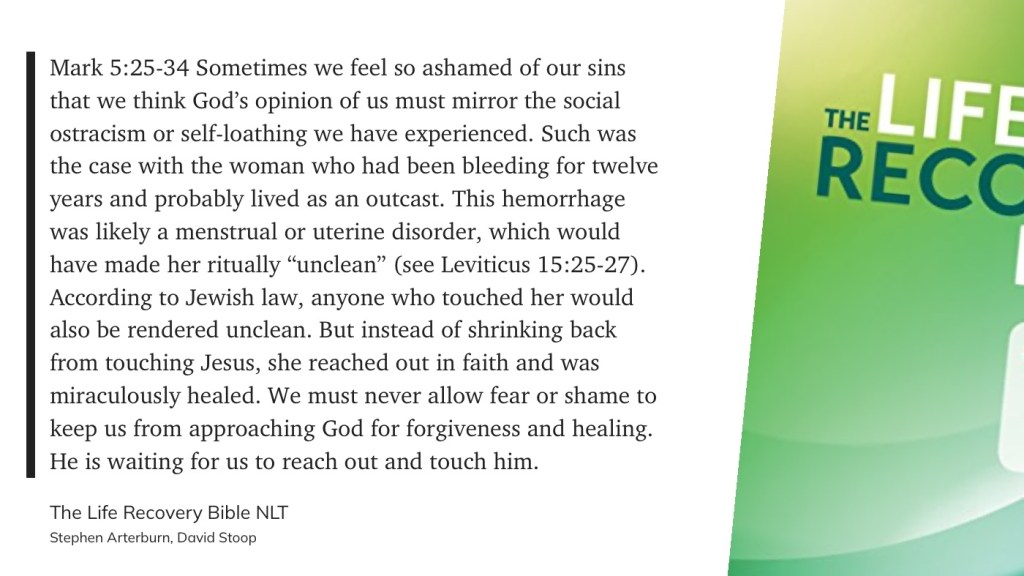
Verses 25-34 recount the story of a woman who, after suffering from hemorrhages for twelve years, is healed by touching Jesus' cloak. This passage teaches the importance of reaching out for help and maintaining hope, even when facing seemingly insurmountable obstacles.
In counseling sessions, parishioners can be guided to seek support from their faith community and trust in God's healing power, both in times of physical and emotional pain.
FMark 5:35-43 concludes with Jesus raising Jairus' daughter from the dead, illustrating the transformative power of faith and the hope of resurrection. This passage can serve as a source of comfort for those grieving the loss of a loved one or facing their mortality.
By emphasizing the eternal life promised through faith in Jesus, parishioners can find solace and peace amidst the sorrows of life.
The Life
Recovery
Bible
THE LIFE RECOVERY BIBLE
13th Sunday of Year B


Catholic
Prayers
Catholic
Prayers
Here are ideas to help you create an opening or closing prayer for your small group discussion
CATHOLIC PRAYERS
13th Sunday of Year B
Almighty and eternal God, source of all wisdom and life, we come before you in gratitude and reverence. As we reflect upon your divine teachings, we find solace and strength in the promise of your everlasting love.
In the words of Wisdom, we are reminded that you created us to be imperishable, to be free from the kingdom of death, and to walk in the path of righteousness. Through your divine grace, you bestowed upon us the gifts of knowledge, understanding, and discernment, so that we may learn from your creation and live according to your will.
Loving Father, we ask for your continued guidance and protection, that we may remain steadfast in our faith, and keep your commandments in our hearts. May we be instruments of your love, bringing hope and joy to those around us, as we strive to be worthy of the promise of eternal life in your heavenly kingdom.
We ask this through Christ our Lord, who lives and reigns with you in the unity of the Holy Spirit, one God, forever and ever. Amen.
Eternal and loving God, we come before you with humble hearts, filled with gratitude for the abundant blessings you have bestowed upon us. Your divine grace and generosity know no bounds, and we are humbled by the knowledge that you have chosen us to be stewards of your love in this world.
As we reflect upon the teachings of Saint Paul in his second letter to the Corinthians, we are reminded of the importance of sharing our abundance with those in need, so that all may experience the richness of your love and the hope of your eternal kingdom.
Loving Father, grant us the strength and courage to follow in the footsteps of your Son, Jesus Christ, who gave of himself freely and without reservation. May we, too, open our hearts and our hands to those who are less fortunate, that they may find comfort, solace, and hope in our actions.
In your divine mercy, grant us the wisdom to understand that true equality lies in the generosity of spirit and the willingness to serve. May we strive to excel in this gracious act of giving, as a testament to our faith and our love for one another.
We ask this in the name of Jesus Christ, our Lord and Savior, who lives and reigns with you in the unity of the Holy Spirit, one God, forever and ever. Amen.
Merciful and loving Father, we come before you with humble hearts, filled with gratitude for the healing power of your love. As we reflect upon the Gospel of Mark, we are reminded of the incredible faith of the woman who touched the hem of your Son's garment and was healed.
Through this powerful example, we are inspired to seek your healing grace in our own lives, and to never lose faith in the transforming power of your divine love.
Loving God, we ask for your mercy and compassion upon all those who are suffering, be it in body, mind, or spirit. May they find comfort in the knowledge that your Son, Jesus Christ, is ever-present in their lives, offering solace and healing to all who seek Him.
In your infinite wisdom, grant us the courage to reach out in faith, just as the woman in the Gospel did, so that we too may experience the saving power of your divine embrace.
We ask this through Christ our Lord, who lives and reigns with you in the unity of the Holy Spirit, one God, forever and ever. Amen.

Ann Osdieck
13th Sunday of Year B
Gospel Connection
He took the child by the hand and said to her, “Talitha koum,” which means, “Little girl, I say to you, arise!” (Mark 5:21-43)
An official, Jairus, falls at Jesus’ feet and pleads.
A suffering lady boldly touches his cloak.
And you grant their wishes
through your
touch.
Jesus, we believe.
Let your healing flow into us, too:
through your poor, your hungry, your troubled;
your daisies, hummingbirds, skies, music, books.
Let us find you everywhere, in all things.
Please touch us with
your grace.
Copyright © 2024, Anne M. Osdieck. All rights reserved. Permission is hereby granted to reproduce for personal or parish use.