
1st Sunday of Advent C

December 1, 2024

Connections

Connections

sundaymassreadings.org

How to Use

🔵 ASK A QUESTION related to this week's Mass readings.

🔵 EXPAND TEXT: Copy and paste any text or insights from a page to generate a more in-depth look at a topic.

🔵 FOR BEST RESULTS: Indicate the specific Sunday in question if it differs from the upcoming one. Refresh chatbot when switching to a different Sunday.

LEARN MORE


YouTube player

SOURCE: Catholic NH – Fr. Chris Martel 2021 Advent Videos

SUMMARY OF VIDEO w/ TIMESTAMPS) ✨

Advent is a season of expectant hope that encourages us to reflect God's light and kindness in a world filled with darkness, as we await the arrival of the Messiah and the promise of eternal life.

  • 00:00 Advent begins, marking a season of expectant hope.
  • 00:38 Hope often focuses on material desires or physical healings, but when these hopes fail, we face disappointment and despair.
  • 01:08 Hope rekindles our lives during Advent as we await the Messiah, illuminating our journey with the light of God amidst darkness.
  • 03:13 This Advent season is a time to inspire hope in everyone around you.
  • 03:24 Our world is currently engulfed in darkness.
  • 03:29 Amidst the pandemic's challenges of worry, fear, and suffering, Advent brings a glimmer of hope.
  • 03:44 Jesus Christ brings hope by dispelling darkness in our lives, both through his birth in Bethlehem and the future promise of being with God in glory.
  • 04:17 Show kindness daily to reflect God's light and bring hope to those in need during Advent, preparing for the joy of Christmas and the promise of eternal life.

FEATURED BULLETIN INSERTS

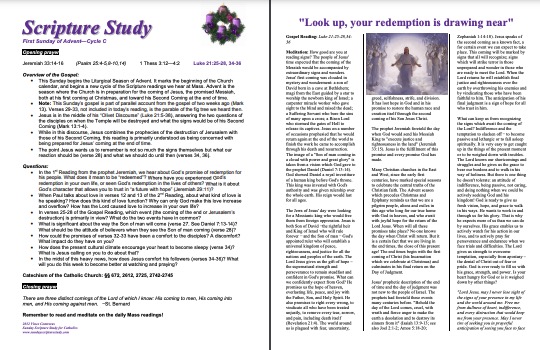
Sunday Scripture Study

Source: Vince Contreras
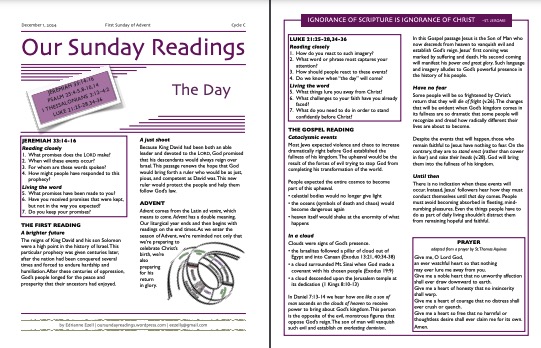

Source: Edrianne Ezell


LECTIONARY COMMENTARY by Fr. Tobin*
ECHOING GOD'S WORD by Fr. Thibodeau*


Weekday Readings

Weekday introductions to the Sunday readings for the upcoming week. It is the last page of a 5-6 page PDF on commentary for the Sunday readings.

Source: Kieran J. O'Mahony, OSA


Month of December

This 82 page PDF has refections and prayers for each day of the month.

NOT YET AVAILABLE

Source: Carmelites


Sunday Resources for Children

SDC WORKSHEET for children
CATHOLIC KIDS BULLETIN
CATHOLIC MOM resources


Click on banner to view contents

Times of Peril and Promise

In 2018, Carol J. Dempsey, O.P. wrote an insightful column that was also featured in CELEBRATION. She continues to write weekly reflections for the National Catholic Reporter.

We are living in a time of global turmoil as we watch some democracies being taken apart while other ones erode socially, culturally and economically. As democracies come apart or falter, international world leaders scramble to figure out how to save the democratic system and its values… 

READ MORE


Generational
Preaching

Generational preaching refers to the practice of delivering homilies that address and connect with people of various ages, life stages, and backgrounds within a congregation.

The goal is to create an inclusive environment where all generations can engage with the message, find relevance and meaning.

YouTube player
List three possible preaching points (key Catholic homily starters) that a homilist could use dealing with real life challenges of teenagers and applications to daily living of the Catholic faith for each of the following New American Bible bible texts xxxxxxxxxxxxxxxxxx. When appropriate quote from the passage.
ADOLESCENTS

Jeremiah 33:14-16

  1. Trusting God's faithfulness amidst uncertainties: Teenagers often face challenges and doubts about their future. This passage reminds them that God is faithful and promises a "future full of hope" (Jer 33:16). They can learn to trust in God's providence and remain optimistic, even when life seems unpredictable.
  2. God's justice for the oppressed: Teens might witness or experience bullying or unjust treatment. This passage highlights God's promise to "render justice and righteousness" (Jer 33:15). Young people can find solace in God's commitment to fairness and work towards creating a more just society.
  3. The power of prayer: God invites Jeremiah to "call to me, and I will answer" (Jer 33:3). Teens can learn that prayer is a powerful tool to find guidance and express their deepest concerns to God.

1 Thessalonians 3:12—4:2

  1. Building a supportive community: Teenagers need positive social connections to thrive. The passage encourages believers to "increase and abound in love" (1 Thes 3:12). Catholic communities can foster genuine relationships and support teens in their faith journey.
  2. Developing holiness: Teens may struggle with peer pressure to engage in harmful behaviors. St. Paul urges them to "be blameless in holiness" (1 Thes 3:13). Practicing self-control and virtue can empower teens to resist temptation and grow in their faith.
  3. Preparing for the Lord's return: Uncertainty about the future can be a source of anxiety for teens. The passage reminds them to "be prepared" for Jesus' return (1 Thes 3:13). Young people can find reassurance in God's ultimate plan and strive to live faithfully every day.

Luke 21:25-28, 34-36

  1. Being vigilant: Teens may become preoccupied with their daily routines. This passage warns against being caught unprepared (Lk 21:34-35). Teens can learn to balance their daily responsibilities with nurturing their spiritual life, staying watchful and ready for the Lord's coming.
  2. Confronting fears: Adolescents often face fears and anxieties. Jesus' words reassure them that, despite distressing events, "not a hair on your head will be destroyed" (Lk 21:18). Trusting in God's protection can help teens overcome their fears and persevere through adversity.
  3. Overcoming materialism: Teens might struggle with the allure of material possessions and consumerism. Jesus warns against being weighed down by "the anxieties of life" (Lk 21:34). Encouraging teenagers to embrace a spirit of detachment from material goods can help them prioritize their spiritual growth over fleeting pleasures.
List three possible preaching points (key Catholic homily starters) that a homilist could use dealing with real life challenges of dating couples and applications to theology of the body for each of the following New American Bible bible texts xxxxxxxxxxxxxxxxxx When appropriate quote from the passage.
DATING PARTNERS

Jeremiah 33:14-16

  1. Building a relationship based on faith: Dating couples can face challenges in connecting on a deeper level. Jeremiah's prophecy highlights God's promise to bring forth a "righteous branch" (Jer 33:15), which can be seen as a reminder to build a relationship grounded in faith and shared values.
  2. The gift of family: Young couples often contemplate their future and the possibility of starting a family. This passage speaks of God's promise to "raise up offspring" (Jer 33:16), underscoring the divine purpose of family life and inviting couples to trust in God's plan.
  3. Overcoming challenges together: Couples may encounter difficulties and trials. The imagery of God's love as an "evergreen tree" (Jer 17:8) can be applied to their relationship, encouraging them to rely on their shared faith as a source of strength and growth through adversity.

1 Thessalonians 3:12—4:2

  1. Love as a choice: Dating couples may focus on the emotional aspects of love, but this passage challenges them to "increase and abound in love" (1 Thes 3:12). This highlights the aspect of love as a choice and encourages couples to cultivate a selfless love that nurtures their relationship.
  2. Embracing purity: Dating couples may struggle with sexual boundaries. Paul's instruction to "live in holiness and righteousness" (1 Thes 4:1) emphasizes the importance of practicing chastity and self-control, rooted in respect for each other's dignity.
  3. Preparing for a future together: Some couples may be anxious about their future. Paul's advice to "be prepared" for the Lord's return (1 Thes 3:13) can inspire them to build a relationship that is centered on Christ and strive for holiness as they discern their future.

Luke 21:25-28, 34-36

  1. Fostering spiritual growth: Couples might find it challenging to maintain a balanced spiritual life. Jesus urges his followers to "be vigilant at all times" (Lk 21:36). Encourage dating couples to prioritize their faith by praying together, attending Mass, and discussing spiritual matters.
  2. Embracing sacrifice: Relationships often require sacrifice and self-giving. This passage speaks of "signs in the sun, moon, and stars" (Lk 21:25), reminding couples that they must be prepared for the challenges that come with a committed relationship, sacrificing personal desires for the greater good of their union.
  3. Prioritizing values: Dating couples may be tempted to compromise their values to please their partner. Jesus warns against being "weighed down with dissipation and drunkenness" (Lk 21:34), guiding them to stay true to their convictions and moral principles in the face of peer pressure or cultural norms.
List three possible preaching points (key Catholic homily starters) that a homilist could use dealing with real life challenges of adults in the workplace for each of the following New American Bible bible texts xxxxxxxxxxxxxxxxxx When appropriate quote from the passage.
WORKING ADULTS

Jeremiah 33:14-16

  1. Trusting in God's plan for our work: Adults may struggle with job-related issues or feel lost in their career paths. This passage reminds them of God's promise to "execute justice and righteousness" (Jer 33:15), which can be seen as a call to trust in God's guidance and providence for their professional lives.
  2. Bringing hope to the workplace: Work environments can be stressful and competitive. Jeremiah's prophecy speaks of the "Branch of righteousness" (Jer 33:15), urging adults to embody hope and righteousness in their work interactions and create a positive atmosphere.
  3. Seeking balance between work and spiritual life: Maintaining a healthy work-life balance can be challenging. The imagery of God's love as an "evergreen tree" (Jer 17:8) can inspire adults to prioritize their spiritual growth alongside their career pursuits.

1 Thessalonians 3:12—4:2

  1. Cultivating a loving work environment: Office politics and conflicts may arise in the workplace. Paul's encouragement to "increase and abound in love" (1 Thes 3:12) can inspire adults to build respectful relationships with colleagues and promote harmony.
  2. Practicing integrity and holiness: Workplace ethics and moral dilemmas may test an adult's character. Paul's call to "be blameless in holiness" (1 Thes 3:13) can guide them in maintaining integrity, honesty, and ethical behavior in their professional lives.
  3. Fostering a sense of purpose: Some adults may feel disconnected from their work's meaning or purpose. Paul's words about being "prepared" for the Lord's return (1 Thes 3:13) can remind them of their higher calling to serve God in all aspects of life, including their work.

Luke 21:25-28, 34-36

  1. Maintaining a balanced perspective on work: Adults might become overwhelmed by work-related stress or expectations. This passage warns against being caught up in the "anxieties of daily life" (Lk 21:34), urging them to prioritize their spiritual well-being and find peace amidst workplace pressures.
  2. Building resilience: Career setbacks or failures can be discouraging. Jesus encourages his followers to "stand erect and raise your heads" (Lk 21:28), inspiring adults to persevere through professional challenges and trust in God's ultimate plan.
  3. Fostering mindfulness and watchfulness: Busy work schedules can lead to a lack of reflection and self-awareness. Jesus' call to "be vigilant" (Lk 21:36) can remind adults to practice mindfulness and seek growth opportunities in their professional lives.
List three possible preaching points (key Catholic homily starters) that a homilist could use dealing with real life challenges of individuals discerning a vocation to priesthood or religious life for each of the following New American Bible bible texts xxxxxxxxxxxxxxxxxx When appropriate quote from the passage.
List three possible preaching points (key Catholic homily starters) that a homilist could use dealing with real life challenges of individuals struggling with health issues or disabilities for each of the following New American Bible bible textsxxxxxxxxxxxxxxxxxx When appropriate quote from the passage.
HEALTH CHALLENGES

Jeremiah 33:14-16

  1. Finding hope in God's promises: Facing health issues or disabilities can lead to feelings of despair. This passage reminds individuals of God's faithfulness in fulfilling His promises, such as bringing forth the "Branch of righteousness" (Jer 33:15). They can find comfort in God's assurance and maintain hope despite their struggles.
  2. Trusting in God's justice: Those with health challenges may grapple with feelings of unfairness. Jeremiah's prophecy emphasizes God's commitment to "justice and righteousness" (Jer 33:15), encouraging individuals to trust in His divine plan and wisdom.
  3. Seeking spiritual healing: Physical healing may not always be possible, but spiritual healing can provide solace and strength. The imagery of God's love as an "evergreen tree" (Jer 17:8) highlights the importance of nurturing one's spiritual life and finding comfort in God's enduring love.

1 Thessalonians 3:12—4:2

  1. Embracing love and support: Health struggles can lead to feelings of isolation. Paul's call to "increase and abound in love" (1 Thes 3:12) encourages individuals to seek support from their faith community and remind them that they are not alone in their struggles.
  2. Practicing holiness through adversity: Physical challenges can be an opportunity for spiritual growth. Paul's exhortation to "be blameless in holiness" (1 Thes 3:13) inspires individuals to persevere in faith, finding meaning and purpose amid their difficulties.
  3. Preparing for God's plan: Uncertainty about the future can be a significant concern for those facing health issues. Paul's reminder to "be prepared" for the Lord's return (1 Thes 3:13) offers reassurance that God has a plan and will guide them through their journey.

Luke 21:25-28, 34-36

  1. Maintaining vigilance in prayer: Living with health challenges requires ongoing strength and resilience. Jesus urges his followers to "be vigilant at all times" (Lk 21:36), emphasizing the importance of prayer and spiritual disciplines for individuals navigating health struggles.
  2. Embracing perseverance: Physical limitations can be discouraging, but Jesus encourages his followers to "stand erect and raise your heads" (Lk 21:28). Individuals can find strength in this message, embracing perseverance and resilience as they face their challenges.
  3. Overcoming anxiety: Health issues can lead to worry and fear. Jesus warns against being "weighed down with … the worries of this life" (Lk 21:34), urging individuals to seek peace and trust in God's provision throughout their struggles.
List three possible preaching points (key Catholic homily starters) that a homilist could use dealing with real life challenges of senior citizens or grandparents for each of the following New American Bible bible texts xxxxxxxxxxxxxxxxxx When appropriate quote from the passage.
GRANDPARENTS & SENIOR CITIZENS

Jeremiah 33:14-16

  1. Embracing hope for future generations: Senior citizens and grandparents often reflect on their family's future. Jeremiah's prophecy offers hope, as it speaks of the "Branch of righteousness" (Jer 33:15) that will bring justice and security to future generations.
  2. Sharing wisdom and guidance: The elderly possess valuable life experiences and insights. They can draw inspiration from Jeremiah's role as a prophet, sharing their wisdom and offering guidance to younger generations.
  3. Trusting in God's faithfulness: Aging and the challenges that come with it can lead to doubts and fears. The passage reminds seniors of God's faithfulness in fulfilling His promises, offering them reassurance and comfort.

1 Thessalonians 3:12—4:2

  1. Nurturing love within families: Senior citizens and grandparents play a vital role in their families. Paul's call to "increase and abound in love" (1 Thes 3:12) highlights their importance in fostering love and unity among family members.
  2. Embracing holiness in later life: Growing older presents unique spiritual opportunities. Paul's encouragement to "be blameless in holiness" (1 Thes 3:13) inspires seniors to deepen their relationship with God and serve as role models for their families.
  3. Preparing for eternal life: Facing the reality of mortality can be challenging for seniors. Paul's words about being "prepared" for the Lord's return (1 Thes 3:13) offer comfort and reassurance as they contemplate their eternal future.

Luke 21:25-28, 34-36

  1. Being watchful in prayer: Aging may bring physical limitations, but seniors can actively participate in prayer. Jesus urges his followers to "be vigilant at all times" (Lk 21:36), emphasizing the power of prayer in sustaining hope and finding strength in difficult times.
  2. Embracing perseverance and resilience: Senior citizens and grandparents often face various challenges. The passage encourages them to "stand erect and raise your heads" (Lk 21:28), embracing perseverance and finding inspiration in their faith.
  3. Overcoming fears and anxieties: Aging can bring fears about health, finances, and relationships. Jesus warns against being "weighed down with … the worries of this life" (Lk 21:34), reminding seniors to find peace and trust in God's provision.
VOCATIONAL DISCERNMENT

Jeremiah 33:14-16

  1. Trusting God's call: Individuals discerning a vocation may struggle with doubt or uncertainty. This passage highlights God's promise to fulfill His word and bring forth a "righteous Branch" (Jer 33:15). Discerners can draw hope from this image, trusting that God will guide them on their vocational journey.
  2. Embracing a prophetic role: Priests and religious brothers and sisters are called to be prophetic voices in the world. Jeremiah's role as a prophet serves as a reminder that discerners are called to embrace this mission in their own lives, speaking truth and serving as witnesses to God's love.
  3. Seeking God's justice and righteousness: Those considering a vocation may be concerned about their ability to live a life of holiness. The promise of God executing "justice and righteousness" (Jer 33:15) encourages discerners to seek these virtues as they grow in their relationship with God.

1 Thessalonians 3:12—4:2

  1. Cultivating love and holiness: Discerners may wonder how to best prepare for their vocation. Paul's encouragement to "increase and abound in love" (1 Thes 3:12) and "be blameless in holiness" (1 Thes 3:13) highlights the importance of nurturing these qualities in one's spiritual life.
  2. Embracing God's will: The discernment process can be filled with uncertainty. Paul's words about being "prepared" for the Lord's return (1 Thes 3:13) remind individuals that ultimately, they are called to align their will with God's, seeking His guidance as they pursue their vocation.
  3. Fostering community support: A strong support network is essential for those discerning a vocation. Paul's prayer for the Thessalonians to "increase and abound in love" (1 Thes 3:12) underscores the importance of fostering relationships with mentors, spiritual directors, and fellow discerners.

Luke 21:25-28, 34-36

  1. Being vigilant in discernment: Indecision and distraction can hinder one's vocational discernment. Jesus' call to "be vigilant" (Lk 21:36) emphasizes the need for discerners to be attentive to God's voice, remaining focused and committed throughout their discernment journey.
  2. Embracing challenges: Pursuing a vocation can involve difficulties and sacrifices. The passage encourages discerners to "stand erect and raise your heads" (Lk 21:28), embracing challenges with faith and courage as they follow God's call.
  3. Overcoming worldly attachments: Detachment from material possessions can be a challenge for discerners. Jesus warns against being weighed down by "dissipation and the worries of this life" (Lk 21:34), urging them to prioritize their spiritual growth and commitment to serving God.

1st Sunday of Advent C

Choose one of the following OUR SUNDAY VISITOR activities as a way to further reflect on the Sunday readings:

  • Make and bless an Advent wreath for your home. Recall that the circle reminds us of God’s eternal faithfulness. The four candles represent the four Sundays in Advent. The candles symbolize Jesus who is the Light of the world. During Advent, focus your daily prayers around the Advent wreath.
  • Have a discussion about how your family prepares for special days and events. Remind family members that this special time of preparation for Christmas is called Advent. Talk about what each family member can do to prepare his or her heart for Jesus’ coming.
  • Together as a family do a Christmas craft or project that reflects the message of Christ’s hope and promise. For example, make homemade Christmas cards or Christmas tree ornaments.
  • Have a family meeting at which all members brainstorm ideas as to how they can prepare for the coming of Christ during Advent. Write the ideas on slips of paper and put the slips in a hat. Each person is to pick one and to carry that idea out for the week. At the end of the week, have each person share what they chose and how they carried it out.

SOURCE: Our Sunday Visitor Life Long Catechesis

RELATED PAGES:

OSV Kids provides children’s books and an engaging monthly activity booklet, OSV Kids, to help little ones form a relationship with Jesus Christ that grows as they do.

OSV Podcasts is your place for conversation and connection. Discover a community of Catholic content producers committed to exploring Truth in a way that unites and invites.


Connecting the Sunday Readings to the Sacrament of Reconciliation

Compassionate messages (3-5 for each readings) a priest could say to a penitent in confession based on the Sunday readings XXXXXXXXXXXXXXXXXXXXXXX

Words of Compassion

1st Sunday of Advent C

Here are some suggestions a priest might make when speaking with a penitent in the confessional.

Jeremiah 33:14-16

  1. “Remember that God’s love for you is like an ‘evergreen tree,’ unwavering and eternal. As you seek healing and forgiveness, know that He offers the hope of renewal and righteousness to all who turn to Him.”
  2. “Trust in God’s promise of a ‘righteous Branch’ who brings justice and security. In the sacrament of confession, you encounter Jesus, the Branch of righteousness, who offers you mercy and grace.”
  3. “In your struggles and uncertainties, recall God’s faithfulness in fulfilling His promises. He is ever-present in your life, guiding you toward reconciliation and growth.”

1 Thessalonians 3:12—4:2

  1. “Strive to ‘increase and abound in love,’ embracing the transformative power of God’s grace in your life. This love will help heal your relationships and strengthen your commitment to holiness.”
  2. “In the confession, you are ‘prepared’ for the Lord’s return by turning away from sin and embracing a life of holiness. Let this sacrament be a source of strength and hope in your journey.”
  3. “As you receive forgiveness, remember the call to ‘be blameless in holiness.’ Seek to cultivate virtue and righteousness, and let your life be a testament to God’s transformative love.”

Luke 21:25-28, 34-36

  1. “Jesus urges us to ‘stand erect and raise our heads’ in the face of challenges. Through the sacrament of confession, you rise to the occasion, seeking healing and renewal with courage and hope.”
  2. “Be ‘vigilant at all times’ in guarding your heart and mind against temptations and distractions. Let this sacrament strengthen your resolve to grow in holiness and resist the ‘anxieties of daily life.'”
  3. “As you confess your sins, remember that Jesus has conquered the powers of darkness. He invites you to overcome the ‘worries of this life’ and find peace in His divine love and mercy.”