1st Sunday of Advent C ✨
HOLY SEE
Sunday Papal Homilies
Sunday Papal Homilies

NEED HELP?
GET ANSWERS
FROM AI

THE WORD THIS WEEK "AI "Catholic Assistant" Chat Bot has been specifically trained for this website
🔵 STEP ONE

CLICK ON THE BLUE ICON at the bottom right corner of screen
🔵 STEP TWO
TYPE YOUR QUESTION that is related to the content on the page
— OR —
COPY AND PASTE any text on the page to generate a more in-depth look of the topic
🔵 STEP THREE
ASK FOLLOW-UP QUESTIONS if necessary
FOR BEST RESULTS:
Refresh chatbot when switching to a different Sunday of year.
Physiognomy?
Never heard that before...
On this page you will find that one of the titles under DOCTRINAL MESSAGES is "The physiognomy of the One who is coming."
ONLINE GUEST: I never heard the word physiognomy. What does that mean?
CATHOLIC ASSISTANT: Physiognomy refers to the practice of assessing a person's character or personality based on their outer appearance, particularly the face. Historically, it was believed that facial features could reveal insights into a person's nature or temperament. While it was once considered a legitimate field of study, modern science does not support physiognomy as a reliable method for understanding personality. In contemporary usage, it often refers more generally to the facial features or expressions of a person.
ONLINE GUEST: How is physiognomy to be used in relation to Jer 33:14-16 1 Thes 3:12—4:2 and Lk 21:25-28, 34-36
CATHOLIC ASSISTANT: A thematic connection can be drawn in terms of looking beyond the surface to understand deeper spiritual truths. Jeremiah speaks of God's promise, which requires faith beyond visible circumstances. Thessalonians calls for growth in love and holiness, focusing on inner transformation. Luke urges vigilance for spiritual signs, emphasizing readiness over appearances. Thus, the readings encourage discernment and spiritual insight rather than judging by appearances.

ASK YOUR OWN QUESTIONS BY CLICKING ON THE AI CHAT ICON AT THE BOTTOM RIGHT CORNER OF THIS PAGE
Be sure to state your location, and then Fr. Austin's 2018 opening
LIVE FROM
VATICAN
TIP: You can rewind the livestream up to twelve hours, allowing you to catch up on any events or addresses you may have missed.

SOURCE: Vatican News – English
Vatican Media Live
This livestream allows viewers to witness the Pope’s addresses during Papal Audiences, as well as other Vatican events and news. The livestream is part of the Vatican Media Center’s efforts to share the latest updates on Pope Francis, the Holy See, and the Church worldwide with a global audience.

The Dicastery for the Clergy deals with everything that concerns the priests and deacons of the diocesan clergy with regard to their persons, their pastoral ministry and what is necessary for its fruitful exercise. In these matters it offers the Bishops appropriate assistance.

Coming of the Lord
The coming of the Lord is present in the texts of today’s liturgy; by means of this expression, the liturgy wishes to show us the Christian meaning of time and history. In the first reading we are told, “In those days and at that time, I shall make an upright Branch grow for David.” In St Luke’s eschatological speech, Jesus says that human beings will see the Son of Man coming on a cloud with power and great glory. In the First Letter to the Thessalonians, St Paul urges them to be prepared for the coming of our Lord Jesus Christ, with all of his saints.
P. Antonio Izqeuirdo, L.C., Copyright © Dicastery for the Clergy
Doctrinal Messages
1st Sunday of Advent C
VATICAN
DAILY
BULLETIN
The Vatican Daily Bulletin is the official news source for the Pope’s activities and statements, providing accurate and up-to-date information. Published daily, it keeps the public informed about the Church’s activities and decisions.
Pastoral Suggestions
1st Sunday of Advent C
THE HOLY
FATHER
RELATED LINKS
THIS SUNDAY’S
QUOTES
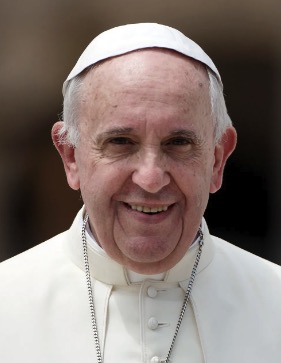
Pope Francis: “Let us welcome Jesus, the God of life, into our lives, and today once again say “yes” to him. Then no stone will block the way to our hearts, no tomb will seal our joy, and no power will prevent us from encountering him who is alive and at work in our midst.” (April 20, 2024) – Emphasizing the importance of accepting Jesus into our lives and allowing him to transform us, just as the people in the Gospel passage (Lk 21:25-28, 34-36) were encouraged to be watchful and prepared for the coming of the Son of Man.
Pope Francis: “Every act of compassion is a sign of God’s love for us, and a sign of the new world he has promised. Let us not be afraid to be compassionate, to draw near to those in need and to make the Lord’s love and mercy tangible.” (November 17, 2024) – Drawing inspiration from the message of hope and divine intervention found in the first reading (Jer 33:14-16), Pope Francis encourages acts of compassion and kindness as expressions of God’s love in our world.
Pope Francis: “The Church is called to be the house of the Father, with doors always wide open. […] No one is excluded from the hope of life: not the poor, not the sick, not those who are sorrowing or alone, not the unloved or abandoned, not the outcast or the marginalized. All can find in the Church a home where they can experience the embrace of the Father.” (February 10, 2024) – Emphasizing the theme of divine promise and restoration from the first reading (Jer 33:14-16), Pope Francis highlights the importance of the Church as a welcoming and inclusive community that embodies hope for all, reflecting the spirit of unity and love in the second reading (1 Thes 3:12—4:2).
Pope Francis: “The risen Christ walks with us on the often difficult path of life, to sustain us and enlighten us. Let us welcome him with faith and joy, and let us allow ourselves to be guided by his light, which drives away every shadow and helps us to walk in the way of peace and fraternity.” (April 5, 2024) – Echoing the message of hope and divine guidance found in the Gospel passage (Lk 21:25-28, 34-36), Pope Francis invites us to embrace the risen Christ’s presence and wisdom in our lives.
Pope Francis
1st Sunday of Advent C

Prayerful Anticipation
2 December 2018 | Saint Peter’s Square
- TEXT
- DISCUSSION GUIDE
Today Advent begins, the liturgical time which prepares us for Christmas, inviting us to lift our gaze and open our hearts to welcome Jesus. During Advent we do not just live in anticipation of Christmas; we are also called to rekindle the anticipation of the glorious return of Christ — when he will return at the end of time — preparing ourselves, with consistent and courageous choices, for the final encounter with him. We remember Christmas, we await the glorious return of Christ, and also our personal encounter: the day in which the Lord will call.
During these four weeks we are called to leave behind a resigned and routine way of life and to go forth, nourishing hope, nourishing dreams for a new future. This Sunday’s Gospel (cf. Lk 21:25-28, 34-36) goes in this very direction and puts us on guard against allowing ourselves to be oppressed by an egocentric lifestyle or by the phrenetic pace of our days. Jesus’ words resonate in a particularly incisive way: “take heed to yourselves lest your hearts be weighed down with dissipation and drunkenness and cares of this life, and that day come upon you suddenly … But watch at all times, praying” (vv. 34, 36).
To be mindful and to pray: this is how to live the time between now and Christmas. To be mindful and to pray. Inner listlessness comes from always turning around ourselves and being blocked by our own life, with its problems, its joy, and suffering, but always turning around ourselves. And this is wearying; this is dull, this closes us off to hope. Here lies the root of the lethargy and laziness that the Gospel speaks about. Advent invites us to a commitment to vigilance, looking beyond ourselves, expanding our mind and heart in order to open ourselves up to the needs of people, of brothers and sisters, and to the desire for a new world. It is the desire of many people tormented by hunger, by injustice and by war. It is the desire of the poor, the weak, the abandoned. This is a favourable time to open our hearts, to ask ourselves concrete questions about how and for whom we expend our lives.
The second attitude to best experience the time of awaiting the Lord is that of prayer. Arise, “look up and raise your heads, because your redemption is drawing near” (v. 28), the Gospel of Luke cautions. It is about standing up and praying, turning our thoughts and our hearts to Jesus who is about to come. One stands when awaiting something or someone. We await Jesus and we wish to await him in prayer which is closely linked to vigilance. Praying, awaiting Jesus, opening oneself to others, being mindful, not withdrawn in ourselves. But if we think of Christmas in the light of consumerism, of seeing what I can buy in order to do this and that, of a worldly celebration, Jesus will pass by and we will not find him. We await Jesus and we wish to await him in prayer which is closely linked to vigilance.
But what is the horizon of our prayerful anticipation? In the Bible the voices of the prophets are especially revealing to us. Today it is that of Jeremiah who speaks to the people who had been harshly tried by exile and who risked losing their very identity. We Christians too, who are also the People of God, run the risk of becoming worldly and of losing our identity, indeed of ‘paganizing’ the Christian way. Therefore, we need the Word of God through which the prophet proclaims: “Behold, the days are coming, says the Lord, when I will fulfil the promise I made … I will cause a righteous Branch to spring forth for David; and he shall execute justice and righteousness in the land” (Jer 33:14-15). And that righteous branch is Jesus. It is Jesus who comes and whom we await.
Discussion Guide for Pope’s Homily
Introduction
Advent marks the beginning of the liturgical season preparing us spiritually for Christmas. It invites us to anticipate not only the commemoration of Jesus’ birth but also His second coming and our personal encounters with Him.
1. Themes of Advent
- Anticipation and Preparation: Discuss how Advent involves looking forward to Christ’s birth and His eventual return. How can we prepare for these events in our lives?
- Hope and Renewal: Reflect on leaving behind the routine of life to embrace new dreams and hopes. What specific hopes do you have for the Advent season?
2. The Call to Vigilance and Prayer
- Vigilance: The Gospel warns us against being weighed down by life’s distractions. What are some ways we can practice vigilance in our daily lives?
- Prayer: Prayer is a key component during Advent. How can we integrate more prayer into our days to better welcome Jesus?
- Jesus’ Teachings (Luke 21:25-28, 34-36): Analyze the passage and discuss its relevance to our Advent journey.
3. Going Beyond Self-Centeredness
- Living for Others: Advent encourages us to look beyond ourselves and serve others. What actions can we take to support those in need in our community?
- Challenging Consumerism: How can we resist the consumerist pressures of the season to focus on its true meaning?
4. Inspiration from the Prophets
- Jeremiah’s Message: Discuss how Jeremiah’s words can be applied to our modern lives. In what ways risk losing our Christian identity?
- The Righteous Branch: How can Jesus’ coming be seen as the fulfillment of hope and justice?
5. Personal Reflection and Action
- Concrete Questions: Reflect on how you are spending your life. For whom do you expend your energies and resources?
- Practicing Attitudes of Advent: What concrete steps can you take to embrace the attitudes of mindfulness, prayer, and vigilance during this Advent season?
Conclusion
The Advent season is an opportunity to rekindle our faith, hope, and commitment to live out our Christian beliefs actively. Discuss individual commitments to make this Advent meaningful both personally and within the community.
IN MEMORY
THIS SUNDAY’S
QUOTES
Pope Benedict XVI: “Christianity is not a new philosophy or a new morality. We are only Christians if we encounter Christ.” (Jer 33:14-16) —November 28, 2010
Pope Benedict XVI: “The Church is not a place for do-gooders or for activists, but for those who seek salvation.” (Jer 33:14-16) —November 27, 2011
Pope Benedict XVI: “Our world needs this presence of God, it needs his light and his love. It needs the presence of Christians who are faithful to their vocation and mission.” (1 Thes 3:12—4:2)—December 2, 2012
Pope Benedict XVI: “To be watchful means to be awake, not to be asleep. It means to be alert and vigilant, ready to receive the Lord when he comes.” (Lk 21:25-28, 34-36) —November 28, 2010
Pope Benedict XVI: “Christ is the King who makes us kings. To be kings with him means that we are united to him, drawn into his love and his light.” (Lk 21:25-28, 34-36) —November 28, 2010
Pope Benedict XVI: “Christ’s coming is an event that renews the whole of reality, an event that leads us to the fullness of life.” (Lk 21:25-28, 34-36) —November 27, 2011
Pope Benedict XVI
1st Sunday of Advent C

The Coming of the Lord
2 December 2012 | Saint Peter’s Square
- TEXT
- DISCUSSION GUIDE
Today the Church begins a new Liturgical Year, a journey which, 50 years after the opening of the Second Vatican Ecumenical Council, is further enriched by the Year of Faith. The first Season on this itinerary is Advent, formed — in the Roman Rite — of the four weeks preceding the Nativity of Our Lord, that is, the mystery of the Incarnation.
The word “advent” means “coming” or “presence”. In the ancient world it meant the visit of the king or emperor to a province; in the Christian language it refers to the Coming of God, to his presence in the world; a mystery that embraces the entire cosmos and history, but that has two culminating events: the First and the Second Coming of Jesus Christ. The first is, precisely, the Incarnation. The second is his glorious return at the end of time. These two events that are chronologically distant — and we are not given to know by how long — are deeply connected, because with his death and Resurrection Jesus fulfilled that transformation of man and of the cosmos which is the final goal of Creation. However, before the end, the Gospel must be proclaimed to all the nations, as Jesus says in the Gospel according to St Mark (cf. Mk 13:10). The Lord’s Coming continues, the world must be penetrated by his presence and this ongoing Coming of the Lord in the proclamation of the Gospel requires our continuous collaboration. Moreover the Church, who is, as it were, the Betrothed, the promised Bride of the Lamb of the Crucified and Risen God (cf. Rev 21:9), in communion with her Lord, collaborates in this Coming of the Lord, in which his glorious return has already begun.
Today the word of God calls us to this, outlining the lines of conduct we should follow to be ready for the Lord’s Coming. In Luke’s Gospel, Jesus says to the disciples: “take heed… lest your hearts be weighed down with dissipation and drunkenness and cares of this life… at at all times, praying” (Lk 21:34, 36). Therefore, moderation and prayer. And the Apostle Paul adds the invitation to “increase and abound in love” among ourselves and for everyone, to make our hearts blameless in holiness (cf. 1 Thess 3:12-13).
In the midst of the upheavals of the world or in the deserts of indifference and materialism, may Christians accept salvation from God and bear witness to it with a different way of life, like a city set upon a hill. “In those days”, the Prophet Jeremiah announced, “Jerusalem will dwell securely. And this is the name by which it will be called: The Lord is our righteousness” (33:16). The community of believers is a sign of God’s love, of his justice which is already present and active in history but is not yet completely fulfilled and must therefore always be awaited, invoked and sought with patience and courage.
Discussion Guide for the Pope’s Homily
1. Introduction to the Liturgical Year and Advent
– Explore the significance of the new Liturgical Year.
– Discuss how the Year of Faith enriches the Church’s journey.
– Explain the meaning of Advent in the Roman Rite and the importance of the Incarnation.
2. Understanding Advent
– Define the term “advent” and its implications in both ancient and Christian contexts.
– Reflect on the two main events of Advent: the First and Second Coming of Jesus Christ.
– Discuss the connection between these two events and their significance in the Christian faith.
3. The Proclamation of the Gospel
– Analyze the role of the Gospel in the ongoing Coming of the Lord.
– Consider how believers can collaborate in spreading the Gospel.
– Identify ways the Church, as the Bride of Christ, participates in this mission.
4. Readiness for the Lord’s Coming
– Examine the warnings given by Jesus in Luke’s Gospel (Lk 21:34, 36) about being prepared.
– Discuss the importance of moderation and prayer in daily life.
– Reflect on Apostle Paul’s call to “increase and abound in love” (1 Thess 3:12-13) and its implications.
5. Living as Witnesses in the World
– Examine how Christians can live differently amid worldly challenges.
– Reflect on the imagery of Christians as “a city set upon a hill.”
– Discuss the message of Jeremiah (33:16) and the community of believers as a manifestation of God’s love and justice.
6. Conclusion and Personal Reflection
– Encourage group members to share personal insights from the sermon.
– Discuss actionable steps individuals and the group can take to live out the teachings of this sermon.
– Reflect on how the themes of Advent can be applied in personal and community life.
Questions for Group Discussion
– How does the new Liturgical Year inspire you to deepen your faith journey?
– In what ways can we actively participate in the ongoing Coming of the Lord?
– How can we, as individuals and as a community, prepare for the Lord’s Coming as suggested by the Gospel and Apostle Paul?
– What challenges do we face in living as witnesses to God’s justice and love, and how can we overcome them?
Prayer and Reflection
– Conclude the session with a group prayer focusing on dedication to prepare for the Lord’s Coming.
– Reflect silently on individual commitments to increase love and holiness in daily life.
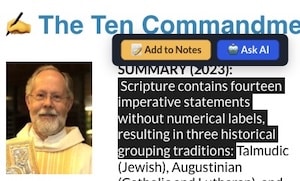 Highlight text or double-click a paragraph anywhere on the site to ADD TO NOTES. You can also click ASK AI to copy your selection to the clipboard with a command prompt, ready for you to paste manually into the chat above.