

In the live-stream video,
you can REWIND up to
twelve hours.

SOURCE: Vatican News – English

Kingship of Jesus Christ
There cannot be any other theme in today’s liturgy than the kingship of Jesus Christ. This kingship is prefigured in the text of the prophet Daniel: “On him was conferred rule, honor and kingship … and his kingship will never come to an end” (first reading). In the Gospel, the kingship of Jesus is affirmed in categorical terms: “So Pilate went back into the Praetorium and called Jesus to him and asked him, “Are you the king of the Jews?” Jesus replied, “It is you who say that I am a king.” The second reading, taken from Revelation, confirms and praises the kingship of Jesus: “To him then, be glory and power for ever and ever. Amen.” At the same time, Christians share Christ’s kingship: “He loved us… and made us a Kingdom of Priests to serve his God and Father.”
P. Antonio Izqeuirdo, L.C., Copyright © Dicastery for the Clergy
✨MEDITATION
STARTERS
- How does the prophet Daniel’s vision of kingship relate to the figure of Jesus Christ in the context of today’s liturgy?
- In what ways does Jesus’ response to Pilate’s question about his kingship reveal his identity and role within the Gospel narrative?
- How does the affirmation of Jesus’ kingship in the second reading from Revelation contribute to our understanding of his divine authority and power?
- What is the significance of Christians sharing in Christ’s kingship, and how does this relate to the concept of being a “Kingdom of Priests” as mentioned in the text?
- How might this understanding of Christ’s kingship and our participation in it influence our daily lives as Christians?
Preachers can use the meditation starters for personal reflection and homily preparation, while small groups can employ them as discussion catalysts.
Doctrinal Messages
34th Sunday of Year B
Characteristics of the Kingdom
- TEXT
- OUTLINE
The Kingdom of Jesus is a pre-announced kingdom, in which the centuries-old promise God made through the prophets is fulfilled. Jesus’ rule is that of the Son of Man, to whom God confers all power and all of the Kingdom (first reading). In the second place, it is a kingdom which overcomes all the powers of evil, symbolized by Daniel in the four beasts. Indeed, Christ will overcome them all on the Cross, which the evangelist John sees like a throne, placing all demonic powers at his feet. In the third place, the Kingdom of Jesus Christ is strangely peculiar: it is not of this world, but it is present in this world, although it is not visible because it belongs to the kingdom of the spirit. In the fourth place, the King defines himself as witness of truth, and the subjects as those who are the subjects of truth and listen to his voice. Yes, Christ is King insofar as he bears witness to the truth, in other words, to the Word of the Father whom he incarnates, and whom the Spirit internalizes and makes effective in our hearts. We are the subjects of Christ the King if we are on the side of truth, if we live, think and act in tune and line with the Word of Jesus Christ. In the fifth place, Jesus is not the king of space but of time, of all times. He is the alpha and omega, the center of time and its regulating principle, “He who is, who was and who is to come.” Finally, Jesus Christ is not only King, but he makes Christians participate in his Kingship: he has made us a Kingdom of Priests for his God and Father. This way, Christians participate in Christ’s Kingship, which has the characteristics that have just been described.
P. Antonio Izqeuirdo, L.C., Copyright © Dicastery for the Clergy
I. Introduction
- Overview of the unique aspects of Jesus’ Kingdom and its establishment as prophesied in the Old Testament
II. The Rule of the Son of Man
- God’s conferment of power and the Kingdom to the Son of Man
- Fulfillment of the centuries-old promise
III. Triumph Over Evil
- Christ’s victory over the powers of evil symbolized by Daniel’s four beasts
- The Cross as a symbol of Christ’s throne and defeat of demonic powers
IV. A Strangely Peculiar Kingdom
- The Kingdom of Jesus Christ as not of this world but present in it
- Its spiritual nature and invisibility
V. The King as Witness of Truth
- Christ’s role as the embodiment of truth and the Word of the Father
- Subjects of truth and their role in listening and aligning with Jesus’ teachings
VI. The King of All Time
- Jesus as the alpha and omega, ruling over all times
- Implications for Christians’ understanding of history and their place in it
VII. Christians as Participants in Christ’s Kingship
- The concept of Christians as a “Kingdom of Priests”
- Shared roles and responsibilities within Christ’s Kingdom
VIII. Conclusion
- Reflection on the distinctive nature of Christ’s Kingdom and its impact on Christians’ lives
- The importance of participating in and living out the values of this Kingdom
✨MEDITATION
STARTERS
- How does the encounter between Jesus and Pilate in the Gospel narrative highlight the concept of the pre-announced Kingdom of Jesus, and how does this relate to the fulfillment of Old Testament prophecies?
- In what ways does the symbolism of the Cross and the defeat of the four beasts in Daniel’s vision emphasize the triumph of Christ’s Kingdom over the powers of evil?
- What are the unique characteristics of Jesus’ Kingdom, particularly its presence in the world while belonging to the spiritual realm, and how does this challenge conventional ideas of earthly kingdoms?
- How is Christ’s role as the witness of truth and the importance of subjects of truth central to the nature of his Kingdom, and what are the implications for Christians in terms of their thoughts, actions, and relationship to the Word of Jesus Christ?
- How does the idea of Christ as the King of all time, as the “alpha and omega,” shape our understanding of his role in regulating and directing history, and how does this impact Christians’ participation in his Kingship?
- What is the significance of Christians being described as a “Kingdom of Priests,” and how does this reflect their shared role in Christ’s Kingship and its distinctive characteristics?
Preachers can use the meditation starters for personal reflection and homily preparation, while small groups can employ them as discussion catalysts.
Pastoral Suggestions
34th Sunday of Year B
A Kingdom of Priests
- TEXT
- OUTLINE
In Jesus Christ, his Priesthood and Kingship are united on the Cross. We Christians are a people of kings and a kingdom of priests by virtue of Jesus Christ’s Death and Resurrection. We are a kingdom of priests because we love and follow the doctrine of truth, because we sing praise and glory to the Lord together in the liturgy, because moved by faith we let him guide our steps towards the Father, each one in his own way, and all as a community of faith and worship. We are also a kingly people because Jesus Christ’s kingship does not make us his subjects or slaves, but free persons, perfectly free in relation to ourselves and our passions, in relation to the world with its powers and snares, in relation to God who attracts us with tenderness and love. I am convinced that the beauty of Christian life lies hidden to most people. And I am absolutely certain that if we were to glimpse this beauty, opening the eyes of our intelligence and love to it, we would fall in love with it. Whether the Church is a people of kings and a kingdom of priests depends on each and everyone of us.
I. Introduction
- Overview of the interconnected roles of Jesus Christ’s Priesthood and Kingship on the Cross
- The Christian community’s collective identity in light of this unity
II. The Christian Community as a Kingdom of Priests
- Shared commitment to truth and worship
- Faith-guided journey toward the Father
- Collective faith and worship within the community
III. The Christian Community as a People of Kings
- Christ’s kingship promoting personal and collective freedom
- Liberation from personal passions and worldly influences
- God’s loving guidance toward a closer relationship with Him
IV. Unveiling the Hidden Beauty of Christian Life
- The unrecognized beauty of Christian life for many people
- The potential impact of revealing this beauty to a wider audience
V. Individual Responsibility and Collective Impact
- Each Christian’s role in shaping the Church’s identity
- Encouraging one another to embody this dual identity
VI. Conclusion
- Reflection on the significance of the Christian community as both a people of kings and a kingdom of priests
- Emphasizing the importance of living out these roles in harmony and unity
P. Antonio Izqeuirdo, L.C., Copyright © Dicastery for the Clergy
✨MEDITATION
STARTERS
- How does the unity of Jesus Christ’s Priesthood and Kingship on the Cross shape our understanding of the Christian community as both a people of kings and a kingdom of priests?
- In what ways does our commitment to truth, communal worship, and guidance by faith contribute to our role as a kingdom of priests in relation to Jesus Christ?
- How does Jesus Christ’s kingship promote freedom from personal passions, worldly powers, and ultimately draw us closer to God through love and tenderness?
- Why might the beauty of Christian life be hidden from many people, and what could be the potential impact of unveiling this beauty to a wider audience?
- How does the collective responsibility of each individual Christian contribute to the Church’s identity as a people of kings and a kingdom of priests, and what can be done to further enhance this shared mission?
HOME PAGE
Pope Francis
Homilies
QUOTES
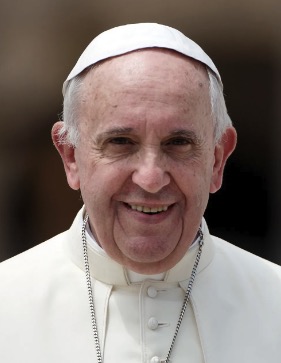
Pope Francis: “Jesus’ kingship is not about power or domination, but about service and love. He does not impose himself on us, but offers himself as a gift, as the way to true freedom and happiness.” (November 24, 2024)
Relation: This quote emphasizes the self-giving nature of Christ’s kingship, reflecting the essence of his testimony in Jn 18:33b-37 and the nature of his dominion in Rv 1:5-8.
Pope Francis: “The Kingdom of Christ is present wherever love, mercy, and justice are lived out. It is in the hearts of those who, like Jesus, bear witness to the truth and give themselves in service to others.” (November 26, 2023)
Relation: This quote highlights the presence of Christ’s kingdom in the actions of those who follow his example, echoing Jn 18:33b-37 and Rv 1:5-8’s portrayal of his eternal dominion.
Pope Francis: “Christ the King invites us to walk the path of humility and self-giving, to seek the last place and to serve, rather than to dominate and impose. His is a kingship of service and love, not power and prestige.” (November 21, 2021)
Relation: This quote emphasizes the humility and selflessness of Christ’s kingship, mirroring the nature of his testimony in Jn 18:33b-37 and his unique dominion described in Dn 7:13-14.
Pope Francis: “The Kingdom of Christ is not of this world, but it transforms this world from within, by the power of the Holy Spirit. It is a kingdom of truth, justice, love, and peace, that begins in the depths of our hearts and reaches out to the ends of the earth.” (November 22, 2020)
Relation: This quote underscores the transformative power of Christ’s kingdom within the world, reflecting the eternal nature of his dominion as described in Rv 1:5-8 and Dn 7:13-14.
Pope Francis: “The Kingdom of Christ is a kingdom of hope and joy, of reconciliation and peace. It is a kingdom that begins now, in the midst of the struggles and challenges of this world, and reaches its fulfillment in the new heavens and the new earth.” (November 25, 2018)
Relation: This quote underscores the ultimate fulfillment of Christ’s kingdom in the future, reflecting the eternal nature of his dominion in Rv 1:5-8 and the vision of his eternal reign in Dn 7:13-14.
Pope Francis
34th Sunday of Year B

The Lord of History
25 November 2018 | Saint Peter’s Square
- TEXT
- OUTLINE
- QUESTIONS
The Solemnity of Christ, King of the Universe, which we celebrate today, is set at the conclusion of the liturgical year and recalls that the life of creation does not advance at random, but proceeds toward a final destination: the definitive manifestation of Christ, Lord of history and of all creation. The conclusion of history will be his eternal kingdom. Today’s Gospel passage (cf. Jn 18:33-37) speaks to us about this kingdom, the kingdom of Christ, the kingdom of Jesus, recounting the humiliating situation that Jesus is in after being arrested in Gethsemane: bound, insulted, accused and led before the authorities of Jerusalem. And then, he is presented to the Roman prosecutor, as one who seeks to undermine political power, to become the king of the Jews. So Pilate conducts his inquest and, in a dramatic interrogation, twice asks Jesus if He is a king (cf. vv. 33, 37).
And Jesus initially responds that his kingship “is not of this world” (v. 36). Then he states: “You say that I am a king” (v. 37). It is evident from his entire life that Jesus does not have political ambitions. Let us recall that after the multiplication of the loaves, the people, excited by the miracle, would have sought to proclaim him king, to overturn the Roman power and reestablish the kingdom of Israel. But for Jesus the kingdom is something else, and it is certainly not achieved by revolt, violence and the force of arms. This is why he withdrew alone to pray on the mount (cf. Jn 6:5-15). Now, in responding, He makes Pilate take note that His disciples did not fight to defend Him. He says: “if my kingship were of this world, my servants would fight, that I might not be handed over to the Jews” (Jn 18:36).
Jesus wants to make it understood that above and beyond political power there is another even greater one, which is not obtained by human means. He has come to earth to exercise this power, which is love, by bearing witness to the truth (cf. v. 37), the divine truth which ultimately is the essential message of the Gospel: “God is love” (1 Jn 4:8); and he wishes to establish in the world his kingdom of love, justice and peace. And this is the kingdom of which Jesus is king, and which extends until the end of times. History teaches us that kingdoms founded on the force of arms and on the abuse of power are fragile and sooner or later collapse. But the Kingdom of God is founded on his love and is rooted in hearts — the Kingdom of God is rooted in hearts —, conferring peace, freedom and fullness of life upon those who embrace it. We all want peace; we all want freedom and we want fulfilment. And how do you do this? Allow the love of God, the Kingdom of God, the love of Jesus, to take root in your heart and you will have peace, you will have freedom and you will have fulfilment.
Today Jesus asks us to allow him to become our king. A king who, with his word, his example and his life immolated on the cross saved us from death, and — this king — indicates the path to those who are lost, gives new light to our existence marred by doubt, by fear and by everyday trials. But we must not forget that Jesus’ kingdom is not of this world. He will give new meaning to our life — at times even put to difficult tests through our mistakes and our sins — merely on the condition that we not follow the logics of the world and of its ‘kings’.
I) The Solemnity of Christ the King
- Celebrated at the conclusion of the liturgical year
- Recalls that life progresses toward the final manifestation of Christ as Lord of history and creation
II) Jesus’ Kingship
- Jesus clarifies his kingship is not of this world
- It is not achieved by revolt, violence, or force of arms
- Jesus’ kingdom is founded on love, truth, and divine power
III) The Power of Jesus’ Kingdom
- Extends until the end of times
- Established on God’s love
- Confers peace, freedom, and fullness of life upon those who embrace it
IV) Jesus’ Call to Follow Him
- Asks us to allow him to be our king
- Provides guidance and salvation
- Requires us to follow God’s logic and not the world’s
V) Implications for Our Lives
- Recognize that Jesus’ kingdom is rooted in hearts
- Embrace the love of God to experience peace, freedom, and fulfillment
- Understand that Jesus’ kingdom is not based on worldly power or ambition
Question 1: What is the purpose of the Solemnity of Christ the King?
Answer: The purpose of the Solemnity of Christ the King is to recall that life progresses toward the definitive manifestation of Christ as Lord of history and creation, ultimately leading to his eternal kingdom.
Question 2: How does Jesus define his kingship in response to Pilate’s questioning?
Answer: Jesus defines his kingship as “not of this world,” clarifying that it is not achieved through political ambitions, revolt, violence, or force of arms.
Question 3: What is the foundation of Jesus’ kingdom?
Answer: The foundation of Jesus’ kingdom is love, as he aims to establish a kingdom of love, justice, and peace in the world.
Question 4: How can one experience peace, freedom, and fulfillment?
Answer: One can experience peace, freedom, and fulfillment by allowing the love of God and the love of Jesus to take root in their heart.
Question 5: What are the characteristics of the kingdom that Jesus wants us to embrace?
Answer: The kingdom that Jesus wants us to embrace is founded on love, rooted in hearts, and offers peace, freedom, and fullness of life to those who accept it.
Question 6: What does Jesus ask of us in relation to his role as king?
Answer: Jesus asks us to allow him to become our king, follow his teachings, and trust in his guidance and salvation.Reply in a thread
HOME PAGE
Pope Francis
Homilies
QUOTES
Pope Benedict XVI: “The Kingdom of Christ is not of this world, but it is present in this world. And it is present, indeed, in the hearts of men and women who, despite their limitations and weaknesses, strive to live according to the commandment of love and bear witness to the truth.” (November 25, 2012)
Relation: This quote emphasizes the presence of Christ’s kingdom within people who live by love and truth, mirroring Jesus’ testimony about his kingdom in Jn 18:33b-37.
Pope Benedict XVI: “The Lord answers: “You say that I am a king. For this I was born, and for this I have come into the world, to bear witness to the truth.” His kingship, then, consists in bearing witness to the truth.” (November 20, 2011)
Relation: This quote directly references Jesus’ response to Pilate in Jn 18:33b-37, highlighting that Christ’s kingship is rooted in his role as a witness to truth.
Pope Benedict XVI: “A king who is not vain and does not seek power for power’s sake, a king who does not oppress and dominate, but seeks the humble service of love for the good of his subjects, for the good of all.” (November 21, 2010)
Relation: This quote echoes the essence of Christ’s kingship as described in Rv 1:5-8, which portrays a king who loves and liberates his subjects.
Pope Benedict XVI: “Christ’s royalty is manifested in his obedience to the Father and in his total gift of self, to the point of dying on the Cross. This is the “royalty” of Jesus, his glory, which we are called to imitate.” (November 22, 2009)
Relation: This quote connects the passage from Jn 18:33b-37 with Christ’s sacrifice on the Cross, linking the concept of Christ’s kingship with his redemptive suffering.
Pope Benedict XVI: “The power of Christ the King is not power as understood by this world, but quite another kind of power: it is the power of love that goes to the ultimate extremes of the Cross.” (November 23, 2008)
Relation: This quote reinforces the notion of Christ’s kingship as expressed in Jn 18:33b-37 and the nature of his power as divine love that transcends earthly understanding.
Pope Benedict XVI
34th Sunday of Year B

The Kingdom of God
25 November 2012 | Saint Peter’s Square
- TEXT
- OUTLINE
- QUESTIONS
The Church today is celebrating Our Lord Jesus Christ as as King of the Universe. This Solemnity comes at the end of the liturgical year and sums up the mystery of Jesus “firstborn from the dead and ruler of the kings of the earth” (Collect, Year B), broadening our gaze towards the complete fulfilment of the Kingdom of God, when God will be everything to every one (cf. 1 Cor 15:28). St Cyril of Jerusalem said: “We preach not one advent only of Christ, but a second also, far more glorious than the former. For the former gave a view of his patience; but the latter brings with it the crown of a divine kingdom… in his second, He comes attended by a host of Angels, receiving glory” (Catechesis XVI, 1, Illuminandorum, De secundo Christi adventu: pg 33, 869 a).
Jesus’ entire mission consisted in proclaiming the Kingdom of God and putting it into practice among human beings with signs and miracles. However, as the Second Vatican Council recalls “this kingdom shone out before men … in the presence of Christ” (Dogmatic Constitution Lumen Gentium, n. 5) and he established it through his death on the Cross and his Resurrection, with which he manifested himself as Lord and Messiah and Priest for ever.
This Kingdom of Christ has been entrusted to the Church which is its “seed” and its “beginning” and has the task of proclaiming it and spreading it among the peoples, with the power of the Holy Spirit (cf. ibid.). At the end of the established time, the Lord will consign the Kingdom to God the Father and will present to him all those who have lived in accordance with his commandment of love.
Dear friends, we are all called to extend God’s saving action, converting to the Gospel, following with determination the King who did not come to be served but to serve and to bear witness to the truth (cf. Mk 10:45; Jn 18:37). In this perspective I invite everyone to pray for the six new Cardinals whom I created yesterday that the Holy Spirit will strengthen them in faith and in charity and fill them with his gifts, so that they may live their new responsibilities as a further dedication to Christ and to his Kingdom. These new members of the College of Cardinals represent well the universal dimension of the Church: they are Pastors of the Church in Lebanon, in India, in Nigeria, in Colombia, and in the Philippines, and one of them has been for many years in the service of the Holy See.
I) The Solemnity of Christ the King
- Celebrates Jesus as the King of the Universe
- Concludes the liturgical year
- Focuses on the mystery of Jesus as “firstborn from the dead and ruler of the kings of the earth”
II) The Kingdom of God
- Proclaimed and practiced by Jesus during his mission
- Established through his death and resurrection
- Entrusted to the Church for proclamation and spreading among peoples
III) The Role of the Faithful
- Called to extend God’s saving action
- Follow the example of the King who came to serve and bear witness to the truth
- Pray for the newly created Cardinals to strengthen them in faith and charity
IV) Universal Dimension of the Church
- Serves as a reminder of the Catholic Church’s global reach and mission
- Represented by the new Cardinals from various countries: Lebanon, India, Nigeria, Colombia, Philippines
Question 1: What is the focus of the Solemnity of Christ the King?
Answer: The focus of the Solemnity of Christ the King is on celebrating Jesus as the King of the Universe and recognizing him as the “firstborn from the dead and ruler of the kings of the earth.”
Question 2: What is the role of the Church in relation to the Kingdom of Christ?
Answer: The Church is entrusted with the Kingdom of Christ as its “seed” and “beginning,” and has the responsibility of proclaiming it and spreading it among the peoples, with the power of the Holy Spirit.
Question 3: What is the ultimate goal of the Kingdom of God?
Answer: The ultimate goal of the Kingdom of God is its complete fulfillment, when God will be everything to everyone.
Question 4: What was the primary focus of Jesus’ mission on earth?
Answer: Jesus’ mission on earth focused on proclaiming the Kingdom of God and putting it into practice among human beings through signs and miracles.
Question 5: How can we support the newly appointed Cardinals in their responsibilities?
Answer: We can support the newly appointed Cardinals by praying for them, asking the Holy Spirit to strengthen them in faith and charity and fill them with the necessary gifts to live their responsibilities as a dedication to Christ and his Kingdom.
Question 6: What is the universal dimension of the Church represented by the new Cardinals?
Answer: The new Cardinals represent the universal dimension of the Church by being pastors from different countries across the world, including Lebanon, India, Nigeria, Colombia, and the Philippines.