
Sunday Reading Connections and Life-Application
Sunday Reading Connections and Life-Application

Scripture & Art

Poetry

Movies & Film


1) 🎬 Epiphany of Adventurers

When pilots Dick Rutan and Jeana Yeager made their historic flight in 1986 with their spindly Voyager aircraft, the whole world followed it with excitement. For nine days a sky-watch was kept, tracking their first non-stop global flight without refueling.
Achievers and risk-takers like Dick Rutan and Jeana Yeager have always fascinated us. Marco Polo journeying to India and China, Christopher Columbus coming to America, Admiral Byrd going to the South Pole, our Astronauts flying to the moon — such adventurers have always aroused our admiration and our skepticism. It was no different at the time of the Magi in today’s Gospel story.
To the cynical observer, the Magi must have seemed foolish to go following a star. These astrologers had to be a little crazy leaving the security of their homeland to venture forth into a strange country ruled by a madman like Herod. Nevertheless, to the person with the eyes of Faith, the Magi had discovered an immense secret. They found not only the secret of the star, but the secret of the whole universe –the secret of God’s incredible love for his people. For the child they found was no ordinary child but the very Son of God become man (Albert Cylwicki in His Word Resounds).
2) 🎬 Artaban the fourth Wise Man
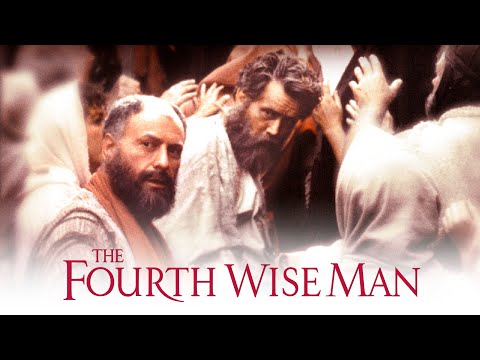
In 1895, Henry van Dyke wrote the story, “The Other Wise Man,” telling of a fourth wise mancalled Artaban. Our hero is not mentioned in the Gospel because he missed the caravan. He got to Bethlehem too late to see the Baby Jesus.
But Artaban did make it in time, using one of his gifts for the newborn King to save one of the Holy Innocents by bribing a soldier. For 33 years Artaban searched for Jesus. He did not find Jesus, but in the meantime, the Fourth wise man used the precious gifts he had brought for the King to feed the hungry and help the poor.
Then one day in Jerusalem Artaban saw the “King of the Jews” being crucified. He started to offer his last gift for the King, a great pearl, to the soldiers as ransom for Him. But then he saw a girl being sold into slavery to pay family debts. Artaban gave his pearl to buy freedom for the girl. Suddenly the earth quaked as Jesus died on the cross and a stone struck Artaban. Dying, he heard a Voice saying: “When you helped the least of my children, you helped me. Meet me in Heaven!”
Artaban, the fourth Wise Man, had been making God present in his community for years by helping others. God asks each of us on the feast of Epiphany to be a fourth Wise Man by becoming God’s epiphanies, making His love present in the world around us by our acts of love and kindness.
3) 🎬 Harry Potter: "You never know what’s going to happen next!”

A survey was made among school children asking the question why they enjoyed reading Harry Potter novels and watching Harry Potter movies. The most common answer was, “Because you never know what’s going to happen next!” The same element of suspense and discovery marked the journey of the Magi, who never knew what road the Spirit was going to take them down next.
The same elements of suspense and discovery were there when Marco Polo journeyed to India and China, when Christopher Columbus travelled to America, and when Admiral Byrd went to the South Pole. Such adventurers have always aroused our admiration and curiosity.
The magi-astrologers described in today’s Gospel had to be a little crazy leaving the security of their homeland to venture forth into a strange country presided over by a mad king like Herod, in search of a Divine Child. But their great Faith, curiosity, and adventurous spirit enabled them to discover the secret of the whole universe – the secret of God’s incredible love for His people – because the Child they found was no ordinary child, but the very Son of God become man. Today’s readings invite us to have the curiosity of the school students and the Faith and adventurous spirit of the magi so that we may experience the “epiphany” of our God in everyone and every event, everywhere. (adapted from Albert Cylwicki in His Word Resounds).
4) A Woman Among the Magi?
Renowned Gospel of Matthew professor, Dominican friar and priest, Rev. Benedict Thomas Viviano has a new Biblical theory that may change nativity scenes across the globe: there was one Wise Woman (or more) among the Wise Men. Viviano’s original theory was published in 2011 in Studies of Matthew by Leuven University Press. It’s “perfectly plausible,” he argues, that Matthew would have understood the magi as some sort of Eastern sages. “On the other hand,” Viviano suggests, “the masculine plural magoi does not close the question of gender. … The main reason to think of the presence of one or more women among the magi is the background story of the queen of Sheba, with her quest for Israelite royal wisdom, her reverent awe, and her three gifts fit for a king.” Viviano’s second reason to suspect the presence of the feminine, he says, is the Israelite tradition of personifying wisdom as a woman (Proverbs 8:22-30; 9:1-6; Sirach, 24). Viviano’s third argument for his female-among-the-magi cause is that Matthew’s Gospel later characterizes Jesus as embodying wisdom, which Jewish literature considers female and even terms Lady Wisdom. The passages Viviano refers to are Matthew, Chapter 11:19 and 25-30.
What difference would it have made if there had been a woman among the magi? A women’s magazine said: “They would have come before the birth of Jesus, brought provisions for the child and his mother, and would have served as midwives!”
5) A Pencil in God's Hands
Mother Teresa described herself as “a pencil in God’s hands. “As long as God keeps pouring in the ink, I will continue to let God write with me and through me.” Through this physically diminutive, spiritual giant, God has indeed writ large. Through her, God has continued to reveal in our midst the mystery or secret plan of salvation of which the author of Ephesians writes in today’s second reading.
St. Teresa of Calcutta understood that there were no second-class citizens in the people of God. Nor is anyone an afterthought in God’s saving plan. The small nun who ministered to the world’s poor also left the world a legacy and a challenge.
At the beginning of this new year, contemporary believers might take time to consider if her legacy will live on in them and how that challenge can be met. Am I willing to accept and cherish absolutely everyone I meet as a co-heir, as a member of the same body and as a sharer of God’s promises? If so, then God’s secret plan continues to be revealed in me; if not, then I have darkened and obscured the manifestation of love and light that we celebrate today.
6) An epiphany in the airport.
We spot what looks like a mom, a dad, and three teenage daughters. The girls and their mom are each holding a bouquet of roses. We are wondering what the story is. Whom are they expecting? The dad keeps looking at his watch. The mom keeps turning her head to make sure she hears each airport announcement. Finally, the door opens. First come the “rushers”–men and women in suits with briefcases and bags over their shoulders, rushing towards phones, bathrooms, and their cars or rent-a-cars. We’re still wondering and watching to learn whom this family we’ve been studying is there to meet. Then out come a young Marine, his wife, and their obviously brand-new baby. The three girls run to the couple and the baby. Then Mom. Dad. Hugs. Kisses. Embraces. “OOPS! The flowers!” But the baby is the center of attention. Each member of the family gets closer and closer to the mother and each opens the bundle in pink to have a first peek at this new life on the planet. We’re seeing it from a distance. It’s better than the evening news. Then we notice several other smiling people also watching the same scene. There are many other hugging scenes, people meeting people, but this is the big one. We’re smiling too. A tear of joy.
What wonderful moment we are photographing into our memory. We’re thinking, “Family! Children! Grandchildren!” This is what life is all about. We’re experiencing an epiphany. Life is filled with them. Praise God!
7) Artaban’s gift
There’s a story called “The Other Wise Man” by Henry van Dyke. It’s about a fourth man who is supposed to accompany the other three wise men on their journey to search for the newborn King. The fourth wise man is Artaban. As Artaban prepares for the journey, he takes with him a bag of precious stones to give to the baby King. On this way to join the other three wise men, Artaban stops to help a poor person. The delay is just enough to make him miss his rendezvous with the others. Artaban never does catch up with them. He constantly runs into people who need help. And he always stops to help them. Eventually, Artaban gives away all his precious stones. As the story ends, Artaban is old and poor. He has never realized his dream to meet the King of Kings. But the story doesn’t end here. One day Artaban is in Jerusalem. Authorities are about to execute a criminal. When Artaban sees the criminal, his heart skips a beat. Something tells him this is the King of Kings for whom he has been searching all his life. Artaban is heartbroken when he sees he can do nothing to help the King. Then something remarkable happens. Artaban hears the King’s voice say to him: “Don’t be broken-hearted, Artaban. You’ve been helping me all your life. When I was hungry, you gave me food. When I was thirsty, you gave me drink. When I was naked, you clothed me. When I was a stranger, you took me in” (Mark Link in Sunday Homilies).
8) Epiphany of a drummer
Consider a true story of a young man named Tony. He travelled all over the world, appearing widely on stage and on television as a drummer in a world-famous music group. Then one day Tony felt called to the priesthood. When he resigned from the music group to enter a seminary, some people thought him to be a fool. The story could end here. And if it did, some would consider it to be a sad story. It would be the story of a young man who let a dream slip through his fingers. But the story doesn’t end here. Tony’s now a priest in the diocese of Dallas. And he’s tremendously happy.
Jesus will someday say to him what he said to Artaban: “You’ve been helping me all your life, Tony. What you did for your Parishioners, you did for me.” (Mark Link in Sunday Homilies).
9) Lesser epiphanies of Robert and Edison
Let’s start by reminding ourselves: God keeps appearing; we still have epiphanies. One kind of lesser epiphany is an “aha” experience. We sometimes get an “aha” when studying the Bible. For days, Robert had been bothered by a big sin he’d committed — that so awful, so nasty sin we dread telling in confession. Then, reading about Jesus raising Lazarus from the dead, Robert felt, “Aha! If God can raise his friend Lazarus from the dead, God can forgive me this great sin I committed!” A “lesser epiphany!” When Robert went to confession, he knew God loved him, deeply and totally.
We have “lesser epiphanies” as others treat us with kindness. After Thomas Edison had finished making the very first light bulb, Edison gave the light bulb to a young assistant to carry upstairs. Crash! The young man dropped the light bulb! Twenty-four hours later, a second light bulb completed, Edison handed the second light bulb to the same young lad. Edison knew, accidents happen, but the young man was still a fine young man. Here was a “lesser epiphany”
God’s love manifested in the kind gesture of a great inventor. Have no doubt: God continues to appear among us. When we attune ourselves to God, we see “lesser epiphanies” every day. There may be no star hovering overhead, but we recognize God in the kind gesture, in the “aha” insight; we see God in the love we receive and are called to give. (Fr. Clyde Bonar)
10) The Hostess of the Magi missed the Child Jesus
Once upon a time there lived in Bethlehem a woman named Babushka. She kept the cleanest and neatest house in town and was also the best cook. She heard rumors of three kings coming across the desert but paid no attention to them because she had so much work to do. Then she heard the sounds of drums and pipes and a cavalcade of riders. She looked out the window and there were three richly dressed kings coming towards her house. They told her that they had come to honor the little prince who had been born in Bethlehem and they needed food and lodging. Babushka cooked a wonderful meal for them, remade all the beds, and wore herself out. The next morning the kings begged her to come with them so she too might see the little prince. Babushka said she would follow after them as soon as she finished the dishes. She cleaned the house again and then took out of a cabinet the toys of her own little prince who had died so long ago. She had no more need of them and would give them to the new little prince. She put them in a basket and sat down for a moment’s rest before she followed the wise men. Hours later she woke up, grabbed the basket, and rushed into town. But the kings were gone and so were the little prince and his parents. Ever after, it is said, Babushka has followed after them. Whenever she finds a newborn babe, she looks to see if he is the little prince. Even if he (or in our days she too), is not there, Babushka leaves a toy for the child.
I think she probably found the prince early on, but we still should learn from her lesson: we should never let the important interfere with the essential. (Fr. Andrew Greely)
11) A new Magi story
In this story, the three wise men, Gaspar, Balthassar and Melchior, were three different ages. Gaspar was a young man, Balthassar a middle-aged man and Melchior an elderly man. They found a cave where the Holy One was and entered to do him homage one at a time. Melchior the old man entered first. He found an old man like himself in the cave. They shared stories and spoke of memory and gratitude. Middle-aged Balthassar entered next. He found a man his own age there. They spoke passionately about leadership and responsibility. Young Gaspar was the last to enter. He found a young prophet waiting for him. They spoke about reform and promise. Afterward when the three kings spoke to each other about their encounter with the Christ, they were shocked at each other’s stories. So, they got their gifts of gold frankincense, and myrrh together and all three went into the cave. They found a baby there, the infant Jesus only twelve days old.
There is a deep message here. Jesus reveals himself to all people, at all stages of their lives, whether they are Jew or Gentile. (Fr. Pellegrino).
12) O Henry’s story of real love through sacrificial sharing: “Gift of the Magi”
A summarized version by Fr. Puncha: It was Christmas Eve, during the days of the depression of the 1930’s. Della and James, a newly married couple, were very poor. They loved each other dearly, but money was hard come by. In fact, as Christmas approached, they were unhappy because they had no money to buy presents for each other. They had two possessions that they valued deeply: James had a gold watch which had belonged to his father, and Della had long and beautiful golden-brown hair. Della knew that James’ watch had no matching chain–only a worn-out leather strap. A matching chain would be an ideal gift for her husband, but she lacked the money to buy it.
As she stood before the mirror, her eyes fell on her long brown tresses. She was very proud of her beautiful hair, but she knew what she had to do. She faltered a moment, but nothing could stand in the way of love. She hastened to the “hair-dealers,” sold her hair for twenty dollars, and went round shop after shop, hunting for the ideal gift. At last she found it: a gold chain for her husband’s watch. She was very happy and proud of the gift. She knew James would love it, the fruit of her sacrifice.
James came in, beaming with love, proud of the gift he had bought for Della. He knew she would be very happy with the gift. But when he saw her, his face fell. She thought he was angry at what she had done. She tried to console him by saying that her hair would grow fast, and soon it would be as beautiful as before. That is when he gave her his gift. It was an expensive set of combs, with gem-studded rims. She had always wanted them for her hair! She was very happy, but with a tinge of sadness. She knew it would be some time before she could use the precious gift.
Then, with tears in her eyes, she presented him with the gift she had bought. As he looked at the beautiful chain, he said with a sigh: “I guess our gifts will have to wait for some time. The combs were very expensive; I had to sell my watch to buy the combs!”
These were the perfect gifts: gifts of sacrificial love. Both James and Della were very happy for, like the Magi, they had discovered LOVE through self-sacrifice.
13) Angel at work?
The British express train raced through the night, its powerful headlight piercing the darkness. Queen Victoria was a passenger on the train. Suddenly the engineer saw a startling sight. Revealed in the beam of the engine’s light was a strange figure in a black cloak standing in the middle of the tracks and waving its arms. The engineer grabbed for the brake and brought the train to a grinding halt. He and his fellow trainmen clambered down to see what had stopped them. But they could find no trace of the strange figure. On a hunch the engineer walked a few yards further up the tracks. Suddenly he stopped and stared into the fog in horror. A bridge had been washed out in the middle and ahead of them it had toppled into a swollen stream. If the engineer had not heeded the ghostly figure, his train would have plummeted down into the stream. While the bridge and tracks were being repaired, the crew made a more intensive search for the strange flagman. But not until they got to London did they solve the mystery. At the base of the engine’s headlight the engineer discovered a huge dead moth. He looked at it a moment, then on impulse wet its wings and pasted it to the glass of the lamp. Climbing back in to his cab, he switched on the light and saw the “flagman” in the beam. In the fog, it appeared to be a phantom figure, waving its arms. When Queen Victoria was told of the strange happening, she said, “I’m sure it was no accident. It was God’s way of protecting us.”
No, the figure the engineer saw in the headlight’s beam was not an angel…and yet God, quite possibly through the ministry of His unseen angels, had placed the moth on the headlight lens exactly when and where it was needed. Today’s Gospel tells us how God sent a star to lead the magi to His Son Jesus. (Billy Graham from Unto the Hills; quoted by Fr. Botelho).
14) “It’s me Papa. Open the door, it’s your son.”
The Buddha told a story. A young widower who loved his five-year-old son very much was away on business, and bandits came, burned down his whole village, and took his son away. When the man returned, he saw the ruins, and panicked. He took the charred corpse of an infant to be his own child, and he began to pull his hair and beat his chest, crying uncontrollably. He organized a cremation ceremony, collected the ashes and put them in a very beautiful velvet bag. Working, sleeping, eating, he always carried the bag of ashes with him. One day his real son escaped from the robbers and found his way home. He arrived at his father’s new cottage at midnight, and knocked at the door. You can imagine at that time, the young father was still carrying the bag of ashes, and crying. He asked, “Who is there?” And the child answered, “It’s me Papa. Open the door, it’s your son.” In his agitated state of mind, the father thought that some mischievous boy was making fun of him, and he shouted at the child to go away, and he continued to cry. The boy knocked again and again, but the father refused to let him in. Some time passed, and finally the child left. From that time on, father and son never saw one another…
After telling this story, the Buddha said, “Sometimes, somewhere, you take something to be the truth. If you cling to it so much, when the truth comes in person and knocks at your door, you will not open it.” (Thich Nhat Hanh, the Vietnamese Buddhist Monk in his book Being Peace). We celebrate the feast of Epiphany. God breaks through. God is revealed. Truth happens.
15) Those who are at the top need to fear a fall
Raymond Brown, the great New Testament scholar, found an echo of the story of the Three Wise Men in the story of King Balak and the prophet Balaam in the Old Testament. Balak was a king of the Moabites. When the Israelites left Egypt under the leadership of Moses, like king Herod who feared the birth of the Messiah and wanted to kill him, King Balak feared the Israelites wanted to destroy Moab, so he planned to destroy them first. To accomplish his purpose, Balak summoned a famous prophet, Balaam, to place a curse on Israel. Balaam was an interesting character; he was a non-Israelite, and a practitioner of enchantment. He was capable of doing both good and evil. Balaam, the prophet, came from the east along with two servants, thereby, making the number three, like the Magi. And when he came, commanded to curse Israel, the Holy Spirit foiled King Balak’s efforts by blessing Israel through Balaam and foretelling the future greatness of Israel and the rise of its royal ruler. Balaam prophesied and said, “A star will come forth from Jacob, and a scepter will rise from Israel.” Like king Herod who massacred all the infants in Bethlehem 2 years-old and younger so that he wouldn’t miss the newborn King, the wicked king Balak tried to do the same thing by using a magus to destroy the Israelites, but his efforts were foiled. (John Rose in Sunday Homilies; quoted by Fr. Botelho).
16) Why a Feast only for the Magi and not for the shepherds?
In the stories of Jesus’ birth, two special groups of people came to visit the newborn babe: the shepherds and the Magi. The Church has no special feast to commemorate the visit of the shepherds, but we have this special feast of Epiphany today to celebrate the visit of the magi. Why? The visit of the Magi is an eye-opener! The shepherds learnt of the birth of Jesus through a direct Revelation from angels appearing in the midnight sky, and they believed the Message. This is direct and supernatural Revelation. Many of us have no problem with that. The Magi, on the other hand, learnt of the birth of Jesus by observing a star. The star did not say anything to them. They had to interpret this natural sign of the star to know what it meant and where it led. If we remember that the Magi, or the three wise men, divined God’s will by reading the movements of the stars and other heavenly bodies, then we can see how the visit of the Magi challenges some of our popular beliefs. (Fr. Munacchi).
17) The star of Bethlehem
In Arthur C. Clarke’s short story “The Star,” we read about a Jesuit astrophysicist who makes a space trip with other scientists to a distant galaxy called the Phoenix Nebula. There they chance upon a solitary planet still orbiting the remnant of a central sun, which had exploded thousands of years ago. The explorers land their spacecraft on this planet and examine the scorched surface caused by that cosmic detonation. They discover a melted-down monolithic marker at the entrance of a great vault in which they find the carefully stored treasures and records of an advanced civilization. On their return trip to earth in our own galaxy, the Jesuit astrophysicist calculates the exact time when the light from this cosmic explosion in the Phoenix Nebula reached earth. It was the date of Christ’s birth when the light from that fire was seen as a bright new star appearing in the East. But now that he had solved an ancient mystery, he had a greater mystery to grapple with. How could a loving God allow a whole planet of intelligent being to be given a galactic conflagration, so that the symbol of their passing might shine above Bethlehem at his Son’s birth?
This science-fiction story about the star of Bethlehem has its source in today’s Gospel. Mathew’s narration of the Magi uses the star as its central symbol. From its rising in the East to its coming to a standstill over Bethlehem, the star leads and guides the astrologers. (Albert Cylwicki in His Word Resounds)
18) Horoscope mania
As we enter into a new year it is comforting to know that the stars are in our favor. We are still in the early years of the Age of Aquarius, which, according to Wikipedia, officially began November 11, 2011. “When the moon is in the seventh house and Jupiter aligns with Mars, then peace will guide the planets and love will spear the stars.“ That’s what the astrologers have been telling us, and it is not difficult to be impressed by the fact that an estimated fifty million North Americans consult the “Horoscope” in their newspapers, and that books on astrology have been selling by hundreds of thousands every year. Among young people, astrology is very much an “in” thing — unfortunately, in some cases, as a kind of substitute for religion, which they have rejected. As in all forms of prediction, astrology can be troublesome because so often it is ambiguous and is very hard to interpret. A man was telling his friend that an astrologer had said to him, “Your wife’s second husband will be rich, brilliant and handsome.” And the friend asked, “Didn’t it upset you to hear that kind of prediction?” “Yes, it did upset me very much,” the man answered. “I didn’t know my wife had been married before!”
For some people, apparently, the star signs can mean what they want them to mean. But it is interesting to note that people are interpreting the star signs to mean we are moving into a new era of brotherhood, peace and love. This should be of the utmost importance to us Christians because our most reliable source for information concerning the world’s destiny, The New Testament, is saying the same thing. And, incredibly, the New Testament begins by telling us the story of a baby’s birth. “We observed His star at its rising and have come to pay Him homage.” On this first Sunday of the New Year, if we have discovered the living presence of God deep in the core of our being then we will not have missed Jesus’ star at its rising, and we will know how to pay Him true homage. With God at the center of our lives we will bear homage to the newborn Babe through our gifts of heartfelt compassion, patient understanding and genuine concern for others. Our greatest gift to the world in this New Year or any other year is the gift of self. This is the homage we pay Him: to love one another as Jesus has loved us. (Millennium edition)
19) Camel on the roof
We begin with a story from a collection of the lives of saints – the saints of Islam – which concerns a king of Balkh (now northern Afghanistan) named Ebrahim ibn Adam. Ebrahim was wealthy according to every earthly measure. At the same time, however, he sincerely and restlessly strove to be wealthy spiritually as well. “One night the king was roused from sleep by a fearful stumping on the roof above his bed. Alarmed, he shouted: “Who’s there?” “A friend,” came the reply from the roof. “I’ve lost my camel!” Perturbed by such stupidity, Ebrahim screamed: “You fool! Are you looking for a camel on the roof?” “You fool!” the voice from the roof answered. “Are you looking for God in silk clothing, and lying on a golden bed?”
The story goes on, according to Jesuit theologian Walter G. Burghardt, to tell how these simple words filled the king with such terror that he arose from his sleep to become a most remarkable saint. [Still Proclaiming Your Wonders: Homilies for the Eighties (New York: Paulist Press, 1984), 55.] — The camel on the roof raises the Epiphany question, “Where are you looking for God?” This compelling question of life properly stands at the beginning of a new year, as does, “Where have you found God?”
20) “If I lose that, I am lost."
A great artist once painted a picture in which a solitary figure is seen rowing a small boat across the dark waters of a lonely lake. A high wind is churning up the waters causing white-crested billows to rage ominously around the tiny skiff. As he rows on, the boatman’s eyes are fixed on the one lone star shining through the darkness. Under the picture, the artist has inscribed these words: “If I lose that, I am lost.”
In the manner of that dauntless boatman, our mission is to keep our eyes fixed on a certain star as we travel along life’s way. This very day, we join with the Wise Men from the East as the Star of Bethlehem guides us along the way to the place of the Savior’s birth. But, having paid homage to the newborn Babe, our eyes must remain fixed on Jesus’ star. In order that Jesus may number us among those who love him and will carry on his work, we must follow his star to the foot of the cross. It is only from the cross that that guiding star can lead us to the empty tomb. It is there, at the place of Resurrection. (Millennium Edition).
21) We Live Like Beggars
Thomas Merton was a famous Christian writer. He was converted to the Catholic religion, and later became a Trappist monk. He was an author of many books. In one of his books, he says that he once met a Hindu sanyasi (ascetic). The sanyasisaid to him that he loved two lovely Christian books: The Confessions of St. Augustine and The Imitation of Christ by Thomas Kempis. He suggested Merton read these two books.
What an irony! A non-Christian recommending two great Christian classics to a Christian! This is the paradox in life: we have such wealth, yet, because of our ignorance, we live like beggars. The same thing happened to the Jews; they were the Chosen ones but did not find the Messiah. (John Rose in John’s Sunday Homilies).
22) “I have a dream…..”
On August 28,1963, before a quarter million Afro-Americans, Martin Luther King Jr. thundered, “I have a dream that former slaves and slave-owners will sit together at the table of brotherhood…I have a dream that little black boys and girls will be able to join hands with little white boys and girls as sisters and brothers… I have a dream that my four children will not be judged by the color of their skin but by the content of their character.” Likewise, Mahatma Gandhi envisioned “The India of my dreams.” King and Gandhiji have left their footprints indelibly on the sands of human history. Ignatius of Loyola spent much time stargazing before birthing the Society of Jesus. Rabindranath Tagore’s prayer, “Amidst thy numberless stars, let me place my own little lamp,” is a must-say for modern Magi who leave familiar shores and follow stars.
Remember, as you strip stars from your Christmas trees and cribs, ask yourself: “Who, and what, is my star?” Start this New Year with some dream and some star that will guide you towards Jesus Christ, Superstar, The Light of all nations. (Francis Gonsalves in Sunday Seeds for Daily Deeds)
23) Looking at the Stars
It was a hot day in July 1969 on board an aircraft carrier in the Pacific. Sailors with binoculars were searching the sky above the carrier. Suddenly they let out a yell. There, orange and white parachutes exploded and bloomed in the blue sky. Dangling from them was a ball-like shape. It was the Apollo II space capsule. Minutes later the capsule plunged into the warm water of the Pacific. The splashdown climaxed a voyage that had put three men on the moon. When the smiling astronauts emerged from the capsule, President Nixon danced a little jig on the carrier deck. He had flown halfway around the world to witness this history-making moment. He said the splashdown climaxed the greatest week in the world since creation. In the exciting months ahead, the three astronauts made a good will tour around the world. They visited 23 countries in 45 days. One of the “most striking moments of the trip,” said Astronaut Ed Aldrin, was to visit the Vatican.
The astronauts were especially moved by the unusual gifts presented them by Pope St. Paul VI. Writing in his book Return to Earth, Ed Aldrin says: “His Holiness unveiled three magnificent porcelain statues of the Three Wise Men. He said that these three men were directed to the infant Christ by looking at the stars and that we three also reached our destination by looking at the stars.” (Mark Link in Sunday Homilies).
24) The whispering angel
The seventeenth century painter Guido Reni has left us a magnificent painting of Matthew. An angel is whispering to him various events in the life of Jesus. The attentive Evangelist is frantically writing down all that he is told. The tale will become his Gospel
A portion of those whispers is today’s story of the Epiphany. It is only Matthew who tells us this tale filled with wonder. Why the other Evangelists ignored this magical story, we will never know — at least this side of the grave. (Fr. Gilhooly).
25) Bones of the wise men?
If you ever visit Cologne (Köln) Cathedral in Germany you can walk around the sanctuary where, behind the main altar, you will find a large reliquary which is said to contain the bones or at least the skulls of the three wise men. “How did they get to Cologne?” you might ask. Ireland has been privileged to have been visited by the relics of St Thérèse of Lisieux (2001) and St Anthony of Padua (2003) so that makes it easier for us to understand the explanation. The wise men’s bones are said to have been found in Persia and then brought to Constantinople by St Helena. St Helena was the mother of the emperor Constantine (AD 306-337), who was the first Roman Emperor to convert to Christianity. The bones were transferred from Constantinople to Milan in the fifth century and to Cologne in 1163. (Fr. Tommy Lane).
26) The Magi at 40,000 feet
On Christmas morning, a single mom and her two sons, ages 14 and 12, boarded a plane in Atlanta. They were heading to San Diego to spend Christmas with friends. Another single mother boarded the same flight, wrangling two small boys, ages 2 and 3. The older boy was wearing a”halo” neck brace to immobilize his head and spine. They took their seats two rows behind the first family. The younger child sat on her lap, and the boy in the halo took the middle seat — next to a man with a look of unmitigated dread. Both toddlers immediately started screaming. The boy in the halo wanted no part of the seat belt and the other didn’t want to sit on his mother’s lap. The first mom knew what the toddlers’ mom was going through. Once the plane was in the air, she got up and offered her seat to the ashen-faced man near the window. He looked spectacularly relieved. She took his place and offered the mom an extra pair of hands. For the next four hours she read Dr. Seuss, walked up and down the aisle with the boys, amused them with hand puppets, changed diapers, doled out Goldfish crackers and bottles. During the last hour of the flight, both children were asleep, and the two moms had a chance to talk. The toddler’s mom asked the first mom about her sons’ father. She told her about the divorce and a new relationship that was faltering. “And your sons: where is their father?” she asked gingerly. The toddlers’ mom spoke softly: “Six months ago, my husband was killed in a car accident. I was at home with the baby, and my older son” — she pointed to the three-year-old with the halo — “was airlifted in critical condition from the scene. He had a broken neck and severe internal injuries. It was touch and go for a while. He still has ways to go.” She went on to explain that she was on leave from Delta and was now trying to sort out the next moves for her and her boys. For now, she was taking them to see her family in California. She smiled wistfully. “You never know how quickly life can change. The life you plan . . .” Her voice trailed off as she smiled at the sleeping child in her lap.
The first mom writes of that Christmas: “I had intended to be the generous one that morning. My gift to her was an extra pair of hands to wrangle spirited toddlers trapped on a plane. But her gift to me was of the Magi order. It was the gift of perspective, of being able to step back and appreciate what I have, however frustrating . . . thanks to that stranger on a plane, I discovered I had more patience and appreciation in me.” [From “The Magi at 40,000 feet” by Laura Wilkinson Sinton, The New York Times (December 22, 2011).] (Fr. Kayala).
27) The Star of Bethlehem
Gordon Wilson’s daughter was killed by a bomb in Enniskillen on Remembrance Day 1987. Instead of calling for revenge, he forgave her killers and began a campaign for peace and reconciliation. He said:
“I am a very ordinary sort of man. I have few personal ambitions and no political aspirations. I just want to live and let live. Life has been kind to me in the main, and I have tried to live by the Good Book. I do not profess to be a good man, but I aim to be. I would like to leave the world a better place than I found it, but I have no exaggerated ideas of my ability to do so. I have hitched my wagon to a star, a star of hope, the star of Bethlehem.”
(Flor McCarthy in New Sunday and Holy Day Liturgies; quoted by Fr. Botelho).
28) The gift of the Magi, and our gift to Him
Once, the people of a very poor parish set their hearts on acquiring an expensive set of figures for their Christmas crib. They worked hard and managed to get a set of rare porcelain for their crib. The Church was left open on Christmas day so that the people could visit the crib. In the evening when the parish priest went to lock up, to his consternation he found the baby Jesus was missing. As he stood there, he spotted a little girl with a pram entering the church. She made straight for the crib, took the baby Jesus out of the pram and put him lovingly in the crib. As she was on her way out the priest stopped her and asked her what she was doing with the baby Jesus. She told him that, before Christmas, she had prayed to Baby Jesus for a pram. She had promised him that if she got the prom, He would have the first ride in it. She had got her pram so she was keeping her side of the bargain.
Christmas evokes generosity in all people, especially in children. It was the poverty of the Infant Jesus that caused the Magi to open their treasures of gold, frankincense, and myrrh, and lay them before him. What is our gift to him? (Flor McCarthy in New Sunday and Holy Day Liturgies; quoted by Fr. Botelho).
29) Kings shall pay him homage
Christian tradition has made three Kings out of the three Wise Men. Whether they were royal or not is unimportant; but it would certainly have been appropriate for the first Gentiles who were invited to greet the Infant King of Kings, to have been of kingly state. King St. Louis IX of France became a sort of fourth Wise Man when he devoutly visited the shrines of the Holy Land around the year 1250. Those were the days of the Crusades – armed Christian expeditions against the Moslems of Palestine who had seized Jerusalem, Bethlehem, and the other places of pilgrimage made holy by Christ’s presence. As a young king, Louis followed the Crusade movement with great devotion. In 1239, he accepted as a most precious gift the crown of thorns of Christ, given to him by the French crusader, Emperor Baldwin II of Constantinople. To house this crown of thorns King Louis built a beautiful little church that still stands in Paris, “La Sainte Chappelle.” In 1244, St. Louis was gravely ill. Blessed with the relic of the sacred crown of Christ, he suddenly recovered. In thanks, he vowed to head a new Crusade to the Holy Land, where the Moslems were threatening to recoup their losses. Louis landed in Egypt and set out against the enemy. “Never did anyone behold so fine a man,” one of his officers said. “He appeared towering over all his people, head and shoulders taller than they, a gilded helmet on his head, a German sword in his hand.” A truly royal figure!
Actually, Louis’ campaign failed. He was himself captured, then ransomed. But he was nevertheless able to make his way as a pilgrim to Jerusalem and Bethlehem. Thus, he fulfilled the dream of the psalmist: “Let us go where He is waiting and worship at His footstool” (Ps. 132, 7)…”All kings shall pay Him homage, all nations shall serve Him” (Ps. 72, 11. Today’s responsorial psalm.) -Father Robert F. McNamara.
30) “The Revelation of the Magi”
What’s more interesting is that Matthew’s story is not the only version of the Magi. There is a document called “The Revelation of the Magi” which tells of TWELVE magi who follow a star and come and visit the child. In fact, if you go to the Metropolitan Museum and look at their Christmas tree you will see a number of kings arranged in the display. This became normal in the Neapolitan versions of the Creche scene, reflecting this alternative story. In the version found in “The Revelation of the Magi” we find twelve sons of kings, who were descendants of a group of mystics, descendants of Seth, the 3rd son of Adam and Eve. These “silent ones”, as they are called, had kept alive a prophecy that at some time in the future God would become man and his coming would be signaled by the appearance of a star. And so now that the star had appeared 12 of the sons of the kings of these “silent ones” traveled to Jerusalem and like Matthew’s story visited King Herod and then went to Bethlehem to honor the child born of the star. Here, there is no mention of gifts; but after paying him homage they returned to their home, that is from “East of the world inhabited by human beings at the Ocean, the great see beyond the world, east of the land of Nod, that place in which dwelt Adam, head and chief of all the families of the world”, interpreted to mean China. Later, they then were visited by the Apostle Thomas who baptized them in the Christian religion and formed a Christian community. Some observations. — Why twelve? It seems that it’s rooted in the fact that the Feast of the Epiphany is in fact twelve days from Christmas – the familiar Christmas carol — which in turn seems to be connected to the idea of twelve apostles and twelve tribes of Israel. Twelve has taken on special meaning in Christian stories. The original document seems to have been written somewhere at the end of the second century beginning of the third, so not at the same time as Matthew’s story, but still seen as a further development of that tradition. Actually, the final part of the story, the arrival of Thomas, seems to be a sixth century addition. Again, as in the case of most of the ancient documents associated with Christianity, this one too has been studied and analyzed. The kings here are also named in the story. It’s a rather interesting list of tongue-twisters: Zaharwandad, Hormizd, Austazp, Arsak, Zarwand, Ariho, Artahsisat, Astanbozan, Mihruq, Ahsiras, Nasardih, and Merodak. It’s all seems to be expansion of the story associated with the Epiphany; created actually to fill in the story found in Matthew; as in the case of other documents which expand the story of Mary and the birth in the stable found in the Gospel according to Luke.
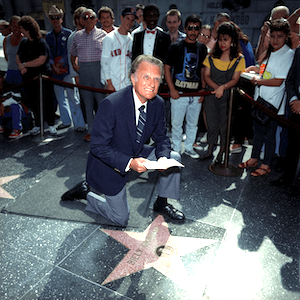
In October 1989, a new star was added to the 1900 stars on the famed sidewalk on Hollywood Boulevard. The new star was placed near the stars of Julie Andrews and Wayne Newton. The new star, as curious as it seems, was the late evangelist Billy Graham, (died February 21, 2018), who preached the Gospel to more than 100 million people around the world.
Years ago, Billy Graham had refused to have his name on a star, but he reconsidered it in 1989. He said, “I hope it will identify me with the Gospel that I preach.” At the unveiling he added, “We should put our eyes on the Star, which is the Lord.”
Three Kings
Bread

Fr. George
Smiga

Fr. George Smiga
There is an Epiphany custom in Mexico that points us to the heart of this manifestation. On the Feast of the Epiphany, Mexican Christians bake a sweet bread that they call Rosca de Reyes which means “the ring of the Kings.” It is a bread that is baked in a circle to resemble the crowns that the Kings wore when they visited the Christ Child. On top of the bread they place candied fruits, cherries, and figs to represent the jewels of the crown. It is a beautiful bread that represents to us the glory of the Epiphany, the beauty of Christ becoming one of us to be our savior. But, there is another part to this bread. Baked inside of it is a small figurine of the child Jesus. This figurine is consciously hidden in the bread because Jesus had to hide from the plot of Herod who sought to destroy him. So, this Ring of the Kings points both to the glory of the Epiphany and to its danger. It reminds us that our human nature is a mixture of both beauty and grace together with struggle and pain—all of which Christ took up as he became one of us.
Now, when the Rosca de Reyes is eaten, the person who receives the piece that has the figurine within it is considered blessed, because he or she has found the Christ Child that has been hidden in the bread…
The Three Kings
Bring the World
to Jesus

Fr. Joe
Jagodensky, SDS

Fr. Joe Jagodensky, SDS
I have satellite radio and often listen to “The Beatles” channel. They’ll introduce a song by another artist saying, “This is what ‘The Beatles’ were listening to before they became ’The Beatles.’” They were enlightened and influenced by what they listened to growing up. Conscious or unconscious, something caught their attention, and it planted a seed that slowly became their seed – a seed to blossom and bloom.
Isn’t that cool? The same thing happens to all of us. We remember a phrase from an attentive teacher, an admonition from a caring parent, that first hug that we’ve since returned to others, a passing compliment from a good friend that becomes your lifelong career. We treasure bits and pieces from others and make them our own…
Metaphorically, the “Three Kings” brings the world to the child Jesus. They show Jesus, the oyster that the world was for him and is for us…

James
Wetzstein
Valparaiso University



Epiphany of the Lord ABC
An 8-year-old asked, “How come the kings brought perfume to Jesus? What kind of gift is that for a baby?” His 9-year-old sister answered, “Haven’t you ever smelled a barn? With dirty animals around, Mary needed something to freshen the air.”
SOURCE: Fr. Tony’s Homilies

You have to be careful in choosing a text
When trying to figure what God will do next;
The wise men, it seems, had Isaiah in mind,
For in chapter 60, the prophet assigned
Jerusalem as the location for light
To shine, with the glory of Yahweh so bright
The wealth of the nations around it would come!
With frankincense, camels, and gold they’d become
Disciples! From darkness, God’s glory’d redound
To those who’d kept faith, and would now be renowned!
SOURCE: LectionaryPoems.com
Epiphany of the Lord ABC
Fr. Frank’s Poetry features a poem a week. Each week the poem is based on a snippet of scri

Epiphany of the Lord ABC
The Star
(2017)

A small but brave donkey named Bo yearns for a life beyond his daily grind at the village mill. One day, he finds the courage to break free, embarking on the adventure of his dreams. On his journey, he teams up with Ruth, a lovable sheep who has lost her flock, and Dave, a dove who has lofty aspirations. Along with three camels and some eccentric stable animals, Bo and his new friends follow the Star and become accidental heroes in the greatest story ever told — the first Christmas.
The Visit of
the Wise Men
(Mt 2:1-12)

This video reveals the visit of Wise Men from the East to the child Jesus in Bethlehem, as recorded in Matthew chapter 2. In particular it shows the Wise Men following a star to Israel, where they enquire as to the location of the new-born King of the Jews. They are pointed towards Bethlehem, where they find the child Jesus and worship Him and give gifts of gold, frankincense and myrrh.
Epiphany of the Lord ABC
“Firework” – Katy Perry (2010)
“Let it shine
Just own the night”

In Katy Perry’s song, “Firework,” the lyrics encourage individuals to recognize their own unique qualities and to let their inner light shine. Like the Magi’s journey, the light we discover within us can represent God’s guidance, our inner calling, or our true potential. The star serves as a symbol of destiny and purpose, leading us to encounter the divine presence just as the Magi found Jesus.
Just as the Magi face challenges, we, too, encounter naysayers and people like Herod in our lives. Herod, threatened by the prospect of a newborn king, attempts to deceive the Magi by pretending to support their quest but secretly desires to eliminate any competition. Similarly, there are individuals who try to discourage us or undermine our confidence in pursuing our dreams, fearing the potential power and strength we possess.
Katy Perry’s song, “Firework,” echoes the message of the Magi’s story by emphasizing the importance of recognizing and embracing our own value, regardless of others’ opinions. The song and the Gospel passage remind us that we have a divine spark within, urging us to strive for greatness and make a positive impact in the world.
RELATED : Singing from the Lectionary (Facebook)
Adoration
of the Magi
in Art

The (Three) Wise Men or (Three) Kings, were, in the Gospel of Matthew and Christian tradition, a group of distinguished foreigners who folowed the “Star of Betlehem“ and visited Jesus after his birth, bearing gifts of gold, frankincense and myrrh. The three wise men who came to seek and honor the infant Jesus were named Gaspar, Balthasar, and Melchior. They were philosophers, the counselors of rulers, learned in all the wisdom of the ancient East. The idea that they were also kings came from the Isaiah 60:3.
Wise Men
Visit Jesus

 Highlight text or double-click a paragraph anywhere on the site to ADD TO NOTES. You can also click ASK AI to copy your selection to the clipboard with a command prompt, ready for you to paste manually into the chat above.