Homily Starters, Fr. Tony’s Homily
Homily Starters, Fr. Tony’s Homily
February 22, 2026
February 22, 2026
1st Sunday of Lent A


- ANECDOTES
- EXEGESIS
- LIFE MESSAGES

HOMILY STARTERS
1st Sunday of Lent (A)
Eagle’s Fatal Feast

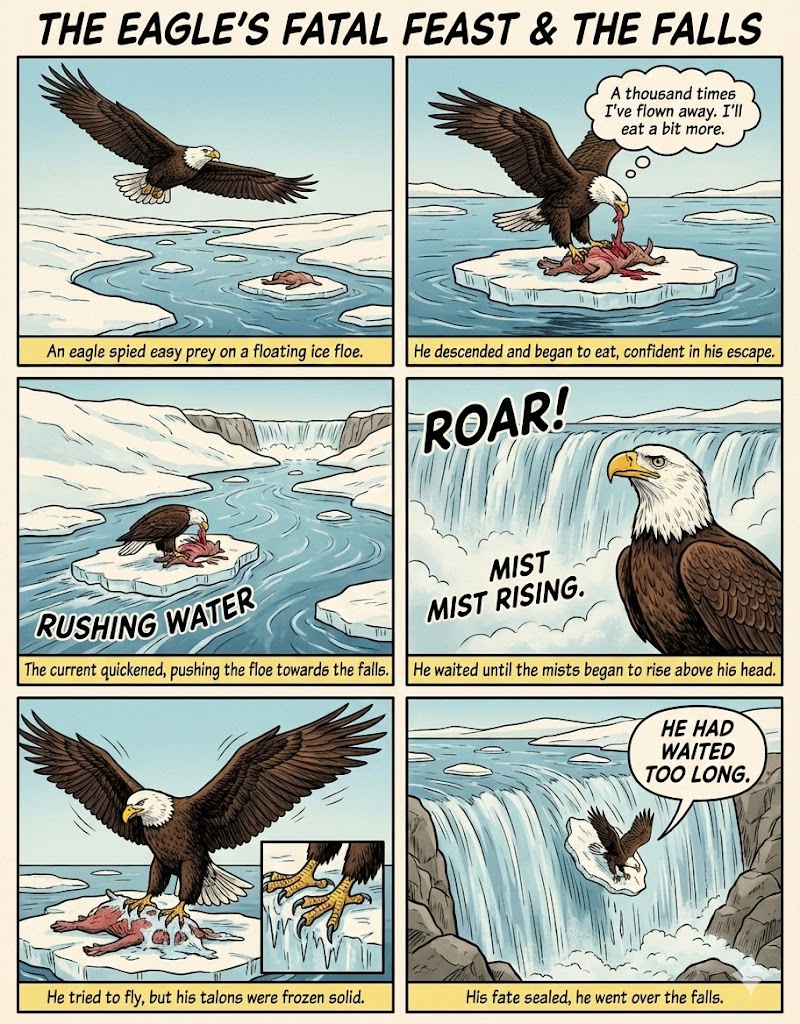
Eagle in Niagara Falls
It was a cold, winter day. A carcass on an ice floe floated slowly down the Niagara River. An Eagle flying overhead spied the easy prey below and descended upon it. He began to eat. As he did, the water of the river began slowly pushing the floe toward the falls. But could not the eagle, stretch forth his great wings and fly? Could he not, at the very brink of the falls, leap into the safety of the air? Had he not done so a thousand times before? So slowly, he continued to eat. As he waited, the water of the river began pushing the floe faster and faster and closer and closer to the falls, until the roar of the falls began to echo throughout the canyon. — He waited until the very mists of the falls began rising above his head. Finally, he stretched forth his great wings to fly. Unknown to him, his talons, sunk in the frozen flesh of his prey and sunk in the ice of the floe, had frozen solid. His fate was sealed. He struggled, and he struggled, and he tried to get away, but he could not, until at last, the floe went over the falls and onto the rocks below. He had waited too long.
The eagle represents anyone who believes they can dabble in a bad habit, sin, or dangerous situation and leave whenever they want. The eagle thinks, “I can fly away at any moment. I’ve done it a thousand times before.” We often overestimate our own strength and willpower. We believe we are the masters of our vices, not realizing that over time, our capacity to “fly away” diminishes.
1st Sunday of Lent (A)
Final Minute

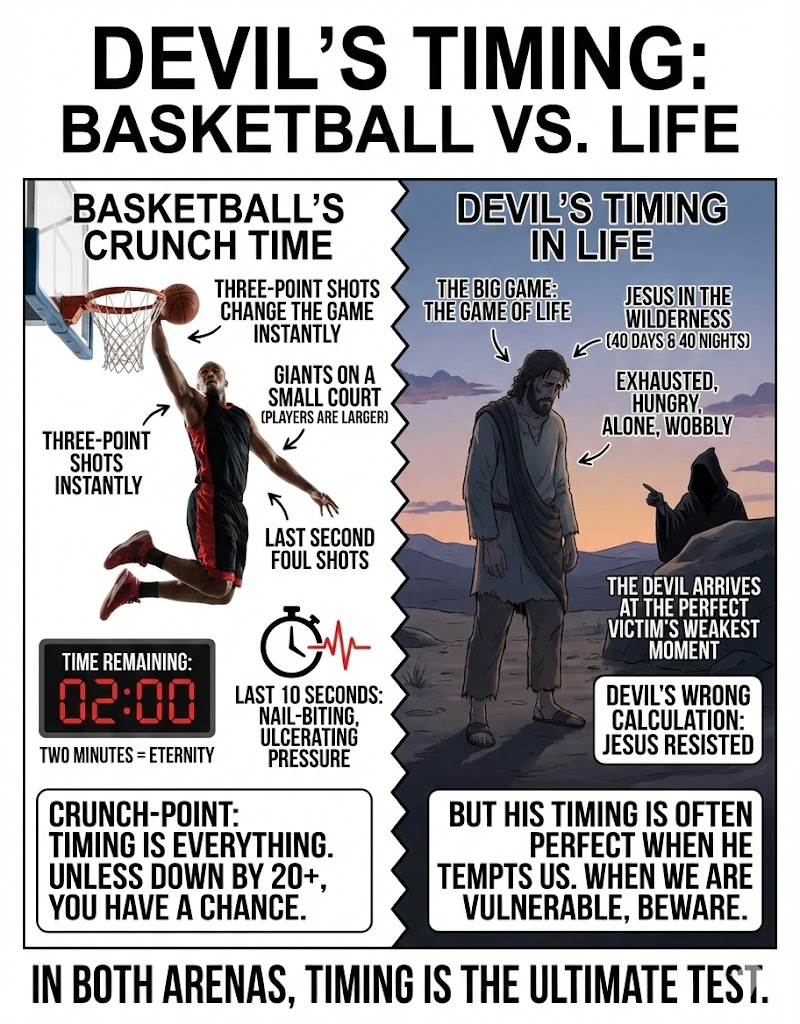
Devil’s Timing
In basketball, things change much more quickly than in football. This is partly because there are three-point shots; partly because of the trumping effect of last second foul shots; partly because the basketball court is still the same size it’s always been while players are all now seven feet tall, weigh 250 pounds, and can dunk from the free-throw line. The basketball score, the balance of power, in any game seems as though it can change in an instant. In basketball, two minutes left on the clock is an eternity. Entire games are played, entire lifetimes are lived, in those last two minutes. Unless your team is down by more than 20 points, you still have a chance. That’s why the most nail-biting, hair-raising, ulcerating, blood-pressure-raising moments in sports are in the last 10 seconds of neck-and-neck basketball games. In the last few seconds of a one-point game the test becomes not of skill, or style, or strength. No: at that crunch-point everything comes down to timing.
In the big game – the game of life – timing is everything. Does anyone doubt the devil’s timing when he arrived to accompany Jesus after he had spent forty days and forty nights of fasting in the wilderness? Jesus was exhausted, hungry, alone, tired, wobbly. The devil wrongly calculated that Jesus would be a perfect victim. But his timing is often perfect when he tempts us. ’s the same way with the Christian life. The way to live a Christian life is to “think wonderful, beautiful thoughts.” They will lift you off the ground and send you soaring to Heaven.
1st Sunday of Lent (A)
Appalachian Trail


You Look Different
A number of years ago Doug Alderson wrote a beautiful article in Campus Life magazine. It described his 2,000-mile hike down the Appalachian Trail. Doug had just graduated from high school and had lots of unanswered questions: Was there a God? What was the purpose of life? What was his purpose in Life? Commenting on all this, Doug wrote: “There had to be more to life than money, TV, parties and getting high…My hike was a search for inner peace, a journey to find myself.” The hike proved to be more difficult than Doug anticipated. At times the trail became dangerously steep. The days were often rainy. Doug’s clothes got soaked, his feet got wet, his body shivered and ached at night. But Doug didn’t give up. The long hours of walking and climbing gave Doug a chance to think. They also gave him a chance to get to know himself better. There was no one around to influence him. Five months later Doug reached home. He was a different person. Even his dog eyed him strangely, as if to say, “Where have you been? What have you done? You look different.”
Doug was different. He had found what he was searching for. There was a God. Life had a purpose, and he had a role to play in it. Doug summed up his experience this way: “I was more my own person. I liked what I saw in myself.”
SOURCE: Mark Link in Sunday Homilies; quoted by Fr. Botelho
1st Sunday of Lent (A)
Sirens in Greek Mythology


Alluring Music of the Sirens
The story of sirens in Greek mythology describes the negative and positive ways of fighting temptations. The Sirens are creatures with the heads of beautiful women and the bodies of attractive birds. They lived on an island (Sirenum scopuli– a group of three small rocky islands). With the irresistible charm of their song, they lured mariners to their destruction on the rocks surrounding their island (Homer’s Odyssey XII, 39-54, 158-200; Virgil’s Aeneid V, 42-44; Ovid’s Metamorphoses XIV, 88-89). They sang so sweetly that all who sailed near their home in the sea were fascinated and drawn to the shore only to be destroyed. When Odysseus, the hero of the Odyssey, passed that enchanted spot he escaped the temptation from sirens by ordering himself to be tied to the mast and ordering his sailor comrades to put wax in their ears, so that they might not hear the luring and bewitching strains. But King Tharsius chose a better and positive way of conquering Sirens’ temptations. He took the great Greek singer and lyrist Orpheus along with him. Orpheus took out his lyre and sang a song so clear and ringing that it drowned the sound of those lovely, fatal voices of the Sirens.
Today’s readings advise us that the best way to break the charm of this world’s alluring voices during Lent is not by trying to shut out the music with ear-plugs, but to have our hearts and lives filled with the sweeter music of prayer, penance, the word of God, self-control, and acts of charity. Then temptations will have no power over us.
The 1st Reading Explained
1st Sunday of Lent (A)

The 2nd Reading Explained
1st Sunday of Lent (A)
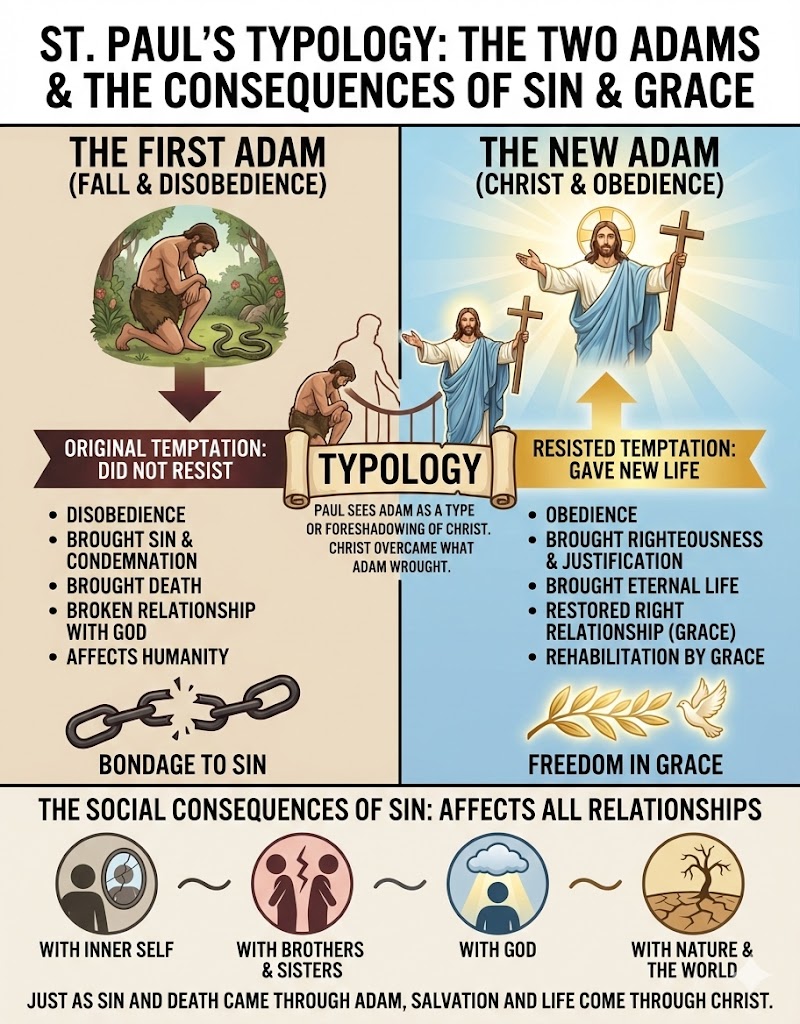
The Gospel Reading Explained
1st Sunday of Lent (A)



Message #1
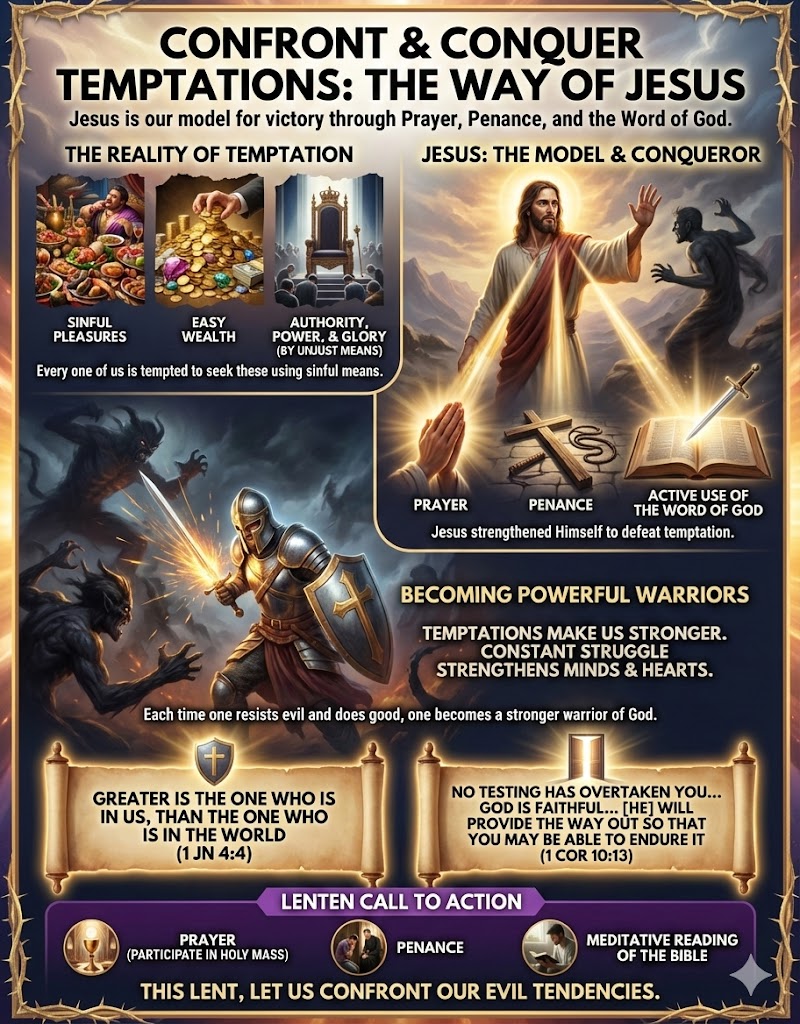
Message #2
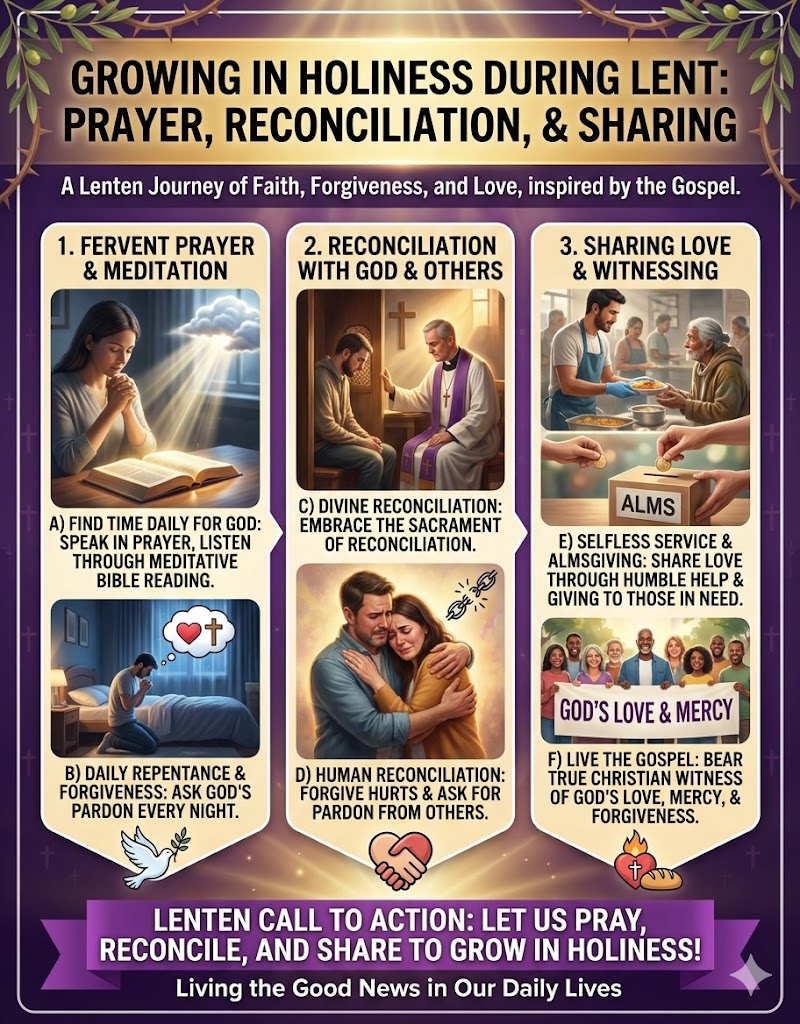
Message #3

Infographics were created using Google Gemini 3 and Nano Banana Pro. Inspiration take from Fr. Tony’s Homilies; Non-profits may freely use this infographic in their publications and/or ministry. Please give credit or a shout out to TheWordThisWeek.NET.