




The Road to Hope
(Prov.9:1-6; Eph.5:15-20; Jn.6:51-58)
CONCLUSION: In John’s Gospel today, Jesus says, ‘Unless you eat the flesh of the Son of Man and drink his blood, you do not have life within you.’
Nguyên Van Thuân understood this well. He said that the only thing that helped him survive so many years of torture and dehumanisation was the Holy Eucharist. It gave him life and he used it to love his fellow prisoners and even the guards who abused him. Some of these men were so moved by his faith that they, too, became Catholics.
The Eucharist (Greek for ‘thanksgiving’) means so much more than just ‘receiving Communion.’ It’s about consuming Jesus Himself, combining our life with His, so that we might draw life from Him.
And not just eternal life, but also the strength we need to survive – and thrive – here on earth.
Fr. Andrew Ricci
PODCAST: Jesus states that we must eat his flesh and drink his blood to have eternal life. May our reception of the Body and Blood of Christ in Holy Communion nourish our souls as the Lord renews us with his grace.
Fr. Austin Fleming

“How can this man give us his flesh to eat?”
INTRODUCTION: Folks still quarrel over this question. As you know, there are many Christian churches that don’t take the Lord at his word here, that don’t believe that the bread of the Eucharist becomes the Body of Christ. It’s interesting, isn’t it, that often it’s the Christians who preach the absolute necessity of a personal encounter and relationship with our Lord and Savior Jesus Christ who are the least inclined to believe that Jesus comes to us – truly and personally – in his Body and Blood, in the Bread and Cup of the Lord’s Supper.
Dominican Blackfriars


INTRODUCTION: If you don’t eat the flesh of the Son of Man and drink his blood you shan’t have life in you. This is disgusting language, of course it’s disgusting. Not the language of religion but the language of the slaughter-house and the butcher’s, for a start; sides of meat hanging on hooks and blood all over the floor – that’s what this is about. Not churchy language at all.
St John is often explained as a writer who takes some basic thoughts about Jesus and turns them into poetry. Well, this isn’t poetic at all, not at all!
Fr. Charles E. Irvin
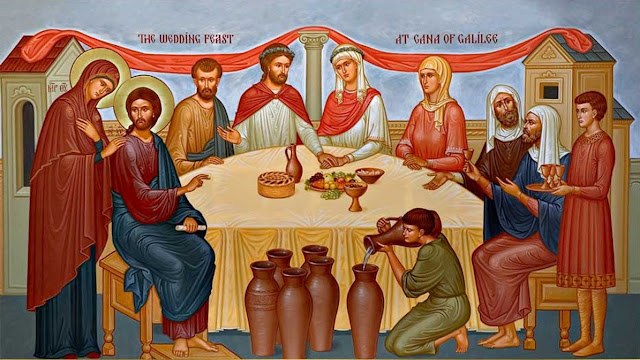
Understanding the Deep Connection in Holy Communion

INTRODUCTION: When you love someone, you want to be a part of the life of the one you love. Love seeks union, a union of heart, mind, soul, and life with your beloved. You want to belong.
So much of life, perhaps all of life, is about belonging, the belonging that takes us to family reunions, weddings, anniversaries, and all those other special moments when once again we experience and share in each other’s lives. Texting, twittering, e-mailing, cell phone chatting, and all manner of other modern methods of being a part of the lives of others now abound. But they do not bring real belonging.
Fr. Leon Ngandu, SVD
Fr. Leon Ngandu, SVD
“For my Flesh is True Food, and my Blood is True Drink”
EXCERPT: Through this Gospel passage, our Holy Mother Church wants to teach us that the Eucharist is not “like” but the real Body and Blood of Christ. When we receive Holy Communion, we become one with our Lord in an intimate relationship, just as he is in an intimate relationship with his Father, God. The Eucharistic food is different from other blessed foods, including manna, since all the blessed foods sustain only our temporary needs but do not give eternal life as the Body and Blood of Christ do.

Fr. George Smiga
Wisdom to Know God’s Ways

INTRODUCTION: Today’s first reading from the book of Proverbs presents Wisdom preparing a great feast and inviting us all to participate. She calls out to us saying: “Put immaturity aside and walk in the way of insight.” What we need to know about wisdom in the Hebrew Scriptures is that Wisdom is a lot more than cleverness or intelligence. Wisdom, in the bible, is an aspect of faith. So when Wisdom calls us to walk in the ways of insight, she is really inviting us to understand the ways of God.
Fr. Anthony Ekpunobi, C.M.

CONCLUSION: The modern world is filled with failed political promises and moral decadence. The will to make a change lies in a divine assistance that urges the will to goodness. The optimism of St. Paul in the second reading is recalled: This may be a wicked age, but you redeem it. We redeem it through the life that comes from the Eucharistic Bread.
Msgr. Joseph Pellegrino

Eat My Flesh, Drink My Blood

EXCERPT: When we receive communion, we receive Jesus saving us now. We receive Christ strengthening us and transforming our joys and sorrows into prayers to his Father. Our union with Christ in the Eucharist is union with Christ in passion, death and resurrection. Sometimes we are full of the joy of the Resurrection, sometimes the sorrow of the Passion, but always we are strengthened by the one who gives us his body and blood. The Lord is always in action. His Presence is dynamic.
Msgr. Charles Pope
Costly Truth
INTRODUCTION: Although many of the Jewish listeners who hear Him speaking in the synagogue at Capernaum are grumbling and murmuring in protest at His insistence that they eat His flesh and drink His blood, Jesus does not back down. In fact, He “doubles down” and quite graphically teaches a very real (as opposed to symbolic) call to eat His flesh and drink His blood. Let’s examine Jesus’ teaching in four stages.
I. REALITY
II. REACTION
III. REINFORCEMENT
IV. REWARD
V. The Food of Faith
Bishop John Louis

EXCERPT: Four members of the International Criminal Court (ICC) were detained in Libya for illegally possessing, among other things, a camera in the form of a pen and a recorder in the form of a wrist watch. Would they have been detained for possessing an ordinary pen and wrist watch? No! They were detained because they possessed a camera (though in the form of pen) and a recorder (though in the form of a wrist watch). Similarly, in the Eucharist, though the form is bread it is truly the body of Christ; though the form is wine, it is truly the blood of Christ! That is why St. Paul asks those whose appreciation of the Eucharist is limited by the forms of bread and wine: ‘Is the bread we break not a communion in the body of Christ? Is the cup we drink not a communion in the blood?’ (1 Cor. 10:16). Subsequently, he states categorically: ‘It follows that if anyone eats the Lord’s bread or drinks from this cup in a way unworthy of him, he is guilty of sin against the Lord’s body and blood’ (1 Cor. 11:27). It is clear that St. Paul does not say the person sins against the blessed bread and blessed wine, nor simply against the bread and wine.
Fr. Michael Chua

EXCERPT: While Holy Communion does involve eating human flesh and blood, it is not true that it is cannibalistic. How so? The Eucharist is life. Cannibals eat what is dead. The Christ whom we consume is alive. He is the Risen Lord, He is Life itself. Our reception of the Eucharist doesn’t destroy or change that in any way. Being alive, His body is still united with His soul. And because Jesus Christ is true God and true man, His divinity and humanity are inseparable. In partaking of the human aspects of Christ (His body, blood and soul), we also partake of His divine nature. Christ’s risen body is not a resuscitated corpse like that of Lazarus, but an utterly transformed “spiritual body” (I Cor. 15:44). Therefore, when a Catholic receives the Eucharist, he is receiving not just flesh but glorified flesh, a resurrected and transfigured “super body” that foreshadows the new reality of a new Heaven and a new earth. Cannibalistic practices don’t do that. Putting all these elements together, we arrive at the Catholic formula: “The Eucharist is the body and blood, soul and divinity, of our Lord Jesus Christ.”
Fr. Vincent Hawkswell

No homily available for 20th Sunday of Ordinary Time, Year B
Fr. Tommy Lane
Taste and See the Goodness of the Lord

INTRODUCTION: Sin is always attractive; if it were not, we wouldn’t commit sin. What is sinful attracts and we fall into the trap of believing it will satisfy our needs. But we are still dissatisfied. Why? Because what is sinful never satisfies. The devil deceives us to make us think that sin is attractive, but we discover afterwards that sin damages and did not bring the joy we wanted.
Fr. John Kavanaugh, S.J.
Nurtured

EXCERPT: Wisdom offers herself as our food and drink, a table spread for us, a banquet: “Come, eat of my food, and drink the wine I have mixed.” True wisdom nourishes the whole person. It empowers us to leave foolishness and deception behind.
Ephesians portrays the Spirit as the real answer to our thirst. Quenched, we no longer “act like fools and wallow in ignorance.” The Spirit inebriates; it does not debauch. It unlocks the voice in grateful song: “Give thanks to God the Father always and for everything in the name of our Lord Jesus Christ.”
Bishop Frank Schuster
Real Presence and Simple Faith
EXCERPT: Jesus is not talking about a metaphor or a symbol. The word “flesh” in the original Greek is sarx. The word sarx can only mean “flesh”. Jesus could have
used the word soma if he wanted to convey a concept closer to body and spirit. However, sarx is closer to the word “steak” than it is to the word “body”. This is
why, in my mind, John chapter 6 is the most advanced treatment of the Holy Eucharist in the New Testament. Clearly, in Christ’s mind, the Eucharist is really and truly his body, blood, soul and divinity. This is the bread that has come down from heaven, in Jesus’ very person. In this way, the Promised Land is no longer a piece of real estate that God was leading Moses’ people to. The Promised Land now is eternal life in Christ because we are what we eat.

INTRODUCTION: I was staying at the Intercontinental Hotel in Columbia one time. It was a well-guarded hotel, for outside the walls the area was teeming with many people. There were poor people begging in the streets, and drug addicts all around. Inside, it was an entirely different world. It was safe, bright, and comfortable.
On my way up to my room, I noticed a sign hanging in the elevator advertising a party in suite 611. Obviously, the sign was intended for those who knew the occupants of suite 611. But then I began to think, what if there was a party in suite 611 that invited everyone, literally everyone? The people outside the hotel, the poor on the streets, the beggars; what if they were invited into the magic place of endless food and drink? What if the waiters and busboys, the maids, the women who worked in the hotel laundry and the desk clerk, what if they were invited to the party in suite 611? Who would throw such a party?
