

SOURCE: Vatican News – English

20th Sunday of Year B
Eucharist – Part 2
This Sunday’s readings seem to be focused on the mystery of the Eucharist: what or who is this mystery which hides under bread and wine? The answer is broad and rich in nuances: the mystery is a man, Jesus of Nazareth, like us but come down from heaven (Gospel). It is God’s wisdom that invites us to a banquet so that we may acquire knowledge (first reading). It is the Father’s Son, who wants us to share his divine life (Gospel). It is the glorious Lord to whom the Christian community sings psalms, hymns and inspired songs (second reading).
P. Antonio Izqeuirdo, L.C., Copyright © Dicastery for the Clergy
Catechism Cross-References
Catechism
Cross-References

20th Sunday of Year B
Doctrinal Messages
20th Sunday of Year B
Pastoral Suggestions
Pope Francis
The sacrament of
the Body and Blood of Christ
19 Agust 2018 | Saint Peter’s Square
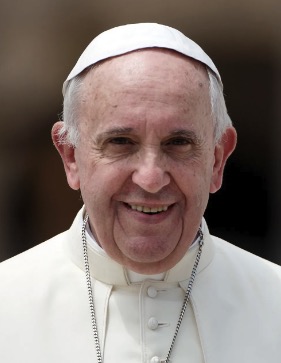
This bread of life, the sacrament of the Body and Blood of Christ, comes to us freely given at the table of the Eucharist. Around the altar we find what spiritually feeds us and quenches our thirst today and for eternity. Each time we participate in the Holy Mass, in a certain sense, we anticipate heaven on earth, because from the Eucharistic sustenance, the Body and Blood of Jesus, we learn what eternal life is. It is living for the Lord: “he who eats me will live because of me” (v. 57), the Lord says. The Eucharist shapes us so that we live not only for ourselves but for the Lord and for our brothers and sisters. Life’s happiness and eternity depend on our ability to render fruitful the evangelical love we receive in the Eucharist.
As in that time, today too Jesus repeats to each of us: “unless you eat the flesh of the Son of man and drink his blood, you have no life in you” (v. 53). Brothers and sisters, it is not about material sustenance, but a living and life-giving bread, which conveys the very life of God. When we receive Communion we receive the very life of God. To have this life it is necessary to nourish ourselves of the Gospel and of the love of our brothers and sisters. Before Jesus’ invitation to nourish ourselves of his Body and of his Blood, we might feel the need to dispute and to resist, as did those listeners whom today’s Gospel spoke of. This happens when we struggle to model our existence after that of Jesus, to act according to his criteria and not according to worldly criteria. By nourishing ourselves of this food we can enter into full harmony with Christ, with his sentiments, with his behaviour. This is so important: to go to Mass and partake in Communion, because receiving Communion is receiving this living Christ, who transforms us within and prepares us for heaven.
Participating in Jesus’ sacrifice of Love
9 August 2012 | Castel Gandolfo
This Sunday’s Gospel (cf. Jn 6:51-58) is the concluding part and culmination of the discourse given by Jesus in the Synagogue of Capernaum after he had fed thousands of people with five loaves and two fishes the previous day. Jesus reveals the meaning of this miracle, namely that the promised time had come; God the Father, who had fed the Israelites in the desert with manna, now sent him, the Son, as the true Bread of life; and this bread is his flesh, his life, offered in sacrifice for us. It is therefore a question of welcoming him with faith, not of being shocked by his humanity, and it is about eating his flesh and drinking his blood (cf. Jn 6:54) in order to obtain for ourselves the fullness of life. It is clear that this address was not given to attract approval. Jesus knew this and gave this speech intentionally. In fact it was a critical moment, a turning point in his public mission. The people, and the disciples themselves, were enthusiastic when he performed miraculous signs; the multiplication of the loaves and fishes was a clear revelation that he was the Messiah, so that the crowd would have liked to carry Jesus in triumph and proclaim him King of Israel. But this was not what Jesus wanted. With his long address he dampens the enthusiasm and incites much dissent. In explaining the image of the bread, he affirms that he has been sent to offer his own life and he who wants to follow him must join him in a deep and personal way, participating in his sacrifice of love. Thus Jesus was to institute the Sacrament of the Eucharist at the Last Supper, so that his disciples themselves might share in his love — this was crucial — and, as one body united with him, might extend his mystery of salvation in the world.