


19th Sunday of Year B
Eucharist
Last week, the liturgy emphasized the power of faith. Today’s liturgy underscores the effectiveness and power of the Eucharist. The bread of the Eucharist that Christ gives us is prefigured in the bread that a messenger of God offers Elijah, “and strengthened by that food he walked for forty days and forty nights until he reached Horeb, God’s mountain” (first reading). The bread that Christ talks about in the Gospel is the bread that has come down from heaven, the bread of life, of an ever-lasting life. It is his flesh for the life of the world (Gospel). This flesh is offered as a sweet-smelling sacrifice and victim, which gives strength to Christians, “by loving as he loved you” (second reading).
P. Antonio Izqeuirdo, L.C., Copyright © Dicastery for the Clergy
Catechism Cross-References
Catechism
Cross-References
19th Sunday of Year B
Doctrinal Messages
19th Sunday of Year B
Pastoral Suggestions
Pope Francis
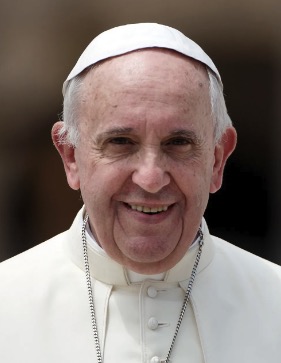
I am The Bread of Life
8 August 2021 | Saint Peter’s Square
In the Gospel for today’s Liturgy, Jesus continues preaching to the people who had seen the prodigy of the multiplication of the loaves. And he invites those people to make a qualitative leap: after having recalled the manna with which God had fed the forefathers in the long journey through the desert, he now applies the symbol of the bread to himself. He states clearly: “I am the bread of life” (Jn 6:48).
What does bread of life mean? We need bread to live. Those who are hungry do not ask for refined and expensive food, they ask for bread. Those who are unemployed do not ask for enormous wages, but the “bread” of employment. Jesus reveals himself as bread, that is, the essential, what is necessary for everyday life; without Him it does not work. Not one bread among many others, but the bread of life. In other words, without him, rather than living, we get by: because he alone nourishes the soul; he alone forgives us from that evil that we cannot overcome on our own; he alone makes us feel loved even if everyone else disappoints us; he alone gives us the strength to love and, he alone gives us the strength to forgive in difficulties; he alone gives that peace to the heart that it is searching for; he alone gives eternal life when life here on earth ends. He is the essential bread of life
I am the bread of life, He says. Let us pause on this beautiful image of Jesus. He could have offered a rationale, a demonstration, but – we know – Jesus speaks in parables, and in this expression: “I am the bread of life”, he truly sums up his entire being and mission. This will be seen completely at the end, at the Last Supper. Jesus knows that the Father is asking him not only to give food to people, but to give himself, to break himself, his own life, his own flesh, his own heart so that we might have life. These words of the Lord reawaken in us our amazement for the gift of the Eucharist. No one in this world, as much they might love another person, can make themselves become food for them. God did so, and does so, for us. Let us renew this amazement. Let us do so as we adore the Bread of Life, because adoration fills life with amazement.
Christians Cannot Be Hypocrites
12 Agust 2018 | Saint Peter’s Square
In today’s second reading, Saint Paul addresses an urgent invitation to us: “Do not grieve the Holy Spirit of God, in whom you were sealed for the day of redemption” (Eph 4:30). But I ask myself: how does the Holy Spirit become saddened? We all received him in Baptism and in Confirmation. Thus, in order not to sadden the Holy Spirit, it is necessary to live in a manner consistent with the promises of Baptism that are renewed in Confirmation. In a consistent manner, not with hypocrisy. Do not forget this. Christians cannot be hypocrites. They must live in a consistent manner. The promises of Baptism have two aspects: rejecting evil and clinging to good.
Rejecting evil means saying ‘no’ to temptation, to sin, to Satan. More concretely, it means saying ‘no’ to a culture of death that manifests itself in escaping from reality towards a false happiness that is expressed in lies, deceit, injustice and in despising others. ‘No’ to all this. The new life given to us in Baptism has the Spirit as its wellspring and rejects any behaviour dominated by feelings of division and discord. This is why the Apostle Paul urges that “all bitterness and wrath and anger and clamour and slander be put away from your hearts, with all malice” (cf. v. 31). This is what Paul says. These six elements or vices which unsettle the joy of the Holy Spirit, poison the heart and lead to cursing God and our neighbours.
But, it is not enough to refrain from doing evil in order to be a good Christian. It is necessary to cling to good and to do good. And then Saint Paul continues: “be kind to one another, tenderhearted, forgiving one another, as God in Christ forgave you” (v. 32). Often, we happen to hear someone say: “I do no harm to anyone”. And they think they are saints. All right, but do you do good? How many people do no evil but, at the same time, do no good, and their life goes by in indifference, apathy and tepidness. This attitude is contrary to the Gospel and it also goes against the temperament of you young people, who are by nature dynamic, passionate and brave. Remember this — if you remember it we can repeat it together: “It is good to do no evil, but it is evil to do no good”. Saint Alberto Hurtado used to say this.