
August 31, 2025
August 31, 2025


Homilies
Homilies
Deacon Greg’s blog has garnered some 20 million readers from around the world since its inception in 2007.
Reflection Questions and Infographics were generated using Google Gemini 2.5 AI tools (w/ Chart.js and Tailwind CSS). Feel free to use them in any non-profit ministry. A Link or shoutout to THE WORD THIS WEEK would be greatly appreciated. —Fr. Don.
22nd Sunday of Year C

LITURGICALLY SOUND (04:06) – Lyrics adapted and inspired from Mother Teresa’s Letters to Archbishop Perier in 1946 & 1947 which can be found in the book “Mother Teresa – Come be My Light: The Revealing Private Writings of the Nobel Peace Prize Winner” By Brian Kolodiejchuk. In these writings Mother Teresa explains her experiences of God calling her to evangelise the poor of India.
“Come, Be My Light”

Deacon Kandra's homily begins by contrasting the world's interest in fame with the Gospel's call to humility. Jesus tells us to invite the poor, the crippled, and the blind—to "be one of them — and make them one of you."
- Deacon Kandra notes that online searches for "fame" far outnumber those for "humility." Why do you think our culture is so much more interested in fame than in humility?
- What does Jesus's command to associate with the marginalized, rather than the rich and famous, teach us about God's priorities?
- In your own life, what is one practical way you could "be one of them" and invite someone who is overlooked or on the margins into your circle of concern?

St. Teresa of Calcutta is a prime example of humility, focusing on the surprising revelation of her nearly 50-year "dark night of the soul," where she felt abandoned by God.
- Were you surprised to learn about Mother Teresa's long struggle with spiritual darkness? How does this knowledge change your perception of her and what it means to be a saint?
- Despite feeling that God had forgotten her, Mother Teresa continued her mission. The homily says her life shows that sainthood takes more than piety; it takes perseverance. How does her example encourage you in your own moments of spiritual dryness or doubt?
- In her darkness, Mother Teresa shared profoundly in Christ's own passion when He cried out, "My God, why have you abandoned me?" How can our own struggles and feelings of abandonment actually unite us more closely to Jesus?
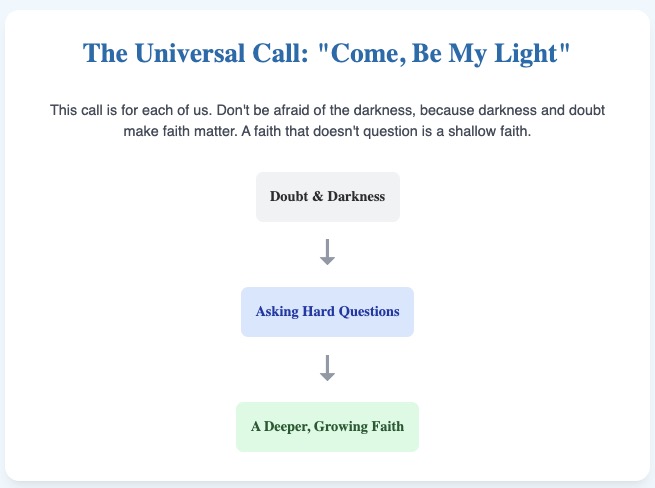
Deacon Kandra centers on the personal call Mother Teresa heard from Christ: "Come, be My light." This call is extended to each of us.
- What does it mean for you, in your specific state in life, to be God's "hands," "voice," and "light"?
- Deacon Kandra says, "Don’t be afraid of the darkness. Because darkness and doubt... make faith matter." How can questioning and uncertainty actually lead to a deeper and more mature faith, rather than a weaker one?
- This call is an invitation to help God "finish what I have begun." How does viewing your daily work and acts of love as a participation in God's ongoing act of creation change your perspective on them?

Deacon Kandra concludes by pointing to the Eucharist as the greatest example of humility—"when God becomes bread, and bread becomes God."
- How is the Eucharist a perfect example of the dynamic of "the exalted is humbled and the humble exalted"?
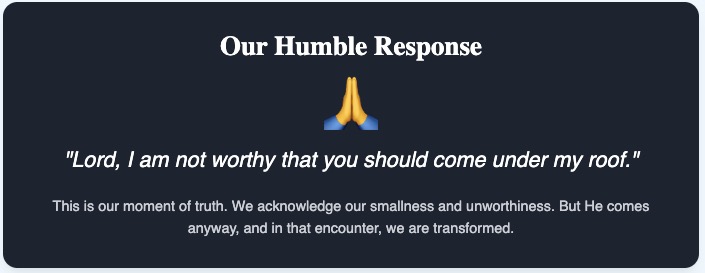
- We pray, "Lord, I am not worthy," yet He comes to us anyway. How does receiving the Eucharist both humble us and exalt us at the same time?
- How can we welcome Christ in the Eucharist with the same spirit as Mother Teresa—a spirit of perseverance and a desire to be His light, even if we feel unworthy or are struggling with our own "darkness"?
Discussion guides and Infographics on this page have been created using AI generative tools (i.e. GOOGLE'S AI Gemini 2.5 Flash LLM, Chart.js and Tailwind CSS). They are free to use for any non-profit ministry. THE WORD THIS WEEK kindly requests that you show your appreciation by sharing a link to the website.
Homily Excerpt
2016 HOMILY— Don’t hang around with the rich and famous, Jesus says. Don’t take the best seat at the table. And when you have someone over for dinner, invite the poor, the crippled, the blind. He is telling us: Be one of them — and make them one of you. ” For every one who exalts himself will be humbled. And the one who humbles himself will be exalted.” An example that keeps coming to my mind is Blessed Mother Teresa.
────── ⋆⋅☆⋅⋆ ──────
Deacon Peter McCulloch
Deacon of the
Diocese of Broken Bay, Australia
Reflection Questions and Infographics were generated using Google Gemini 2.5 AI tools (w/ Chart.js and Tailwind CSS). Feel free to use them in any non-profit ministry. A Link or shoutout to THE WORD THIS WEEK would be greatly appreciated. —Fr. Don.
22nd Sunday of Year C

Humble Pie
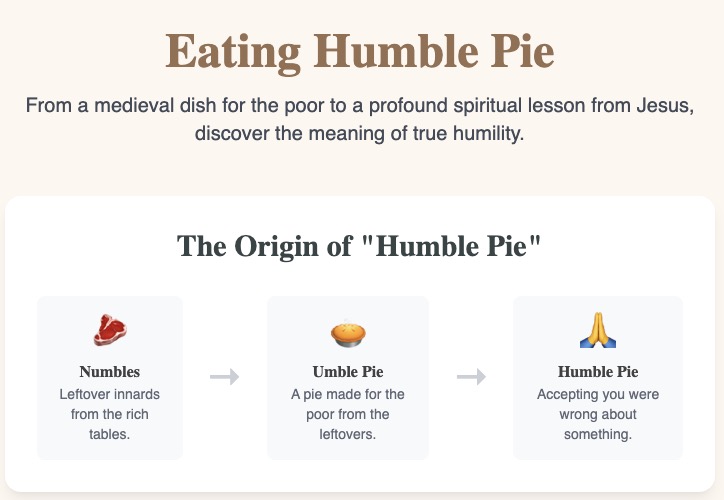
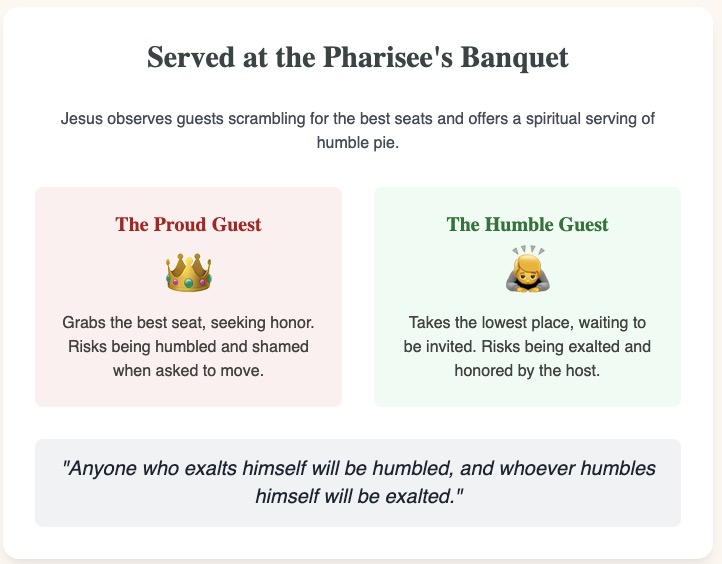
Deacon Peter begins by contrasting the world's fascination with fame and the Gospel's call to humility. Jesus serves "humble pie" at the Pharisee's banquet, challenging the guests' scramble for the best seats.
- Deacon Peter notes that online searches for "fame" vastly outnumber those for "humility." Why do you think our culture is so much more interested in pride and recognition?
- Jesus tells the guests not to grab the best seat, but to wait to be invited. How is this more than just good manners? What spiritual lesson is He teaching about our posture before God?
- The text says pride "claims that everything is perfect, when it can’t be." In what ways does the pressure to appear "perfect" (on social media, at work, etc.) close us off from growth and grace?
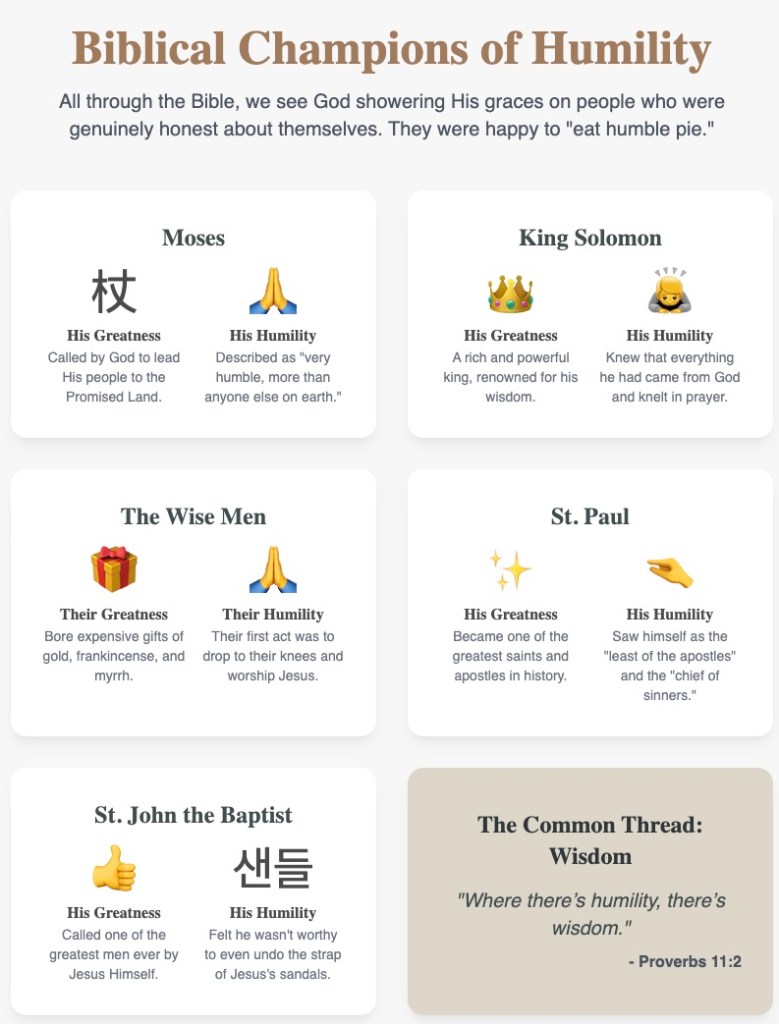
Deacon Peter lists several great figures from the Bible who were powerful examples of humility: Moses, King Solomon, the Wise Men, St. Paul, and St. John the Baptist.
- Which of these examples stands out to you the most, and why?
- These individuals were all "great" in the eyes of the world (leaders, kings, saints), yet they saw themselves as small before God. What does their example teach us about the relationship between true greatness and humility?
- Deacon Peter quotes Proverbs: "Where there’s humility, there’s wisdom." How did humility lead these biblical figures to a deeper wisdom?
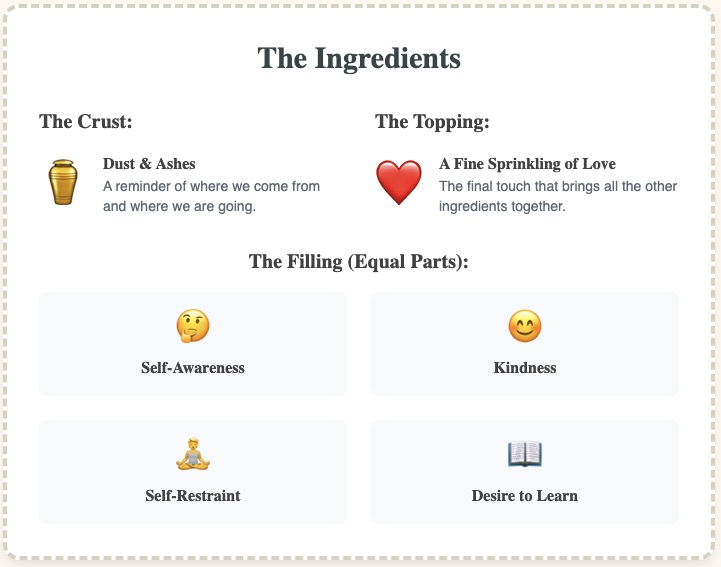
Deacon Peter gives a spiritual "recipe" for humble pie, with a crust, a filling, and a topping.
- The crust is "dust and ashes." What does this ingredient represent about our human condition?
- The filling is a blend of self-awareness, kindness, self-restraint, and a desire to learn. Which of these ingredients do you find easiest to practice? Which is the most challenging for you?
- The pie is served with a "fine sprinkling of love." How does love tie all the other ingredients of humility together?

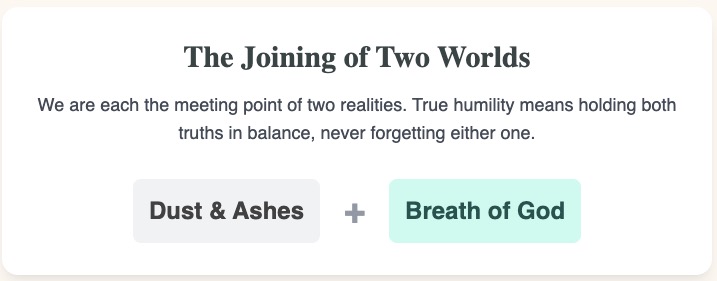
Deacon Peter concludes with the story of the rabbi who taught that everyone should carry two notes in their pockets.
In what situations in your life do you most need to be reminded that you are "dust and ashes"? In what situations do you most need to be reminded that "for your sake the world was created"?
What are the two notes?
Pocket 1: "I am only dust and ashes."
Pocket 2: "For my sake the world was created."
Why is it essential to hold both of these truths at the same time? What happens if we only focus on the first note? What happens if we only focus on the second?
Discussion guides and Infographics on this page have been created using AI generative tools (i.e. GOOGLE'S AI Gemini 2.5 Flash LLM, Chart.js and Tailwind CSS). They are free to use for any non-profit ministry. THE WORD THIS WEEK kindly requests that you show your appreciation by sharing a link to the website.
Homily Excerpt
In Medieval England, the Church used to collect leftover meat from the tables of the rich, and they gave it to the poor. These leftovers were usually deer or beef innards, called numbles. These numbles were chopped or minced, and then wrapped in pastry and cooked. The result was numble pie, which later became umble pie. The rich ate the tasty venison, while the poor ate umble pie.
The nature of this dish has changed over the years, and today we speak of eating humble pie, where we accept that we were wrong about something. Humble pie is what Jesus serves up at the Pharisee’s banquet in today’s Gospel…

MOVIE TRAILER (1:57) – THE SECRET GARDEN (1993)
The Secret Garden
Part 1: The Story and the Metaphor
The homily begins with the story of The Secret Garden, where a neglected, hidden garden is brought back to life, and in the process, heals the children who tend to it.
- Were you familiar with the story of The Secret Garden before this homily? What aspects of the story—the lonely girl, the hidden key, the forgotten garden, the healing power of work—stood out to you most?
- Deacon Peter uses the secret garden as a metaphor for the Kingdom of God. What did you find powerful or insightful about this comparison? In what ways is God's Kingdom sometimes "hidden," "locked," or "forgotten" in our world today?
- The homily says that as Mary Lennox cared for the garden, "something else starts to blossom: her heart." Have you ever experienced a time when doing hard, selfless work for someone or something else changed you for the better?
Part 2: The Narrow Door (Luke 13:22-30)
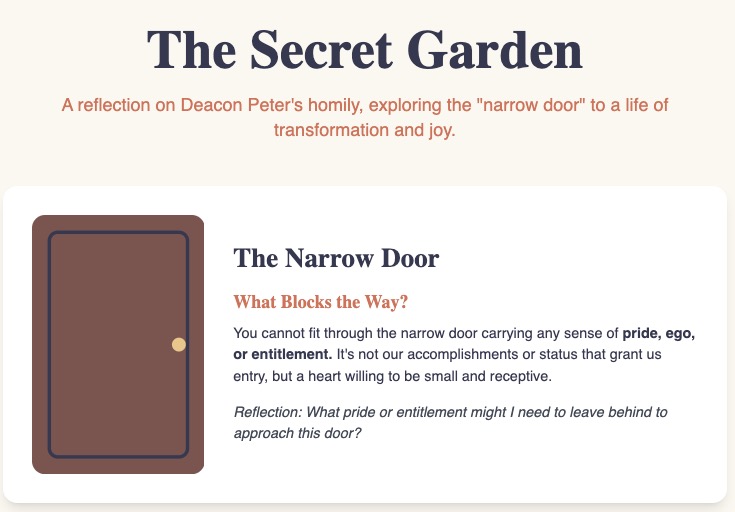
Jesus speaks of a "narrow door" and urges us to "try our best to enter it." Deacon Peter connects this to the door of the secret garden.
- The homily states, "You cannot fit through that door carrying any sense of pride, ego or entitlement." What do these things look like in our daily lives? Can you share an example of a time when letting go of pride or ego was necessary to move forward?
- Jesus redirects the question from "Will many be saved?" to the personal challenge of entering the narrow door. Deacon Peter lists several "better questions" to ask ourselves:
- Am I willing to change to fit through that narrow door?
- Am I willing to forgive, to let go of the resentment that poisons my soul?
- Will I drop the distractions that block me from truly loving God and my family?
- Am I humble enough to accept help and to apologise when I’m wrong?
- Will I reach out to those who are forgotten and unloved?
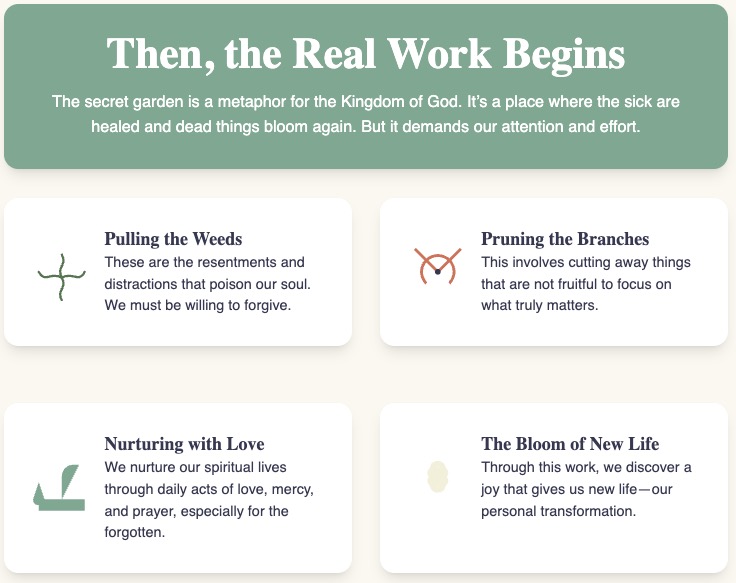
- The work in the garden—digging, pruning, tending—was hard. The homily suggests our spiritual life is the same. What are the spiritual equivalents of "pulling weeds" and "pruning branches" in our lives?
Part 3: Shaking Off Complacency
The homily warns against the comfortable assumption that because we are "good people" or know about Jesus, our salvation is guaranteed.
- Jesus says, "the last will be first, and the first will be last." He also notes that people will come from "east and west, from north and south" to enter the Kingdom. How does this challenge our assumptions about who is "in" and who is "out"?
- Why do you think the idea of "I'm a good person, so I'm set" is so dangerous to our spiritual growth? How does the "narrow door" call us to a daily, active faith rather than a passive one?
Part 4: Our "Yes" is the Key
The homily concludes that the "key to this door can be found in our bold ‘yes’ to God’s call."
- Mary first had to find the key, then the door, before she could even begin the work. What is the first step for us in seeking the "narrow door" in our own lives?
- What does a "bold 'yes' to God" look like for you this week? It doesn't have to be a monumental act. What is one small, concrete way you can "unlock the door" and "tend the garden" in your life, your family, or your community?
Discussion guides and Infographics on this page have been created using AI generative tools (i.e. GOOGLE'S AI Gemini 2.5 Flash LLM, Chart.js and Tailwind CSS). They are free to use for any non-profit ministry. THE WORD THIS WEEK kindly requests that you show your appreciation by sharing a link to the website.
Homily Excerpt

This secret garden is a fine metaphor for the Kingdom of God. It’s a very special place where the sick are healed, dead things bloom again, and joy returns.
Unfortunately, it’s hidden and forgotten by too many people today. They’ve forgotten it because they believe it’s no longer important. ‘We’re going to heaven anyway,’ they think, ‘so why should we bother?’
Or they might think ‘we’re good people, so heaven must surely be ours.’
Jesus is trying to shake us out of this complacency. In John 10:9, Jesus tells us that he is the door, and today he says this door is narrow and not everyone will enter it.
────── ⋆⋅☆⋅⋆ ──────

Dominican Friars
of England & Wales,
Scotland
Reflection Questions and Infographics were generated using Google Gemini 2.5 AI tools (w/ Chart.js and Tailwind CSS). Feel free to use them in any non-profit ministry. A Link or shoutout to THE WORD THIS WEEK would be greatly appreciated. —Fr. Don.
22nd Sunday of Year C


Fr. Brookes begins by highlighting what seems to be a contradiction in the Gospel: Jesus's advice on taking the lower seat appears to be about reasonable self-interest, while His advice on inviting the poor seems to be about setting self-interest aside.
- Before hearing the explanation, did Jesus's two pieces of advice seem contradictory to you? Why or why not?
- In our daily lives, where do we see the tension between acting with "reasonable self-interest" and acting with selfless charity?
- The homily suggests that Jesus's first piece of advice is not a guaranteed social strategy. Can you think of a time when acting humbly did not lead to immediate, worldly honor or recognition?
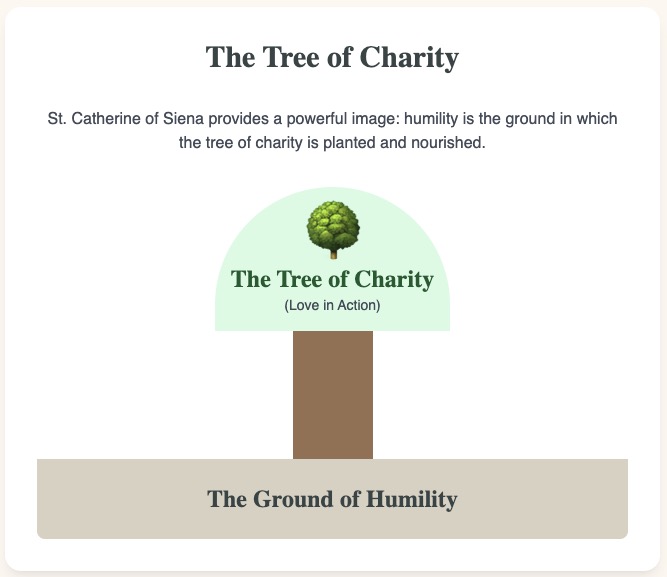
The homily resolves the contradiction by pointing to a "deeper view of reality" where God is always present and a final reward is promised. It emphasizes that humility and charity are closely connected.
- How does taking a "longer view of what is in our best interests"—one that includes God and eternal life—change the way we think about humility and charity?
- St. Catherine of Siena is quoted as saying that humility is the ground in which the tree of charity is planted. What does this image teach you about the relationship between these two virtues? Why can't true charity grow without the soil of humility?
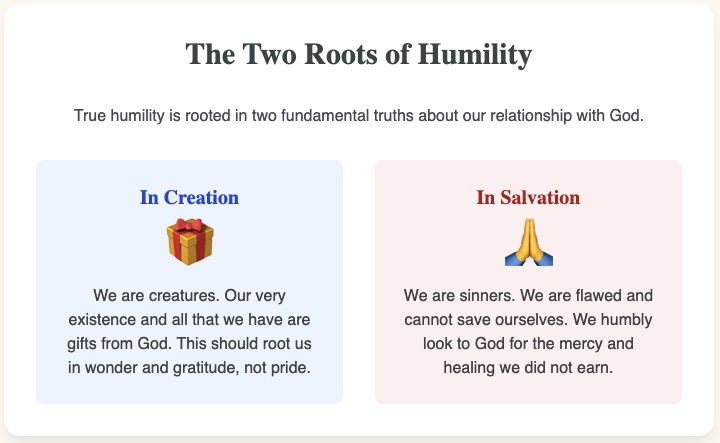
Fr. Brookes explains that humility is rooted in two fundamental truths: that we are creatures who have received everything from God, and that we are sinners who cannot save ourselves.
- The text says that recognizing our existence as a gift from God should root us in "wonder, not self-conceit." What is one gift from God in your life (your existence, a talent, a relationship) that fills you with a sense of wonder and gratitude?
- Humility recognizes that "God loved us while we were still sinners." How does this truth free us from the need to "earn" God's love and open us up to receive His mercy?
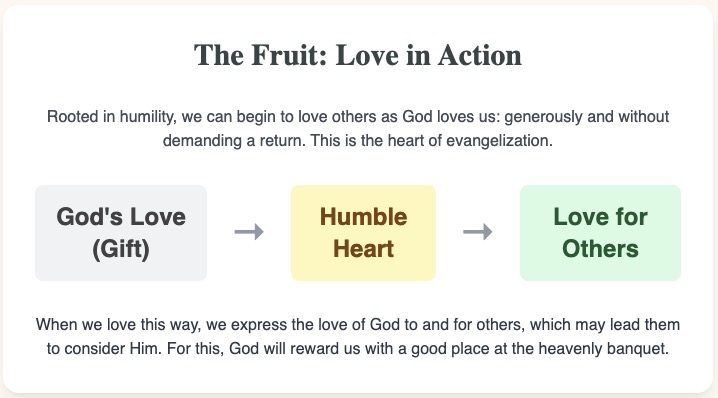
The homily concludes that when we are rooted in humility, we can begin to love others as God loves us: generously and without demanding a return. This is the heart of evangelization.
- What is the difference between loving someone and expecting something in return, versus loving them "as God loves us"?
- The text says that when we love others this way, we "express the love of God to them and for them." Can you share an experience of either giving or receiving this kind of selfless love, and the impact it had?
- How is this generous, non-transactional love the "heart of evangelization"? How might it lead others to "turn to consider God"?
Discussion guides and Infographics on this page have been created using AI generative tools (i.e. GOOGLE'S AI Gemini 2.5 Flash LLM, Chart.js and Tailwind CSS). They are free to use for any non-profit ministry. THE WORD THIS WEEK kindly requests that you show your appreciation by sharing a link to the website.
Homily Excerpt

Twenty-Second Sunday of the Year. Fr Andrew Brookes suggests that humility and love are both reasonable and necessary.
Today’s gospel contains two pieces of moral exhortation by Jesus. However, in the first case the argument of Jesus appears reasonable, and its potency is based on it the reasonableness of wanting to be esteemed; but the second seems very unreasonable: don’t look for hospitality to be returned. The first seems to promote self-interest while the second advocates deliberately setting self-interest aside. Is there a lack of coherence here, even a contradiction, that undermines the teaching of Jesus here and its intended impact?
Part 1: The Setting and the Question
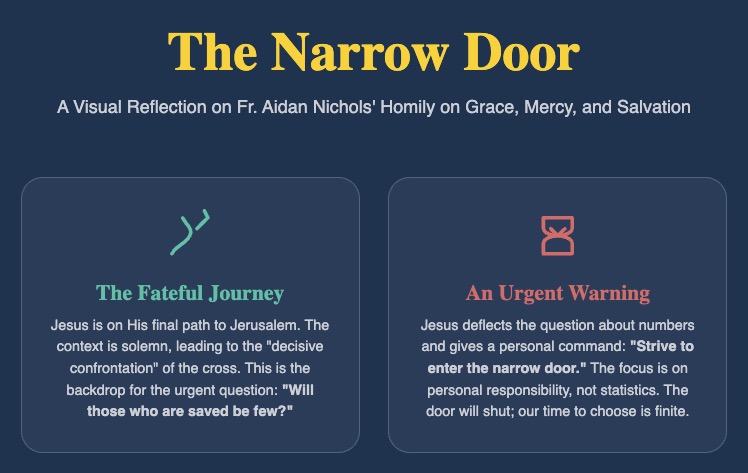
The homily begins by establishing the solemn context of the Gospel: Jesus is on his final, fateful journey to Jerusalem.
- Fr. Nichols emphasizes that for St. Luke, this journey is not just a trip, but the path to the "decisive confrontation" that will bring about our redemption. How does knowing this context change the way you hear the question, "Lord, will those who are saved be few?"
- Why do you think this question was "not far from the hearts, if not the minds, of all the disciples"? What might they have been observing that would lead them to believe that very few people would ultimately be saved?
Part 2: The Unanswered Question and the Urgent Warning
Jesus redirects the questioner away from a number and toward a personal, urgent task.
- Instead of answering "how many," Jesus says, "Strive to enter through the narrow door." What is the difference between these two focuses? Why is Jesus' redirection a more loving and helpful response?
- The homily points out the excuse of those left outside: "We ate and drank in your presence, and you taught in our streets." This suggests a casual, surface-level acquaintance with Jesus. What does a "surface-level" faith look like today? How can we move from being an "interested onlooker" to a true disciple?
- What does the image of the "householder" eventually shutting the door tell us about the nature of our lives and the opportunity for salvation?
Part 3: The Great Reversal
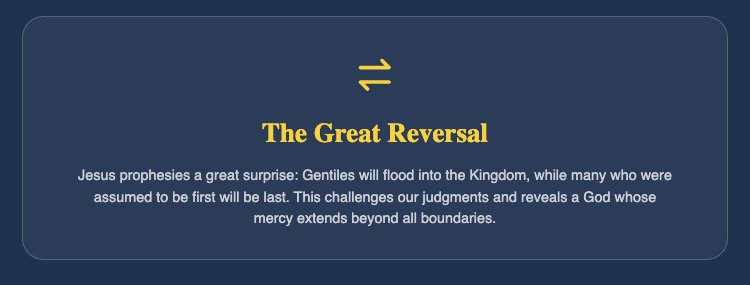
Jesus predicts that many Gentiles will enter the kingdom, while some who seemed to be "first" will be "last."
- This was a shocking statement for its original audience. What assumptions does it challenge? What does it reveal about the scope and nature of God's mercy?
- Fr. Nichols notes the "subtle rider" Jesus adds: "Some who are last will be first, and some who were first will be last." This implies surprises on Judgment Day. How should this reality affect the way we view ourselves and others? Does it guard us from presumption on the one hand, and despair on the other?
Part 4: Pondering the Possibilities
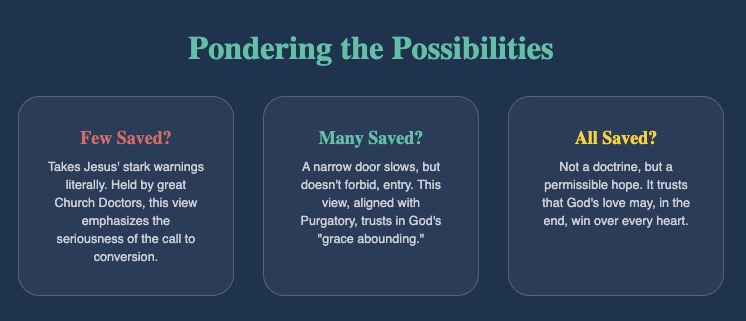
The homily explores three theological possibilities regarding the number of the saved that the Church has considered over the centuries.
- Few will be saved: This view was held by "some of the greatest of the Church's doctors." While it may seem harsh to modern ears, what in the Gospels (like the "narrow door") supports this interpretation?
- Many will be saved: Fr. Nichols suggests that a narrow door "slows down entry" but doesn't necessarily prevent it, connecting this to the doctrine of Purgatory. How does the idea of Purgatory help reconcile the image of the narrow door with the idea of God's immense mercy?
- All will be saved (Universalism): The homily notes that the Church does not allow this to be taught as public doctrine but "permits us to hope it may be true." What is the difference between a formal doctrine and a permissible hope? Why is this distinction important for our faith?
- Which of these three possibilities do you find most compelling, and why? How do you reconcile the seemingly contradictory scriptural themes of the "narrow door" and "grace abounding"?
Discussion guides and Infographics on this page have been created using AI generative tools (i.e. GOOGLE'S AI Gemini 2.5 Flash LLM, Chart.js and Tailwind CSS). They are free to use for any non-profit ministry. THE WORD THIS WEEK kindly requests that you show your appreciation by sharing a link to the website.
Homily Excerpt
Twenty-First Sunday of the Year. Fr Aidan Nichols ponders on the number of those who will be saved.
Today’s Gospel of the ‘narrow door’ raises some difficult issues concerning grace, election, predestination and the number of the saved – especially the last question, with which the Gospel opens.
Jesus is on his way to Jerusalem. For the evangelist Luke, Jesus only made one journey to Jerusalem truly worth recording, and that was in the year of his death, the last Passovertide he was to spend on earth, the moment of decisive confrontation with the religious and political authorities, a confrontation that was to be the instrument of the redemption itself. When St Luke speaks of the Lord as ‘going up’ to Jerusalem, he is looking ahead to the definitive ‘going up’ of the Ascension when Christ will through his Passion and Death enter on his reign as Lord of history. This is the context where someone asks him, ‘Lord, will those who are saved be few?’ No doubt the question was not far from the hearts, if not the minds, of all the disciples. Short of a moral miracle, the total of those actually laying hold on the salvation Jesus was offering them must surely have seemed very few indeed.
────── ⋆⋅☆⋅⋆ ──────
Fr. Austin Fleming
Priest of the
Archdiocese of
Boston
Reflection Questions and Infographics were generated using Google Gemini 2.5 AI tools (w/ Chart.js and Tailwind CSS). Feel free to use them in any non-profit ministry. A Link or shoutout to THE WORD THIS WEEK would be greatly appreciated. —Fr. Don.
22nd Sunday of Year C

MEAN GIRLS CLIP (0:41): Cafeteria Tribes
The School Cafeteria
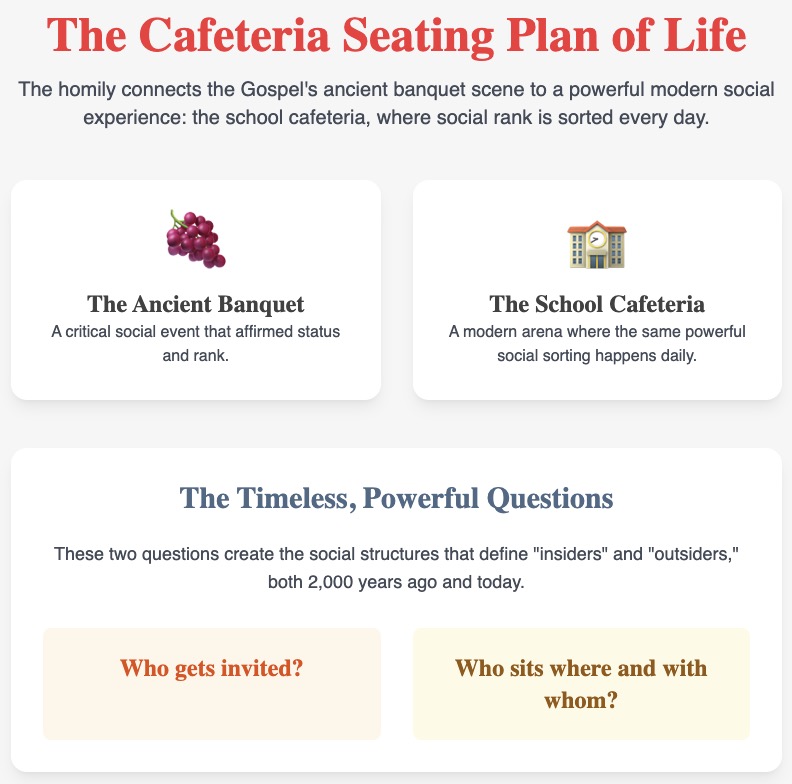
The homily begins by connecting the Gospel's banquet scene to a modern, powerful social experience: the school cafeteria.
- The homily says the school cafeteria is a place of "powerful, critical social moments" that sorts out social rank. Does this analogy resonate with your own experience? Can you remember who you sat with (and who you didn't sit with) at lunch?
- Where else in our adult lives do we see this "cafeteria seating plan" play out (at work, in neighborhoods, in social groups, even in families)?
- Why do you think the questions of "who gets invited and who sits where" are still so powerful in our lives, even 2,000 years after Jesus spoke about them?

Fr. Fleming presents the core truth of the Gospel: "in the heart of Jesus there is no room for discrimination... partiality... or exclusion." His table is "one eternally large, round cafeteria table."
- What does the image of a "round table" with Jesus at the center signify to you? How is it different from the long, hierarchical tables of the world?
- If we truly believed there was "plenty of room for every brother and sister," how would that change the way our parishes, families, and communities operate?

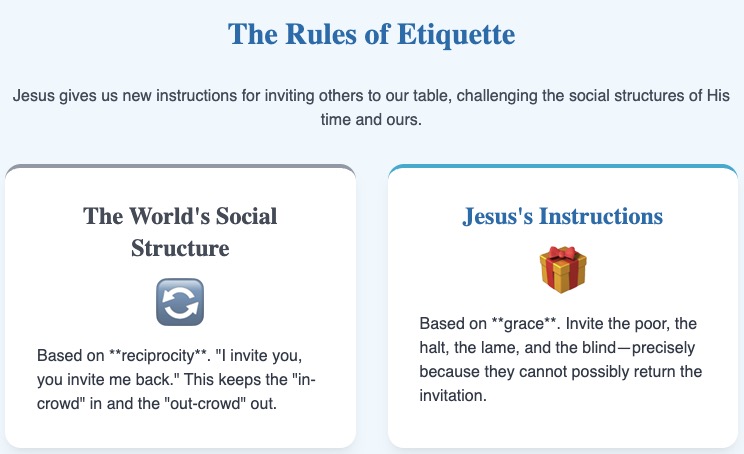
The homily contrasts the world's rules of invitation with Jesus's. The world's rule is transactional ("I invite you, you invite me back") to keep the "in-crowd" in and the "out-crowd" out.
- Jesus's rule is to invite "the poor, the halt, the lame and the blind" precisely because they cannot return the invitation. What is the spiritual purpose of this kind of non-transactional generosity?
- The homily notes that those who are "out" might find a way "in" if they have something to offer the "cool kids." How does Jesus's call to open our hearts to all—"even if they have nothing to offer in return"—challenge this worldly logic?

Fr. Fleming brings the Gospel into our daily lives, asking us to examine our own "tables" and "invitation lists."
- For Students: How can you make a difference in the lives of your classmates by how you choose your table and seats in the cafeteria this week?
- For Adults: Think about your workplace, neighborhood, or family gatherings. Who is always invited? Who is seldom invited, and why?
- The homily asks a challenging question: "Who would Jesus invite to my table?" How might your next gathering look different if you took this question seriously?

Fr. Fleming concludes by pointing to the Mass as the place where we "practice" and "rehearse" the table manners of the Kingdom.
- The guest list for the Lord's Table is a long one because "everyone's name is on it." How does looking around at the people in the pews with you at Mass remind you of this truth?
- How can what we do here at the altar "nourish and strengthen us" to be more welcoming and hospitable at the tables of our own hearts and lives during the week?
Discussion guides and Infographics on this page have been created using AI generative tools (i.e. GOOGLE'S AI Gemini 2.5 Flash LLM, Chart.js and Tailwind CSS). They are free to use for any non-profit ministry. THE WORD THIS WEEK kindly requests that you show your appreciation by sharing a link to the website.
Homily Excerpt
2016 HOMILY — The unspoken protocol of school cafeteria seating
keeps some folks “in” and some folks “out.” Of course, those who are “out” might find a way “in” – if they have something to offer the crowd in the “higher seats,” at the tables where the cool kids sit… Many of us will be going to work and choosing where we’ll have lunch- and whom we’ll invite to join us…
But by contrast, Jesus calls us to open our hearts to all – regardless of what others may have to offer us in return and even if they have nothing to offer in return.

────── ⋆⋅☆⋅⋆ ──────
Fr. Jude Siciliano, O.P.

Fr. Jude Siciliano, OP
USA Southern Province
Reflection Questions and Infographics were generated using Google Gemini 2.5 AI tools (w/ Chart.js and Tailwind CSS). Feel free to use them in any non-profit ministry. A Link or shoutout to THE WORD THIS WEEK would be greatly appreciated. —Fr. Don.
22nd Sunday of Year C
God’s Generosity

Fr. Jude begins by explaining that the dinner is a "trap" and that Jesus uses the occasion to teach about the "messianic inversion," where God's reign turns worldly values upside down.
- He defines the "messianic inversion" as God's favor resting on "the despised and the least." Who are the people in our society today that might be considered "despised" or "least"?
- How does this idea challenge our worldly notions of success, status, and who is "blessed"?
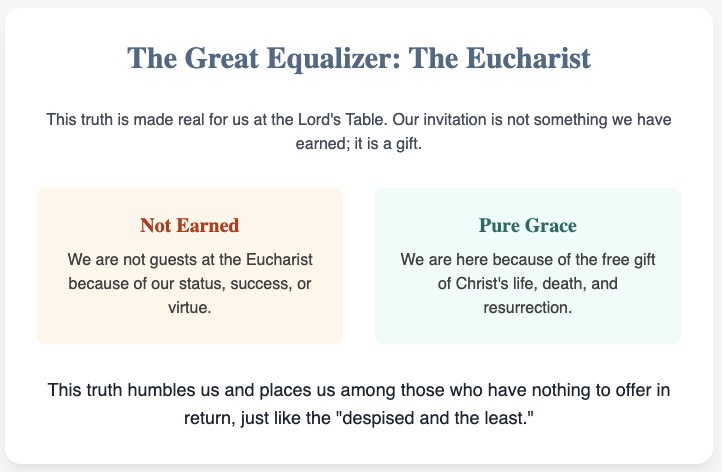
- The text notes that we are guests at the Eucharist not because we earned it, but by "pure grace." How does this truth humble us and place us among those who have nothing to offer in return?

Jesus's words "break all the rules of etiquette," challenging both the guests jockeying for position and the host's invitation list.
- Jesus isn't giving a lesson in manners, but describing the "way of life for his disciples." Why do you think Jesus's instructions about who to invite (the poor, crippled, lame, blind) are so radical and uncomfortable?
- Fr. Jude applies this directly to the plight of "unwanted immigrants." How does Jesus's command challenge us to respond to this and other situations involving marginalized groups in our community?
- Fr. Jude asks us to look at our own "invitation lists." Who are the people we consistently invite into our lives? Who is seldom invited, and why? Who would Jesus invite to our table?

Fr. Jude makes a key distinction: striving for success is not wrong, but our motivation is what matters. We are called to use our gifts not for our own glory, but for the well-being of others.
- What is the difference between going "beyond the minimum" in our work to gain privilege versus doing so in order to serve? Can you think of a practical example?
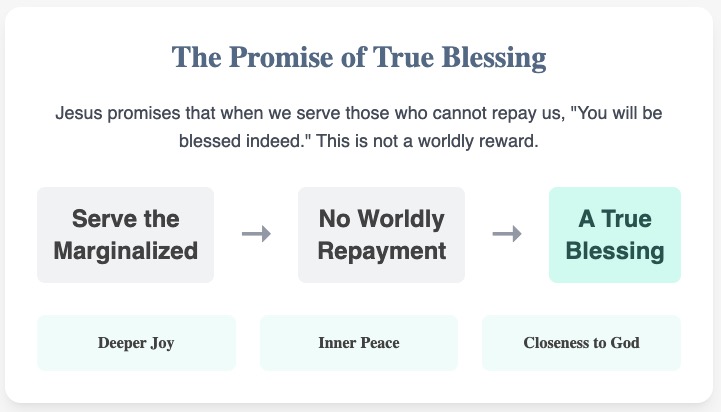
- Jesus promises that when we serve those who cannot repay us, "You will be blessed indeed." What kind of "blessing" do you think this refers to, if not a worldly reward?
- How can we practice humility in our successes, ensuring that we are using our gifts for others rather than for self-exaltation?
Fr. Jude concludes by describing the Eucharist as the place where we "practice" and "rehearse" the table manners of the Kingdom.
- What does the phrase "kingdom practicing" mean to you? How is the Mass a rehearsal for our lives outside of church?
- Fr. Jude says that at the altar, "social, economic, or political distinctions vanish." How does the act of receiving Communion side-by-side with all members of our parish community reinforce this truth?
- What is one specific way the experience of being an unworthy but welcomed guest at the Lord's Table can "nourish and strengthen" you to be more welcoming and hospitable this week?
Reflection Questions and Infographics on this page have been created using AI generative tools (i.e. GOOGLE'S AI Gemini 2.5 Flash LLM, Chart.js and Tailwind CSS). They are free to use for any non-profit ministry. THE WORD THIS WEEK kindly requests that you show your appreciation by sharing a link to the website.
Homily Excerpt
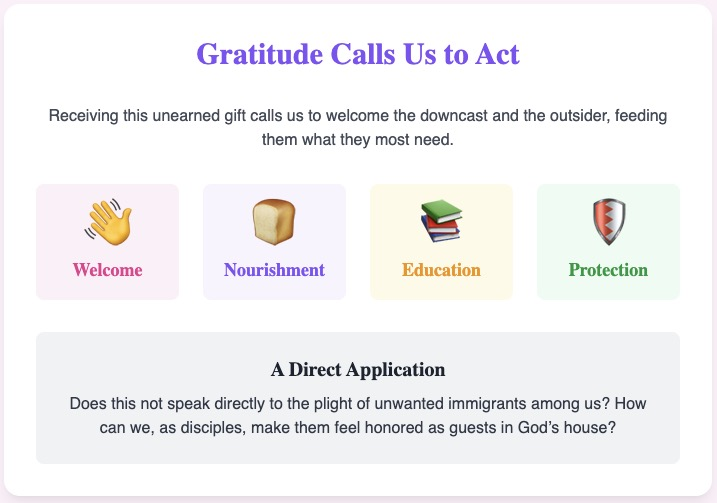
Jesus challenges us to imitate God’s generosity. We are to invite those who cannot repay us, just as God has invited us to this banquet, the Eucharist. Here, at this table, we are not guests because we earned it. God expects no payment. We are here because of pure grace, the free gift of Christ’s life, death, and resurrection.
Gratitude calls us to act. Like Jesus’ parable urges, we are to welcome the downcast, the outsider, and feed them what they most need—welcome, nourishment, education, protection. Does this not speak directly to the plight of unwanted immigrants among us—men, women, and children hiding in fear of arrest or deportation, some even confined in harsh detention centers, like Alligator Alcatraz? How can we, disciples of Christ, make them feel honored as guests in God’s house?
Reflection Questions and Infographics on this page have been created using AI generative tools (i.e. AI Gemini Pro, Chart.js and Tailwind CSS). They are free to use for any non-profit ministry. THE WORD THIS WEEK kindly requests that you show your appreciation by sharing a link to the website.
────── ⋆⋅☆⋅⋆ ──────
Fr. Jude Langeh, CMF

Reflection Questions and Infographics were generated using Google Gemini 2.5 AI tools (w/ Chart.js and Tailwind CSS). Feel free to use them in any non-profit ministry. A Link or shoutout to THE WORD THIS WEEK would be greatly appreciated. —Fr. Don.
22nd Sunday of Year C


The homily begins by addressing our cultural desire for status and honor, which Jesus directly confronts in the Gospel.
- The homily mentions the "high table syndrome" where a privileged few get the best benefits. Where do you see this desire for status and fear of "losing face" in our society today?
- Jesus teaches that "everyone who exalts himself will be humbled, and the man who humbles himself will be exalted." Why do you think this is such a consistent and central part of His message?
- The text reminds us that Jesus asks us to become like little children. What qualities of a child do you think Jesus wants us to imitate in our spiritual lives?
The Foundation of All Virtues
The homily uses powerful images to describe humility: it is the ground, the root system, and the foundation for all other virtues.
- St. Augustine says that the higher a wall, the deeper its foundation must be; the taller the tree, the deeper its roots. How does this image help you understand why humility is so essential for spiritual growth?
- Why can't other virtues (like charity, patience, or courage) be strong without a deep foundation of humility?
- Reflecting on John the Baptist's words, "He must increase, but I must decrease," what is one area in your life where you could "decrease" to allow Christ to "increase"?
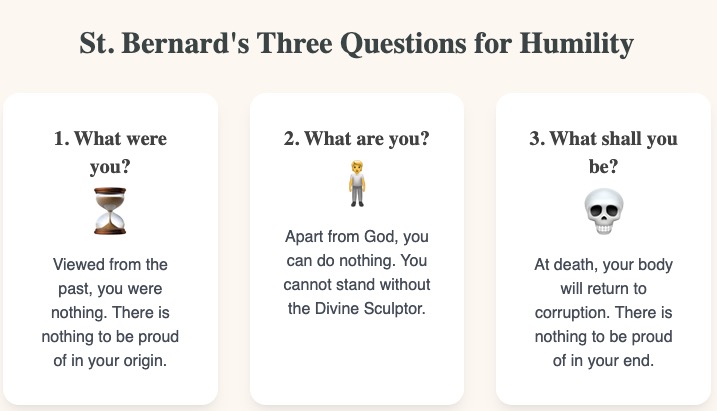
The guide presents three questions from St. Bernard to help us understand the reality of our condition, which is the heart of humility.
- What were you? (Before you were formed, you were nothing). How does reflecting on our origin from "nothing" help to combat pride?
- What are you? (Apart from God, you can do nothing). The homily uses the analogy of a statue that can stand on its own versus a person who cannot stand without the "divine sculptor." In what ways do you rely on God's constant support in your daily life?
- What shall you be? (At death, your body will become a mass of corruption). How does contemplating our own mortality help us to live with greater humility in the present?
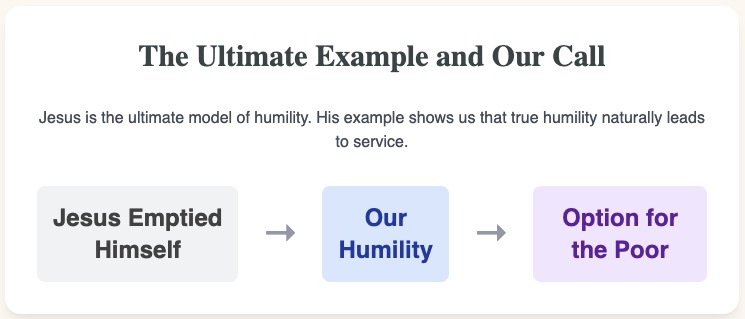
The homily concludes by pointing to Jesus as the ultimate model of humility and calling us to a "preferential option for the poor."
- Jesus "emptied himself, taking the form of a servant." How does the humility of God Himself challenge our own struggles with pride?
- The homily says our humility will "push us" to have a preferential option for the poor. How are humility and service to the poor connected?
- What is one practical way you can live out the virtue of humility this week, either by serving someone in need or by consciously taking a "lower place" in a situation?
Access guide and infographics by clicking on banner
────── ⋆⋅☆⋅⋆ ──────
Fr. Charles E. Irvin

Priest of the
Diocese of Lansing
(1933 – 2021)
Reflection Questions and Infographics were generated using Google Gemini 2.5 AI tools (w/ Chart.js and Tailwind CSS). Feel free to use them in any non-profit ministry. A Link or shoutout to THE WORD THIS WEEK would be greatly appreciated. —Fr. Don.
22nd Sunday of Year C

“Well, Father,” I was asked, “what’s wrong with being proud of yourself? Aren’t we supposed to have some pride? Why are we supposed to be humble – what good does it do other than to allow others to take advantage of us?” That’s a good question, one that we should consider.
Balancing pride and humility is a problem for us all. My answer to the question about bring proud is: “It all depends.” It all depends upon what we’re being proud about. There are forms of pride that are good… and there are certainly forms of pride that are bad.
Let’s start with good pride…
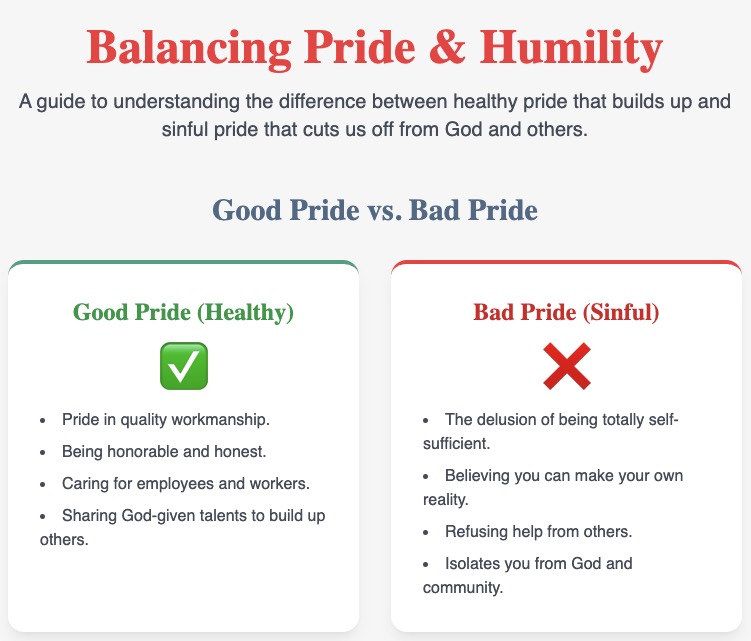
The homily begins by acknowledging that not all pride is sinful. It makes a distinction between healthy pride in our work and talents, and the sinful pride that cuts us off from God and others.
- The text mentions “good pride” in quality workmanship, being honorable, and sharing our God-given talents. Can you think of a time you felt a healthy sense of pride in something you did well? What made that feeling different from sinful pride?
- The guide says we should not have a “false humility that causes us to withhold what we can create for others.” Why is hiding our talents not a true form of humility?

The core of sinful pride is the “delusion that tells us we’re totally self-sufficient,” the same temptation Adam and Eve faced. This leads to the belief that “I can take care of my own problems.”
- The homily uses the powerful example of an alcoholic who, in their pride, cannot admit they have a disease they cannot control on their own. In what other areas of life do people often say, “I can handle this myself,” when they really need help?
- Why is the idea of total self-sufficiency a “delusion”? What is the truth about our human condition that this prideful attitude denies?

The homily explains that pride brings with it “denial, rationalization, and living a lie,” which hurts not only the prideful person but everyone around them.
- The text gives the example of someone in a troubled marriage who says, “I don’t need any counseling help.” How does this prideful denial prevent healing and cause suffering for the whole family?
- Reflect on a time you found it difficult to admit you were wrong or needed help. What was the “lie” you were tempted to believe in that moment? What did it feel like to finally embrace the truth?

A specific focus is placed on how pride keeps people away from the Sacrament of Penance (Confession).
- The homily describes the prideful person as saying, “I can confess to God without needing to go to a priest.” Why is this a way of “striking their own bargains with God” and setting their own terms for forgiveness?
- Jesus gave His apostles the authority to forgive sins. How does going to confession require us to set aside our pride and humbly accept God’s forgiveness on His terms, not our own?
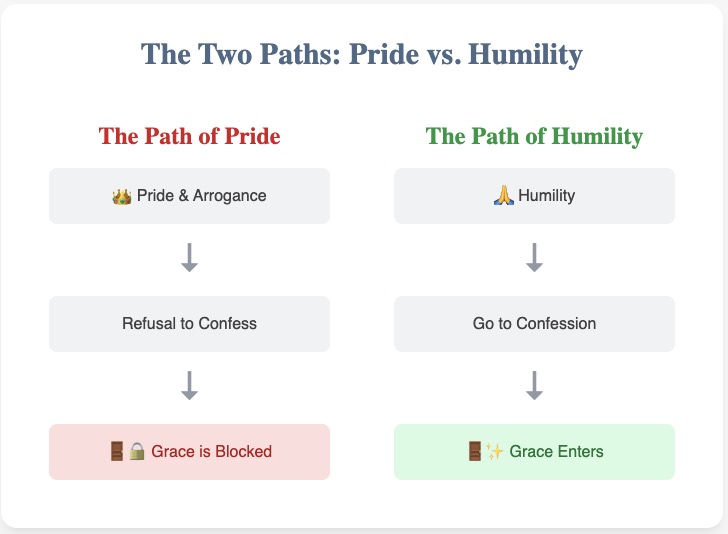
The homily concludes by pointing to Jesus as the model of humility and the source of our strength to overcome pride.
- The text says that Jesus “lived life humbly and died in humiliation that we might receive the power that humility gives us.” What kind of “power” does humility give us?
- The final sentence is a powerful summary: our lives can be better “because God is in charge and our egos are not.” What is one practical area in your life this week where you can consciously choose to let God be in charge instead of your own ego?
Reflection Questions and Infographics on this page have been created using AI generative tools (i.e. GOOGLE’S AI Gemini 2.5 Flash LLM, Chart.js and Tailwind CSS). They are free to use for any non-profit ministry. THE WORD THIS WEEK kindly requests that you show your appreciation by sharing a link to the website.
────── ⋆⋅☆⋅⋆ ──────
Fr. George Smiga

Homiletic Professor
at St. Mary Seminary
Reflection Questions and Infographics were generated using Google Gemini 2.5 AI tools (w/ Chart.js and Tailwind CSS). Feel free to use them in any non-profit ministry. A Link or shoutout to THE WORD THIS WEEK would be greatly appreciated. —Fr. Don.
22nd Sunday of Year C
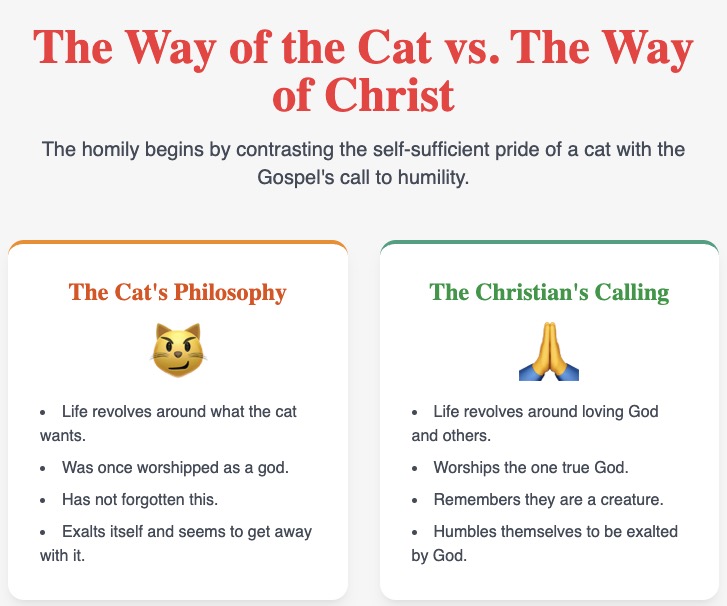
2004 HOMILY – Cats are not known for their humility. In fact thousands of years ago cats were worshipped as gods. Apparently they have not forgotten this. The life of a cat revolves around what the cat wants to do: to eat, to stretch, to be petted, to sleep. Cats seem to be able to exult themselves and get away with it. They are perhaps the only animals to which the words of Jesus in today’s Gospel do not apply. For what Jesus tells His disciples is that those who exult themselves will be humbled. It is only by humbling ourselves that we can be exulted.

The homily begins by contrasting the self-sufficient attitude of a cat with the Christian virtue of humility. It defines humility as “the willingness to acknowledge our own limitations” without devaluing ourselves.
- The homily lists several honest acknowledgements of limitations (e.g., “I am not as patient as I need to be,” “I am not a good listener”). What is one of your own limitations that is difficult for you to admit?
- How is the “honest humility” described here different from simply having low self-esteem? Why is it important to remember that even with our weaknesses, we “remain people of goodness and dignity”?
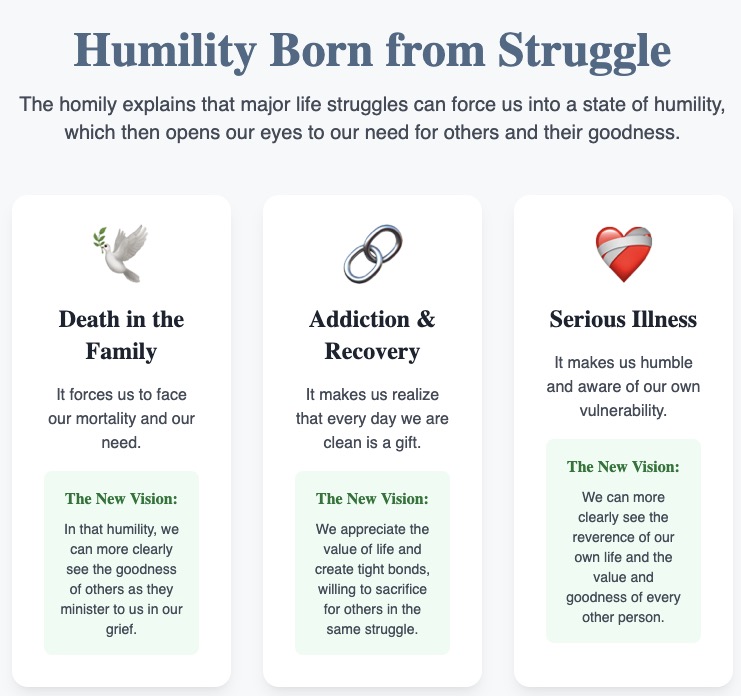
Fr. Smiga explains that major life struggles—like death, addiction, or serious illness—force us into a state of humility. This humility then opens our eyes to our need for others and their goodness.
- Fr. Smiga states that in the face of death, “we can more clearly see the goodness of others as they minister to us in our grief.” Have you ever experienced a difficult time that made you more aware of your need for others and more grateful for their kindness?
- Why do you think shared struggle, as seen in 12-step programs or among those with the same illness, creates such “tight bonds”? What does this teach us about the importance of vulnerability in building community?

Fr. Smiga contrasts the proud person, who relates to others based on what they can provide, with the humble person, who sees the intrinsic value of others.
- Jesus tells us to invite those who cannot repay us to make it clear that our relationships “should not flow from our use of them but from their value as people.” In what subtle ways do we sometimes treat people based on what they can do for us?
- Reflect on Martin Buber’s idea that “God is found between people.” How does pride, which tells us “we don’t need anyone else’s help,” prevent us from finding God in our relationships?
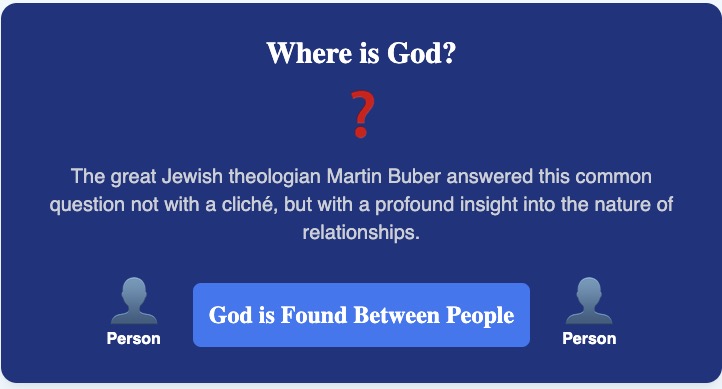
The Only Road to God
Fr. Smiga concludes that because love is found in our relationships with each other, and humility is what allows us to see our need for those relationships, then “it is only the humble who will walk upon” the road to God.
- Do you agree with the statement that “love is the only way to God”? Why or why not?
- If humility is the key to walking the path of love, what is one practical step you can take this week to cultivate humility in your heart?
Reflection Questions and Infographics on this page have been created using AI generative tools (i.e. GOOGLE’S AI Gemini 2.5 Flash LLM, Chart.js and Tailwind CSS). They are free to use for any non-profit ministry. THE WORD THIS WEEK kindly requests that you show your appreciation by sharing a link to the website.
────── ⋆⋅☆⋅⋆ ──────
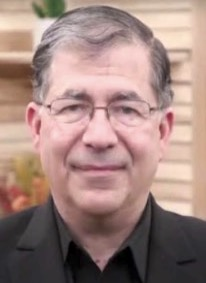
Frank Pavone, Director
Reflection Questions and Infographics were generated using Google Gemini 2.5 AI tools (w/ Chart.js and Tailwind CSS). Feel free to use them in any non-profit ministry. A Link or shoutout to THE WORD THIS WEEK would be greatly appreciated. —Fr. Don.
22nd Sunday of Year C

Pro-Life is About Humility
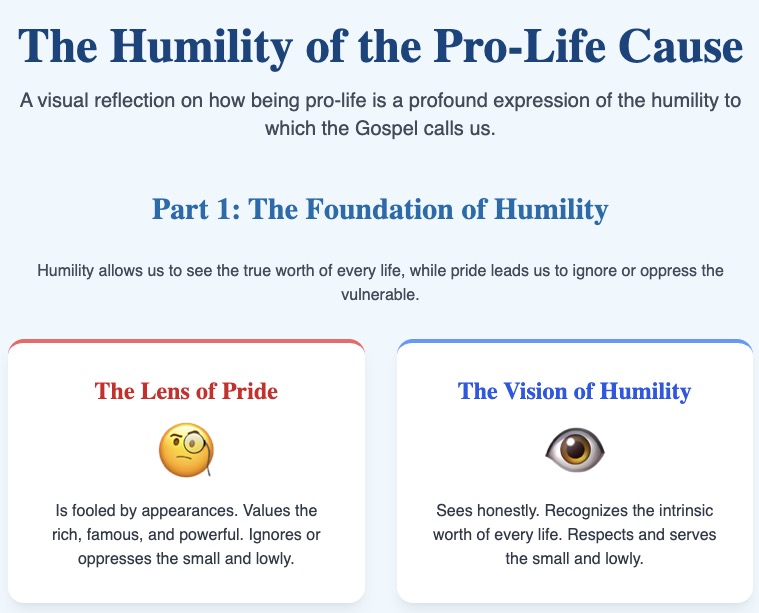
The text begins by stating, "Being pro-life is really all about the humility of which today’s first reading and Gospel speak." Humility allows us to see the true worth of every life.
- How does humility help us to "see each other and ourselves honestly, as neither more nor less than what we are"?
- The guide says pride leads us to "oppress or ignore" lives, while humility leads us to "serve" them. Can you think of examples of how societal pride leads to the ignoring of certain lives?
- How does humility keep us from being "fooled by appearances" and valuing people based on their wealth, fame, or power?
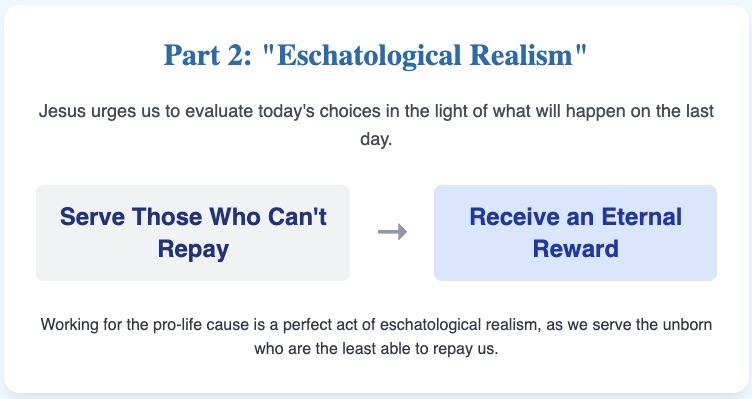
Jesus urges us to evaluate our choices "in the light of what will happen on the last day." This is called "eschatological realism."
- How does thinking about the "resurrection of the just" change your perspective on the choices you make today?
- The text applies this directly to serving the unborn, who are "the least able to repay us." How is working for the pro-life cause an act of eschatological realism?
- What are other areas of your life where you could apply this principle, choosing to act based on an eternal reward rather than an immediate, earthly one?
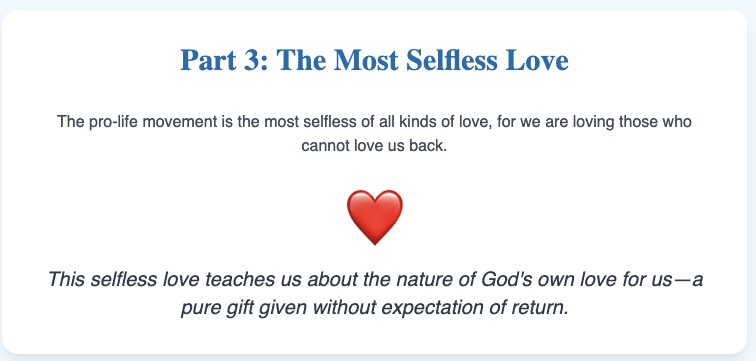
The guide describes the pro-life movement as "the most selfless of all kinds of love, for we are loving those who cannot love us back."
- Jesus’s command is to invite those who cannot repay the favor. How does the pro-life cause perfectly fulfill this command?
- Why is it often more difficult to love and serve those who cannot even acknowledge our efforts, let alone thank or repay us?
- What does this kind of selfless love teach us about the nature of God's own love for us?

The homily concludes by connecting our service to the unborn with our call to imitate God, who is the "father of orphans" and gives "a home to the forsaken."
- How is the unborn child a modern example of the "forsaken" or the "orphan" that the Psalm speaks of?
- In what other ways can we, as a parish community or as individuals, imitate God by giving "a home to the forsaken" and leading "forth prisoners to prosperity"?
- How does the virtue of humility empower us to be a voice for those who have no voice?
Reflection Questions and Infographics on this page have been created using AI generative tools (i.e. GOOGLE'S AI Gemini 2.5 Flash LLM, Chart.js and Tailwind CSS). They are free to use for any non-profit ministry. THE WORD THIS WEEK kindly requests that you show your appreciation by sharing a link to the website.
Reflection Excerpt
Being pro-life is really all about the humility of which today’s first reading and Gospel speak. Humility allows us to see each other and ourselves honestly, as neither more nor less than what we are. Because we see the worth of our own lives and those of our neighbors, we are not led by pride to either oppress or ignore those lives. Rather, humility leads us to serve those lives. Humility keeps us from being fooled by appearances, and led to pay more attention to those who are more rich, famous, or powerful. Instead, we respect and serve the small and lowly. We don’t determine their value, and neither does the law.
────── ⋆⋅☆⋅⋆ ──────

Priest of the Diocese
of St. Petersburg,
Florida
Reflection Questions and Infographics were generated using Google Gemini 2.5 AI tools (w/ Chart.js and Tailwind CSS). Feel free to use them in any non-profit ministry. A Link or shoutout to THE WORD THIS WEEK would be greatly appreciated. —Fr. Don.
22nd Sunday of Year C

Humility–Living Under His Mercy
Homily Excerpt
This is how all of us need to embrace our spiritual lives. The polarization of American society has seeped down to a polarization within the Catholic Church. There are some people who are convinced that they are better than others due to the particular liturgies they are attracted to or the groups to which they belong. For example, years ago Marriage Encounter was more prevalent in our diocese than it is now. This was and is a wonderful experience that has helped many marriages. But, sadly, some people made it quite clear that their marriages were better than those of people who had not made an encounter. Similarly, there may be people who think that they are better Catholics than others because they are active in campus ministry, or attracted to the Tridentine Mass. Campus Ministry is wonderful, but those in campus ministry have no right to compare themselves to other Catholics who might not be as active. Nor do those who attend the Latin Mass have a right to think that they are better than those who are not attracted to this type of liturgy. There is no place for spiritual arrogance in the banquet of the Lord. No, for all of us, our position at the wedding banquet, our place a the table, is a matter for God to decide. Our only concern should be thanking God that we are in the banquet in the first place.
────── ⋆⋅☆⋅⋆ ──────
Priest of the
Archdiocese of
Washington D.C.
Reflection Questions and Infographics were generated using Google Gemini 2.5 AI tools (w/ Chart.js and Tailwind CSS). Feel free to use them in any non-profit ministry. A Link or shoutout to THE WORD THIS WEEK would be greatly appreciated. —Fr. Don.
22nd Sunday of Year C
You Have to Serve
Before You Sit
Homily Excerpt
In the Gospel for Sunday’s Mass, the Lord Jesus summons us to a deeper appreciation for what brings true honor, for what makes a person truly great. As you may imagine, what the world considers great and honorable is rather different from what God thinks and sees. Let’s look at this Gospel in three parts and discover its paradoxical vision.
I. THE PERSON who HONORS
II. THE PARADOX of HONORS
III. THE PRESCRIPTION for HONORS
────── ⋆⋅☆⋅⋆ ──────
Fr. Michael Chua
Priest of the Archdiocese
of Kuala Lumpur,
Malaysia
Reflection Questions Infographics were generated using Google Gemini 2.5 AI tools (w/ Chart.js and Tailwind CSS). Feel free to use them in any non-profit ministry. A Link or shoutout to THE WORD THIS WEEK would be greatly appreciated. —Fr. Don.
22nd Sunday of Year C
Homily Excerpt
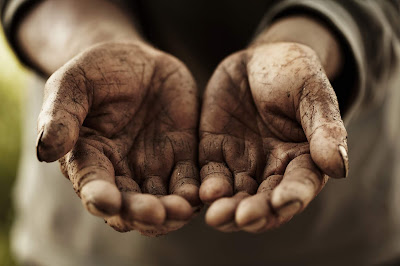
Being a priest, it is almost impossible to find ourselves at any table other than the VIP table at a Church function. So, it’s a little difficult to heed the Lord’s advice, “make your way to the lowest place and sit there.” If I had my way, I would make my way to the back of the hall, closest to the toilets for convenience, and to the exit to facilitate a quick get-away when no one’s looking. But in deference to the organisers and as a “guest of honour” we don’t get to choose where to sit. You just submit yourself like a puppet to the host who will tell you, “Father, move up higher” and you simply comply. This is the irony and the paradox of humility. In insisting, in the name of humility, of wanting to be seated at a more humble and discrete position, it actually betrays my arrogance. Even if we think that our way is the more humble one, the more magnanimous, the more charitable option, it would be pride and not humility that would be insisting on this. Humility is doing what you must do, even when you don’t prefer it.

Homily Excerpt
Christian humility doesn’t call one to demean oneself for its own sake. Any performative act to showcase one’s humility is hypocrisy and it is quite the opposite of what humility stands for. True humility is a call to recognise one’s total dependence on God and leaves the matter of rank and reward completely to Him. The humble man finds favour with the Lord, not because it is a form of reward, but because the humble man allows God to do what he himself cannot do. The humble man veils himself so that the glory of God may be revealed. Therefore, to take the lowest place is never just to earn honour, respect or even praise from others. To take the lowest place, would be to find ourselves in that very place where Christ had chosen to sit, He who is God, assumed the lowest position of a worthless slave. To give without expecting anything in return would mean that we do not serve, or give, to derive some earthly gain and benefit from our investment, but rather, be assured that what often seems to be a thankless job, will receive its reward from God in heaven.
Homily Excerpt
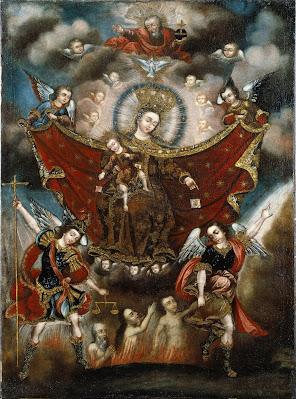
When Protestants ask Catholics if they have been saved, the question would most likely be met with a stunned look on the part of the Catholic or an admission that he has never thought about this before. This comes as good news to the Protestant as he can now confidently proselytise the Catholic and ensure that the latter is saved by becoming a Bible believing, faith professing Protestant Christian. For many Protestants, one becomes a Christian by merely making a confession of faith in Jesus as Saviour and Lord. Baptism comes later but isn’t necessary for our salvation. I guess the reason why most Catholics are not prepared with an answer to that question is that salvation or rather, heaven, is something they often take for granted. Why worry about this moot issue when we can all get to heaven?
Priest of the
Diocese of Cloyne,
Ireland
Infographics were generated using Google Gemini 2.5 AI tools (w/ Chart.js and Tailwind CSS). Feel free to use them in any non-profit ministry. A Link or shoutout to THE WORD THIS WEEK would be greatly appreciated. —Fr. Don.
22nd Sunday of Year C
Who We Really Are: Citizens of Heaven
Homily Excerpt
The Church is called to be the place where there are no divisions, labels, prejudices, and stereotypes. While God calls us to serve in diverse ways in the Church, the Church is to be the earthly reflection of heaven.
We don’t need to worry about keeping up false appearances when we know who we really are, citizens of heaven. Our concern is not in seeking the first place but in living the spiritual reality of who we are: priceless, purchased by the precious blood of Jesus. As we realize who we are and who everyone else is, we see that the divisions and prejudices of society show that society has not yet arrived at an understanding of what society is called to be
Twenty-Second Sunday (Year C)
Who we really are: citizens of heaven 2007
Related: The journey from pride to humility
The greatest among you must be your servant
Book excerpt: Ruth Burrows on humility
Stories about humility
────── ⋆⋅☆⋅⋆ ──────
Auxiliary Bishop of
Archdiocese of
Seattle
Infographics were generated using Google Gemini 2.5 AI tools (w/ Chart.js and Tailwind CSS). Feel free to use them in any non-profit ministry. A Link or shoutout to THE WORD THIS WEEK would be greatly appreciated. —Fr. Don.
22nd Sunday of Year C
Homily Excerpt
A good spiritual reflection therefore this coming week could be: where am I currently on the wheel of fortune right now? Are you the king or queen of your mountain, on top of your game, well, that’s good, one day you won’t be. Are you the unfortunate pauper in the spiritual life, having every kind of bad luck? Well, sorry about that. The good news is things can only get better. Regardless of where I find myself on the wheel of fortune right now, a better question is how grounded am I in my relationship with Jesus Christ? It is a better question because only Jesus can make sense of our lives in good times and in bad and in sickness and in health.
Discussion guides and Infographics on this page have been created using AI generative tools (i.e. AI Gemini Pro, Chart.js and Tailwind CSS). They are free to use for any non-profit ministry. THE WORD THIS WEEK kindly requests that you show your appreciation by sharing a link to the website.
Video clips from YouTube which are added serve to complement the homily. They may not have a direct correlation with the contributor’s original content, however. Instead, they aim to inspire preachers to enrich their own homilies, drawing ideas and insights from both the written material and the visual content explored.