August 31, 2025
August 31, 2025


w/ Guided Reflection Questions & Infographics
Homilies
Homilies
Video Homilies, Reflection Questions, Free Sunday Bulletin Graphics, Sunday Readings
Video Homilies, Reflection Questions, Free Sunday Bulletin Graphics, SUnday Readings
- BISHOP Barron
- 2-Min Homily
- FR. RUTTIG
- MSGR. Hahn
BISHOP
BARRON

TIP: Begin playing the video and, as you listen to it, explore the infographics and reflection questions.
Infographics were generated using Google Gemini AI tools (Chart.js and Tailwind CSS). Feel free to use them in any non-profit ministry. A LINK or shoutout toTHE WORD THIS WEEK would be greatly appreciated. .
22nd Sunday of Year C

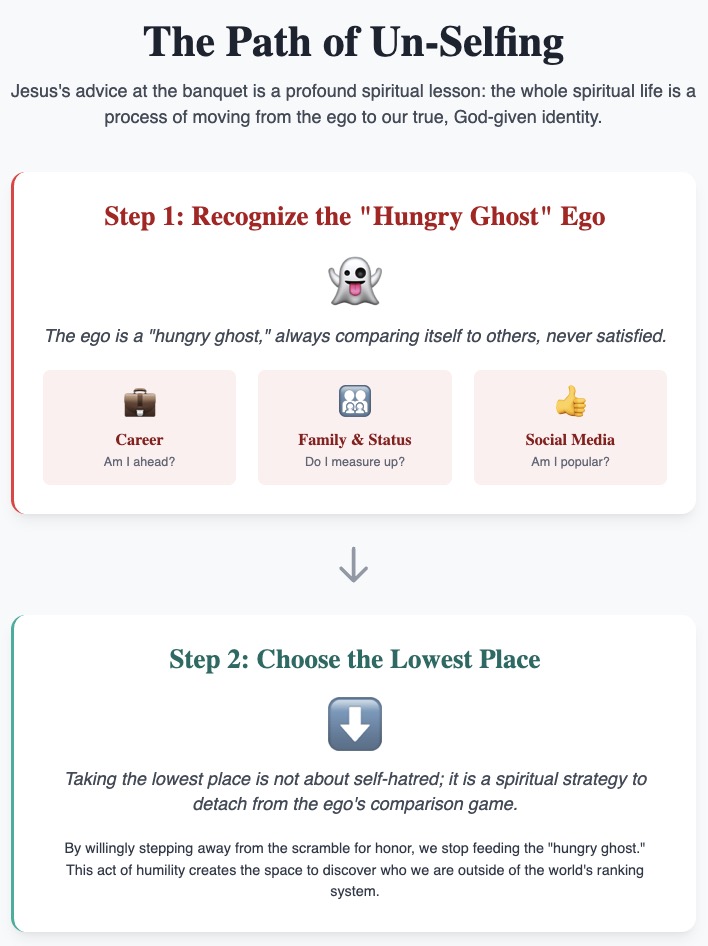
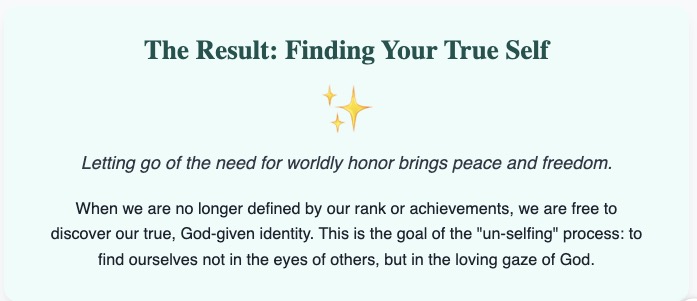
Part 1: The Path of Un-Selfing
Bishop Barron begins by explaining that Jesus’s advice about where to sit at a banquet is not just about good manners, but a profound spiritual lesson about the ego and our relationship with God.
- Bishop Barron says the “whole spiritual life is a process of un-selfing.” What does this phrase mean to you? Why is it so difficult to move away from the logic of the ego?
- The sermon describes the ego as a “hungry ghost,” always comparing itself to others. In what areas of your life (career, family, social media, etc.) do you find yourself most often playing this “comparison game”?
- The advice to “take the lowest place” is a strategy for finding your true, God-given identity. Can you share a time when letting go of the need for honor or recognition actually brought you a sense of peace or freedom?
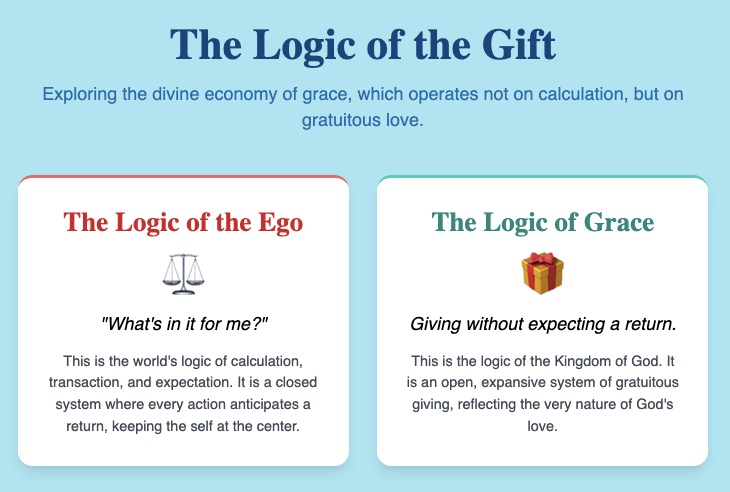
Part 2: The Logic of the Gift
The sermon shifts from the guests to the host, explaining that the Kingdom of God operates on a “logic of the gift,” which is completely different from the world’s logic of calculation and return.
- Bishop Barron contrasts the “logic of the ego” (what’s in it for me?) with the “logic of grace” (giving without expecting a return). Where do you see the logic of the ego most prevalent in our culture?
- Jesus tells the host to invite “the poor, the crippled, the lame, the blind”—those who cannot possibly pay him back. Who are the modern equivalents of these people in our own lives or communities?
- Giving without expecting a return is a sign of love. Why is this kind of “gracious, non-calculating” love so powerful and transformative, both for the giver and the receiver?

Part 3: The Divine Invitation
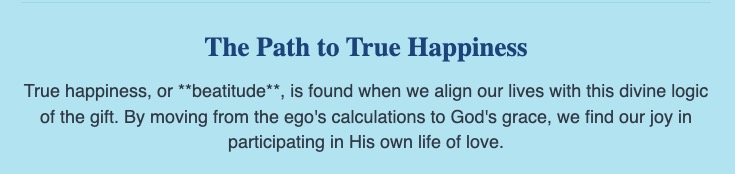
The ultimate message is that we find our joy by participating in God’s own life, which is a life of pure, gratuitous love.
The sermon states that true happiness (“beatitude”) is found when we align our lives with this divine logic of the gift. What is one practical, concrete step you could take this week to live less by the ego’s calculation and more by God’s grace?
Bishop Barron describes God’s own being as a “play of gracious giving.” How does this image of God differ from a God who is a distant lawgiver or a stern judge?


Part 1: Understanding Pride and Humility
Bishop Barron defines pride as an “excessive self-love” that caves us in on ourselves, like a black hole drawing everything inward. Humility, from the Latin “humus” (soil), is the opposite: being grounded, down-to-earth, and in touch with reality.
- Bishop Barron says pride prevents us from “real contact with reality.” In what ways have you seen this to be true in your own life or in the world around you? How does being preoccupied with ourselves blind us to the truth of a situation or the needs of others?
- He quotes Paul Tillich, who said, “Pride is born of fear.” We are finite, vulnerable, and threatened, so we build walls to protect ourselves. Do you agree? Can you think of a time when fear made you act pridefully (e.g., being defensive, boastful, or overly controlling)?
- Reflect on the idea of humility as being “grounded.” What does a genuinely “down-to-earth” person look and act like? How is this different from common, superficial ideas of humility (e.g., thinking poorly of oneself)?
- Jordan Peterson is quoted as saying, “Self-regard, psychologically speaking, is identical to misery.” Why do you think being focused on oneself leads to unhappiness, while forgetting oneself in service, love, or worship leads to joy?


Part 2: The Parable in Practice: The Wedding Banquet
Jesus tells a parable about a wedding banquet, advising guests not to seek the place of honor but to deliberately take the lowest place. This isn’t just about good manners; it’s a spiritual strategy.
- The wedding banquet was a very public space. Where are the “wedding banquets” in our world today, where people publicly jockey for position and honor? (Consider workplaces, social media, family gatherings, or even church communities).
- Bishop Barron uses the metaphor of the “Wheel of Fortune,” where being at the top is the most anxious position of all because you can only go down. Have you ever achieved something you desperately wanted, only to find that it brought more anxiety than peace? (As Oscar Wilde said, “The only thing worse than not getting what you want is getting what you want.”)
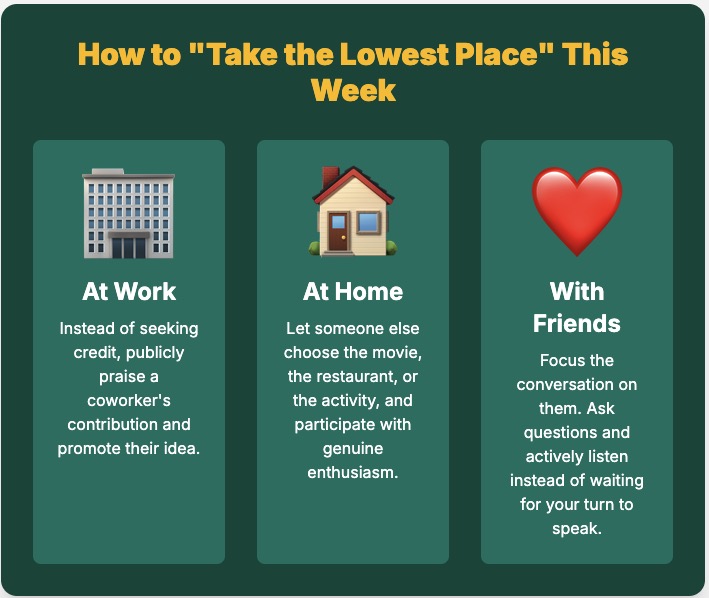
- What does it practically mean to “take the lowest place” in your life? Give a concrete example of how you could do this at work, at home, or with friends this week.

Part 3: The Only Winning Strategy Is Not to Play
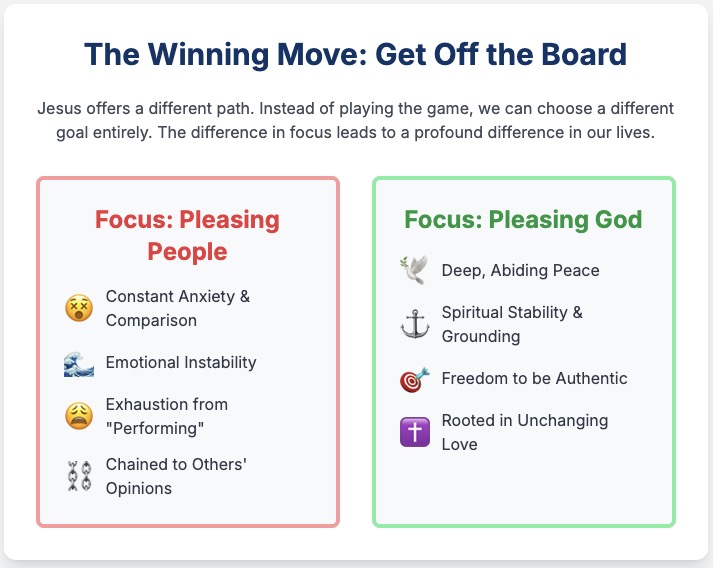
The sermon concludes with a powerful takeaway: the only way to win the destructive game of pride and honor-seeking is to refuse to play it. Instead of trying to please people, we should seek only to please God.
What is the difference between seeking to please people and seeking to please God? How does shifting your focus from “What do they think of me?” to “What does God ask of me?” change your actions, your priorities, and your sense of peace?
Bishop Barron references the movie War Games, where the conclusion about nuclear war is, “The only winning strategy is not to play.” What “games” of comparison, competition, and self-promotion do you feel pressured to play in your daily life? What would it look like to simply get off the board?
“You’re handing the whole of your happiness over to the fickle attitudes of other people.” How much time and energy do you spend trying to manage what other people think of you? Why is this a “waste of time”?
TWO MINUTE
HOMILY

TIP: Begin playing the video and, as you listen to it, explore the infographics and reflection questions.
Infographics were generated using Google Gemini AI tools (Chart.js and Tailwind CSS). Feel free to use them in any non-profit ministry. A LINK or shoutout toTHE WORD THIS WEEK would be greatly appreciated. .
22nd Sunday of Year C

This discussion guide has been generated by GOOGLE’S AI Gemini 2.5 Flash LLM.
Fr. Kelly begins by noting that while we all remember the advice to take the lowest seat at a formal dinner, we often forget to apply this lesson to the rest of our lives.
- Fr. Kelly mentions being “pushy or barrelling others out of our way to ensure the best of everything for myself.” What are some subtle, everyday examples of this behavior that we might not even notice we’re doing?
- Why do you think it’s easier to practice this “banquet humility” in a formal, public setting than it is in our homes, workplaces, or social events?
- The homily contrasts appearing humble to avoid social embarrassment with living the essence of humility. What is the difference between these two things?
The “Me First” Mentality vs. God’s Generosity
Fr. Kelly challenges the worldly concepts of “first in best dressed” and “every man for themselves” by contrasting them with God’s own nature.
- Can you share an experience where you consciously chose to focus on giving or helping rather than getting, and what the outcome was for you and for the other person?
- Fr. Kelly contrasts two sets of questions. The world asks: “What’s in it for me? What can I get?” The Lord asks: “How shall I help others? What shall I give?” In which situations do you find it most difficult to switch from the first set of questions to the second?
- Fr. Kelly describes God the Father as one who “wants to keep giving.” How does this image of a generous, constantly providing God challenge a mindset of scarcity or competition?
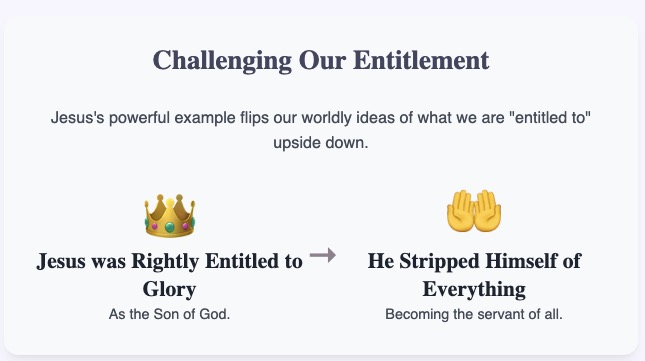
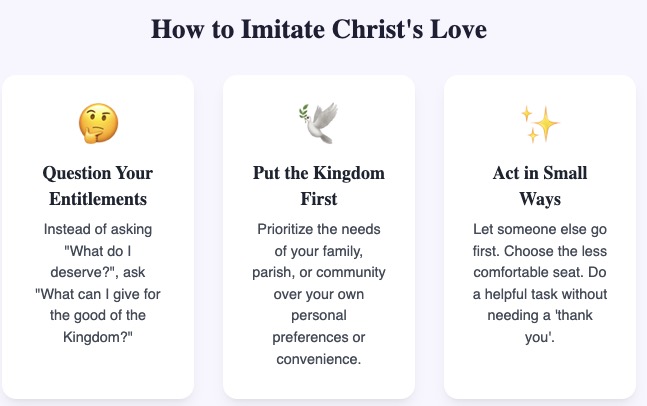
Fr. Kelly points to Jesus as the ultimate model of humility: the most important person to ever live, who became the servant of all.
- What does the phrase “self-forgetting love” mean to you? How is it different from simply being nice or polite?
- Jesus was “rightly entitled” to glory, yet He stripped Himself of everything for the sake of the Kingdom. How does this powerful example challenge our own ideas about what we are “entitled to” in our lives?
- What is one small way you can imitate Christ’s “self-forgetting love” this week, putting the needs of the Kingdom or another person before your own preferences?


This discussion guide has been generated by GOOGLE’S AI Gemini 2.5 Flash LLM.
Part A: Choosing Humility Over Honor
- The reflection says humility is “choosing love over pride.” Can you think of a time this week in our family when someone chose love? What did that look like?
- When is it hardest to be humble in our family? (e.g., during a disagreement, when you feel you’re right, when you want to be first).
- What’s the difference between being proud of our family and having too much pride in our family?
Part B: Taking the Lowest Place
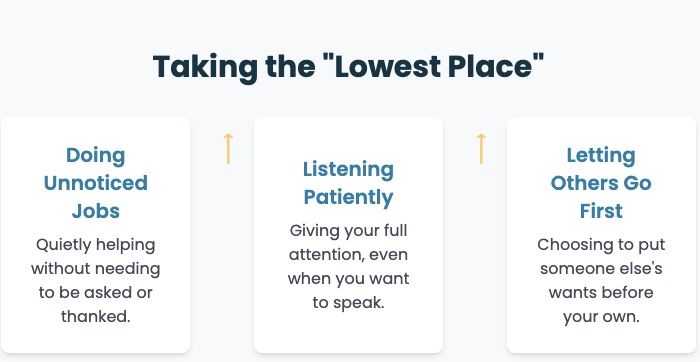
- Jesus says to “take the lowest place.” What are some of the “unnoticed everyday jobs” in our home? How can we all share in doing them?
- What does “letting someone else go first” mean in our family? Can you think of a specific example? (e.g., choosing a movie, taking the best seat on the couch, getting a snack).
- The reflection mentions “listening patiently.” What makes it hard to listen patiently to each other sometimes? What is one way we can get better at it?

Part C: Extending Our Table
- Jesus tells us to invite those who can’t repay us. Who are the “lonely, struggling, or outsider” people in our community, school, or neighborhood?
- How can our family “extend its table”? This doesn’t just mean inviting people for dinner. What are other ways we can show hospitality and welcome to others?
- Why do you think it’s important for a family to not just focus on itself, but to also look outward and serve others?

4. Living It Out: A Family Challenge
As a family, choose one specific “lowest place” action to focus on this week. Write it down and put it somewhere you’ll all see it, like on the refrigerator.
- Examples:
- “This week, I will do a chore without being asked and without looking for a ‘thank you.'”
- “This week, I will let my sibling choose the game we play first.”
- “This week, when I feel like interrupting, I will take a breath and listen patiently instead.”
FR. KEVIN
RUTTIG
TIP: Begin playing the video and, as you listen to it, explore the infographics and reflection questions.
Infographics were generated using Google Gemini AI tools (Chart.js and Tailwind CSS). Feel free to use them in any non-profit ministry. A LINK or shoutout toTHE WORD THIS WEEK would be greatly appreciated. .
22nd Sunday of Year C

This discussion guide has been generated by GOOGLE’S AI Gemini 2.5 Flash LLM.
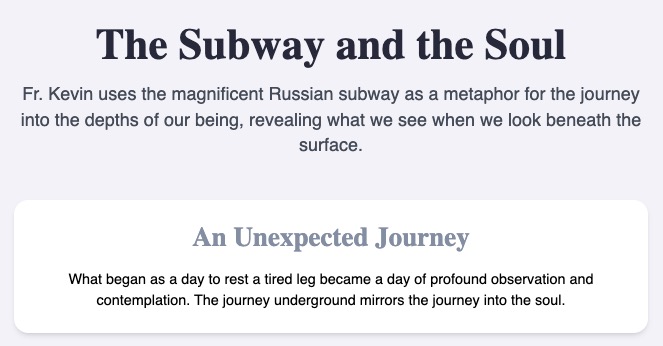
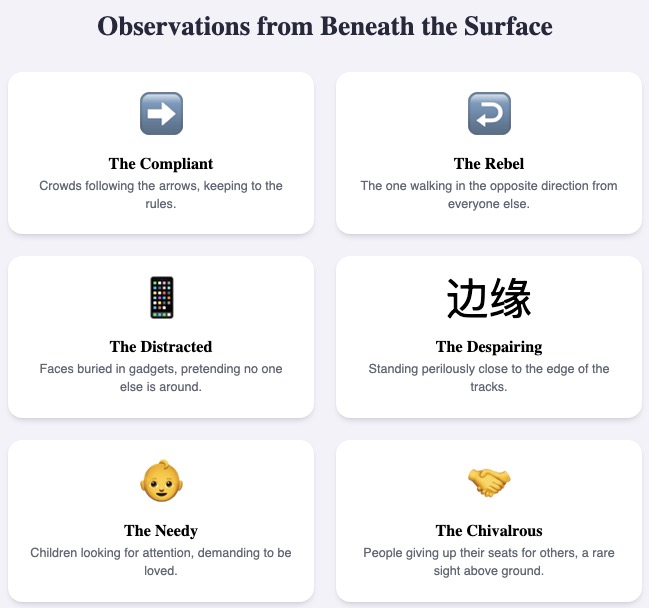
Fr. Kevin begins with a vivid story about his visit to the magnificent, temple-like subway stations in Russia. He uses this journey underground as a central metaphor for the journey into the depths of our own souls.
- Fr. Kevin says his “wasted day” of observation was “one of the best days of the entire journey.” When has a time of quiet observation and contemplation, rather than busy activity, been fruitful for you?
- What part of Fr. Kevin’s story about the Russian subway stood out to you the most? Why do you think the builders made the stations beautiful like “temples” rather than just functional?
- The homily describes various people underground: those following the rules, those going against the flow, the distracted, the despairing, the needy, and the chivalrous. How are these observations a good reflection of what we see in the wider world and even within ourselves?
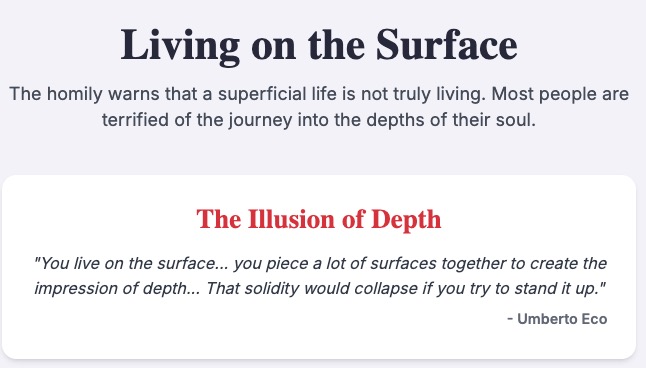
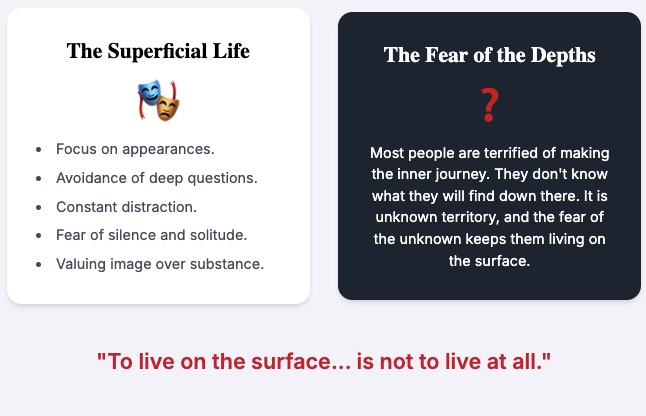
The homily contrasts the journey to the depths with a superficial life, quoting Umberto Eco: “You live on the surface… you piece a lot of surfaces together to create the impression of depth.”
- What does a “superficial life” look like in our culture today? In what ways do we “piece a lot of surfaces together to create the impression of depth”?
- Why is living only on the surface “not to live at all”? What is missing from such a life?
- Fr. Kevin says most people are “terrified of making that journey to the depths of their soul.” What do you think makes this inner journey so frightening for people?
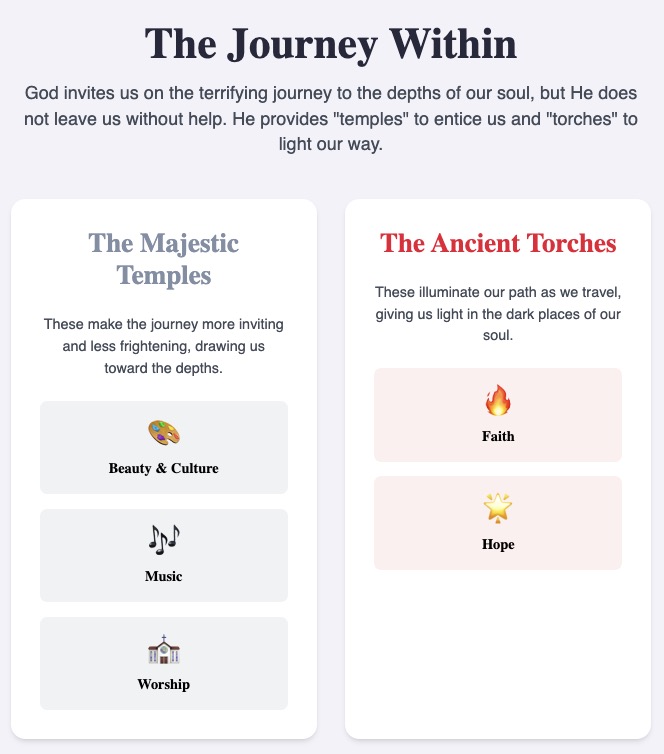
God invites us on this terrifying journey but also provides help. The “majestic temples of beauty, of music, of culture, of worship” make the journey “a little less terrifying.”
- Think about a time you were moved by a piece of music, a work of art, a beautiful landscape, or a moment in liturgy. How did that experience help you go “beneath the surface” of your everyday thoughts and feelings?
- The homily mentions our journey is “illumined by the ancient torches of faith and hope.” How do faith and hope act as lights when we are exploring the dark or confusing parts of ourselves?
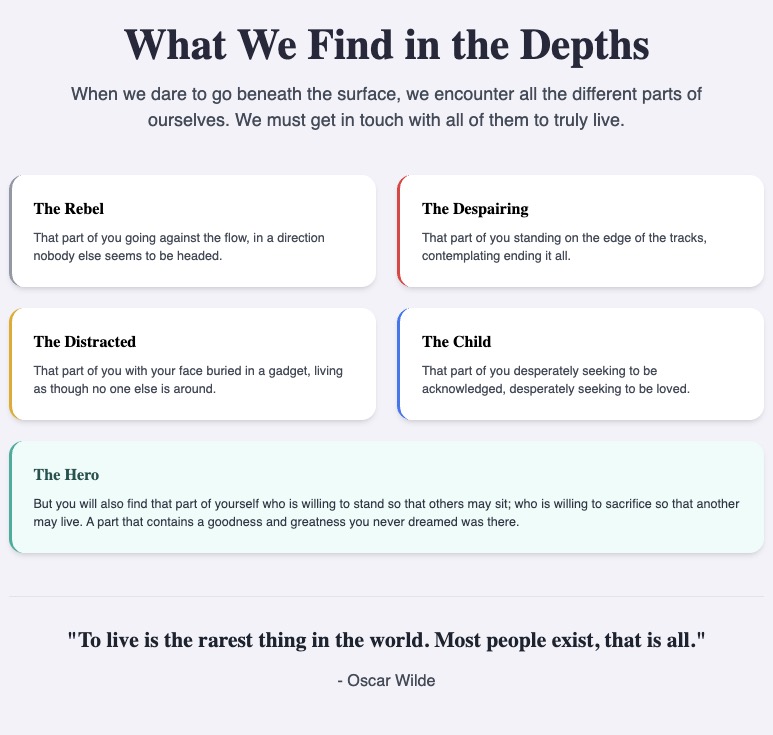
When we dare to go beneath the surface of our own lives, we encounter all the different parts of ourselves.
- Fr. Kevin lists several parts of the self we meet in the depths. Which of these resonates most with you in your life right now?
- The part that is going against the flow.
- The part that is standing on the edge of the tracks in despair.
- The part that is distracted, pretending no one else is around.
- The part that is a child, desperately seeking to be loved.
- The part that is willing to sacrifice so another may live.
- Why is it important to “get in touch with” and be “comfortable with” all these parts of ourselves, not just the noble and good ones?
- The homily promises that in the depths, we will also find a goodness and greatness we “never dreamed was there.” Why do you think we often fail to see this part of ourselves?
Closing Reflection
The homily ends with a powerful call to action from Oscar Wilde: “To live is the rarest thing in the world. Most people exist, that is all.”
- What is the difference between merely “existing” and “truly living”?
- What is one small, concrete step you can take this week to “dare to penetrate the surface” in your own life—perhaps in your prayer, in a relationship, or in a moment of quiet reflection?

Part 1: The Special Children of God
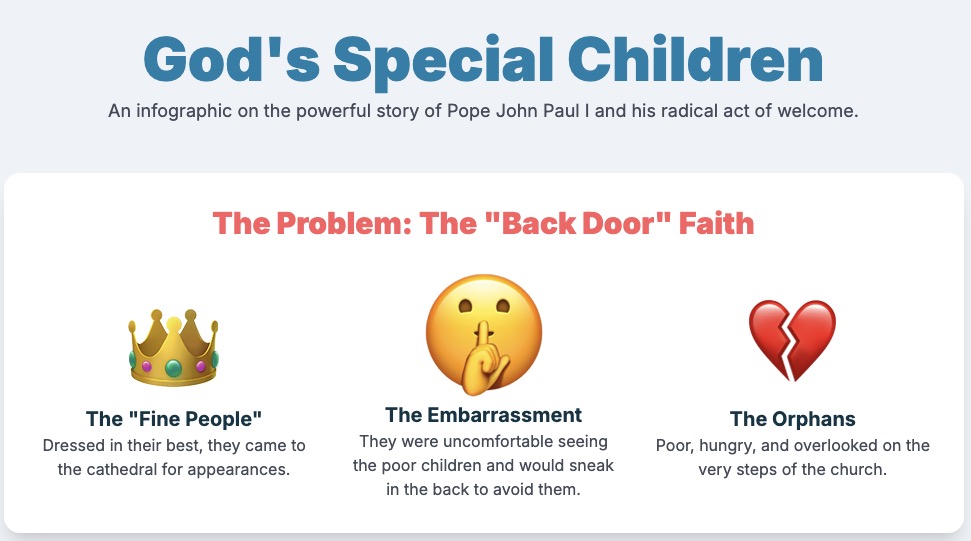
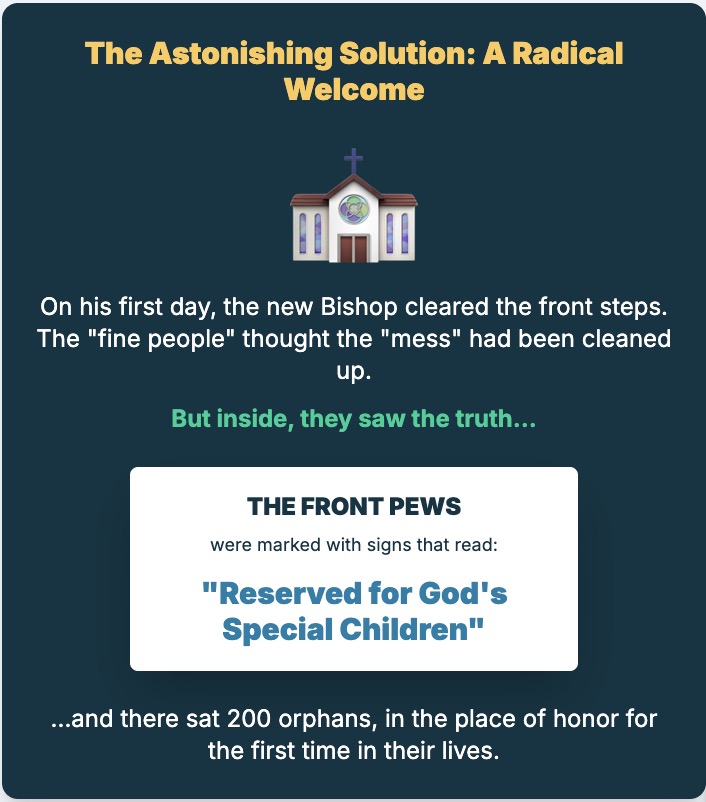
The sermon opens with the powerful story of Bishop Albino Luciani (later Pope John Paul I) and the street children of Vittorio Veneto.
- The “fine people” of the city were embarrassed by the poor orphans on the cathedral steps and would “sneak around to the back door.” What does this action reveal about their hearts and their understanding of faith? In what ways do we sometimes “use the back door” to avoid uncomfortable truths or the needs of others in our own communities?
- The Bishop reserved the front pews for “God’s special children.” Why was this act so “astonishing”? What message did it send to both the orphans and the wealthy parishioners?
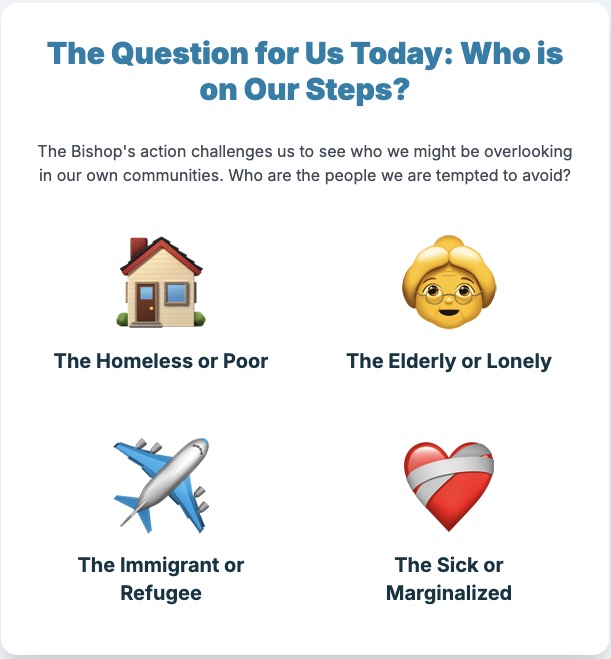
- Who are the people in our society today that might be considered “on the steps” of our churches, workplaces, or communities—people we might be tempted to overlook?



Part 2: The Unexpected Guest List
Jesus’ parable in the Gospel tells us not to invite friends or wealthy neighbors to our banquets, but rather the poor, crippled, blind, and lame.
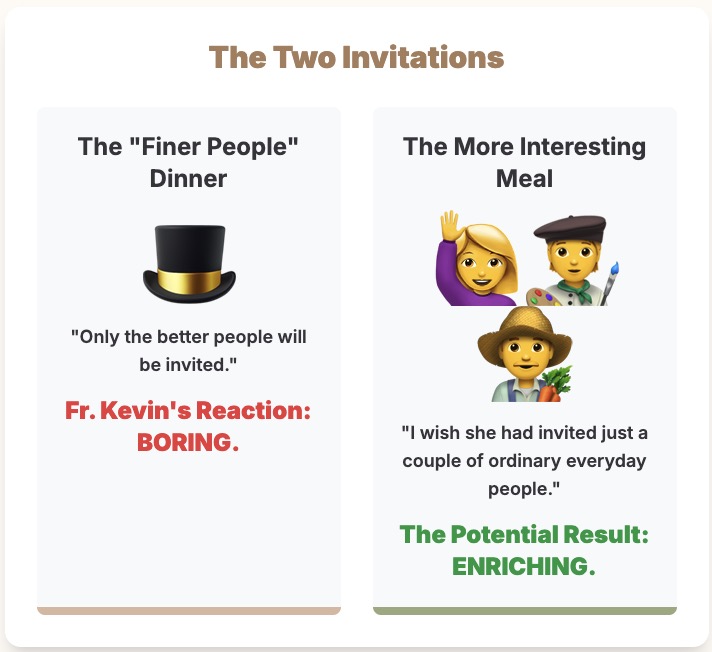
- Fr. Kevin notes, “We enjoy the company of those we consider our equals. We don’t like being around people we consider beneath us.” Why do you think this is such a common human tendency? What fears or insecurities might be at the root of this behavior?
- Fr. Kevin shares a story about turning down an invitation to a dinner with “only the finer people,” finding them “rather boring.” Have you ever found that conversations with a diverse group of people are more enriching than those with people just like you? Share an experience.
- The video reminds us that God “humbled himself to become one of us.” How does reflecting on the Incarnation challenge any “snobbery” or arrogance we might feel in our own lives?

Part 3: The Canceled Wedding Banquet
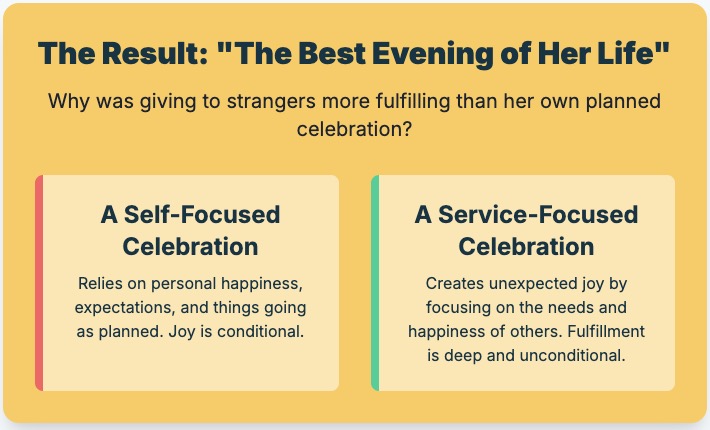
Fr. Kevin tells a modern-day parable of a woman whose fiancé gets cold feet, so she invites people from homeless shelters to her prepaid wedding banquet.
- The video says of this gesture, “it was also the best evening of the woman’s life.” Why do you think an act of radical generosity toward strangers could be more fulfilling than her own planned wedding celebration?
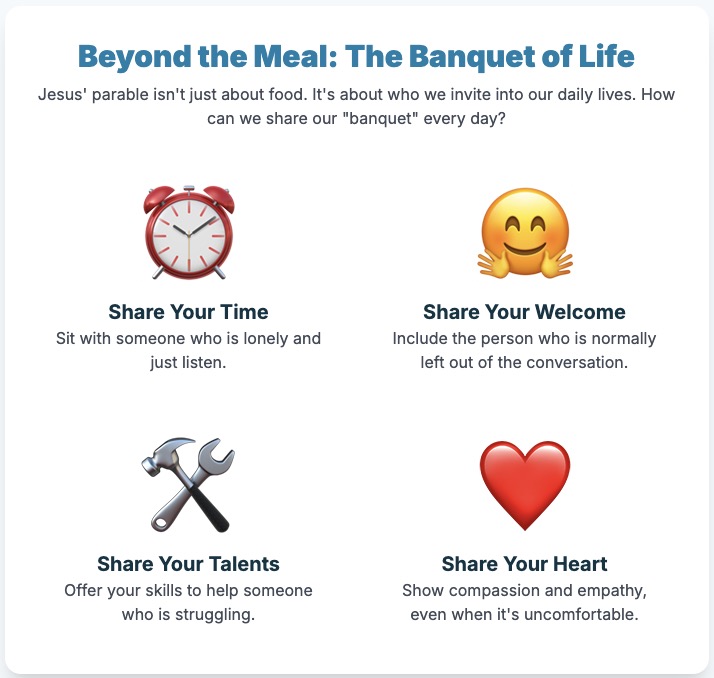
- This story is presented as a perfect example of what Jesus is talking about. It’s not just about a meal, but about the “banquet of life.” What does it mean to invite the marginalized to the “banquet of your life”? What might that look like on a day-to-day basis?
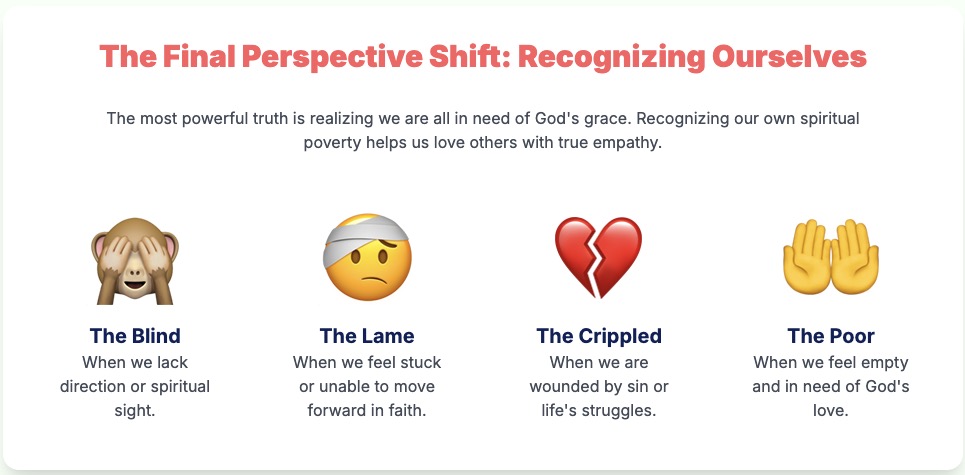
Part 4: Lifting Ourselves Up
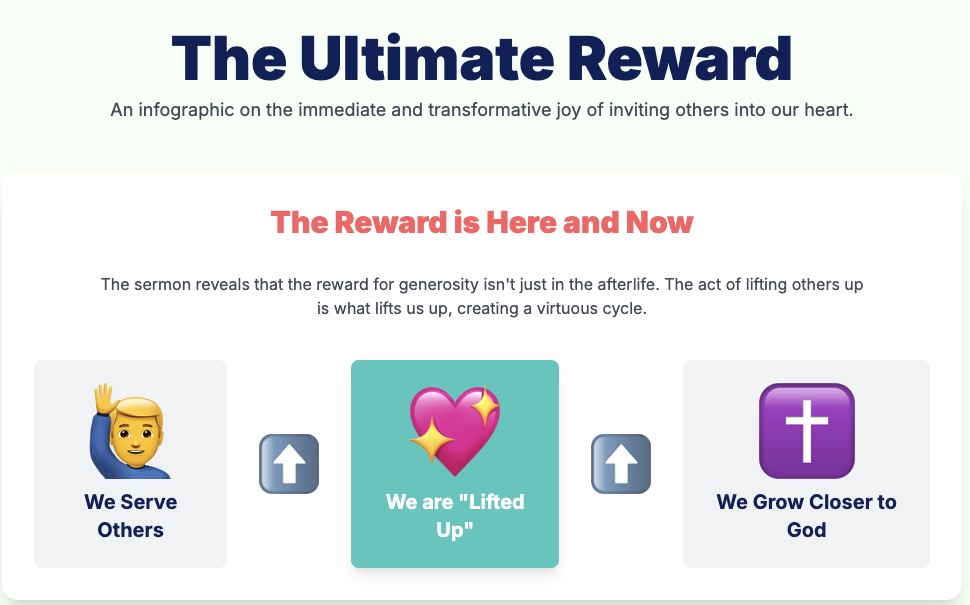
The video concludes by shifting our perspective: our reward for inviting the marginalized isn’t in the afterlife, but in the here and now. “At that moment, we have not so much lifted them up as we have lifted ourselves up.”
- What does it mean to be “lifted up” in this context? How does associating with and loving those who are different from us enrich our own lives and bring us closer to God?
- Reflect on the final, powerful idea: “We may just find that we—you and I—were those blind and lame and crippled and orphaned and poor who have been lifted up in the embrace of a loving God.” In what areas of your life do you feel poor, blind, or in need of being “lifted up”? How does recognizing your own neediness help you to better love others?
- Closing Challenge: What is one concrete action you can take this week to invite someone who cannot “repay” you not just to your table, but into your heart?

Access guide and infographics by clicking on banner
MSGR. PETER
HAHN
TIP: Begin playing the video and, as you listen to it, explore the infographics and reflection questions.
Infographics were generated using Google Gemini AI tools (Chart.js and Tailwind CSS). Feel free to use them in any non-profit ministry. A LINK or shoutout toTHE WORD THIS WEEK would be greatly appreciated. .
22nd Sunday of Year C
This discussion guide has been generated by GOOGLE’S AI Gemini 2.5 Flash LLM.
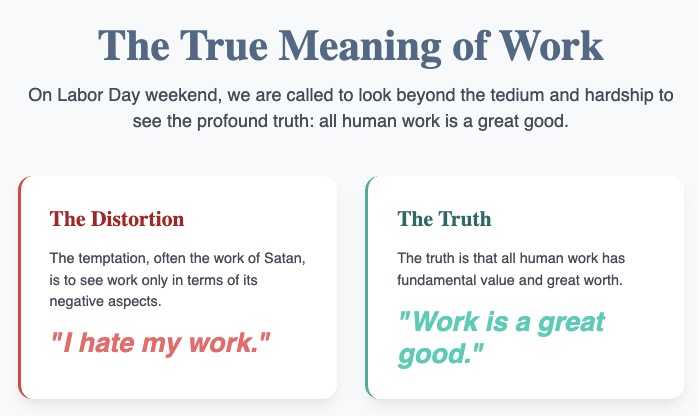
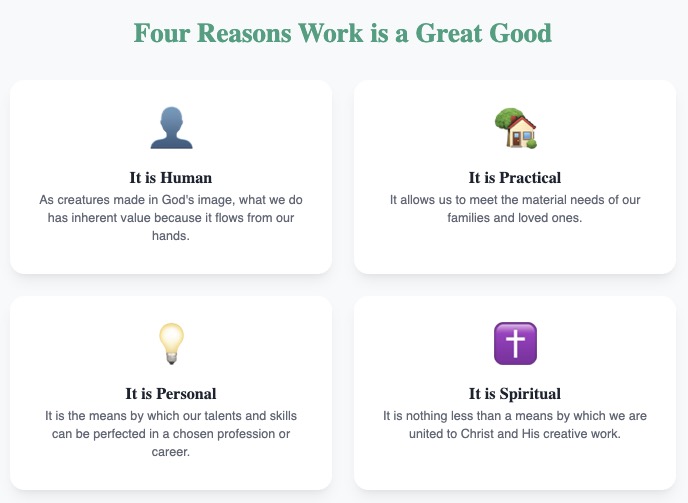
Msgr. Hahn begins by addressing the common temptation to see work only in terms of its “tedium and its hardship,” which he calls a distortion from Satan. He reframes work as a great good.
The homily says that in a spiritual sense, “work is nothing less than a means by which you and I are united to Christ.” Have you ever experienced a moment where your work felt like a prayer or a way of connecting with God? What did that feel like?
What are some of the negative ways our culture, or even we ourselves, tend to view work? How does this contrast with the three positive aspects Msgr. Hahn identifies: human (flowing from our dignity), practical (providing for needs), and spiritual (uniting us to Christ)?

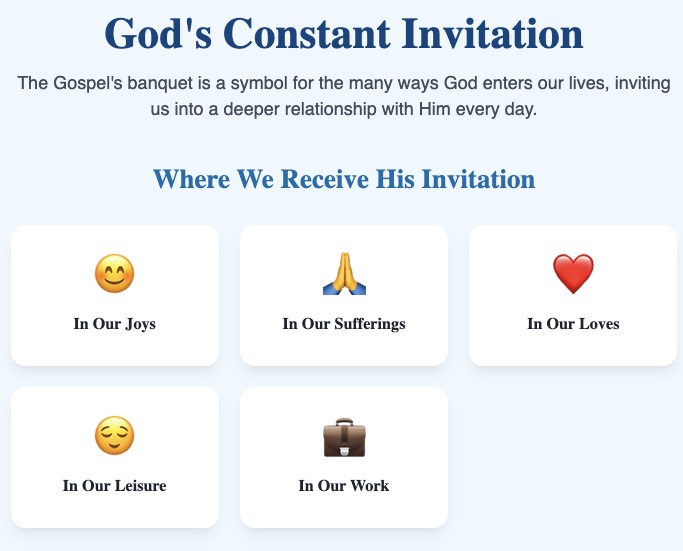
The homily explains that the Gospel’s examples of a wedding banquet and a lunch are symbolic of the many ways God enters our lives and invites us into a deeper relationship.
- Msgr. Hahn lists several areas where God’s invitation can be found: “in our joys, in our sufferings, in our loves, in our Leisure and yes, in our work.” Which of these areas is it easiest for you to see God’s presence? Which is the most difficult?
- How does viewing our daily tasks and even our sufferings as “invitations” from God change our perspective on them?
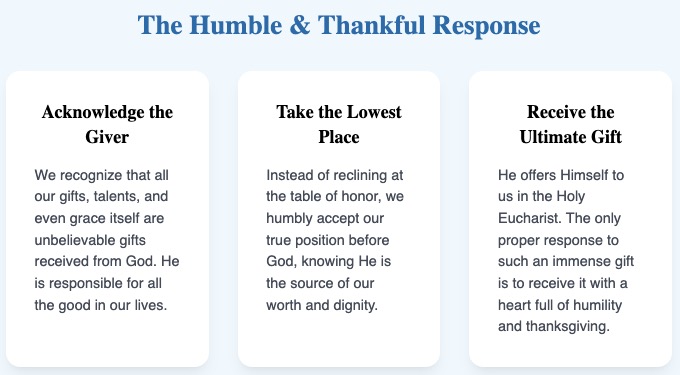
The homily states that the “underlying principle by which we are to engage all things” is the virtue of humility, which is grounded in thanksgiving.
- Msgr. Hahn says, “He is the one who is responsible for all the good in our lives.” Why is a deep awareness of this truth essential for growing in humility?
- The homily asks, “How many times have you sat down and thanked God for your work?” and even, “How many times have we thanked God maybe for a particular suffering or tragedy?” Why is gratitude, especially for difficult things, so central to the virtue of humility?
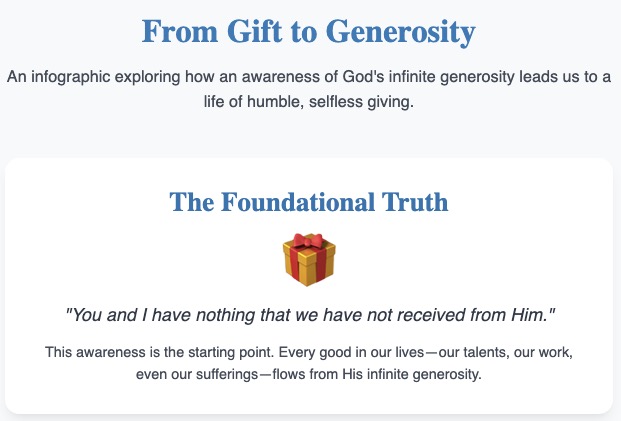
An awareness of the truth that “you and I have nothing that we have not received from him” naturally leads to a spirit of generosity.
- Jesus calls us to share our gifts not just with those who can repay us, but to “give freely and humbly without any regard for what we might receive back.” Why is this non-transactional generosity so counter-cultural?
- In what practical ways can we be more generous with our “gifts and talents” (time, skills, patience, etc.) in our families or communities this week?
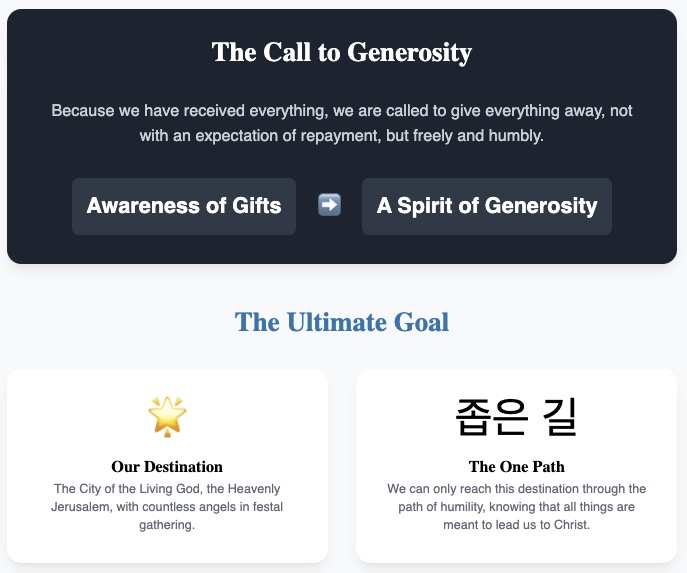
The homily concludes by reminding us of our final destination: “the city of the Living God, the heavenly Jerusalem,” and that the only path to get there is humility.
- How does keeping our ultimate destiny in mind help us to practice humility in our present circumstances?
- Msgr. Hahn says we must strive to “know the joy of all things, yes even our work, knowing that all is meant to lead us to Christ.” What is one thing you can do to more consciously connect your daily work to your ultimate goal of heaven?


This discussion guide has been generated by GOOGLE’S AI Gemini 2.5 Flash LLM.
The homily begins by framing our entire life of faith as a series of invitations from God and our responses to them.
- The homily states that in all our relationships, there is an “invitation” and a “response.” Can you think of a recent example in your own life (with family, friends, or God) where you either gave or received an invitation? What was the response?
- God’s first and most fundamental invitation is the gift of life itself. How does viewing your existence as a personal invitation from God change your perspective on your daily life?
- The homily says the Gospel’s examples of banquets are “symbolic of all the ways that God will enter into our lives.” Besides formal prayer or Mass, in what unexpected situations or circumstances have you felt an “invitation” from God recently?
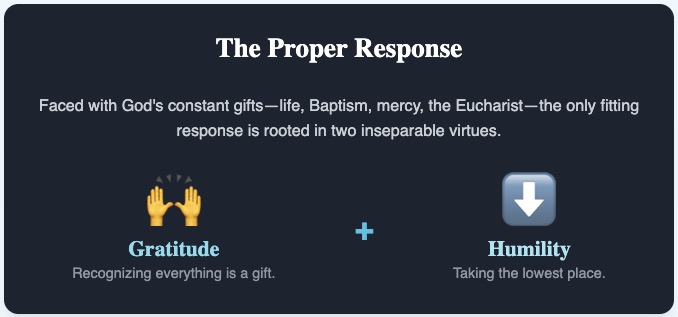
The homily teaches that the only fitting response to God’s constant gifts—Baptism, mercy, the Eucharist—is “total gratitude and humility.”
- Why is it so easy to forget that “everything we have is his gift to us”? What things in our culture make it difficult to maintain this awareness?
- Jesus’s advice is to “go to the lowest place.” What does taking the “lowest place” look like in a modern context, such as at work, in the family, or on social media?
- The homily connects humility to generosity, calling us to give “freely again without regard for what we might receive in return.” Why is it so difficult to be generous without expecting some form of repayment or recognition?
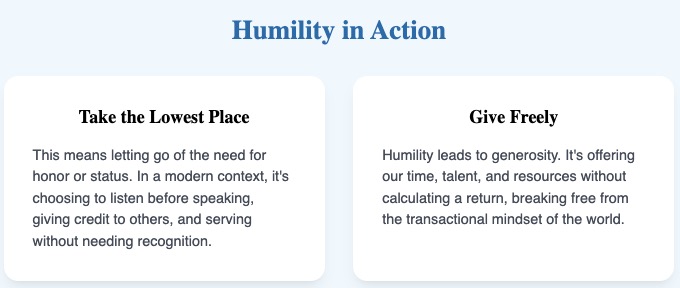
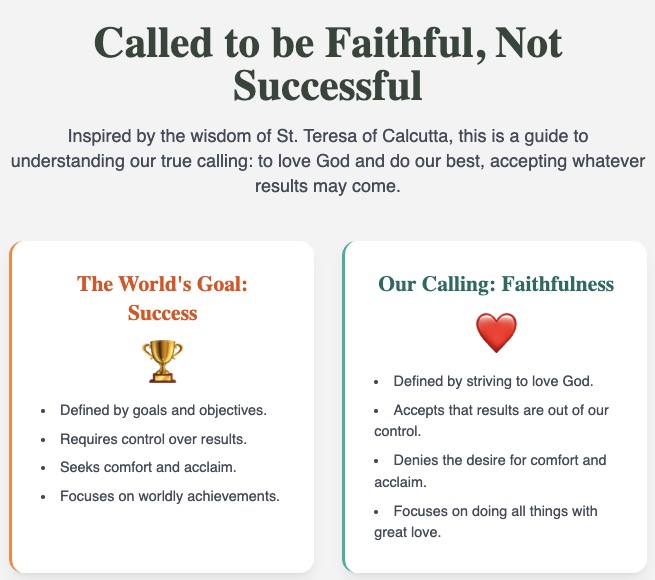
The homily uses the life of Mother Teresa as a concrete example of living out this humble, generous response.
- Mother Teresa’s motto was to do “small things with great love.” What is a “small thing” in your own life that you could try to do with “great love” this week?
- The homily mentions that Mother Teresa experienced a period of spiritual “darkness” and a feeling of separation from God, yet she persevered. How does her example challenge the idea that a holy life is always filled with good feelings and consolations?
- Reflect on Mother Teresa’s famous quote: “We are called to be faithful, not successful.” What is the difference between these two things? In what areas of your life do you tend to worry more about being successful than being faithful?
The Ultimate Goal
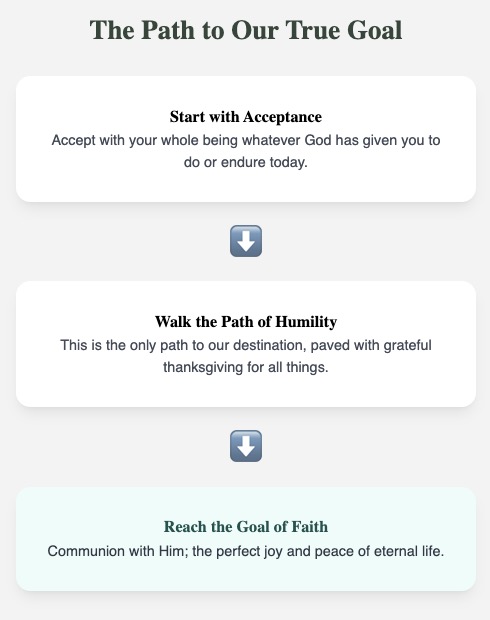
The homily concludes by reminding us that our goal is “communion with him” and that the only way to reach it is through the “path of humility.”
- How does remembering our final goal—eternal life with God—help us to endure difficulties or times of darkness, as Mother Teresa did?
- The homily encourages us to accept “whatever God has given us to do or to endure today.” How does this mindset differ from trying to control every outcome in our lives?
- What is one practical step you can take to be more “faithful” in your daily calling, letting go of the need for a specific, “successful” result?

This discussion guide has been generated by GOOGLE'S AI Gemini 2.5 Flash LLM.
Opening Prayer
Gracious God, we thank you for the gift of your Word and for the wisdom shared in this homily. As we reflect on the challenging path of faith, give us the grace to persevere. Help us to keep our eyes fixed on Jesus, our true source of peace, even amid the struggles and divisions we face. We ask this in your name. Amen.
Homily Summary
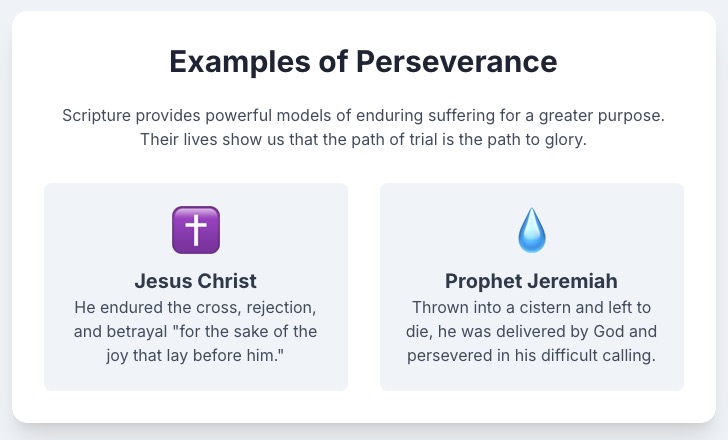
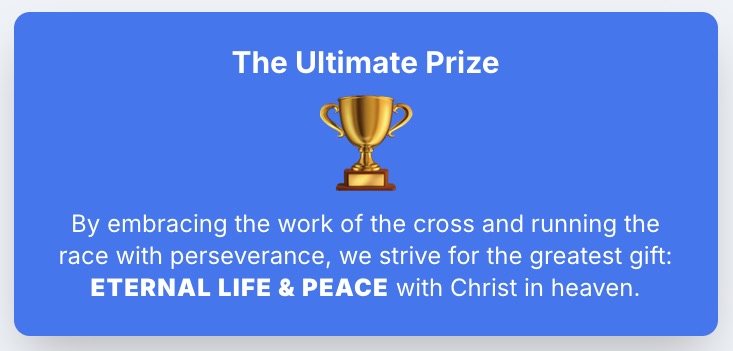
In this homily, Msgr. Hahn explores the perplexing words of Jesus, who states he has come to bring not peace, but division. He resolves this apparent contradiction by drawing a crucial distinction between the goal of our Christian journey—eternal peace with Christ—and the journey itself, which is a path of trial, struggle, and suffering. He emphasizes that the path to peace is not an easy one. By examining the life of Jesus, the prophet Jeremiah, and the words of the Letter to the Hebrews, Msgr. Hahn stresses the need for perseverance and the dangers of seeking a path of "complacency or compromise." The homily ultimately calls us to embrace the work of the cross, running the race of faith so that we may one day receive Christ's greatest gift of eternal life and peace.

Key Themes & Scripture
- Peace as the Goal, Division as the Path: The homily's central message is that while Christ is the Prince of Peace and his ultimate gift is eternal peace, the journey to that peace is full of hardship and division.
- The Grace of Perseverance: We are called to "persevere in running the race that lies before us," just as Jesus did, to reach the joy that lies ahead.
- The Work of the Cross: A call to embrace suffering and difficulty as a means of being united with Christ and his passion, rather than seeking an easy, comfortable faith.
- The Dangers of Compromise: The homily warns against the temptation to take a path of "complacency or compromise" and to fail to proclaim the truths of our faith, even to loved ones.
- Scripture: The homily draws on the Gospel reading about Christ bringing division, the Letter to the Hebrews urging us to persevere and keep our eyes on Jesus, and the story of the prophet Jeremiah as an example of faithfulness amid suffering.
Discussion Questions
- Msgr. Hahn calls Jesus's words about bringing division "some of the most perplexing in all of sacred scripture." How do you reconcile Jesus as the "Prince of Peace" with this idea of him bringing division?
- The homily distinguishes between the goal of peace and the journey of division. Can you think of a time in your life when you experienced this firsthand—when a difficult choice for your faith ultimately led to a deeper sense of peace?
- We are urged to "persevere in running the race that lies before us." What does this "race" look like in your life right now, and what are some of the struggles that make you feel weary?
- Msgr. Hahn warns against the temptation to take a path of "complacency or compromise." In what areas of your life are you most tempted to take the easy path instead of embracing the "work of the cross"?
- The homily specifically mentions the difficulty of proclaiming the truths of our faith "even to family or loved ones." What makes this so challenging, and what do you think it means to do so with both conviction and love?
- How does focusing on the ultimate "joy that lay before him," as Jesus did, change your perspective on the sufferings and struggles you face in your daily life?
Closing Prayer
Lord Jesus, you endured the cross for the joy that lay before you. We pray for your strength and your perseverance. Sustain us in the race of faith, and help us to never grow weary of doing your work. May we embrace the struggles of this life so that we may one day share in the eternal peace you have promised us. Amen.
Access guide and infographics by clicking on banner

This discussion guide has been generated by GOOGLE'S AI Gemini 2.5 Flash LLM.
Theme:
Access guide and infographics by clicking on banner