25th Sunday of Year B

September 22, 2024

Homilies

1 MINUTE HOMILYTWO MINUTE HOMILYFR. PETER HAHNFR. JUDE LANGEHFR. KEVIN RETTIGFR. GEOFFREY PLANT
YouTube player

SOURCE: The Jesuit Post

YouTube player

SOURCE: Fr. Peter Hahn Archive of Homilies

VIEWING GUIDE w/ Questions

KEY INSIGHTS OF THE READINGS

Understanding Conflict and Peace

Q: What is the root cause of conflict according to the Book of Wisdom?
A: The Book of Wisdom identifies wickedness as the source of all conflict, contrasting it with the just one (the Son of God) who will be defended and delivered by God.

Q: How does St. James explain the origin of internal struggles and conflicts?
A: St. James teaches that interior struggles, wars, and conflicts stem from disordered passions like jealousy and selfish ambition, with the path to joy found in God's grace and the gospel.

Jesus' Teachings on Greatness

Q: What is Jesus' definition of true greatness?
A: Jesus teaches that greatness is found in service and love, not accomplishments, stating "whoever wishes to be first must be the last of all and the servant of all" to his apostles.

Prayer and Spiritual Growth

Q: Which biblical text is highlighted as a treasure for prayer and thanksgiving?
A: The Psalms, particularly Psalm 118, are emphasized as great treasures of prayer, with the quote "give thanks to the Lord for he is good for his mercy endures forever" being a favorite.

Overcoming Life's Challenges

Q: How can one maintain peace and joy amidst life's difficulties?
A: The readings suggest staying united to God through the transforming power of God's grace and trusting in God's constant presence and deliverance, even during great sadness and struggle.

Q: What is the key to overcoming internal battles against disordered passions?
A: Confidence in the transforming power of God's grace allows one to trust in God's deliverance, even in the midst of ongoing internal battles against disordered passions.

PRACTICAL LIFE APPLICATIONS

Maintaining Peace and Joy

Q: How can I maintain peace and joy in difficult times?
A: Cultivate confidence in God's defense and deliverance from troubles, as predicted by the Book of Wisdom, by staying connected to Christ through baptism and regular spiritual practices.

Serving Others

Q: What's the key to finding true joy according to Jesus?
A: Focus on service and love rather than personal accomplishments, as taught in the Gospel, by recognizing and letting go of disordered passions like jealousy and ambition.

Gratitude and Reflection

Q: How can I cultivate a spirit of gratitude?
A: Regularly reflect on and give thanks for God's mercy and blessings in all circumstances, as encouraged in Psalm 118, acknowledging God's enduring goodness and rejoicing in each day.

Overcoming Negative Emotions

Q: How can I combat jealousy and selfish ambition?
A: Wage war against disordered passions through the transforming power of God's grace, staying united to Christ to win the battle and prioritize serving others over personal gain.

Embracing Life's Challenges

Q: How can I maintain a positive outlook during both joys and sufferings?
A: Accept all experiences with trusting confidence in God's constant presence and deliverance, as stated in Psalm 118: "This is the day the Lord has made; let us rejoice and be glad in it."

Living with Optimism

Q: How can I approach life's varying events with confidence?
A: Engage life with optimism and confidence in God's defense and deliverance, as predicted for Christ and adopted sons and daughters of God by baptism, maintaining a strong connection to Christ for success.

CULTURAL/RELIGIOUS CRITIQUES

Controversial Religious Interpretations

Q: Does God really protect the just from all harm?
A: The Book of Wisdom suggests God will defend the righteous and deliver them from foes, but this may conflict with real-world experiences of suffering among believers.

Q: Is Christ the ultimate example of God's protection?
A: The video implies Christ as the model of divine protection, yet His crucifixion and suffering challenge this interpretation of absolute safety for the just.

Human Nature and Conflict

Q: Are all wars solely caused by internal passions?
A: St. James attributes conflicts to disordered passions like jealousy and selfish ambition, potentially oversimplifying complex geopolitical and socioeconomic factors in warfare.

Q: Can true greatness only be achieved through service and love?
A: Jesus teaches that greatness comes from service, not accomplishments, which may contradict societal values of achievement and personal success.

YouTube player

SOURCE: Fr. Kevin’s Homilies

“Whoever receives a child in my name receives me.” There are many ways of receiving the Christ, and some are quite powerful. Josephine Baker, an iconic African-American performer and civil rights advocate, created a diverse family of adopted children from various backgrounds to promote unity and combat racism, embodying her vision of a compassionate and harmonious world.

KEY INSIGHTS w/ Timestamps
  • 00:00 Josephine Baker, a talented African-American singer and dancer born in poverty, became a superstar in Europe, defied segregation in the U.S., and played a significant role in the civil rights movement.
  • 01:52 Josephine Baker, celebrated for her bravery and talent, uniquely formed a diverse family during the post-war years, embodying hope amidst devastation.
  • 02:55 Desperate refugees fleeing brutal oppression face discrimination and hostility from locals struggling with their own hardships, as seen through Josephine's experiences of being barred from American establishments upon returning home.
  • 03:52 A woman, inspired by her vision of a harmonious world, adopts children from diverse cultural backgrounds, raising them in their respective traditions.
  • 04:55 Josephine adopted 12 children from diverse backgrounds and faiths, creating a vibrant multicultural family.
  • 05:53 A black woman created a diverse family of children from various ethnicities and religions to combat racism and promote unity.
  • 06:54 Josephine Baker believed in the potential for mutual respect among humanity, embracing the world as her own despite her imperfections.
  • 07:25 A courageous vision for a compassionate world inspires action against hatred, war, and suffering, emphasizing the importance of embracing and nurturing every child.
YouTube player

SOURCE:  Fr. Geoffrey Plant Homily Presentations

As the journey to Jerusalem continues the disciples struggle with the demands of God’s reign: it is not about seeking glory, but being the least; it is not about lording it over others, but serving; it is not seeking security and positions of honour, but losing one’s life and being servant of all.

KEY INSIGHTS w/ Timestamps
  • 00:00 The homily emphasizes the Greek word ὁδός as a symbol of both the physical and spiritual journeys of discipleship, reflecting on the Exodus from slavery to freedom and the disciples' struggle to understand their identity in following Jesus.
  • 03:31 Faith is a journey filled with challenges and discoveries, guiding us toward understanding life and death.
  • 05:45 Jesus predicts his suffering and death, but the disciples struggle to grasp his role as a suffering Messiah, reflecting their incomplete understanding of his mission.
    • Jesus predicts his rejection, death, and resurrection three times on the way to Jerusalem, but the disciples fail to understand his message, highlighted by the healing of a blind man.
    • The disciples, while recognizing Jesus as the Messiah, struggle to understand his prophecy of suffering and rejection, reflecting their incomplete spiritual insight.
    • The concept of a suffering Messiah is foreign to pre-Christian Judaism, which expected a triumphant Davidic figure, highlighting the shock of Peter and the misunderstanding of Jesus' role among his contemporaries.
    • Jesus clarifies that he is not a king who will restore Israel's sovereignty but rather foretells his Passion.
  • 11:40 Jesus' Transfiguration symbolizes divine revelation, while his journey to Capernaum underscores his second prophecy of the Passion.
    • Jesus performed miracles in Bethsaida and later transfigured on a mountain with Peter, James, and John near Caesarea Philippi.
    • The story of the Transfiguration is traditionally associated with Mt Tabor, where a basilica was built in the 4th century, despite earlier debates about its location.
    • The geographical debate over the site of the Transfiguration highlights that mountains symbolize divine revelation, while today's gospel emphasizes Jesus' journey to Capernaum and his second prophecy of the Passion.
  • 15:23 Jesus teaches that true greatness lies in being last and serving others, as the disciples misunderstand his Passion by focusing on their own status.
    • The disciples react to Jesus' prophecies of his Passion with misunderstanding and self-interest, focusing on their own greatness rather than grasping the significance of his suffering.
    • Jesus teaches his disciples that true greatness comes from being last and serving others.
  • 17:45 True greatness in heaven comes from humble service to others, especially the insignificant, as shown by welcoming children.
    • The Greek term "διάκονος" refers to a humble servant, exemplified by a child, highlighting the importance of selflessness and attentiveness in serving others.
    • True greatness in the kingdom of heaven is defined by humble service to the insignificant, as exemplified by welcoming children, rather than by worldly status or power.
  • 20:58 Embracing and serving those we find difficult, like lepers, reflects Christ's love, as shown by St. Francis and modern saint Carlo Acutis.
    • St. Francis of Assisi transformed from abhorring lepers to showing them mercy, exemplifying the grace of recognizing every person as a brother in Christ.
    • Embracing those we naturally repulse, like lepers, transforms bitterness into sweetness, revealing that serving the least among us is akin to serving Christ.
    • St. Francis of Assisi may seem an intimidating model of discipleship, but Carlo Acutis, a modern saint who embraced technology and compassion, offers a relatable example for today's Christians.
  • 25:47 A young boy named Carlo, moved by the plight of homeless immigrants in Milan, took action by providing them with food, blankets, and guidance, embodying the spirit of service and humility that challenges the pursuit of personal glory.

Bishop Robert Barron

YouTube player

SOURCE: Word on Fire

VIEWING GUIDE w/ Questions

KEY INSIGHTS OF THE READINGS

Jesus' Teaching on Humility

Q: How did Jesus use a child to illustrate true greatness?
A: Jesus placed a child in the midst of his disciples, identifying himself with the child, to counteract the obsession with honor and demonstrate that true greatness lies in humility and servanthood.

Q: What did Jesus say about being first in God's kingdom?
A: Jesus taught that to be first in God's kingdom, one must become the "last of all and the servant of all", emphasizing the importance of selflessness and service over worldly status.

Shifting Perspective on Success

Q: How does Jesus' teaching challenge conventional ideas of success?
A: Jesus urged his followers to "stop worrying about the ladder" and reject the "rat race for honors", suggesting that life's true meaning lies beyond the pursuit of worldly achievements and status.

Q: What quality of children did Jesus emphasize as crucial for entering God's kingdom?
A: Jesus highlighted children's ability to enter life without self-preoccupation, emphasizing the importance of approaching life and faith without constantly referencing oneself.

Redefining Value

Q: How did Jesus redefine the concept of importance?
A: By elevating a child, considered a "nobody" in society, to a position of prominence, Jesus demonstrated that God's values differ significantly from societal norms, emphasizing the worth of the humble and marginalized.

PRACTICAL LIFE APPLICATIONS

Servant Leadership

How can I become a true leader according to Jesus? Become the servant of all and focus on being last rather than striving to be first.

What practical action can I take to embody Christ-like leadership? Receive and care for children or those considered "nobodies" in society, as this is equivalent to receiving Jesus Himself.

Shifting Priorities

How can I align my values with Jesus' teachings? Stop worrying about status and position ("the ladder") and instead focus on the simple things in life.

Spiritual Growth

What transformation does Jesus call for in His followers? Change and become like children, embracing their qualities of humility, simplicity, and trust.

Recognizing Christ in Others

How can I encounter Jesus in my daily life? Look for Him in the least expected places, particularly in those who are overlooked or marginalized by society, such as children in Jesus' time.

CULTURAL/RELIGIOUS CRITIQUES

Challenging Traditional Religious Hierarchy

Q: Is Jesus dismissing the importance of religious leadership positions?
A: Jesus suggests the "ladder of status and position" in religious contexts is a "stupid ladder" and a "waste of time spiritually", implying that traditional hierarchies may be irrelevant to true faith.

Redefining Spiritual Success

Q: Does Jesus advocate for a complete reversal of societal values?
A: Jesus states "If anyone wishes to be first, he shall be the last of all and the servant of all", radically challenging conventional notions of success and leadership in spiritual contexts.

Child-like Faith vs. Adult Wisdom

Q: Is Jesus suggesting adults should become childish to enter heaven?
A: Jesus declares "Unless you change and become like one of these, you will not enter the kingdom of heaven", potentially devaluing adult wisdom in favor of a child-like approach to faith.

Critique of Worldly Pursuits

Q: Is Jesus condemning all forms of ambition and achievement?
A: Jesus criticizes preoccupation with "wealth, pleasure, power, and honor" as "distractions from God", potentially discouraging followers from pursuing worldly success or recognition.

Embracing Immediacy over Reflection

Q: Should Christians prioritize immediate experiences over thoughtful contemplation?
A: Jesus encourages focusing on "simple things" like "a beautiful sunset or a serene pond" rather than spiritual reflection, potentially downplaying the importance of theological study or meditation.

Deacon Peter McCulloch

Deacon of the
Diocese of Broken Bay, Australia

RECENT

Being Different

Wis.2:12, 17-20; Jas.3:16-4.3; Mk.9:30-37

2024 EXCERPT: Most people don’t like being different. They’d rather fit in than stand out from the crowd.

That’s because our society values sameness. It loves the familiar. Early in life, we all learn that if you’re too different you’ll be teased, ridiculed or excluded in some way. So, most of us try hard to fit in, and we do this by adopting the fashions and culture of the time.

On the Road to Greatness

2021 EXCERPT: ‘The world offers you comfort,’ Pope Benedict XVI once said, ‘But you weren’t born for comfort. You were born for greatness.’

What, then, is greatness? Most people today would probably use words like visionarycourageous and famous to describe it, but they’re unlikely to mention humility. Yet, so many of the world’s greatest leaders were humble. Just think of Jesus, Gandhi, Mother Teresa, Nelson Mandela and Martin Luther King Jr.

Fr. Andrew Ricci

Priest of the
Diocese of Superior,
Wisconsin

RECTOR OF CHRIST THE KING
CATHEDRAL

RECENT

The Disciple’s Path is Marked with Service
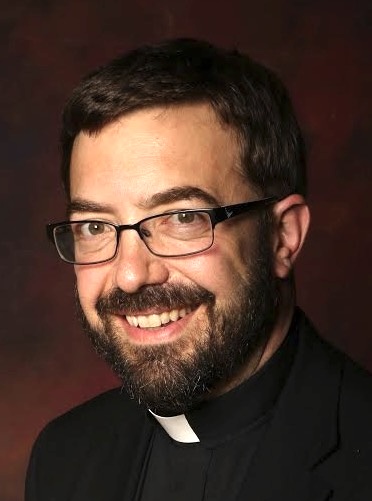
2021 PODCAST: The Scripture readings reveal how often our lives are disrupted by evil from the inside and the outside of our hearts. How do we proceed? How do we find our way? The Lord teaches that the disciple’s path is marked with service, putting the needs of others ahead of one’s own.

Fr. Austin Fleming

Priest of the
Archdiocese of
Boston

HOMILIES

VIDEOS

Who is This in My Life? Who am I in Others’ Lives?

2015 EXCERPT: Who would be the person in your life, either now or maybe some time ago, who would be the person in your life who best fits the description we find in the Letter of James? Who’s the person in your life who is, or who was:

  • gentle, not rough
  • peaceable, not irksome,  
  • compliant, not cantankerous,
  • merciful, not resentful,
  • constant, not fickle,
  • sincere, not deceptive
  • a source of goodness, not of harm?

There’s only one thing better than having such a person in your life and that’s being such a person in the lives of others. And that’s precisely the message James offers in this passage. And James doesn’t fail to point out that such gifts are not naturally ours to give and receive but rather are cultivated and harvested when, with God’s help, we engage the conflicts within us, the inner wars of our desires, needs and self-interest, in our own hearts, and allow the wisdom of God’s grace to bring order to our chaos and peace to our passions.

Dominican Blackfriars


Dominican Friars
of England & Wales,
Scotland

HOMILIES

ARCHIVE

2021 EXCERPT: The problem with the disciples, St Mark suggests, is that there was a much more worldly competition at work. They were debating ‘which one of them was the greatest’ and it was not greatness in virtue they had in mind. Like the sons of Zebedee in Matthew’s Gospel they are jockeying for position.

There is, though, something quite ‘innocent’ in this transparent jockeying for prestige. A French priest, preaching in an English church, once mistranslated these words from his French bible as ‘they were arguing which of them was the tallest’! It was a happy mistake because only children argue about who is the tallest and the disciples are in fact acting just like children. Perhaps that is why Jesus uses the example of the child he sets in front of them. Certainly the lesson that Jesus gives them is a gentle one. He understands them, he loves them. They are his family.

It is in serving each other and seeing each other as ‘family’ that we are not only vindicated in our trust in God but in fact become the hands, the arms, the very heart of an all-loving, all-merciful Father.

Fr. Charles E. Irvin

Priest of the
Diocese of Lansing
(1933 – 2021) 

HOMILIES

The Imperial Self

EXCERPT: After we were born our parents found days and months of sheer delight as they cuddled us, held us, played with us, and watched us become little persons. Each boasted of the characteristics they saw in us that they were sure came from their own genes. In generous moments they gave attribution to the other parent or the other parent’s family.

It was not long, however, that our parents had to begin dealing with something within us that I can only describe as “The Imperial Self.” We all had one, you know – and still do! And what is amazing is how soon that Imperial Self asserts itself after we’ve been given life. The darling, lovable baby soon strives to become self-willed and demanding. In that emergence the words “I,” “me,” and “mine” become no longer descriptive, they become imperious. Our parents soon became more willing to break the wills of those little wild horses by trying to put bit and bridle on their willful little egos.

Then came middle and later childhood. Once again our parents were given days and years of delight, happiness, and exchanged love in those pre-teen years. Ah, those were the days! But then came the teen years.
Fr. Leon Ngandu, SVD

Fr. Leon Ngandu, SVD

BIBLE TEACHER AT
SAINT AUGUSTINE CATHOLIC HIGH SCHOOL IN THE ARCHDIOCESE OF NEW ORLEANS

HOMILIES

“Do you also want to leave?”

EXCERPT: Before we make this critical and personal decision, let us take the necessary time to review again all of Jesus’ teachings in this Bread of Life Discourse. Here are the recapitulating points: Jesus cares for us when we follow him. He feeds us like he fed the five thousand people (the first Sunday of our meditation). He invites us to work, not for the food that perishes, but for the food that endures for eternal life, which is to unite with him in the sacrament of the Eucharist at Mass (second Sunday). We are on our earthly journey to heaven, where we will meet God. So, to not starve with hunger, we need Jesus, the bread of life, to sustain us spiritually (third Sunday). His Flesh and Blood we receive in the Holy Communion make us remain in him and he in us, and have eternal life (fourth Sunday). This union transforms our lives. We become one with Jesus, he, who is the head, and we are the members of his body, which is the Church that Saint Paul talks about when he uses the analogy of love between wife and husband in today’s second reading (fifth Sunday).

Fr. Joe Jagodensky, SDS

SOULFUL MUSE

RECENT

2021 EXCERPT: A friend of mine told me that he spends quiet time on a Sunday morning at Barnes and Noble.  I looked the two of them up in my Catholic saints book but couldn’t seem to locate either one of them.  It was enlightening to be enlightened by a personal response from him to a divine call.  And it’s only a book store.  One hour or three?  Doesn’t matter when the quality is measured against evaluating the past week and renewing the new week to come.

It’s not the same as my rote ritual which was created to be such.  The repeating of repeating words are intended to bring about that necessary future salvation.

Fr. George Smiga

Homiletic Professor
at St. Mary Seminary

ARCHIVE

YouTube player
THE SHOW MUST GO ON (3:18) — The enticing ‘Never Never Land” taken from the musical Peter Pan Live! Allison Williams steps into the shoes of the boy who never grows up in this stand out number from Peter Pan the musical.

Peter Pan or the Kingdom of God?

2006 EXCERPT: All of us have heard of Peter Pan and the magical place where he lived, called Never Never Land. It was a place where children never had to grow up or assume any responsibility, where they could do what they wanted to do whenever they chose to do it. Occasionally you’d have to deal with a pesky pirate, but all the needs and pleasures of life were magically available.

What would Never Never Land look like if we tried to update it to our own times? It might be a place where we could watch any TV program or movie we wanted twenty four hours a day; a place where, if we decided, we could fly to the other side of the world or move across town in a few minutes; a place where every kind of food was available, from steaks to pizza, from capers to cantaloupe, and we could eat as much as we wanted, even if it made us sick; a place where if we wanted to play golf, we would not have just one beautiful golf course to choose from, but maybe ten or twenty; a place where we could watch it football games from all parts of the country; a place that had malls full of merchandise, more than we could ever buy or need, and where we could shop until we became bored with doing so.

Could it be that our lifestyle has much in common with Peter Pan’s magic place? Could it be that America is in some sense a Never Never Land?

Fr. Anthony Ekpunobi, C.M.

Priest of the
Congregation of
the Mission Province
of Nigeria

HOMILIES

2021 EXCERPT: Today in the gospel, the secret ambitions of the apostles are revealed when they journeyed secretly with Jesus Christ into the region of Galilee. The imminent death of Jesus Christ presupposes that a successor will be appointed in his place. As such the apostles argued among themselves of who is the greatest and possible heir to the seat of leadership. Jesus Christ turns the table against them when he described the leadership duty rather the leadership position. Contrary to popular opinion, leadership in the kingdom is of service rather than to control or to rule. The choice is to serve or to control!

Msgr. Joseph Pellegrino

Priest of the Diocese
of St. Petersburg,
Florida

HOMILIES

Arrogance Has No Place
in the Life of a Christian

2024 EXCERPT: Who are the best people at work? Who are the best students in a school? Who are the best people in our families? Who are the best people in our society? The best people are those who are kind, compassionate, just, full of mercy and all those good things that James wrote about in today’s second reading.

Maybe we need to think about some of those grudges we still hold on to so tightly. So many of our grudges come from our conviction that we were not treated with the respect we felt we had a right to, be that from a boss, a neighbor, a distant relative or even a member of our immediate family.

This is wrong, very wrong. The way of the Christian is not the way of being concerned with what others think. We are Christians. The basic attitude of our relationship with others must be that of Jesus Christ. His way was the way of service. Christianity is not a popularity contest. It is a contest of service. The Christian is not concerned with getting respect. He is concerned with giving respect.

Msgr. Charles Pope

Priest of the
Archdiocese of
Washington D.C.

HOMILIES

No Homily Available

Asking a Crucial Question

2018 EXCERPT: In the Sunday Gospel, the Lord Jesus is asking a crucial question. The word crucial here is selected carefully; it comes from the Latin cruces, meaning “cross.” Indeed, looming over this entire gospel reading is the cross. In it, Jesus makes the second prediction of His passion, death, and resurrection. It is in the context of this teaching that the Lord asks the “crucial” question of us: What is most central in your life? Let’s look at this gospel passage in five stages.

I. The Processional Picture 
II. The Pain that is Proclaimed 
III. Their Pretentious Pride  
IV. The Probing Point

V. The Paradoxical Prescription

Bishop John Louis

Auxiliary Bishop of
Archdiocse of Accra,
Ghana

HOMILIES

2021 EXCERPT:  According to today’s first reading (taken from the Book of Wisdom), the wicked planned to end the life of the righteous man.  They said: ‘let us condemn him to a shameful death’ (Wisdom 2:20).  Similarly, about 2,000 years ago, some wicked religious leaders planned to end the life of the most holy person who ever lived – our Lord Jesus Christ.  In both cases, the wicked persons thought that death was the end of every person.  However, Jesus Christ, both in last Sunday’s and this Sunday’s gospel readings, mentioned his resurrection when he predicted his death.  Beloved, in Jesus Christ, death is not our end.

This notwithstanding, there are still people who kill others thinking that death ends the life of a person.  Thus, we have cases of a worker killing his colleague either through a physical or spiritual means, a politician contracting a gang to assassinate a fellow politician, a businessman eliminating a competitor, etc.  All these people act thinking that death ends one’s life.  This is, however, far from the truth; for there is life and, indeed, everlasting life after death.

Fr. Michael Chua

Priest of Archdiocese
of Kuala Lumpur,
Malaysia

HOMILIES

2021 EXCERPT: The behaviour of the Lord’s disciples, is both pitiful and amusing. Once again, He attempts to prepare them for what lies ahead by spelling it out clearly: “The Son of Man will be delivered into the hands of men; they will put him to death; and three days after he has been put to death he will rise again.” This is the second time our Lord speaks to them of His passion and yet, they remain confounded but were too ashamed to seek clarification. Perhaps, they did not want a repeat of what happened to Peter when our Lord publicly and harshly rebuked him. Or perhaps they were terrified that their worst fears might be confirmed – that our Lord will die as He had predicted.

There is deep irony in the disciples’ misplaced attention. Our Lord had barely finished describing His humiliating and excruciating death, and they are already conspiring to grab some glory of their own. We can only imagine what they were thinking as our Lord repeated His disturbing prediction. “We healed people in your name. We hung with you when others rejected you. We handed out the bread and fish to the 5,000. Don’t we deserve a little more than everyone else?” It’s ironic, foolish, and entitled thinking but it’s also outrageous and tragic.

Fr. Vincent Hawkswell
Priest of the
Archdiocese of
Vancouver

RECENT HOMILIES
B.C. Catholic

2024 EXCERPT: “Let us lie in wait for the righteous one, who makes life inconvenient for us and opposes our actions,” the godless say.

The late Archbishop Adam Exner, OMI, told me that when he came to Vancouver, in 1991, the secular media were neutral, but by the time he retired, in 2004, they were hostile.

How should we react?

“The wisdom from above is first pure, then peaceable, gentle, willing to yield, full of mercy and good fruits,” St. James says.

Fr. Tommy Lane

Priest of the
Diocese of Cloyne,
Ireland

HOMILIES

Living united with Jesus

2021 EXCERPT: The way Jesus lived his life led to his passion, death, and resurrection and we see a similar example in the first reading. In that reading from a couple of centuries before Jesus, people feel challenged by someone living a just and honest life, so they gang up against him. They said God would deliver him from his enemies and the reading concluded with them even condemning him to death. They wanted to silence the good man simply because he was good. So, the first reading is really a prophecy of Jesus’ passion and death which is why this first reading was chosen for today because there is always a link between the first reading and the Gospel. They jeered at the good man in the first reading, and we read in the gospels that while Jesus was on the cross three different groups or individuals mocked and jeered at Jesus. They tried to silence and kill Goodness itself, to silence the Gospel, to silence God. We see various attempts today also to silence Goodness, to silence the Gospel, to silence God. They might appear to succeed for a time, but God cannot be silenced. Jesus rose from the dead on Easter Sunday and God’s kingdom will succeed even if for a time it appears smaller in this world and looks as if it has lost a lot. So, in the face of attempts to drown out the Gospel, even if God’s kingdom will appear to continue to shrink and lose, we simply continue to witness to Jesus, trusting in God.

Fr. John Kavanaugh, S.J.

Jesuit Homilist,
Scholar and Author
(1941-2012)

HOME

Perils of Power

EXCERPT: Anyone whose faith is radically Christian is at a terrible disadvantage. Everything, even our deepest attachments, is put at risk—especially when we confront a monstrous threat. “With revilement and torture let us put him to the test that we may have proof of his gentleness and try his patience. Let us condemn him to a shameful death; for according to his own words, God will take care of him.” So the wicked plot, Wisdom reminds us.

And so it would be with Jesus, who was “delivered into the hands of men to put him to death.” Ultimately Christ refused the logic of power and self-preservation. He entrusted his entire being into the hands of the One who sent him. And three days after his death, he rose.

Bishop Frank Schuster

Auxiliary Bishop of
Archdiocese of
Seattle

HOMILIES

YEAR B

Discipleship and Service

2021 EXCERPT: Do you want the quickest method to make sure everyone around you hates you? Make yourself more important than them. If you want people to dislike you, just talk about yourself and your accomplishments ad nauseum whenever you are around them and be disinterested in other people’s lives. This will guarantee that no one will like you. Who wants to be around people like that, raise your hand?

Do you want the surest way to have a lot of friends and people who love you? Make other people more important than yourself. Celebrate other people’s successes rather than your own. Become more interested in other people’s lives. Make other people’s needs more important than your own. You will end up with more friendships than sand on the seashore. There is a lot of wisdom in Jesus’ words today, “If anyone wishes to be first, they shall be the last of all and the servant of all”. He led by example by placing us as more important than himself. This is why the greatest of us all is the one who does the same.

Father Bob Warren, SA

Franciscan Friars of the Atonement

Diocese of Phoenix

HOMILIES

Authenticity

2021 EXCERPT: If I were to stop you and ask you to describe a successful person, I dare say most of you would think in terms of income. Success for most of us means income and wealth, and financial prosperity means success in our society. Nine out of ten people would say that success in life has something to do with making money; that is the popular thinking of the world.

But today we are in Church where a different set of values supposedly prevails. This is the time and place for us to reconsider the concept of success. Let’s face it, no one wants to fail, all of us want to succeed. Most of us would agree that the greatest expert on life is Jesus. That was His specialty, He knew how to live. In just a few short years He built a life that made a lasting impact upon the world. What did success mean to Him?

Our Gospel reading tells about a day when he talked to His disciples on this all-important subject. They were as confused about it as we are. Their goal in life was to gain prominence and prestige, every one of them aspired to that position. Jesus overheard that argument and told them how to settle it. He said if anyone wishes to rank first, he must be the last of all and servant to all.

HOME | BLOG UPDATES

Homilies

Homilies – Top Rated

Homilies – Top Rated

Homilies – Top Rated