

HOLY SEE
Scroll down the page to read papal homilies from Pope Francis and Benedict XVI.

SOURCE: Vatican News – English

25th Sunday of Year B
Change
With his person, his teachings and his life, Jesus Christ has brought about a change in our world. The texts of this Sunday’s liturgy focus on this change. The godless man who does not understand or accept the life of the upright is asked to change his attitude (first reading). Jesus’ disciples need to change their mentality before the surprising teachings of their Master (Gospel). James proposes to the Christians a spiritual plan which calls for a change in the lifestyle that they had before (second reading).
P. Antonio Izqeuirdo, L.C., Copyright © Dicastery for the Clergy
Catechism Cross-References

Catechism
Cross-References

25th Sunday of Year B
Doctrinal Messages
25th Sunday of Year B
Pastoral Suggestions
Pope Francis
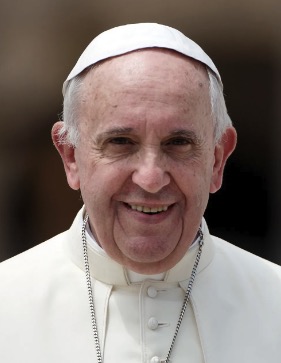

On Primacy and
Domination of Others
23 September 2018 | Santakos Park in Kaunas (Lithuania)
Today’s first reading, from the Book of Wisdom speaks of the persecution of the righteous, those whose “mere presence” annoys the ungodly. The ungodly are described as those who oppress the poor, who have no compassion for the widow and show no respect to the elderly (cf. 2:17-20). The ungodly claim to believe that “power is the norm of justice”. They dominate the weak, use their power to impose a way of thinking, an ideology, a prevailing mindset. They use violence or repression to subject those who simply by their honest, straightforward, hardworking and companionable everyday life show that a different kind of world, a different kind of society, is possible. The ungodly are not content with doing anything they like, giving into their every whim; they do not want others, by doing good, to show them up for who they are. In the ungodly, evil is always trying to destroy good…
Jesus in the Gospel tells us of a temptation of which we have to be very careful: the desire for primacy and domination over others, which can dwell in every human heart. How often has it happened that one people considers itself superior, with greater acquired rights, with more privileges needing to be preserved or gained. What is the antidote that Jesus proposes when this impulse appears in our heart or in the heart of any society or country? To be the last of all and the servant of all; to go to the place where no one else wants to go, where no one travels, the furthest peripheries; to serve and come to know the lowly and the rejected.
If power had to do with this, if we could allow the Gospel of Jesus Christ to reach the depths of our lives, then the “globalization of solidarity” would be a reality. “In our world, especially in some countries, different forms of war and conflict are re-emerging, yet we Christians remain steadfast in our intention to respect others, to heal wounds, to build bridges, to strengthen relationships and to “bear one another’s burdens” (Gal 6:2)” (Evangelii Gaudium, 67).

Who is the Greatest?
23 September 2012 | Castel Gandolfo
After the second prediction of the passion, the disciples began to discuss with one another who was the greatest among them (cf. Mk 9:34), and after the third, James and John asked Jesus to sit one at his right hand and one at his left when he would come into glory (cf Mk 10:35-40). However, there are various other signs of this gap: for example, the disciples do not succeed in healing an epileptic boy whom Jesus subsequently heals with the power of prayer (cf. Mk 9:14-29); and when children are brought to Jesus the disciples admonish them; Jesus on the contrary is indignant, has them stay and says that only those who are like them will enter the Kingdom of God (cf. Mk 10:13-16).
What does all this tell us? it reminds us that, the logic of God is always “different” from ours, just as God himself revealed through the mouth of Isaiah: “For my thoughts are not your thoughts, / neither are your ways my ways” (Is 55:8). For this reason following the Lord always demands of human beings — of all of us — a profound con-version, a change in our manner of thinking and living, it demands that the heart be opened to listening, to let ourselves be illuminated and transformed from within.