24th Sunday of Year B

September 15, 2024

Holy See

YouTube player
The timeline of the scrubber tool allows you to navigate through the video framesand perform a “scrub backwards” up to 12 hours ago.

SOURCE: Vatican News – English

24th Sunday of Year B

YEAR B

Essence of Our Being

In what does the essence of our being consist? Todayโ€™s liturgy gives us an answer. In the first reading, man has three traits according to the plan of God: man is a being “who listens”, who suffers, who experiences the presence and help of God. The Gospel presents Jesus as the perfect fulfillment of the human person: the One Anointed by God, the man of suffering, the servant obedient unto his death, he who loses his life to save that of others. Finally, in the second reading James teaches that in man, faith and works are combined in an indissoluble union to achieve perfect human fulfillment.

P. Antonio Izqeuirdo, L.C., Copyright ยฉ Dicastery for the Clergy

Catechism Cross-References
Catechism
Cross-References

First Reading

Is 50:5-9a

No need to fill out form. Scroll down and look for YELLOW highlights.

Courtesy of Catholic Cross Reference Online

Second Reading

Jas 2:14-18

No need to fill out form. Scroll down and look for YELLOW highlights.

Courtesy of Catholic Cross Reference Online

Gospel Reading

Mk 8:27-35

No need to fill out form. Scroll down and look for YELLOW highlights.

Courtesy of Catholic Cross Reference Online

24th Sunday of Year B

YEAR B

Doctrinal Messages

Man according to God

I think that the definition of the person should not be sought exclusively or mainly in man (although this search should not be excluded), since man does not create himself, nor does he give himself life. The most authentic definition of man may be given by the One who created man and called him from non-life to life, from nothingness to existence. In the third Song of the Servant of Yahweh, a theological-anthropological summary is delineated. The first trait, not reported in the liturgical reading, defines the human being as the being who receives from God the gift of speaking words of life for others, especially for the tired and the oppressed. Then three other traits appear in the song of the liturgical text: 1) Man is the being whom God has enabled to "listen", like the disciples. He is a disciple of God, which entails not only theoretical listening, but also the kind of listening that leads to action, to the implementation of what he has heard, of the original voice that precedes him and that regulates his life. In other words, man is an obedient disciple of God. 2) Man is not a being made for death, as Heidegger would say, but a being determined to suffer. Suffering is the anvil on which man is forged; it is the mold in which his personality is shaped; it is the borderline, the extreme condition that reveals his eternal nature; it is the real and mysterious code of the human condition. 3) Man is the being assisted by God, in whom God shows his constant and effective presence. This divine presence is the rock upon which all the great certainties of man are based; the beacon that guides man in the darkness; the banner that enflames him in his battle to be and to become each day. By way of conclusion, it may be said that those who exclude solidarity, listening, pain, and Godโ€™s presence in their understanding of man, do not really know who man is.

P. Antonio Izqeuirdo, L.C., Copyright ยฉ Dicastery for the Clergy

Christ, the true man

Jesus is first and foremost the Messiah, the One Anointed by God, who subjects his entire being to the mission that God has entrusted to him, going as far as the obedience of the Cross. This is why in Jesus the Anointed One and the Servant of suffering are combined, not like two contrasting titles of his human condition, but like two names of the same person that define and characterize him. Even when Jesus is compared with other figures of the Bible (Moses, Elijah, John the Baptist, Solomon, Jonah...), he remains distinct, unique. As he himself will say, "Here is someone greater than Jonah, here is someone greater than Solomon." On the other hand, in his condition of suffering, Jesus is not self-destructive. He experiences no denial in the face of death; rather, he continues to have absolute trust in God, who will assist him in his pain and will make him rise from the dead. This is why Jesus calls Peter Satan when Peter tries to make him stray from his redeeming mission and his perfect human condition in accordance with God. Finally, in Jesus we find another trait pointed out by James in the second reading: consistency between faith and good deeds. Here we are not talking about the deeds of the law, but the deeds of faith. We could say that Jesusโ€™ self-consciousness coincides with his self-fulfillment

P. Antonio Izqeuirdo, L.C., Copyright ยฉ Dicastery for the Clergy

The Word of truth

The Word of truth is the revelation of God contained in the Gospel, which the Lord has sowed in the heart of every believer. The Christian must be obedient to this Word, so that he not only listens to it, but also puts it into practice. What is this Word of truth? Fundamentally, it is love for God and love for oneโ€™s neighbor, the heart of true Christian religion. Those who fulfill this Word of truth will attain salvation. Man must be true to himself in order not to remain a mere listener, but to put this Word into practice. We must succeed in "doing" the Word of truth. This is what true religion consists in, in the eyes of God.

P. Antonio Izqeuirdo, L.C., Copyright ยฉ Dicastery for the Clergy

24th Sunday of Year B

YEAR B

Pastoral Suggestions

A Person and a Christian

These two realities have traveled down separate paths. It seems to some that one cannot be a complete man if one is a perfect Christian. In anthropological terms this is the dilemma which has existed for centuries between faith and reason, between science and faith. In our cultural and spiritual climate, John Paul II, in keeping with Catholic doctrine, has categorically asserted that "faith and reason are like the two wings with which the human spirit elevates itself to the contemplation of truth." Translated into anthropological terms, it may be stated that "the person and the Christian are like the two wings with which the human spirit elevates itself to the fulfillment of its humanity." Perhaps it may be useful to ask ourselves why in the past, and probably today as well, "being a person" has been separated from "being a Christian", and vice versa. What aspects, what traits of Christian life have succeeded in overshadowing and even alienating us from an authentic conception of the person? What models of Christianity have been presented or are presented in our time, that may seem to others, both Christians and non-Christians, less human or even dehumanizing? The Council declared beautifully that Christ reveals man to man, but we should ask ourselves, as Christians, are we all following Christโ€™s footsteps in this respect? There is no doubt that there is still a long way to go as far as this aspect is concerned. Following this path is a task for each and every Christian.

P. Antonio Izqeuirdo, L.C., Copyright ยฉ Dicastery for the Clergy

The Christian paradox

"Anyone who wants to save his life will lose it; but anyone who loses his life for my sake, and for the sake of the Gospel, will save it." This is the great Christian - in other words, human - paradox. In paradoxical terms, Jesus presents the great battle of human existence. It is the battle between selfishness and self-giving, between the seduction of the ego and the attraction of God, between the worshipping of oneโ€™s own personality and the worshipping of true humility. Normally, but wrongfully so, one thinks that by being selfish he can fulfill himself, he can save his identity, achieve a great personality. But after some time one becomes aware that he is chasing after the impossible, and then comes the frustration of having wasted so much energy uselessly, of realizing that one has gone down the wrong track. The right track implies an emptying of the self in order to fill oneself with God, giving oneself to others disinterestedly without seeking compensations of any kind, the deep humility of those who know and accept that all that they are and have comes from God and must be placed at the service of others. This is the way of salvation. This is the way of our authentic self-fulfillment. This is the way of the Christian paradox. Let us walk together and be happy through Christ. It is the way that he has shown us, his disciples.

P. Antonio Izqeuirdo, L.C., Copyright ยฉ Dicastery for the Clergy

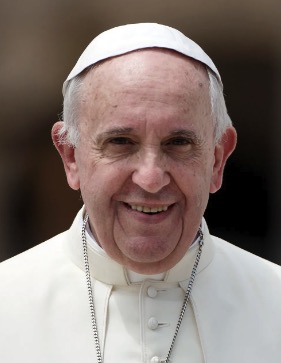
Pope Francis

Who is Jesus?

16 September 2018 | Saint Peter’s Square

Todayโ€™s Gospel passage (cf. Mk 8:27-35) turns to the question that permeates the whole Gospel of Mark: who is Jesus? But this time Jesus himself poses it to his disciples, helping them to gradually address the question of his identity. Before asking them, the Twelve, directly, Jesus wants to hear from them what the people think about him, and he is well aware that the disciples are very sensitive to the Teacherโ€™s renown! Therefore, he asks: โ€œWho do men say that I am?โ€ (v. 27). It comes to light that Jesus is considered by the people as a great prophet. But, in reality, he is not interested in the opinions and gossip of the people. He also does not agree that his disciples should answer the questions with pre-packaged formulas, quoting well-known individuals from Sacred Scripture, because a faith that is reduced to formulas is a short-sighted faith.

The Lord wants his disciples of yesterday and today to establish a personal relationship with him, and thus to embrace him at the centre of their life. For this reason he spurs them to face themselves honestly, and he asks: โ€œBut who do you say that I am?โ€ (v. 29). Today, Jesus addresses this very direct and confidential question to each of us: โ€œYou, who do you say that I am? All of you, who do you say that I am? Who am I for you?โ€. Each person is called to respond, in his or her heart, allowing each one to be illuminated by the light that the Father gives us in order to know his Son Jesus. And it can also happen to us, as it did to Peter, that we passionately affirm: โ€œYou are the Christโ€. However, when Jesus tells us clearly what he told the disciples, that is, that his mission is fulfilled not on the wide road to success, but on the arduous path of the suffering, humiliated, rejected and crucified Servant, then it can also happen that we, like Peter, might protest and rebel because this contrasts with our expectations, with worldly expectations. In those moments, we too deserve Jesusโ€™ healthy rebuke: โ€œGet behind me, Satan! For you are not on the side of God, but of menโ€ (v. 33).

READ MORE

Following Jesus

16 September 2012 | Beirut City Center Waterfront

On this Sunday when the Gospel asks us about the true identity of Jesus, we find ourselves transported with the disciples to the road leading to the villages around Caesarea Philippi. Jesus asks them: โ€œWho do you say that I am?โ€ (Mkย 8:29). The moment he chose to ask this question is not insignificant. Jesus was facing a decisive turning-point in his life. He was going up to Jerusalem, to the place where the central events of our salvation would take place: his crucifixion and resurrection. In Jerusalem too, following these events, the Church would be born. And at this decisive moment, Jesus first asks his disciples: โ€œWho do men say that I am?โ€ (Mkย 8:27). They give very different answers: John the Baptist, Elijah, one of the prophets! Today, as down the centuries, those who encounter Jesus along their own way give their own answers. These are approaches which can be helpful in finding the way to truth. But while not necessarily false, they remain insufficient, for they do not go to the heart of who Jesus is. Only those willing to follow him on his path, to live in fellowship with him in the community of his disciples, can truly know who he is. Finally, Peter, who had dwelt with Jesus for some time, gives his answer: โ€œYou are the Christโ€ (Mkย 8:29). It is the right answer, of course, but it is still not enough, since Jesus feels the need to clarify it. He realizes that people could use this answer to advance agendas which are not his, to raise false temporal hopes in his regard. He does not let himself be confined to the attributes of the human saviour which many were expecting.
READ MORE

SOURCE: The Holy See Archive at the Vatican Website ยฉ Libreria Editrice Vaticana