Fr. Austin Fleming
2nd Sunday of Easter B


Doubt and loss can ultimately lead to a deeper faith in Jesus and his grace and mercy.
- 00:00 Doubting Thomas was both a doubter and a believer, and his doubt ultimately led to deeper faith in Jesus.
- 01:41 Jesus’ death was not meant to be painful or inglorious, it wasn’t supposed to end like this.
- 02:00 Thomas, like many today, struggled to maintain faith despite a long history of belief.
- 02:29 Life doesn’t always go as planned, and sometimes we face unexpected losses and disappointments.
- 03:09 Unexpected illness, relapse, loss, broken promises, and painful memories – it wasn’t supposed to end this way.
- 04:22 Thomas’s initial doubt and demand for tangible proof were transformed into a confession of faith as Jesus invited him to confront and accept his loss.
- 05:41 Life continues after death, prompting us to examine our losses and disappointments, and to not let them weaken our faith.
- 06:52 Trust in Jesus, even in times of doubt and loss, as he invites us to believe in him and receive his grace and mercy.
Homiletic Pastoral Review
2nd Sunday of Easter B

Basilica of the National Shrine
2nd Sunday of Easter B

Dominican Blackfriars
2nd Sunday of Easter B

Bishop Robert Barron
2nd Sunday of Easter B



Featured Podcasts
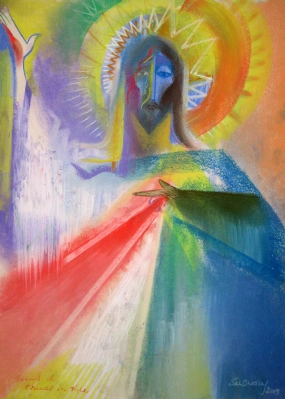
Divine Mercy
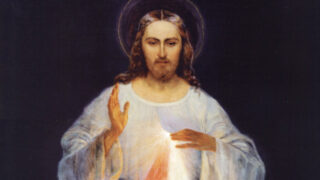
2018 – On this Second Sunday of Easter, Divine Mercy Sunday, we remember the dedication of this day by Saint John Paul II in honor of St. Faustina’s vision of Christ, in which the Lord’s heart radiated forth with divine mercy for the world. But what does mercy mean? It designates the suffering of the heart, a type of compassion, a deep, loving identification with people in their suffering. It is the characteristic of God, for God is love. Nothing in the world would exist if it were not, at every moment, loved into being by God—a great act of tender mercy. How is this love made manifest in us? Precisely through following God’s commands and through forgiveness.

Resurrection and the Love of This World
2009 – From the time of Marx, Feuerbach and Freud, we’ve heard the critique that religion is a wish-fulfilling fantasy, a game of “pie in the sky when you die.” The readings for this second Sunday of Easter give the lie to this criticism, for they show how those who were convinced of Jesus’ resurrection were also deeply commited to a more just society.
2nd Sunday of Easter B

God’s action in our lives is always one of peace, and through faith and belief in Jesus as the Son of God, we can receive eternal life and the infinite mercy of God, bringing us peace and hope.
- 00:00 🙏 Jesus appears to the Apostles on Easter Sunday, offering peace and the Holy Spirit, reminding us that God’s action in our lives is always one of peace.
- 01:14 🙏 God is always with us to console, strengthen, and sustain us, filling us with his peace, known and maintained through our growth in faith.
- 01:57 🙏 Remain in the community of faith, be open-minded, and believe that Jesus is the Son of God for eternal life.
- 02:46 🙏 Our faith in the infinite mercy of God gives us peace and hope in eternal life, which is the most important thing we need to nurture and grow in.
- 04:09 📜 God appeared to Saint Faustina in the 1930s and gave her great visions.
- 04:27 🙏 Jesus is mercy, and the more connected we are to that reality, the happier we will be, with a schedule of events for the day.
- 04:57 🙏 Receive the special gift of plenary indulgence, removing all temporal punishment due to sin, by receiving sacramental confession and the Eucharist with no attachment to sin.
- 05:41 🙏 Embrace the eternal reality of Easter, grow in faith and hope, and seek God’s mercy and forgiveness.
Fr. Charles E. Irvin
2nd Sunday of Easter B

Receive the Holy Spirit
We just heard Jesus declaring to His apostles: Peace be with you. As the Father has sent me, so I send you.” After saying this he breathed on them and said to them, “Receive the Holy Spirit; for those whose sins you forgive, they are forgiven; for those whose sins you retain, they are retained.”
The importance of the work of the Holy Spirit needs to be seen. St. John in his gospel account tells us that as He expired Jesus “handed over His spirit.” What, then, of the Holy Spirit and Jesus?
Fr. Joe Jagodensky, SDS
2nd Sunday of Easter B
“Doubting Thomas?” Think Again
An undeserved handle to conveniently categorize and contain him in our illusionary way of controlling people. Why don’t we call Peter “Two-timing Peter” for all of his back and forth commitment to Jesus? Or call him “Miser Matthew.” Because of his previous trade, he probably kept a little on the side just if this Messiah thing didn’t work. Nope. It’s only “Doubting” Thomas. The man who wanted the questions were asked first instead of accepting the answers to all of life’s inquiries. I think Thomas was a down-to-earth kind of guy. Jesus is crucified, and are his fellow friends letting their imaginations run wild? Were they drowning their sorrows by drinking that cheap wine again, thinking about a resurrection?
2nd Sunday of Easter B


The Church community as the central place for God’s Mercy
Divine Mercy Sunday is a time for the Christian community to reflect on God’s mercy and stand with Him in a changing world.
- 00:00 📜 Divine Mercy Sunday is a time to focus on the values of the Christian community and the changing world.
- 04:56 🌍 The world’s largest and most powerful nations often act independently.
- 05:08 🙏 God’s mercy is available to all, and the community discusses the importance of standing with Him.
- 06:47 🙏 Divine Mercy Sunday is a time to reflect on the vision of Jesus and to pay homage to it.
Fr. George Smiga
2nd Sunday of Easter B

Marks of Wounds and Glory
There is not a verse of the scriptures that is wasted. Christians have always followed the example of the Jewish rabbis in believing that there is no verse of the scripture that is accidental. Every verse, every word, has significance for our lives. This is certainly true of today’s gospel. Jesus appears in his risen body to the disciples. Yet that body bears the marks of his passion, the nail prints in his hands, the gash in his side. Now the presence of those marks might at first seem to be simply the disciples describing what they saw. But the scriptures pay great attention to the marks. They even invite Thomas to touch them. From this we can be assured that their presence is much more then accurate description. They are meant to carry a message, a truth for our lives. The truth is this: there is power and life in woundedness.
Wounds and Scars
A wound and a scar are not the same. A wound is an open gash bleeding and painful. A scar is a wound that has been healed. So, a scar is a sign that blood and pain are over. The scars in the risen body of Christ testify that his suffering is done, that his wounds have been healed by the power of God. The marks of Jesus’ passion remain on his body because they are now part of who he is. Jesus shows those scars to the disciples because he wants them to understand that his suffering and resurrection are connected. Jesus is not simply one who has been raised from the dead. Jesus is one who has suffered and has been raised from the dead. The scars on his glorified body give witness to the truth that pain is not wasted, and wounds can be overcome.
Fr. Anthony Ekpunobi, C.M.
2nd Sunday of Easter B

Msgr. Joseph Pellegrino
2nd Sunday of Easter B

Our Doubts and His Mercy

Perhaps there are some people reading this who are experiencing intense doubt. The doubts that we suffer at various times of our lives, are not all that bad after all. The experience of doubt can lead us to take a more determined step into faith. No, not a step, a leap, a leap into the arms of the Lord who loves us with all our human limitations, including those that might question his very love. Maybe that is why Pope St. John Paul II declared that the Sunday that we reflect on doubts and faith should also be
the Sunday that we recognize the overwhelming Divine Mercy of the Lord.
Msgr. Charles Pope
2nd Sunday of Easter B
We live in times in which mercy, like so many other things, has become a detached concept in people’s minds, separated from the things that really help us to understand it. For indeed, mercy makes sense and is necessary because we are sinners in desperate shape. Yet many today think it unkind and unmerciful to speak of sin as sin. Many think that mercy is a declaration that God doesn’t really care about sin, or that sin is not a relevant concept.
Let’s look at four teachings on mercy, God’s perfect mercy.
Bishop John Louis
2nd Sunday of Easter B

Fr. Michael Chua
2nd Sunday of Easter B

Life Issues
2nd Sunday of Easter B

Peace be unto you.
Second Sunday of Easter B
Frank Enderle
We know the sadness, the defeat, the powerlessness and the disappointment that the Apostles felt on the day that the Lord died on the Cross. On Easter Sunday, the presence of the Risen Christ among them calmed their fears and their faith was strengthened once again.
No Grudges
2nd Sunday of Easter
Divine Mercy Sunday
Antonio P. Pueyo
When I contemplate the image of the Divine Mercy, I get the feeling that Jesus is looking into the deep recesses of my heart and despite what He sees there, He forgives and He accepts me.
Meeting the Risen Lord
2nd Sunday of Easter (B)
Antonio P. Pueyo
Peter jumped into the water and swam to Jesus on the shore. His attitude is like that of a child who gets excited at seeing his mother coming home. There is no hesitation or conditions. Only one thing matters – the beloved is here. We can compare Peter’s attitude to that of Thomas. Thomas doubted and he presented conditions, “Unless I see the marks of the nails in his hands and put my finger into the nailmarks, and put my hand into his side, I will not believe” (Jn. 20:26).
Faith
2nd Sunday of Easter
Douglas McManaman
95% of the things we do every day are based on faith—not supernatural faith, but natural faith, which is “trusting in what somebody tells you because you have evidence that the speaker is well informed about the subject and is honest.” For example, we have faith in our family doctor that the prescription he writes for us is not going to kill us. Christian faith is a grace that gives us the power to believe what God has revealed about Himself and which exceeds the grasp of human reason. But if a person is given that grace, he or she has to choose to cooperate with it. But some people find that very difficult and even refuse, yet they have no problem trusting the media, their colleagues, their bosses, their friends, etc.
The Encouragers
Proclaim Sermons
Life includes plenty of sources of discouragement, but encouraging others is a true Christian ministry. We can encourage others by building them up, praying for them, stating the vision and offering direct words of encouragement.
Doubting Thomas’ Questions Help All of Us See (Easter 2)
Proclaim Sermons
The value of doubt is that it can lead us toward a resilient faith that can sustain us in good times and bad. Doubting Thomas proved that by refusing to believe the seemingly outrageous story of the resurrection of Jesus unless he had proof. And Jesus was happy to show Thomas the truth, just as Jesus is happy to lead us to eternal truths.
SOURCE: LifeIssues.net Homily Archive
Fr. Phil Bloom
2nd Sunday of Easter B

MeToo & Need for Mercy
Bottom line: We need mercy because we have strayed from what’s deepest in our hearts. In doing so we have hurt others and we have hurt God. The Me Too movement dramatized the moral law written on the human heart.
RELATED HOMILIES:
2015: Disciples and Disciple Makers Week 2
2012: Divine Mercy in a Time of Crisis
2009: The Eighth Day
2006: Mercy in Action
2003: The Truth Is Out There
2000: A Requisite for Faith
1997: Room for Doubt
2nd Sunday of Easter B

The Joy of Faith in Jesus
Following the revelations of Jesus to St. Faustina in Poland, we call today Divine Mercy Sunday. We celebrate the mercy of Jesus in a special way today. We prepared for this celebration by a novena praying the Chaplet of Divine Mercy beginning on Good Friday. We are reminded of the image of Divine Mercy by our second reading today (Year B) stating that Jesus came by water and blood (1 John 5:6). Jesus said to St. Faustina,
“Tell ailing mankind to draw close to my merciful heart and I will fill them with peace. (Diary of St. Faustina, 1074)
Mankind will not find consolation until it turns with confidence to my mercy and love.” (Diary of St. Faustina, 300)
This reminds me of the Gospel today. The disciples were gathered in the Upper Room and were afraid. But Jesus came to them with his message of peace, “Peace be with you.” (John 20:19) They were no longer afraid. It is like that for us too. We will not find peace until we find it in Jesus. Jesus’ message for each of us today is to find our peace in him. The Gospel was written, “that you may believe that Jesus is the Messiah, the Son of God, and that through this belief you may have life in his name.” (John 20:31). We can have life only in Jesus.
Fr. John Kavanaugh, S.J.
2nd Sunday of Easter B

Community Transformations
We have not a few liberals and conservatives who act as if the presence of the other side is a contaminant in the church. There have been wars and persecutions mounted in the name of dogma. There have been excommunications and interdicts in the name of right practice.
Divisions have wounded the church and injured our witness in faith. The passion for being right has served the cause of ego at least as much as it has served the cause of Christ.
Bishop Frank Schuster
2nd Sunday of Easter B
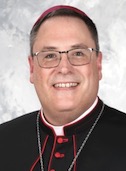
Blessed by a Wounded Hand
A takeaway from our Gospel reading is that the Risen Lord can transform our wounds into glorified wounds, holy wounds, which can become a source of strength and healing to others. We all know people like that. Who are these people in your life? We all want to be like them. They demonstrate to us that through a relationship with Jesus, we can gain strength from the illnesses that inflict us, or accidents that befall us, or even injustices committed against us, as much as we can learn from our own mistakes. Our transformed wounds can then become a source of strength and motivation, giving hope and healing to others. We can give hope and healing to others when we let Jesus transform our wounds into his glorified wounds.
Fr. Michael Cummins
2nd Sunday of Easter B
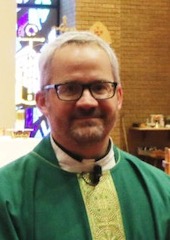
Divine Mercy
very Sunday when we gather for the Mass we profess the creed. What Thomas says in today’s gospel, “Unless I see the mark of the nails…” is, in fact, a non-creed and it is a non-creed professed by many people in our world today – not necessarily evil people but people who are prisoners of themselves and of their own sensations. Thomas, at this moment, was egocentric and lost in himself because he was lost in his own pain and crushed hope. He was focused inward – solely on himself. Even when the other disciples say, “We have seen the Lord!” he will not believe because he is so imprisoned within himself. Thomas will not even entertain the possibility. Egocentrism always leads one to unbelief – one becomes a prisoner to ones own sensations and cannot believe in anything else.
2nd Sunday of Easter B