

31st Sunday of Year B
November 3, 2024
NEW FEATURE: The AI Assistant at the bottom right corner
has been specifically trained for this website.

SOURCE: The Jesuit Post
2021 HOMILY – We should prioritize our love for God and seek His guidance to transform our lives and effectively serve others.

Core Teachings
Q: What is the Shema and why is it significant?
A: The Shema is the most important Jewish prayer, framing the entire faith of Christianity by stating that God is our Lord alone and we must love God above all else and love our neighbor as ourselves.
Practical Application
Q: How can one practically apply the teachings of the Shema?
A: To love God and neighbor, one must listen to God's voice in daily life, give God space to speak in prayer, and allow God to transform them, drawing closer to the Kingdom God wants built.
Challenges
Q: What struggle do Christians face regarding the Shema?
A: Despite its short and deeply meaningful nature, Christians still struggle to understand what it truly means to serve God and neighbor in practice.
Practical Steps for Spiritual Growth
Q: How can I actively listen for God's voice in my life?
A: Engage in regular prayer to open yourself to God's guidance and transform your life according to His will.
Q: What is the core principle of faith according to the video?
A: Recite and internalize the Shema, a foundational Jewish prayer that emphasizes loving God above all else and loving your neighbor as yourself.
Building God's Kingdom
Q: How can I contribute to building God's Kingdom?
A: Focus on loving God with your entire being and loving your neighbors as yourself, which Jesus identified as the greatest commandments.

SOURCE: Archdiocese of Brisbane Homilies

2021 HOMILY – The essence of faith lies in loving God and our neighbors, prioritizing divine love above all else to address the challenges of our self-centered worldview.
- 00:00 A sincere question from a Scribe in the Gospel highlights the importance of seeking knowledge and understanding rather than trying to trap others.
- 00:47 Jesus’ clear answer about loving God and neighbor eliminates the need for further questions, highlighting the essence of faith.
- 01:19 God is the ultimate priority in our lives, surpassing our own importance.
- 01:45 Recognizing that God comes first helps us see reality clearly and confront the ecological and climate crises rooted in our self-centered worldview.
- 02:18 Love God wholeheartedly, as He embodies love, and let that love guide all your actions.

SOURCE: Fr. Peter Hahn Archive of Homilies
2018 HOMILY - Keeping the reality of death in mind encourages us to live each day with purpose, love God and our neighbors, and strive for eternal happiness by following His commandments and the teachings of the Church.
- 00:00 Keeping the reality of death in mind helps us gain perspective on life and aspire to eternal glory with the saints.
- 01:02 Live each day as if it's your last, remembering the fleeting nature of worldly things and the eternal reality that lies ahead.
- 01:20 Love God wholeheartedly and your neighbor as yourself to attain eternal happiness.
- 01:50 God's commandments are given not as burdens but as guidance for a fulfilling and joyful life, emphasizing love for God and neighbor.
- 02:46 God's mercy through Christ empowers us to strive for happiness by following His commandments and the teachings of the Church, even amidst our failures.
- 03:33 Saints exemplify holiness and inspire us to live a life of virtue and faith.
- 03:34 November invites us to remember the deceased while actively building God's kingdom through love, work, and civic responsibility, especially as we approach election day.
- 04:30 Follow Christ and His Church over political ideologies, prioritizing faith and morals in our actions and votes.
- The priest reassures the audience that he will not be discussing politics.
- We have a moral duty to follow Christ and His Church rather than political ideologies, ensuring our votes align with fundamental teachings on faith and morals, particularly opposing abortion and euthanasia, while striving to build God's kingdom on earth.
Spiritual Growth
Q: How can I maintain proper perspective on life and death?
A: Keep the reality of death before your eyes at all times to gain proper perspective on eternal life and the transience of earthly things.
Q: What is the core of Christian faith?
A: Love God with all your heart, soul, mind, and strength, and love your neighbor as yourself, which is the summation of everything the faith teaches.
Living God's Commandments
Q: Why should I follow God's commandments?
A: The commandments are for our own good and happiness, helping us have a long and happy life and receive an abundance of God's blessings.
Q: How does God respond when we fail to follow the commandments?
A: God's mercy fills us with His love, and through Christ's sacrifice, we can still live and be happy even when we fail.
Church Guidance
Q: How can the Church help me in my spiritual journey?
A: The Church and its teachings guide us into true and lasting happiness, helping us become the persons God wants us to be and become Saints.
Q: How should I approach political decisions as a Christian?
A: Follow Christ and His Church, not a political party or ideology, recognizing that no party or candidate is ever pure and there can be different interpretations of Church teaching.
Church Teachings and Politics
Q: Is it sinful to vote for candidates who support abortion?
A: According to the 2003 voter guide by Cardinal Joseph Ratzinger (now Pope emeritus Benedict), it is sinful to knowingly vote for any political program or individual that contradicts the church's basic fundamental teachings on issues like abortion, euthanasia, embryonic stem-cell research, and marriage.
Q: Should Catholics prioritize church teachings over political party loyalty?
A: The church has a solemn moral duty to follow Christ and His teachings, not political parties or ideologies, as no party or candidate is ever pure.
Controversial Church Doctrines
Q: Why does the church focus on death and eternity?
A: The church celebrates All Saints and All Souls in October/November to remind us of death and eternity, pointing to the ultimate reality of eternal life in heaven and suffering in purgatory, to give proper perspective on life's fleeting things.
Q: What are the church's "non-negotiable" teachings?
A: The church's teachings on abortion, euthanasia, embryonic stem-cell research, and marriage are considered non-negotiables that cannot be supported in any circumstance, according to the 2003 voter guide by Cardinal Joseph Ratzinger.
Marriage and Morality
Q: What is the church's stance on same-sex marriage?
A: The church teaches that marriage is the union of man and woman, and it is sinful to knowingly vote for any political program or individual that contradicts this teaching.
Q: How can one become a saint despite failing to follow church teachings perfectly?
A: While we will fail in striving to follow church teachings, Christ's sacrifice fills us with God's mercy, and we become saints by integrating the teachings into our lives and becoming the persons God wants us to be.


SOURCE: Fr. Kevin’s Homilies
2021 HOMILY – True love requires intentional actions and commitment, which can transform emotions and relationships, ultimately fostering a more harmonious world.
- 00:00 A woman seeks revenge on her husband for past hurts, prompting a psychologist to devise a clever plan.
- 00:32 Pretend to shower your partner with love and kindness before delivering a painful breakup to maximize emotional impact.
- 01:34 After realizing her true feelings, a woman chooses love over divorce, highlighting that our actions shape our emotions and beliefs about love.
- 02:28 Loving God may be easy, but true love for our neighbors requires action and commitment, even when it’s challenging.
- 03:20 Treating others with kindness can transform feelings of dislike into love, creating a more harmonious world.
- 03:47 Love is a practice rooted in recognizing our shared divinity, leading to genuine affection through acts of kindness.
- 04:54 Embrace love as a guiding force to transform yourself and the world around you.
Bishop Robert Barron


SOURCE: Word on Fire
2021 SERMON - Friends, God is not satisfied to be in the background of your life. The Lord your God is the Lord alone, so love him with everything you've got—your whole heart, your whole soul, and all your strength.
- 00:00 Jesus identifies the Shema, "Hear, O Israel, the Lord our God is Lord alone," as the greatest commandment, emphasizing its foundational importance in faith and morality.
- 01:47 Loving God with all your heart, soul, and strength is the essence of faith, emphasized in the Shema, which Jesus identifies as the fundamental command.
- 03:06 Listening to a higher voice, rather than asserting one's own autonomy, is essential for understanding biblical faith and avoiding the pitfalls of modernity.
- 04:50 Secularism undermines true belief in God, reducing Him to a vague notion, while genuine faith requires wrestling with His demands as the central authority in our lives.
- Secularism troubles society by minimizing the significance of God to a mere vague acknowledgment rather than a serious belief.
- Wrestling with God involves seriously engaging with His demands and recognizing Him as the singular, commanding presence in our lives, contrary to the distant view of God in modernity.
- 07:27 The belief in one God emphasizes that nothing else can be considered absolute, rejecting the divinity of nations, politicians, and nature.
- 08:48 Only the Lord God deserves our worship and love, encompassing our entire being, emotions, and spiritual essence.
- 10:07 Every aspect of our being should be directed to God, who is the ultimate source of existence and not in competition with the world around us.
- 11:49 Experiencing beauty and joy in life reflects God's presence and the Shema calls for total love and devotion to the one true God.
- Experiencing beauty and joy in life, from a baseball game to love, reflects God's creative presence and anticipates the ultimate fulfillment in heaven.
- The Shema emphasizes that the Lord is the one true God, calling for total love and devotion to Him.
Core Religious Concepts
Q: What is the Shema and why is it important?
A: The Shema is the most basic commandment in Israelite religion, found in Deuteronomy 6, stating "Hear, O Israel, the Lord our God is Lord alone" - a fundamental declaration of monotheism and absolute devotion to God.
Q: How does Aquinas define God?
A: Aquinas describes God as the sheer act of 'to be' itself, the infinite source of all created matter and energy, not competing with creaturely things but shining through all things.
Practical Application of Faith
Q: How should one love God according to the Shema?
A: Love God with your whole heart, whole soul, and all strength, directing every gift and capacity towards God, seeing and appreciating Him in and through all things.
Q: What does it mean to be a "wrestler with God"?
A: Being a wrestler with God, like Abraham and the people of Israel, means taking God's demands seriously, even when they don't make sense, and engaging actively with one's faith.
Religious Identity and Practice
Q: Who is considered the founder of Israel and why?
A: Abraham is the founder of the holy people Israel because he listened to a higher voice beyond his own autonomy, exemplifying the fundamental aspect of biblical religion.
Q: How does Paul relate the Church to Israel?
A: Paul states that the Church is the new Israel, meaning all followers of Christ are meant to be wrestlers with God, continuing the tradition of the people of Israel in their faith practice.
Religious Exclusivity
Q: Is the Shema promoting religious intolerance?
A: The Shema's declaration that "the Lord your God is one" implies that no other entity can be absolute, potentially challenging other religious beliefs and promoting exclusivity of the Israelite God.
Q: Does the Shema contradict religious pluralism?
A: By stating that one should "love the Lord your God" with whole heart, soul, and strength, the Shema prioritizes the God of Israel above all else, potentially conflicting with inclusive religious views.
Divine Supremacy
Q: Does the Shema diminish human autonomy?
A: The emphasis on "listening" to God's voice beyond one's own autonomy and self-assertion suggests a subordination of individual will to divine authority.
Q: Is the Shema undermining secular values?
A: The assertion that nothing else can be absolute, including country, politician, power, or human being, challenges secular ideals and political systems that don't prioritize religious authority.
Metaphysical Claims
Q: Does the Shema contradict scientific understanding?
A: Describing God as the "sheer act of 'to be' itself" that lies behind all things may conflict with scientific explanations of the universe's origin and nature.
Q: Is the Shema promoting a controversial view of reality?
A: The idea that God can be seen and appreciated "in and through all things" as the "source of all creation" presents a metaphysical worldview that may be incompatible with materialistic perspectives.

SOURCE: Word on Fire
2024 SERMON – In the first reading, taken from the sixth chapter of Deuteronomy, we hear the “shema,” a prayer fundamental to Jewish theology and spirituality. And in the Gospel, when one of the scribes asks Jesus which is the greatest commandment, the Son of God, the Torah made flesh, recites the same prayer.
Deacon Peter McCulloch

On Two Feet and Two Wings
This discussion guide has been generated by the WORD THIS WEEK'S Catholic AI Assistant based on Deacon McCulloch's homily.
Introduction to the Commandments
1. Discuss the surprise element in discovering there are 613 commandments in the Torah.
2. Why do people often only think of the Ten Commandments?
3. How do these additional commandments impact Jewish and Christian beliefs?
The Most Important Commandments
4. Explore why Jesus identifies two commandments as the greatest.
5. Why is never mentioning only loving God, significant?
6. Discuss how loving God and loving neighbor complement each other, citing 1 John 4:7-8.
Insights from Early Christian Saints
7. Reflect on St. Basil the Great's view that love for people stems from love for God.
8. How does St. Catherine of Siena’s dialogue with God deepen our understanding of loving our neighbor?
Defining ‘Neighbor’
9. Discuss Henri Nouwen’s perspective on who our neighbor truly is.
10. Using the parable of the Good Samaritan, analyze why the Samaritan is considered the neighbor.
11. How does this redefine our understanding of neighbors in everyday life?
Living Out Neighborly Love
12. Reflect on Mother Teresa’s story of the Hindu family sharing with a Muslim family.
13. What can we learn about love and generosity from this story?
Practical Steps to Love
14. Discuss CS Lewis's advice to act as if we love our neighbors and how this can lead to genuine affection.
15. Reflect on Karl Rahner's suggestion to engage in community service as a way to deepen faith and love.
Conclusion: The Goal of Pure Love
16. What does it mean to love with a pure and selfless love, and how does this reflect God’s love for us?
17. Why is it said that loving God and neighbor allows us to "walk with two feet" and "have two wings to fly to heaven"?
Reflection Questions
18. What steps can we take to ensure our love for others is genuine and selfless?
19. How do you plan to incorporate these teachings into your daily life?
20. Can you share a personal experience of a time when you found it difficult to love your neighbor?
Takeaways
21. Emphasize the importance of viewing love for God and neighbor as inseparable.
22. Encourage practical, everyday actions that reflect this dual-commandment approach to love.
23. Inspire commitment to a lifetime practice of love without expectation of return.
Deut.6:2-6; Heb.7:23-28; Mk.12:28-34
2021 EXCERPT: In his book Mere Christianity, CS Lewis says: ‘Don’t waste time bothering whether you “love” your neighbour; act as if you did. As soon as we do this,’ he says, ‘we find one of the great secrets. When you are behaving as if you loved someone, you will soon come to love them.’
The great theologian Karl Rahner once said something similar. A student who was going through a crisis of faith asked him for some books to read to regain his faith.
‘Forget books,’ Rahner said, ‘go out and join a group of Christians who help the poor.’

The Golden Rule
This discussion guide has been generated by the WORD THIS WEEK'S Catholic AI Assistant based on Deacon McCulloch's homily.
Introduction
1. Reflect on the current state of the world with respect to violence and war. How can the universal call to love our neighbors serve as a countermeasure to these issues?
2. Discuss how different major religions encapsulate the idea of loving one's neighbor through the Golden Rule.
Scriptural Foundation
3. Analyze the Gospel passage where Jesus outlines the two greatest commandments: loving God and loving your neighbor. How do these commandments summarize the Christian faith?
4. Explore why Jesus presents two commandments and how they are interconnected, as explained in 1 John 4:7-8.
Loving God and Neighbor
5. Discuss St. Basil the Great's perspective on the relationship between loving God and loving others. Why is it crucial to love God first?
6. Reflect on personal experiences where love for God has translated into love for others, even when challenging.
Application of the Golden Rule
7. Understand the Golden Rule as a standard for living and why St. James refers to it as the Royal Law.
8. Debate reasons why people today might ignore the call to love their neighbors.
Identifying Our Neighbors
9. Consider Pope St. Paul VI's broad interpretation of who qualifies as our neighbor, highlighting the inclusion of enemies, different faiths, and societal classes.
10. Discuss ways in which group members can identify and connect with their own neighbors in their daily lives.
Practical Steps to Love with the Heart of Christ
11. Examine St. Thérèse of Lisieux’s approach to dealing with difficult relationships. How does her method exemplify love in action?
12. Share personal experiences of overcoming dislike or animosity towards someone using Thérèse’s strategy of prayer, praise, and kind acts.
Recognizing Jesus in Others
13. Delve into the significance of seeing Jesus in others and how it transforms interactions.
14. Share methods for cultivating the ability to recognize Jesus in diverse people and situations.
Jer.31:7-9; Heb.5:1-6; Mk.10:46-52
2024 EXCERPT: With so much violence and war around our world today, it’s worth remembering that the call to love our neighbour is actually universal.
They express it differently, but all the major religions – Christianity, Islam, Hinduism and Judaism – share the same Golden Rule to love your neighbour.
It’s there again in today’s Gospel, where Jesus spells out his two greatest commandments. The first, he says, is to love our Lord God with all your heart, soul, mind and strength. And the second is to love your neighbour as yourself.
Fr. Andrew Ricci

Loving God and Neighbor
2021 PODCAST: Jesus cites two passages of the Old Testament to teach what are the Great Commandments of loving God and Neighbor. As we put this love into practice, we will be drawn into an ever-increasing dynamic of communion, forgiveness and service.
Fr. Austin Fleming


The Law of Love
2018 EXCERPT: When the bible speaks about love you can be sure of on thing: it’s not talking about romantic love… There’s a reason why the scriptures speak of love as law, why Jesus speaks of love as a commandment. I can promise to obey a law. I can pledge to keep a commandment. But I can neither promise nor pledge to maintain an emotion or keep a feeling alive.
Dominican Blackfriars

Keeping Things Together
Background and Context
1. Why Authority Matters
Understanding why the religious authorities questioned Jesus's authority.
- Why were the Pharisees, Sadducees, and Herodians concerned with Jesus's actions in the Temple?
- How did Jesus’s actions challenge their traditional authority?
2. The Role of the Temple
Discussion of the Temple as a symbol of religious and social norms.
- How had the Jewish priests interpreted God’s law regarding sacrifices and worship?
- What issues did Jesus and Jeremiah have with the way the Temple was being used?
3. Polarization in Religion
Consider the effects of maintaining one point of view without considering others.
- What are examples of a "polarized mind" both in the context of the sermon and today?
- How did the polarization affect the religious authorities' interactions with Jesus?
Key Teachings and Themes
1. Jesus's Core Teaching: Love of God and Neighbor
Discuss the core commandments Jesus taught.
- What was the significance of Jesus quoting the Shema from Deuteronomy?
- How did Jesus emphasize the importance of loving one’s neighbor?
2. Combining Spiritual and Earthly Love
Understanding Jesus's unification of divine and human love.
- Why was it important for Jesus to combine love for God with love for neighbor?
- How does Jesus represent the union of the divine and human?
3. Concrete Examples of Love in Action
Explore how these teachings are applied in everyday life.
- See how the Good Samaritan parable exemplifies love of neighbor.
- How did Jesus demonstrate love in action through his life and ministry?
Personal Reflection and Change
1. Response of the Scribe
Study the reaction of the scribe compared to other authorities.
- In what ways did the scribe’s response differ from other religious leaders?
- What qualities made the scribe open to Jesus's teachings?
2. Reevaluation of Practices and Beliefs
Reflecting on personal beliefs and practices in light of Jesus's commandment.
- How can we avoid becoming fixated on our own views and be open to others?
- What personal changes can we make to better align with loving God and neighbor?
3. Implications for the Church
Consider how the Church can embody these teachings.
- How can the Church address tendencies to polarize and instead bring people together?
- What role can the Church play in implementing Jesus’s teachings in the modern world?
Action Points
1. Practicing Love
- Identify concrete steps to love both God and neighbor in daily life.
- How can we, like the sympathetic scribe, listen and enact positive changes?
2. Community Engagement
- Discuss how small groups can model inclusivity and unity in the Church and beyond.
- Develop community projects focused on supporting and loving neighbors in need.
These discussion points aim to provoke reflection, dialogue, and the practical application of Jesus’s teachings in both personal and communal contexts.

2021 EXCERPT: The Church is always in danger of being riven by polarising tendencies where groups are fixated on one idea and will not give room or listen to others’ views. We need to see how Jesus brings together rather than separates; makes love of neighbour closely linked to love of God. And then, we can admire, too, the scribe of today’s Gospel. He was not imprisoned with his own rigid views but was willing to listen carefully to and approve what Jesus said. Even a scribe could change and enter the Kingdom of heaven. What Jesus said to us of the Good Samaritan could also be said of the sympathetic scribe: “Go and do likewise.”
Fr. Charles E. Irvin
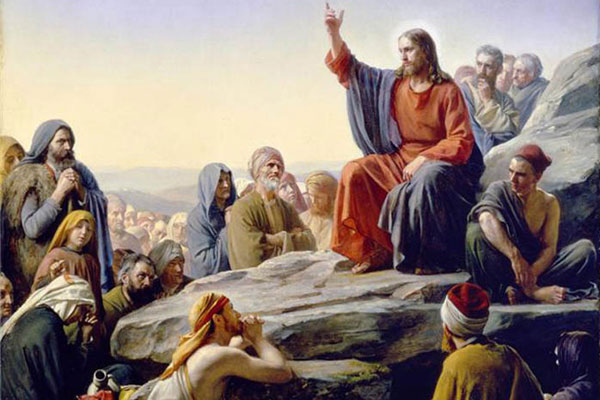
Hear O Israel, the Lord is Our God, the Lord Alone!
Introduction
The sermon, "HEAR O ISRAEL, THE LORD IS OUR GOD, THE LORD ALONE," emphasizes the importance of returning to a core understanding of God’s sovereignty and purpose for humanity. It navigates through historical and cultural shifts, urging believers to remain steadfast in their faith and values despite societal changes.
Discussion Questions
Historical Context
- What significance did the cry "HEAR O ISRAEL, THE LORD IS OUR GOD, THE LORD ALONE" hold for the Israelites?
- How did this proclamation serve as a call to return to God's original intent for the Jewish people?
Conceptualizing God
- Discuss the challenges of concretizing ideas about God. Why might attempts to limit God with human concepts fail?
- Reflect on historical instances where perceptions of God were tied to specific places or institutions. How did these views impact Jewish society?
National Purpose and Values
- Examine how losing sight of divine purpose can deform a nation’s identity and values. Can you think of examples where this might be happening in today’s world?
- What role does accepting God's lordship play in understanding and achieving a collective national purpose?
Christian Understanding
- In what ways does the Eucharist symbolize sharing in God’s divinity and purpose?
- How can love of neighbor as a reflection of God’s love change the way Christians approach their daily lives?
Sermon on the Mount Reflections
- Discuss the Beatitudes mentioned (e.g., "Blessed are the poor in spirit") and their relevance to modern believers.
- How do these teachings contrast with contemporary societal values like power, control, and possession?
Cultural Critique
- Evaluate the sermon’s critique of substituting human dominion for God’s order. Why might this lead to societal disorder and loss of values?
- Consider the symbolism of money in society as mentioned in the sermon. How does it reflect or distort divine principles?
Overcoming Despair
- How can believers maintain hope and resist despair, according to the sermon?
- Reflect on historical or personal examples where reformation and adherence to God's values led to transformation.
Conclusion
Reaffirm the call to acknowledge God’s sovereignty: HEAR O ISRAEL, THE LORD IS OUR GOD, THE LORD ALONE. Emphasize the importance of engaging with this message actively in personal and community life, recognizing its relevance in today’s cultural and spiritual climate.
Activities
-Personal Reflection: Spend some time meditating on the central proclamation of the sermon. Consider its meaning in your personal life and how it can guide your values and actions.
- Group Exercise: Identify practical ways your group can embody and promote the values discussed in the sermon within your community.
- Creative Project: Create a visual or written piece that encapsulates the key themes of the sermon and share it with your group.

EXCERPT: This cry struck a deep chord in the true sons and daughters of Israel. Throughout their long and turbulent history this cry always forced the Jewish people back to a consciousness of their origins and their national purpose. This was the cry of Moses when God first formed the Israelites into a nation. It is the First Commandment… the re-forming commandment when every restoration of Judaism was needed.
There came a time when ideas and concepts about God and about who He was were attempted to be concretized. All such attempts, both long ago, and even now, fail. They fail because God is free to be who He is in His mystery and cannot be restricted by our human and limited conceptualizations.
Fr. Leon Ngandu, SVD
Fr. Leon Ngandu, SVD
“You are not far from the kingdom of God”
EXCERPT: The Church teaches us that knowing God’s commandments and the Church’s precepts is good; observing them is even much better. However, when we know and observe the commandments alone without discipleship, we are close to the kingdom of God but not yet in. To inherit eternal life, we are called to a further step, which is to follow Jesus and begin a personal relationship with him. It is not logical to think that we can go to heaven by just living a good life but without a personal relationship with Jesus. Note that in heaven, we will be in intimate communion with Christ. So, it does not make sense that we want to go there, and in the meantime, we reject Jesus, who is God himself, who has taken flesh and lives among us. Thus, to love our Lord with all our hearts, souls, minds, and strengths means to love Jesus, who is “God-with-us.” Failing to love Jesus like this is a failing to observe the greatest of the commandments. And failing to keep the greatest of the commandments is failing to inherit eternal life in the kingdom of God.
As we want to become saints and meet our loved ones in heaven one day (see the solemnity of All Saints and the commemoration of All Souls we celebrated on November 1st and 2nd,) today’s liturgy reminds us to love Jesus, who is God in the flesh, with all our hearts, souls, minds, and strength, and love our neighbors as we love ourselves. Let us come to Jesus because, as our second reading tells us, he is able to save those who approach God through him since he lives forever to make intercession for us.
Fr. George Smiga

The Most Important Thing

2006 EXCERPT: What is more important than anything else? What would we value above every other thing? The Greek philosopher Plato thought that this was the most crucial question that anyone could ask. In fact, he set up an exercise to determine it. He asked his students to picture their life as a big triangle and to place at the base of the triangle everything they valued, everything that they thought was important or noteworthy. Once that was done, Plato encouraged his students to raise those things that they valued to the apex of the triangle. Now of course as they pushed things up, there was less and less space. And so things that were less important had to be left aside. Finally when they reached the very top of the triangle, there was room for only one thing. That thing, Plato said, was the one most important thing.
Now I am quite sure that Jesus never knew of Plato’s exercise. And it might seem that if he engaged in it, he would be unable to determine only one thing that is most important. Because when the scribe in today’s gospel asks him to pick one commandment, the most important one, the one that would sit at the top of the triangle, Jesus gives two commandments: that we should love God with all our heart, that we should love our neighbor as ourselves. So it seems that Jesus cannot narrow it down to one. But I would suggest to you that this would be an inaccurate understanding of Jesus’ teaching. The two commandments that are given are actually two components of one great commandment. Neither of those two commandments can function independently. Both are necessary. Each is one side of the same coin, together forming the one great commandment that is most important of all.
Msgr. Joseph Pellegrino


Any Questions?

2024 EXCERPT: People used to ask Mother Theresa why she cared for the poor, dying on the streets. They would point out to her that these people weren’t even Christian. Her response was, “How can you love God and not care for his image?” To this we can add, “We don’t help others according to whether they are Catholic or not. We help them because we are Catholic.” God doesn’t expect us to leave our families and go to the poorest countries of the world to seek out those who need the most help, but he does expect us to reverence His Presence in others. God doesn’t want us to be bogged down in a quagmire of laws, but he does expect us to live out the one law of loving him with all our hearts, minds and souls and loving our neighbors as ourselves.
The people who heard Jesus speak realized this. After he spoke no one dared ask him any question. Nor should we ever question the Law of Love.
Msgr. Charles Pope
The Whole Law, Standing on One Foot
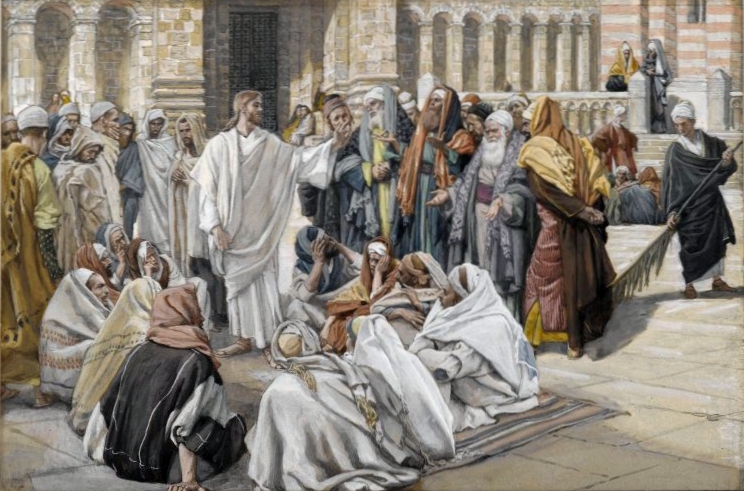
2021 EXCERPT: Hillel the Elder, sometimes referred to as Rabbi Hillel, was a Jewish religious leader who lived shortly before Jesus’ time. There is a famous story told of him in which he was challenged by a potential convert to teach him the entire Torah while “standing on one foot.” In other words, can you distill the essence and present it succinctly?
Bishop John Louis
Love of God and Neighbor

2021 EXCERPT: Today, when we cherish portable devices for the sake of convenience and effective utility, we should be able to appreciate today’s message: Jesus says that all the commandments of God have been reduced to the one commandment of love. This commandment is more portable than a laptop, an iPad or even the smallest mobile phone, because we do not need a bag or a purse or even our hands to carry it – it is carried in the heart. Therefore, as long as we have a heartbeat, the commandment of love can be used anytime and anywhere. It does not operate on an internet or phone network which could be interrupted. Also, it requires no man-made technological data (credits) to function but the free grace of God.
Fr. Michael Chua

Love Wins
2018 EXCERPT: When the US Supreme Court ruled by a 5 to 4 vote in 2015 that the US Constitution guarantees the right of marriage to all persons, without exception, meaning same-sex marriage is now a constitutional and legal right, supporters celebrated by making the hashtag #lovewins viral on social media. Outside the Supreme Court, the police allowed hundreds of people waving rainbow flags and holding signs, to advance onto the court plaza as those present for the decision streamed down the steps. “Love has won,” the crowd chanted as courtroom witnesses threw up their arms in victory. It is ironic, that those opposed to the decision to redefine the age-old definition of marriage came to be labelled as “haters” – the logic – if you are against same-sex marriage, you are against love, therefore, you are a “hater.” It is interesting how “love” too has been redefined to include those who agree with one’s ideological positions and excludes those who don’t. It is more ironic that if you are a supporter of a traditional viewpoint of marriage, you are a “hater” too. To put a label on people as a way of closing off the debate or as a way of vilifying those who disagree really runs counter to this whole idea of “love.”
Getting It Right
Our gospel passage begins with a question posed by a scribe, a scholarly expert of the Law: “which is the first of all the commandments?” His motives are unclear. Why would an expert of the Law seek knowledge from someone who has no formal training in the Law? Is he trying to test our Lord’s knowledge of the Law? Even if his motives are pure and his question is genuine, being a scholar, was he looking for an intellectual answer rather than some insight that would lead to personal spiritual growth?
But our Lord’s response is not just any theoretical answer which academics enjoy brandishing in public to show off their erudition. He is not just reciting some Jewish catechism from memory. If you have paid attention to the first reading you would realise that the first part of the answer given by the Lord is not novel nor ground breaking. In fact, His answer is surprising precisely because of its simplicity and notoriety. The Shema is an affirmation of God’s singularity and kingship, the foundation of Israel’s covenantal relationship with God and principle which underlies all the commandments. Thus, it is the centrepiece of the daily morning and evening prayers and is considered the most essential prayer in all of Judaism.
Fr. Vincent Hawkswell
Commandments as God’s Gift to Us
2024 EXCERPT: Humans are not self-existent, meaning we do not exist independently of other beings or causes, so we have insurmountable limits which we must freely recognize and respect, says the Catechism of the Catholic Church (CCC).
The physical laws described by scientists constitute limitations on our bodies; the moral laws described in this Sunday’s readings constitute limitations on our souls.
Some scientists call the physical laws patterns rather than laws for they differ from the moral laws in some very fundamental ways.
Fr. Denis J. Hanly

Love the Lord Your God
EXCERPT: This is a wonderful Gospel. And one of the reasons it is a wonderful Gospel is it is one of the few times where the leaders of the Jewish community and Jesus came together at a very important understanding — and that was the meaning of the Great Commandment.
As you know up to now Jesus is already in Jerusalem. He has already gone up to the temple and now he’s teaching in the temple. And it is a sad occasion, because he knows that he will be rejected and he will soon be marched up the Hill of Calvary and die on the cross.
At the same time, it is wonderful for us to see for a moment, before the great splits and the great problems and the breaking up of this union, this total union between Jews and gentiles, Jews and Christians.
Fr. Tommy Lane

Loving God with all our heart, soul, mind, and strength

EXCERPT: Jesus summarized the ten commandments in two: You shall love the Lord your God with all your heart, soul, mind, and strength, and secondly, you shall love your neighbor as yourself. It seems to me that if we really knew God, we would automatically love God with all our heart, soul, mind, and strength and would not for a moment put anything before God. If we really knew God, loving God with all our heart, soul, mind, and strength would not seem like a commandment because it would be the natural thing to do. So, if we are not loving God with all our heart, soul, mind, and strength, I think we can firstly ask ourselves what might be blocking us. One possibility is that we may not understand the love of God for us or God’s mercy towards us or might even be a little afraid of God. In other words, in our minds we may put limits on God’s love for us or put limits on how much forgiveness God can bestow on us. God loves us infinitely and is always loving us and always ready to forgive us. It is we who put limits on God’s love and mercy, not God. Or to put it another way: God made us in his image and likeness, and we sometimes make God in our image and likeness!
Fr. John Kavanaugh, S.J.
Saints

EXCERPT: [All the saints] had in common the kind of wholeheartedness that the Book of Deuteronomy and the Gospel of Mark require: to love the Lord our God with all one’s heart, soul, mind, and strength.
At first hearing, the “Great Commandment” might suggest to us, as it did to a young woman at the turn of the twentieth century, a range of high and mighty acts:
All the deeds I long to accomplish for you. I would be a martyr, a doctor of the church. I should like to accomplish the most heroic deeds—the spirit of the crusader bums in me. I long to die on the battlefield in defense of the holy church. I would be a missionary. I would choose to be flayed like St. Bartholomew, plunged into boiling oil like St. John, or like St. Ignatius of Antioch I would be ground by the teeth of wild beasts into bread worthy of God. With St. Agnes and St. Cecilia I would offer my neck to the sword of the executioner, and like St. Joan of Arc, I would murmur the name of Jesus at the stake. (Story of a Soul, St. Therese)
Bishop Frank Schuster
Synodality and the Art of Listening
2021 EXCERPT: Jesus summarized 613 commandments in the Torah with two commandments, one from Deuteronomy and one from Leviticus, love God and love neighbor. This weekend, I want to focus on what does it mean to listen to God’s word. You see, the passage of note from Deuteronomy begins, “Hear, O Israel”. In Hebrew, the word is “Shema”. It is a word that means emphatically, “to listen”. The Latin for the word “listen” is “Oboedire”, it is where we get the word obedience. It is a word that also means emphatically, “to listen”. And this is really not easy to do in our culture because there are so many things competing for our attention.
The Moment of Truth

2018 EXCERPT: Many of us lead hectic lives: we have careers, projects, programs, hobbies, agendas, schedules, and more, and all these things are good. Once in a while ask yourself, does coming here week after week make any difference in my life out there? How do I treat those at work, at school? How do I tend my neighbor? Do I ever comfort the sorrowing?
Do I every visit the sick? Do I ever care for anyone other than myself?
Remember the words of the scribe: to love God and your neighbor as yourself is worth more than all burnt offerings and sacrifices. This Gospel reminds us all of that profound truth, a truth we must never forget. And if we learn this truth, like the man with the young son, like the scribe, we will have our conversion moment. Then we are not far from the reign of God.
