

32nd Sunday of Year B
November 10, 2024
NEW FEATURE: The AI Assistant at the bottom right corner
has been specifically trained for this website.

SOURCE: The Jesuit Post
2021 HOMILY – Don’t compare and despair! Fr. Eric Sundrup, SJ, reflects on the story of the poor widow and what it can teach us about our own offerings.

Giving from the Heart
Q: What's the essence of giving according to Jesus' teaching?
A: Giving is about where it comes from, not quantity or quality, emphasizing the importance of offering what is uniquely yours and giving it your all, straight from your heart.
Avoiding Comparison
Q: Why should we avoid comparing our offerings to others?
A: Comparing and despairing is a refrain to avoid as it leads to despair, according to spiritual advice given to Fr. Eric Sundrup during his novitiate.
Mindset for Giving
Q: What mindset should we adopt when giving?
A: Stop worrying, gloating, compensating, and comparing when giving; instead, focus on giving from your heart and trusting that this is all God asks for, rather than adhering to human standards of quantity or quality.
Giving from the Heart
Q: How can I avoid comparing my contributions to others?
A: Focus on giving what is uniquely you, from your heart, and trust that this is all God asks for, rather than worrying about quantity or quality compared to others.
Avoiding Despair
Q: What's the key to preventing despair when giving?
A: Stop comparing yourself to others and instead concentrate on giving your all from your own resources, regardless of how they measure up to others' contributions.
True Value of Giving
Q: What determines the real worth of a contribution?
A: The source and spirit of the giving matters more than the amount; like the poor widow who gave all she had, contributions from poverty or sacrifice can be more valuable than larger donations from surplus.

SOURCE: Archdiocese of Brisbane Homilies
2021 HOMILY – Small acts of love and generosity, though often overlooked, hold immense value and can lead to significant positive impacts on individuals and communities.
- 00:00 Small acts of generosity, like a poor widow’s humble donation, reveal profound love and kindness that often go unnoticed but are deeply valued.
- 01:07 Small acts of love and generosity, often overlooked, significantly contribute to the betterment of our families, communities, and the Church.
- 01:49 Small acts of generosity, offered with love, can lead to abundant spiritual blessings and joy.

SOURCE: Fr. Peter Hahn Archive of Homilies
2018 HOMILY - True sacrifice and generosity, exemplified by the selfless actions of a widow and the commitment of veterans, reflect a deep trust in God's provision and the importance of giving in the face of adversity.
- 00:00 Happy feast day of Saint Leo the Great, as we also honor Veterans Day and reflect on the sacrifices made for our freedom.
- 00:41 Living lives of sacrifice and generosity is the core message of our readings, exemplified by heroic models.
- 00:57 A desperate widow on the brink of death encounters the prophet Elijah, who asks her for food and drink, highlighting a profound paradox of hope in her dire situation.
- 01:35 A widow, feeling hopeless and empty, learns to trust in God's provision through the Prophet's encouragement, leading to her and her son's sustenance and survival.
- 02:45 A marginalized widow, despite her hopelessness, chooses to give everything she has, illustrating the power of selfless generosity in the face of fear and anxiety.
- 03:21 True sacrifice involves giving our time, resources, and love, honoring the commitment of veterans who served and sacrificed for our nation.
- 03:47 To truly receive, one must give, trusting in God's unseen providence rather than relying solely on our own understanding.
- 04:34 True favor with God comes from total faith, as shown by the widow's selfless giving, contrasting with the false righteousness of the scribes and highlighting the importance of Christ's sacrifice.
- Jesus highlights that true favor with God comes from total faith and trust, exemplified by the widow, while warning against the false righteousness of the scribes, emphasizing the importance of Christ's perfect sacrifice for our spiritual strength and communal giving.
- The widows' acts of giving everything they had exemplify trust in God's provision, encouraging us to selflessly share with one another, especially in remembrance of those who have sacrificed all.
Sacrificial Giving
Q: How can I practice sacrificial giving in my daily life?
A: Trust in God's providence and give generously, even when you have little or nothing, following the examples of the widows who gave their last resources to help others.
Q: What is the spiritual benefit of sacrificial giving?
A: Sacrificial giving leads to blessings and sustenance from God, as demonstrated by the widow at Zarephath who was fed and sustained after giving her last meal to Elijah.
Faith and Trust
Q: How can I deepen my trust in God's providence?
A: Look beyond what you can see and trust in God's ongoing action in your life, recognizing that faith calls us to perceive the unseen workings of God.
Service and Sacrifice
Q: How does military service relate to biblical teachings on sacrifice?
A: Military service exemplifies the ultimate sacrifice taught in the Bible, as those who give their lives for their nation embody the call to live sacrificially for others.
Encountering Christ
Q: What is the greatest blessing we can receive?
A: The greatest blessing is encountering the mystery of the risen Christ, who gave everything as a perfect sacrifice to take away the sins of the world.
Living Generously
Q: How can I apply the teachings from these biblical examples in my life?
A: Live a life of sacrifice and generosity, consistently giving of yourself to others, as modeled by the biblical examples and the ultimate sacrifice of Christ.
Controversial Interpretations of Scripture
Q: Is it ethical for Elijah to demand food from a starving widow?
A: The story teaches that trusting in God's providence, even in dire circumstances, can lead to unexpected blessings and provision.
Q: Does the widow's sacrifice of her last coins promote irresponsible financial behavior?
A: Jesus' praise of the widow's "whole livelihood" donation emphasizes the value of sacrificial giving over the amount given.
Challenging Religious Practices
Q: Should churches encourage members to give beyond their means?
A: The readings suggest that giving of oneself - whether time, heart, or hands - is key to receiving God's blessings and overcoming life's troubles.
Q: Is it fair to compare modern charitable giving to the "ultimate sacrifice" of martyrs?
A: The gospel draws parallels between everyday acts of generosity and the selfless service of those who have given their lives for others.
Theological Implications
Q: Does God's providence negate personal responsibility for one's financial situation?
A: The message emphasizes trusting in God's provision while also actively participating through generous giving and service.
Q: Is self-sacrifice always the answer to life's problems?
A: The readings present giving of oneself as a universal solution to life's troubles, potentially oversimplifying complex issues.

SOURCE: Fr. Jude Thaddeus Langeh Basenbang
2018 HOMILY – Giving from our Hearts! A question that we can all ask ourselves then is: what is it that I am still holding on to – that prevents me from totally surrendering myself to God? The widow’s gift dripped rich in meaning because “she has given everything she has.” In other words, she gave from her heart. Jesus is emphasizing that our gifts have meaning and impact based on the way they are given, not merely based on their size.

SOURCE: Fr. Kevin’s Homilies
2021 HOMILY – The story of marzipan’s origins highlights how creativity and generosity can turn limited resources into something valuable and uplifting during challenging times, especially during the festive season.
- 00:00 The arrival of Halloween marks the start of a festive season filled with sweets, leading to Thanksgiving and culminating in Christmas treats.
- 00:50 Marzipan, a delightful almond confection enjoyed worldwide, adds a sweet and bitter flavor to various treats like chocolates, wedding cakes, and festive desserts.
- 01:47 Marzipan, a long-standing confectionery art, is celebrated for its intricate, hand-painted figures and was even used as medicine in the Middle Ages.
- 02:47 Marzipan’s origins are disputed, with a notable legend tracing it back to Lübeck, Germany.
- 03:02 In 1407, a devastating famine struck Lubeck, leading bakers to scavenge an abandoned warehouse for ingredients to create bread substitutes amid enemy sieges and failed crops.
- 03:59 A clever baker’s apprentice transforms forgotten almonds and honey into a delicious and nutritious new bread, bringing hope to the people.
- 04:41 A clever baker turned a small resource into a feast, empowering the town to fend off enemy troops.
- 05:10 In moments of selfless generosity, even the smallest offerings can transform into invaluable treasures when given from a heart that cares deeply.
Bishop Robert Barron

SOURCE: Word on Fire
2021 SERMON – Friends, a connection with God leads to life and flourishing. When we sever that connection, we experience a drought similar to the one in our first reading today. The Lord responds to our needs, so trust in his providence, and he will not abandon you.
- 00:00 Elijah's encounter with the widow of Zarephath highlights faith and divine provision amid a drought symbolizing the consequences of idolatry.
- 01:47 Trusting in the Lord can lead to unexpected provisions during times of desperation and uncertainty.
- 03:24 Elijah's unwavering trust in God's providence leads him to seek sustenance from a vulnerable widow in Zarephath, illustrating the challenges of stepping out of comfort zones.
- Elijah, facing dwindling resources, exemplifies unwavering trust in God's providence, ultimately receiving a divine command to seek sustenance from a widow in Zarephath.
- Elijah's call to leave Israel and visit a widow in a foreign land highlights the challenges of stepping out of one's comfort zone and the vulnerability of those at the bottom of the social hierarchy.
- 05:25 Trust in God's providence often requires stepping out of our comfort zones and being open to His plans for us.
- 06:39 Trust in God's providence is crucial, as illustrated by Elijah's encounter with a desperate widow during a famine.
- Elijah, facing a desperate widow during a famine, exemplifies the importance of trusting in God's providence even in seemingly hopeless situations.
- The humorous exchange highlights the woman's desperation as she faces death while being asked to prioritize someone else's request for a cake.
- 09:05 Trusting in the Lord and giving selflessly leads to unexpected abundance and fulfillment.
- 10:58 Trust in the Lord's providence by selflessly giving, and you will find your resources multiply even in times of distress.
- God is love, and the more we give of ourselves for the good of others, the more divine grace we receive, a truth understood by all saints.
- In times of drought and distress, trust in the Lord's providence and give what little you have in love to discover that your resources will multiply.
- 13:13 Together, Elijah and the widow reveal the transformative power of generosity during challenging times.
Trusting in Divine Providence
Q: How should one respond when facing scarcity or drought in life?
A: Trust in the Lord's providence, don't give up, and listen attentively to the people and circumstances He sends your way, especially during times of greatest distress.
Q: What is the "law of the gift" and how does it work?
A: The "law of the gift" states that the more you give of your life in love, the more divine grace increases in you, as exemplified by the widow of Zarephath whose resources multiplied after sharing with Elijah.
Spiritual Principles
Q: What spiritual principle does the story of Elijah and the widow illustrate?
A: The story demonstrates that connection to God leads to life and flourishing, while severing that connection results in drought and lifelessness.
Q: How can one experience multiplication of resources in times of scarcity?
A: Give in love even the little you have, and you'll find resources multiplying, as Jesus taught and the widow of Zarephath experienced with her oil and flour.
Biblical Themes
Q: What recurring theme is present in the lives of biblical heroes?
A: The Bible often summons heroes of salvation history out of their comfort zone, inviting them to trust in God's providence rather than their own plans, as seen with figures like Moses and Elijah.
Q: How does the Bible portray the relationship between God and life?
A: The Bible teaches that connection to God leads to life, while severing that connection leads to drought and lifelessness, a principle illustrated in various stories throughout scripture.
Controversial Religious Practices
Q: Is God responsible for causing droughts as punishment?
A: The video suggests that King Ahab's idolatry caused a great drought in Israel by severing the connection to God, implying divine punishment for religious disobedience.
Q: Should people rely on supernatural feeding during crises?
A: The story portrays Elijah being fed by ravens and drinking from Wadi Cherith, promoting the idea of trusting in God's providence even in seemingly impossible situations.
Social and Gender Issues
Q: Were widows unfairly treated in biblical times?
A: The video describes widows as second-class citizens without financial or emotional support, highlighting the challenging social status of women in ancient societies.
Controversial Religious Teachings
Q: Is it ethical to ask for food from those who are starving?
A: Elijah's request for the widow's last meal despite her dire circumstances is presented as a test of faith, raising questions about the morality of religious demands.
Q: Does giving away resources in faith lead to material abundance?
A: The story claims that the widow's oil and flour multiplied after she gave her last food to Elijah, promoting the idea that sacrificial giving leads to divine provision.
Spiritual Principles
Q: Can giving away resources increase one's spiritual wealth?
A: The video teaches the "spiritual law of the gift", suggesting that giving away in love increases divine grace, a concept that may be controversial in materialistic societies.

SOURCE: Word on Fire
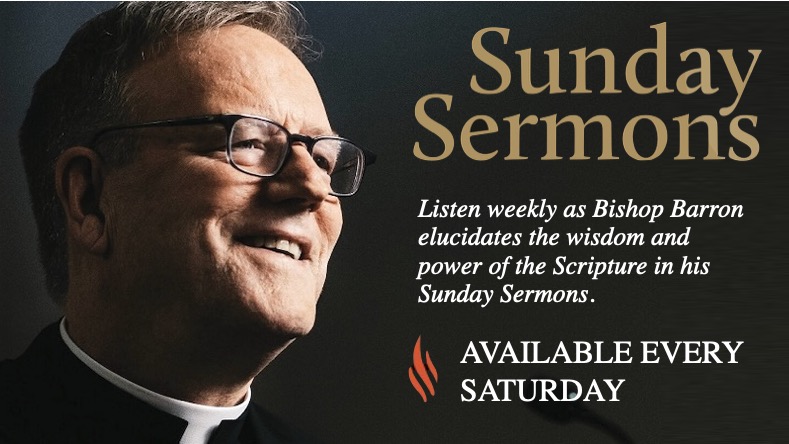
2024 SERMON – Friends, our first reading is that wonderful story of Elijah and the widow of Zarephath, which is a kind of hidden gem in the Old Testament. Like so many of the stories in the Bible, it is very understated, but chock full of spiritual meaning. And it has to do with how we respond—and the strange and surprising ways God might respond to us— when things are toughest.
- 00:00 Elijah's confrontation with King Ahab leads to a drought, symbolizing the spiritual consequences of turning away from God as he navigates dire circumstances.
- 01:27 Trusting in God's Providence is essential, especially during times of trial when our own resources are depleted.
- 02:52 Trust in God's providence during times of despair, as He provides sustenance and guidance even when hope seems lost.
- 04:02 Trusting God often leads us to unexpected places and people, as demonstrated by Elijah's journey to a foreign land where a widow, despite her own dire circumstances, is chosen to provide for him.
- 05:38 Trusting in God often leads to unexpected provisions, as illustrated by the widow who, despite her dire circumstances, is called to share her last meal with the prophet Elijah.
- 07:30 Trusting in God's providence can lead to unexpected blessings, as seen when the widow shares her last meal with Elijah despite her dire circumstances.
- 09:15 Giving everything in faith leads to unexpected abundance and sustenance in times of desperation.
- 10:27 Giving generously in tough times fosters trust in God, who provides help through unexpected means.
- Giving away what you have, even in difficult times, leads to unexpected abundance and requires trust in God's logic rather than worldly logic.
- God often provides help in unexpected ways and through unlikely people, especially in our most desperate times.
Trusting God in Difficult Times
Q: How can I maintain faith during desperate situations?
A: Trust in God's Providence and have faith that He will multiply your resources, even when facing desperation, depression, or loss of joy, just as He did with the widow's last meal for Elijah.
Q: Where should I look for help in challenging circumstances?
A: Be open to unlikely sources of help, as God often sends people to unexpected places for assistance, like Elijah being sent to the widow of Zarephath who had nothing.
Acting on Faith
Q: What should I do when God's instructions seem illogical?
A: Follow God's commands even if they appear counterintuitive, like the widow who was instructed to feed Elijah despite having nothing left for herself and her son.
Q: How can I develop a stronger attitude of trust in God?
A: Embrace attitudes of trust by responding positively to God's challenging summons, such as being asked to help others when you feel you have nothing to give.
God's Provision
Q: How does God's plan work in desperate situations?
A: Trust that God has a specific plan for your life, even in desperate straits, and be willing to follow His guidance to unlikely places or people for help.
Q: What can I learn from the story of Elijah and the widow?
A: Recognize that God can provide abundantly even when resources seem scarce, as demonstrated by the continuous supply of flour and oil for the widow, Elijah, and her household.
Controversial Religious Practices
Q: Should we give away our last resources when desperate?
A: Yes, give away even the little you have in times of desperation, like the Widow of Zarephath did with her last meal, trusting God will multiply it 30-60-100 fold.
Q: Is it wise to rely on divine provision during a drought?
A: Yes, trust in God's Providence even when faced with impossible choices and natural disasters, as Elijah did when sent to the Widow of Zarephath during a severe drought.
Challenging Traditional Beliefs
Q: Can God's ways be counterintuitive?
A: Yes, God's ways are often unexpected and counterintuitive, as demonstrated when Elijah was sent to the impoverished Widow during a drought for provision.
Q: Does God use unlikely people to provide help?
A: Yes, God's provision often comes through the least likely people, as shown when Elijah received help from the poor Widow of Zarephath despite her poverty and the ongoing drought.
Faith in Difficult Circumstances
Q: How should one respond to depression and loss of joy?
A: Trust in God's Providence and provision, even when things that once gave life are drying up, as Elijah did in 1 Kings 17:10-16.
Q: Should we trust divine guidance that seems illogical?
A: Yes, trust in God's guidance even when it seems like the least likely scenario, as Elijah did when sent to the Widow of Zarephath in 1 Kings 17:10-16.
Deacon Peter McCulloch
On the Widow’s Mite
This discussion guide has been generated by the WORD THIS WEEK'S Catholic AI Assistant based on Deacon McCulloch's homily.
The Politician's Intentions
1. What are your thoughts on the politician's actions in the story shared at the beginning of the sermon? Do you think his actions were truly for self-promotion or something else?
2. How can we ensure our own actions are genuinely aligned with our values and faith?
Comparison with the Scribes
3. How does Jesus’ warning about the scribes relate to the politician’s story?
4. What modern-day behaviors or tendencies might reflect those of the scribes in the Temple?
The Widow's Offering
5. Why does Jesus highlight the widow's offering as the greatest gift?
6. In what ways do you see her actions as a representation of true sacrifice and faith?
The Two Greatest Commandments
7. Reflect on the symbolism of the two coins representing the two greatest commandments.
8. How can you apply these commandments in your daily life to reflect those values?
Following Examples of Generosity
St. Elizabeth of Hungary
9. Discuss the ways St. Elizabeth demonstrated letting go of worldly attachments.
10. What qualities of her life inspire you in your own journey of faith and service?
Tom Monaghan
11. What impact did reading Chapter 8 of "Mere Christianity" have on Tom Monaghan's life?
12. Consider the role that transformative experiences or readings have had in shaping your values and actions.
Margaret's Commitment
13. Margaret's actions reflect selflessness and dedication to helping others. How can ordinary acts of kindness equate to significant contributions in the world?
14. In what ways can you contribute to causes or individuals needing support, even if it seems small?
Personal Reflection and Action
Letting Go of Personal Kingdoms
15. Reflect on the idea of letting go of personal kingdoms to embrace God's kingdom.
16. What steps can you take to practice humility and prioritize God's will in your life?
Living for Others
17. Identify areas where you can increase your generosity and service to others.
18. How can you implement a practice in your daily routine to ensure you are living for others in a spirit of love and generosity?
1 Kgs.17:10-16; Heb.9:24-28; Mk.12:38-44
2021 EXCERPT: I once knew a man, a politician, who liked to promote himself. Every week he’d always arrive late for Mass with his large family in tow. Making a grand entrance, he’d walk to the front of the church, look around, and sit down. It wasn’t long before other churchgoers asked themselves: was he honouring God or himself? Was he looking for faith or votes?
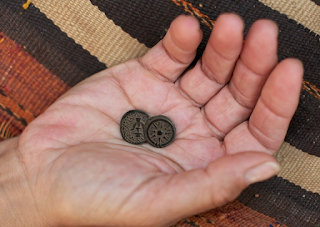
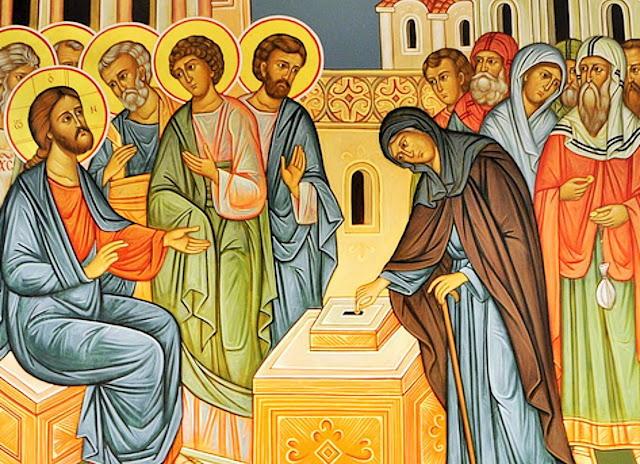
Something similar happens in Mark’s Gospel today. Jesus warns his followers to beware of the scribes in the Temple. These men like to strut around in fine clothes, greeting people and taking the best seats in the synagogue. They like to parade their wealth and importance. But Mark then contrasts this life of pride and selfishness with another story, about a poor widow. She quietly donates to the Temple two tiny copper coins, each smaller than a fingertip. (These coins are often called Mites today, but in ancient Israel they were known as Lepta)
A Generous Heart
This discussion guide has been generated by the WORD THIS WEEK'S Catholic AI Assistant based on Deacon McCulloch's homily.
1. Cultural Understanding:
- How does La Passeggiata reflect community values? Why is it important for people to come together in this way?
- How does the idea of “fare bella figura” relate to how we present ourselves in society today?
2. Biblical Reflection:
- In Mark’s Gospel, what do the Temple scribes represent according to the sermon?
- Why does Jesus praise the widow’s offering more than the wealthier contributions? What does her act signify?
- How does the widow’s story prepare us for understanding Jesus’ ultimate sacrifice?
3. Personal Application:
- What does it mean to let go of worldly attachments, as suggested in the sermon?
- Are there actions or attitudes in your life that resemble those of the scribes? How can you shift towards a mindset of humility and selflessness?
4. Modern Examples:
- Discuss Dolores Hart’s journey from actress to nun. What can we learn from her decision to leave Hollywood for a life of service?
- How did Kevin Fagan exemplify selflessness during his time as a prisoner-of-war? What would inspire someone to act so courageously under such circumstances?
5. Broader Implications:
- How do the lives of these individuals challenge us in our understanding of discipleship and sacrifice today?
- In what ways can we as a community cultivate an attitude of love for God and our neighbors, as symbolized by the widow’s two coins?
Reflective Exercise:
- Think of a personal “two coins” you can offer in your daily life. What small yet significant sacrifices can you make to better serve others?
- Consider writing a short prayer or meditation that focuses on letting go of personal kingdoms to embrace the Kingdom of God. Share and discuss it with your group.
Conclusion:
Reflect on the key message from this sermon: true discipleship involves humility, selflessness, and a deep love for God and others. How can this insight be applied to our daily lives and community activities?
1 Kgs.17:10-16; Heb.9:24-28; Mk.12:38-44
2024 EXCERPT: This widow is an icon of Christ, a living image of Jesus himself. And her two coins represent his two greatest commandments: to love God and to love each other, with all our hearts, souls and minds. This is the challenge Jesus has set for all of us.
But can we do that? Can we let go of our worldly attachments, and turn our hearts, souls and minds towards God and our neighbours?
Someone once said that if we want God’s kingdom to come, then we need to let go of our own personal kingdoms.
Let me tell you of three people who did just that.
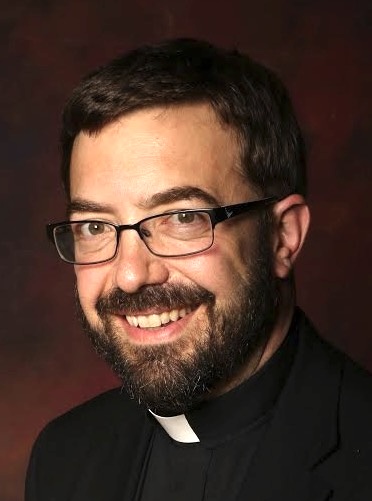
Fr. Andrew Ricci
Making a Worthy Sacrifice
2021 PODCAST: The two widows in the readings today make great sacrifices from the little they possess. Their example invites us to consider what sacrifices are we willing to make in our lives today.
Fr. Austin Fleming
Abuse, Generosity, and the True Essence of Giving
2018 EXCERPT: This week (November 2018) the Catholic bishops of the United States gather[ed] for their annual November meeting. The agenda for their meeting [was] almost entirely devoted to the crisis in our Church, created by those who abused both their office and those in their care. Pray with me, as I’m sure you do, that the bishops’ work this week will be substantive and will manifest changes and plans for more change to stanch the hemorrhaging of the church’s credibility and rescue her from the jeopardy in which her mission lies.
Dominican Blackfriars


Loving and Giving
Fr Lawrence Lew encourages us to offer everything to God without fear.
This discussion guide has been generated by the WORD THIS WEEK'S Catholic AI Assistant based on this Sunday's homily provided by the Dominican Blackfriars.
Introduction
Lew's central message about offering everything to God without fear.
- Discuss the importance of recognizing that everything we possess originates from God's generosity.
1. Understanding the Offertory Prayer
- Reflect on the significance of the phrase "we have received" in the Offertory prayer.
- How does this phrase shift our understanding of giving back to God?
- Discuss how this relates to 1 Corinthians 4:7 which states that nothing truly belongs to us.
2. Trust in God's Provision
- Explore the concept of God's providence as mentioned in the sermon.
- What does it mean to trust in God's provision like the widow of Sidon did?
- Discuss the implications of Bede Jarrett OP's prayer in understanding our relationship with God.
3. Personal Reflection and Application
- Consider how we can see our own lives and possessions as gifts from God.
- How does this perspective encourage us to entrust our lives to God’s care?
- Reflect on how this trust might affect our actions and decisions in daily life.
4. The Example of the Poor Widow
- Discuss how the story of the poor widow exemplifies total faith and trust in God.
- Why does Jesus highlight the faith of a poor widow for our edification?
- How can we apply the widow’s example of giving from the heart in our own lives?
5. Heart Over Material Value
- Discuss the importance of intention and relational significance in our offerings to God.
- How does God’s perspective on giving differ from human perspectives?
- Consider examples of how we can offer ourselves as a "loving oblation" to God.
6. God’s Love and Generosity
- Explore St. Thomas Aquinas’ idea that recognizing love provokes love in return.
- How does acknowledging God’s gifts increase our understanding of his love?
- Reflect on ways in which God’s generosity can inspire our acts of love and charity.
7. Becoming More Truly God’s
- Discuss how offering our lives to God's service helps us become more aligned with His will.
- Consider how God’s grace and virtues can become part of our identity when we trust in Him.
- Reflect on the phrase, “Not as the world gives, do you give, O Lover of souls” and what it means for our spiritual journey.
Group Discussion and Sharing
- Share personal experiences where you felt God’s provision and care in your life.
- Discuss practical ways the sermon inspires you to offer more of your life and possessions to God.
- Conclude by collectively praying for the grace to trust and give generously as the widow did.

2021 SUMMARY: In a homily for the Thirty-Second Sunday of the Year, Fr. Lawrence Lew emphasizes the importance of recognizing God as the source of all we have and the transformative power of offering everything back to Him in faith. Drawing from the revised translation of the Offertory prayer, Fr. Lew highlights that the bread we offer at the altar symbolizes all that we have received from God’s goodness, including life itself.
Using the example of the poor widow who gives her last two coins in the Gospel, Fr. Lew illustrates the profound faith in God’s providence that arises when we entrust all that we have to Him. This selfless offering reflects a deeper understanding that God has first loved us and continues to give us His gifts, encouraging us to love Him in return. As we embrace the spiritual significance of our offerings, we grow in faith and learn to love as God has loved us.
Love Hurts
Fr David Goodill warns us that we miss out on love if we refuse to be vulnerable.
This discussion guide has been generated by the WORD THIS WEEK'S Catholic AI Assistant based on this Sunday's homily provided by the Dominican Blackfriars.
1. The Nature of Self-Giving
- Reflect on the statement: "Anything worthwhile in life requires self-giving." What experiences have you had that support or challenge this notion?
- Discuss the connection between self-giving and the concept of being "crucified with Christ." How do you interpret this metaphor in your own life?
2. Love and Pain
- Love is described as something that "hurts" and "opens us to pain." Share examples from your life where love involved sacrifice or suffering.
- How do you differentiate between love that is worth the pain and love that isn't?
3. Insights from Literature: Marilynne Robinson’s Gilead
- Summarize John Ames’s journey in Gilead and discuss how loss and unexpected love transform his life.
- Compare John Ames's tendency to retreat from pain with his brother Edward Ames's embrace of fashionable ideas. What lessons can be learned from their different approaches to love and belief?
4. Wealth and Self-Giving Love
- Reflect on Jesus's observation of the rich and the widow's offering. How does wealth serve as both a protection and an obstacle to true self-giving love?
- Discuss how wealth can sometimes create a superficial interaction with the world. Have you experienced this in your own life or observed it in others?
5. The Role of God and Faith
- Explore the idea that allowing God’s love into our lives opens us to pain and suffering. How does this coincide with your current understanding of faith and spirituality?
- In what ways can faith be a source of strength in moments of pain and sacrifice?
6. The Message of the Widow’s Offering
- Consider the widow's act of giving her last coins. What does her example teach about the nature of generosity and selflessness?
- Discuss how her story can be an inspiration for living a life of self-giving love.
7. Christ’s Sacrifice and Our Response
- Reflect on the significance of Christ’s self-giving act on the cross. How does this influence your understanding of love and sacrifice?
- Discuss practical ways you can open your life to love, even when it involves pain, in your everyday actions and relationships.
2024 EXCERPT: When Jesus observes the rich giving large sums into the temple treasury he is not impressed. Their wealth protects them from suffering, but is an obstacle to the self-giving love through which we grow. Wealth insulates the rich from the sufferings that come with poverty, but it can also prevent them entering into life and love; they retreat into seclusion or encounter the world in the superficial manner of global tourists. They keep God at a distance, for to allow God’s love into our lives is to open our lives to pain and suffering…
The Letter to the Hebrews proclaims that Christ has entered heaven through his blood on the cross. By his self-giving act of love on the cross Christ has brought healing to the world and opened the gates of heaven to all who turn to him and call upon his mercy. To call on Christ is to open our lives to love, and love brings pain; yet without Christ we suffer alone.
Fr. Charles E. Irvin
Lessons in Faith, Trust, and Generosity from Inspiring Women
This discussion guide has been generated by the WORD THIS WEEK'S Catholic AI Assistant based on Fr. Irvin's homily.
Discussion Questions
1. Initial Reactions
- How did the stories in the sermon make you feel?
- Which story resonated with you the most, and why?
2. The Power of Community
- Reflect on the story of the woman who was crippled by polio. How did the parish community impact her life?
- In what ways can community support play a pivotal role in spiritual and personal healing?
3. Acts of Generosity
- Discuss the significance of the woman donating her savings to the parish building campaign. What does this act teach us about value and sacrifice?
- How did the anonymous gift of the van demonstrate the community’s understanding and appreciation of her sacrifice?
4. Resilience and Faith
- Consider the story of Earl Campbell’s mother and the Detroit teacher. How do these examples illustrate resilience and faith in the face of adversity?
- How can personal hardships serve as opportunities for growth and giving?
5. Prioritizing God’s Purpose
- The sermon poses a significant question: “Do we give God what’s left over after we’ve taken care of everything else?” How does this challenge our daily priorities?
- How can individuals align their personal goals with God’s purposes?
6. Trust and Dependence on God
- Discuss the metaphor of the retired admiral and Queen Elizabeth I. How does it relate to our relationship with God?
- What does it mean to “look after God’s business,” and how can this trust transform personal lives?
7. The Gift of the Heart
- The sermon emphasizes that God wants more than material offerings; He wants our hearts. What does giving your heart to God entail in practical, everyday terms?
- How can we ensure that our actions and intentions align with sincere spiritual giving?
Reflection and Application
- Reflect on personal experiences in which acts of generosity or support from a community made a significant impact on your life.
- Share how you can incorporate the lessons from the sermon into your life. Identify specific actions or changes you can make to prioritize spiritual giving and alignment with God’s purposes.

SUMMARY: Fr. Irvin’s homily centers on the transformative power of aligning our lives with God’s purpose and giving our hearts to Him. Through stories of women who generously offered their love and trust, we learn the value of putting God first in our daily lives. By prioritizing divine intentions, such as caring for loved ones, pursuing peace, and promoting justice, we find true purpose and experience immeasurable blessings. Trusting in God and allowing His business to become ours lead to a radiant life filled with faith, hope, and love.
Fr. Leon Ngandu, SVD
Fr. Leon Ngandu, SVD
We Offer God what we Have and who we Are with Love and Gratitude
EXCERPT: One day, one parishioner asked his parish priest: “Father, how much should I spend on the birthday present for my wife?” The parish priest said, “If you love her, then you know.” Another day, the same person asked his parish priest again, “Father, how much am I supposed to give my tithe to God in the Church? Is it ten percent of my income? Before or after tax? Am I also supposed to tithe from other incomes, such as gifts, tax returns, and benefits? His parish priest answered, “If you love God, then you know.” Today’s Scripture readings discuss our offerings or donations to God. Two poor widows, one in the first reading and another in the Gospel, are praised because they gave all they had with love and trust. Jesus did not acclaim the other contributors in the Gospel because they donated from their surplus wealth. These two widows remind us of Jesus, who gave all he had (his life) to take away the sins of the world, as the sacred author of Hebrews tells us in the second reading. Today’s Bible readings do not ask us to put all our savings in the collection baskets and expect miracles afterward. Instead, they focus on our love for God and our neighbors, which should motivate our offerings to God. When we realize how much God loves us and how worthy the sacrifice of Jesus on the cross for us is, we will know that we should offer God “all we have” and “all we are” with total love and gratitude.
Fr. George Smiga

The Widow’s Choice
This discussion guide has been generated by the WORD THIS WEEK'S Catholic AI Assistant based on Fr. Smiga's reflection which raises important questions about authority, individual conscience, and decision-making. This guide will help small groups explore these themes in depth.
Understanding Sacrifice:
- What does the widow's sacrifice signify in the context of the sermon?
- How do we interpret the idea of sacrifice in our own lives? Are there situations where sacrifice might be seen as misguided?
Authority and Influence:
- Explore the role of the scribes in the gospel. How does Jesus' criticism of them relate to the widow's decision?
- Discuss how authority figures influence our decisions. What should be the limits of their influence?
Forming Our Conscience:
- What is the significance of free will and forming our conscience wisely, as discussed in the sermon?
- Share experiences where forming your own conscience conflicted with external opinions or pressures.
Discernment in Decision-Making:
- How does discernment play a role in making decisions according to God's will?
- Reflect on a decision in your life where discernment was crucial. What was the outcome?
Application to Current Events:
- The sermon ties the concept of discernment to political choices. How can we apply discernment in evaluating political candidates?
- Discuss the importance of listening critically to political rhetoric and promises.
Church and Religious Authority:
- How should we balance respect for religious leaders with discernment and personal conscience?
- Consider Pope Francis' criticisms of church leaders. How do these views align with the sermon's message?
Personal Relationships and Expectations:
- In what ways do our personal relationships influence our decisions as highlighted in the sermon?
- Discuss strategies for balancing expectations from loved ones while staying true to your conscience.
Personal Application:
- Reflect on a personal situation where discerning God's calling was challenging. How did you navigate it?
- How can the lessons from this sermon inform your approach to decision-making in the future?

2015 EXCERPT: There is an issue to be resolved in today’s gospel. Jesus clearly says that a poor widow put more into the temple treasury than anyone else because of her extreme sacrifice. The few coins that she placed in the treasury were all that she had to live on. Now there is no denying the widow’s sacrifice. But here is the issue we must decide: Did Jesus praise her action or lament it? Did Jesus see her donation to the treasury as a good thing or as a misguided choice? I would suggest to you that Jesus saw it as a misguided choice. I believe that he, like us, would conclude that a woman who was so poor should keep what she had for herself and her children rather than giving to the temple treasury.
Moreover, the fact that this woman gave all that she had to the treasury might well indicate that some people were pressuring her to do so. Those she trusted and respected were calling on her to give her entire livelihood. Who might these people be? The first part of today’s gospel makes that clear. Jesus criticizes the scribes who seek their own honor and devour the homes of widows. Jesus is criticizing the scribes because they are using their position of authority for their own gain rather than the service of others. This poor widow becomes a victim of their advice and gives away all that she has. Jesus laments her decision.
Msgr. Joseph Pellegrino


Care for the Weakest

2024 EXCERPT: How had it happened that society could take advantage of the destitute? How does it happen that society continues to take advantage of those who have no protection?
Our recent Popes, particularly Pope St. John Paul II and Pope Francis, have written quite a lot about the sinful structures of society. St. John Paul II suffered through the reign of Nazi Terror in Poland and the destruction of thought by the communists. He experienced the plight of the poor and the worship of materialism of the capitalists. St. John Paul II saw evil in all three, fascism, communism and materialistic capitalism.
Pope Francis has been true to his determination to lead the Church to be mindful of the poor. Both popes have written about ideologies that have held and continue to hold the world hostage to sin.
Msgr. Charles Pope
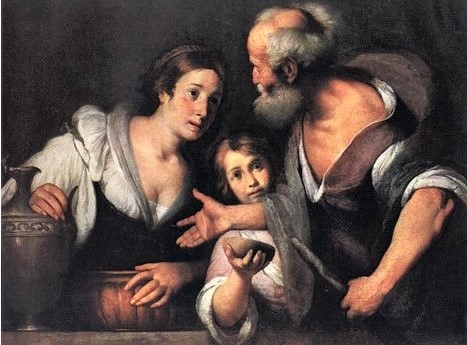
The Paradox of Poverty
This discussion guide has been generated by the WORD THIS WEEK'S Catholic AI Assistant based on Msgr. Pope's homily.
1. Introduction to the Paradox of Poverty
- Discuss the idea presented in the sermon: that poverty can be a doorway for God's blessings. How do you understand the paradox of poverty providing freedom and room for God to work?
- Reflect on the statement: "In our worldly riches, we feel we have 'too much to lose'; the Gospel just seems too demanding." How do worldly riches impact your spiritual life?
2. The Desire Portrayed
- Read 1 Kings 17:10-16. What significance does the location "Zarephath," meaning "refining fire," have in this narrative?
- Consider the widow's hunger for bread as a symbol for a deeper hunger. Discuss how our earthly desires can reflect a deeper spiritual hunger for communion with God.
3. The Dimensions of Poverty
- How does the sermon describe the freedom found in poverty? Discuss how having less can make blessings more apparent and gratitude easier to attain.
- Reflect on the sentiment: "In riches we trust in ourselves, but in poverty, we can only trust in God." How do you experience trust in your life when faced with needs or lack?
4. The Demand that is Prescribed
- Elijah asks the widow to trust in God's promise. Discuss the importance of faith in this narrative and how fear of loss can hinder faith.
- Consider the modern implications of the statement: "The sleep of a laborer is sweet, whether he eats little or much, but the abundance of a rich man permits him no sleep." How does this reflect societal issues related to wealth and anxiety?
5. The Deliverance Produced
- Explore the outcome of the widow's trust in God's word through Elijah. Share personal experiences when trusting God has resulted in unexpected blessings.
- Discuss the scriptures mentioned in the sermon (e.g., Ecclesiastes 11:1, Luke 6:38, Matthew 10:42) and how they relate to the notion of giving, generosity, and receiving blessings.
6. Personal Reflection and Application
- Reflect on the question: "Do you believe all this? Or are these just slogans for others?" How do you personally relate to the call for trust and generosity in your life?
- Challenge yourself and the group: Identify areas where you might have "too much to lose" and consider how embracing a mindset of spiritual poverty could enhance your faith journey.
7. Concluding Thoughts
- Discuss the example of the widow who was "poor enough to be free" and how her faith journey can inspire your own.
- Encourage group members to share any personal testimonies of God's faithfulness in situations where they had little to lose but chose to trust Him regardless.
2021 EXCERPT: The first reading in today’s Mass (1 Kings 17:10-16) speaks to us of the paradox of poverty: it is our poverty, our neediness, that provides a doorway for God to bless us with true riches. Our emptiness provides room for God to go to work.
In our worldly riches, we feel we have “too much to lose”; the Gospel just seems too demanding. In our poverty, emptiness, and detachment from this world, however, there is a strange and unexpected freedom that makes it easier to step out in faith—and stepping out in faith is the only thing that can save us.
I. The Desire Portrayed
II. The Dimensions of Poverty
III. The Demand that is Prescribed
IV. The Deliverance Produced
Bishop John Louis
God Can Give Us More Than We Ask For

EXCERPT: The Holy Scripture praises God for being ‘able to do far more abundantly beyond all that we ask or think’ (Eph. 3:20). Indeed, God can do far more than we expect or can imagine! The stories of the two poor widows in today’s first and gospel readings underscore the fact that God is ‘able to do far more abundantly beyond all that we ask or think’
Fr. Michael Chua

God is Watching

2018 EXCERPT: As Catholics, we shouldn’t always take the Bible literally, but we should always take it seriously. To take the story of the Widow’s Mite seriously, we must keep the condemnation in the story. This story is meant to confront us, but it has, repetitively, been interpreted to condemn others or in a limited way, to highlight the virtue of generous giving. Catholic priests jump at the opportunity to use this passage to highlight the need for Catholics in the pew to give more. The collection usually increases this Sunday, but just this Sunday only! Unfortunately, it usually returns to previous levels the following week, exposing a very Catholic phenomena – Catholics usually give out of guilt, not out of passion or commitment. But the character of the poor widow being held up as a model for generous giving is secondary to the condemnation which precedes and follows this episode.

Giving ’till It Hurts
2021 EXCERPT: Today we are given two examples of remarkable generosity – the sort that really hurts. We have one story in the first reading where God commanded a widow to give her last bit of food to a prophet, and another story in the gospel, where Our Lord after having rebuked the teachers of the law for devouring widows’ houses, points to a widow’s giving at the Temple as exemplary. In both cases, these two women risked starvation and losing their entire livelihood in giving and sharing – one for a stranger whom she treated as an intimate neighbour and another to God.
In a way, both these women epitomise the two-fold commandment of love which we heard last Sunday. In fact, some ancient commentators have seen the two mites offered by the widow in the gospel as a symbol of the two-fold Great Commandment of love.
Fr. Vincent Hawkswell
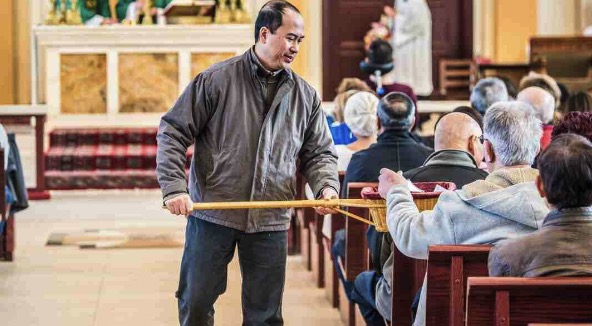
God is Never Outdone in Generosity
This discussion guide has been generated by the WORD THIS WEEK'S Catholic AI Assistant based on Fr. Hawkswell's reflection.
1. Introduction
- Discuss the significance of stewardship in religious and community life as described by Fr. Hawkswell.
- How do the actions of the two poor widows exemplify stewardship?
2. Understanding Stewardship
- Define the role of a steward according to the sermon and the Catechism of the Catholic Church (CCC).
- Why is the concept of stewardship important in the context of faith and community support?
3. The Relationship Between Wealth and Spirituality
- Reflect on the story of the rich young man who asked Jesus what he must do to be saved.
- Share personal thoughts on how material wealth can interfere with spiritual priorities.
4. Examples of Sacrificial Giving
- Discuss the woman who donated $3,000 to the Bishop's Appeal despite her financial state.
- What motivations might lead individuals to sacrifice financially for the Church and community?
5. Personal Experiences with Tithing
- Reflect on what Richard Garnet, the chief fund-raiser for the Calgary diocese’s annual Bishop’s Appeal in 1996, said about his own journey with tithing, from less than one hour's wage to ten percent of his salary.
- How did his family come to terms with the decision to tithe despite financial concerns?
- Share thoughts on how tithing might affect one's financial planning and spiritual well-being.
6. The Impact of Tithing
- Discuss Barbara and Francis Scholtz's perspective on how tithing could transform the Church's financial health.
- What are potential benefits of tithing for both individuals and religious communities?
7. Spiritual Dimensions of Generosity
- What does "sacrificial giving" mean, and how is it tied to spiritual growth?
- How does giving influence one's gratitude, responsibility, and joy according to the sermon?
8. Cultural Observations
- Examine the statement about poor Catholics giving a large percentage of their income, particularly the contribution of Chicago's poor African-American Catholics.
- Why might those with less tend to give more proportionally, and what lessons can be drawn from this?
9. Personal Reflection and Actions
- Consider what personal obstacles might prevent you from practicing generous giving.
- As a group, brainstorm actionable ways to incorporate elements of stewardship and sacrificial giving into daily life.
10. Concluding Thoughts
- Reflect on any changes in perspective as a result of this discussion.
- How can the stories and teachings in the sermon inspire ongoing commitment to stewardship in your community?
2024 EXCERPT: This Sunday’s readings recount how two very poor widows nevertheless donated to others. They reminded me of articles I ran in The B.C. Catholic when I was editor. Now that I am 82 years old and no longer have responsibility for a parish, perhaps I can cite them without being suspected of self-interest!
Stewardship is key to any rationale for giving to the Church, said Richard Garnet, chief fund-raiser for the Calgary diocese’s annual Bishop’s Appeal in 1996.
Fr. Denis J. Hanly


Fr. Tommy Lane
God Looks at the Heart

EXCERPT: Two extraordinary women feature in our readings today. The woman in the first reading (1 Kings 17:10-16), the widow at Zarephath, is extraordinary because during a famine she trusted enough in God’s prophet Elijah to share with him the last bread she baked for herself and her son with her last flour and oil. As the prophet had predicted, there was a miraculous multiplication miracle, and her flour and oil did not run out and she had enough bread for herself and her son for a year. The woman in the Gospel is extraordinary in her generosity as she gave her two small coins to a collection in the temple (Mark 12:38-44). What she gave was miniscule. In Mark’s Greek it is clear what those two small coins were and together they were worth only 1/64th of a daily wage! Even though the economic value of what she gave was tiny, the “heart value,” if I may put it like that, was colossal. What she gave, she gave with her heart.
Fr. John Kavanaugh, S.J.
When There Seems Nothing Left
This discussion guide has been generated by the WORD THIS WEEK'S Catholic AI Assistant based on Fr. Kavanaugh's reflection.
Introduction:
- Begin by reading the story of the speaker’s experience at the L’Arche community in Bangalore.
- Reflect on the main characters: the speaker and John, a man with Down’s syndrome.
Discussion Questions:
1. Initial Impressions:
- What were your initial thoughts about the setting of the sermon?
- How did the introduction of John and his situation affect your perception of the L’Arche community environment?
2. Exploring Personal Struggles:
- How does Fr. Kavanaugh describe his own internal struggles despite not having a visible handicap?
- Discuss how both Fr. Kavanaugh and John experience feelings of fear and inadequacy. How do these feelings manifest in their daily lives?
3. Acts of Service:
- John finds purpose by cleaning the hallways. Discuss the significance of this act in terms of its contribution to the community.
- Fr. Kavanaugh contributes by cooking and presiding at the Eucharist. How do these contributions differ from John's, if at all, in terms of their impact?
4. The Breakthrough Moment:
- Analyze the moment when John reaches out to Fr. Kavanaugh by grabbing his ankle. What is the significance of this gesture?
- How does this interaction change the dynamics between Fr. Kavanaugh and John?
5. The Widow’s Mite and Acts of Giving:
- Discuss the parallel drawn between John’s gift to Fr. Kavanaugh and the biblical story of the widow’s mite. What common themes do you see?
- How does giving from one's poverty, as opposed to one’s surplus, affect the nature and impact of the gift?
6. Personal Reflections on Giving:
- Reflect on a time when someone gave to you, not from their abundance but from their scarcity. How did it affect you?
- Have you ever been in a situation where you felt you had little to offer, yet still managed to give? How did it make you feel?
7. The Nature of Grace and Generosity:
- In what ways can small acts of kindness and generosity have a profound impact on others?
- Discuss how grace can manifest in unexpected ways, as seen through John’s story.
8. The Lasting Impact of John:
- Consider the closing remarks about John’s continued influence within the community. Why do you think John was considered a joy in the community despite his initial struggles?
Conclusion:
- Reflect on how the sermon’s message can be applied to your own life and community interactions.
- Share insights on how this discussion might influence your perspective on giving, receiving, and recognizing grace in everyday life.

EXCERPT: There are times when we are down, and we think we have nothing left to give. Little remains in the barrel of our lives. Then, for some reason, we still manage to give more out of the nothing we have left. And grace is born again.
How often the mere pennies of others replenish us. It happens in those moments when someone seems to have nothing much to give us: no education, no program, no sermon, no sound advice, no solution to our problems. If they do not give up on us, but give us something else, if they give not from their surplus, but all they have to live on, we find that they have offered their very being. Their presence. Their hearts. What they bestow on us, finally, is no merely human asset, but the life of God flourishing in our faith, hope, and love.
Bishop Frank Schuster
Charity and Grace
2018 EXCERPT: I find it interesting that this Gospel reading of the impoverished and yet generous widow always comes to us at a time when we discuss sacrificial giving in our parish community. And yes, her bold witness of giving from her poverty to the temple in juxtaposition of the wealthy giving from their surplus is most worthy of note and should challenge us. I was blessed however to run across Bishop Barron’s homily for this weekend and I am so glad I did because he opened up a deeper spiritual truth that this Gospel is trying to tell us.
You see, both the widow in our Gospel reading and the widow in our first reading from the Book of Kings represent souls who have hit rock bottom. If you were a widow back in those days, you were in trouble because there simply weren’t the kind of social nets that we have today. Malnutrition and starvation were common fates. And so the bible constantly calls us as a People of God to watch out for widows, orphans and anyone who is impoverished. One of the purposes of the Temple treasury was to do just that. And we do well at that as Church today and we must always be challenged to do more.

Beyond Measurements: Finding Value in Who We Are, Not What We Do

2021 EXCERPT: In our Gospel, Jesus saves us from the false way of evaluating ourselves. The widow was praised, not for what she gave, but for who she was: a woman of faith, full of trust, and totally reliant on God. And so whether we are able to do a little, or lot, whether we are able to give a little or give in abundance, it is who we become in the doing and in the giving that is the greater gift that God desires. It is not the gift that is important to God, as much as the giver.
Jesus holds up these two humble women for us to emulate and admire. Keep in mind the people Jesus admired, and what they did. I recall that He admired a good Samaritan who went out of his way to help a wounded man. Also the forgiving father in the story of the prodigal son. The master who paid his servant a generous wage. The Roman Centurion who asked Jesus to cure his slave. Zacchaeus, the tax collector, who gave away half of his belonging. And today, two widows who gave all they had
